
供需关系

Search documents
广发期货《特殊商品》日报-20251106
Guang Fa Qi Huo· 2025-11-06 07:54
Group 1: Natural Rubber Industry Report Industry Investment Rating - Not provided Core View - Dark - colored rubber has reached an inventory accumulation inflection point, and with weak macro sentiment, rubber prices have further declined. If raw material supply in the main producing areas goes smoothly, there is room for further decline; if not, the rubber price is expected to run between 15,000 - 15,500 [1]. Summary by Directory - **Spot Price and Basis**: On November 5th, the price of Yunnan state - owned whole - miscible rubber (SCRWF) in Shanghai was 14,350 yuan, down 250 yuan (-1.71%) from the previous day. The all - milk basis decreased by 225 yuan (-81.82%), and the Thai standard mixed rubber quote dropped by 50 yuan (-0.35%) [1]. - **Monthly Spread**: The 9 - 1 spread decreased by 5 yuan (-3.23%), the 1 - 5 spread decreased by 10 yuan (-11.76%), and the 5 - 9 spread increased by 15 yuan (21.43%) [1]. - **Fundamental Data**: In August, Thailand's natural rubber production was 451.50 (unit not clear), down 26.00 (-5.45%); Indonesia's was 195.00, down 3.40 (-1.71%); India's was 81.70, up 2.70 (3.42%); and China's was 122.30, up 8.60. The weekly开工率 of semi - steel tires was 73.41, down 0.26, and that of all - steel tires was 65.34, down 0.24. In August, domestic tire production was 10,295.40 (in ten thousand pieces), up 9.10% [1]. - **Inventory Change**: As of November 5th, the bonded area inventory increased by 15,439 (3.57%), and the natural rubber factory - warehouse futures inventory on the SHFE increased by 2,015 (4.73%) [1]. Group 2: Glass and Soda Ash Industry Report Industry Investment Rating - Not provided Core View - For soda ash, the price is trending weakly, with obvious over - supply. The operation should be bearish. For glass, in the short - term, the market has support, and short - term long opportunities for low - level rebounds can be captured. In the long - term, the industry needs capacity clearance [3]. Summary by Directory - **Glass - related Price and Spread**: On November 5th, the South China glass quote was 1,190 yuan/ton, down 10 yuan (-0.83%); the glass 2601 contract was 1,097 yuan, down 8 yuan (-0.72%); and the 01 basis increased by 8 yuan (32.00%) [3]. - **Soda Ash - related Price and Spread**: The 01 - 4 spread of soda ash decreased by 6.0 yuan (-5.41%). The soda ash 2601 contract was 1,195 yuan, up 6.0 yuan (0.50%); and the 2605 contract was 1,282 yuan, up 2.0 yuan (0.17%) [3]. - **Supply**: In late October, the soda ash开工率 was 86.89%, down 1.72%, and the weekly output was 75.76 (in ten thousand tons), down 1.71%. The float glass daily melting volume remained unchanged, and the photovoltaic daily melting volume was 88,540.00 tons, down 750.0 tons (-0.84%) [3]. - **Inventory**: As of late October, the glass factory - warehouse inventory was 6,579.00 (in ten thousand heavy boxes), up 4.72%; the soda ash factory - warehouse inventory was 170.20 (in ten thousand tons), up 2.54%; and the soda ash delivery warehouse inventory was 67.69 (in ten thousand tons), down 3.18% [3]. - **Real Estate Data Month - on - Month**: New construction area increased by 0.09%, construction area decreased by 2.43%, completion area decreased by 0.03%, and sales area decreased by 6.50% [3]. Group 3: Log Industry Report Industry Investment Rating - Not provided Core View - In the context of strong supply and weak demand, the log futures market is expected to maintain a weak and volatile trend. The inverted price between the domestic and foreign markets provides some support for the import cost, limiting the downward space of the market [4]. Summary by Directory - **Futures and Spot Price**: On November 5th, the log 2511 contract was 778.5 yuan/cubic meter, up 2.0 yuan (0.26%); the 11 - 01 spread decreased by 1.5 yuan. The price of 3.9A medium - sized radiata pine at Rizhao Port remained unchanged at 750 yuan/cubic meter [4]. - **Import Cost Calculation**: The import theoretical cost was 812.97 yuan, up 6.84 yuan (1%) [4]. - **Supply**: From November 3rd - 9th, 2025, 17 ships carrying New Zealand logs are expected to arrive at 13 Chinese ports, an increase of 2 ships (13% week - on - week), with a total arrival volume of about 57.1 (in ten thousand cubic meters), an increase of 7.7 (in ten thousand cubic meters) (16% week - on - week) [4]. - **Inventory**: As of October 31st, the national coniferous log inventory was 288 (in ten thousand cubic meters), an increase of 4 (in ten thousand cubic meters) from the previous week. The daily average log delivery volume was 6.28 (in ten thousand cubic meters), an increase of 0.16 (in ten thousand cubic meters) [4]. Group 4: Industrial Silicon Industry Report Industry Investment Rating - Not provided Core View - The industrial silicon price is expected to oscillate at a low level, with a main price fluctuation range of 8,500 - 9,500 yuan/ton. If the price drops to around 8,500 yuan/ton, long positions can be considered. Attention should be paid to the digestion of warehouse receipts after the concentrated cancellation of the November contracts [5]. Summary by Directory - **Spot Price and Main Contract Basis**: On November 5th, the price of East China oxygen - permeable S15530 industrial silicon remained unchanged, and the basis (based on oxygen - permeable SI5530) decreased by 135 yuan (-23.89%) [5]. - **Monthly Spread**: The 2511 - 2512 spread decreased by 25 yuan (-6.25%), and the 2512 - 2601 spread decreased by 5 yuan (-14.29%) [5]. - **Fundamental Data (Monthly)**: In the month, the national industrial silicon production was 45.22 (in ten thousand tons), up 7.46%; Xinjiang's production was 23.56 (in ten thousand tons), up 15.94%; Yunnan's was 5.38 (in ten thousand tons), down 9.60%; and Sichuan's was 5.19 (in ten thousand tons), down 1.91%. The national开工率 was 61.94%, down 9.98% [5]. - **Inventory Change**: As of the reporting period, Xinjiang's inventory decreased by 0.03 (in ten thousand tons) (-0.28%), Yunnan's factory - warehouse inventory increased by 0.05 (in ten thousand tons) (1.47%), and the social inventory decreased by 0.10 (in ten thousand tons) (-0.18%) [5]. Group 5: Polysilicon Industry Report Industry Investment Rating - Not provided Core View - In November, the supply pressure eases, but the demand also decreases, resulting in a weak supply - demand situation. The price is expected to oscillate in a high - level range. In terms of trading strategies, on the futures side, long positions can be taken when the price approaches the lower limit of the range; on the options side, put options around 50,000 can be sold to earn premiums; on the equity side, photovoltaic ETFs, new energy ETFs, and related stocks can be held [6]. Summary by Directory - **Spot Price and Basis**: On November 5th, the average price of N - type polysilicon re - feedstock remained unchanged at 52,200.00 yuan/ton, and the N - type material basis (average price) increased by 360.00 yuan (23.76%) [6]. - **Futures Price and Monthly Spread**: The main contract price was 53,352 yuan, down 360 yuan (-0.67%); the near - month - to - first - continuous spread decreased by 25 yuan (-1.15%) [6]. - **Fundamental Data (Weekly and Monthly)**: Weekly, the silicon wafer production was 14.24 (unit not clear), down 3.33%, and the polysilicon production was 2.82 (in ten thousand tons), down 4.41%. Monthly, the polysilicon production was 13.40 (in ten thousand tons), up 3.08%, the import volume was 0.13 (in ten thousand tons), up 28.46%, and the export volume was 0.21 (in ten thousand tons), down 28.16% [6]. - **Inventory Change**: As of the reporting period, the polysilicon inventory was 26.10 (in ten thousand tons), up 1.16%, and the silicon wafer inventory was 18.93 (unit not clear), up 2.49% [6].
广发早知道:汇总版-20251106
Guang Fa Qi Huo· 2025-11-06 05:36
Report Industry Investment Rating No relevant information provided. Core Viewpoints of the Report The report comprehensively analyzes various financial derivatives and commodity futures, including stock index futures, Treasury bond futures, precious metals, shipping index futures, and multiple metal and agricultural product futures. It provides market conditions, influencing factors, and operation suggestions for each category, highlighting market trends and potential investment opportunities and risks in different sectors. Summary by Directory Financial Derivatives - Financial Futures Stock Index Futures - Market condition: A-shares showed resilience, with major indices rebounding after an early decline. Most major contracts of the four stock index futures closed higher, and the basis discount of the main contracts widened. Power resource-related industries performed well, while technology sectors corrected [2][3]. - News: The State Council Tariff Commission adjusted tariff measures on US imports. Overseas, the Bank of Japan's meeting minutes indicated potential interest rate hikes [3][4]. - Capital: On November 5, the trading volume in the A-share market decreased slightly. The central bank conducted reverse repurchase operations, resulting in a net withdrawal of funds [4]. - Operation suggestion: With unclear market directions and cold trading sentiment, it is recommended to wait and see [4]. Treasury Bond Futures - Market performance: Most Treasury bond futures closed lower, with minor changes in the yields of major interest rate bonds in the interbank market [5]. - Capital: The central bank conducted reverse repurchase operations, resulting in a net withdrawal of funds. The interbank liquidity was loose, and the overnight repurchase rate remained stable [5][6]. - Operation suggestion: The upward trend of Treasury bond futures driven by the central bank's bond purchases has paused. It is recommended to buy on dips for the 10-year Treasury bond active bond 250016.IB and consider positive arbitrage strategies [6]. Financial Derivatives - Precious Metals - Market review: The US Supreme Court debated the legality of Trump's large-scale tariffs. US employment data improved slightly, and the government shutdown affected market liquidity [7][8]. - Market situation: Precious metals stopped falling and rebounded. Gold closed at $3,978.75 per ounce, up 1.21%, and silver closed above $48 per ounce, up 1.79% [9]. - Outlook: In the medium to long term, precious metals are expected to enter a bull market, but there may be a 2 - 3 month consolidation period after reaching new highs. Short-term gold is expected to trade between $3,900 - $4,030, and silver between $47 - $49 [9][10]. - Operation suggestion: Hold long positions at low levels and buy on dips [32]. Financial Derivatives - Shipping Index (European Route) - Spot price: As of November 4, the freight quotes for Shanghai - Europe routes varied among different shipping companies [11]. - Shipping index: As of November 3, the SCFIS European route index decreased, while the US West route index increased. As of October 31, the SCFI composite index increased [11]. - Fundamentals: As of November 4, the global container shipping capacity increased year-on-year. The eurozone's October composite PMI was 52.2, and the US October manufacturing PMI was 48.7 [11]. - Logic: The futures market oscillated upward, and the main contract is expected to fluctuate between 1,800 - 2,000 points [12]. - Operation suggestion: Buy on dips for the December contract in the short term [12]. Commodity Futures - Non-ferrous Metals Copper - Spot: As of November 5, the average price of electrolytic copper decreased, and the premium/discount showed mixed changes. Market sentiment was still cautious [12]. - Macro: The US dollar index strengthened, suppressing copper prices. The US October ISM manufacturing PMI was lower than expected, and the Trump tariff case was under review [13]. - Supply: The spot TC of copper concentrate remained low. In October, the production of electrolytic copper decreased, and it is expected to decline slightly in November [13]. - Demand: The downstream demand for copper showed strong resilience, with more purchase orders released after price corrections [14]. - Inventory: LME, COMEX, and domestic social inventories of copper increased [15]. - Logic: The short - term rise in copper prices may suppress demand, but the long - term supply - demand contradiction supports the upward movement of the price bottom. - Operation suggestion: Pay attention to the support at 84,000 and the resistance at 86,500 [16]. Aluminum Oxide - Spot: On November 5, the spot prices of aluminum oxide in different regions showed mixed trends, with a generally loose supply pattern and a weakening price [16]. - Supply: In October, the production of metallurgical - grade aluminum oxide increased year - on - year. The operating capacity decreased slightly, and it is expected to remain in a supply - surplus situation in November [17]. - Inventory: In October, the inventories of aluminum oxide at ports, factories, and electrolytic aluminum plants increased [17]. - Logic: The price of aluminum oxide is expected to remain weakly volatile, with the main contract trading between 2,750 - 2,900 yuan/ton [18]. - Operation suggestion: The main contract is expected to operate between 2,750 - 2,900 yuan/ton [18][19]. Aluminum - Spot: On November 5, the average price of A00 aluminum decreased, and the premium/discount also declined, with limited actual transactions [20]. - Supply: In October, domestic electrolytic aluminum production increased slightly year - on - year and month - on - month. The aluminum - water ratio increased, and the operating capacity remained stable. It is expected that the daily output of aluminum ingots may decline slightly in November [20]. - Demand: In the traditional peak season, the weekly operating rates of downstream aluminum processing products declined [20]. - Inventory: Domestic social inventories of aluminum ingots increased, while LME inventories decreased [21]. - Logic: The short - term price of aluminum will fluctuate between event - driven factors and weak fundamentals. Pay attention to the resistance at 21,500 yuan/ton [22]. - Operation suggestion: The main contract is expected to operate between 20,800 - 21,600 yuan/ton [23]. Aluminum Alloy - Spot: On November 5, the average price of aluminum alloy ADC12 decreased, with weak spot trading [23]. - Supply: In September, the production of recycled aluminum alloy ingots increased, and the operating rate rose. It is expected that the operating rate will remain stable in October [23]. - Demand: In October, demand showed a mild recovery, but the transmission of terminal demand was not smooth, and high prices suppressed purchasing willingness [24]. - Inventory: In October, the social inventory of aluminum alloy increased slightly, and the registered warehouse receipts increased [24]. - Logic: The price of ADC12 is expected to remain strongly volatile, with the main contract trading between 20,400 - 21,000 yuan/ton [25][26]. - Operation suggestion: The main contract is expected to operate between 20,400 - 21,000 yuan/ton. Consider arbitrage strategies [26]. Zinc - Spot: On November 5, the average price of zinc ingots decreased, and downstream procurement was mainly for rigid demand [26]. - Supply: The processing fees of domestic and imported zinc concentrates decreased. From January to October, the cumulative production of refined zinc increased. It is expected that the processing fees will continue to decline in November [27]. - Demand: The operating rates of primary zinc processing industries were generally stable, and overall demand showed no significant improvement [28]. - Inventory: Domestic social inventories of zinc decreased, while LME inventories remained stable [28]. - Logic: Zinc prices are expected to be volatile and strong in the short term, but the fundamentals may limit further upward movement. It may continue to trade within a range [29]. - Operation suggestion: The main contract is expected to operate between 22,300 - 23,000 yuan/ton [29]. Tin - Spot: On November 5, the price of tin decreased, and the spot premium remained unchanged. The market transaction improved slightly [29]. - Supply: In September, domestic tin ore imports decreased, and tin ingot imports also declined. The supply from Myanmar showed signs of improvement [30]. - Demand: The demand for tin remained weak, with a decline in orders in the solder industry. Although some new fields drove tin consumption, it was not enough to make up for the shortfall [31][32]. - Inventory: LME inventories increased, while domestic social inventories decreased [31]. - Logic: Considering the strong fundamentals, it is recommended to hold long positions at low levels and buy on dips. Pay attention to the supply recovery in Myanmar [32]. - Operation suggestion: Hold long positions at low levels and buy on dips [32]. Nickel - Spot: As of November 5, the average price of electrolytic nickel decreased, and the import price also declined [32]. - Supply: In the capacity expansion cycle, the production of refined nickel decreased slightly in October but remained at a high level [33]. - Demand: The demand from electroplating and alloy industries was stable, while the demand from stainless steel was average. The demand for nickel sulfate showed signs of improvement in the short term but faced challenges in the medium term [33]. - Inventory: LME inventories remained high, while domestic social inventories decreased slightly, and bonded area inventories declined [33]. - Logic: The nickel market is expected to remain weakly volatile, with the main contract trading between 118,000 - 124,000 yuan/ton. Pay attention to macro - level changes and Indonesian policies [34]. - Operation suggestion: The main contract is expected to operate between 118,000 - 124,000 yuan/ton [34][35]. Stainless Steel - Spot: As of November 5, the prices of 304 cold - rolled stainless steel in Wuxi and Foshan showed different trends, and the basis increased [36]. - Raw materials: The price of nickel ore remained firm, while the price of nickel iron decreased. The chromium iron market was weak, and the cost support declined [36]. - Supply: In September and October, the production of stainless steel increased. The production of the 300 - series remained at a high level [37]. - Inventory: Social inventories decreased slightly, and the number of warehouse receipts declined [37]. - Logic: The stainless steel market is expected to remain weakly volatile, with the main contract trading between 12,500 - 13,000 yuan/ton. Pay attention to macro - level changes and steel mill supply [38]. - Operation suggestion: The main contract is expected to operate between 12,500 - 13,000 yuan/ton [38][39]. Lithium Carbonate - Spot: As of November 5, the prices of battery - grade and industrial - grade lithium carbonate decreased, and the trading volume was weak [39]. - Supply: In October, the production of lithium carbonate increased. Recently, the output of lithium carbonate from spodumene decreased slightly, while that from mica remained stable [40][42]. - Demand: The overall demand was optimistic, with an increase in production schedules in the iron - lithium and ternary sectors. Pay attention to the demand after November [40][42]. - Inventory: The overall inventory decreased, with a reduction in smelter and downstream inventories [41]. - Logic: The short - term fundamentals support the price, but the trading logic has shifted. The price is expected to fluctuate between 78,000 - 82,000 yuan/ton [42]. - Operation suggestion: The main contract is expected to operate between 78,000 - 82,000 yuan/ton [42][43]. Commodity Futures - Black Metals Steel - Spot: The spot price of steel was weak, and the basis strengthened [43]. - Cost and profit: The cost of iron elements had weak support, while the cost of carbon elements had support. Profits from high to low were billet > hot - rolled coil > rebar > cold - rolled coil [43]. - Supply: From January to September, the production of iron elements increased. In October, the growth rate slowed down, and the output of the five major steel products increased slightly [43]. - Demand: Domestic demand expectations were weak, while exports remained high. The apparent demand for steel increased [44]. - Inventory: The inventory of the five major steel products decreased, and it is expected that the inventory center will increase year - on - year but decrease month - on - month [44]. - Viewpoint: The 1 - month contract has a loose supply of iron elements. It is recommended to hold the strategy of going long on coking coal and short on hot - rolled coils [44]. Iron Ore - Spot: As of November 5, the prices of mainstream iron ore powders decreased [46]. - Futures: The main contract of iron ore increased slightly, while the far - month contract decreased. The 1 - 5 spread widened [47]. - Basis: The basis of different iron ore varieties was positive [48]. - Demand: The daily consumption of imported iron ore decreased, and the profitability of steel mills declined [49]. - Supply: Global iron ore shipments decreased, while the arrivals at 45 ports increased significantly [50]. - Inventory: Port inventories increased, the daily port clearance volume increased, and steel mill inventories decreased [51]. - Viewpoint: The iron ore market is expected to be weakly volatile. It is recommended to wait and see on a single - side basis and consider the strategy of going long on coking coal and short on iron ore [52]. Coking Coal - Spot and futures: As of November 5, coking coal futures rebounded, and the prices of Shanxi and Mongolian coking coal were strong [53]. - Supply: The production of coking coal increased slightly, and the inventory decreased [54]. - Demand: The production of coke increased slightly, while the iron - making output decreased significantly. The demand for coking coal from steel mills weakened [55]. - Inventory: The overall inventory of coking coal decreased slightly, with inventory reductions in mines, ports, and washing plants, and inventory increases in coking plants and steel mills [55]. - Viewpoint: It is recommended to go long on coking coal 2601 on dips and consider the strategy of going long on coking coal and short on coke [55]. Coke - Spot and futures: As of November 5, coke futures rebounded, and the third round of price increases by mainstream coke enterprises was implemented [56]. - Profit: The average profit per ton of coke for independent coking plants was negative, but the loss narrowed after the price increase [56]. - Supply: The price of coking coal increased, providing cost support for coke. The production of coke increased slightly [57]. - Demand: Due to environmental restrictions, the iron - making output decreased, and the demand for coke from steel mills was suppressed [57]. - Inventory: The overall inventory of coke increased slightly, with inventory increases in coking plants and ports and inventory decreases in steel mills [57]. - Viewpoint: It is recommended to go long on coke 2601 on dips and consider the strategy of going long on coking coal and short on coke [58]. Commodity Futures - Agricultural Products Meal - Spot market: On November 5, the prices of domestic soybean meal and rapeseed meal increased, and the trading volume of soybean meal increased [59]. - Fundamentals: The State Council adjusted tariff measures on US imports. Bangladesh agreed to purchase US soybeans, and the estimated soybean yield in the US was adjusted [59][60]. - Market outlook: The adjustment of tariffs on US imports boosted the prices of US soybeans and domestic futures. The cost support for domestic soybean meal has increased [60][61]. Live Pigs - Spot: The spot price of live pigs was weak, with a decline in prices in various regions [62]. - Market data: The profit of live pig breeding decreased, and the average slaughter weight decreased slightly [62]. - Market outlook: The market supply is loose, and the pig price is expected to be weakly volatile. It is recommended to hold the 3 - 7 reverse spread and operate with caution [63]. Corn - Spot price: On November 5, the prices of corn in Northeast China and North China showed different trends, with light market transactions [64]. - Fundamentals: The grain inventory in Guangzhou Port decreased slightly, while the corn inventory increased [64]. - Market outlook: The supply pressure remains, and the upward movement of the corn price is limited [64].
宏观预期反复但稳定,基本金属探底回升
Zhong Xin Qi Huo· 2025-11-06 05:17
1. Report Industry Investment Rating - No specific industry investment rating is provided in the report. 2. Core Viewpoints of the Report - The macro - expectation is volatile but stable, and base metals bottomed out and rebounded. In the short - to - medium term, supply disruptions continue to support base metal prices, but macro support has weakened. Long - term, with potential domestic incremental stimulus policies and supply disruptions in copper, aluminum, and tin, the prices of these metals are expected to rise [1]. - Copper: Due to tight US monetary liquidity, copper prices adjusted in the short term, but are expected to be volatile and bullish in the medium - to - long term [8]. - Alumina: The current fundamentals are in surplus, and the price is under pressure and fluctuating [10]. - Aluminum: Pay attention to demand changes, and the price is volatile at a high level, with a potential upward shift in the medium - term price center [13]. - Aluminum alloy: Scrap aluminum supply remains tight, and the price is volatile at a high level in the short term, and volatile in the medium term [15]. - Zinc: LME zinc inventories are at a low level, and the price is volatile at a high level in the short term, with a potential decline in the long term [18]. - Lead: Social inventories are at a low level, and the price is volatile, and is expected to be volatile and bullish [19]. - Nickel: Market sentiment is volatile, and the price is volatile [21]. - Stainless steel: Ferronickel prices continue to fall, and the price is volatile [23]. - Tin: Market sentiment has declined, and the price is expected to be volatile and bullish due to supply disruptions [25]. 3. Summary by Related Catalogs 3.1行情观点 - **Copper** - **Viewpoint**: US monetary liquidity is tight, causing short - term copper price adjustments. Mid - term outlook is volatile and bullish. - **Analysis**: Fed cut interest rates in October, but Powell's speech was slightly hawkish. US financial system funding conditions worsened. In September, SMM China's electrolytic copper output decreased month - on - month. Spot premiums recovered, and inventories increased. Sino - US leaders' meeting is conducive to cooperation [8][9]. - **Logic**: Macro factors and tight monetary liquidity led to price adjustments. Supply is constrained by mine disruptions and increased scrap copper recycling costs. Demand may pick up as spot turns to premium [10]. - **Alumina** - **Viewpoint**: The fundamentals are in surplus, and the price is under pressure and fluctuating. - **Analysis**: Alumina spot prices in different regions showed different trends, and warehouse receipts increased [10][11]. - **Logic**: High - cost capacity fluctuates, and the domestic market is in a strong inventory - building trend. Ore prices loosen slightly, and the price is under pressure. However, low - valuation may attract more funds [11][12]. - **Aluminum** - **Viewpoint**: Pay attention to demand changes, and the price is volatile at a high level, with a potential upward shift in the medium - term price center. - **Analysis**: Aluminum prices and premiums decreased. Aluminum rod and ingot inventories changed slightly. A project will be put into production, and some areas have environmental protection restrictions. Some aluminum has been transported to the US [13]. - **Logic**: The macro - environment is generally positive. Supply is affected by domestic environmental protection and overseas disruptions. Demand is stable after the peak season, and inventory changes should be monitored [14]. - **Aluminum alloy** - **Viewpoint**: Scrap aluminum supply is tight, and the price is volatile at a high level in the short term, and volatile in the medium term. - **Analysis**: Alloy prices decreased. The US may restrict scrap aluminum exports, and the estimated scale of the passenger car market decreased [15]. - **Logic**: Cost support is strong due to tight scrap aluminum supply. Supply is affected by raw material shortages and other factors. Demand has a marginal improvement, especially in the automotive market [15]. - **Zinc** - **Viewpoint**: LME zinc inventories are at a low level, and the price is volatile at a high level in the short term, with a potential decline in the long term. - **Analysis**: Spot zinc premiums were stable. Inventories increased slightly. A mine's production was affected by an earthquake [18]. - **Logic**: The macro - environment is improving. Short - term zinc ore supply is loose, and smelters' profitability is good. Domestic consumption is in the off - season, and demand is average [18]. - **Lead** - **Viewpoint**: Social inventories are at a low level, and the price is volatile, and is expected to be volatile and bullish. - **Analysis**: Scrap battery prices were stable, and lead prices and inventories increased. Some enterprises are in maintenance or resuming production [19]. - **Logic**: Spot premiums and the price difference between primary and recycled lead decreased. Supply is affected by enterprise maintenance and resumption. Demand is in the peak season, and battery factories'开工率 is high [19]. - **Nickel** - **Viewpoint**: Market sentiment is volatile, and the price is volatile. - **Analysis**: LME and domestic nickel inventories increased. Some projects are in progress, and a company's new materials have achieved certain results [21]. - **Logic**: Market sentiment dominates the market. The industrial fundamentals are weakening marginally, with loose ore supply and increased inventories [22]. - **Stainless steel** - **Viewpoint**: Ferronickel prices continue to fall, and the price is volatile. - **Analysis**: Futures warehouse receipts were stable. Spot premiums were positive. Ferronickel prices decreased, and the Indonesian government allocated funds for mining projects [23]. - **Logic**: Cost support has weakened. Stainless steel production increased, but downstream demand's acceptance of price increases is limited. Inventories may accumulate seasonally [24]. - **Tin** - **Viewpoint**: Market sentiment has declined, and the price is expected to be volatile and bullish due to supply disruptions. - **Analysis**: LME and domestic tin inventories changed, and spot prices decreased. - **Logic**: Supply is constrained by problems in Myanmar and Indonesia. However, refined tin production has increased, and inventory accumulation restricts price increases [25]. 3.2行情监测 - No specific content for monitoring is provided in the text. 3.3中信期货商品指数 - On November 5, 2025, the comprehensive index, the special index (including the commodity 20 index, the industrial products index), and the PPI commodity index showed different changes. The non - ferrous metals index had a daily decline of 0.10%, a 5 - day decline of 1.28%, a 1 - month increase of 2.06%, and a year - to - date increase of 6.75% [151][152].
综合晨报-20251106
Guo Tou Qi Huo· 2025-11-06 03:02
Report Industry Investment Ratings No specific industry investment ratings are provided in the report. Core Views - The medium - term downward risk of oil prices remains due to supply - demand surplus pressure and the uncertain impact of geopolitical factors [2]. - Precious metals are in a high - level shock platform and should be temporarily observed due to the uncertainty of the US economy and Fed policies [3]. - For most commodities, the market is affected by factors such as supply - demand balance, policy changes, and seasonal factors, showing different trends of shock, strength, or weakness [2 - 50]. Summary by Commodity Categories Energy - **Crude Oil**: After the unexpected increase in API and EIA crude oil inventories, the medium - term downward risk of oil prices exists. Geopolitical factors have an uncertain impact on supply [2]. - **Fuel Oil & Low - Sulfur Fuel Oil**: Low - sulfur fuel oil has limited upward momentum due to sufficient supply, while high - sulfur fuel oil's medium - term supply tends to be loose. The crack spread between high - and low - sulfur fuel oils is expected to widen [22]. - **Liquefied Petroleum Gas (LPG)**: With improved chemical profits and increased combustion demand, but weak international oil prices, the LPG main contract is expected to oscillate [24]. - **Bitumen**: With the decline of construction in the north, the fundamentals show multiple negative signals, and the market is under pressure [23]. Metals - **Precious Metals**: Precious metals are in a high - level shock platform, and it's advisable to wait and see due to the uncertainty of the US economy and Fed policies [3]. - **Base Metals**: - **Copper**: After hitting a record high, it needs new negative supply themes or strong demand signals. It's recommended to wait and see [4]. - **Aluminum**: The short - term trend is oscillating and slightly stronger, but the upward space is limited [5]. - **Zinc**: Supported by winter storage and refinery复产 expectations, it's expected to oscillate between 22,000 - 23,000 yuan/ton, and short - term long positions on dips are recommended [8]. - **Nickel**: Weakly operating with a downward - shifting center of gravity due to weak downstream demand [10]. - **Tin**: After a short - term sharp decline, it's close to the October low, and short - selling is suspended to wait for changes in social inventory [11]. - **Lead**: Oscillating between 17,300 - 17,500 yuan/ton due to the conflict between supply - demand fundamentals and market sentiment [9]. - **Manganese Silicon and Silicon Iron**: Both are expected to have narrow - range oscillations, with relatively stable supply and demand [19][20]. - **Coke and Coking Coal**: Both are oscillating strongly. Although downstream demand provides some support, steel mills' low profit levels lead to price - pressing sentiment. Attention should be paid to safety production assessment information [17][18]. - **Alumina**: With a surplus supply pattern, it's weakly operating with limited rebound space [7]. - **Cast Aluminum Alloy**: It follows the price of aluminum and has no independent market for the time being [6]. Chemicals - **Urea**: The market is oscillating strongly, with increasing production and some support from agricultural demand, but the supply - demand surplus situation persists, and the market is expected to oscillate within a range [25]. - **Methanol**: With high port inventory, high import supply, and weak downstream demand, the market is under pressure, and it's necessary to wait for supply reduction and demand improvement [26]. - **Pure Benzene**: It's oscillating at a low level. There are medium - term negatives of high imports and falling demand, and it's advisable to focus on the inventory accumulation rhythm [27]. - **Styrene**: New production capacity is increasing, and the price is expected to continue to be weak [28]. - **Polypropylene, Plastic, and Propylene**: The supply is relatively loose, downstream demand is weak, and the market performance is average [29]. - **PVC and Caustic Soda**: PVC is operating at a low level due to high supply and low demand, while caustic soda is expected to continue to decline due to high inventory and weak demand [30]. - **PX and PTA**: Supply is increasing, and there is a risk of inventory accumulation. The anti - arbitrage strategy is continued, and attention should be paid to oil price fluctuations [31]. - **Ethylene Glycol**: Supply is increasing, and there is an expectation of inventory accumulation. The anti - arbitrage strategy is adopted, and attention should be paid to the possibility of plant shutdowns [32]. - **Short - Fiber and Bottle - Chip**: Short - fiber is expected to accumulate inventory in the future, and bottle - chip is under pressure due to weak demand and over - capacity [33]. Building Materials - **Glass**: After the production line shutdown in Shahe, the inventory is expected to decline. With rising costs, the downward space is limited, and short - selling options can be held [34]. - **20 - Rubber, Natural Rubber, and Butadiene Rubber**: The supply pressure is easing, demand is slowly recovering, but inventory is increasing, and the market sentiment is pessimistic. It's advisable to wait and see and focus on cross - variety arbitrage opportunities [35]. - **Soda Ash**: It's oscillating. With increasing supply and high inventory, and reduced demand from float glass, it's under pressure, and attention should be paid to the strategy of going long on glass and short on soda ash [36]. Agricultural Products - **Soybean and Soybean Meal**: Affected by the tariff adjustment, the price of soybean meal may rise. Attention should be paid to the opportunity of going long on dips after the Sino - US trade eases [37]. - **Soybean Oil and Palm Oil**: The contradiction between soybean and palm oil is differentiated. It's expected that soybean meal will be stronger than oil, and there is a risk of oil price decline [38]. - **Rapeseed and Rapeseed Oil**: It's recommended to be bullish on rapeseed meal and bearish on rapeseed oil in the short term, with the risk of changes in trade relations [39]. - **Soybean No.1**: Driven by the rise of US soybeans, the price is strengthening, and attention should be paid to market sentiment and policy changes [40]. - **Corn**: The supply is abundant, and the price is expected to continue to be weak at the bottom. Attention should be paid to the Sino - US economic and trade agreement [41]. - **Hog**: The futures price rebounds, but the spot price continues to fall. There is a high probability of a second bottom - probing in the first half of next year [42]. - **Egg**: The futures price is strong, and it's advisable to wait for the opportunity to go short in the fourth quarter [43]. - **Cotton**: The short - term trend is oscillating, and it's advisable to wait and see. Attention should be paid to the impact of Sino - US negotiations on trade [44]. - **Sugar**: The international market supply is sufficient, and the domestic market focuses on the new - season output estimate. Attention should be paid to weather and crop growth [45]. - **Apple**: The market is trading the inventory pressure in advance, and a bearish strategy is maintained [46]. - **Timber**: With low inventory providing support, it's advisable to wait and see [47]. - **Pulp**: The supply is relatively loose, demand is average, and it's advisable to wait and see or conduct short - term operations [48]. Financial Products - **Stock Index**: The market is expected to oscillate in the short term. It's advisable to maintain a balanced layout and focus on technological innovation, industrial upgrading, and also consider cyclical and consumer sectors [49]. - **Treasury Bond**: The futures are oscillating, and the steepening of the yield curve is expected to end [50].
《有色》日报-20251106
Guang Fa Qi Huo· 2025-11-06 02:15
Report Industry Investment Ratings No relevant content provided. Core Views Copper - Overseas liquidity is tight, and the strong US dollar index suppresses copper prices. After the reduction of interest rates and tariffs, the market may enter a macro "vacuum period" in November. The next macro nodes may be the December FOMC meeting, the domestic Politburo meeting, and the Central Economic Work Conference. Pay attention to the Fed's interest - rate cut rhythm and Sino - US tariff situation. - The supply of copper ore remains tight, and the spot TC of copper ore stays at a low level. If the prices of by - products such as sulfuric acid continue to fall, there may be a phased reduction in smelting production. The downstream's psychological price ceiling for copper prices gradually moves up. The downstream demand for copper is resilient, and there are still many purchase orders after price declines. In the long - term, the supply - demand contradiction supports the upward movement of the copper price's bottom center [1]. Aluminum - Alumina prices are expected to remain weakly volatile, with the main contract reference range of 2750 - 2900 yuan/ton. The supply pressure is not substantially relieved, the demand is weak, and the cost support is gradually shifting down. Pay attention to the supply recovery progress of Guinea's bauxite, the impact of domestic environmental policies on production, and the inventory depletion rhythm. - Aluminum prices are expected to fluctuate between event - driven factors and weak reality in the short - term. The 21500 yuan/ton pressure level is crucial. If the inventory continues to accumulate, there is a risk of price correction to the 20500 - 20800 yuan/ton range [3]. Aluminum Alloy - The casting aluminum alloy market followed the aluminum price to rise and then fall. The supply of raw materials is tight, and the demand shows a mild recovery. The ADC12 price is expected to maintain a relatively strong volatile trend, with the main contract reference range of 20400 - 21000 yuan/ton. Pay attention to the supply of scrap aluminum, procurement costs, and inventory depletion [4]. Zinc - Against the background of concerns about LME zinc squeezing, Shanghai zinc oscillated at a high level. The supply of zinc is generally loose, but the subsequent production increase may be limited. The demand has no extraordinary performance, and the LME's low inventory causes squeezing risks, which support zinc prices. Zinc prices are expected to be volatile and relatively strong in the short - term, with the main reference range of 22300 - 23000 [7]. Tin - The supply of tin ore remains tight, and the improvement of supply within the year is limited. The demand is weak, and the contribution of new fields such as AI and photovoltaics is small. Considering the strong fundamentals, a strategy of buying on dips is recommended. Pay attention to macro - level changes and the supply recovery in Myanmar in the fourth quarter [9]. Nickel - The nickel market is in a weak and volatile state. The macro - sentiment is weak, and the supply of nickel ore from the Philippines is affected by the rainy season and typhoons, while that from Indonesia is relatively loose. The demand for stainless steel is weak, and the demand for ternary materials has limited sustainability. Nickel prices are expected to fluctuate within a range, with the main reference range of 118000 - 124000 [11]. Stainless Steel - The stainless - steel market is running weakly. The supply pressure still exists, the demand is not significantly boosted, and the social inventory is slowly decreasing. The short - term market is expected to be weakly volatile, with the main operating range of 12500 - 13000. Pay attention to macro - expectations and steel supply [13]. Lithium Carbonate - The lithium carbonate market is weakly volatile. Although the short - term fundamentals are strong, the trading logic has switched, and the news and capital drives are stronger. The price is expected to fluctuate and adjust, with the main reference range of 78000 - 82000 yuan [15]. Summaries by Related Catalogs Copper - **Price and Basis**: SMM 1 electrolytic copper price decreased by 1.45% to 85335 yuan/ton, and the premium increased by 25 yuan/ton. The premiums of other copper types also changed to varying degrees. The refined - scrap price difference increased by 3.20%, and the import profit and loss improved by 163.21 yuan/ton. - **Monthly Spread**: The spread between 2511 - 2512 increased by 20 yuan/ton, and the spread between 2512 - 2601 decreased by 50 yuan/ton. - **Fundamental Data**: In October, the electrolytic copper production decreased by 2.94 million tons (-2.62%), and in September, the import volume increased by 7 million tons (26.50%). The inventory of copper concentrates at domestic ports decreased by 7.67%, and the social inventory increased by 8.46% [1]. Aluminum - **Price and Spread**: SMM A00 aluminum price decreased by 0.65% to 21300 yuan/ton, and the premium decreased by 10 yuan/ton. The prices of different regions of alumina showed different trends, with some remaining stable and some decreasing. - **Monthly Spread**: The spread between 2511 - 2512 increased by 5 yuan/ton, and the spread between 2512 - 2601 increased by 170 yuan/ton. - **Fundamental Data**: In October, the alumina production increased by 2.39%, the electrolytic aluminum production increased by 3.52%, and in September, the import volume increased by 13.57%. The开工 rates of various aluminum products decreased to varying degrees, and the social inventory of electrolytic aluminum increased slightly [3]. Aluminum Alloy - **Price and Spread**: The prices of SMM aluminum alloy ADC12 and its regional varieties decreased, with the decline ranging from 0.23% to 0.47%. The refined - scrap price differences in different regions decreased. - **Monthly Spread**: The spread between 2511 - 2512 decreased by 10 yuan/ton, and the spread between 2512 - 2601 increased by 35 yuan/ton. - **Fundamental Data**: In September, the production of recycled aluminum alloy ingots decreased by 2.42%, and the production of primary aluminum alloy ingots increased by 1.06%. The开工 rates of recycled aluminum alloy decreased, while that of primary aluminum alloy increased slightly. The social inventory of recycled aluminum alloy ingots increased slightly [4]. Zinc - **Price and Spread**: SMM 0 zinc ingot price decreased by 0.35% to 22500 yuan/ton, and the premium increased by 15 yuan/ton. The import profit and loss improved by 21.34 yuan/ton. - **Monthly Spread**: The spread between 2511 - 2512 decreased by 5 yuan/ton, and the spread between 2512 - 2601 decreased by 10 yuan/ton. - **Fundamental Data**: In October, the refined zinc production increased by 2.85%, and in September, the import volume decreased by 11.61%, while the export volume increased by 696.78%. The开工 rates of galvanizing and zinc oxide increased slightly, while that of die - casting zinc alloy decreased slightly. The seven - region social inventory of zinc ingots in China decreased by 1.10% [7]. Tin - **Spot Price and Basis**: SMM 1 tin price decreased by 1.44% to 281300 yuan/ton, and the premium remained unchanged. The LME 0 - 3 premium decreased by 12.16%. - **Internal - External Ratio and Import Profit and Loss**: The import loss decreased by 0.34%, and the Shanghai - London ratio remained unchanged. - **Monthly Spread**: The spread between 2511 - 2512 increased by 280 yuan/ton, and the spread between 2512 - 2601 increased by 230 yuan/ton. - **Fundamental Data**: In September, the tin ore import decreased by 15.13%, and the refined tin production decreased by 31.71%. The SHEF inventory increased by 2.65%, and the social inventory decreased by 2.11% [9]. Nickel - **Price and Basis**: SMM 1 electrolytic nickel price decreased by 0.70% to 120950 yuan/ton, and the premium of 1 Jinchuan nickel increased by 200 yuan/ton. The import profit and loss improved by 6.68%. - **Electrolytic Nickel Cost**: The costs of different production methods of electrolytic nickel decreased to varying degrees. - **New Energy Material Prices**: The price of battery - grade nickel sulfate decreased slightly, while the price of battery - grade lithium carbonate increased by 0.32%. - **Monthly Spread**: The spread between 2512 - 2601 increased by 40 yuan/ton, and the spread between 2601 - 2602 increased by 50 yuan/ton. - **Supply - Demand and Inventory**: In October, China's refined nickel production increased by 0.84%, and the import volume increased by 124.36%. The SHFE inventory increased by 1.87%, and the social inventory decreased by 1.48% [11]. Stainless Steel - **Price and Basis**: The prices of 304/2B stainless steel in Wuxi and Foshan showed different trends, with the Foshan price decreasing by 0.78%. The futures - spot price difference increased by 2.35%. - **Raw Material Price**: The prices of most raw materials remained stable, with the price of 8 - 12% high - nickel pig iron decreasing by 0.22%. - **Monthly Spread**: The spread between 2512 - 2601 increased by 25 yuan/ton, and the spread between 2601 - 2602 increased by 5 yuan/ton. - **Fundamental Data**: In October, the production of 300 - series stainless steel in China and Indonesia increased slightly. The import volume increased by 2.70%, and the export volume decreased by 6.55%. The 300 - series social inventory decreased by 0.55% [13]. Lithium Carbonate - **Price and Basis**: The prices of SMM battery - grade and industrial - grade lithium carbonate decreased, and the prices of CIF battery - grade lithium carbonate and lithium hydroxide in China, Japan, and South Korea also decreased. The lithium - spodumene concentrate price decreased by 1.18%. - **Monthly Spread**: The spread between 2511 - 2512 increased by 180 yuan/ton, and the spread between 2511 - 2601 increased by 260 yuan/ton. - **Fundamental Data**: In October, the production of lithium carbonate increased by 5.73%, the demand increased by 8.70%, and the total inventory decreased by 10.90%. The capacity increased by 0.80%, and the开工 rate increased by 1.82% [15].
广发期货《有色》日报-20251105
Guang Fa Qi Huo· 2025-11-05 05:04
Group 1: Report Industry Investment Ratings - No relevant information provided Group 2: Core Views of the Report Copper - Overseas liquidity is tight, the US dollar index is strong, and copper prices weakened yesterday. In the medium - long term, supply - demand contradictions support the upward shift of the bottom center of copper prices, but short - term rapid increases suppress demand. The support for the main contract is at 84000 - 85000 [1]. Aluminum - Alumina prices are expected to remain weakly volatile, with the main contract reference range of 2750 - 2900 yuan/ton. Aluminum prices will likely fluctuate between event - driven factors and weak fundamentals in the short term, and there is a risk of a callback to 20500 - 20800 yuan/ton if inventory accumulates [4]. Aluminum Alloy - ADC12 prices are expected to maintain a relatively strong oscillating trend, with the main contract reference range of 20400 - 21000 yuan/ton [6]. Zinc - Zinc prices will show a short - term oscillating and strengthening trend, but the fundamentals provide limited elasticity for the continuous upward movement of Shanghai zinc. It may maintain range - bound oscillations, with the main contract reference range of 22300 - 23000 [8]. Tin - Considering the strong fundamentals, a strategy of buying on dips is recommended. If the supply from Myanmar recovers smoothly, tin prices may weaken; otherwise, they are expected to continue the strong trend [11]. Nickel - The nickel market is expected to oscillate within a range, with the main contract reference range of 118000 - 126000. Attention should be paid to macro - expectations and Indonesian industrial policies [13]. Stainless Steel - The stainless - steel market is expected to remain weakly volatile in the short term, with the main contract reference range of 12500 - 13000. Attention should be paid to macro - expectations and steel mill supply [15]. Lithium Carbonate - Lithium carbonate prices are expected to be weakly adjusted, with the main contract reference range of 76000 - 82000 yuan/ton [17]. Group 3: Summary by Relevant Catalogs Copper - **Price and Basis**: SMM 1 electrolytic copper was at 86590 yuan/ton, down 0.29% from the previous day. The import profit and loss was - 685 yuan/ton, up 186.69 yuan/ton from the previous day [1]. - **Monthly Spread**: The 2512 - 2601 spread was 30 yuan/ton, up 110 yuan/ton from the previous day [1]. - **Fundamental Data**: In October, electrolytic copper production was 109.16 million tons, down 2.62% month - on - month; in September, imports were 33.43 million tons, up 26.50% month - on - month [1]. Aluminum - **Price and Spread**: SMM A00 aluminum was at 21440 yuan/ton, with no change from the previous day. The import profit and loss was - 2608 yuan/ton, down 2.8 yuan/ton from the previous day [4]. - **Monthly Spread**: The 2511 - 2512 spread was - 35 yuan/ton, down 30 yuan/ton from the previous day [4]. - **Fundamental Data**: In October, alumina production was 778.53 million tons, up 2.39% month - on - month; electrolytic aluminum production was 374.21 million tons, up 3.52% month - on - month [4]. Aluminum Alloy - **Price and Spread**: SMM aluminum alloy ADC12 was at 21400 yuan/ton, with no change from the previous day. The 2511 - 2512 spread was - 115 yuan/ton, down 65 yuan/ton from the previous day [6]. - **Fundamental Data**: In September, the production of recycled aluminum alloy ingots was 66.10 million tons, up 7.48% month - on - month; the production of primary aluminum alloy ingots was 28.30 million tons, up 4.43% month - on - month [6]. Zinc - **Price and Spread**: SMM 0 zinc ingot was at 22580 yuan/ton, up 1.03% from the previous day. The import profit and loss was - 4758 yuan/ton, down 276.57 yuan/ton from the previous day [8]. - **Monthly Spread**: The 2511 - 2512 spread was - 55 yuan/ton, down 5 yuan/ton from the previous day [8]. - **Fundamental Data**: In October, refined zinc production was 61.72 million tons, up 2.85% month - on - month; in September, imports were 2.27 million tons, down 11.61% month - on - month [8]. Tin - **Spot Price and Basis**: SMM 1 tin was at 285400 yuan/ton, with no change from the previous day. The LME 0 - 3 premium was 74.00 dollars/ton, up 85.00% from the previous day [11]. - **Monthly Spread**: The 2511 - 2512 spread was - 310 yuan/ton, down 66.07% from the previous day [11]. - **Fundamental Data**: In September, tin ore imports were 8714 tons, down 15.13% month - on - month; SMM refined tin production was 10510 tons, down 31.71% month - on - month [11]. Nickel - **Price and Basis**: SMM 1 electrolytic nickel was at 121800 yuan/ton, down 0.16% from the previous day. The LME 0 - 3 was - 212 dollars/ton, down 3.25% from the previous day [13]. - **Monthly Spread**: The 2512 - 2601 spread was - 240 yuan/ton, down 10 yuan/ton from the previous day [13]. - **Supply and Inventory**: In October, China's refined nickel production was 35900 tons, up 0.84% month - on - month; imports were 38164 tons, up 124.36% month - on - month [13]. Stainless Steel - **Price and Basis**: 304/2B (Wuxi Hongwang 2.0 roll) was at 12800 yuan/ton, with no change from the previous day. The futures - spot price difference was 425 yuan/ton, up 25.00% from the previous day [15]. - **Monthly Spread**: The 2512 - 2601 spread was - 65 yuan/ton, down 10 yuan/ton from the previous day [15]. - **Fundamental Data**: In October, China's 300 - series stainless - steel crude steel production (43 companies) was 182.17 million tons, up 0.38% month - on - month; Indonesia's 300 - series stainless - steel crude steel production (Qinglong) was 42.35 million tons, up 0.36% month - on - month [15]. Lithium Carbonate - **Price and Basis**: SMM battery - grade lithium carbonate was at 80608 yuan/ton, down 0.12% from the previous day. The basis (SMM battery - grade lithium carbonate benchmark) was 280 yuan/ton, down 83.53% from the previous day [17]. - **Monthly Spread**: The 2511 - 2512 spread was - 1480 yuan/ton, down 60 yuan/ton from the previous day [17]. - **Fundamental Data**: In October, lithium carbonate production was 92260 tons, up 5.73% month - on - month; demand was 126961 tons, up 8.70% month - on - month [17].
央行调查:9成人不信房价涨,房子还能买吗?
Sou Hu Cai Jing· 2025-11-05 04:20
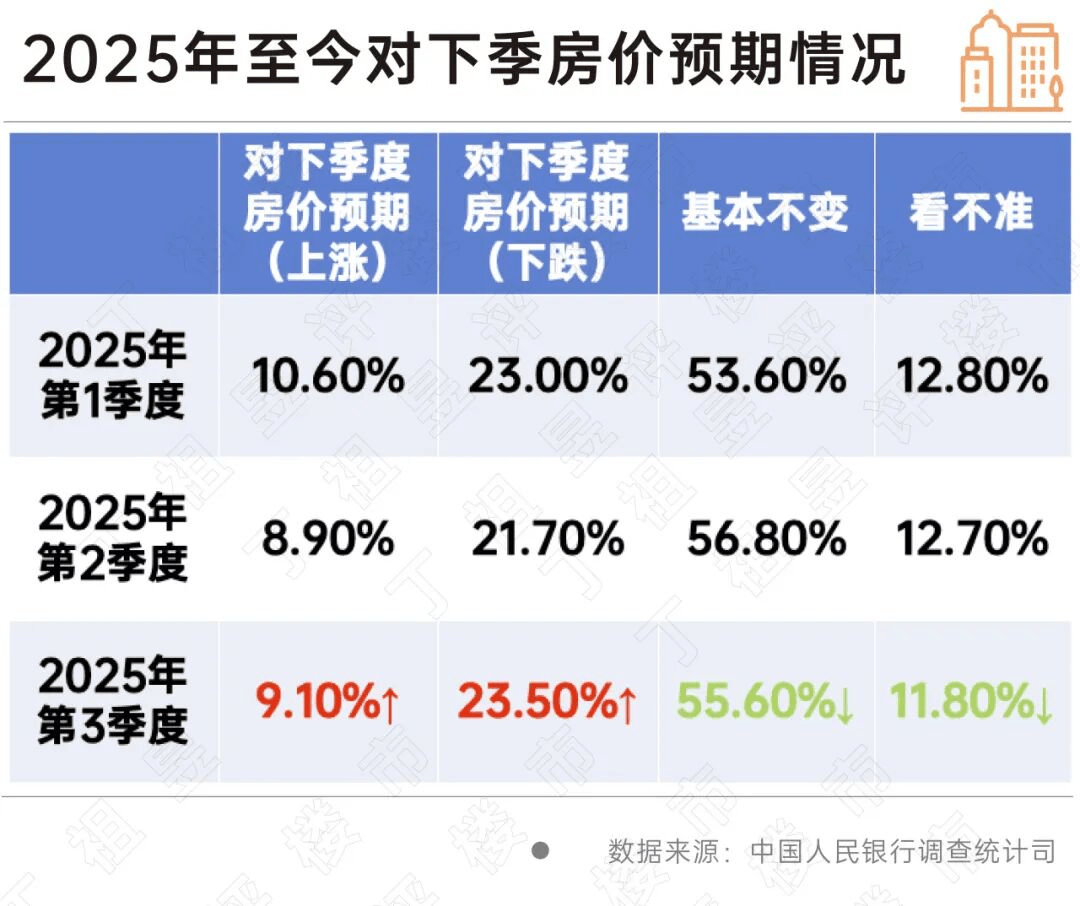
Core Insights - The central viewpoint of the news is that a recent survey by the central bank indicates a significant lack of confidence in the housing market, with only 9.1% of residents expecting housing prices to rise by the third quarter of 2025, while 23.5% anticipate a decline [1][3]. Group 1: Market Sentiment - The central bank's survey is authoritative, covering 50 cities and 20,000 depositors, highlighting a strong signal regarding the current state of the housing market [3]. - The former deputy governor of the central bank, Zhu Min, stated that it is "very difficult" for housing prices to rise again due to factors like population aging and high per capita housing space [3][5]. Group 2: Demographic Changes - The traditional buyer demographics are shifting; younger generations (post-95s and post-00s) are less inclined to purchase homes, as marriage rates decline and many already have access to family-owned properties [5]. - The previous motivations for buying homes, such as the "mother-in-law economy" and speculative investment, are becoming less relevant as the market dynamics change [5]. Group 3: Financial Implications - The current housing market is characterized by a high rate of mortgage defaults, with an average default rate of 3.7% nationwide, and exceeding 5% in some third- and fourth-tier cities [5][6]. - The perception of housing as a financial asset is diminishing, leading to a focus on housing primarily as a necessity for living, which may reduce overall demand [6]. Group 4: Future Outlook - The article suggests that the era of speculative real estate investment is over, and future housing decisions should be based on personal needs and financial capabilities rather than market speculation [6]. - The government is increasing the construction of affordable housing to meet rental demand, indicating a shift in policy focus towards rental markets [6].

《有色》日报-20251105
Guang Fa Qi Huo· 2025-11-05 03:32
1. Report Industry Investment Ratings No relevant information provided. 2. Core Views Copper - Overseas market liquidity is tightening, and the US dollar index is strong, suppressing copper prices. In the long - term, the supply - demand contradiction supports the upward movement of the copper price bottom, but short - term rapid increases may inhibit demand. The subsequent focus is on demand changes and overseas liquidity, with the main contract supported at 84000 - 85000 [1]. Aluminum - Alumina prices are expected to remain weakly volatile, with the main contract ranging from 2750 - 2900 yuan/ton. Aluminum prices will fluctuate between event - driven factors and weak fundamentals in the short term, and there is a risk of correction if inventories continue to accumulate [4]. Aluminum Alloy - The ADC12 price is expected to maintain a relatively strong volatile trend, with the main contract ranging from 20400 - 21000 yuan/ton. Attention should be paid to scrap aluminum supply, procurement costs, and inventory reduction [6]. Zinc - Against the background of concerns about LME zinc squeezing, Shanghai zinc oscillated at a high level. In the short term, zinc prices will be oscillating and relatively strong, but the fundamentals may limit the upward space, with the main contract ranging from 22300 - 23000 [8]. Tin - Tin supply is tight, and demand is weak. With a strong fundamental outlook, a strategy of buying on dips is recommended. Future trends depend on macro - level changes and the supply recovery in Myanmar [11]. Nickel - Macro sentiment is stable, and cost has some support, but the overall fundamentals are flat. In the medium - term, the supply is expected to be loose, restricting the upward space of prices. The main contract is expected to oscillate in the range of 118000 - 126000 [13]. Stainless Steel - Policy and macro - level driving forces are weakening, and the fundamentals have not improved significantly. The short - term market is expected to be weakly volatile, with the main contract ranging from 12500 - 13000 [15]. Lithium Carbonate - The short - term strong fundamentals support the price, but the trading logic has switched recently. The price is expected to be weakly adjusted, with the main contract ranging from 76000 - 82000 [17]. 3. Summary by Directory Copper Price and Basis - SMM 1 electrolytic copper price was 86590 yuan/ton, down 0.29% from the previous day. The import profit and loss was - 685 yuan/ton, up 186.69 yuan/ton from the previous day [1]. Monthly Spread - The 2512 - 2601 spread was 30 yuan/ton, up 110 yuan/ton from the previous day [1]. Fundamental Data - In October, electrolytic copper production was 109.16 million tons, down 2.62% month - on - month. In September, imports were 33.43 million tons, up 26.50% month - on - month [1]. Aluminum Price and Spread - SMM A00 aluminum price was 21440 yuan/ton, unchanged from the previous day. The import profit and loss was - 2608 yuan/ton, down 2.8 yuan/ton from the previous day [4]. Monthly Spread - The 2511 - 2512 spread was - 35 yuan/ton, down 30 yuan/ton from the previous day [4]. Fundamental Data - In October, alumina production was 778.53 million tons, up 2.39% month - on - month, and electrolytic aluminum production was 374.21 million tons, up 3.52% month - on - month [4]. Aluminum Alloy Price and Spread - SMM aluminum alloy ADC12 price was 21400 yuan/ton, unchanged from the previous day. The scrap - to - refined price difference in Foshan for broken primary aluminum was 1789 yuan/ton, up 0.56% from the previous day [6]. Monthly Spread - The 2511 - 2512 spread was - 115 yuan/ton, down 50 yuan/ton from the previous day [6]. Fundamental Data - In September, recycled aluminum alloy ingot production was 66.10 million tons, up 7.48% month - on - month [6]. Zinc Price and Spread - SMM 0 zinc ingot price was 22580 yuan/ton, up 1.03% from the previous day. The import profit and loss was - 4758 yuan/ton, down 276.57 yuan/ton from the previous day [8]. Monthly Spread - The 2511 - 2512 spread was - 55 yuan/ton, down 5 yuan/ton from the previous day [8]. Fundamental Data - In October, refined zinc production was 61.72 million tons, up 2.85% month - on - month. In September, imports were 2.27 million tons, down 11.61% month - on - month [8]. Tin Spot Price and Basis - SMM 1 tin price was 285400 yuan/ton, unchanged from the previous day. The LME 0 - 3 spread was 74 dollars/ton, up 85% from the previous day [11]. Monthly Spread - The 2511 - 2512 spread was - 30 yuan/ton, down 66.07% from the previous day [11]. Fundamental Data - In September, tin ore imports were 8714 tons, down 15.13% month - on - month, and SMM refined tin production was 10510 tons, down 31.71% month - on - month [11]. Nickel Price and Basis - SMM 1 electrolytic nickel price was 121800 yuan/ton, down 0.16% from the previous day. The LME 0 - 3 spread was - 212 dollars/ton, down 3.25% from the previous day [13]. Monthly Spread - The 2512 - 2601 spread was - 240 yuan/ton, down 10 yuan/ton from the previous day [13]. Supply and Inventory - China's refined nickel production was 35900 tons, up 0.84% month - on - month. Imports were 38164 tons, up 124.36% month - on - month [13]. Stainless Steel Price and Spread - The price of 304/2B (Wuxi Hongwang 2.0 coil) was 12800 yuan/ton, unchanged from the previous day. The futures - spot price difference was 425 yuan/ton, up 25% from the previous day [15]. Monthly Spread - The 2512 - 2601 spread was - 65 yuan/ton, down 10 yuan/ton from the previous day [15]. Fundamental Data - China's 300 - series stainless steel crude steel production (43 companies) was 182.17 million tons, up 0.38% month - on - month. Imports were 12.03 million tons, up 2.70% month - on - month [15]. Lithium Carbonate Price and Basis - SMM battery - grade lithium carbonate average price was 80608 yuan/ton, down 0.12% from the previous day. The basis (SMM battery - grade lithium carbonate benchmark) was 280 yuan/ton, down 83.53% from the previous day [17]. Monthly Spread - The 2511 - 2512 spread was - 1480 yuan/ton, down 60 yuan/ton from the previous day [17]. Fundamental Data - In October, lithium carbonate production was 92260 tons, up 5.73% month - on - month. The total inventory was 84234 tons, down 10.90% month - on - month [17].
中辉能化观点-20251105
Zhong Hui Qi Huo· 2025-11-05 03:26
Report Industry Investment Rating - Most of the products in the energy and chemical industry are rated as "Cautiously Bearish", including crude oil, LPG, L, PP, PVC, PX, PTA, MEG, methanol, urea, and asphalt [2][4][6]. - Natural gas is rated as "Cautiously Bullish" [6]. - Glass is rated as "Bearish with Rebound" [6]. - Soda ash is rated as "Bearish with Consolidation" [6]. Core Viewpoints - The industry is generally affected by factors such as supply - demand imbalances, cost fluctuations, and geopolitical risks. Most products face downward pressure due to oversupply or weakening cost support, while natural gas has upward potential due to increased demand in the consumption season [2][4][6]. Summary by Product Crude Oil - **Market Performance**: Overnight international oil prices fell, with WTI down 0.80%, Brent down 0.69%, and SC unchanged from the previous period [8][9]. - **Basic Logic**: The core driver is the oversupply in the off - season. OPEC+ plans to increase production by 137,000 barrels per day in December and pause production increases in Q1 next year. Global crude oil inventories are accelerating the accumulation [10][11]. - **Strategy**: Hold existing short positions and consider adding short positions lightly. Pay attention to the price range of SC at [455 - 470] [12]. LPG - **Market Performance**: On November 4, the PG main contract closed at 4,266 yuan/ton, down 0.91% [14][15]. - **Basic Logic**: It follows the cost - end oil price. The cost is bearish as Saudi Arabia lowered the CP contract price again. The supply has decreased slightly, and the downstream chemical industry's operating rate has increased, but the inventory at ports has risen [16]. - **Strategy**: Hold short positions. Pay attention to the price range of PG at [4200 - 4300] [17]. L - **Market Performance**: The L2601 contract closed at 7,009 yuan/ton [20]. - **Basic Logic**: Social inventory is slowly decreasing, and cost support is weakening. The supply is in a loose pattern, and the demand is in the peak season but lacks restocking motivation [21]. - **Strategy**: The market maintains a contango structure. Industries should sell - hedge at high prices and hold short positions. Pay attention to the price range of L at [6750 - 6900] [21]. PP - **Market Performance**: The PP2601 closed at 6,691 yuan/ton [24]. - **Basic Logic**: The upstream and mid - stream inventories are at the same - period high. The demand is at the end of the "Silver October", and there is a high pressure to destock. The oil - based cost support is insufficient [25]. - **Strategy**: The market maintains a contango structure. Industries should sell - hedge at high prices and hold short positions. Pay attention to the price range of PP at [6450 - 6600] [25]. PVC - **Market Performance**: The V2601 closed at 4,719 yuan/ton [28]. - **Basic Logic**: The cost support is weakening as the price of calcium carbide falls. The social inventory is stable, and the fundamentals maintain a high - inventory and high - warrant structure [29]. - **Strategy**: The market maintains a high contango. Industries should hedge at high prices. Be cautious when short - chasing. Pay attention to the price range of V at [4550 - 4700] [29]. PX - **Market Performance**: - **Basic Logic**: The supply side has domestic production cuts and overseas production increases. The demand has improved recently but is expected to weaken. The PXN and PX - MX spreads are relatively high. The cost - end oil price rebounds but the supply - demand pattern remains loose [30]. - **Strategy**: Take profit on short positions at low prices and look for opportunities to short at high prices. Pay attention to the price range of PX at [6550 - 6650] [31]. PTA - **Market Performance**: The TA01 closed at 4,586 yuan/ton [32]. - **Basic Logic**: The processing fee is low, and the later - stage device maintenance efforts are expected to increase, which will relieve the supply pressure. The terminal demand has slightly improved, but there is an expected inventory accumulation in November [33]. - **Strategy**: Take profit on short positions at low prices and look for opportunities to short at high prices. Pay attention to the price range of TA at [4530 - 4590] [34]. MEG - **Market Performance**: - **Basic Logic**: Domestic and overseas devices have increased their loads. The supply pressure is expected to increase, and there is an expected inventory accumulation in November. The valuation is low, but there is no upward driver [36]. - **Strategy**: Hold short positions cautiously and look for opportunities to short on rebounds. Pay attention to the price range of EG at [3870 - 3950] [37]. Methanol - **Market Performance**: - **Basic Logic**: High inventory suppresses the spot price rebound. The supply pressure is large, and the demand performance is average. The cost support is weakly stable [40]. - **Strategy**: Hold short positions cautiously. Look for opportunities to go long on the 01 contract at low prices and consider the MA1 - 5 reverse spread. Pay attention to the price range of MA at [2091 - 2141] [42]. Urea - **Market Performance**: The UR01 closed at 1,625 yuan/ton [43]. - **Basic Logic**: The supply pressure is increasing, and the demand has slightly improved. The inventory is at a high level but has decreased recently. The valuation is low [44]. - **Strategy**: The fundamentals are weak. Consider going long lightly in the medium - to - long - term. Pay attention to the price range of UR at [1610 - 1640] [46]. Natural Gas - **Market Performance**: On November 4, the NG main contract closed at 4.501 US dollars per million British thermal units, up 3.02% [48][49]. - **Basic Logic**: The geopolitical risk of sanctions on Russia has been released, and the demand for heating has increased with the temperature drop, which supports the gas price [50]. - **Strategy**: The rising demand in the consumption season supports the gas price, but the supply is sufficient, and the upward pressure is increasing. Pay attention to the price range of NG at [4.262 - 4.458] [51]. Asphalt - **Market Performance**: On November 4, the BU main contract closed at 3,193 yuan/ton, down 1.24% [53][54]. - **Basic Logic**: It follows the cost - end oil price. The cost support is decreasing, and the supply and demand are both weakening. The inventory has decreased [55]. - **Strategy**: The valuation is high, and the supply is sufficient. The medium - to - long - term trend is bearish. Lightly short - allocate. Pay attention to the price range of BU at [3100 - 3200] [56]. Glass - **Market Performance**: The FG2601 closed at 1,095 yuan/ton [59]. - **Basic Logic**: The daily melting volume has increased slightly, the fundamentals are in a loose pattern, and the capital game is intense. The inventory in factories is slowly decreasing but remains high [60]. - **Strategy**: The loose pattern is hard to change, and the medium - to - long - term rebound is bearish. Pay attention to the price range of FG at [1060 - 1110] [60]. Soda Ash - **Market Performance**: The SA2601 closed at 1,209 yuan/ton [63]. - **Basic Logic**: The factory inventory is slightly decreasing but still at a high level. The demand is mostly rigid, and the supply is in a loose pattern due to high - production periods [64]. - **Strategy**: The market maintains a contango structure. Industries should sell - hedge at high prices. The single - side rebound is bearish. Pay attention to the price range of SA at [1170 - 1220] [64].
中国人民银行今日早评-20251105
Ning Zheng Qi Huo· 2025-11-05 02:22
Key Points by Commodity Gold - US government shutdown continues, but with Sino-US relations easing and the US potentially pausing tariff measures, risk aversion weakens. The rising US dollar index is negative for gold. Gold may experience high-level oscillations in the medium term. Monitor the impact of the US dollar index on gold [1] 纯碱 - The national mainstream price of heavy soda ash is stable at 1,269 yuan/ton. Weekly production is 757,600 tons, a 2.3% increase. Total inventory is 1.702 million tons, with a weekly decrease of 0.01%. The float glass industry has stable operation and decreasing inventory. The domestic soda ash market is stable, with some plant shutdowns reducing supply. The 01 contract of soda ash is expected to oscillate in the short term, with resistance at 1,200. It is recommended to wait and see or consider short - term long positions on dips [1] Iron Ore - From October 27th to November 2nd, global iron ore shipments decreased by 174,500 tons to 3.2138 million tons. Shipments from Australia and Brazil decreased by 166,700 tons to 2.7592 million tons. Supply is becoming more abundant in the near - term, while demand is weakening due to production cuts in Tangshan. There is a possibility of production resumption this week. Port inventory is still increasing, and steel mills' inventory has decreased significantly, with a potential for accelerated restocking. Ore prices are expected to decline further, and a short - selling strategy can be considered [3] Rebar - On November 4th, domestic steel prices continued to fall. In November, more steel mills plan to conduct maintenance and production cuts, and environmental restrictions are in place in the north. As the market enters the off - season, supply and demand are both expected to weaken. Raw material prices are under pressure, and steel mills are on the verge of profitability. Steel prices are expected to oscillate weakly in the short term [4] Manganese Silico - The national average capacity utilization rate of 187 independent silicon - manganese enterprises is 43.28%, a 0.09% increase from last week. Daily output increased by 655 tons to 29,830 tons. The cost of manganese ore may have limited upward potential. Demand for manganese silico is expected to weaken as steel production may decline in the future. Supply is expected to remain high, and inventory pressure persists. The price of manganese silico may not have strong upward momentum in the short term [5] Palm Oil - Last week, the narrowing price gap between soybean oil and palm oil led to increased purchases of palm oil, resulting in a decrease in inventory. As of the end of the 44th week of 2025, domestic palm oil inventory decreased by 10,000 tons to 555,000 tons. The market expects an increase in palm oil inventory in Malaysia in October, which is negative for palm oil prices. Palm oil is expected to remain weak in the short term [6] Rapeseed Meal - As of November 1st, the weekly operating rate of domestic rapeseed processing enterprises increased by 0.49 percentage points to 1.47%. Weekly rapeseed crushing volume increased by 2,000 tons to 6,000 tons. There is an expectation of zero processing volume this week. Supply shortages reduce the risk of price decline. It is recommended to take long positions at low prices and monitor Sino - Canadian trade policies [6] Live Pigs - On November 4th, the average wholesale price of pork increased by 0.2% to 18.02 yuan/kg. The high - priced pork has low acceptance from consumers, and the number of second - fattening pigs has decreased. As enterprises resume normal slaughter, pig prices are expected to decline slowly in the short term. The LH2601 contract of live pigs shows a weak technical pattern, and farmers can consider hedging according to their slaughter plans [7] Short - term Treasury Bonds - On November 5th, the central bank conducted a 700 - billion - yuan 3 - month reverse repurchase operation, which is an equal - amount roll - over. The loose money supply is positive for short - term bonds. The bond market is expected to oscillate with an upward bias in the medium term, but trading is becoming more difficult [7] Silver - The probability of the Fed cutting interest rates by 25 basis points in December is 70.1%. The rising US dollar index due to positive Sino - US trade relations is putting pressure on precious metals. Silver is expected to oscillate in the short term and rise in the long term, with limited downward space [8] Methanol - The weekly signing volume of methanol production enterprises in Northwest China decreased by 8,500 tons to 23,900 tons. The market price in Jiangsu decreased by 20 yuan/ton to 2,082 yuan/ton. Production capacity utilization increased by 1.09 percentage points to 86.73%. Port inventory decreased slightly, while enterprise inventory increased. Methanol prices are expected to oscillate weakly in the short term, with resistance at 2,145. It is recommended to wait for further stabilization [9] Polypropylene - The mainstream price of East China's drawn polypropylene decreased by 19 yuan/ton to 6,536 yuan/ton. Capacity utilization increased by 0.61 percentage points to 78.62%. Commercial inventory decreased by 51,300 tons to 874,000 tons. Supply pressure has eased slightly, and downstream orders have improved slightly. The PP 01 contract is expected to oscillate in the short term, with resistance at 6,570. It is recommended to hold short positions cautiously [10] Crude Oil - As of the week ending October 31, 2025, US commercial crude oil inventory increased by 6.52 million barrels, while gasoline and distillate inventories decreased. China and Russia agreed to cooperate in the standardization of the oil and gas industry. Crude oil prices are expected to remain under pressure for the rest of the year and may ease slightly in the first quarter of next year [11] PX - This week, domestic PTA production increased by 44,800 tons to 1.4503 million tons. Capacity utilization increased by 2.40 percentage points to 78.38%. Social inventory decreased by 5,700 tons to 3.1356 million tons. The restart of previously shut - down PTA plants has increased supply, and the market is expected to have a slight inventory build - up. PX prices are under pressure, and the overall fundamentals of PTA are weak [11] Rubber - In Thailand, cup - lump prices decreased, while latex prices increased. From January to September, global natural rubber production increased by 2.3%, while consumption decreased by 1.5%. Indonesia's exports to China increased significantly. China's rubber inventory is at a low level, and raw material prices are expected to be firm. However, tire enterprises are facing shipment pressure, and some plan to reduce production in November. Rubber prices are expected to oscillate weakly in the short term, with limited downward space [12]