美元贬值

Search documents
摩根资管:若资金持续流入港A市场 HIBOR跌幅或较预期更大
Zhi Tong Cai Jing· 2025-09-18 08:06
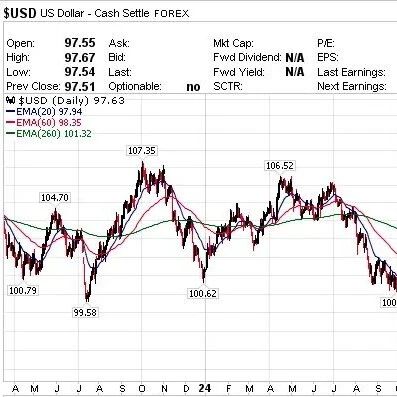
Group 1 - Morgan Asset Management's Chief Market Strategist for Asia Pacific, Xu Changtai, predicts that with the Federal Reserve entering a rate-cutting cycle and the expectation of a depreciating US dollar, funds may flow into emerging markets, benefiting the Hong Kong A-share market [1] - Xu estimates that the Hong Kong Interbank Offered Rate (HIBOR) will continue to have room for decline, potentially more than expected, which will positively impact the Hong Kong residential property market, with a better environment anticipated in 2026 compared to this year [1] - The Federal Reserve is expected to cut rates by 0.25% in both October and December of this year, with further cuts of 2-3 times in 2026, bringing the long-term federal funds rate down to a neutral level of 3% [1] Group 2 - Historical data suggests that during previous rate-cutting cycles, such as in 2019, US stock performance was strong, leading to a preference for technology-related sectors, while retail and industrial stocks are expected to be more volatile [2] - The US dollar is currently stable, but with the US facing fiscal and trade deficits and entering a rate-cutting cycle, alongside Europe nearing the end of its rate cuts and Japan potentially raising rates, a depreciation of the dollar is anticipated, estimated at 5-7% over the next 12-18 months [2]
高盛:流动性驱动市场狂欢,结构性风险隐现关键信息:9月17日 美元贬值 黄金储备超美债
Sou Hu Cai Jing· 2025-09-17 15:16
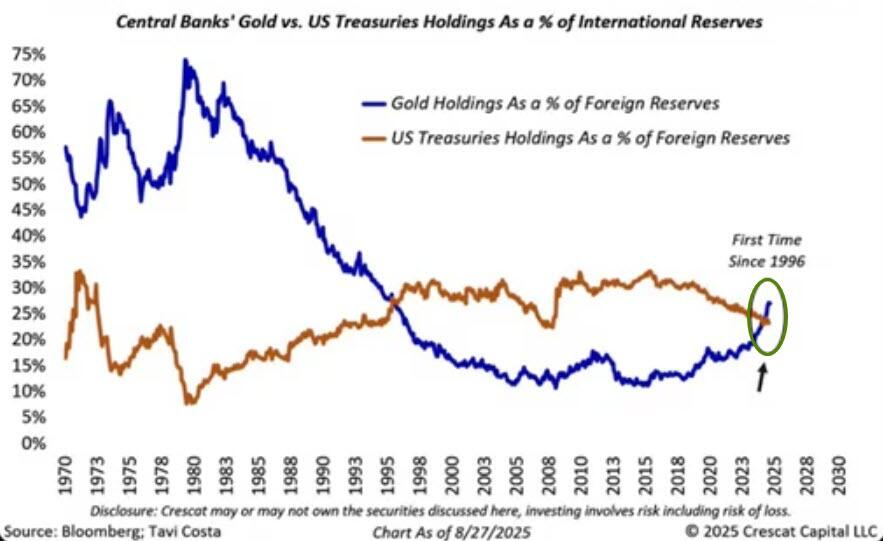
Core Viewpoint - The current market sentiment is that "liquidity outweighs fundamentals," driven by rising expectations of interest rate cuts by the Federal Reserve, which is expected to inject upward momentum into risk assets [1] Group 1: Market Environment - The current market environment is compared to two historical periods: the mid-1990s when the Federal Reserve's preemptive rate cuts extended the economic expansion and fueled a stock market surge, and the 1970s before the collapse of the Bretton Woods system, characterized by dollar depreciation and weakened trust in U.S. government debt [1] - There is a significant amount of idle capital ready to buy on dips, which is likely to prolong the current market cycle [1] Group 2: Trust in U.S. Debt - A warning is issued regarding foreign central banks' gold reserves surpassing U.S. Treasury holdings for the first time in thirty years, indicating a potential erosion of trust in U.S. government debt [1] - The current cycle may end due to a breakdown in trust, despite the ongoing liquidity-driven market rally [1] Group 3: Structural Risks - While liquidity may continue to drive market enthusiasm, structural risks should not be overlooked [1]
美联储降息之路布满荆棘?美银调查:“第二波通胀”成头号风险
Sou Hu Cai Jing· 2025-09-17 05:07
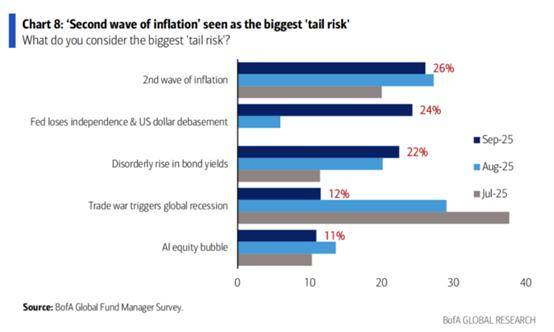
Group 1 - The core concern among fund managers has shifted from "trade war causing global recession" to "second wave of inflation" as the biggest tail risk, with 26% of managers identifying it as such, a slight decrease from August [1] - 24% of fund managers view the loss of Federal Reserve independence and dollar depreciation as the largest tail risk, while 22% cite disorderly rise in bond yields [1] - Only 12% of fund managers consider "trade war causing global recession" as the biggest risk, significantly down from 29% in August [1] Group 2 - The survey indicates that "long on the tech giants" remains the most crowded trade, with 42% of fund managers holding this view, slightly down from 45% in August [3] - Other popular trades include long on gold (25%), short on the dollar (14%), and long on cryptocurrencies (9%) [3] - The survey was conducted from September 5 to 11, involving 165 fund managers managing a total of $426 billion in assets [3] Group 3 - Recent economic indicators show signs of rising inflation in the U.S., prompting some economists to advise the Federal Reserve to avoid significant rate cuts [4] - The U.S. Consumer Price Index (CPI) rose by 0.4% month-over-month in August, exceeding market expectations of 0.3%, with a year-over-year increase of 2.9%, accelerating by 0.2 percentage points from July [4] Group 4 - The Federal Reserve began a two-day meeting on September 16, with widespread expectations for a rate cut of 25 basis points, marking the first cut in nine months [5] - Investors are particularly focused on the Fed's future policy path, with the upcoming dot plot and comments from Powell expected to provide further insights [5]

高盛首席宏观研究员:“流动性叙事”驱动一切,美元的下跌与“1970年代”如出一辙,风险是1979重演
Hua Er Jie Jian Wen· 2025-09-17 03:54
Core Viewpoint - Current market conditions are reminiscent of the 1970s, with a decline in the dollar's value against real assets and a loss of trust in government debt, similar to the period before the collapse of the Bretton Woods system [1][3] Group 1: Market Dynamics - Foreign central banks now hold more gold than U.S. Treasury securities for the first time in 30 years, indicating a shift in trust away from the dollar [1][3] - The Federal Reserve's dovish stance and interest rate cut expectations may extend the current economic cycle, potentially leading to a resurgence in risk assets by 2026 [3][4] - Historical precedents show that Fed rate cuts during non-recession periods often boost stock markets, provided that the market believes economic weakness is temporary [5][6] Group 2: Trust and Asset Performance - The rise of cryptocurrencies parallels the historical role of gold as a hedge against inflation and political instability, reflecting a broader loss of trust in fiat currencies [6][7] - Systemic factors such as populism and inequality are eroding trust in existing financial systems, prompting investors to diversify into various risk assets [7][8] Group 3: Liquidity and Long-Term Risks - Current market conditions are driven by liquidity, overshadowing fundamental concerns, similar to the dynamics observed in the early 2000s [9][10] - The dollar has been experiencing a hidden depreciation since 2009, not against other currencies but in terms of purchasing power against real assets [9][10] - Long-term bonds are facing a structural bear market, with their "risk-free" status increasingly questioned, potentially leading to a scenario worse than the 1940s and 1950s [10][11] Group 4: Future Outlook - The stability of long-term interest rates is crucial for maintaining a positive market outlook; a sudden collapse in the long bond market could expose vulnerabilities [11][14] - The current cycle may end not due to economic weakness but rather due to a loss of trust, with structural themes like defense, nuclear energy, and AI potentially gaining focus in a liquidity-driven environment [15][16]

点阵图将揭示降息预测白银td走跌
Jin Tou Wang· 2025-09-17 03:27
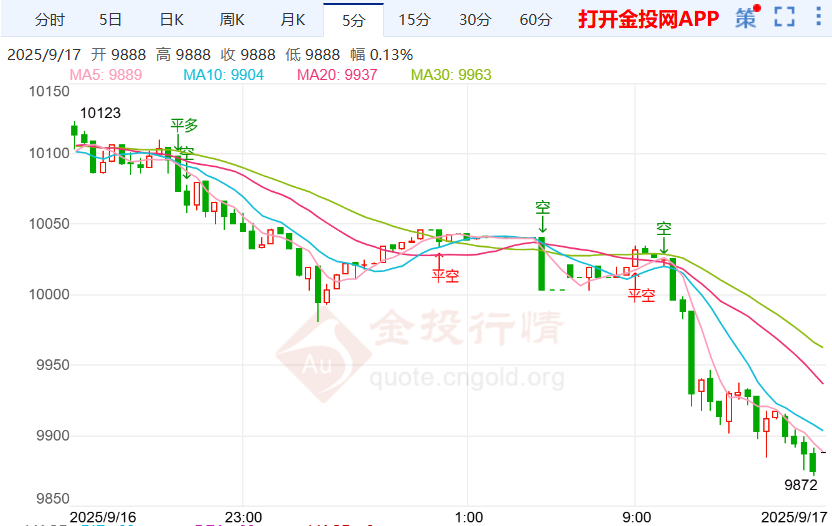
Group 1 - The current trading price of silver TD is around 9887 yuan per kilogram, showing a decline of 1.76% from the opening price of 10111 yuan per kilogram [1] - The highest price reached today was 10124 yuan per kilogram, while the lowest was 9872 yuan per kilogram, indicating a bearish short-term trend in silver TD [1][5] Group 2 - The FOMC's internal divisions are likely to be reflected in the "dot plot," which shows Federal Reserve officials' predictions for future benchmark interest rates [3] - The dot plot may reveal whether officials are inclined to continue rate cuts in the upcoming meetings in October and December, with a first-time release of 2026 rate forecasts [3][4] - Market expectations are pricing in significant easing, with investors anticipating a total of 75 basis points cut this year and another 75 basis points in 2026 [3] - The anticipated rate cuts by the Federal Reserve are expected to have a significant negative impact on the US dollar, reducing its attractiveness to international capital [3][4]
'BAD SIGN': Fed is ignoring one sign that could spell big trouble
Youtube· 2025-09-16 19:15
Do you believe the Federal Reserve is an independent body. What what do you think about the independent. Oh, it should be.It should be, but I think they should listen to smart people like me. I think I have a better instinct than him. If you look, all the economists got it wrong.I got it right along with one other people out of a hundred. So, they should listen to people that are smart. Nothing wrong with that.But they have to make their own choice. But they should listen. The Federal Reserve in the hot sea ...

美银哈特尼特:经济增长预期飙升,股市多头行情或延续
Zhi Tong Cai Jing· 2025-09-16 11:50
Group 1 - The core viewpoint is that the stock market remains bullish as expectations for economic growth have significantly improved, with global stock markets likely to rise further [1] - A recent Bank of America survey indicates that 28% of global fund managers are overweight on stocks, the highest level in seven months [1] - The perception of economic growth has seen the most significant improvement in nearly a year, with only 16% of investors believing the economy will weaken [1] Group 2 - The report highlights that the risks of a "recessionary trade war" are diminishing, contributing to a bullish market sentiment [1] - The MSCI All-Country World Index has reached an all-time high, driven by renewed investment enthusiasm in artificial intelligence and stronger tech stocks [1] - Nearly half of the survey respondents expect the Federal Reserve to implement four or more rate cuts in the next 12 months [1] Group 3 - Approximately 26% of respondents view a "second round of inflation" as the biggest tail risk, while 24% are concerned about the weakening independence of the Federal Reserve and dollar depreciation [2] - The survey conducted from September 5 to 11 included 165 respondents managing a total of $426 billion in assets [2] - Key findings include a cash holding rate of 3.9% for the third consecutive month and a net 15% of investors adopting a "below normal" risk strategy, an improvement from 19% in August [2] Group 4 - About 39% of respondents want companies to increase capital expenditures, the highest since December of the previous year, while only 27% prefer companies to focus on balance sheet optimization, the lowest since February 2022 [2] - The most crowded trades include going long on the "seven tech giants" (42%), going long on gold (25%), shorting the dollar (14%), and going long on cryptocurrencies (9%) [2]

2025年第三季经济与投资策略观点:利率下调 预期与稳健经济前景
Sou Hu Cai Jing· 2025-09-15 04:43
Group 1: Global Economic Outlook - Global economic activity remains robust despite ongoing policy uncertainties, with a projected growth rate of 2.5% for this year and 2.6% for 2026, both above market consensus levels [1][4] - The peak of policy uncertainty has passed, yet market expectations for economic growth remain pessimistic, particularly regarding the timing of potential interest rate cuts by the Federal Reserve [1][5] - The resilient U.S. economy, characterized by strong growth and high inflation, contradicts market expectations for immediate rate cuts, which may be delayed until 2026 [1][5] Group 2: Regional Economic Insights - The U.S. labor market remains strong, supporting consumer spending, while inflation risks persist due to delayed impacts from tariff disputes [2][5] - The Eurozone is experiencing solid growth, bolstered by trade agreements and supportive monetary and fiscal policies, although this may signal the end of the European Central Bank's easing cycle [2][5] - The UK faces constraints on growth, with GDP expected to remain below 1%, and inflation potentially exceeding 4% in the coming months [2][5] Group 3: Emerging Markets and Currency Trends - China's manufacturing exports have benefited from delayed tariff increases, leading to steady economic growth, although recent data indicates a mild slowdown [3][4] - Emerging markets may see improved prospects if the U.S. dollar continues to depreciate, providing central banks with room to lower interest rates and stimulate domestic demand [3][6] - A depreciating dollar could create deflationary effects in other regions, facilitating monetary easing and boosting internal demand [6]
金价在美联储会议前夕逼近历史高位
Sou Hu Cai Jing· 2025-09-13 02:09
Group 1 - Gold prices are on track for a fourth consecutive week of gains, rising approximately 1.8% this week and nearing $3,650 per ounce after reaching a record high on September 9 [1] - Silver prices have followed gold's trend, surpassing $42 per ounce, marking the highest level since 2011 [1] - The U.S. consumer price index data for August met expectations, providing the Federal Reserve with room to potentially lower borrowing costs after weak labor market data [1] Group 2 - Physical gold-backed ETFs have seen an increase of nearly 17 tons this week, indicating strong demand [2] - UBS has raised its year-end gold price target from $3,500 to $3,800 per ounce, citing robust ETF buying, declining interest rates, and a weakening dollar [2] - Gold is viewed as a hedge against the declining dollar, with President Trump advocating for lower policy rates, further enhancing gold's appeal [2]
美联储终于要降息了!华尔街坚信:美元“世纪大跌”还有下半场
凤凰网财经· 2025-09-12 12:50
Core Viewpoint - The article discusses the ongoing bearish trend of the US dollar, highlighting that despite a recent stabilization, many market participants anticipate further depreciation due to various economic pressures and the Federal Reserve's potential interest rate cuts [1][2][4]. Group 1: Current Dollar Performance - The ICE Dollar Index experienced a nearly 11% decline in the first half of 2025, marking the largest drop since 1973 [2]. - Recent data shows a significant reduction in speculative net short positions on the dollar, dropping from approximately $21 billion at the end of June to $5.7 billion [2]. - Market participants remain skeptical about a trend reversal, citing concerns over the US fiscal and trade deficits, a weak job market, and a reassessment of currency hedging strategies [2][4]. Group 2: Economic Factors Influencing the Dollar - Persistent negative factors affecting the dollar include a reevaluation of the "American exceptionalism" narrative, trade protectionism concerns, and ongoing dual deficits [4][5]. - Weak US employment data has created room for more aggressive rate cuts by the Federal Reserve, which could diminish the dollar's interest rate advantage [5]. - The current pricing in the interest rate market suggests that the Fed may continue to lower rates through the end of the year, reinforcing bearish sentiment towards the dollar [5]. Group 3: Foreign Investment and Hedging Strategies - Foreign holdings of US assets amount to trillions, and any reduction in risk exposure could further pressure the dollar, although large-scale sell-offs have not yet occurred [6][7]. - Asset management companies are accelerating their hedging strategies in response to the dollar's weak performance, with more participants expected to join in the next three to six months [8]. - Hedging operations typically involve selling dollars through forward contracts or swaps, which could suppress the dollar's real-time exchange rate [9]. Group 4: Government Stance on Dollar Valuation - Industry experts suggest that the US government may not actively support a strong dollar, as its "America First" agenda conflicts with a strong dollar strategy [11]. - The dollar index is projected to fluctuate between 95 and 100 in the short term, with expectations of a further 5% to 7% depreciation against major non-US currencies over the next year [11]. - Current dollar levels are viewed as neutral, with analysts indicating that the dollar still has more room for decline in the ongoing bear market [12].