股债跷跷板效应

Search documents
债券增值税政策刺激公募委外需求 “固收+”或增配红利资产
Zheng Quan Shi Bao· 2025-08-05 18:57
Core Viewpoint - The recent changes in value-added tax (VAT) policy have led to significant fluctuations in the bond market, prompting institutional investors to adjust their strategies for higher yields in a low-interest-rate environment [1][2]. Group 1: Impact of VAT Policy Changes - The announcement from the Ministry of Finance and the State Administration of Taxation on August 8 reinstated VAT on interest income from newly issued government bonds, local government bonds, and financial bonds, affecting all bond types without exceptions [2]. - The VAT rate for institutional investors is approximately 6.34%, while public fund products benefit from a reduced VAT burden of about 3.26%, indicating a greater impact on banks, insurance companies, and brokerages compared to public funds [2][3]. Group 2: Institutional Investment Strategies - The differences in VAT treatment among various institutions may lead to increased demand for outsourcing bond investments to external public asset management firms, especially as the yield space shrinks in a low-interest-rate environment [3]. - Institutions are likely to adjust their investment strategies to seek higher interest income to offset the losses from VAT, which may involve shifting towards credit bonds as the tax differences between government and credit bonds diminish [4]. Group 3: Shift Towards "Fixed Income Plus" Strategies - Institutional investors may reallocate funds from the bond market to dividend-paying stocks, reflecting a shift in the "fixed income plus" strategy due to the rigid nature of liability costs [5]. - Insurance funds have been actively increasing their equity investments, particularly in high-dividend stocks, while still maintaining a significant presence in the bond market, particularly in government bonds [5].
难寻“代餐”!中小行做债热情再升温,7月城农商行现券交易额创年内新高
Sou Hu Cai Jing· 2025-08-05 16:16
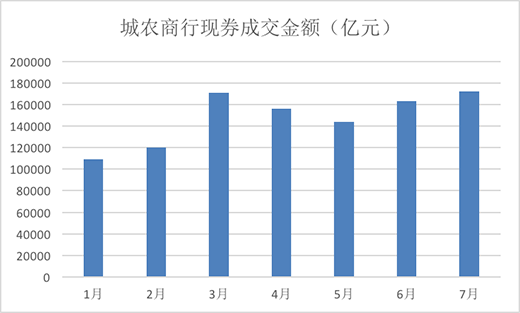
不过,进入二季度,中小行做债热情突然转"冷"。银行间同业拆借中心数据显示,来到4、5月份,中小行交易热 情连续两个月下降,城农商行现券合计成交金额分别环比下滑8.6%、7.9%。特别是在5月份,城农商行现券合计 成交笔数出现大幅下降,环比减少9.5%。 本报(chinatimes.net.cn)记者李明会 北京报道 "资产荒"困局之下,债市成为中小行资产配置的主战场。 近日,《华夏时报》记者梳理今年以来银行间同业拆借中心的现券买卖月报数据发现,今年4月、5月,城农商行 现券成交金额连续两个月环比下滑;不过,在经历两个月的短暂调整后,城农商行加大现券交易力度,6 月、7 月 现券成交金额分别环比增长13.5%、5.7%。其中,7月份现券成交金额达17.24万亿元,再次突破17万亿元大关,创 年内新高。 同时,央行数据显示,今年以来,中资中小银行债券投资金额逐月增加,截至今年6月末,相关投资金额达46.44 万亿元。 "城农商行现券交易频繁的背后驱动因素主要是有效贷款需求不足、信贷投放缩量、大行下沉挤压、跨区展业受限 等。"东方金诚金融业务部高级副总监鲁金飞在接受《华夏时报》记者采访时表示,当前市场环境下,利率债 ...


部分理财产品因债市调整现净值回撤
Zheng Quan Ri Bao· 2025-08-05 15:44
业内人士建议,理财公司可通过久期、杠杆策略增厚收益 普益标准研究员张璟晗表示,从宏观经济、政策调控等多角度看,债市仍具备一定配置价值。市场中部 分理财公司同样认为当前债市调整带来了一定投资机会,并加仓优质城投债、产业债等。机构间的博弈 与交易行为,在一定程度上维持了市场的流动性和稳定性。 目前,债券类资产的投资收益主要来自两部分:资本利得与票息收益。债券资产的票息收益每日累积, 并持续计入产品净值,这为产品净值的修复提供了支撑。 "债券的票息特性决定了债市是天然的多头市场。"前述银行理财子公司人士表示,从长期表现来看,我 国债券市场总体呈现"牛长熊短"的格局,在过去的多轮调整中,债券市场均能快速完成修复。理财是与 时间为友的过程,长期持有可以减少非理性决策的成本,并享受债市修复后的收益机会。 站在当前时点,银行理财子公司该如何调整理财产品资产端配置策略? 农银理财方面表示,面对本轮债市调整,将通过调降产品久期和杠杆、增加同业存单等流动性仓位配置 等防守策略进行积极应对。下一步,将在保持产品流动性的基础上,规避投资波动较大的券种,控制净 值回撤,并积极关注市场调整后带来的交易及配置机会,力争提升产品业绩表现。 ...
难寻“代餐”!中小行做债热情再升温 7月城农商行现券交易额创年内新高
Hua Xia Shi Bao· 2025-08-05 15:04
Core Viewpoint - The bond market has become the main battlefield for asset allocation among small and medium-sized banks amid the "asset shortage" dilemma, with significant fluctuations in trading volumes observed throughout the year [1][2][4]. Trading Activity - In March, the total trading volume of bonds by city and rural commercial banks exceeded 17 trillion yuan, marking a 42% month-on-month increase, with nearly 350,000 transactions, a 30% increase [2]. - However, trading enthusiasm cooled in April and May, with trading volumes declining by 8.6% and 7.9% respectively, and a notable 9.5% drop in transaction counts in May [4][5]. - By July, trading volumes rebounded, reaching 17.24 trillion yuan, surpassing the trading volumes of larger banks [7]. Investment Trends - The bond investment amount of Chinese small and medium-sized banks has been steadily increasing, reaching 46.44 trillion yuan by the end of June, with a year-to-date increase of 3.6 trillion yuan [5][11]. - Despite the overall decline in trading enthusiasm, city and rural commercial banks have shown a strong demand for bond investments, driven by insufficient loan demand and a shrinking credit supply [1][10]. Market Dynamics - The concentration of quality credit resources in larger banks has limited the opportunities for small and medium-sized banks to secure quality corporate loans, prompting them to favor liquid and low-risk bonds [7]. - The bond market has experienced a bull market trend, making bond trading and investment a rational choice for small banks [7][10]. Future Outlook - The trend of small and medium-sized banks increasing bond investments is expected to continue, with a focus on enhancing asset-liability management and exploring opportunities in specialized financial services [10][12]. - The People's Bank of China has acknowledged the stabilizing role of small banks in the bond market, emphasizing the need for a balanced approach to investment returns and risk [11].
中债策略周报-20250805
Zhe Shang Guo Ji Jin Rong Kong Gu· 2025-08-05 11:46
Report Summary 1. Report Industry Investment Rating No relevant content provided. 2. Core Viewpoints - The weakening domestic demand is reflected by the July manufacturing PMI falling short of expectations, and the correction in the commodity market pricing this week is favorable for the bond market, with yields of different maturities declining. The potential returns are considerable considering the downward space of 10 - 12bp for the 10 - year and 30 - year Treasury bond yields and the duration [3][6]. - In terms of fundamentals and monetary policy, the demand side remains weak, and the short - term policy stimulus expectations are retreating. The cooling of the commodity market and the stock market may be beneficial to the bond market due to the stock - bond seesaw effect. The opportunities in the first and middle ten - days of the month may be greater, while the situation in the last ten - days needs further observation [6]. - For the second half of the year, policy clues may be the main variable guiding the macro - economic trend. The loose monetary policy will continue, and the bond market can prioritize high - cost - effective varieties [35]. 3. Summary by Directory Bond Market Performance Review - Interest rate bonds: The yield curve has flattened. The 1 - year Treasury bond yield decreased by 1bp to 1.37%, and the yields of 3 - year and above decreased more significantly. The 10 - year and 30 - year Treasury bond yields decreased by 3.3bp and 3.4bp to 1.71% and 1.92% respectively [12][15]. - Credit bonds: The spreads generally widened. On the implied AA+ urban investment bond curve, the 1 - year, 3 - year, and 5 - year yields increased by 10bp, with the 5 - year yield reaching 2.04%. On the AAA - secondary capital bond curve, the 1 - year, 3 - year, and 5 - year yields increased by 7bp, 14bp, and 14bp respectively [15]. Bond Market Primary Issuance Situation - Local bonds: Issued 3372 billion yuan this week, with a net issuance of 2360 billion yuan, including 209 billion yuan of new general bonds, 1832 billion yuan of new special bonds (575 billion yuan of special special bonds), 877 billion yuan of ordinary refinancing bonds, and 454 billion yuan of special refinancing bonds [20]. - Treasury bonds: Issued 4061 billion yuan this week, with a net issuance of 107 billion yuan, including 830 billion yuan of special Treasury bonds [20]. - Policy - financial bonds: Issued 1580 billion yuan this week, with a net issuance of - 56 billion yuan [20]. Fund Market Situation - The cross - month capital market remained stable. Before the cross - month, the central bank's large - scale net reverse - repurchase injection made the capital market looser. The overnight interest rate fell below the OMO rate, and the R001 decreased by 19bp to 1.36%. On the cross - month day, the central bank's "unexpected" reduction in roll - over still maintained a balanced capital market [26]. - The overnight and one - week Shibor rates closed at 1.32% and 1.45%, changing by - 5bp and + 3.8bp respectively compared with last week. The overnight and one - week CNH Hibor rates closed at 1.1% and 1.28%, changing by - 43.1bp and - 36.2bp respectively compared with last week [26]. - The yields of inter - bank certificates of deposit mostly declined. The 1 - month AAA inter - bank certificate of deposit decreased by 6.9bp to 1.49%. The weighted issuance period of inter - bank certificates of deposit was compressed to 5.9 months. The average trading volume of inter - bank pledged repurchase decreased from 7.70 trillion yuan last week to 6.72 trillion yuan [29]. China Bond Market Macro - environment Tracking and Outlook - The US dollar index has been below 100 for the past week, and the offshore RMB has continued to appreciate. The central bank may maintain a loose tone in the second half of the year. This week, the central bank conducted a basically equal - amount roll - over, with a net injection of 69 billion yuan [34]. - In terms of the macro - economic outlook, achieving the 5% annual target is not difficult. Policy clues will be the main variable guiding the macro - economic trend in the second half of the year. The loose monetary policy will continue, and the bond market can prioritize high - cost - effective varieties [35].
债基开始过苦日子?频繁遭遇赎回,多只收益转负,是该抄底还是避险?
Xin Lang Cai Jing· 2025-08-05 07:41
智通财经8月5日讯(记者 李迪)下半年以来,股市行情火热,债市却波动加剧,股债跷跷板效应愈发 凸显。 受债市波动的影响,多只债基的年内收益转负,部分产品的年内亏损超过1%。同时,多只债基遭遇大 额赎回,已公告称调整份额净值精度。 近期多只债券基金出现亏损,业内人士分析主要有两方面原因。 一方面,今年以来债市持续震荡,7月初以来股市回暖,股债跷跷板效应下债市波动加剧。债市震荡对 纯债基金的业绩造成一定压力,持有长久期品种较多的产品会承受更多波动压力。 达诚定海双月享的基金经理陈佶分析称,7月股票市场火热,上证综指最高达到3636,接近去年十一后 的高点,同时万得全A指数已突破去年高点达到5684,同时各家机构均判断权益市场会继续上涨,这也 是压制债券的主要因素。 另一方面,部分二级债基的股票投资部分收益不佳。虽然今年股市存在很多投资机会,但是板块轮动 快,大盘波动也比较大,如果把握不好节奏,投资股票的收益也不会太好。 以人保鑫利债券为例,该基金的基金经理胡琼予在二季报中指出,"本年度以来大小盘风格切换较为频 繁,价值成长之间轮动较为剧烈。"该基金在报告期内仓位维持稳定,但风格轮动较为滞后,切换之间 未能获得较好 ...
国债期货:股债跷跷板效应施压 期债走势先扬后抑
Jin Tou Wang· 2025-08-05 02:04
Market Performance - Treasury futures opened significantly higher but weakened in the afternoon, with mixed closing performances; the 30-year main contract rose by 0.08%, while the 10-year main contract increased by 0.02%, and the 5-year main contract fell by 0.01% [1] - Notably, there was a clear divergence in performance among different delivery months for the same maturity; for example, the 10-year treasury futures T2509 rose by 0.02%, while T2512 and T2603 fell by 0.17% and 0.34% respectively [1] - In the interbank market, major interest rate bonds initially saw yields decline but later turned to a noticeable increase; as of 17:00, the yield on the 30-year treasury bond "25 Super Long Special Treasury 02" rose by 1.9 basis points to 1.9220% [1] Funding Situation - The central bank announced a 7-day reverse repurchase operation of 544.8 billion yuan at a fixed rate of 1.40%, with the same amount being the bid and winning amount [2] - On that day, 495.8 billion yuan of reverse repos matured, resulting in a net injection of 49 billion yuan [2] - The interbank market remains stable with a slight increase in DR001, hovering around 1.31%, while overnight funding rates for non-bank institutions' pledged certificates and credit bonds decreased slightly [2] Policy Developments - The National Development and Reform Commission indicated plans to expedite the approval of new policy financial instruments, with several regions already holding meetings to seize policy dividends [3] - The issuance of government bonds, including ultra-long special treasury bonds and new special bonds, is expected to accelerate, supporting infrastructure investment in the second half of the year [3] - A new tax policy on bond interest income will take effect on August 8, 2025, imposing a 6% VAT on interest income from newly issued government bonds, while existing bonds will remain exempt until maturity [3] Operational Recommendations - The new tax regulations on treasury bonds may enhance demand for older bonds, potentially widening the yield spread between new and old bonds [4] - There is a possibility that new bonds issued after August 8 may become the deliverable bonds for T, TF, and TS contracts, leading to weaker performance in long-term contracts [4] - The overall expectation for early August includes a favorable environment for bond trading, with anticipated stability in interest rates and potential for upward movement in bond prices [4]
宝城期货国债期货早报-20250805
Bao Cheng Qi Huo· 2025-08-05 01:43
1. Report Industry Investment Rating - No information available 2. Core Viewpoints of the Report - The short - term view of TL2509 is to oscillate, the medium - term view is to oscillate, and the intraday view is to oscillate strongly, with an overall view of oscillation. The core logic is that the manufacturing PMI weakened in July, but the possibility of an interest rate cut in the short term is low [1]. - For varieties such as TL, T, TF, and TS, the intraday view is to oscillate strongly, the medium - term view is to oscillate, and the reference view is to oscillate. Overall, it is expected that treasury bond futures will mainly oscillate within a range in the short term [5]. 3. Summary by Relevant Catalogs 3.1 Variety Viewpoint Reference - Financial Futures Stock Index Sector - For TL2509, the short - term is within a week, the medium - term is from two weeks to one month. The short - term view is oscillation, the medium - term view is oscillation, the intraday view is oscillating strongly, and the overall view is oscillation. The core logic is that the manufacturing PMI weakened in July, but the short - term possibility of an interest rate cut is low [1]. 3.2 Main Variety Price Market Driving Logic - Financial Futures Stock Index Sector - The varieties include TL, T, TF, and TS. The intraday view is oscillating strongly, the medium - term view is oscillation, and the reference view is oscillation. The core logic is that treasury bond futures oscillated and sorted out yesterday. Due to the policy emphasizing the implementation of a moderately loose monetary policy in the second half of the year and the weakening of the manufacturing PMI data in July, the expectation of an interest rate cut has increased. Since early July, treasury bond futures have generally corrected, and market interest rates have rebounded significantly. Since the end of July, market interest rates have fallen from high levels, and treasury bond futures have bottomed out and rebounded. However, the stock market trading volume is still at a high level, the risk appetite of the stock market is strong, and the stock - bond seesaw effect suppresses the demand for treasury bonds to some extent, limiting the upward space of treasury bond futures in the short term [5].
周观:如何评估国债等品种征收增值税对债市影响
Soochow Securities· 2025-08-03 05:34
Group 1: Report Industry Investment Rating - No information provided in the given content Group 2: Core Viewpoints of the Report - The yield of the 10-year active treasury bond decreased from 1.7325% last Friday to 1.695%, with a weekly change of -3.75bp. The bond yield showed a pattern of "first rising then falling," corresponding to the "first rising then falling" of the Shanghai Composite Index, indicating an obvious stock-bond seesaw effect [1][11] - Starting from August 8, the interest income of newly issued treasury bonds, local government bonds, and financial bonds will be subject to value-added tax again. This policy change has short-term and long-term impacts on the bond market. In the short term, it is beneficial for old bonds, while in the long term, it is bearish for the bond market [14][15] - The probability of the Fed cutting interest rates in September is as high as 89.8%, mainly due to the weakening of the US labor market, with the number of newly added non-farm payrolls reaching the lowest point in 2025 and the unemployment rate rising [21][22] Group 3: Summary According to the Directory 1. One-week Viewpoints - **Yield Changes of 10-year Treasury Bonds**: The yield of the 10-year active treasury bond decreased by 3.75bp this week. The yield showed different trends on each trading day due to various factors such as commodity futures, stock markets, policy announcements, and economic data [1][11] - **Impact of Bond VAT Policy**: Starting from August 8, newly issued bonds will be subject to VAT, while old bonds and their subsequent issuances will continue to be exempt. In the short term, it is beneficial for old bonds, and in the long term, it is bearish for the bond market [14][15] - **Possibility of Fed Interest Rate Cut**: Considering the US economic data and labor market conditions, the probability of the Fed cutting interest rates in September is as high as 89.8% [21][22] 2. Domestic and Overseas Data Summary - **Liquidity Tracking**: The total net injection of the open market operation from July 28 to August 1 was -6433 billion yuan. The money market interest rates showed different degrees of decline [33][35] - **Domestic and Overseas Macroeconomic Data Tracking**: The total commercial housing transaction area showed signs of recovery. Steel prices and LME non-ferrous metal futures official prices declined. Overseas, US bond yields generally increased, and the US dollar index, commodities, and stock markets showed different trends [50][57][71] 3. One-week Review of Local Bonds - **Primary Market Issuance Overview**: A total of 70 local bonds were issued in the primary market this week, with an issuance amount of 337.175 billion yuan, a repayment amount of 94.638 billion yuan, and a net financing amount of 242.536 billion yuan. The top three provinces in terms of issuance amount were Sichuan, Anhui, and Yunnan [82][83] - **Secondary Market Overview**: The stock of local bonds this week was 52.53 trillion yuan, with a trading volume of 36.6108 billion yuan and a turnover rate of 0.69%. The top three provinces with active trading were Sichuan, Shandong, and Anhui [95] - **Local Bond Issuance Plan for this Month**: The local bond issuance plan shows the planned issuance amount of each province on different dates [102][103] 4. One-week Review of the Credit Bond Market - **Primary Market Issuance Overview**: A total of 215 credit bonds were issued in the primary market this week, with a total issuance amount of 179.211 billion yuan, a total repayment amount of 165.838 billion yuan, and a net financing amount of 13.372 billion yuan. The net financing amount decreased by 41.542 billion yuan compared with last week [104] - **Issuance Interest Rates**: The issuance interest rates of different types of bonds showed different degrees of changes, with the issuance interest rate of short-term financing increasing by 20.50bp, and the issuance interest rates of medium-term notes, enterprise bonds, and corporate bonds showing varying degrees of decline [120] - **Secondary Market Transaction Overview**: The total turnover of credit bonds this week was 558.558 billion yuan, with different trading volumes for different ratings and bond types [120] - **Yield to Maturity**: The yields to maturity of different types of bonds showed different trends, with the yields of short-term financing and medium-term notes showing mixed trends, and the yields of enterprise bonds and urban investment bonds generally rising [121][124][125] - **Credit Spreads**: The credit spreads of short-term financing and medium-term notes generally narrowed, while the credit spreads of enterprise bonds and urban investment bonds showed different trends [126][129][135] - **Grade Spreads**: The grade spreads of short-term financing and medium-term notes generally narrowed, the grade spreads of enterprise bonds generally widened, and the grade spreads of urban investment bonds generally narrowed [139][143][147]
基金研究周报: A股整体回调,微盘股逆势走强(7.28-8.1)
Wind万得· 2025-08-02 22:28
Market Overview - The A-share market experienced a correction from July 28 to August 1, with major indices like the Shanghai 50, CSI 300, and STAR 50 declining by 1.48%, 1.75%, and 1.65% respectively, indicating significant pressure on undervalued blue-chip and technology sectors [1] - The only highlight was the rise of the Wind Micro-Stock Index, which increased by 1.09%, while the Wind Double Innovation Index recorded a positive return of 0.12% [1] - The Shanghai Composite Index rose by 1.67%, the Shenzhen Index by 2.33%, and the ChiNext Index by 2.76% during the week [1] Industry Performance - The average decline of Wind's first-level industry indices was 1.44%, with only 19% of sectors achieving positive returns [1] - The healthcare, telecommunications, and media sectors performed relatively well, with increases of 2.95%, 2.54%, and 1.13% respectively [1] - Conversely, real estate, non-ferrous metals, and coal sectors saw significant declines of 3.43%, 4.62%, and 4.67% respectively [1] Fund Issuance - A total of 28 funds were issued last week, including 19 equity funds, 6 mixed funds, and 3 bond funds, with a total issuance of 12.833 billion units [14] Global Asset Review - The global equity markets showed mixed performance, with the Nasdaq index slightly up by 0.07%, while the Dow Jones and S&P 500 fell by 1.72% and 0.77% respectively [3] - European markets were generally weak, with the French CAC40 and German DAX down by 0.80% and 0.63% respectively, while the UK FTSE 100 saw a slight increase of 0.14% [3] - Asian markets mostly declined, with the Nikkei 225, Korean Composite Index, and Hang Seng Index down by 1.58%, 2.40%, and 3.47% respectively [3] Domestic Fund Market Review - The Wind All-Base Index fell by 0.36% last week, with the ordinary equity fund index down by 0.38% and the mixed equity fund index down by 0.39% [2][6] - The bond fund index saw a slight increase of 0.04% [2] - The performance of various fund categories showed that the ordinary equity fund index had a year-to-date return of 14.48% [6] Bond Market Review - The stock-bond "teeter-totter" effect continued, with the national bond futures index (CFFEX 10-year) rising by 0.22% [11] - Short-term funding spreads showed little change compared to the previous week, while medium to long-term rates remained low [11]