
供需矛盾

Search documents
铂钯金期货日报-20251225
Rui Da Qi Huo· 2025-12-25 10:27
Report Industry Investment Rating - Not provided Report's Core View - The recent parabolic rise in platinum and palladium prices may increase the risk of a high - level decline. Short - term technical correction pressure should be guarded against [2] Summary by Relevant Catalogs Futures Market - The closing price of the platinum main contract was 529.05 yuan/gram (up 29.65 yuan), and the closing price of the palladium main contract was 686.95 yuan/gram (down 43.85 yuan) - The main contract holdings for platinum were 3,179.00 hands (down 277.00 hands), and for palladium were 10,387.00 hands (up 90.00 hands) [2] Spot Market - The Shanghai Gold Exchange platinum spot price (Pt9995) was 591.25 yuan/gram (down 15.74 yuan), and the Yangtze River palladium spot price was 417.00 yuan/gram (down 41.00 yuan) - The platinum main contract basis was - 95.70 yuan/gram (down 45.39 yuan), and the palladium main contract basis was - 112.05 yuan/gram (up 2.85 yuan) [2] Supply - Demand Situation - The platinum CFTC non - commercial long positions were 9,966.00 contracts (down 243.00 contracts), and the palladium CFTC non - commercial long positions were 3,003.00 contracts (down 342.00 contracts) - The total platinum supply in 2025 is expected to be 220.40 tons (down 0.80 tons), and the total palladium supply in 2025 is expected to be 293.00 tons (down 5.00 tons) - The total platinum demand in 2025 is expected to be 261.60 tons (up 25.60 tons), and the total palladium demand in 2025 is expected to be 287.00 tons (down 27.00 tons) [2] Macro Data - The US dollar index was 97.90 (down 0.36), the VIX volatility index was 14.00, and the 10 - year US Treasury real yield was 1.94% (up 0.00%) - The initial annualized quarterly - on - quarterly growth rate of the US real GDP in the third quarter was 4.3%, far exceeding the market expectation of 3.3%, with consumer spending being the main driver. The core PCE price index in the third quarter rose 2.9%. US core capital goods orders and shipments rebounded in October - US President Trump posted that he hopes the next Fed chair will cut interest rates when the economy and markets perform well - Gold prices have risen more than 71% this year, and silver prices have risen about 147% - According to CME's "FedWatch", the probability of a 25 - basis - point interest - rate cut by the Fed in January next year is 13.3%, and the probability of keeping interest rates unchanged is 86.7%. By March next year, the probability of a cumulative 25 - basis - point cut is 40.7%, the probability of keeping rates unchanged is 54.4%, and the probability of a cumulative 50 - basis - point cut is 5.0% [2] Industry News - The platinum and palladium markets hit the daily limit for several consecutive trading days before. Today, their trends diverged. The platinum 2606 contract rebounded strongly after hitting a low in the morning, while the palladium 2606 contract was still under pressure after hitting the daily limit down - Tight physical inventory and cross - regional arbitrage trading have significantly increased the price elasticity of platinum recently. The London platinum lease rate continued to rise, and palladium ETF holdings continued to increase, exacerbating the supply - demand contradiction - The large domestic - foreign price difference has stimulated arbitrage motives, pushing up the spot price and amplifying the futures price elasticity - In the medium - to - long - term, platinum prices may be supported by the Fed's easing expectations, the continuation of the supply - demand structural deficit, and the expansion of long - term demand expectations in the hydrogen economy. Palladium's demand is expected to weaken due to over - concentration in the automotive catalyst field and the popularization of new - energy vehicles, with the market shifting from short supply to oversupply. However, the bullish sentiment driven by interest - rate cut expectations may support the price, and its low current price may make it a cost - effective choice again [2]
涨价蔓延了
小熊跑的快· 2025-12-25 00:47
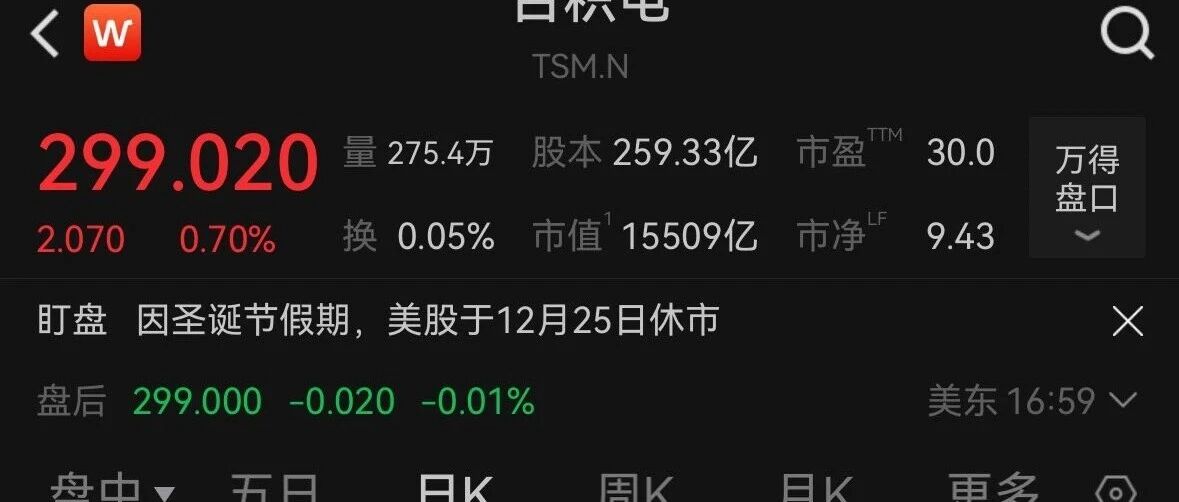
Group 1 - The core viewpoint of the article highlights the ongoing price increases in the semiconductor industry, particularly affecting power chips and BCD production [1] - Semiconductor companies, including SMIC, have notified clients of a 10% price increase for 8-inch BCD chips, indicating a broader trend of rising costs [1] - The price hikes have spread from initial increases in U.S. electricity costs to various sectors, including storage, lithium batteries, and now AI server power chips [1] Group 2 - TSMC is also expected to raise prices for its 2-3nm chips, suggesting that the trend of increasing costs is affecting multiple technology nodes [1] - The supply-demand imbalance continues to manifest across different segments of the semiconductor industry, indicating persistent market pressures [1]

东吴期货:白银价格持续走高
Qi Huo Ri Bao· 2025-12-24 02:01
Group 1 - The core driver of the recent surge in London spot silver prices, which have increased over 30% since November 24, is attributed to macro liquidity easing, supply-demand imbalances, and heightened investment demand [1][3] - The macro liquidity aspect is influenced by the Federal Reserve's three interest rate cuts this year and expectations of further cuts in 2026, leading to a decline in the 10-year U.S. Treasury yield to 4.16% and a drop in the dollar index below 100, which enhances the appeal of non-yielding assets like silver [1][3] - On the supply side, a structural shortage in the global silver market has persisted for several years, driven by rapid industrial demand from sectors like photovoltaics and AI, while mineral supply remains constrained, resulting in historically low visible inventories [1][2] Group 2 - The COMEX silver futures market is facing significant delivery pressure due to high physical delivery demands and tight available resources, with the largest silver ETF, iShares Silver Trust, increasing its holdings by 760.37 tons (4.98%) since November 21, further straining market liquidity [2] - Policy uncertainties, particularly regarding the U.S. "232 investigation" results expected on January 17, 2026, are causing market concerns over rising import costs, prompting investors to stockpile physical silver, which exacerbates the tight supply situation [2][3] - In the short term, while silver prices have incorporated a lot of optimistic expectations, the underlying support from the Fed's easing cycle, rigid growth in green energy demand, and ongoing supply-demand gaps remain intact, suggesting that silver prices are likely to stay above $60 per ounce [3]
白银价格持续走高
Qi Huo Ri Bao· 2025-12-23 23:14
Group 1 - The core driver of the recent surge in silver prices includes macro liquidity easing, intensified supply-demand conflicts, and increased investment demand [1][2][3] - The Federal Reserve's three interest rate cuts this year and expectations for further cuts in 2026 have led to a decline in the 10-year U.S. Treasury yield to 4.16%, enhancing the appeal of non-yielding assets like silver [1] - Structural supply shortages in the global silver market have persisted for several years, with industrial demand from sectors like photovoltaics and AI growing rapidly, while mineral supply remains constrained [1][2] Group 2 - As of December 18, the largest silver ETF, iShares Silver Trust (SLV), reported a holding of 16,018.29 tons, an increase of 760.37 tons or 4.98% from the low on November 21 [2] - The upcoming results of the U.S. "232 investigation" on silver, expected on January 17, 2026, have created uncertainty regarding tariff policies, prompting investors to stockpile physical silver [2][3] - The recent price increase in silver futures is attributed to a combination of macroeconomic easing, structural supply shortages, and heightened investment demand, with expectations for silver prices to remain above $60 per ounce [3]
黑色建材日报-20251223
Hua Tai Qi Huo· 2025-12-23 02:42
1. Report Industry Investment Rating - No information provided on industry investment ratings in the given content 2. Core Views of the Report - The steel market has average trading volume, and steel prices are fluctuating. Glass and soda ash markets are showing a weak and fluctuating trend, while silicon manganese and silicon iron markets have different trends with their own supply - demand characteristics [1][3] 3. Summary by Relevant Catalogs Glass and Soda Ash Market Analysis - Glass futures showed a weak and fluctuating trend yesterday, and the market transaction center of the spot market moved down. Soda ash futures also showed a weak and fluctuating trend, and downstream buyers showed strong wait - and - see sentiment [1] Supply - Demand and Logic - Glass production is oscillating at a high level, supply contraction is insufficient, rigid demand lacks improvement, and there is an expectation of further decline in rigid demand as the Spring Festival approaches. Soda ash production, although declining, is still at a relatively high level, and new production lines may increase supply. There are also challenges to the demand for heavy soda ash [1] Strategy - Glass: Weak and fluctuating; Soda ash: Weak and fluctuating; No strategies for inter - period and inter - variety trading [2] Silicon Manganese and Silicon Iron Market Analysis - Silicon manganese futures generally trended upward yesterday, and the spot market was strong with a slight price increase. Silicon iron futures had mixed long - and short - term sentiments, showing a narrow - range fluctuating trend, and the spot price was slightly adjusted upward [3] Supply - Demand and Logic - Silicon manganese enterprises are in continuous losses, with production and operating rates at relatively low levels, but the reduction in production is insufficient, leading to record - high enterprise inventories. The inventory of manganese ore at ports continues to rise, and the total inventory of manganese elements increases slightly, weakening cost support. Silicon iron production has dropped significantly this week, and enterprise inventory pressure has been relieved [3] Strategy - Silicon manganese: Fluctuating; Silicon iron: Fluctuating [4]
白银比黄金涨势更凶猛,背后逻辑是什么?
Zhong Guo Jing Ying Bao· 2025-12-22 00:06
Core Viewpoint - Silver prices have surged significantly, with the London spot silver price exceeding $66 per ounce, marking a daily increase of over 3.5% as of December 17, and a total increase of over 32% since November 24 [1][2] Group 1: Market Dynamics - The recent surge in silver prices has led to a decline in the gold-silver ratio, reaching a four-year low [2] - Key drivers for silver's stronger performance compared to gold include macro liquidity easing, intensified supply-demand imbalances, and increased investment demand [2] - The Federal Reserve's three interest rate cuts in 2023 and expectations for further cuts in 2026 have contributed to a decline in the 10-year U.S. Treasury yield to 4.16%, enhancing the appeal of non-yielding assets like silver [2] Group 2: Supply and Demand Factors - The global silver market has experienced structural shortages for several years, with industrial demand from sectors like photovoltaics and AI growing rapidly, while mineral supply remains constrained [2] - It is projected that the silver market will face a shortfall of 3,660 tons by 2025, with over 50% of demand driven by industries such as photovoltaics and electric vehicles [2] - The tight supply situation is exacerbated by the fact that 72% of mined silver is sourced from copper, lead, and zinc by-products [2] Group 3: Market Behavior and Risks - The COMEX futures market is currently facing significant physical delivery demands, leading to a "short squeeze" that amplifies price increases [3] - Analysts caution about potential short-term pullback risks due to the rapid price increase, with concerns that the market may enter an overbought territory [3] - The RSI indicator for silver is above 85, indicating severe overbought conditions, and the non-commercial net long positions in COMEX silver have reached a record high since 2020, suggesting accumulated profit-taking pressure [3]
长江有色: 宏观转好+供紧支撑 18日铝价或上涨
Xin Lang Cai Jing· 2025-12-19 07:26
长江铝价alu.ccmn.cn短评:美11月就业报告出炉后市场情绪转乐观,隔夜伦铝续涨0.82%;沪铝供需偏 稳,市场预期明年上半年供需偏紧,下方支撑较强,今现铝或上涨。 基本面看,沪铝供需偏稳,电解铝运行产能变化有限,铝水供应比例增幅不大,受发运影响供应未明显 增加,且市场预期明年上半年供需偏紧,下方支撑较强。需求端处于消费淡季,表现趋弱但下行幅度有 限,消费仍具有韧性。地产行业虽仍在探底,但逆周期增量政策调节下,其对铝需求的拖累将减弱;新 能源汽车、光伏等新动能领域增速或放缓,不过出口及电网、储能投资领域仍可期。现货市场,持货商 年末变现出货积极,流通略过剩,现货贴水扩大。部分看涨下游入场补货成亮点,但多数对后市信心不 足,接货交单需求减弱,供需缺口扩大,交投氛围一般。 综合来看,宏观情绪升温支撑铝价,供需矛盾不大,预计铝价高位震荡,今现铝或上涨。 长江有色金属网ccmn.cn 电话:0592-5668838 新浪合作大平台期货开户 安全快捷有保障 【铝期货市场】:美11月就业报告出炉后市场情绪转乐观,隔夜伦铝震荡走强,最新收盘报价2906美 元/吨,收涨23美元,涨幅0.82%,成交量16689手减少5 ...

市场情绪谨慎,钢价持续震荡
Hua Tai Qi Huo· 2025-12-19 02:18
Group 1: Investment Ratings - Glass: Oscillating weakly [2] - Soda Ash: Oscillating [2] - Ferrosilicon Manganese: Oscillating [3] - Ferrosilicon: Oscillating [3] Group 2: Core Views - The market sentiment is cautious, and steel prices continue to oscillate. The macro - atmosphere for glass and soda ash is warm, with a slight rebound. The consumption of steel products is fair, and ferroalloys have a slight rebound [1][2] Group 3: Market Analysis Glass and Soda Ash - Glass futures oscillated upward with active trading. Spot prices were generally weak, with low - price and rigid - demand purchases. This week, the total inventory of float glass was 58.558 million heavy boxes, a 0.57% week - on - week increase. Glass production is oscillating at a high level, supply contraction is insufficient, and there is still a supply - demand contradiction. Rigid demand lacks improvement and is expected to decline further with the arrival of the off - season. Attention should be paid to cold - repair situations and the impact of macro - policies on speculative demand [1] - Soda ash futures oscillated upward, supported by cost. Spot market quotes were weakly stable, with overall mixed price changes and mainly rigid - demand purchases. This week, soda ash production was 721,400 tons, a 1.9% week - on - week decrease; inventory was 1.4993 million tons, a 0.33% week - on - week increase. Soda ash production is at a relatively high level in the same period, and with the commissioning of new production lines, supply is expected to increase further. Inventory is oscillating at a high level, and considering the expected increase in the cold - repair plan of float glass, the demand for heavy soda ash faces challenges. Attention should be paid to the impact of downstream demand on soda ash prices [1] Double Silicon (Ferrosilicon Manganese and Ferrosilicon) - For ferrosilicon manganese, although it is the off - season, the consumption of building materials is still fair, and ferrosilicon manganese futures oscillated upward. The spot market of ferrosilicon manganese oscillated, with cost - side ore prices remaining firm. The price of 6517 in the northern market was 5,490 - 5,550 yuan/ton, and in the southern market was 5,600 - 5,650 yuan/ton. Currently, ferrosilicon manganese enterprises are in a continuous loss situation, with production and operating rates at relatively low levels. However, the reduction in production is insufficient, resulting in continuously new high enterprise inventories. The inventory of manganese ore at ports has slightly increased, and the total inventory of manganese elements has remained stable, providing cost support for ferrosilicon manganese. Attention should be paid to the cost support of manganese ore and production changes [2] - For ferrosilicon, ferrosilicon futures rose first and then fell. The spot market of ferrosilicon was weak. The ex - factory price of 72 - grade ferrosilicon natural lumps in the main production areas was 5,100 - 5,200 yuan/ton, and the price of 75 - grade ferrosilicon was 5,600 - 5,650 yuan/ton. This week, ferrosilicon production decreased slightly, enterprises remained in a loss situation, actively adjusted the production rhythm, demand declined marginally, and ferrosilicon enterprise inventories were at a high level. High inventories will continue to suppress ferrosilicon prices. Attention should be paid to changes in cost - side coal and electricity prices and regional policies [2]
OEXN:贵金属格局重塑
Xin Lang Cai Jing· 2025-12-18 10:18
Core Viewpoint - The precious metals market is undergoing a structural re-evaluation driven by multiple macroeconomic and industrial forces, with gold nearing historical highs and silver continuously setting records, indicating a reallocation of assets by investors in response to economic slowdown expectations, changes in liquidity environment, and long-term uncertainties [1][4]. Group 1: Performance Comparison - Silver has experienced a remarkable surge of nearly 130% since 2025, significantly outperforming gold's approximately 65% increase, reflecting a market re-pricing of silver's dual attributes, transitioning from a "high-volatility precious metal" to a more strategically significant asset class [1][4]. - The rising unemployment rate has strengthened expectations for future easing policies, highlighting the value of precious metals as a hedge, with silver's role as a risk buffer increasing in a context of marginal economic growth slowdown [1][4]. Group 2: Supply and Demand Structure - A persistent global silver supply deficit has become a long-term variable, with annual silver production remaining around 813 million ounces, while industrial demand continues to expand, particularly in sectors like renewable energy, transportation electrification, and computing infrastructure [1][4]. Group 3: Futures Market Dynamics - The silver futures trading volume is approaching that of gold, indicating a significant shift in market structure, which is viewed as a signal of structural change rather than short-term speculation [2][5]. - The demand for silver in industrial applications, such as photovoltaics, energy storage, electric vehicles, and data center construction, creates a continuous and rigid demand, enhancing price stability compared to gold, which primarily serves as a store of value [2][5]. Group 4: Liquidity and Market Environment - Ongoing interest rate cuts and asset purchase programs are improving the financial environment, with historical evidence suggesting that easing cycles tend to elevate the overall valuation of precious metals [3][6]. - The current precious metals market dynamics are not merely driven by short-term sentiment but are the result of macroeconomic policies, industrial upgrades, and market structure interactions, with the roles of silver and gold in the global asset system being redefined [3][6].
日度策略参考-20251217
Guo Mao Qi Huo· 2025-12-17 05:55
Industry Investment Ratings - There is no clear overall industry investment rating provided in the report. However, some individual commodity ratings are as follows: - Platinum: Bullish in the long - term [1] - Palladium: Bullish in the short - term; consider [long platinum, short palladium] arbitrage strategy in the medium - term [1] - Fuel oil: Bearish [1] Core Views - In the short term, the market is adjusting due to factors such as decreased risk appetite, weak economic data, and limited policy signals. But the market adjustment since mid - November has opened up space for the upward movement of stock indices next year [1]. - Asset shortage and weak economy are favorable for bond futures, but the central bank has recently warned of interest rate risks, and attention should be paid to the Bank of Japan's interest rate decision [1]. - Different commodities have different trends based on their own supply - demand fundamentals, cost factors, and macro - economic and policy environments. Summary by Categories Macro - finance - Stock indices are expected to continue a weak trend in the short term, but investors can consider gradually establishing long positions during the adjustment phase and using the discount structure of stock index futures to optimize long - term investment costs and win - rates [1]. - Bond futures are favored by asset shortage and weak economy, but short - term interest rate risks are signaled by the central bank, and the Bank of Japan's interest rate decision should be watched [1]. Metals Non - ferrous metals - Aluminum: Prices are in high - level wide - range oscillations due to limited industrial drivers and fluctuating risk appetite [1]. - Alumina: Production and inventory are both increasing, the fundamental situation is weak, some short - positions are closed in the short term with a price rebound, but the upward driving force is limited [1]. - Zinc: After the digestion of short - term macro - benefits, the fundamentals have improved, the cost center has moved up, but the price is under pressure due to news such as LME position limits, and low - long opportunities can be focused on [1]. - Nickel: The overall US non - farm data is weak, the macro - sentiment is fluctuating. Indonesian nickel ore premiums are stable in December. Global nickel inventory is high, and short - term prices may oscillate weakly. In the long - term, the primary nickel market remains in an oversupply situation [1]. - Stainless steel: The price of raw material nickel has declined, and the stainless steel futures are oscillating weakly. Short - term operations are recommended, and opportunities for selling hedging at high prices can be considered [1]. - Tin: Prices are oscillating in the short term due to the tense situation in the Congo and fluctuating macro - sentiment, but a bullish view is held in the long term, and opportunities for low - long after corrections can be focused on [1]. Precious metals - Gold: Prices are expected to oscillate in the short term but have upward potential in the long term [1]. - Silver: Prices are fluctuating sharply and are likely to have wide - range oscillations in the short term [1]. - Platinum: Prices are expected to be strong in the short term and can be bought at low prices in the long term [1]. - Palladium: May follow platinum to be strong in the short term; a [long platinum, short palladium] arbitrage strategy can be considered in the medium term [1]. New Energy - related - Industrial silicon: Northwest production is increasing while southwest production is decreasing. Polycrystalline silicon and organic silicon production schedules are decreasing in December. There is an expectation of capacity reduction in the long - term, and terminal installation is improving marginally in the fourth quarter [1]. - Polycrystalline silicon: It is the traditional peak season for new energy vehicles, energy storage demand is strong, supply - side复产 is increasing, and there is pressure at the 100,000 - yuan key point [1]. Black Metals - Rebar and hot - rolled coil: For both, the value of futures - spot positive arbitrage positions can be rolled for profit - taking. The futures - spot basis and production profit are not high, indicating that the price valuation is not high, and short - chasing is not recommended [1]. - Iron ore: Near - month contracts are restricted by production cuts, but the commodity sentiment is good, and there are upward opportunities for far - month contracts [1]. - Manganese silicon: Direct demand is weak, supply is high, inventory is accumulating, and the price is under pressure [1]. - Ferroalloy: Supply and demand provide support, the valuation is low, but short - term sentiment dominates, and the price is fluctuating strongly [1]. - Glass: Follows the general trend, with acceptable supply - demand and low valuation, and the downward space is limited, and it may be under pressure and oscillate [1]. - Soda ash: Follows glass, with acceptable supply - demand and low valuation, and may be under pressure and oscillate [1]. - Coking coal and coke: After the release of negative news, there are signs of stabilization, and attention should be paid to the spot situation this week and whether downstream enterprises will start winter storage replenishment [1]. Agricultural Products - Soybeans: The USDA report has no highlights. The short - term negative impact of imported soybean auctions on the supply side should be focused on. It is recommended to short the 05 contract due to the expected bumper harvest in global main producing areas [1]. - Cotton: There is strong expectation of a domestic bumper harvest, and the purchase price of seed cotton supports the cost of lint. The downstream opening rate is low, but the yarn mill inventory is not high, with rigid replenishment demand. The cotton market is currently in a situation of "having support but no driver", and future policies, planting area, weather, and demand in the peak season should be watched [1]. - Sugar: There is a global surplus and a significant increase in domestic new - crop supply, with a strong consensus among short - sellers. If the price continues to fall, there is strong cost support, but the short - term fundamentals lack continuous drivers, and changes in the capital side should be watched [1]. - Corn: The quantity of grain entering the port drying towers is increasing, but farmers are still reluctant to sell. The short - term expectation is weakly oscillating, and attention should be paid to the grain - selling progress and inventory changes at each link [1]. - Soybean meal: US soybean exports are weak, South American weather has no obvious driving factors for speculation, and domestic far - month crushing margins are good. The short - term expectation is oscillating, and attention should be paid to subsequent auction volumes and the domestic customs inspection and quarantine policy [1]. - Pulp: Paper pulp futures are fluctuating due to the contradiction between "weak demand" and "strong supply" expectations. It is recommended to wait and see for unilateral operations, and consider a 1 - 5 reverse spread for the monthly spread [1]. - Logs: Log futures are falling due to the decline in foreign quotes and spot prices. The 01 contract is under great pressure as the delivery month approaches and is expected to oscillate weakly [1]. Energy and Chemicals - Crude oil: OPEC+ has suspended production increases until the end of 2026, the Russia - Ukraine peace agreement is being promoted, and the US has increased a new round of sanctions against Russia [1]. - Fuel oil: Follows crude oil in the short term. The demand for "14th Five - Year Plan" construction is likely to be disproven, the supply of Ma Rui crude oil is sufficient, and the asphalt profit is high [1]. - Asphalt: The raw material cost provides strong support, the futures - spot price difference is at a low level, and the mid - stream inventory may start to accumulate [1]. - Natural rubber: The cost of butadiene has increased, supporting downstream products. The private factory's transaction price has increased, and the main factory's listed price has been raised. The operating rate of butadiene rubber is high, and there are rumors of a South Korean factory closing, boosting market sentiment [1]. - PTA: The cost of PX is high, and the PTA profit is under pressure, but integrated enterprises have an advantage in raw material self - sufficiency. The polyester load is maintained at a high level, and the PTA consumption remains high [1]. - Short - fiber: The price continues to closely follow the cost [1]. - Styrene: The cost of benzene and naphtha provides some support, but the overall production economy is negative. The spot market sentiment is warming up, and the short - term replenishment demand is reflected in the slight premium of forward prices. The total inventory remains high without significant destocking [1]. - Propylene: There is limited upside space due to weak export sentiment and insufficient domestic demand, but there is support from anti - reflux and the cost side [1]. - PP: There are fewer overhauls, the operating load is high, the supply pressure is large, downstream improvement is less than expected, and the cost is supported by high - priced propylene monomers [2]. - PE: The operating load is high, the supply pressure is large, downstream improvement is less than expected, and the cost is affected by the decline in oil prices [2]. - PVC: The market is returning to fundamentals, with more new capacity coming online, increasing supply pressure, and weakening demand [2]. - Caustic soda: The delivery of alumina in Guangxi has started, some alumina plants have postponed production, and the procurement rhythm has slowed down. There is inventory pressure in Shandong, and the price of liquid chlorine is high [2]. - LPG: Geopolitical and tariff issues are easing, the international oil and gas market is returning to a fundamentally loose situation. CP and FEI have recently rebounded. The northern hemisphere's combustion demand is gradually being released, and the domestic C3/C4 production and sales are smooth. The PG price is oscillating within a range after a correction [2]. Others - Shipping: In the container shipping market, the price increase in December did not meet expectations, and the price increase expectation during the peak season has been priced in. The supply of shipping capacity in December is relatively loose [2]. - Paper: The paper pulp futures are fluctuating due to the contradiction between "weak demand" and "strong supply" expectations. It is recommended to wait and see for unilateral operations, and consider a 1 - 5 reverse spread for the monthly spread. The log futures are expected to oscillate weakly [1].