
输入型通胀

Search documents
物价温和回升,货币降息降准
泽平宏观· 2026-03-10 04:07
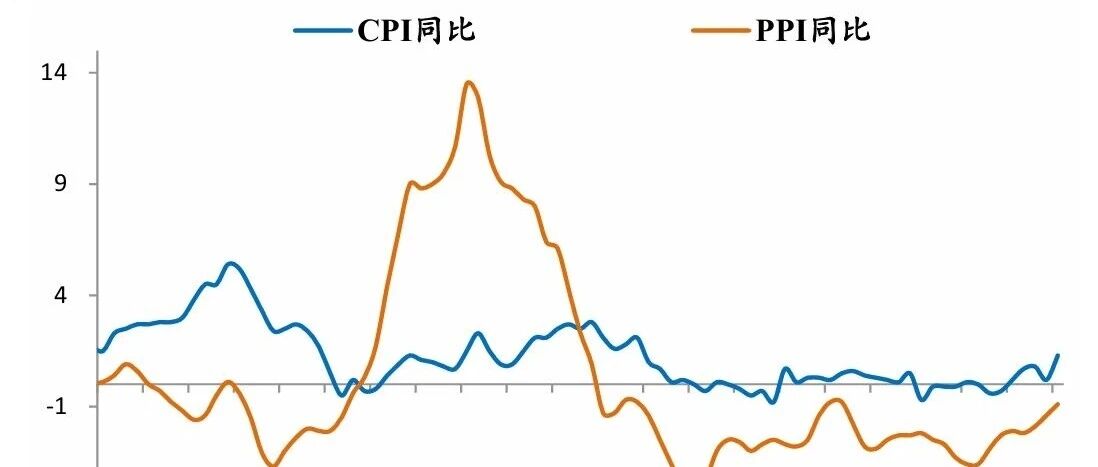
Core Viewpoint - The article discusses the moderate recovery of prices in February, driven primarily by input costs rather than demand, indicating a need for monetary policy adjustments and proactive fiscal measures [1][2]. Group 1: Price Trends - February CPI increased by 1.3% year-on-year, marking a rise of 1.1 percentage points from the previous month, reaching a three-year high [1][7]. - PPI decreased by 0.9% year-on-year, with the decline narrowing by 0.5 percentage points compared to the previous month, continuing a trend of narrowing for three consecutive months [1][22]. Group 2: Factors Influencing Prices - The increase in food prices by 1.7% year-on-year and service prices by 1.1% is attributed to the timing of the Spring Festival [2][9]. - Rising international oil prices and metal prices have intensified input cost pressures, with Brent crude oil futures averaging a 20.7% increase month-on-month [4][22]. - Despite weak overall demand, sectors related to new productive forces, such as semiconductor materials, are experiencing high demand and price increases [2][22]. Group 3: CPI and Core CPI Insights - Core CPI, excluding food and energy, rose by 1.8% year-on-year, reflecting a slight recovery in consumer demand [10][11]. - Service prices saw significant increases, with airfares and accommodation prices rising by 29.1% and 5.4% respectively [10]. Group 4: Pork Price Cycle - The pork price decline is slowing, with a year-on-year decrease of 8.6% in February, but the decline is less severe than in previous months [14][15]. - The current "pig cycle" is still in a downtrend, with production capacity adjustments beginning but not yet sufficient to drive a significant price recovery [14][16]. Group 5: PPI Improvement - PPI's decline is narrowing due to input inflation and strong demand in certain tech sectors, with a year-on-year decrease of 0.9% in February [22]. - Prices in the non-ferrous metal mining and processing sectors increased by over 20% year-on-year, reflecting rising international prices [22][23].

伊朗局势的关键推演:环球市场动态2026年3月10日
citic securities· 2026-03-10 02:59
Market Overview - Oil prices experienced extreme volatility, with WTI crude oil futures soaring to nearly $120 per barrel before plummeting to around $85 following comments from Trump about the end of military actions in Iran[4][26]. - The U.S. stock market rebounded after a significant drop, with the Dow Jones increasing by 239 points (0.5%) to close at 47,740.8, and the S&P 500 rising by 0.8%[8][9]. Asian Market Dynamics - The A-share market showed resilience, with the Shanghai Composite Index closing down 0.67% at 4,096.60 points, while the Hong Kong Hang Seng Index fell by 1.35% to 25,408.46 points[15][11]. - The Asian markets overall were under pressure, with Vietnam's index dropping 6.5% and South Korea's KOSPI down 6.0%[20][21]. Sector Performance - Energy stocks surged due to rising oil prices, with the energy sector in Hong Kong gaining 3.0%[11][16]. - The technology sector in the U.S. led the market rebound, with the information technology index rising by 1.8%[9]. Economic Implications - The ongoing conflict in Iran is expected to lead to increased input inflation, with potential short-term negative impacts on exports but long-term benefits for certain sectors[6]. - The gas industry faces narrowing margins, with domestic import costs projected to rise by 7% to 25% in 2026 due to geopolitical tensions[13]. Investment Recommendations - For the A-share market, it is advised to focus on sectors such as chemicals, non-ferrous metals, power equipment, and new energy, while increasing exposure to insurance and brokerage firms[6]. - In the U.S. market, defense and energy infrastructure stocks are expected to benefit from the current geopolitical climate[6].
2026年2月物价数据点评:输入型通胀:油金共振
GUOTAI HAITONG SECURITIES· 2026-03-10 02:55
Inflation Overview - February CPI increased by 1.3% year-on-year and 1.0% month-on-month[3] - February PPI decreased by 0.9% year-on-year but increased by 0.4% month-on-month, marking the highest month-on-month growth in nearly four years[3][11] CPI Analysis - The significant year-on-year increase in CPI is attributed to the distortion caused by the Spring Festival timing, with actual momentum remaining stable[3][11] - Core CPI's month-on-month growth is at a seasonal high of 0.7%, driven primarily by rising gold prices[16][22] PPI Insights - Input inflation is the main driver of PPI changes, with oil and gold prices contributing to a "oil-gold resonance" effect[5][24] - The mining sector saw a month-on-month increase of 5.1% in oil and gas extraction, while non-ferrous metal mining rose by 7.1%[26] Market Trends - The report highlights a divergence in industrial prices across upstream, midstream, and downstream sectors, with external demand for non-ferrous metals remaining strong[26] - The report emphasizes the need to monitor input inflation risks against the backdrop of U.S. re-inflation and geopolitical tensions[30] Risk Considerations - There is a potential risk of internal "stagflation" due to input-driven inflation[31]
中金 • 全球研究 | 中东冲突如何影响东南亚市场?
中金点睛· 2026-03-10 00:05
Group 1: Core Views - The recent tensions in the Middle East have heightened geopolitical risks, leading to increased market volatility and a shift in capital flows towards Southeast Asia, which may enhance the resilience of certain industries in the region [2][3] - The crisis is expected to bring inflationary pressures and supply chain disruptions, but it may also lead to a reconfiguration of capital, with foreign equity capital likely flowing into Southeast Asia as companies seek stable and high-growth alternative markets [2][3] Group 2: Macroeconomic Insights - Indonesia is expected to benefit from rising commodity prices, particularly in precious metals, coal, and palm oil, which may boost government revenues [3] - Malaysia is positioned as a "dark horse" due to its status as a net energy exporter and its focus on developing data centers and semiconductor industries, which could attract foreign investment [3] - Singapore may emerge as a safe haven for capital, with potential inflows from the Gulf region and a strong performance of local financial institutions and the Singapore dollar [3] - Thailand faces a mixed outlook, with rising oil prices benefiting energy stocks but potentially harming its tourism sector [3] - Vietnam's prospects are uncertain, facing input inflation pressures but also the possibility of renewed foreign direct investment due to its integration into global supply chains [3] - The Philippines may be more vulnerable due to its heavy reliance on remittances from overseas workers, particularly in the Middle East, and rising oil prices could exacerbate its trade deficit [3] Group 3: Investment Strategies - The investment landscape in Southeast Asia is showing clear differentiation, with a recommendation for investors to focus on companies with pricing power and those benefiting from rising commodity prices, while avoiding sectors heavily reliant on fuel and raw material costs [4] - Companies in the energy, commodities, and food sectors, as well as large regional conglomerates and strong financial institutions, are identified as potential safe havens [4] - Conversely, sectors such as transportation and logistics, consumer goods manufacturing, and discretionary retail are seen as facing significant risks due to rising input costs [4] Group 4: Sectoral Analysis - Energy and commodity companies in Indonesia and Malaysia are expected to perform well due to their status as net exporters, with rising prices for agricultural products, oil, and metals likely benefiting their profitability [13] - Large diversified groups and leading financial institutions are viewed as safer investments during market volatility, as they can absorb cost increases across various sectors [13] - Strong consumer brands with pricing power are likely to maintain market share despite rising costs, as they can pass on some of the inflationary pressures to consumers [13] Group 5: Risks and Challenges - The transportation and logistics sectors, particularly airlines, are highly sensitive to fuel price increases, which could compress profit margins despite potential cost pass-through mechanisms [14] - Consumer goods manufacturers, especially in food and beverage, may struggle to fully transfer rising costs to price-sensitive consumers, impacting their profitability [14] - The automotive sector may face demand pressures as rising fuel prices affect disposable income, leading to potential declines in sales [14]

高弹性品种,利差仍偏薄
HUAXI Securities· 2026-03-09 15:17
1. Report Industry Investment Rating No information regarding the industry investment rating is provided in the given content. 2. Core Views of the Report - From March 2 - 6, due to the escalation of the Middle - East geopolitical conflict, the bond market oscillated narrowly. Credit bond yields declined across the board, with medium - to long - term bonds performing better. The yields of 5 - 10 - year AA+ and AA and 5 - year AA(2) urban investment bonds dropped by 4 - 6bp, and the spreads narrowed by 2 - 4bp, while the spreads of 1 - 3 - year bonds widened passively by 1 - 3bp [1]. - Since 2026, in a volatile bond market environment, credit bonds have shown strong performance, with yields dropping significantly. High - elasticity credit varieties such as long - term general credit bonds and long - term Tier 2 and perpetual bonds have achieved good holding returns. However, the current overall credit spreads are at relatively low levels, and the spread protection space for some long - term general credit bonds is thin [2]. - If there is no incremental positive news in the bond market, long - end interest rates may enter a state where they cannot decline further, and the volatility of high - elasticity varieties such as long - term credit and long - term Tier 2 and perpetual bonds may increase. If the capital interest rate remains stable after the Two Sessions, the leverage strategy can continue to be used to increase returns, as medium - and short - term credit bonds still have a certain carry trade space [3]. 3. Summary by Directory 3.1 Urban Investment Bonds - From March 1 - 8, the net financing of urban investment bonds was positive, with district - level platforms contributing the main increment. The issuance sentiment improved, and the issuance interest rates generally declined. In the secondary market, the yields of urban investment bonds declined across the board, with medium - to long - term varieties performing better, and the spreads showed a differentiated performance [27][31]. - In terms of broker transactions, medium - and low - grade varieties performed better, and some entities had active low - valuation transactions [35]. 3.2 Industrial Bonds - Since March, the issuance and net financing of industrial bonds have increased year - on - year. The issuance sentiment has improved, and the issuance proportion of 1 - 3 - year and over - 5 - year bonds has increased, while the issuance interest rates have increased across the board. From the perspective of broker transactions, the buying sentiment has warmed up, the proportion of medium - to long - term varieties in transactions has decreased, and the proportion of high - grade transactions has rebounded [37][39]. 3.3 Bank Tier 2 and Perpetual Bonds - From March 2 - 6, there were no new issuances of bank Tier 2 and perpetual bonds. In the secondary market, the yields of bank Tier 2 and perpetual bonds generally declined slightly, with short - term varieties having a larger decline. The spreads widened passively, and bonds with a term of 2 years and above underperformed general credit bonds, while 1 - year bonds outperformed [42]. - From the perspective of broker transactions, the trading sentiment of bank Tier 2 and perpetual bonds has significantly warmed up, and the term structure of transactions has changed in different ways for different types of banks [45].
通胀持续确认,但债市或延续修复
ZHONGTAI SECURITIES· 2026-03-09 13:23
1. Report Industry Investment Rating - Not provided in the given content 2. Core View of the Report - In February, the price continued to recover. The CPI reflected the accelerated repair of endogenous momentum, especially the service sub - item after excluding the base effect. The PPI recovered under the input of raw materials and the mapping of computing power. The market is concerned about whether the bond market will trade the "inflation market", but the report maintains the view that the bond market is in the repair logic [6][7] 3. Summary According to Relevant Catalogs CPI Analysis - In February, the CPI and core CPI readings reached the highest monthly values in nearly 3 years. The CPI was 1.3% year - on - year and 1.0% month - on - month, and the core CPI was 1.8% year - on - year and 0.7% month - on - month, both the highest since February 2023 [2] - The strong rise of CPI was due to the Spring Festival month - shifting factor. Even excluding this factor, the CPI month - on - month was still 0.35 pct stronger than last year. The average month - on - month growth rate of CPI from January to February this year was 0.6%, second only to 2024 in the past 5 years and significantly higher than last year's 0.25% [2] - In terms of sub - items, from January to February, the month - on - month growth rates of service CPI and food CPI were 0.45 pct and 0.55 pct higher than last year, higher than those of non - food (+0.25 pct) and consumer goods (+0.2 pct). In February, food and tobacco, transportation and communication, and education and entertainment made large contributions to the year - on - year change of CPI, almost contributing to all the 1.1 pct change in CPI year - on - year [3] PPI Analysis - In February, the PPI continued to recover year - on - year, but the month - on - month repair speed slowed down. The PPI was - 0.9% year - on - year, with the decline narrowing by 0.5 pct compared with last month, and 0.4% month - on - month, with the growth rate the same as last month [4] - The ex - factory prices of means of production and means of subsistence continued to recover year - on - year. In February, they were - 0.7% and - 1.6% year - on - year, up 0.6 pct and 0.1 pct respectively compared with last month; the month - on - month growth rates were 0.5% and 0 respectively, with the former remaining flat and the latter down 0.1 pct compared with last month [4] - Among sub - items, the ex - factory price of the mining industry accelerated its recovery, while that of durable consumer goods slowed down. In February, the year - on - year and month - on - month growth rates of the mining industry's ex - factory price were - 5.3% and 1.2% respectively, up 2.8 pct and 2.9 pct respectively compared with last month; for durable consumer goods, they were - 1.6% and 0.3% respectively, up 0.2 pct year - on - year and flat month - on - month compared with last month, with the repair speed slowing down [4] - In terms of sub - industries, the ex - factory prices of upstream non - ferrous and energy - chemical industries with input - type characteristics and the computer, communication and electronics industries related to computing power had relatively large month - on - month increases, including non - ferrous mining, oil and gas processing, non - ferrous smelting and rolling, chemical product manufacturing, and chemical fiber manufacturing [4] Market Expectation and Current Situation - The market - expected inflation path included the mapping of "anti - involution" in the new energy industry chain, the turnaround of the real estate chain driving the black industry chain, and the non - ferrous market driven by the prosperity of the technology industry. However, recently, the input - type inflation narrative of "war + oil and gas" has taken the lead [7] - Such input - type inflation has been experienced in 2021 and 2022, which brought contraction risks to the downstream. Looking back, it had little impact on the bond market trend for the whole year. The report maintains the view that the bond market is in the repair logic [7]
瑞达期货国债期货日报-20260309
Rui Da Qi Huo· 2026-03-09 09:05
涨1.3%,扣除食品和能源价格的核心CPI同比上涨1.8%。受国际大宗商品价格上行,国内部分 行业需求快速增长、宏观政策持续显效等因素影响,全国PPI环比上涨0.4%,同比下降0.9%, 降幅连续收窄。 国债期货日报 2026/3/9 | 项目类别 | 数据指标 | 最新 | 环比 项目 | 最新 | 环比 | | --- | --- | --- | --- | --- | --- | | 期货盘面 | T主力收盘价 | 108.315 | -0.21% T主力成交量 | 122889 | 64877↑ | | | TF主力收盘价 | 105.980 | -0.14% TF主力成交量 | 80258 | 28721↑ | | | TS主力收盘价 | 102.460 | -0.04% TS主力成交量 | 39934 | 10815↑ | | | TL主力收盘价 | 111.520 | -1.11% TL主力成交量 | 148019 | 78211↑ | | 期货价差 | TL2606-2603价差 | 0.12 | -0.24↓ T06-TL06价差 | -3.21 | 1.04↑ | | | T2606-26 ...

银行投资观察20260308:风偏逐渐企稳,输入型通胀对长期利率影响加大
GF SECURITIES· 2026-03-08 14:28
Core Insights - The report indicates that the banking sector is showing signs of stabilization in risk appetite, with increasing input inflation impacting long-term interest rates [4][15] - The A-share banking sector has rebounded, outperforming H-shares, which have lagged behind [13][37] Section Summaries 1. Current Observation - During the observation period from March 2 to March 6, 2026, the banking sector (CITIC first-level industry) rose by 1.6%, ranking 6th among all industries and outperforming the Wind All A index, which fell by 2.3% [13] - The performance of state-owned banks, joint-stock banks, city commercial banks, and rural commercial banks varied, with changes of 3.30%, 0.98%, 1.17%, and 0.49% respectively [13] - H-shares of banks fell by 4.4%, underperforming the Hang Seng Composite Index, which dropped by 3.8% [13] 2. Investment Recommendations - The report emphasizes the importance of monitoring inflation recovery and its effects on long-term interest rates in the second quarter of 2026 [15] - It suggests that if inflation accelerates, the valuation of high-dividend and debt-like assets may be pressured, necessitating a downward adjustment of target returns for the banking sector [15] - Key recommended stocks include Ningbo Bank, China Merchants Bank, Qingdao Bank, and large state-owned banks [15] 3. Sector Performance - The banking sector's average price of convertible bonds increased by 0.11%, outperforming the China Securities Convertible Bond Index by 2.18 percentage points [14] - The report notes that the net profit growth rate and revenue growth rate expectations for A-share banks in 2025 have slightly decreased by 0.14 percentage points and 0.06 percentage points respectively compared to the previous period [14] 4. Individual Stock Performance - Among A-share banks, Chongqing Bank saw the highest increase at 12.46%, while Changsha Bank experienced the largest decline at 2.35% [13] - In H-shares, Chongqing Bank and Chongqing Rural Commercial Bank led the gains, while Zhengzhou Bank and Bank of China faced significant declines [13] 5. Valuation and Financial Analysis - As of March 6, 2026, the banking sector's latest price-to-earnings (P/E) ratio is 6.7x, and the price-to-book (P/B) ratio is 0.66x, indicating that valuations are at historical average levels [37] - The report highlights that the relative P/E and P/B ratios of the banking sector compared to the Wind All A index are 0.16 and 0.23 respectively, also aligning with historical averages [37]



海外“滞涨”预期下,国内债市怎么走
GUOTAI HAITONG SECURITIES· 2026-03-08 12:18
Group 1 - The report indicates that the recent geopolitical conflicts have led to significant volatility in overseas markets, particularly in commodities and equities, with a shift towards "stagflation" expectations [6][7][12] - The impact of overseas stagflation on the domestic bond market is viewed as neutral to positive, suggesting that it may stabilize the bond market rather than create negative pressure [14][20] - The report emphasizes that the transmission paths of overseas asset price increases to the domestic bond market are primarily through stock-bond sentiment and inflation inputs, with the former likely providing more support to the bond market [14][16][22] Group 2 - The bond market has shown resilience despite external pressures, with the long-end and ultra-long-end bond pricing benefiting from risk-averse sentiment [22][24] - The report notes that the recent increase in PPI may not significantly impact the bond market, as the transmission of cost increases from upstream to downstream is often limited [16][20] - The report highlights that the domestic policy response to stagflation expectations may include monetary easing measures, which could further support the bond market [21][23] Group 3 - The weekly review of the bond market indicates a mixed performance in interest rates, with some rates declining while others increased, reflecting the ongoing volatility influenced by geopolitical events and policy expectations [24][29] - The report details that the yield spreads for government bonds have widened, indicating a shift in market dynamics, while credit spreads have generally narrowed [35][37] - The analysis of asset relative value shows that the yield differentials for various bond types have exhibited divergence, with some categories experiencing tightening while others have expanded [35][37]
输入通胀有谜团,债市演绎斗兽棋
ZHONGTAI SECURITIES· 2026-03-08 12:10
1. Report Industry Investment Rating - The industry rating is "Overweight", expecting a gain of over 10% relative to the benchmark index in the next 6 - 12 months [28] 2. Core Viewpoints - The bond market has seen a recovery this year, but the ongoing Middle - East situation has shifted asset pricing from "pulse - style" risk - aversion to inflation concerns. "Input - type" or "supply - side" inflation doesn't necessarily lead to bond market adjustments, and inflation usually isn't the core contradiction in the bond market. The report maintains the judgment that the 10 - year bond will repair to 1.75% and the 30 - year bond to 2.15%, and the 30 - year bond may present more opportunities due to its chip structure [4][8][26] 3. Summary by Relevant Catalogs 3.1 War and PPI Inflation - Since the beginning of the year, the bond market has had a recovery, but the Middle - East situation has changed asset pricing. As of March 6, the Nanhua Commodity Index rose 14.1%, with precious metals, industrial products, and agricultural products up 22.6%, 12.8%, and 3.9% respectively. The PPI inflation in March may accelerate further, with the average of the Nanhua Industrial Products Index in March up 6.7% from February, higher than the 4.4% increase in January. The inflation in January was driven by technology optimism and strategic premiums in metals, while the inflation in March is due to the US - Iran war, with oil prices soaring and affecting downstream products [8][9] 3.2 Impact of Inflation on the Bond Market - The current commodity price rebound is an "input - type inflation" risk caused by geopolitical events and energy prices. Inflation affects interest rates through two mechanisms: influencing central bank monetary policy and affecting inflation expectations or risk preferences. Looking at historical data from three similar post - 2020 periods, central bank monetary policy remained stable, and there was no consistent conclusion on market interest rates. "Input - type" or "supply - side" inflation doesn't necessarily lead to bond market adjustments and usually isn't the core contradiction in the bond market [14][21] 3.3 Micro - behavior and Strategy of the Bond Market - In the first week of March, the borrowing of Special 6 reached 10 billion, and the bond market showed a multi - empty game. After the holiday, 25 Special 6 first covered short positions and then increased short positions, with the borrowing concentration rising to a record high of 41.7%. Some short - sellers forced funds to stop losses, but the current fund holding duration is about 2.4 years, and there has been little addition of duration. The bond market has decoupled from high - volatility assets and has become a low - volatility allocation asset. The report maintains the repair targets of 1.75% for the 10 - year bond and 2.15% for the 30 - year bond, and the 30 - year bond may have more opportunities [23][25][26]