产能过剩

Search documents
大摩闭门会-供给侧改革反内卷,是新瓶装旧酒吗?- 纪要
2025-07-15 01:58
Summary of Key Points from Conference Call Industry and Company Involved - The conference call primarily discusses the **Chinese economy** and the **supply-side reform** initiatives, particularly focusing on the **steel**, **cement**, and **photovoltaic glass** industries. Core Insights and Arguments 1. **Impact of Tariffs on U.S. Economy**: Despite the U.S. imposing tariffs on multiple countries, the market's reaction has been muted. However, the long-term effects on U.S. corporate profits and inflation are expected to be significant post-Q3 2023, necessitating vigilance from companies regarding potential risks [1][3][21]. 2. **Differences in Supply-Side Reform 2.0**: The current supply-side reform differs from the 2015-2018 reforms in its broader scope, complexity due to international factors, and emphasis on institutional adjustments for long-term stability [1][4][5][17]. 3. **Economic Performance in H1 2025**: China's economy showed resilience with a GDP growth exceeding 5%, driven by export activities and policy support. However, challenges are anticipated in H2 2025 due to supply-demand imbalances and deepening deflation [1][8][9]. 4. **Sector-Specific Production Cuts**: The steel industry plans to cut production by approximately 30 million tons, while the cement industry has a reduction plan set to begin in November 2024. The coal industry is unlikely to be involved in this round of reforms due to electricity safety concerns [1][10][11][12]. 5. **Challenges in the Photovoltaic Industry**: The photovoltaic glass sector is currently facing losses, with leading companies beginning to reduce production. The industry struggles with low concentration and weak demand, making comprehensive supply-side reform a lengthy process [1][13][30][31]. 6. **External Demand Pressures**: China faces external demand pressures from high tariffs, potential declines in exports to the U.S., and a global trade cycle downturn, which could impact economic growth and inflation [1][18][19]. 7. **Stock Market Outlook**: The Chinese stock market has entered a volatile phase since June, with recommendations to focus on A-shares while maintaining caution towards Hong Kong stocks. The long-term impact of supply-side reforms is expected to be positive for the overall stock market [2][20][25][27][28]. 8. **Future Economic Predictions**: The macroeconomic outlook for 2025 and 2026 suggests a potential deflationary environment, but successful supply-side reforms could lead to upward risks in economic growth [1][29]. Other Important but Possibly Overlooked Content 1. **Institutional Adjustments Needed**: The current reform emphasizes the need for institutional changes, including local government fiscal systems and social security frameworks, to achieve sustainable development [1][5][36]. 2. **Market Reaction to Policy Changes**: The market's response to new tariff policies has been characterized by investor fatigue, indicating a desire for clarity and stability in trade relations [1][22]. 3. **Long-Term Investment Strategies**: The call suggests a cautious approach to investments in the short term, with a focus on individual A-share opportunities, while the overall market is expected to improve in terms of investment returns over the next 6 to 12 months [1][24][28].
天际股份: 2025年半年度业绩预告
Zheng Quan Zhi Xing· 2025-07-14 16:10
Summary of Key Points Core Viewpoint - The company, Tianji New Energy Technology Co., Ltd., is forecasting a significant loss for the current reporting period, although it shows an improvement compared to the previous year [1]. Financial Performance - The company expects a net loss attributable to shareholders in the range of 50 million to 65 million yuan, compared to a loss of 127.72 million yuan in the same period last year [1]. - The net loss after deducting non-recurring gains and losses is also projected to be between 50 million and 65 million yuan, compared to a loss of 128.28 million yuan in the previous year [1]. - Basic earnings per share are expected to be a loss of 0.10 to 0.13 yuan, improving from a loss of 0.25 yuan per share in the same period last year [1]. Performance Review and Causes - The primary reason for the loss is attributed to the oversupply in the lithium hexafluorophosphate market, leading to low sales prices that do not cover costs [1]. - The company's other two main business segments, including phosphate chemical products from its subsidiary Xinte Chemical, showed slight profitability, while the small home appliance segment remained stable [1]. - The company has made significant progress in reducing costs and controlling expenses in its lithium hexafluorophosphate business, contributing to a substantial reduction in losses compared to the previous year [1].

天洋新材: 2025年半年度业绩预亏公告
Zheng Quan Zhi Xing· 2025-07-14 09:20
Group 1 - The company, Tianyang New Materials, is forecasting a net profit of -11.5 million yuan, which represents a decrease of 3.58 million to 7.08 million yuan compared to the same period last year, indicating a year-on-year decrease of approximately 81% to 160% [1][2] - The expected profit for the current period is projected to be between -6.45 million and -9.95 million yuan, which is an increase of 1.15 million to 4.65 million yuan compared to the same period last year, reflecting a year-on-year increase of approximately 10% to 42% [1][2] - The company's previous year's total profit was 5.5029 million yuan, with a net profit attributable to the parent company of -4.4166 million yuan and a net profit after deducting non-recurring gains and losses of -11.095 million yuan [1][2] Group 2 - The main reason for the expected loss is the significant decline in revenue from the photovoltaic encapsulation adhesive film, which decreased by approximately 55% due to overall industry overcapacity and ongoing price competition, leading to a negative gross profit situation [2] - The comparison to the previous year's figures is affected by a relatively small base, which contributes to the large percentage changes in the current profit forecast [2]

天风证券:石化行业面临产能过剩压力 “十五五”需推动减量置换与审批收紧
智通财经网· 2025-07-14 03:40
Group 1 - The petrochemical industry in China is facing structural overcapacity challenges due to peak demand and declining refined oil needs, leading to excess refining capacity and overproduction of chemicals like ethylene and aromatics [1] - The average profit percentile for major chemical products in the first half of 2025 is expected to be below 50%, with PDH profits dropping to a historical low of 0% [1] - The industry needs to eliminate outdated capacity and tighten new project approvals to achieve high-quality transformation [1] Group 2 - The refining sector is experiencing peak demand and decline in refined oil, necessitating a net elimination of capacity during the 14th Five-Year Plan, rather than just controlling new capacity [2] - The ethylene sector is facing overcapacity due to new oil conversion capacities and requires control over new capacity and project approvals, as well as the elimination of small projects that do not meet energy and carbon standards [2] - Unlike coal, which may not have absolute overcapacity but requires control over operating rates, the petrochemical sector is experiencing overcapacity that necessitates capacity reduction and new project approval controls [2]

供给侧改革会卷土重来吗?
Hu Xiu· 2025-07-14 02:41
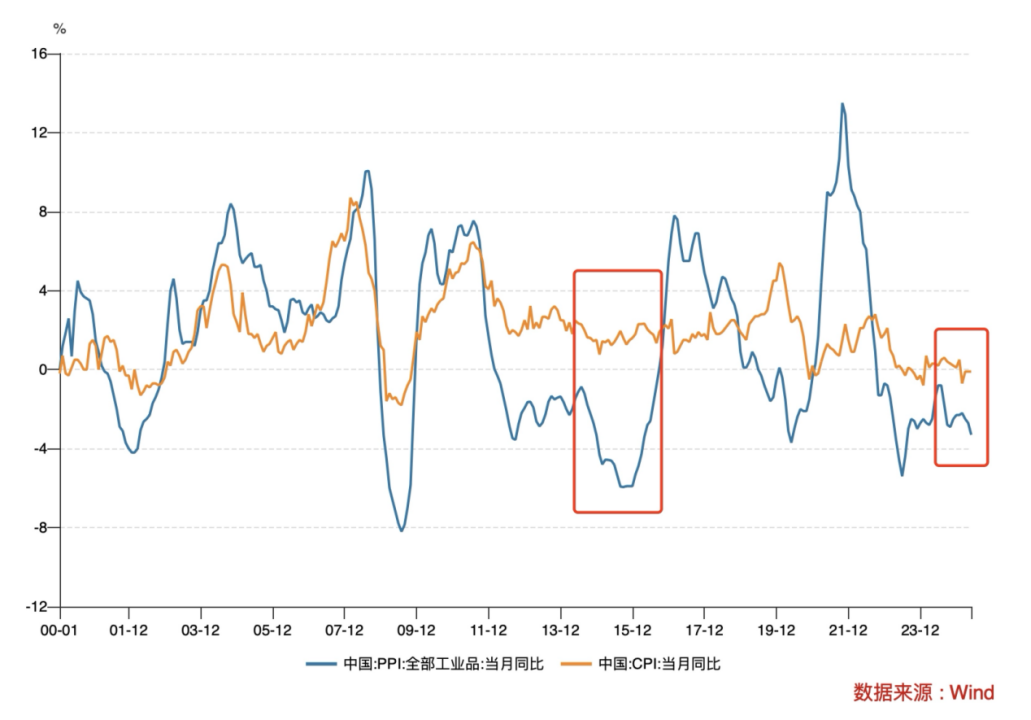
Group 1 - The current economic situation is more complex than a decade ago, with issues extending from production to consumption, affecting PPI and CPI [3][5][6] - The decline in consumer confidence is linked to deteriorating asset-liability balances due to real estate downturns and corporate profit declines, leading to increased unemployment and suppressed consumption [5][11][12] - The need for reform is recognized, but a straightforward approach to reduce production capacity may not be feasible due to the current macroeconomic conditions [10][11][60] Group 2 - The shift in economic structure has led to a decrease in the demand for labor, with the service sector's share of GDP increasing significantly over the past nine years [12][14] - Demand-side reforms are considered more effective than supply-side reforms, as increasing demand is seen as a better solution than merely cutting production [15][39] - The current economic model shows a structural imbalance between consumption and investment, with a significant portion of economic benefits not reaching the average consumer [37][38] Group 3 - Stimulating consumer confidence is crucial, as current policies like subsidies may only provide temporary relief without addressing underlying issues [41][43] - The distribution of wealth and consumer spending power is highlighted as a key factor in improving consumption levels, with a focus on creating a more balanced distribution mechanism [43][49] - The stock market's potential to improve consumer sentiment is noted, as an increase in stock market participation could enhance the perception of economic stability [64][65]

反内卷:石化抓手或在控产能
Tianfeng Securities· 2025-07-14 02:15
Investment Rating - Industry Rating: Outperform the market (maintained rating) [3] Core Viewpoints - The petrochemical industry is facing a significant challenge due to the peak and decline in demand for refined oil products, necessitating a net elimination of capacity during the "15th Five-Year Plan" period, rather than merely controlling new capacity [2][21] - The ethylene sector is experiencing overcapacity due to a large influx of new oil conversion capacity, which requires controlling new capacity and tightening project approvals during the "15th Five-Year Plan" [2][21] - The average profit margins for major chemical products in the first half of 2025 are expected to be below 50% historical percentiles, indicating a challenging profitability environment [12][15] Summary by Sections 1. Review of 2015 Petrochemical Supply-Side Reform Policies - The State Council issued guidelines to strictly control new capacity in basic chemical products and to manage the construction of new refining and ethylene projects [9] 2. Achievements of Petrochemical Supply-Side Reform - China's refining capacity has grown moderately, with no significant oversupply until 2024, but a peak in refined oil demand is anticipated [10] 3. The Environment Facing the Petrochemical Industry in 2025 - Significant increases in production capacity for major petrochemical products have been observed, with ethylene self-sufficiency rising from 57% in 2020 to 76% in 2024 [15] 4. Possible Measures for "Anti-Internal Competition" - The petrochemical industry must focus on leading sectors such as refining and ethylene capacity, with a need for capacity elimination and project approval control [21]
早盘直击 | 今日行情关注
申万宏源证券上海北京西路营业部· 2025-07-14 01:53
从市场运行节奏看,沪指突破去年四季度密集成交区,重心继续上移。沪指突破五、六月份来回震 荡的小箱体后连续上行,已经越过了去年四季度的密集成交区,重心再次上移。目前上方的主要技术压 力位在去年十月初的高点,这个位置也是周线大箱体的顶部位置。 风险提示:国际地缘、贸易冲突超出预期;全球金融市场风险暴露;国内上市公司业绩增速回落超 预期;全球经济衰退超预期。 首先,宏观预期有所改善,A 股市场连续上涨。近期国际局势有所好转,外部环境开始边际改善。 全球贸易摩擦逐步缓和,美国的部分压制手段有所收敛。国内方面,"反内卷"工作持续推进,产能过剩 预期将有所缓解,这对提升盈利预期有正面作用。此外,稳定币的发展对金融板块形成一定利好,推动 相关板块持续活跃,帮助指数冲破重要技术压力。上周,两市连续反弹,日均成交增加。沪指上周延续 了向上反弹的趋势,周三盘中创出去年 11 月以来的高点,周四周五继续向上推进。深圳成指上周同步 反弹,创出阶段高点。量能方面,上周两市日均量能超过 15000 亿,较上周出现回升。上周市场热点主 要集中在钢铁、房地产和券商等行业。投资风格方面,中小盘和科技风格涨幅更大。 ...

“双焦”供需偏弱形势未变 对煤价仍有拖累
Zhong Guo Chan Ye Jing Ji Xin Xi Wang· 2025-07-14 01:12
Group 1 - The overall trend of "double coke" futures prices continued to decline since October last year, with a rebound observed in June 2025 [1] - The coking coal market faced supply pressure leading to a continuous drop in prices, while coke prices followed suit due to cost collapse [1][2] - In the first quarter, domestic coal production was high, but a seasonal decline occurred during the Spring Festival, followed by a rapid recovery in production [1][2] Group 2 - The second quarter saw an oversupply of coke capacity and weak bargaining power, leading to continuous price reductions [2] - International trade tensions exacerbated market pessimism, further driving down commodity prices [2] - By the latter half of the second quarter, environmental policies and safety production measures led to production cuts in some regions, which, combined with low coal prices, improved market sentiment and prices began to rebound [2] Group 3 - In the first five months of the year, domestic coking coal production maintained a rapid growth rate, with a cumulative production increase of approximately 9.72 million tons, a 4.5% year-on-year rise [2][3] - Despite production cuts in May and June, the overall situation of oversupply and loose supply in the coal industry remained unchanged [3] - The majority of coal mines are still profitable, which is a key reason for their reluctance to cut production [3] Group 4 - The current coal industry policy focuses on stable production and supply to ensure energy security, with plans to implement a coal capacity reserve system by 2025 [3][4] - The approach to managing excess capacity has shifted from aggressive elimination to a more regulated exit of outdated capacity [4] Group 5 - Coking coal imports have decreased, alleviating supply pressure, with May imports down 17% month-on-month and 23% year-on-year [5][6] - The decline in Mongolian coal imports is attributed to the overall drop in domestic coal prices, reducing the cost-effectiveness of imported coal [6] Group 6 - Coking coal prices are at relatively low levels, with recent inventory levels at coking plants increasing slightly due to accelerated procurement [7] - Although there is a short-term inventory reduction, overall inventory levels remain high compared to previous years [7] - The production cuts driven by environmental and safety factors are not expected to be sustainable, and coal production is likely to remain high [7]
多晶硅、工业硅涨价解读
2025-07-14 00:36
Summary of Conference Call Records Industry Overview - The records primarily discuss the polysilicon and industrial silicon markets, focusing on price fluctuations, supply-demand dynamics, and macroeconomic policies affecting these industries [1][5][24]. Key Points and Arguments Polysilicon Market Dynamics - In the first half of 2024, polysilicon prices fluctuated significantly due to production cuts by industry leaders and inventory sales, dropping from 9,500 CNY/ton to 7,000 CNY/ton, then recovering by 1,000 CNY due to further production cuts [1]. - The cash cost of polysilicon initially was around 36,000 CNY, with recent price fluctuations causing it to rise to over 45,000 CNY, while transaction volumes remained low [6][7]. - The current inventory of polysilicon is approximately 400,000 tons, equivalent to four months of industry consumption, with a monthly production close to 100,000 tons [9]. Industrial Silicon Market Trends - In the first quarter of 2025, industrial silicon prices initially hovered around 10,000 CNY/ton but fell to about 7,000 CNY due to expectations of abundant water supply and insufficient polysilicon production [2]. - The total inventory of industrial silicon, including hidden stocks, reached over 1.5 million tons, sufficient for more than five months of consumption [9]. Supply and Demand Imbalance - The polysilicon market is currently oversupplied, with total production capacity at 3.65 million tons and monthly production around 100,000 tons, while total demand is only 120,000 to 130,000 tons [3][16]. - The industry is experiencing a significant inventory buildup, particularly in July and August, where production is expected to increase to 110,000 tons per month [16]. Macroeconomic Policies - Current macroeconomic policies aim to stabilize the market by preventing sales below production costs and promoting healthy industry development through joint pricing and acquisition of outdated capacities [5][24]. - The policies are designed to enhance overall competitiveness and ensure that product prices do not fall below costs, as discussed in various industry meetings [5]. Cost and Pricing Variations - There are significant differences in cash costs among polysilicon producers, affecting the overall market cost structure. For instance, the reduction efficiency of different production methods can lead to cost differences of 4,000 to 5,000 CNY per ton [20]. - The production cost for large furnace industrial silicon has decreased due to improvements in labor, waste heat power generation, and efficiency, impacting smaller furnace operations negatively [19]. Future Outlook - The market sentiment remains cautious, with expectations of price adjustments needed for downstream acceptance of higher polysilicon prices. The downstream industry is currently reluctant to accept prices above 40,000 CNY [17][24]. - The potential for production cuts exists, but the feasibility is challenged by varying production costs among companies, making unified agreements difficult [29][23]. Technological Developments - Advances in battery technologies, such as perovskite and n-type batteries, are influencing polysilicon demand, with n-type batteries requiring slightly less polysilicon compared to p-type [18]. Additional Important Insights - The acceptance of standard delivery products in the downstream market is low due to quality concerns and cost implications, leading to a preference for mixed package materials [8]. - The overall market is characterized by a significant amount of hidden inventory and a cautious approach to purchasing, with many companies prioritizing inventory reduction over new purchases [26][27]. This summary encapsulates the critical insights from the conference call records, highlighting the current state and future outlook of the polysilicon and industrial silicon markets.
聚焦“产能利用率”提升:车企加码基地改造升级 业内呼吁优化产业布局
Mei Ri Jing Ji Xin Wen· 2025-07-13 14:24
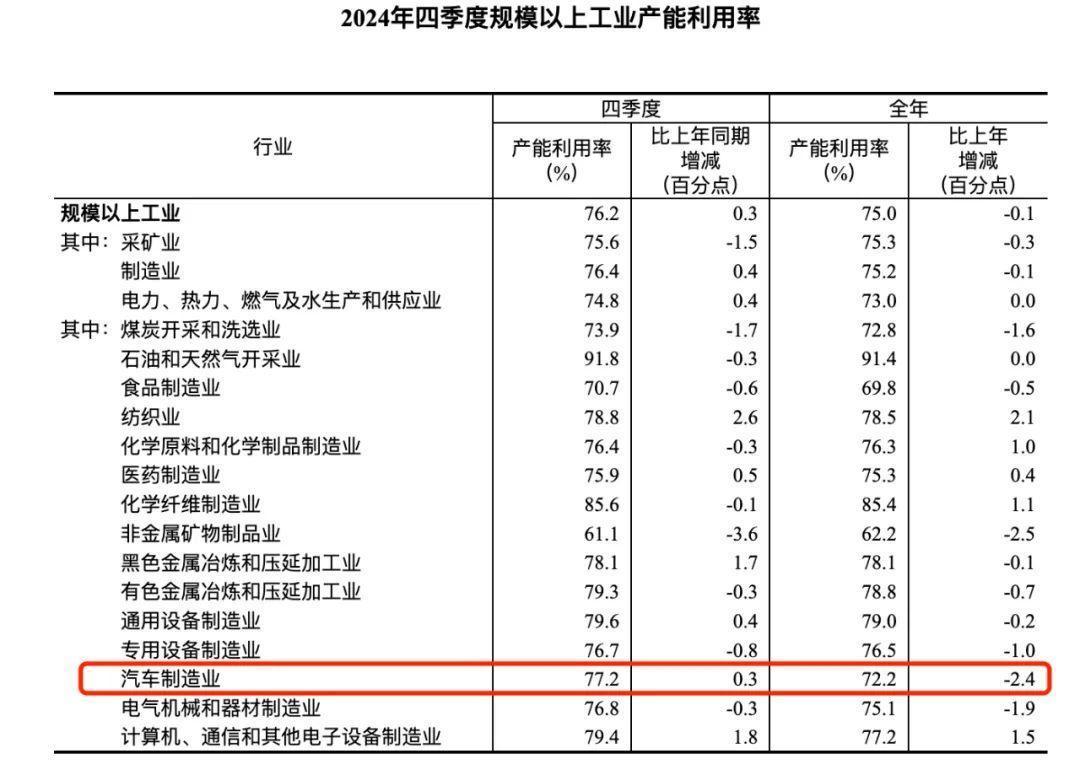
Group 1 - The automotive industry is facing a significant issue of overcapacity, with a need to redefine and optimize production capacity and resource allocation [1][4] - In 2024, the automotive manufacturing capacity utilization rate is projected to be 72.2%, a decrease of 2.4 percentage points from the previous year, and lower than the overall industrial utilization rate of 75.0% [1][3] - The peak capacity utilization rate for the automotive manufacturing sector was 82.2% in 2017, indicating a downward trend in recent years [1] Group 2 - The global automotive capacity utilization rate is expected to drop to 65% by 2028, with a potential decline to 60% due to weak demand [5] - Some companies are adapting to the challenges by upgrading and transforming their production bases, such as SAIC Volkswagen, which is integrating resources and planning for future electric vehicle production [6] - Honda has announced the closure of two production lines in China to facilitate its transition to electric vehicles, while other companies like Lantu Automotive are also modernizing existing facilities instead of building new ones [7] Group 3 - The automotive industry is focusing on enhancing quality management and optimizing production layouts, with many companies integrating resources to improve production efficiency in preparation for industry transformation [8]