经济增长

Search documents
中国银河证券:四季度货币宽松或超预期
Di Yi Cai Jing· 2025-10-17 00:08
Core Viewpoint - The report from China Galaxy Securities indicates that monetary easing in the fourth quarter may exceed expectations due to signs of economic weakening in the third quarter and the onset of a new policy waiting period [1] Group 1: Economic Indicators - There are signs of weakening in the third quarter economic data, leading to a lack of consensus on interest rate cuts for the fourth quarter [1] - The challenges of low price levels and high real interest rates necessitate a potential reduction in rates [1] Group 2: Policy Measures - The government is expected to implement coordinated fiscal policies, with 500 billion yuan in policy financial tools accelerating deployment and around 1 trillion yuan in debt-related tools potentially being introduced in the fourth quarter [1] - The primary goals of monetary policy in the fourth quarter will focus on economic growth and full employment, suggesting that monetary easing may be more aggressive than anticipated [1] Group 3: Central Bank Actions - The central bank is likely to adopt a proactive approach to monetary easing, potentially implementing a 10-20 basis point interest rate cut to guide the Loan Prime Rate (LPR) downward, which would further reduce loan and deposit rates [1] - There is also a possibility of restarting government bond transactions as part of the monetary policy strategy [1]

国际货币基金组织预测2025年拉美国家实现温和增长
Shang Wu Bu Wang Zhan· 2025-10-16 15:54
Core Insights - The International Monetary Fund (IMF) projects moderate growth for Latin America in 2025, estimating a growth rate of 2.4% for that year and 2.3% for 2026, which shows slight improvement compared to July's report but still falls short of pre-pandemic momentum [1] Economic Environment - Emerging economies are facing increasing global environmental challenges, impacting economic vitality in Latin America [1] - External conditions are becoming more challenging, with higher tariffs imposed by the U.S. limiting external demand and significantly affecting several large export-oriented economies [1] Trade and Investment - Uncertainty regarding trade relations is affecting private investment, as trade policy uncertainty is suppressing corporate investment willingness [1] - The IMF calls for a pragmatic, adaptable, and cooperative multilateral system to address risks and challenges, emphasizing the need for clear and transparent trade rules to improve growth prospects [1]
英国经济靠制造业“单引擎”飞行 8月勉强实现增长
智通财经网· 2025-10-16 07:59
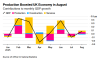
Economic Growth - The UK economy experienced a slight recovery in August, with GDP increasing by 0.1% after a 0.1% decline in July, aligning with economists' median expectations [1][3] - Manufacturing output rose by 0.7%, exceeding expectations, while the services sector remained stagnant for two consecutive months [1][3] Sector Performance - In the three months leading up to August, the UK GDP grew by 0.3%, indicating potential growth for the third quarter [3] - The manufacturing sector saw growth in 8 out of 13 sub-sectors, with the pharmaceutical manufacturing sector contributing the most at a growth rate of 3% [6] - Despite an increase in retail sales, the services sector failed to expand, with declines noted in wholesale, entertainment, and transportation sectors [6] Trade Dynamics - In August, UK goods imports remained flat, while exports decreased, with a notable decline of approximately £700 million in exports to the United States [7]

【环球财经】今年前九个月吉尔吉斯斯坦经济同比增长10%
Xin Hua Cai Jing· 2025-10-16 06:20
Economic Overview - The GDP of Kyrgyzstan for the first nine months of the year is estimated at 1.2405 trillion som (approximately 14.2 billion USD), reflecting a year-on-year growth of 10% [1] - The service sector accounts for 50% of the economy, while the goods production sector represents 34.7%, and product taxes contribute 15.3% [1] Sector Performance - Industrial production increased by 10.2% year-on-year [1] - The construction sector experienced significant growth of 29.6% [1] - Wholesale and retail trade grew by 10.9% [1] - Agriculture, forestry, and fishing saw a modest increase of 0.9% [1] - The hotel and restaurant services sector grew by 19.2% [1] - Communication services expanded by 7.2% [1] - Freight volume increased by 10.6% [1] Trade Dynamics - The foreign trade volume of Kyrgyzstan for January to August was 9.8481 billion USD, showing a year-on-year decline of 9.1% [1] - The decrease in trade is attributed to a 23.7% drop in exports and a 5.2% reduction in imports [1] - In the trade structure, exports account for 17.6% while imports make up 82.4% [1]
首席点评:经济从“韧”到“进”的可期之路
Shen Yin Wan Guo Qi Huo· 2025-10-16 02:53
Group 1: Report Summary - The report is dated October 16, 2025, and is from Shenyin Wanguo Futures Research Institute [1] - It analyzes economic data, including CPI, PPI, and financial statistics, and provides comments on key commodities and market trends [1][6][7] Group 2: Economic Data - In September 2025, CPI环比 rose 0.1% and同比 fell 0.3%, while core CPI同比 rose 1.0% with the increase expanding for the 5th consecutive month; PPI环比 remained flat and同比 fell 2.3% with the decline narrowing by 0.6 percentage points [1][6] - In the first three quarters of 2025, the cumulative increase in social financing scale reached 30.09 trillion yuan, 4.42 trillion yuan more than the same period last year; RMB loans increased by 14.75 trillion yuan, and RMB deposits increased by 22.71 trillion yuan [1][7] - At the end of September, the year - on - year growth rate of social financing stock was 8.7%, 0.7 percentage points higher than the same period last year; M2同比 grew 8.4%, 1.5 percentage points higher than the same period last year [7] Group 3: Key Commodities Precious Metals - Gold continued to strengthen, with the international gold price reaching $4200 per ounce. Factors such as the Fed's possible pause in balance - sheet reduction, trade war concerns, and central bank gold - buying supported the rise, but there may be adjustments due to accumulated profit positions [2][19] Copper - Copper prices closed lower at night. The supply of concentrates remained tight, but smelting output continued to grow. An Indonesian mine accident may lead to a supply - demand gap and support copper prices in the long term [2][20] Crude Oil - SC crude oil fell 0.7% at night. A cease - fire agreement in Gaza was signed, and OPEC expected an increase in global oil demand, but short - term prices showed a downward trend [3][13] Group 4: Market Outlook Financial - Stock indices are likely to maintain a bullish trend, with a possible shift in market style towards value in the fourth quarter. Domestic liquidity is expected to remain loose, and external funds may flow in [10][11] - Treasury bonds may be slightly bearish in the short term, but the domestic central bank may implement more relaxed monetary policies, providing support for bond prices [12] Energy and Chemicals - Crude oil prices may break down in the short term [13] - Methanol is expected to be bullish in the short term, with increased开工 load and rising inventory [14] - Rubber is expected to fluctuate in the short term, with supply pressure likely to increase and demand support being limited [15][16] - Polyolefin prices are expected to follow cost fluctuations, with a possible slowdown in the decline after continuous drops [17] - Glass and soda ash markets are cautious, with expectations of potential supply changes in the glass industry but ongoing inventory digestion [18] Metals - Precious metals may face adjustments after a rapid rise [19] - Copper prices may be supported in the long term by supply - demand changes [20] - Zinc prices may be weaker in the domestic market compared to overseas, and they tend to follow copper prices [22] - Carbonate lithium is in a destocking state, and prices are supported, with limited volatility [23] Black Metals - Coking coal and coke may experience increased short - term fluctuations due to high steel production, inventory, and trade frictions [24] - Iron ore is expected to be bullish with strong demand and reduced global shipments [25] - Steel market supply - demand contradictions are not significant, with hot - rolled coils stronger than rebar in the medium term [26] Agricultural Products - Protein meal prices are affected by trade tensions and USDA report delays, with short - term pressure on domestic prices [27][28] - Edible oil prices may be pressured in the short term but supported in the long term by production and policy factors [29] - Sugar prices are expected to be weak in the domestic market and may fluctuate in the international market [30] - Cotton prices are expected to be weak in the short term due to supply and demand factors [31] Shipping Index - The container shipping European line is expected to fluctuate widely in the short term, with shipping companies' price - setting and market sentiment being key factors [32] Group 5: External Market Performance - On October 15, 2025, most major external market indices rose, including the S&P 500, European STOXX 50, and FTSE China A50 futures. The US dollar index fell, and gold and silver prices increased [8]
美联储褐皮书:近几周经济活动持平,劳动力需求低迷
Jin Shi Shu Ju· 2025-10-16 00:40
Group 1 - The Federal Reserve's Beige Book indicates that U.S. economic activity has remained largely flat in recent weeks, with overall consumer spending slightly declining [1] - Employment levels are stable, but labor demand is weak, and multiple regions report rising input costs [1][2] - Consumer spending, particularly among middle- and low-income households, has weakened, and manufacturing has been negatively impacted by tariffs [1][2] Group 2 - The labor market has shown signs of weakness over the past six weeks, with employers reporting layoffs and natural attrition to reduce workforce numbers [2] - Wages have increased across all regions, with overall growth described as moderate to average, contrasting with previous months where some regions saw no wage growth [2] - Price pressures are rising due to tariffs, but not all businesses are passing these costs onto consumers, which may help protect consumer spending [2] Group 3 - The Beige Book is unlikely to prevent the Federal Reserve from supporting further interest rate cuts in upcoming meetings, as more policymakers are publicly backing this move [3] - The report aligns with Fed Chair Powell's message that economic conditions have not improved since the last rate cut on September 17 [3] - ING anticipates that the Fed will likely cut rates by 25 basis points in both October and December meetings, even without key data releases [3]
美联储“褐皮书”:关税提高、需求疲软致美国形势充满挑战
Sou Hu Cai Jing· 2025-10-15 23:53
Core Insights - The Federal Reserve's report indicates that overall economic activity in the U.S. has not changed significantly since the last report, with mixed growth across different regions [1] - Consumer spending, particularly in retail, has seen a slight decline, while demand for leisure and hotel services from international travelers has further decreased [1] - Middle and low-income households are increasingly seeking discounts and promotions due to rising prices and economic uncertainty [1] Economic Activity - Three regions reported slight to moderate growth, five regions reported no change, and four regions indicated a slight slowdown in economic activity [1] - Agricultural, energy, and transportation activities have generally declined across the 12 reporting districts [1] Labor Market and Costs - Demand for labor is generally weak across regions and industries, with rising prices reported during the reporting period [2] - Input costs are accelerating due to increased import costs and rising expenses in services such as insurance, healthcare, and technology solutions [2] - Many regions reported that tariffs have contributed to rising input costs [2] Future Outlook - Some regions noted an improvement in market sentiment, with a minority of respondents expecting demand to rebound in the next 6 to 12 months [1] - However, most respondents anticipate that increasing uncertainty will continue to weigh on economic activity [1] - Specific concerns were raised regarding the downward risks to economic growth posed by potential government shutdowns [1]
高盛总裁约翰·沃尔德伦表示,(美国)经济增长更多地受投资拉动,而非消费。
Xin Lang Cai Jing· 2025-10-15 17:16
Core Viewpoint - Goldman Sachs President John Waldron stated that U.S. economic growth is increasingly driven by investment rather than consumption [1] Group 1 - The emphasis on investment as a key driver of economic growth indicates a shift in the economic landscape [1] - This perspective suggests potential opportunities for sectors related to capital investment and infrastructure development [1]

诺奖启示录:技术创新是持续性的社会变革
3 6 Ke· 2025-10-15 09:40
Group 1: Core Insights - The 2025 Nobel Prize in Economic Sciences is awarded to Joel Mokyr, Philippe Aghion, and Peter Howitt for their contributions to understanding innovation-driven economic growth [1] - Mokyr receives half of the prize for identifying prerequisites for sustained growth through technological advancement, while Aghion and Howitt share the other half for their theory on creative destruction as a means to achieve sustained growth [1] Group 2: Joel Mokyr's Contributions - Joel Mokyr is a prominent economic historian whose work is significant despite the low status of economic history in the academic hierarchy [2] - Mokyr's research focuses on the relationship between technological progress and economic growth, analyzing factors such as geography, institutions, and government [3][4] - He connects the Enlightenment with the Industrial Revolution, arguing that the former facilitated the spread of useful knowledge that led to the latter [3] Group 3: Theoretical Frameworks - Mokyr's research emphasizes the importance of creativity, institutional incentives, and diversity in fostering technological progress [3] - He explores why the Industrial Revolution did not occur in certain regions, attributing it to high transaction costs, lack of entrepreneurial spirit, and institutional repression [4] - The research expands to include the impact of culture, human capital, and interest groups on economic development [4] Group 4: Aghion and Howitt's Contributions - Aghion and Howitt are recognized for formalizing Schumpeter's concept of creative destruction, explaining how disruptive innovation drives economic growth [5] - Their work highlights the positive correlation between democratic governance and innovation success, suggesting that higher levels of democracy enhance economic growth [12] Group 5: Broader Implications - The recent Nobel Prize winners' research addresses significant issues relevant to current economic challenges, particularly in the context of the ongoing AI revolution [6] - The relationship between technological progress and macroeconomic policy is emphasized, suggesting that innovation alone cannot resolve macroeconomic issues without structural improvements [10][11] - The interplay between technology, institutions, and freedom is explored, indicating that a balance is necessary for fostering innovation [15][16]
美股牛市显露疲态,投资者开始担忧人工智能热潮的负面影响
财富FORTUNE· 2025-10-14 13:07
Core Viewpoint - The article discusses the potential negative impact of artificial intelligence (AI) on U.S. economic growth, despite the prevailing belief that AI will significantly enhance productivity and drive economic expansion [1][3]. Group 1: Concerns About AI and Economic Growth - Top analysts from Wall Street are questioning whether the AI-driven market rally could actually hinder U.S. economic growth, with concerns about a potential infrastructure bubble [1]. - Morgan Stanley's Chief Investment Officer, Lisa Shalett, expressed worries about a bubble in the AI sector and indicated that the current market rally is nearing its peak [2]. - UBS's Chief Economist, Paul Donovan, raised the question of whether AI is damaging U.S. economic growth, suggesting that the current investment frenzy should be viewed with caution [3]. Group 2: Economic Dynamics and AI - Donovan highlighted that while data centers contribute to economic growth, AI might suppress current growth by reallocating resources, leading to higher electricity costs and reduced consumer spending [4]. - Shalett pointed out that even new AI companies are not experiencing ideal growth rates, attributing this to market saturation and increased competition [4]. - The article notes that despite mid-term risks, some analysts believe AI currently has a net positive impact on growth, as evidenced by GDP performance exceeding expectations [5]. Group 3: Future Projections and Market Sentiment - Analysts predict that capital expenditures in cloud services are expected to grow significantly, with actual growth rates surpassing initial forecasts [6]. - Jason Furman, a Harvard professor, indicated that excluding data center investments would show a drastically different GDP growth outlook, suggesting that AI's impact on growth is complex and multifaceted [7].