反内卷

Search documents
如何平衡收益与波动?天弘基金“固收+”团队详解2026年股债攻守道
Jin Rong Jie· 2026-01-27 11:05
Core Viewpoint - The capital market is at a critical juncture with multiple variables influencing it, leading to a heightened demand for balance between seeking returns and risk avoidance, making "fixed income +" products a focal point for investors [1] Group 1: Market Trends - "Fixed income +" products have become a significant growth driver in the public fund industry, with their overall scale reaching 2.65 trillion yuan by the end of 2025, a 1 trillion yuan increase from 1.65 trillion yuan at the end of 2024, marking a historical high [1] - The macroeconomic environment is expected to maintain a weak recovery in 2026, with a continued loose policy stance and reasonable liquidity, providing ample space for "fixed income +" products to enhance returns through equity assets [2] Group 2: Investment Strategies - The "fixed income +" team at Tianhong Fund is adopting a flexible asset allocation strategy, focusing on a balanced approach without over-concentration in any single direction or style [4] - In equity investments, the team is focusing on three main rotation strategies: "network-type assets" like express delivery and media, "new era assets" such as AI and offshore manufacturing, and "traditional framework assets" like aviation and chemicals [5] Group 3: Research and Decision-Making Framework - Tianhong's "fixed income +" team has developed a collaborative investment research model, integrating the expertise of different fund managers to enhance decision-making and avoid the limitations of a single investment perspective [6] - The investment research system is built around the "Tianhong Five Cycles" framework, which assesses macroeconomic cycles, monetary policy cycles, and investor behavior to determine optimal asset allocation timing [6] Group 4: Performance and Future Outlook - Tianhong Fund's performance in the bond category over the past 3, 5, 7, and 10 years has been strong, with returns of 12.65%, 24.41%, 48.91%, and 63.25% respectively, ranking well against peers [7] - Despite uncertainties in the market, including U.S. Federal Reserve policies and domestic PPI trends, the "fixed income +" team remains optimistic about investment opportunities in 2026, particularly with the implementation of the "14th Five-Year Plan" and policies aimed at improving supply-demand relationships in certain industries [7]
多数光伏企业2025年延续亏损状态,部分企业锚定2026年业绩扭亏
Di Yi Cai Jing· 2026-01-27 10:56
Core Viewpoint - The keyword "pre-loss" has become prominent in the 2025 performance forecasts of various photovoltaic companies, indicating that most firms continue to face losses due to operational challenges and supply-demand imbalances in the industry [1] Group 1: Financial Performance - Leading photovoltaic companies are forecasting significant losses for 2025, with Tongwei Co. expecting a loss of 9 to 10 billion yuan, LONGi Green Energy forecasting a loss of 6 to 6.5 billion yuan, and JinkoSolar projecting a loss of 5.9 to 6.9 billion yuan [1] - The overall photovoltaic industry has experienced nine consecutive quarters of losses since Q4 2023, driven by a decline in component prices due to intense competition and insufficient end-user demand [1][2] Group 2: Industry Challenges - The photovoltaic industry is facing a supply surplus, with core raw material prices rising while product prices continue to decline, leading to significant operational pressure on companies [2] - The ongoing low operating rates and the deepening market reforms in the domestic electricity sector, along with increasing trade barriers abroad, have created a complex and challenging operating environment for photovoltaic companies [2] Group 3: Recovery Efforts - Some companies are beginning to emerge from the loss cycle, with LONGi Green Energy expecting to reduce losses by up to 30.38% and Aiko Solar by up to 77.44% compared to 2024 [2] - The China Photovoltaic Industry Association reported a 16.9% year-on-year decline in revenue for the main industry chain in the first three quarters of 2025, although gross margins improved to 3.64% [2] Group 4: Future Goals - Companies like Trina Solar have set profit targets for 2026, aiming for a net profit of no less than 200 million yuan, with increasing targets for subsequent years [3] - LONGi Green Energy's employee stock ownership plan also includes targets for positive net profit in 2026, with specific profit goals for 2027 and 2028 [3] Group 5: Price Adjustments - Trina Solar has raised its component prices three times this month, with prices now ranging from 0.88 to 0.92 yuan per watt, reflecting a response to industry self-discipline [4] - Major component manufacturers are increasing prices by 0.02 to 0.04 yuan per watt, and there is a growing willingness among intermediate suppliers to support price increases [4]






2025年1-12月工业企业盈利数据的背后:新质引领工业利润,传统仍有承压
ZHESHANG SECURITIES· 2026-01-27 09:22
Group 1: Industrial Profit Trends - In 2025, industrial enterprises' profits grew by 0.6% year-on-year, a recovery from the previous 0.1%[2] - December 2025 saw a profit increase of 5.3% compared to a 13.1% decline in November 2025[2] - The average two-year profit growth rate for December was -1.35%, indicating a narrowing decline[2] Group 2: Sector Performance - High-tech manufacturing profits increased by 13.3%, outperforming the overall industrial growth by 12.7 percentage points[4] - The equipment manufacturing sector contributed 39.8% to total industrial profits, a 2.6 percentage point increase from the previous year[6] - Profits in the smart consumer device manufacturing sector surged by 48.0%, with specific industries like smart drones and automotive devices seeing increases of 102.0% and 88.8% respectively[4] Group 3: Traditional Industries and Challenges - Traditional industries are experiencing a split, with sectors like biochemical pesticides and bio-based energy showing significant profit growth, while textiles and furniture remain under pressure[6] - The profit growth in traditional sectors with new productivity characteristics was notably higher, with biochemical pesticides growing by 20.7% and bio-based energy by 47.9%[6] Group 4: Market Dynamics and Policy Implications - The "anti-involution" policy aims to curb low-quality, low-price competition, supporting a stabilization of industrial profits[7] - The PPI for December 2025 recorded a year-on-year decline of 1.9%, but showed a slight month-on-month increase of 0.2%[3] - The forecast for 2026 suggests a gradual recovery in industrial profits, with an expected annual growth rate of 3.6%[9]
2025年1-12月工业企业效益数据点评:新动能及反内卷支撑下,全年工企利润实现增长
BOHAI SECURITIES· 2026-01-27 09:19
Group 1: Profit Growth Overview - In 2025, the profit growth rate of industrial enterprises increased by 0.5 percentage points to 0.6% year-on-year[2] - In December 2025, the profit of industrial enterprises grew by 5.3% year-on-year, reversing from negative to positive with an increase of 18.4 percentage points[2] - The industrial added value in December 2025 rose by 5.2% year-on-year, up 0.4 percentage points from November[2] Group 2: Factors Influencing Profitability - The recovery in profit growth was driven by resilient exports and the high-tech and equipment manufacturing sectors[2] - The Producer Price Index (PPI) in December 2025 improved by 0.3 percentage points to -1.9% year-on-year, influenced by new productive forces and rising international metal prices[2] - The revenue profit margin for industrial enterprises in 2025 was 5.31%, a year-on-year decline of 1.5%, but the decline was less severe than in the previous months[2] Group 3: Sector Performance and Future Outlook - Among 41 industrial sectors, 16 achieved positive profit growth in 2025, with notable increases in black metal smelting, non-ferrous metal mining, and high-tech manufacturing[3] - The profit growth in high-tech manufacturing, particularly in computer and communication equipment, accelerated, indicating strong sector performance[3] - The "anti-involution" policy and new growth drivers are expected to support profit growth in 2026, with continued price improvements anticipated[3] Group 4: Risks and Challenges - There is a risk that the effects of the "anti-involution" policy may not meet expectations, potentially impacting price improvements[4] - External uncertainties, including rising global trade protectionism, pose risks that could disrupt domestic economic performance[4]
技术突破与多重利好共振,有色金属2026年上行可期?
Xin Lang Cai Jing· 2026-01-27 09:13
Core Viewpoint - Recent breakthroughs in lithium extraction from salt lakes in China indicate a shift in the industry from "cost advantage" to "technology leadership," potentially leading to a full-chain upgrade from resource development to high-value utilization [1] Group 1: Macro Environment - The overall macro environment is favorable for the non-ferrous metals sector [3][12] - Multiple supportive factors are emerging for the non-ferrous metals sector due to the dual backdrop of global economic restructuring and domestic policy drivers [4][13] Group 2: Global Liquidity and Geopolitical Risks - Expectations for increased global liquidity are rising, with UBS predicting two 25 basis point rate cuts by the Federal Reserve in 2026, lowering the target range for the federal funds rate to 3.00% to 3.25% [5][14] - Heightened geopolitical risks at the start of 2026 are expected to increase market demand for safe-haven assets, benefiting gold prices and supporting demand for key strategic metals like copper, tungsten, molybdenum, cobalt, and rare earths [6][14] Group 3: Domestic Economic Stability - China's manufacturing PMI rose above the neutral line in December, indicating economic stabilization and a potential recovery in manufacturing sentiment [6][14] - Continued government investment and infrastructure improvements are anticipated, alongside constraints on corporate expansion due to "anti-involution" policies, which may sustain price increases in the non-ferrous metals sector [6][14] Group 4: National Strategy and Resource Security - In 2026, China will initiate a new round of mineral exploration strategies and crack down on illegal mining of strategic mineral resources, which is expected to strengthen the long-term stability of the industry [6][15] Group 5: Supply and Demand Dynamics - The overall supply-demand balance for various non-ferrous metals is expected to remain tight, supporting upward price trends [8][18] - Factors such as global monetary easing, geopolitical tensions, supply-side constraints, and steady demand are likely to drive the non-ferrous metals sector in 2026 [10][19] Group 6: Specific Metal Insights - Gold: China's official gold reserves have increased for 14 consecutive months, indicating a trend towards further accumulation by the central bank [19] - Silver: Supply remains tight while industrial demand, particularly from the photovoltaic sector, continues to grow [19] - Copper: Long-term capital expenditure on copper mines is insufficient, leading to a potential shift from a tight balance to a shortage [19] - Aluminum: High copper prices are accelerating the "aluminum substitution for copper" trend, with potential shortages in aluminum supply expected [19] - Lithium: Demand for lithium battery materials remains strong, with expectations for a supply-demand reversal in lithium carbonate prices [19] - Cobalt: Continued export quotas from the Democratic Republic of Congo are expected to maintain structural tightness in cobalt supply [19]


炼油化工专题:给长期收缩叠加成本下行,炼油炼化利润迎来中期修复
Guoxin Securities· 2026-01-27 08:52
Investment Rating - The report maintains an "Outperform" rating for the refining and chemical industry [10] Core Views - The refining and chemical industry is expected to experience a mid-term profit recovery due to long-term supply contraction and declining costs [1] - The Ministry of Industry and Information Technology has issued a growth stabilization plan for the petrochemical industry, emphasizing the "reduce oil and increase chemicals" strategy [1][19] - The global oil price is projected to fluctuate within a comfortable range for refineries, with Brent crude oil expected to stabilize between $55 and $65 per barrel by 2026 [2] - The sustainable aviation fuel (SAF) market is anticipated to grow significantly, becoming a new source of demand after the peak of traditional oil products [4] Summary by Sections Industry Growth and Policy - The petrochemical industry is a crucial pillar of the national economy, with a target of over 5% annual growth in value added from 2025 to 2026 [19] - The industry is approaching a policy control line of 1 billion tons in refining capacity, leading to the gradual consolidation and elimination of smaller capacities [20][21] - The focus is on optimizing the structure of the industry, with support for the transformation of aging facilities and the demonstration of new technologies [1][19] Cost and Profitability - Recent adjustments in oil prices and the reduction of official Saudi oil prices (OSP) are expected to alleviate cost pressures on domestic refineries [2] - Despite a slowdown in demand growth for refined oil products, the profit margins for refineries are expected to improve due to structural optimization and cost reductions [2][8] Chemical Products and Market Dynamics - The supply-demand structure for PX and PTA is improving, with no new PX capacity expected until 2026, leading to increased profitability in the refining and chemical sectors [3] - The SAF market is projected to have a demand space exceeding 40 million tons by 2050, with significant capacity development expected in China [4][8] Key Companies and Recommendations - Key companies recommended for investment include China Petroleum, Rongsheng Petrochemical, and Tongkun Co., with strong positions in refining and chemical production [9][10] - China Petroleum is noted for its extensive refining capacity and integrated operations across the oil and gas value chain [9] - Rongsheng Petrochemical leads in PX and PTA production, benefiting from improved profitability in the aromatic and polyester chains [9]



炼油化工专题:供给长期收缩叠加成本下行,炼油炼化利润迎来中期修复
Guoxin Securities· 2026-01-27 08:50
Investment Rating - The report maintains an "Outperform" rating for the refining and chemical sector [1][8][10]. Core Insights - The refining and chemical industry is undergoing a structural transformation driven by supply constraints and cost reductions, leading to a mid-term recovery in refining and petrochemical profits [1][8]. - The Ministry of Industry and Information Technology has issued a growth plan for the petrochemical industry, emphasizing the need for capacity control and the promotion of "reducing oil and increasing chemicals" as a necessary transformation path for refineries [1][19]. - The international oil price is expected to fluctuate within a comfortable range for refineries, with Brent crude oil projected to stabilize between $55 and $65 per barrel by 2026 [2][38]. - The demand for refined oil products is slowing down, but the structural optimization in supply and declining costs are expected to improve refining margins [2][8]. Summary by Sections Industry Growth and Policy - The petrochemical industry is a crucial pillar of the national economy, with a target of over 5% annual growth in value added from 2025 to 2026 [19][21]. - The industry is approaching a policy control line of 1 billion tons in refining capacity, leading to the gradual elimination of smaller, less efficient capacities [20][21]. Refining Costs and Profitability - Recent adjustments in Saudi OSP prices and improvements in VLCC freight rates are expected to alleviate cost pressures on domestic refineries [2][8]. - The overall refining margin is anticipated to improve due to a combination of limited supply growth and structural optimization initiatives [2][8]. PX and PTA Market Dynamics - The supply-demand structure for PX and PTA is improving, with no new PX capacity expected in 2024-2025, leading to a significant increase in PX price spreads [3][8]. - PTA processing fees have also risen, indicating a recovery in profitability for the refining sector [3][8]. Sustainable Aviation Fuel (SAF) Market - The SAF market is projected to grow significantly, with the EU setting a target for SAF blending ratios to exceed 70% by 2050, creating a demand gap that Asia-Pacific countries, including China, are expected to fill [4][8]. - China's SAF production capacity is anticipated to increase rapidly, contributing to the overall growth of the refined oil market post-peak [4][8]. Key Company Recommendations - The report recommends investing in leading domestic refining and petrochemical companies, including China Petroleum, Rongsheng Petrochemical, and Tongkun Co., which are expected to benefit from the recovery in refining margins [8][9][10].
全球避险情绪升温,贵金属延续涨势
Hua Tai Qi Huo· 2026-01-27 05:16
FICC日报 | 2026-01-27 全球避险情绪升温,贵金属延续涨势 2026年期货市场研究报告 第1页 请仔细阅读本报告最后一页的免责声明 市场分析 通胀叙事大趋势不改。12月11日中央经济工作会议召开:会议强调,深入实施提振消费专项行动;强调深入整治"内 卷式"竞争制定和实施;会议确认,把促进经济稳定增长、物价合理回升作为货币政策的重要考量。后续继续提振 消费,以及推进"反内卷"的大方向并未发生变化,未来物价回升路径仍需关注供给侧的政策方向。1月15日,央行 宣布下调各类结构性货币政策工具利率0.25个百分点,各类再贷款一年期利率降至1.25%,其他期限档次利率同步 调整。并强调,今年降准降息还有一定空间,人民币汇率预计将继续双向浮动,保持弹性。1 月 20 日,财政部官 网集中发布 5 个重要政策文件,涵盖个人消费贷款、设备更新、中小微企业贷款、服务业经营主体贷款及民间投 资专项担保五大领域,以 "延长期限、扩大范围、提高标准" 为核心导向,通过财政贴息与担保支持,降低融资成 本、激发市场活力,助力扩大内需与经济高质量发展。此外,伊朗和委内瑞拉的地缘局势骤紧,在民粹主义和贸 易保护主义思潮下,全球争 ...
社科院金融所:2025年四季度中国经济稳中有进显活力
2 1 Shi Ji Jing Ji Bao Dao· 2026-01-27 05:02
Core Insights - The report from the Chinese Academy of Social Sciences (CASS) provides a comprehensive analysis of China's macroeconomic and financial situation for the fourth quarter of 2025 and offers targeted suggestions for economic development in 2026 [1][3]. Economic Performance - In 2025, China's GDP reached a total of 140 trillion yuan, achieving a growth target of 5.0%, marking a successful conclusion to the 14th Five-Year Plan [3]. - The global economy faced challenges, with the U.S. showing strong recovery driven by consumption and AI investments, while the EU struggled with slow growth and Japan experienced unexpected quarterly contraction [3]. Policy Recommendations - CASS suggests that fiscal and financial collaboration should be the core strategy for expanding domestic demand, with measures to boost consumption through optimized loan interest subsidies and digital consumption vouchers [4][9]. - Investment strategies should include special guarantees and risk-sharing mechanisms to stimulate private sector activity, alongside high-quality urban renewal initiatives [4][9]. Sectoral Insights - Traditional investment growth is slowing, while emerging sectors like service consumption and high-tech industry investments are gaining momentum, with high-tech investments in information services and aerospace growing by 28.4% and 16.9% respectively [5][7]. - The consumer market is showing a "weak goods, strong services" pattern, with retail sales of consumer goods growing at only 0.9% year-on-year, while service retail sales increased by 5.5% [7]. Economic Outlook - The International Monetary Fund (IMF) forecasts global economic growth at 3.3% for 2026, with potential easing in U.S.-China trade relations providing a favorable environment for China's economic policies [8]. - CASS indicates a shift in China's economic policy from "extraordinary counter-cyclical adjustments" to a balanced approach that emphasizes both counter-cyclical and cross-cyclical adjustments [8]. Implementation Strategies - A series of targeted policies are set to support economic stability in 2026, focusing on fiscal and financial collaboration to enhance domestic demand [9][10]. - Recommendations include increasing government bond issuance to expand fiscal spending, supporting low-income groups, and improving the social security system to strengthen the economic foundation [10].

中加基金权益周报|市场面临降温
Xin Lang Cai Jing· 2026-01-27 04:04
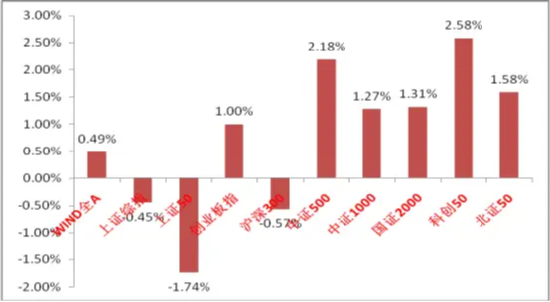
Market Overview - A-shares showed mixed performance last week with a decline in trading volume at high levels [14] - The market experienced a cooling down after a period of heightened emotions, with a rapid decrease in market liquidity and financing levels [19] Macro Data Analysis - China's exports in December increased by 6.6% year-on-year in USD terms, exceeding market expectations and showing month-on-month growth [4][16] - For the entire year of 2025, exports are projected to grow by 5.5%, making it the largest contributor to economic growth among the three driving forces [4][16] - The strong export performance in December is attributed to sustained external demand during the global manufacturing cycle and a rush to export due to domestic tax rebate policy reductions [4][16] - The new export orders index for China's manufacturing PMI rose by 1.4 percentage points to 49.0% in December, supporting the evidence of strong external demand [4][16] - Key export items included computers, integrated circuits, and automobiles, with the latter showing the strongest growth, potentially influenced by the EU's proposed minimum import price policy for Chinese cars [4][17] Short-term Market Strategy - The market is expected to benefit from favorable liquidity conditions, a weak dollar cycle, and a gradual appreciation of the RMB, alongside active institutional funds and insurance sector dynamics [19] - The spring market rally is driven by hotspots in commercial aerospace and AI applications, leading to an increase in market risk appetite [19] - However, the rapid momentum of the market may accumulate risks, prompting regulatory measures to cool down the stock market [19] Mid-term Market Outlook - Technology growth remains a favored direction, with expectations of improving economic fundamentals gradually accumulating [20] - The current economic fundamentals and technology narratives have not fundamentally changed, and the technology sector remains a priority for allocation [20] - There are concerns regarding the fundamentals of many defensive dividend sectors and cyclical sectors, which may require strong catalysts for further market development [20] Long-term Market Perspective - The long-term dynamics of the US-China struggle are becoming clearer, with increasing skepticism about the US government's governance and institutional credibility [21] - Despite uncertainties in the US economic outlook and the Fed's interest rate cuts, the RMB has appreciated against the USD, which could support China's equity market if foreign capital continues to flow in [21] - The trend towards long-term capital from public funds and insurance companies is expected to strengthen, with significant stock holdings by major A-share listed insurance companies [21] Industry Insights - Defensive dividend sectors are entering an observation period, with potential for fund allocation if aggressive sectors continue to face pressure [22] - The focus remains on technology sectors, particularly in AI and commercial aerospace, which are expected to provide strong short-term performance [23] - There is a need to monitor the stabilization of AI applications and related sectors for potential investment opportunities [23]