AI科技革命

Search documents
商业航天连涨,AI全面扩散!2026年投资抓什么?
Zhong Guo Zheng Quan Bao· 2026-01-12 23:50
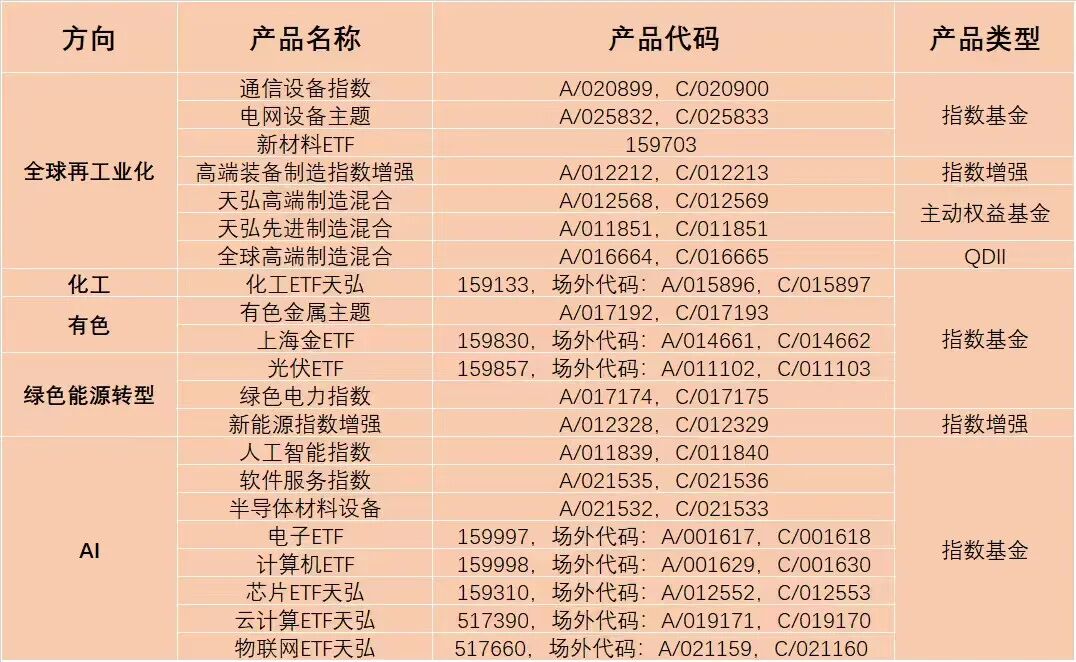
Core Viewpoint - The core investment opportunities for the next five years are centered around "global re-industrialization," driven by changes in geopolitical dynamics, the AI technology revolution, and a collective commitment to sustainable development [1][3]. Group 1: Global Re-industrialization - Global re-industrialization is driven by three main factors: geopolitical changes prompting countries to reassess supply chain security, the AI technology revolution leading to unprecedented investments in computing power and energy, and a commitment to sustainable development transforming green energy from a concept into actionable infrastructure projects [3]. - Chinese enterprises are participating in global re-industrialization through three pathways: initial type focusing on supply-side constraints, resource type extending downstream processing, and承接型 embedding into new supply chains to leverage manufacturing advantages [3][4]. Group 2: Investment Opportunities - The A-share market is expected to see a favorable investment window as industrial enterprise turnover rates and capacity utilization begin to rise, with a stable liquidity outlook for 2026 [5]. - Two main investment themes for 2026 are identified: 1. Embracing "reasonably valued winning assets," particularly manufacturing leaders with international competitiveness and stable profitability, such as those in the chemical industry [6]. 2. Exploring "potentially elastic betting assets," focusing on cyclical and certain consumer goods, where demand recovery could lead to significant price elasticity [7]. Group 3: Investment Products - A range of investment products is available for those interested in global re-industrialization, including index funds and actively managed funds targeting sectors like communication equipment, new materials, and green energy [9].

平安鑫利混合基金经理王华:全球双宽周期下 资源品与周期股迎来配置良机
Quan Jing Wang· 2026-01-07 08:37
Group 1 - The core viewpoint of the report is that the global economy is entering a dual easing cycle of fiscal and monetary policies in 2026, which will create new development opportunities for cyclical sectors [1] - The report highlights that developed countries are accelerating their re-industrialization processes through fiscal expansion, driven by trends in energy security and industrial chain security, which will support commodity prices [1] - Market expectations indicate that the Federal Reserve may implement 2 to 3 interest rate cuts in 2026, further promoting global monetary easing [1] Group 2 - The report emphasizes the potential for price increases in the copper and aluminum industries due to tight supply and steady demand growth, presenting good investment opportunities [1] - The long-term allocation value of precious metals, particularly gold, is highlighted as increasingly significant in the context of global instability and rising debt, reinforcing its role as a safe-haven asset [1] - The Chinese Central Economic Work Conference's focus on deepening supply-side reforms and price recovery is seen as a positive signal for the midstream cyclical sector, indicating a potential bottoming out and recovery space [2] Group 3 - The "anti-involution" policy constraints combined with demand-side support policies are expected to significantly improve the supply-demand dynamics in cyclical industries such as new energy and chemicals [2] - The acceleration of real estate sales is seen as reducing negative factors in the industry chain, suggesting a potential for recovery by the end of the year [2] - Overall, the cyclical sector in 2026 is anticipated to benefit from the dual expectations of "expansive fiscal" and "expansive monetary" policies globally, along with domestic policy support, providing numerous investment opportunities [2]
浙商证券浙商早知道-20260107
ZHESHANG SECURITIES· 2026-01-06 23:30
Market Overview - On January 6, the Shanghai Composite Index rose by 1.5%, the CSI 300 increased by 1.55%, the STAR 50 climbed by 1.84%, the CSI 1000 went up by 1.43%, the ChiNext Index gained 0.75%, and the Hang Seng Index rose by 1.38% [4] - The best-performing sectors on January 6 were non-ferrous metals (+4.26%), non-bank financials (+3.73%), basic chemicals (+3.12%), defense and military industry (+3.08%), and comprehensive sector (+2.89%). The worst-performing sector was telecommunications (-0.77%) [4] - The total trading volume for the A-share market on January 6 was 28,323 billion, with a net inflow of 2.879 billion Hong Kong dollars from southbound funds [4] Key Insights - The macroeconomic report highlighted two core viewpoints: asset replacement in reserves and a focus on basic and rare metals as a main theme [5] - The geopolitical environment is exceeding expectations, and a potential easing of US-China tensions could lead to a reassessment of national security demands. Additionally, rapid advancements in AI technology may boost global growth and alleviate debt and geopolitical pressures [6] - In the bond market, the current pricing framework for floating-rate bonds is more closely linked to the DR007 benchmark rate. The investment value of floating-rate bonds is expected to improve, considering the narrowing of the short-term interest rate corridor and changes in the yield curve [7] Industry Commentary - The 2025 box office data released by the film bureau showed a total box office of 51.832 billion and 1.238 billion viewers, both exceeding a 20% increase compared to the previous year [10] - The Spring Festival box office set a record for the same period, and the summer box office showed steady growth compared to last year. Several imported blockbusters performed better than expected towards the end of the year, with top films, especially animated ones, dominating the market [10] - Investment opportunities are suggested in companies like Wanda Film, Bona Film, China Film, Shanghai Film, Happy Blue Ocean, Maoyan Entertainment (Hong Kong), and Damai Entertainment (Hong Kong) for the 2026 Spring Festival [10]
LME显性库存再度下探 沪铜强势上涨格局未变
Jin Tou Wang· 2026-01-04 06:05
Group 1 - On the last trading day before the holiday, the main copper futures contract in Shanghai rose slightly by 0.84%, closing at 98,240.00 CNY per ton [1] - On December 31, the domestic electrolytic copper trading volume was 13,600 tons, a decrease of 860 tons from the previous trading day, representing a 38.83% decrease on a month-over-month basis [2] - Chile's copper production in November fell by 7.18% year-on-year to 451,815 tons, marking the fourth consecutive month of decline [2] Group 2 - According to Guoguang Futures, the Federal Reserve's meeting minutes indicated that dovish officials believe a shift to a more neutral policy stance would help prevent further deterioration in the job market, with expectations of over 200 billion USD in reserve management bond purchases in the next 12 months to ease liquidity demands [4] - Copper prices have been rising recently, but profit margins for copper products are being squeezed, leading to a slowdown in production rates due to various factors including raw material prices and demand [4] - The inventory of cathode copper on the Shanghai Futures Exchange has been increasing, indicating a decline in downstream purchasing capacity, while the overall strong upward trend in copper prices remains unchanged despite recent high prices causing resistance from downstream buyers [4]

债市策略思考:元旦假期资产表现与要闻汇总
ZHESHANG SECURITIES· 2026-01-03 13:44
Group 1 - The core viewpoint of the report indicates that during the New Year holiday (January 1-2), major asset classes showed a pattern of "divergent equities, strong non-ferrous metals, pressured bonds, and stable foreign exchange" [1][11] - The report highlights that the Hong Kong stock market led global gains, while major European and American stock indices performed flat during the holiday [1][11] - In the commodity sector, silver continued its upward momentum from 2025, with copper, aluminum, and gold also recording slight increases [1][11] Group 2 - The overall performance of major asset classes in 2025 was characterized by "strong precious metals, rising equity markets, and commodity divergence" [2][14] - Precious metals, particularly silver, saw significant gains due to increased geopolitical tensions and a restructuring of the dollar credit system, with silver's annual increase reaching 142% [2][14][22] - The domestic equity market experienced a slow bull market driven by policy support, confidence recovery, and capital inflow, with technology stocks leading the A-share bull market [2][25] Group 3 - The report summarizes key news during the New Year holiday, including the official implementation of new fund sales regulations, which may alleviate concerns about bond fund liquidity [3][27] - The article published in "Qiushi" magazine emphasized the need to stabilize real estate market expectations and improve market conditions [3][31] - The Ministry of Commerce reported that sales related to the "old-for-new" policy exceeded 2.6 trillion yuan in 2025, indicating a significant consumer market impact [3][32] Group 4 - The report suggests that the bond market may present some short-term trading opportunities, especially following the relaxation of redemption fees for bond funds [4][35] - It is noted that the overall recovery space for bonds may be limited, and a quick trading strategy may be more favorable [4][37] - For long-term bullish positioning, patience is advised as the current market conditions are still considered relatively early in the cycle [4][37]
中金公司A股市场2026年展望:乘势笃行
中金· 2025-12-31 16:02
Investment Rating - The report maintains a positive outlook for the A-share market, indicating that the market has moved past its bottom phase and is expected to continue its upward trend into 2026 [1][2]. Core Insights - The report emphasizes that the A-share market is likely to experience a shift from valuation recovery to improved earnings expectations, with a projected overall profit growth of approximately 4.7% for 2026 [3][36]. - It highlights the importance of macroeconomic factors, including the restructuring of the global monetary order and the ongoing AI technology revolution, which are expected to support the performance of Chinese assets [2][12]. - The report suggests that the market may experience a balanced style shift, with a focus on sectors benefiting from high growth and innovation, as well as those poised for cyclical recovery [4][38]. Summary by Sections Macroeconomic and Policy Environment - The report discusses the ongoing restructuring of international order and its impact on China's industrial innovation, suggesting that the safety of dollar assets is being questioned, which may benefit Chinese assets [12][16]. - It notes that while domestic demand still needs repair, external demand shows resilience, with exports expected to remain stable due to China's manufacturing advantages [13][14]. Earnings Outlook - The report forecasts a positive earnings growth trajectory for 2026, with non-financial corporate earnings expected to grow by around 8.2%, driven by policy implementation and improvements in supply-demand dynamics [36][37]. - It highlights that the banking sector may see stable earnings, while the brokerage and insurance sectors could benefit from an active capital market, although growth rates may moderate due to high base effects [37][39]. Structural Analysis - The report identifies key investment opportunities in high-growth sectors such as AI technology, innovative pharmaceuticals, and high-end manufacturing, which are expected to contribute positively to overall market performance [38][39]. - It emphasizes the importance of the capacity cycle, noting that many industries are approaching improvement points after a period of capital expenditure reduction, which could lead to enhanced earnings elasticity [39][40]. - The report also points out that overseas expansion remains a significant growth opportunity for companies, with an increasing share of revenue coming from international markets [40].

需求预期受振 沪铜暂时企稳【12月31日SHFE市场收盘评论】
Wen Hua Cai Jing· 2025-12-31 09:51
Group 1 - Copper prices opened slightly higher in the morning, with an increase of over 2%, but closed with a narrower gain of 0.84% due to a pullback after initial gains [1] - Domestic policy support has boosted expectations for copper demand, while a decline in precious metals has exerted some downward pressure on copper prices [1] - The December manufacturing PMI in China returned to the expansion zone, indicating an overall recovery in economic sentiment [1] Group 2 - The Federal Reserve's December meeting minutes were relatively neutral, with limited guidance for the market, and the dollar index saw a slight increase [2] - The Fed is expected to conduct over $200 billion in reserve management bond purchases in the next 12 months to alleviate liquidity demands at the end of the quarter [2] - Global electrification and the AI technology revolution are anticipated to create strong growth opportunities for copper demand, despite slow recovery in global mining production [2]
2025年A股收官!沪指11连阳全年涨超18% “科技牛”行情贯穿全年
Xin Hua Cai Jing· 2025-12-31 07:43
Market Performance - On the last trading day of 2025, A-shares showed mixed performance with the Shanghai Composite Index slightly up by 0.09%, marking an 11-day consecutive rise, closing at 3968.84 points [1] - The Shenzhen Component Index fell by 0.58% to 13525.02 points, while the ChiNext Index dropped by 1.23% to 3203.17 points [1] - The total market capitalization of A-shares reached nearly 109 trillion yuan, with an increase of approximately 2.3 trillion yuan during the year, setting a historical record [1] Annual Performance - In 2025, the Shanghai Composite Index rose by 18.41%, the Shenzhen Component Index by 29.87%, the ChiNext Index by 49.57%, the Sci-Tech 50 Index by 35.92%, and the Northern Exchange 50 Index by 38.8% [1] - Notable individual stocks such as Shenghong Technology, New Yisheng, and Zhongji Xuchuang saw annual gains exceeding 300% [1] - Leading sectors included CPO, storage chips, commercial aerospace, and non-ferrous metals [1] Institutional Insights - Market trends indicate an overall upward trajectory, with short-term adjustments underway; investors are advised to look for buying opportunities in leading sectors after corrections [2] - The upcoming "Spring Rally" is anticipated to start early in 2026, supported by liquidity and risk appetite, with significant events like the Two Sessions potentially boosting market sentiment [2] - Key investment areas include high-growth sectors such as semiconductors, consumer electronics, artificial intelligence, robotics, and commercial aerospace [2] Policy Developments - Five government departments announced a subsidy program for the replacement of old home appliances and the purchase of new digital and smart products starting January 1, 2026, with a subsidy of 15% on the final sale price for eligible products [3] - A press conference is scheduled for January 6, 2026, to discuss the promotion of green consumption, indicating a focus on sustainable practices [4] - Major banks will start paying interest on digital RMB wallets at the same rate as regular savings accounts from January 1, 2026, enhancing the attractiveness of digital currency [5]
贵金属的转折点?风浪越大鱼越贵!
格隆汇APP· 2025-12-25 09:41
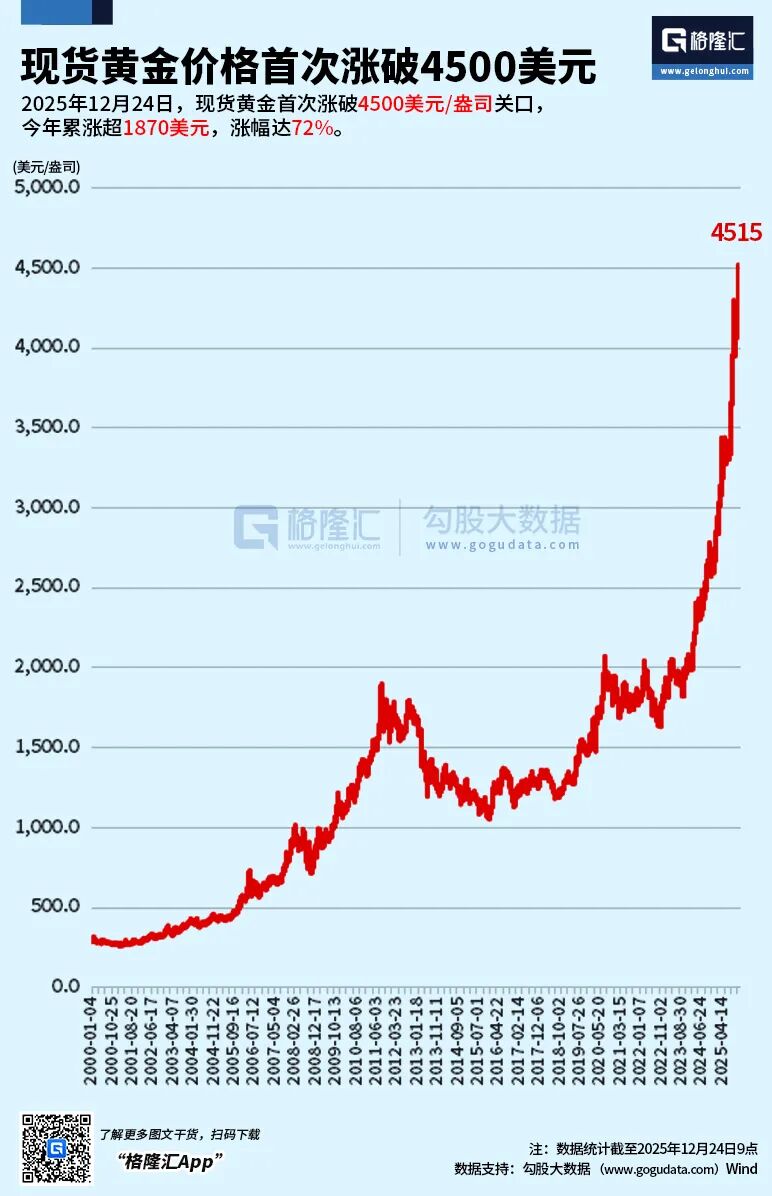
Core Viewpoint - The current precious metals market is experiencing significant volatility, with extreme bullish sentiment on one side and sudden bearish movements on the other, indicating a potential turning point for precious metals [5][10]. Short-term Disturbances - Investors should avoid acting as "purchasers" during the upcoming passive fund rebalancing, which is expected to exert selling pressure on silver (9%) and gold (3%) [16][18]. - Active funds are likely to preemptively reduce their holdings to lock in profits, suggesting that the current bullish trend in precious metals may soon end [20][21]. - It is advised to reduce positions in non-ferrous stocks to navigate this turbulent period [22]. Long-term Support for Gold Bull Market - The long-term bullish trend for gold is supported by four key factors: 1. Central banks have been net buyers of gold for three consecutive years, with purchases exceeding 1,000 tons annually, and are projected to reach 1,086 tons in 2024 [31]. 2. The Federal Reserve's interest rate cuts are expected to support gold prices, with three cuts anticipated by 2025 [36][37]. 3. The global debt crisis, particularly in the U.S., has created a demand for safe-haven assets like gold, as debt levels exceed $36 trillion [42][45]. 4. Retail investors currently have a low allocation to gold, with U.S. gold ETFs comprising only 0.17% of private investment portfolios, indicating significant room for growth [49]. Market Trends and Predictions - Historical data shows that gold has consistently outperformed U.S. equities over the past 25 years, with a 20-year return rate of 761% compared to the S&P 500's 673% [64]. - The current gold price has surpassed $4,500, with a total market capitalization of $31.5 trillion, suggesting a strong valuation relative to historical peaks [66]. - Analysts predict that gold could reach $5,000 per ounce by 2026, with some forecasts suggesting a potential rise to $10,000 per ounce by 2029, driven by multiple factors including the Fed's interest rate policies and global de-dollarization [69][72]. Investment Strategy - Short-term strategies should focus on defensive measures, such as reducing positions to avoid passive selling pressure, while long-term strategies should involve buying on dips as market volatility stabilizes [83][88]. - Investors are encouraged to consider gold-related ETFs for a straightforward investment approach that aligns with gold price movements [92].

贵金属的转折点?风浪越大鱼越贵
3 6 Ke· 2025-12-25 08:07
Core Viewpoint - The precious metals market is experiencing significant volatility, with extreme bullish sentiment on one side and sudden declines on the other, indicating a potential turning point for the sector [1][2]. Short-term Disturbances - Investors should be cautious of short-term fluctuations and avoid becoming "bag holders" as the market is currently under pressure from passive fund rebalancing [5][6]. - The Bloomberg Commodity Index (BCOM) will undergo annual rebalancing from January 8 to 15, leading to a 9% sell-off pressure on silver and 3% on gold, which could disrupt the short-term market [6][8]. - Active funds are likely to preemptively reduce their positions to lock in profits before the rebalancing occurs [7]. Long-term Anchors - Despite short-term volatility, the long-term upward trend for gold remains intact, supported by four key factors [11]. - Central banks have been net buyers of gold for three consecutive years, with purchases expected to reach 1,086 tons in 2024, increasing gold's share in global reserves from 9% to 18.2% [14][16]. - The Federal Reserve's interest rate cuts are expected to support gold prices, with three rate cuts anticipated by 2025 [17][18]. - The global debt crisis, particularly in the U.S., has heightened the appeal of gold as a safe-haven asset, with U.S. debt exceeding $36 trillion [22][23]. - Retail investors currently have a low allocation to gold, with U.S. gold ETFs representing only 0.17% of private investment portfolios, indicating significant room for growth [28][30]. Market Dynamics - The current market sentiment has led to a 40% increase in silver prices within a month, driven by quantitative funds [49][50]. - The company has successfully guided its members from a price of $1,800 to $4,500, demonstrating a strong grasp of market trends [55]. - The long-term outlook for gold is optimistic, with potential targets of $5,000 by 2026 and even $10,000 by 2029, contingent on various economic factors [45][46][40].