
人民币升值

Search documents
美联储再次降息 对你我有何影响?
Sou Hu Cai Jing· 2025-10-30 01:06
Group 1: Impact on Enterprises - The Federal Reserve's interest rate cut typically leads to an increase in international commodity prices, which may raise the import costs for industries in China such as chemicals, metal processing, and air logistics [2] - Companies that heavily rely on overseas energy and commodity resources need to pay closer attention to the risks associated with rising costs [2] Group 2: Impact on Individuals - A decrease in the Federal Reserve's interest rates is likely to weaken the US dollar, resulting in a relative appreciation of the Chinese yuan, which lowers costs for studying abroad, overseas shopping, and travel [3] - Individuals planning to use US dollars in the future may consider exchanging some dollars while the currency is weak [3] - The interest rate cut will directly lower the yields on US Treasury bonds, potentially decreasing returns on dollar-denominated assets, including wealth management products linked to the dollar [3] - The weakening of the dollar may influence global capital flows, with more funds likely directed towards emerging markets, making Chinese assets more attractive, which is a positive signal for China's capital markets [3]
3600亿,人民币拐点已至,结汇顺差创纪录,外资抛美元疯抢中国资产
Sou Hu Cai Jing· 2025-10-28 16:34
Core Insights - In September 2025, China's bank settlement and sales surplus reached $51 billion, the highest monthly figure since December 2020, indicating a significant shift in cross-border capital flow back to China [1][3] - The total bank settlement in September was $264.7 billion, with sales at $213.6 billion, resulting in a substantial surplus that reflects a fundamental change in corporate financial strategies [3][4] - The depreciation risk of the US dollar, coupled with expectations of further interest rate cuts by the Federal Reserve, has prompted companies to accelerate the conversion of their dollar assets back to RMB [4][5] Group 1 - The net inflow of foreign capital into China reached $93.1 billion in the first three quarters of 2025, marking four consecutive quarters of net inflow [6] - The onshore RMB appreciated from 7.1805 to 7.1330 against the US dollar by August 2025, the highest level in nearly ten months, supported by increased capital inflows [6] - The appreciation of the RMB is expected to further increase the settlement ratio of exporters, potentially leading to additional RMB strengthening [6][9] Group 2 - The stock market is experiencing a systemic revaluation, with the Shanghai Composite Index reaching new highs, indicating strong investor sentiment [6] - A 1% appreciation of the RMB could lead to approximately a 3% increase in the Chinese stock market, creating a "Davis Double Play" effect for international investors [6] - Different industries are experiencing varied impacts from RMB appreciation, with import-dependent sectors like aviation benefiting from reduced procurement costs [6][8] Group 3 - Foreign investment strategies in Chinese assets are diversifying, with a focus on "growth leaders and high-dividend blue chips," particularly in technology and industrial sectors [8] - The shift in capital flow patterns is creating more room for monetary policy adjustments, with continuous surpluses in bank settlements since March 2025 [8][9] - The current market dynamics are fostering a positive feedback loop between RMB appreciation and stock market performance, enhancing liquidity and potentially lowering financing costs [9]

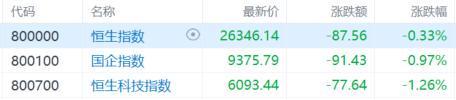
港股收评:三大指数齐跌,恒指跌0.33%,黄金股下挫
Ge Long Hui· 2025-10-28 08:36
Market Overview - The Hong Kong stock market experienced a collective decline in the afternoon, halting a three-day rally, with the Hang Seng Index down 0.33% to 26,346 points, the Hang Seng China Enterprises Index down 0.97% to 9,375 points, and the Hang Seng Tech Index down 1.26% to just above 6,000 points [1][2]. Sector Performance - Major technology stocks led the market decline, with notable drops including SMIC down over 3%, and other companies like Trip.com, SenseTime, Li Auto, NetEase, and Midea Group falling more than 2% [4][5]. - Gold stocks also faced significant losses, with China Silver Group down over 10%, and other mining companies like Zijin Mining and Lingbao Gold down over 7% [6]. - Cryptocurrency-related stocks saw sharp declines, with Huajian Medical down over 12% and other firms like Blueport Interactive and Big Brother International dropping more than 6% [7][8]. - Sportswear stocks fell broadly, with Anta Sports and 361 Degrees down over 4%, and other brands like Li Ning and Yue Yuen Industrial also declining [9][10]. - Water utility stocks performed well, with China Water Affairs Group up over 18%, and other companies like Guangdong Investment and Tianjin Chuangye Environmental Protection rising more than 3% [11]. - Dairy stocks rebounded after previous declines, with Yurun Dairy up over 3% and China Feihe up over 2% [12]. - Banking stocks showed resilience, with Standard Chartered and HSBC both rising over 3% [13]. Investment Trends - Southbound funds recorded a net inflow of HKD 2.258 billion, indicating continued interest in Hong Kong stocks [13]. - Analysts from Xiangcai Securities predict that the Hong Kong market will follow the US market's upward trend, driven by expected interest rate cuts and favorable currency movements [15].
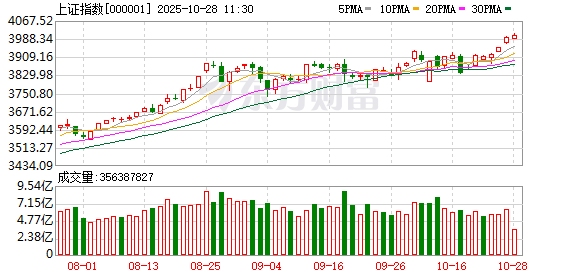
上证指数时隔十年再上4000点 成交额仍待放量
Di Yi Cai Jing· 2025-10-28 04:52
Core Viewpoint - The A-share market has shown resilience, with the Shanghai Composite Index breaking the 4000-point mark, reflecting improved market sentiment and investor confidence, driven by progress in US-China trade negotiations and supportive regulatory policies [2][4]. Market Performance - As of the morning close, the Shanghai Composite Index rose by 0.21%, closing at 4005 points, with a total trading volume of 1.36 trillion yuan, a decrease of 216.5 billion yuan compared to the previous day [2]. - The index's ability to maintain above 4000 points is seen as a psychological barrier that could attract more capital inflow and support future market trends [4]. Regulatory Environment - The China Securities Regulatory Commission (CSRC) has introduced measures to optimize the Qualified Foreign Institutional Investor (QFII) system, enhancing access and operational efficiency for foreign investors [2]. - Future plans include the introduction of a refinancing framework to broaden support for mergers and acquisitions, alongside encouraging listed companies to improve governance and increase shareholder returns through dividends and buybacks [3]. Investment Sentiment - Analysts suggest that the market is currently experiencing a "slow bull" trend, with expectations of continued upward movement in the index, albeit with increased volatility [5]. - There is a cautionary note regarding high valuations in certain sectors, particularly technology and semiconductors, which may lead to profit-taking behavior among investors [3][4]. Economic Context - The market's recent performance is influenced by global economic conditions, including expectations of a potential interest rate cut by the Federal Reserve and the possibility of a meeting between US and Chinese leaders at the APEC summit, which could ease geopolitical tensions [5]. - The overall market sentiment is supported by a marginally easing domestic policy environment, which is expected to bolster risk appetite among investors [3].
创两个月最大涨幅,人民币升值或继续助推资产重估
Xuan Gu Bao· 2025-10-27 23:59
Industry Insights - The appreciation of the RMB is expected to lead to a revaluation of Chinese assets, with the stock market likely to maintain a bullish atmosphere due to marginal economic stabilization and relatively loose liquidity [1] - Industries such as transportation, non-ferrous metals, petrochemicals, machinery, home appliances, electronics, and power equipment are anticipated to benefit from the appreciation of the RMB, considering factors like exchange gains and losses, foreign currency liabilities, northbound holdings, and raw material imports [1] - For industries like aviation and papermaking, where many products are settled in foreign currencies, the appreciation of the RMB will reduce costs and enhance profits [1] Company Highlights - Shanying International is recognized for its leading position in the paper and packaging printing sectors in China [1] - Huaxia Airlines is identified as an independent private airline company that focuses on regional transportation [1]
中间价再创阶段性高点 人民币升值窗口开启了吗?
Xin Hua Cai Jing· 2025-10-23 07:20
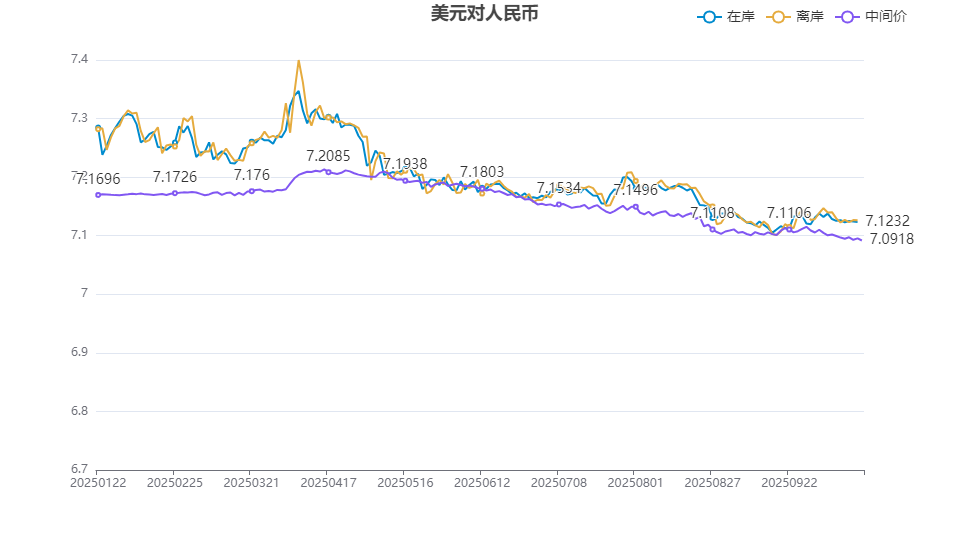
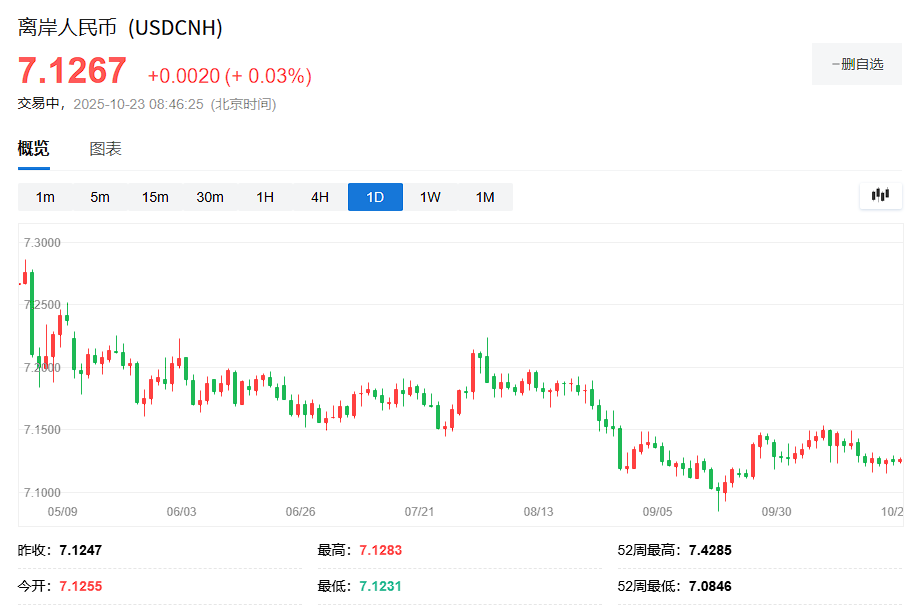
Core Viewpoint - The Chinese yuan (RMB) has appreciated against the US dollar, reaching a midpoint of 7.0918, the highest since October 15, 2024, indicating a strong signal of stability in the currency market [1][3]. Exchange Rate Trends - The RMB midpoint has been adjusted upwards by 966 basis points this year, reflecting a trend of moderate appreciation [1]. - Since late August, the RMB has shown a rapid appreciation against the USD, driven by optimistic sentiment and increased foreign capital inflow [7]. Factors Supporting RMB Appreciation - Multiple factors are expected to support a moderate appreciation of the RMB, including the recent announcement of 500 billion yuan in new policy financial tools to boost growth, which enhances market confidence [5]. - The internationalization of the RMB is progressing well, with recent bilateral currency swap agreements signed with several central banks, providing liquidity support [5]. - The RMB's share in global payments reached 3.17% in September, maintaining above 2.9% for three consecutive months, indicating increased international usage [5]. Economic Context - The RMB's appreciation is supported by improvements in the Chinese economy, easing real estate and local debt issues, and a positive outlook from the IMF regarding China's growth [6]. - The US dollar index has decreased by 9.5% in the first nine months of the year, benefiting non-USD currencies, including the RMB [6]. Market Sentiment and Predictions - Analysts predict that the RMB will continue to appreciate, with expectations of reaching 7.0 against the USD by the end of 2025 and further to 6.7 by the end of 2026, contingent on stable export conditions [9]. - The upcoming fourth quarter is typically a peak period for export enterprises to settle foreign exchange, which could lead to a positive feedback loop of appreciation [9]. Policy and Market Stability - The People's Bank of China (PBOC) aims to maintain a stable RMB exchange rate, emphasizing the importance of market forces in determining the currency's value [7]. - The PBOC has sufficient policy tools to manage exchange rate expectations and will adjust its approach based on domestic economic changes [9].
申银万国期货首席点评:外汇市场保持着较强的韧性和活力
Shen Yin Wan Guo Qi Huo· 2025-10-23 05:34
Report Summary 1. Report Industry Investment Rating No relevant content provided. 2. Core Viewpoints of the Report - China's foreign exchange market maintained strong resilience and vitality in September, with cross - border capital flows remaining active and balanced, and supply and demand in the foreign exchange market being relatively balanced. The total scale of China's foreign - related payments and receipts in the first three quarters reached a record high [1]. - The prices of crude oil, precious metals, and stock indices showed different trends. Crude oil prices were difficult to reverse the downward trend; precious metals experienced significant adjustments at high levels; stock indices were about to enter a direction - selection stage [1][2][3][4]. 3. Summary by Relevant Catalogs 3.1当日主要新闻关注 - **International News**: As of October 21, the total debt of the US federal government exceeded $38 trillion for the first time, just over two months after reaching $37 trillion in mid - August [5]. - **Domestic News**: In September, the unemployment rate of the 16 - 24 age group in urban China was 17.7%, 7.2% for the 25 - 29 age group, and 3.9% for the 30 - 59 age group [6]. - **Industry News**: In the first three quarters, the total transport turnover, passenger volume, and cargo volume of the civil aviation industry were 1220.3 billion ton - kilometers, 580 million passengers, and 739,500 tons respectively, with year - on - year increases of 10.3%, 5.2%, and 14% [7]. 3.2外盘每日收益情况 - The S&P 500 index decreased by 0.53%, the European STOXX 50 index decreased by 0.47%, and the FTSE China A50 futures increased by 0.10%. ICE Brent crude oil increased by 4.36%, while London gold and silver decreased by 0.64% and 0.46% respectively. Other varieties also showed different degrees of increase or decrease [10]. 3.3主要品种早盘评论 - **Financial Products** - **Stock Indices**: After a high - level shock in September, stock indices were about to enter a direction - selection stage. The domestic liquidity environment was expected to remain loose, and external funds were also likely to flow in. The market style might return to value in the fourth quarter [4][11]. - **Treasury Bonds**: The central bank was expected to continue implementing a moderately loose monetary policy, and there might be reserve requirement ratio cuts and interest rate cuts in the fourth quarter, which would support the price of treasury bond futures [12][13]. - **Energy and Chemical Products** - **Crude Oil**: SC crude oil rose 1.65% at night, but the downward trend of oil prices was difficult to reverse [2][14]. - **Methanol**: Methanol prices fell 0.13% at night. The operating rate of domestic coal - to - olefin plants decreased, and coastal methanol inventories continued to rise. The methanol market fluctuated more due to various uncertainties [15]. - **Rubber**: Rubber prices fluctuated on Wednesday. Supply pressure might gradually emerge, and demand support was relatively limited. The market was expected to fluctuate and adjust in the short term [16]. - **Polyolefins**: Polyolefin futures rebounded slightly. After continuous declines, the market sentiment gradually stabilized [17]. - **Glass and Soda Ash**: Glass futures closed slightly up, and soda ash futures rebounded slightly. Both were in the process of inventory digestion, and the market was still cautious [18][19]. - **Metals** - **Precious Metals**: Gold and silver prices adjusted significantly at high levels. After a rapid rise, there were profit - taking positions, and the driving factors weakened, leading to sharp price adjustments [3][20]. - **Copper**: The supply of copper concentrates remained tight, and the smelting output continued to grow. The Indonesian mine accident might lead to a supply - demand gap in the global copper market, supporting copper prices in the long term [21]. - **Zinc**: Zinc prices rose at night. The smelting output was expected to continue to increase. Due to different inventory situations at home and abroad, domestic zinc prices might be weaker than foreign ones, and the overall price might fluctuate within a range [22]. - **Lithium Carbonate**: Supply increased, demand showed some growth, and inventory decreased. The futures price fluctuated and rose. It was expected to remain volatile in the short term, and the downward adjustment space was limited [23]. - **Black Metals** - **Coking Coal and Coke**: The double - coking futures oscillated at night. The steel price and demand showed some improvement, but the possibility of blast furnace production cuts due to shrinking profits could not be ignored. The short - term market was expected to oscillate at a high level [24][25]. - **Iron Ore**: Iron ore prices stabilized. The demand for iron ore was supported, and the global iron ore shipment decreased recently. The port inventory decreased rapidly. The market was expected to be strong and fluctuate upward [26]. - **Steel**: Steel prices were stable and improving. The supply pressure was gradually emerging, and the inventory continued to accumulate. The overall supply - demand contradiction was not significant. The market was expected to be bullish in the medium term [27]. - **Agricultural Products** - **Protein Meal**: Bean and rapeseed meal prices oscillated and rose at night. The US soybean export inspection volume was higher than expected, and the Brazilian soybean planting progress was good. The domestic market was expected to fluctuate weakly in the short term [28]. - **Oils and Fats**: Oils and fats prices were weak at night. The production and export of Malaysian palm oil increased, but the market was under pressure due to uncertainties in Sino - US trade [29]. - **Sugar**: Zhengzhou sugar prices were weak at night. The global sugar market entered the inventory accumulation stage, and the domestic sugar market was expected to fluctuate in the short term [30]. - **Cotton**: Zhengzhou cotton prices oscillated. The US cotton market was in a short - term oscillation. The domestic cotton market was under pressure from weak demand, but the price was supported by factors such as slow harvesting progress and rising purchase prices. It was expected to be strong and fluctuate in the short term [31]. - **Shipping Index** - **Container Shipping to Europe**: The EC index was strongly oscillating. Maersk's price increase in November indicated its intention to support prices. The market continued to bet on the year - end peak season, and the upward driving force was accumulating. The far - month contract was slowly recovering, and attention should be paid to the progress of the Israel - Palestine cease - fire negotiation [32].
中国企业猛卖美元!9月结售汇顺差达510亿美元,创2020年12月以来最大
Hua Er Jie Jian Wen· 2025-10-23 00:51
Core Insights - In September 2025, China's banks recorded a foreign exchange settlement surplus of $51 billion, the largest since December 2020, indicating a significant increase in the willingness of market participants to settle foreign exchange amid rising expectations for the appreciation of the Renminbi [1][4]. Group 1: Foreign Exchange Data - In September 2025, banks settled $264.7 billion in foreign exchange and sold $213.6 billion, resulting in a surplus of $51 billion, marking the highest monthly surplus in nearly five years [4]. - From January to September 2025, banks accumulated $1,853.3 billion in settlements and $1,790.1 billion in sales, leading to a cumulative surplus of $63.2 billion, which is higher than the same period last year [4]. - In September 2025, banks recorded foreign income of $681.2 billion and foreign payments of $684.3 billion, with cumulative figures from January to September being $5,870.5 billion and $5,750.8 billion respectively [4]. Group 2: Market Sentiment and Analysis - The data reflects an optimistic sentiment towards the Renminbi, with offshore Renminbi reaching its strongest level since November of the previous year, and export enterprises accelerating their foreign exchange settlements, which may further support the Renminbi [1][5]. - According to Khoon Goh, head of Asian research at Australia & New Zealand Banking Group, the net surplus in foreign exchange settlements indicates an increase in funds flowing into China, which supports the Renminbi, while the willingness of exporters to settle foreign exchange is also on the rise [5]. - With the central bank favoring a stronger Renminbi and pushing for an increase in the central parity rate, it is anticipated that the settlement ratio among exporters will further increase, leading to additional appreciation of the Renminbi for the remainder of the year [5].
9月结售汇顺差510亿美元,上中旬净结汇较多
Sou Hu Cai Jing· 2025-10-22 12:03
Core Viewpoint - In September 2025, China's foreign exchange market showed a significant increase in both bank settlement and sales, with a surplus of 510 billion USD, indicating a robust and balanced foreign exchange environment [1][3][4]. Group 1: Bank Settlement and Sales Data - In September 2025, banks settled 18,809 billion RMB (approximately 2,647 billion USD) and sold 15,183 billion RMB (approximately 2,136 billion USD), resulting in a settlement surplus of 3,626 billion RMB (approximately 510 billion USD) [1]. - From January to September 2025, banks cumulatively settled 185,330 million USD and sold 179,010 million USD [1][2]. - The bank's foreign-related income in September was 48,409 billion RMB, while foreign payments were 48,629 billion RMB [1]. Group 2: Cross-Border Fund Flows - In September, the total cross-border income and expenditure for non-bank sectors reached 1.37 trillion USD, reflecting a 7% month-on-month increase [3]. - The net outflow of cross-border funds was 31 billion USD in September, which has since turned into a net inflow in October [3]. - The total scale of foreign-related income and expenditure for the first three quarters of the year reached 11.6 trillion USD, marking a historical high for the same period [3]. Group 3: Trade and Investment Trends - In September, China's total import and export value was 4.04 trillion RMB, with exports growing by 8.4% and imports by 7.5% year-on-year [4]. - The A-share market saw a total trading volume of 6.8 trillion RMB in September, indicating a significant increase and setting a new high [4]. - Experts predict that the upcoming peak in corporate financial settlements and profit distributions will likely lead to an increase in bank settlement volumes, potentially supporting the appreciation of the RMB [4]. Group 4: Market Dynamics and Future Outlook - The foreign exchange market is expected to remain stable, with a balanced supply and demand situation, despite potential complexities from seasonal factors and policy adjustments [5]. - The shift from an export-driven economy to one focused on domestic demand may lead to a decrease in the contribution of trade surpluses to settlement and sales [5]. - The dual characteristics of cross-border investment are becoming more pronounced due to further financial market opening, which will complicate the dynamics of bank settlement and sales [5].
资金面与基本面共振,港股科技互联网板块迎来配置良机
Mei Ri Jing Ji Xin Wen· 2025-10-21 05:49
Economic Overview - The domestic economic fundamentals are showing positive signs, with GDP growth of 5.2% year-on-year in the first three quarters, indicating a stable and progressive economic operation [1] - The external environment is also improving, as trade tensions have eased following a video call between the economic leaders of China and the U.S., agreeing to a new round of consultations [1] Capital Flows - Southbound capital continues to favor the Hong Kong stock market, with a net inflow of 450.89 billion HKD last week, marking a five-week high; the cumulative net inflow this year has surpassed 1.1 trillion HKD, reflecting strong confidence from mainland investors [1] Market Outlook - Analysts suggest that with the backdrop of RMB appreciation and strengthened expectations for U.S. Federal Reserve rate cuts, a "catch-up" rally in Hong Kong stocks is anticipated [1] - The technology sector in Hong Kong, identified as a core asset for AI, is highlighted as having significant investment value, according to Huafu Securities [1] - Despite recent volatility, the upward industrial cycle and influx of new capital are expected to support a bullish market trend for Hong Kong stocks in the fourth quarter, with technology remaining a key focus [1]