美元流动性
Search documents
道指大跌超500点,多数中概股下跌,逸仙电商跌近21%,小鹏跌10%,比特币跌破92000美元
2 1 Shi Ji Jing Ji Bao Dao· 2025-11-17 23:17
Market Overview - On November 18, US stock indices collectively declined, with the Dow Jones falling over 500 points, a decrease of approximately 1.2% [1] - The S&P 500 index has dropped over 2% since November, ending a six-month streak of gains, and is down more than 3% from its historical peak [1] - The tech-heavy Nasdaq has fallen over 5% from its record high [1] Stock Performance - Major tech stocks mostly declined, with Micron Technology down nearly 2%, Nvidia and Apple down over 1.8%, and Meta down 1.2%. Tesla, however, rose by 1.1% [2] - Google was a notable exception, initially rising 6% to reach a new all-time high before closing with a gain of just over 3%. Berkshire Hathaway reportedly built a position in Google during Q3 [2] - The Nasdaq China Golden Dragon Index fell by 1.21%, with significant declines in several Chinese stocks, including Yatsen Global down nearly 21% and XPeng down over 10% [2] Commodity Market - Precious metals and base metals experienced widespread declines, with spot gold dropping nearly 2% to a low of $4006.80 per ounce before closing around $4045 [4] - LME aluminum, nickel, and lead all fell over 1% [4] - The CME FedWatch Tool indicates a reduced probability of a 25 basis point rate cut by the Federal Reserve in December, now at 42.9% [4] Cryptocurrency Market - Cryptocurrencies faced significant declines, with Bitcoin dropping below $92,000 and Ethereum also falling below $3,000 [4][5] - Over the past 24 hours, more than 160,000 traders were liquidated, with a total liquidation amount of $851 million [5] - The recent drop in Bitcoin prices is attributed to tightening dollar liquidity and changing Federal Reserve policy expectations, leading to increased selling pressure on high-volatility assets [5][6] Risk Assets - An unusual phenomenon observed is the simultaneous decline of risk assets like Bitcoin and traditional safe-haven assets like gold, which raises concerns [6]

热门中概股走强,阿里巴巴涨超3%,谷歌市值创新高,加密货币超16万人爆仓
2 1 Shi Ji Jing Ji Bao Dao· 2025-11-17 15:53
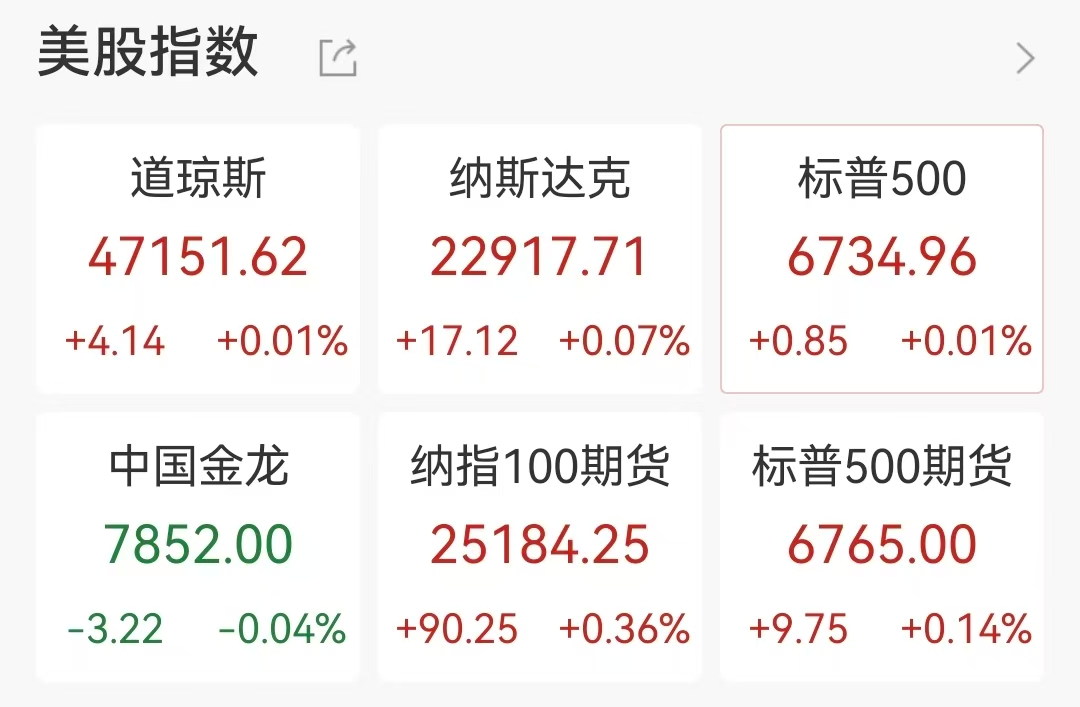
Market Performance - US stock market opened lower but turned positive, with the Dow Jones up 0.01%, S&P 500 up 0.01%, and Nasdaq up 0.07% as of 23:16 [1] - Major tech stocks showed mixed performance, with Micron Technology rising over 5% to reach a new historical high, while Nvidia, Apple, and Amazon fell over 1% [2][3] Company Highlights - Berkshire Hathaway disclosed its Q3 13F report, marking Warren Buffett's last detailed stock portfolio disclosure before stepping down as CEO, revealing significant sales of Apple shares and purchases of Alphabet shares [2] - Google (Alphabet) stock rose over 4%, reaching a market value of over $3.5 trillion [2] Chinese Stocks - Nasdaq China Golden Dragon Index fell 0.04%, but some popular Chinese stocks like Alibaba, GDS, and JD.com saw gains of 3.6%, 3.3%, and 2.4% respectively [3] Precious Metals - Gold prices continued to adjust, with spot gold down 0.43% at $4062.56 per ounce, and COMEX gold futures down 0.49% at $4074.2 [3][4] Cryptocurrency Market - Most cryptocurrencies continued to decline, with Bitcoin down 1.32% and Ethereum and Solana dropping nearly 2% [5] - Over the past 24 hours, more than 160,000 traders were liquidated, with total liquidation amounting to $786 million [6] - Bitcoin's price fell below $94,000, erasing all gains for the year and dropping over 25% from its peak of $126,251 on October 6 [6][7] Market Sentiment - Analysts noted that the significant drop in Bitcoin's price is primarily due to tightening dollar liquidity and changing Federal Reserve policy expectations, leading to increased selling pressure on high-volatility assets [7] - A concerning trend observed is the simultaneous decline of risk assets like Bitcoin and traditional safe-haven assets like gold, indicating potential systemic liquidity issues in the market [7]
比特币失守9.5万美元
Bei Jing Shang Bao· 2025-11-16 15:40
Core Viewpoint - The cryptocurrency market is experiencing significant downward pressure, with Bitcoin and Ethereum prices declining sharply due to factors such as reduced liquidity and a growing trust crisis in crypto assets [1][2]. Group 1: Market Performance - Bitcoin has fallen below the critical threshold of $95,000, with a daily drop of over 1%, a weekly decline of nearly 10%, and a monthly decrease of 14% [1]. - As of November 16, Bitcoin's price was $95,500, down 24% from its yearly high of $126,200 [1]. - Ethereum has also weakened, with a current price of $3,174, reflecting a daily drop of 1.55% and a monthly decline of 20% [1]. Group 2: Market Dynamics - Over the past 24 hours, more than 97,800 investors in the global cryptocurrency market faced liquidation, with total liquidated amounts reaching $251 million [1]. - The decline in Bitcoin's price is attributed to a contraction in dollar liquidity, driven by rising short-term U.S. interbank rates (SOFR), leading to a "money shortage" in financial markets [2]. Group 3: Trust Crisis and Regulatory Environment - The seizure of 127,000 Bitcoins by the U.S. Department of Justice from a Cambodian fraud group, valued at approximately $15 billion, has undermined the perceived security of crypto assets [2]. - The incident has raised serious questions about the safety of cryptocurrency transactions, potentially leading to a long-term bear market if investor confidence continues to wane [2]. - There are noticeable signs of institutional capital withdrawal, with net outflows from Bitcoin and Ethereum ETFs in the U.S. since November, compounded by ongoing regulatory uncertainties [2]. Group 4: Future Outlook - Analysts suggest that if dollar liquidity continues to tighten, Bitcoin may test the $90,000 level; conversely, if the Federal Reserve resumes rate cuts and liquidity improves, a rebound could occur [3]. - The cryptocurrency market faces multiple uncertainties in the long term, and investors are advised to recognize the high-risk nature of crypto assets [3]. - Bitcoin is undergoing a transformation from a speculative asset to an institutional asset, with its future value increasingly dependent on liquidity conditions, regulatory policies, and the rebuilding of trust [3].
暴击!比特币失守9.5万美元,较年内高点跌去24%
Bei Jing Shang Bao· 2025-11-16 13:06
Core Viewpoint - The cryptocurrency market is experiencing significant downward pressure, with Bitcoin and Ethereum prices declining sharply, indicating a broader market downturn [1][3][4]. Market Performance - Bitcoin's price has fallen to $95,563, down 24% from its yearly high of $126,200, with a daily drop of 0.54%, a weekly decline of nearly 10%, and a monthly decrease of 14% [3]. - Ethereum is also under pressure, currently priced at $3,174, with a daily drop of 1.55% and a monthly decline of 20% [3]. Market Dynamics - A total of 97,824 investors faced liquidation in the past 24 hours, with a cumulative liquidation amount of $251 million, reflecting significant volatility in the market [3]. - The decline in Bitcoin's price is attributed to two main factors: its "scarcity" and "dollar liquidity," with the immediate trigger being the contraction of dollar liquidity [4]. Trust Crisis - A recent event where the U.S. Department of Justice seized 127,000 Bitcoins from a Cambodian fraud group, valued at approximately $15 billion, has undermined the perceived security of cryptocurrency [4]. - The belief that cryptocurrencies are absolutely secure has been challenged, leading to a potential long-term bear market if trust in transaction security continues to erode [4]. Institutional Behavior - There are clear signs of institutional capital withdrawal, with net outflows observed in Bitcoin and Ethereum ETFs since November, compounded by ongoing regulatory uncertainties [4][5]. Future Outlook - If dollar liquidity continues to tighten, Bitcoin may test the $90,000 support level; conversely, if the Federal Reserve resumes rate cuts, a rebound could occur [5]. - The long-term outlook for the cryptocurrency market remains uncertain, with a need for investors to recognize the high-risk nature of these assets [5]. - Bitcoin is transitioning from a speculative asset to an institutional asset, with its future value increasingly dependent on liquidity conditions, regulatory policies, and the rebuilding of trust [5].
中信期货晨报:国内商品期货大面积飘红,沪银继续领涨期市-20251114
Zhong Xin Qi Huo· 2025-11-14 00:38
1. Report Industry Investment Rating - No relevant content provided 2. Core Viewpoints of the Report - In November, the macro environment enters a vacuum period, and major asset classes lack further bullish drivers. The market needs to digest previous gains, so major assets may enter a short - term oscillation period. However, the overall allocation idea in the fourth quarter remains unchanged, and the macro environment is still favorable for risk assets. It is recommended that investors maintain a balanced allocation in major assets in the fourth quarter, continue to hold long positions, and focus on the allocation opportunities of stock indices, non - ferrous metals (copper, lithium carbonate, aluminum, tin), and precious metals. If there is a certain correction in the fourth quarter, appropriate additional allocation can be made [7] 3. Summary According to Relevant Catalogs 3.1 Macro Highlights - **Overseas Macro**: This week, the global macro focus is more on changes in US dollar liquidity. Although the US dollar liquidity seems to be in a short - term tight situation, it will not have a significant impact on major asset prices. There are two factors for the improvement of US dollar liquidity: marginal easing of monetary policy and the normal release of funds in the TGA account once the US government resumes work, which can relieve the short - term pressure on US dollar liquidity to a certain extent [7] - **Domestic Macro**: In October, China's export volume growth was weaker than expected and the previous value, and the month - on - month performance was also weaker than the seasonal average. However, more optimistic information was seen in the October inflation data. In addition, there is a possibility that the October consumption data may slightly exceed expectations [7] - **Asset Views**: In November, the macro environment enters a vacuum period, and major asset classes lack further bullish drivers. The market needs to digest previous gains, so major assets may enter a short - term oscillation period. The overall allocation idea in the fourth quarter remains unchanged, and the macro environment is still favorable for risk assets. It is recommended that investors maintain a balanced allocation in major assets in the fourth quarter, continue to hold long positions, and focus on the allocation opportunities of stock indices, non - ferrous metals (copper, lithium carbonate, aluminum, tin), and precious metals. If there is a certain correction in the fourth quarter, appropriate additional allocation can be made [7] 3.2 Viewpoint Highlights 3.2.1 Financial Sector - **Stock Index Futures**: Driven by technology - related events, the growth style is active. Concerns include the overcrowding of small - cap funds. The short - term outlook is oscillatory upward [9] - **Stock Index Options**: The overall market trading volume has slightly declined. Concerns include the lower - than - expected liquidity in the options market. The short - term outlook is oscillatory [9] - **Treasury Bond Futures**: The bond market continues to be weak. Concerns include policy surprises, better - than - expected fundamental recovery, and tariff factor surprises. The short - term outlook is oscillatory [9] 3.2.2 Precious Metals Sector - **Gold/Silver**: With the easing of geopolitical and trade tensions, precious metals are in a phased adjustment. Concerns include the performance of the US fundamentals, the Fed's monetary policy, and the global equity market trends. The short - term outlook is oscillatory [9] 3.2.3 Shipping Sector - **Container Shipping to Europe**: In the third quarter, the peak season has passed, and there is pressure on loading with no upward drivers. Concerns include the rate of freight decline in September. The short - term outlook is oscillatory [9] - **Steel**: There is limited market driving force, and the market is oscillating at a low level. Concerns include the progress of special bond issuance, steel exports, and pig iron production. The short - term outlook is oscillatory [9] - **Iron Ore**: Pig iron production is stable in the short term, and the market is oscillating. Concerns include overseas mine production and shipment, domestic pig iron production, weather factors, port ore inventory changes, and policy dynamics. The short - term outlook is oscillatory [9] 3.2.4 Black Building Materials Sector - **Coke**: Market sentiment is average, and the market is oscillating at a low level. Concerns include steel mill production, coking costs, and macro sentiment. The short - term outlook is oscillatory [9] - **Coking Coal**: Supply has slightly recovered, and there is an obvious divergence between futures and spot. Concerns include steel mill production, coal mine safety inspections, and macro sentiment. The short - term outlook is oscillatory [9] - **Silicon Iron**: There is still cost support, and attention is paid to the final pricing of steel tenders. Concerns include raw material costs and steel tender situations. The short - term outlook is oscillatory [9] - **Manganese Silicon**: The supply - demand situation is loose, suppressing the market, and the futures price is mainly oscillating at a low level. Concerns include cost prices and overseas quotes. The short - term outlook is oscillatory [9] - **Glass**: The inventory contradiction is intensifying, and both futures and spot prices are falling. Concerns include spot sales. The short - term outlook is oscillatory [9] - **Soda Ash**: The supply - demand situation is still in surplus, and the cost - driven upward movement is limited. Concerns include soda ash inventory. The short - term outlook is oscillatory [9] - **Alumina**: The fundamental situation is still in surplus, and the alumina price is under pressure and oscillating. Concerns include the failure of ore production to recover as expected, the over - expected resumption of electrolytic aluminum production, and extreme market trends. The short - term outlook is oscillatory [9] - **Aluminum**: There is a linkage between stocks and futures, and the aluminum price is oscillating upward. Concerns include macro risks, supply disruptions, and lower - than - expected demand. The short - term outlook is oscillatory upward [9] - **Zinc**: The export window is open, and the zinc price is oscillating at a high level. Concerns include macro - turning risks and the over - expected recovery of zinc ore supply. The short - term outlook is oscillatory [9] - **Lead**: Social inventory has slightly increased, and the lead price is oscillating. Concerns include supply - side disruptions and slow battery exports. The short - term outlook is oscillatory [9] - **Nickel**: Market sentiment has improved, and the nickel price is oscillating. Concerns include unexpected macro and geopolitical changes, Indonesian policy risks, and the failure of supply to be released as expected. The short - term outlook is oscillatory [9] - **Stainless Steel**: Warehouse receipts continue to decline, and the stainless - steel market is oscillating. Concerns include Indonesian policy risks and over - expected demand growth. The short - term outlook is oscillatory [9] - **Tin**: Shanghai tin inventory continues to decline, and the tin price is oscillating. Concerns include the expected resumption of production in Wa State and changes in demand improvement expectations. The short - term outlook is oscillatory [9] - **Industrial Silicon**: The supply in the southwest region has rapidly declined, and the silicon price is oscillating. Concerns include over - expected supply cuts and over - expected photovoltaic installations. The short - term outlook is oscillatory [9] - **Lithium Carbonate**: The resumption of production expectations are fluctuating, and caution is needed for significant price fluctuations. Concerns include lower - than - expected demand, supply disruptions, and new technological breakthroughs. The short - term outlook is oscillatory [9] 3.2.5 Energy and Chemical Sector - **Crude Oil**: The expectation of oversupply is strengthening, and geopolitical disturbances still exist. Concerns include OPEC+ production policies and the Middle East geopolitical situation. The short - term outlook is oscillatory [11] - **LPG**: Refinery out - put has decreased, and the import cost is under pressure. Concerns include the cost progress of crude oil and overseas propane. The short - term outlook is oscillatory [11] - **Asphalt**: The spot price in Shandong has stabilized, and the asphalt futures price is oscillating. Concerns include sanctions and supply disruptions. The short - term outlook is oscillatory [11] - **High - Sulfur Fuel Oil**: The fuel oil futures price is oscillating, and attention is paid to the progress of the Russia - Ukraine conflict. Concerns include geopolitics and crude oil prices. The short - term outlook is oscillatory [11] - **Low - Sulfur Fuel Oil**: The refined oil market is strong, and low - sulfur fuel oil may run strongly. Concerns include crude oil prices. The short - term outlook is oscillatory upward [11] - **Methanol**: The high - inventory situation is suppressing the market, and overseas disturbances are not significant. Methanol is oscillating and consolidating. Concerns include macro - energy and overseas dynamics. The short - term outlook is oscillatory [11] - **Urea**: There is still an increase in production capacity, and the futures price is under short - term pressure. Concerns include the implementation of export quotas and the coal price market. The short - term outlook is oscillatory [11] - **Ethylene Glycol**: The spot market is loose, and there is still production profit. There is little hope of reversing the downward trend in the short term. Concerns include coal and oil price fluctuations, port inventory rhythm, and Sino - US trade frictions. The short - term outlook is oscillatory downward [11] - **PX**: Market sentiment is becoming more rational, and the processing fee is strongly supported under the situation of strong supply and demand. Concerns include significant crude oil price fluctuations and macro abnormalities. The short - term outlook is oscillatory [11] - **PTA**: Market sentiment is flat, and the basis is under pressure. Concerns include significant crude oil price fluctuations and macro abnormalities. The short - term outlook is oscillatory [11] - **Short - Fiber**: The market follows the "buy on dips" pattern, and attention is paid to the conversion between peak and off - peak seasons. Concerns include the purchasing rhythm of downstream yarn mills and the quality of peak - season demand. The short - term outlook is oscillatory [11] - **Bottle Chips**: The market performance is flat, and it passively follows the cost. Concerns include the implementation of bottle - chip enterprise production reduction targets and new device commissioning situations. The short - term outlook is oscillatory [11] - **Propylene**: Inventory still needs time to be digested, and the market is oscillating weakly. Concerns include oil prices and the domestic macro environment. The short - term outlook is oscillatory [11] - **PP**: The support from maintenance is still limited, and PP is oscillating weakly. Concerns include oil prices and domestic and overseas macro environments. The short - term outlook is oscillatory [11] - **Plastic**: Maintenance has decreased, and plastic is oscillating weakly. Concerns include oil prices and domestic and overseas macro environments. The short - term outlook is oscillatory [11] - **Styrene**: There are still concerns about over - inventory, and styrene is oscillating weakly. Concerns include oil prices, macro policies, and device dynamics. The short - term outlook is oscillatory [11] - **PVC**: The weak reality is suppressing the market, and PVC is oscillating weakly. Concerns include expectations, costs, and supply. The short - term outlook is oscillatory [11] - **Caustic Soda**: The market is in a situation of low valuation and weak expectations, and caustic soda is oscillating. Concerns include market sentiment, start - up, and demand. The short - term outlook is oscillatory [11] - **Oils and Fats**: Rapeseed oil continues to lead the oils and fats market, and attention is paid to the USDA report. Concerns include US soybean weather and Malaysian palm oil production and demand data. The short - term outlook is oscillatory upward [11] - **Protein Meal**: The market expects the supply - demand report to be bullish, and soybean meal follows the rise of US soybeans. Concerns include weather, domestic demand, the macro environment, and Sino - US and Sino - Canada trade wars. The short - term outlook is oscillatory [11] - **Corn/Starch**: The short - term supply tension has not been relieved, and the market is oscillating at a high level. Concerns include demand, the macro environment, and weather. The short - term outlook is oscillatory [11] - **Pigs**: The situation of near - term weakness and long - term strength in the pig market continues. Concerns include breeding sentiment, epidemics, and policies. The short - term outlook is oscillatory downward [11] 3.2.6 Agricultural Sector - **Natural Rubber**: Driven by a strong macro environment, the rubber price continues to rise. Concerns include production area weather, raw material prices, and macro changes. The short - term outlook is oscillatory [11] - **Synthetic Rubber**: The market continues to rebound. Concerns include significant crude oil price fluctuations. The short - term outlook is oscillatory [11] - **Cotton**: The cotton price has slightly declined, and the upside and downside space of the 01 contract is expected to be limited. Concerns include demand and inventory. The short - term outlook is oscillatory [11] - **Sugar**: Zhengzhou sugar has rebounded and returned above 5500 yuan/ton. Concerns include imports and Brazilian production. The short - term outlook is oscillatory downward [11] - **Pulp**: The market is dominated by capital, and the long - position advantage remains unchanged. Concerns include macro - economic changes and US dollar - based quote fluctuations. The short - term outlook is oscillatory [11] - **Offset Paper**: The fundamental situation has limited changes, and offset paper is oscillating within a range. Concerns include production and sales, education policies, and paper mill start - up dynamics. The short - term outlook is oscillatory [11] - **Logs**: The port - arrival pressure first increases and then decreases, and logs are oscillating at a low level. Concerns include special port fees, shipment volume, and dispatch volume. The short - term outlook is oscillatory [11]
中信期货晨报:国内商品期货涨多跌少,沪银领涨期市-20251113
Zhong Xin Qi Huo· 2025-11-13 07:59
1. Report Industry Investment Rating No relevant content provided. 2. Core Viewpoints of the Report - The global macro situation this week focuses on changes in US dollar liquidity. Although there is short - term tightness, it won't have a significant impact on major asset prices. There are two factors for improvement: marginal easing of monetary policy and normal release of funds in the TGA account when the US government resumes work [7]. - In October, China's export growth was weaker than expected, but there were more positive signs in inflation data, and consumer data may slightly exceed expectations [7]. - In November, the macro environment enters a vacuum period, and major assets may enter a short - term shock period. However, the overall allocation idea in the fourth quarter remains unchanged, and the macro environment is still favorable for risk assets. It is recommended to allocate major assets evenly in the fourth quarter, hold long positions in stock indices, non - ferrous metals (copper, lithium carbonate, aluminum, tin), and precious metals, and increase positions appropriately if there is a correction [7]. 3. Summary by Directory 3.1 Macro Highlights - **Overseas Macro**: The short - term tightness of US dollar liquidity won't have a large impact on major asset prices. Monetary policy is marginally easing, and the release of TGA account funds after the US government resumes work can relieve the short - term pressure [7]. - **Domestic Macro**: October's export growth was weaker than expected, but there were positive signs in inflation data, and consumer data may slightly exceed expectations [7]. - **Asset Views**: In November, major assets may enter a shock period. The overall allocation idea in the fourth quarter remains unchanged, and it is recommended to evenly allocate major assets, hold long positions in stock indices, non - ferrous metals, and precious metals, and increase positions if there is a correction [7]. 3.2 Viewpoint Highlights 3.2.1 Financial Sector - **Stock Index Futures**: Catalyzed by technology events, the growth style is active. There is a risk of overcrowding in small - cap funds, and the short - term trend is expected to be a volatile upward [8]. - **Stock Index Options**: The overall trading volume has slightly declined, and the short - term trend is expected to be volatile [8]. - **Treasury Bond Futures**: The bond market continues to be weak. The short - term trend is expected to be volatile, affected by policy, fundamental repair, and tariff factors [8]. 3.2.2 Precious Metals - **Gold/Silver**: Due to the easing of geopolitical and economic and trade situations, precious metals are in a phased adjustment. The short - term trend is expected to be volatile, affected by the US fundamentals, Fed's monetary policy, and global equity market trends [8]. 3.2.3 Shipping - **Container Shipping to Europe**: The peak season in the third quarter has passed, and there is a lack of upward momentum. The short - term trend is expected to be volatile, and attention should be paid to the rate of freight decline in September [8]. 3.2.4 Steel and Iron Ore - **Steel**: In the off - season, the fundamentals are under pressure, and the short - term trend is expected to be volatile, affected by the issuance of special bonds, steel exports, and iron - water production [8]. - **Iron Ore**: The short - term fundamentals are stable, and the short - term trend is expected to be volatile, affected by overseas mine production and shipment, domestic iron - water production, weather, port inventory, and policy [8]. 3.2.5 Black Building Materials - **Coke**: The game between coking and steel enterprises continues, and the short - term trend is expected to be volatile, affected by steel mill production, coking costs, and macro sentiment [8]. - **Coking Coal**: The market sentiment is weak, but the spot price is rising. The short - term trend is expected to be volatile, affected by steel mill production, coal mine safety inspections, and macro sentiment [8]. - **Silicon Iron**: The supply - demand driving force is limited, and it follows the valuation fluctuations of coal. The short - term trend is expected to be volatile, affected by raw material costs and steel procurement [8]. - **Manganese Silicon**: After the first - round steel procurement inquiry is announced, the price follows the decline of coking coal. The short - term trend is expected to be volatile, affected by cost prices and overseas quotes [8]. - **Glass**: Prices have been lowered in various regions, and downstream purchasing sentiment is weak. The short - term trend is expected to be volatile, affected by spot sales [8]. - **Soda Ash**: Supply exceeds demand, and cost - driven upward movement is limited. The short - term trend is expected to be volatile, affected by soda ash inventory [8]. - **Aluminum Oxide**: The fundamentals are still in an oversupply situation, and the price is under pressure. The short - term trend is expected to be volatile, affected by ore复产 and electrolytic aluminum复产 [8]. - **Aluminum**: The stock - futures linkage leads to an upward - volatile price. The short - term trend is expected to be a volatile upward, affected by macro risks, supply disruptions, and demand [8]. - **Zinc**: The export window is open, and the price is fluctuating at a high level. The short - term trend is expected to be volatile, affected by macro risks and zinc ore supply [8]. - **Lead**: Social inventory is slightly increasing, and the price is fluctuating. The short - term trend is expected to be volatile, affected by supply disruptions and battery exports [8]. - **Nickel**: Market sentiment is improving, and the price is fluctuating. The short - term trend is expected to be volatile, affected by macro and geopolitical changes, and Indonesian policies [8]. - **Stainless Steel**: Warehouse receipts are decreasing, and the price is fluctuating. The short - term trend is expected to be volatile, affected by Indonesian policies and demand growth [8]. - **Tin**: The inventory of Shanghai tin continues to decrease, and the price is fluctuating. The short - term trend is expected to be volatile, affected by the resumption of production in Wa State and demand improvement [8]. - **Industrial Silicon**: The supply in the southwest is rapidly decreasing, and the price is fluctuating. The short - term trend is expected to be volatile, affected by supply - side production cuts and photovoltaic installations [8]. - **Lithium Carbonate**: The resumption of production expectation is fluctuating, and the price may fluctuate significantly. The short - term trend is expected to be volatile, affected by demand, supply disruptions, and technological breakthroughs [8]. 3.2.6 Energy and Chemicals - **Crude Oil**: There is a lack of short - term driving forces, and the price is expected to be volatile, affected by OPEC+ production policies and the Middle East geopolitical situation [10]. - **LPG**: Refinery output has decreased, and import costs are under pressure. The short - term trend is expected to be volatile, affected by cost factors such as crude oil and overseas propane [10]. - **Asphalt**: The spot price in Shandong has stabilized, and the futures price is expected to be volatile, affected by sanctions and supply disruptions [10]. - **High - Sulfur Fuel Oil**: The futures price is volatile, and attention should be paid to the Russia - Ukraine conflict. The short - term trend is expected to be volatile, affected by geopolitics and crude oil prices [10]. - **Low - Sulfur Fuel Oil**: The refined oil market is strong, and the price may be on a volatile upward trend, affected by crude oil prices [10]. - **Methanol**: High inventory suppresses the price, and overseas disturbances are not significant. The short - term trend is expected to be volatile, affected by the macro - energy situation and overseas developments [10]. - **Urea**: Export information boosts the spot market, and the futures price is expected to be volatile in the short term, affected by export quotas and coal prices [10]. - **Ethylene Glycol**: The spot market is loose, and there is little hope of reversing the downward trend in the short term. The short - term trend is expected to be a volatile downward, affected by coal and oil prices, port inventory, and Sino - US trade friction [10]. - **PX**: The market sentiment is rational, and the processing fee is strongly supported by strong supply and demand. The short - term trend is expected to be volatile, affected by crude oil fluctuations and macro changes [10]. - **PTA**: The market sentiment is flat, and the basis is under pressure. The short - term trend is expected to be volatile, affected by crude oil fluctuations and macro changes [10]. - **Short - Fiber**: Consumers tend to buy on dips, and attention should be paid to the off - peak and peak season conversion. The short - term trend is expected to be volatile, affected by downstream yarn mill purchasing and peak - season demand [10]. - **Bottle Chips**: The market performance is flat, and it follows the cost passively. The short - term trend is expected to be volatile, affected by bottle - chip enterprise production cuts and new device commissioning [10]. - **Propylene**: Inventory needs time to be digested, and the price is expected to be on a volatile downward trend, affected by oil prices and the domestic macro situation [10]. - **PP**: Maintenance support is limited, and the price is expected to be on a volatile downward trend, affected by oil prices and domestic and overseas macro situations [10]. - **Plastic**: Downstream transactions have increased, but maintenance support is limited. The price is expected to be on a volatile downward trend, affected by oil prices and domestic and overseas macro situations [10]. - **Styrene**: There are still concerns about over - inventory, and the price is expected to be on a volatile downward trend, affected by oil prices, macro policies, and device operations [10]. - **PVC**: The weak reality suppresses the price, and it is expected to be volatile, affected by expectations, costs, and supply [10]. - **Caustic Soda**: With low valuation and weak expectations, the price is expected to be volatile, affected by market sentiment, production, and demand [10]. 3.2.7 Agriculture - **Oils and Fats**: Rapeseed oil is relatively strong, and attention should be paid to the effectiveness of upper - level technical resistance. The short - term trend is expected to be a volatile upward, affected by US soybean weather and Malaysian palm oil production and demand data [10]. - **Protein Meal**: US soybeans are testing the upper - level resistance, and it is recommended to hold reverse spreads on Dalian soybean meal. The short - term trend is expected to be volatile, affected by weather, domestic demand, macro factors, and Sino - US and Sino - Canadian trade wars [10]. - **Corn/Starch**: The market is in a short - term tight situation, and the price is expected to be volatile at a high level, affected by demand, macro factors, and weather [10]. - **Pigs**: Supply and demand are loose, and the price is weak. The short - term trend is expected to be a volatile downward, affected by breeding sentiment, epidemics, and policies [10]. - **Natural Rubber**: With the approaching expiration of the November contract, there may be a pulse - like upward movement. The short - term trend is expected to be volatile, affected by production - area weather, raw material prices, and macro changes [10]. - **Synthetic Rubber**: The short - term trend is expected to be volatile, affected by crude oil fluctuations [10]. - **Cotton**: The price has slightly declined, and the short - term trend is expected to be volatile, affected by demand and inventory [10]. - **Sugar**: The price is fluctuating within a narrow range, and the short - term trend is expected to be a volatile downward, affected by imports and Brazilian production [10]. - **Pulp**: The market is dominated by funds, and the long - position advantage remains. The short - term trend is expected to be volatile, affected by macro - economic changes and US dollar - denominated quotes [10]. - **Double - Glued Paper**: In the tendering peak season, the price is expected to stabilize in November and be volatile, affected by production and sales, education policies, and paper - mill operations [10]. - **Logs**: In the de - inventory cycle, the price is expected to be volatile, affected by special port fees, shipment volume, and dispatch volume [10].
资产的信号(20251113):港股反弹,箭在弦上
Western Securities· 2025-11-13 06:58
Core Conclusions - The U.S. government shutdown has ended after 43 days, marking the longest shutdown in U.S. history, following the signing of a temporary funding bill by President Trump [1] - The release of significant liquidity from the Treasury General Account (TGA), which had accumulated nearly $1 trillion during the shutdown, is expected to ease global liquidity constraints [2] - The resumption of employment data disclosures, including non-farm payrolls, is likely to reignite expectations for interest rate cuts, as the labor market may show signs of weakness due to the shutdown's impact [3] - With the U.S. government reopening and a shift towards looser dollar liquidity, a rebound in risk assets, particularly Hong Kong stocks, is anticipated [4] - A strategic asset allocation favoring Hong Kong innovative pharmaceuticals, Hang Seng Technology, and gold is recommended, as broader asset classes are expected to benefit from the easing liquidity conditions [5] Global Major Asset Changes - Domestic CPI and PPI have unexpectedly improved, reinforcing inflation expectations, with CPI turning positive at 0.2% and PPI's decline narrowing to -2.1% [16][18] - October exports unexpectedly turned negative year-on-year, influenced by high base effects, while exports to the U.S. increased, indicating resilience in trade with emerging markets [17] - The prolonged U.S. government shutdown has led to liquidity tightening, impacting various asset classes, but this is expected to improve with the government's reopening [21] - The ADP employment data showed unexpected improvement, suggesting a potential increase in labor supply due to the shutdown's effects on government employees [25] - The Federal Reserve officials are leaning towards a cautious approach regarding interest rate cuts, with limited future rate reductions anticipated [29] Recent Major Asset Review - Domestic stock markets experienced a mixed performance, with the Shanghai Composite Index rising by 0.27% while the CSI 300 fell by 0.66% [33] - U.S. and European stock markets saw declines due to the government shutdown and tightening liquidity, with the Nasdaq dropping by 3.04% [35] - U.S. Treasury yields increased amid uncertainties regarding interest rate cuts, with the 10-year yield rising to 4.10% [37] - Commodity prices fell, with WTI crude oil and Brent oil prices decreasing by 2.02% and 1.76%, respectively, due to concerns over demand [40] - The U.S. dollar index fluctuated, ultimately decreasing by 0.20%, while the onshore and offshore RMB experienced slight depreciation [42]
美联储停止缩表+政府停摆结束:黄金上涨的“两大引擎”重启?
Qi Huo Ri Bao· 2025-11-13 05:56
Core Viewpoint - The recent fluctuations in gold prices are influenced by the potential end of the U.S. government shutdown, easing geopolitical tensions, tightening dollar liquidity, and profit-taking by long positions. Gold prices have rebounded as market expectations for a Federal Reserve rate cut in December increase, stabilizing investment demand [2][11]. Group 1: U.S. Government Shutdown and Dollar Liquidity - The U.S. government shutdown has led to significant selling pressure on gold, with COMEX gold futures dropping below $4000 per ounce, reaching a low of $3901.3 per ounce [2]. - The Federal Reserve's announcement to halt balance sheet reduction in December is expected to alleviate the low reserve issue in the U.S. banking system, where bank reserves fell below the "ample liquidity" threshold of $3.1 trillion, reaching $2.85 trillion by November 5 [3]. - The U.S. Congress passed a temporary funding bill on November 9, which is expected to end the government shutdown and reduce the fiscal liquidity siphoning effect [3]. Group 2: Economic Indicators and Rate Cut Expectations - Economic indicators suggest a slowdown, with October's job cuts reaching the highest level for that month in nearly 20 years, increasing by 175.3% year-over-year [5]. - October's inflation data showed a mild increase, with the CPI rising 0.3% month-over-month, which is below market expectations and previous months, reinforcing the market's anticipation of a Federal Reserve rate cut [5][6]. - The Supreme Court's ruling on IEEPA tariffs may exacerbate the U.S. debt issue, potentially forcing the Federal Reserve to consider rate cuts [5]. Group 3: Gold Market Dynamics - Central bank gold purchases are on the rise, with a reported 220 tons bought in Q3 2025, a 28% increase from the previous quarter, reversing earlier declines [7]. - Global gold demand reached a record high of 1313 tons in Q3 2025, with total demand valued at $146 billion, driven by significant inflows into gold ETFs, which saw a historic high of $26 billion [7][8]. - The SPDR gold ETF's holdings rebounded to 1042.06 tons by November 10, after a drop to 1036.05 tons in late October due to selling pressure [8]. Group 4: Market Outlook and Trading Strategies - The easing of dollar liquidity concerns and the potential for a Federal Reserve rate cut have shifted the macro narrative towards optimism, reducing the selling pressure on gold [11]. - Investors are advised to monitor COMEX gold options to hedge against increased volatility, with trading volumes reaching a historical high of 175,000 contracts [11].
国际黄金期货价格12日大幅上涨 银价盘中逼近历史高点
Xin Hua She· 2025-11-13 01:01
新华财经北京11月13日电(吴郑思)11月12日,贵金属价格再度大幅飙升。其中银价单日大涨超4%, 盘中高点逼近历史新高。 在市场分析人士看来,随着美联储宽松的货币政策预计将继续下去,贵金属的实物买盘需求保持稳定, 黄金和白银的基本面仍然强劲。"除非发生任何重大变化,否则这两种金属未来几周内都可能走 高。"Solomon Global市场分析师表示。 纽约商品交易所黄金期货市场交投最活跃的2025年12月黄金期价当日上涨68.2美元,收于每盎司4201.4 美元,涨幅为1.65%。 当天12月交割的白银期货价格上涨215.5美分,收于每盎司53.230美元,涨幅为4.22%。盘中银价一度触 及53.625美元,距离此前创下的53.765美元高点仅一步之遥。 在此背景下,指标10年期美债收益率跌至11月5日以来最低水平,则进一步强化了12日当天贵金属的涨 势。 另外,美国亚特兰大联储主席博斯蒂克12日突然宣布,将于2026年2月28日任期届满时退休,届时他距 美联储强制退休年龄尚有五年有余。由于博斯蒂克在货币政策上的立场倾向"鹰派",此举也增强了市场 对美联储加速鸽派转向的猜测。 正是在上述基本面逻辑支持下,即 ...
中信期货晨报:国内商品期市涨跌参半,贵金属板块涨幅居前-20251112
Zhong Xin Qi Huo· 2025-11-12 01:58
1. Report Investment Rating The report does not explicitly mention the investment rating for the industry. 2. Core Viewpoints - In November, the macro environment enters a vacuum period, and large - scale assets lack further positive drivers. The market needs to digest previous gains, so large - scale assets may enter a short - term shock period. However, the overall allocation idea in the fourth quarter remains unchanged, and the macro environment is still favorable for risk assets. It is recommended that investors make a balanced allocation in large - scale assets in the fourth quarter, hold long positions, and pay attention to the allocation opportunities of stock indices, non - ferrous metals (copper, lithium carbonate, aluminum, tin), and precious metals. In case of a certain correction in the fourth quarter, appropriate additional allocation can be made [7]. 3. Summary by Directory 3.1 Macro Highlights - **Overseas Macro**: This week, the global macro focus is more on changes in US dollar liquidity. Although there seems to be a short - term tight situation in US dollar liquidity, it will not have a significant impact on the prices of large - scale assets. There are two factors for the improvement of US dollar liquidity: marginal easing of monetary policy and the normal release of funds in the TGA account once the US government resumes work, which can relieve the short - term pressure on US dollar liquidity to a certain extent [7]. - **Domestic Macro**: In October, China's export volume growth year - on - year was weaker than expected and the previous value, and the month - on - month performance was also weaker than the seasonal average. However, more optimistic information was seen in the inflation data for October. In addition, there is a possibility that the consumption data for October may slightly exceed expectations [7]. - **Asset Views**: As mentioned above, large - scale assets may enter a shock period in the short term, but the overall fourth - quarter allocation idea remains unchanged, and the macro environment is favorable for risk assets [7]. 3.2 Viewpoints Summary 3.2.1 Financial Sector - **Stock Index Futures**: Driven by technology events, the growth style is active. However, there is a problem of crowded funds in small - and micro - cap stocks. The short - term judgment is a shock - upward trend [8]. - **Stock Index Options**: The overall market trading volume has slightly declined, and the liquidity of the options market may be lower than expected. The short - term judgment is a shock trend [8]. - **Treasury Bond Futures**: The bond market continues to be weak. Key points to watch include policy surprises, better - than - expected fundamental recovery, and tariff factor surprises. The short - term judgment is a shock trend [8]. 3.2.2 Precious Metals - **Gold/Silver**: Due to the easing of geopolitical and economic and trade relations, precious metals are in a stage of adjustment. Key points to watch include the performance of the US fundamentals, the monetary policy of the Federal Reserve, and the trend of the global equity market. The short - term judgment is a shock trend [8]. 3.2.3 Shipping - **Container Shipping to Europe**: The peak season in the third quarter has passed, and there is pressure on loading, lacking upward drivers. Key points to watch include the rate of freight decline in September. The short - term judgment is a shock trend [8]. 3.2.4 Steel and Iron Ore - **Steel**: In the off - season of demand, the market is under pressure, and the price on the disk has fallen from a high level. Key points to watch include the progress of special bond issuance, steel export volume, and hot metal production. The short - term judgment is a shock trend [8]. - **Iron Ore**: The pressure of inventory accumulation has been released in advance, and the supply - demand margin is expected to improve. Key points to watch include the production and shipment of overseas mines, domestic hot metal production, weather factors, changes in ore inventory at ports, and policy dynamics. The short - term judgment is a shock trend [8]. 3.2.5 Black Building Materials - **Coke**: Three rounds of price increases have been implemented, and a fourth round is being proposed. Key points to watch include steel mill production, coking costs, and macro sentiment. The short - term judgment is a shock trend [8]. - **Coking Coal**: Domestic supply is difficult to increase, and the sentiment in the spot market remains strong. Key points to watch include steel mill production, coal mine safety inspections, and macro sentiment. The short - term judgment is a shock trend [8]. - **Silicon Iron**: Cost support remains strong, but the supply - demand is loose, and the price is under pressure. Key points to watch include raw material costs and steel procurement situations. The short - term judgment is a shock trend [8]. - **Manganese Silicon**: Cost support still exists, but there is pressure on the upper side of the disk. Key points to watch include cost prices and overseas quotes. The short - term judgment is a shock trend [8]. - **Glass**: Production cuts in Shahe have been implemented, but demand remains weak. Key points to watch include spot production and sales. The short - term judgment is a shock trend [8]. - **Soda Ash**: Cost support has strengthened, and light soda ash has shown a short - term recovery. Key points to watch include soda ash inventory. The short - term judgment is a shock trend [8]. 3.2.6 Non - Ferrous Metals and New Materials - **Copper**: Due to the tight US dollar liquidity, the copper price has adjusted in the short term. Key points to watch include supply disruptions, better - than - expected domestic policies, less - than - expected dovishness of the Federal Reserve, less - than - expected recovery of domestic demand, and economic recession. The short - term judgment is a shock trend [8]. - **Alumina**: The fundamental situation is still one of over - supply, and the alumina price is under pressure and in a shock state. Key points to watch include less - than - expected ore复产, better - than - expected electrolytic aluminum复产, and extreme market trends. The short - term judgment is a shock trend [8]. - **Aluminum**: There is a linkage between stocks and futures, and the aluminum price is rising in a shock manner. Key points to watch include macro risks, supply disruptions, and less - than - expected demand. The short - term judgment is a shock - upward trend [8]. - **Zinc**: The export window has opened, and the zinc price is in a high - level shock state. Key points to watch include macro - turning risks and better - than - expected recovery of zinc ore supply. The short - term judgment is a shock trend [8]. - **Lead**: Social inventory has slightly increased, and the lead price is in a shock state. Key points to watch include supply - side disruptions and slowdown in battery exports. The short - term judgment is a shock trend [8]. - **Nickel**: Market sentiment has improved, and the nickel price is in a shock state. Key points to watch include unexpected macro and geopolitical changes, Indonesian policy risks, and less - than - expected supply release. The short - term judgment is a shock trend [8]. - **Stainless Steel**: Warehouse receipts continue to decline, and the stainless steel market on the disk is in a shock state. Key points to watch include Indonesian policy risks and better - than - expected demand growth. The short - term judgment is a shock trend [8]. - **Tin**: The inventory of Shanghai tin continues to decline, and the tin price is in a shock state. Key points to watch include the expected复产 in Wa State and changes in demand improvement expectations. The short - term judgment is a shock trend [8]. - **Industrial Silicon**: The supply in the southwest has rapidly declined, and the silicon price is in a shock state. Key points to watch include unexpected production cuts on the supply side and better - than - expected photovoltaic installations. The short - term judgment is a shock trend [8]. - **Lithium Carbonate**: The expected复产 is uncertain, and attention should be paid to significant price fluctuations. Key points to watch include less - than - expected demand, supply disruptions, and new technological breakthroughs. The short - term judgment is a shock trend [8]. 3.2.7 Energy and Chemical Industry - **Crude Oil**: There is a lack of short - term driving factors, and the market continues to be in a shock state. Key points to watch include OPEC+ production policies and the geopolitical situation in the Middle East. The short - term judgment is a shock trend [10]. - **LPG**: The external release of refineries has decreased, and the import cost is under pressure. Key points to watch include the cost progress of crude oil and overseas propane. The short - term judgment is a shock trend [10]. - **Asphalt**: The spot price has fallen, and the asphalt futures price is in a shock state. Key points to watch include sanctions and supply disruptions. The short - term judgment is a shock trend [10]. - **High - Sulfur Fuel Oil**: The fuel oil market is in a weak shock state. Key points to watch include geopolitical factors and crude oil prices. The short - term judgment is a shock trend [10]. - **Low - Sulfur Fuel Oil**: The refined oil market is strong, and low - sulfur fuel oil may show a strong - upward shock trend. Key points to watch include crude oil prices. The short - term judgment is a shock - upward trend [10]. - **Methanol**: The high - inventory reality suppresses the market, and overseas disturbances are not significant. The short - term judgment is a shock trend. Key points to watch include macro - energy and overseas dynamics [10]. - **Urea**: Export information has boosted the spot market, but downstream transactions have become more cautious. The short - term judgment is a shock trend. Key points to watch include the implementation of export quotas and the coal price market [10]. - **Ethylene Glycol**: There is a game between downward supply - demand and cost support. The short - term market is in a low - level range and under obvious upward pressure. Key points to watch include fluctuations in coal and oil prices, port inventory rhythm, and Sino - US trade frictions. The short - term judgment is a shock trend [10]. - **PX**: There are rumors of some factories reducing the load of disproportionation, which has affected market sentiment. The short - term judgment is a shock - upward trend. Key points to watch include significant fluctuations in crude oil prices and macro - abnormalities [10]. - **PTA**: Driven by the upstream, the price center has moved up, and there is no unexpected reduction in supply. The short - term judgment is a shock - upward trend. Key points to watch include significant fluctuations in crude oil prices and macro - abnormalities [10]. - **Short - Fiber**: The cost is strong, but demand is weak, and processing fees are under pressure. The short - term judgment is a shock - upward trend. Key points to watch include the purchasing rhythm of downstream yarn mills and the quality of peak - season demand [10]. - **Bottle Chips**: It follows the raw material price increase passively. The short - term judgment is a shock - upward trend. Key points to watch include the implementation of bottle - chip enterprise production - cut targets and new device commissioning situations [10]. - **Propylene**: Inventory needs time to be digested, and the market is in a shock state. Key points to watch include oil prices and the domestic macro - situation. The short - term judgment is a shock trend [10]. - **PP**: The production volume remains at a relatively high level, and the market is in a shock state. Key points to watch include oil prices and domestic and overseas macro - situations. The short - term judgment is a shock trend [10]. - **Plastic**: The downstream transactions have increased, but the support from maintenance is limited, and the market is in a shock state. Key points to watch include oil prices and domestic and overseas macro - situations. The short - term judgment is a shock trend [10]. - **Styrene**: There are still concerns about over - inventory, and the styrene market is in a weak shock state. Key points to watch include oil prices, macro - policies, and device dynamics. The short - term judgment is a shock trend [10]. - **PVC**: The weak reality suppresses the market, and the PVC market is in a weak shock state. Key points to watch include expectations, costs, and supply. The short - term judgment is a shock trend [10]. - **Caustic Soda**: The market is in a low - valuation and weak - expectation state, and the caustic soda price is in a shock state. Key points to watch include market sentiment, production start - up, and demand. The short - term judgment is a shock trend [10]. 3.2.8 Agricultural Sector - **Oils and Fats**: Rapeseed oil led the rise in oils and fats yesterday. The short - term judgment is a shock - upward trend. Key points to watch include US soybean weather and Malaysian palm oil production and demand data [10]. - **Protein Meal**: The far - month contracts have made up for the increase, and the monthly spread has narrowed. The short - term judgment is a shock trend. Key points to watch include weather, domestic demand, the macro - situation, and Sino - US and Sino - Canadian trade wars [10]. - **Corn/Starch**: Downstream procurement and upstream hoarding have led to an upward breakthrough in futures prices. The short - term judgment is a shock trend. Key points to watch include demand, the macro - situation, and weather [10]. - **Pigs**: The monthly slaughter volume is sufficient, and the pig price is running at a low level. The short - term judgment is a shock - downward trend. Key points to watch include breeding sentiment, epidemics, and policies [10]. - **Natural Rubber**: It has rebounded slightly following the macro - sentiment, and attention should be paid to its sustainability. The short - term judgment is a shock - downward trend. Key points to watch include production - area weather, raw material prices, and macro - changes [10]. - **Synthetic Rubber**: It has temporarily stabilized, but the raw material pressure is still relatively large. The short - term judgment is a shock - downward trend. Key points to watch include significant fluctuations in crude oil prices [10]. - **Cotton**: The price is fluctuating in a narrow range and in a shock state. The short - term judgment is a shock trend. Key points to watch include demand and inventory [10]. - **Sugar**: It has rebounded slightly. The short - term judgment is a shock - downward trend. Key points to watch include imports and Brazilian production [10]. - **Pulp**: The futures market has driven the spot market, and the market is dominated by disk funds. The short - term judgment is a shock trend. Key points to watch include macro - economic changes and fluctuations in US dollar - denominated quotes [10]. - **Double - Glued Paper**: Supported by tenders, the market has stabilized. The short - term judgment is a shock trend. Key points to watch include production and sales, education policies, and paper - mill production start - up dynamics [10]. - **Logs**: Domestic timber has been delivered successively, and the log market on the disk is running at a low level. The short - term judgment is a shock trend. Key points to watch include special port fees, shipment volume, and dispatch volume [10].