结构性短缺

Search documents
白银市场将现连续第六年结构性短缺,供应创新高仍难填缺口
智通财经网· 2026-02-11 06:51
Group 1 - The silver market is heading towards a structural shortfall for the sixth consecutive year, with a projected gap of 67 million ounces by 2026 [1] - Industrial silver processing is expected to decline by 2% to 650 million ounces, influenced by reduced usage in the solar photovoltaic sector and trends of direct substitution [1] - Jewelry demand is forecasted to drop for the second consecutive year, decreasing by 9% to 178 million ounces, marking the lowest level since 2020 [1] Group 2 - Global silver supply is anticipated to grow by 1.5% to reach a ten-year high of 1.05 billion ounces, with mine production increasing by 1% to 820 million ounces and recycling volume rising by 7% to exceed 200 million ounces for the first time since 2012 [1] - The recent decline in gold and silver futures is attributed to profit-taking ahead of the delayed January employment report, with potential weak data possibly increasing pressure on the Federal Reserve to cut rates, which could support precious metal prices [1] - Silver ETF outflows have made silver susceptible to short-term volatility, but the current supply shortage indicates a potential recovery in the coming months [2]
每日期货全景复盘2.9:减产传闻有待核实,短期氧化铝期货或反复波动
Jin Shi Shu Ju· 2026-02-09 10:14
Group 1: Precious Metals Futures - Recent volatility in precious metals remains high, with unclear trends; silver and gold futures have shown significant gains, with silver up 8.9% to 20,873 yuan/kg and gold up 3.88% to 1,125.94 yuan/g [1] - The upcoming release of U.S. CPI and non-farm employment data may trigger fluctuations in gold and other precious metals; geopolitical tensions in the Gulf region continue to pose risks [1] - Central banks are expected to maintain a strong interest in increasing gold reserves due to long-term factors such as geopolitical instability and global monetary system restructuring [1] Group 2: Platinum and Palladium Futures - Platinum and palladium futures are expected to follow the overall sentiment of the precious metals sector, with platinum rising 10.58% to 545.05 yuan/g and palladium up 7.59% to 438.15 yuan/g [1] - The platinum market has experienced physical shortages for several years, with limited mining capacity and insufficient capital expenditure, leading to a structural supply gap [2] - Palladium supply remains constrained, with low inventories and high supply concentration, making it a high-volatility trading product [2] Group 3: Alumina Futures - Alumina futures experienced fluctuations due to rumors of production cuts; the main contract closed up 1.45% at 2,868 yuan/ton [2] - Despite production cuts and maintenance, overall alumina supply remains high, leading to an oversupply situation; inventory levels continue to rise [2][3] - The market is awaiting confirmation of production cut rumors from a major alumina producer, but even if confirmed, it may not significantly alter the overall oversupply dynamics [2]
铜价高位震荡:短期调整不改长期上行趋势,结构性短缺支撑“超级周期”
Xin Lang Cai Jing· 2026-01-07 09:56
Core Viewpoint - The copper futures market is experiencing a "slowdown in price increase and adjustment," with short-term demand weakness contrasting with long-term supply shortages, which are expected to support copper prices in the future [1][11]. Short-term Adjustment Reasons - Demand Weakness: Traditional sectors are dragging down demand, while emerging demand has not fully materialized. The operating rates of copper rod and cable enterprises have dropped significantly due to price mismatches, leading to reduced production [2]. - Emotional Factors: High copper prices have led to profit-taking among speculators, contributing to price volatility. Geopolitical uncertainties and monetary policy changes have also increased market unpredictability [3]. - Inventory Accumulation: Domestic refined copper inventories have increased, reflecting a short-term contradiction between weak demand and sufficient supply, which puts pressure on copper prices [4]. Long-term Support for Price Increase - Structural Shortages: Global copper mine supply remains tight, with major mining companies reporting a decrease in copper production. The overall increase in supply is limited, with expectations for only 612,000 tons of new copper mine output in 2026 [5][6]. - Emerging Demand: New sectors such as AI, energy storage, and renewable energy are driving copper demand. Predictions indicate significant increases in copper consumption from data centers and lithium-ion battery production in the coming years [7]. Future Trends - Short-term (1-2 months): Copper prices are expected to remain in a "high-level fluctuation" pattern, influenced by traditional demand weakness and inventory accumulation, while speculative buying may provide some support [8]. - Mid-term (3-4 months): Supply shortages are anticipated to worsen, supporting copper prices, alongside the gradual release of emerging demand. Price targets may exceed $14,000 per ton [9]. - Long-term (5-12 months): The "super cycle" for copper prices is expected to continue, driven by structural shortages and rising demand from new sectors. Long-term prices may surpass $16,000 per ton, setting new historical highs [10]. Conclusion - The recent short-term adjustment in copper prices is attributed to "demand weakness" and "emotional fluctuations," rather than a reversal of the long-term trend. The long-term outlook remains positive, supported by structural shortages and emerging demand. Investors should focus on "demand recovery" and "inventory digestion" in the short term while seizing "structural opportunities" in the long term [11].


铜:高位博弈加剧,震荡上行未改
Ning Zheng Qi Huo· 2026-01-05 11:33
Report Summary 1. Report Industry Investment Rating No relevant content provided. 2. Core Viewpoints - The copper market is currently in a game between "strong expectations" and "weak reality," with the divergence between futures and spot prices deepening. Geopolitical changes during the New Year's holiday increased market uncertainty. The long - term supply shortage logic remains unchanged, while the demand side is weak due to high copper prices and the year - end adjustment period [2]. - In the short term, copper prices are at an absolute high, and volatility is expected to increase significantly. Macro - sentiment and geopolitical uncertainties will be key variables disturbing the market. In the medium - to - long term, the structural shortage driven by insufficient mine investment, green transformation, and AI demand is still strong, and copper prices are expected to maintain an upward - trending oscillation [2]. 3. Summary by Directory Market Review and Outlook - Affected by the New Year's holiday, trading days were incomplete last week. Both Shanghai copper and LME copper hit new highs at the beginning of the week and then pulled back to varying degrees [2]. - The copper market is in a game between "strong expectations" and "weak reality," with the futures - spot divergence deepening. Geopolitical changes during the holiday increased market uncertainty [2]. - The long - term supply shortage logic remains unchanged, supported by global mine disruptions and smelting - end production cut concerns. The demand side is weak due to high copper prices and the year - end adjustment period, with both production and sales weak and social inventories increasing [2]. - In the short term, copper prices are at a high level, and volatility will increase. Macro - sentiment and geopolitical uncertainties are key variables. In the medium - to - long term, copper prices are expected to oscillate upward due to structural shortages [2]. Factors to Watch - The report suggests paying attention to US PMI and non - farm payroll data, geopolitical changes, and downstream demand fluctuations [3]. Weekly Data Changes | Indicator | Unit | This Week | Last Week | Change | Change Rate | Frequency | | --- | --- | --- | --- | --- | --- | --- | | Electrolytic copper price (≥99.95%, Shanghai) | Yuan/ton | 98790 | 97800 | 990 | 1.01% | Weekly | | Electrolytic copper premium/discount (≥99.95%, Shanghai) | Yuan/ton | - 185 | - 350 | 165 | 47.14% | Weekly | | Clean copper concentrate forward spot composite index (TC) | US dollars/dry ton | - 44.76 | - 44.70 | - 0.06 | - 0.13% | Weekly | | Oxygen - free copper rod price | Yuan/ton | 100270 | 98800 | 1470 | 1.49% | Weekly | | LME copper inventory | Tons | 145325 | 157025 | - 11700 | - 7.45% | Weekly | | SHFE copper inventory | Tons | 145342 | 111703 | 33639 | 30.11% | Weekly | [3] Other Analyses - The report also includes analyses of the futures market, supply, demand, and inventory, with multiple data charts presented, but no specific data analysis content is provided in the text [5][12][16][24]
长江有色:冬歇减产及刚需补库博弈 18日铅价或涨跌不大
Xin Lang Cai Jing· 2025-12-19 07:26
Group 1 - The core viewpoint of the articles indicates that the lead market is experiencing a transition from total supply-demand dynamics to structural differentiation, with a focus on the impact of macroeconomic factors and the energy transition on metal demand [1][2] - The lead price is expected to maintain resilience at the bottom due to low inventory levels and cost rigidity, despite weak demand growth [2] - The current lead market is characterized by a "weak reality" and "strong expectations," with supply constraints from winter production cuts and tight recycled battery supply leading to a rapid decline in social inventory to a five-year low [1] Group 2 - The spot market is in a stalemate, with smelters and battery companies engaged in deep price expectation negotiations, resulting in a significant reduction in scattered transactions [2] - The core contradiction in lead prices has shifted from total supply-demand to "structural shortages," where low inventory and cost rigidity provide bottom support against weak demand growth [2] - Short-term lead prices are expected to remain stable, with macro sentiment improving and supply constraints showing resilience, while terminal demand remains notably differentiated [2]
分析师:铜市下一轮短缺是结构性的,而非炒作
Wen Hua Cai Jing· 2025-12-18 05:25
Group 1 - The core viewpoint of the article indicates that the copper market will face structural shortages starting in 2026 due to the growth in electrification demand outpacing new supply [1] - The report highlights that the demand for copper is expected to double by 2045 due to the energy transition, driven by the rapid growth of data centers, grid expansion, and the proliferation of electric vehicles [1] - Supply constraints are already evident, with mining disruptions in Chile, Indonesia, and Peru leading to tighter market conditions [1] Group 2 - The report estimates that without new mining projects or significant increases in copper recycling, the copper deficit could reach 19 million tons by 2050 [1] - In contrast, lithium supply is expected to continue growing, with total capacity projected to increase from 1.5 million tons of lithium carbonate equivalent in 2025 to 4.4 million tons by 2035 [1] - Although lithium prices have decreased from a peak of $80,000 per ton in 2022 and have remained low, recent supply disruptions and subsidy cuts have led to a slight price rebound [1]
金银比发出超卖警报?白银此轮狂欢是泡沫将破还是新纪元开启?
Jin Shi Shu Ju· 2025-12-17 10:04
Core Viewpoint - Silver is currently experiencing a structural shortage combined with a surge in industrial demand, driven by sectors such as photovoltaics, electric vehicles, data centers, and artificial intelligence [1] Group 1: Structural Shortage and Industrial Demand - UBS indicates that silver benefits from the same investment demand factors as gold, particularly low interest rates, and will also gain from industrial demand growth due to monetary and fiscal stimulus [2] - The Silver Institute forecasts a significant increase in silver demand for photovoltaics, electric vehicles, and data centers/artificial intelligence in the coming years [2] - Morgan Stanley expects investment demand for silver to continue driving prices upward, as low inventories may lead to physical shortages [2] - Analyst Eamonn Sheridan notes that the rare combination of persistent supply shortages and strong demand from both industries and investors supports the current rise in silver prices [2] - Ewa Manthey from ING highlights that silver's supply elasticity is insufficient, making it difficult to increase production independently unless output from related metals also rises [2] - Michele Schneider from MarketGauge states that silver has become a critical industrial metal, with technology companies expected to invest $700 billion in AI infrastructure, which may be hindered by insufficient silver supply [2] Group 2: Market Dynamics and Speculative Flows - Brian Lan from GoldSilver Central believes that the recent rise in silver prices is a result of speculative flows [3] - Kunal Shah from Nirmal Bang Commodities reports a severe short squeeze in the silver market [3] - Trevor Yates from Global X ETFs notes that Western investors are shifting from long-term underexposure to a rush into silver ETFs, indicating significant future inflows [3] - Deutsche Bank reports that global exchange silver inventories have dropped to near a ten-year low, while silver ETF holdings surged by 1,145 tons in one month, driving prices higher [3] Group 3: Outlook and Price Targets - Standard Chartered suggests that while the gold-silver ratio appears slightly oversold, silver still has room to rise relative to gold, maintaining a positive outlook for silver prices but cautioning against short-term volatility [4] - Deutsche Bank observes that the gold-silver ratio has fallen to a new low since 2021, slightly above the 50-year average, indicating caution in the short term despite a favorable long-term outlook [4] - Morgan Stanley predicts that silver shortages will peak by 2025, with expectations that silver will underperform gold next year [4] - Ed Meir from Marex Group notes that the current volatility in silver's upward trend makes it difficult to determine where the rise will end [4] - Avi Gilburt from ElliWaveTrader suggests that the gold-silver bull market may conclude by 2026, with an ideal target around $75 to $80, representing a potential "emotional top" [4] - Kunal Shah from Nirmal Bang Commodities anticipates that current trends may push silver prices towards $70 in the short term [4][5] - Michele Schneider from MarketGauge posits that the gold-silver ratio could drop to 40, indicating significant upside potential for silver prices, potentially reaching $75 by 2026, with any adjustments viewed as buying opportunities [5]
金属周报 | 结构性短缺点燃铜市,降息预期叠加挤仓风险引爆白银
对冲研投· 2025-12-08 11:30
Core Viewpoint - The article highlights the ongoing bullish sentiment in the copper market driven by expectations of structural shortages in refined copper for the upcoming year, while gold prices remain relatively stable [2][5]. Copper Market Analysis - Last week, copper prices continued their upward trend, with COMEX copper rising by 3.33% and SHFE copper increasing by 6.12% [4]. - The market anticipates a structural shortage of refined copper next year, which has led to heightened market sentiment and trading activity [6][10]. - The upcoming FOMC meeting may introduce macroeconomic headwinds for copper prices, and a short-term price adjustment could be expected, presenting potential buying opportunities [6][10]. - SHFE copper prices approached 93,000 yuan per ton, but downstream consumption has been somewhat suppressed due to high prices [12]. - COMEX copper inventories have increased significantly, with over 430,000 tons recorded, indicating a potential supply adjustment in the market [12]. Precious Metals Market Analysis - Gold prices fell by 0.67% on COMEX, while silver prices rose by 3% last week, reflecting a divergence in performance [4][29]. - Economic data from the U.S. showed weaker-than-expected results, which, combined with dovish statements from Federal Reserve officials, supported high prices for precious metals [8][29]. - The market is closely monitoring the upcoming Federal Reserve interest rate decision, which could impact precious metal prices, particularly if hawkish signals emerge [8][29]. - Long-term trends suggest that gold and silver prices remain in an upward trajectory despite short-term fluctuations [8]. Inventory and Positioning - COMEX gold inventories decreased by approximately 50,000 ounces, while silver inventories increased by about 300,000 ounces last week [45]. - The SPDR gold ETF saw an increase in holdings by 4.8 tons, reaching 1,050 tons, indicating a growing interest in gold investments [50]. - Non-commercial long positions in COMEX gold increased, suggesting a bullish sentiment among traders [50].

铜价再创新高,下一站花旗看涨至13000美元
美股IPO· 2025-12-05 16:03
Core Viewpoint - Citi predicts that copper prices will average $13,000 per ton in Q2 of next year due to supply shortages caused by U.S. stockpiling, with multiple bullish factors supporting the upward trend until 2026 [1][4]. Group 1: Price Predictions - Citi's analysts forecast a 2.5% increase in global copper end-use consumption next year [4]. - Currently, copper prices have risen by 1.97% to $11,675 per ton, surpassing earlier highs this week [2]. - The copper market is expected to enter a structural shortage next year, with a significant supply gap projected over the next decade due to strong demand and limited supply [6]. Group 2: Market Dynamics - The expectation of U.S. import tariffs is causing metal flows to the U.S., leading to inventory depletion in other major regions [6]. - Global exchange copper inventories have surged to over 656,000 tons, the highest level since 2018, with about 60% stored in U.S. warehouses, indicating regional imbalances in the market [9]. - JPMorgan describes the current situation as a "more volatile and urgent bullish mid-stage" for copper prices, driven by the U.S. siphoning effect [9]. Group 3: Long-term Outlook - Citi emphasizes that macroeconomic and fundamental improvements will support its confidence in rising copper prices, driven by lower interest rates, U.S. fiscal expansion, European military restructuring, and energy transition [10]. - Goldman Sachs shares a long-term bullish stance based on structural factors, including strong demand in power infrastructure, AI, and defense sectors, alongside constrained mining supply [10].


ETO Markets:套利狂潮与降息预期共振下的新一轮商品超级周期
Sou Hu Cai Jing· 2025-12-01 08:37
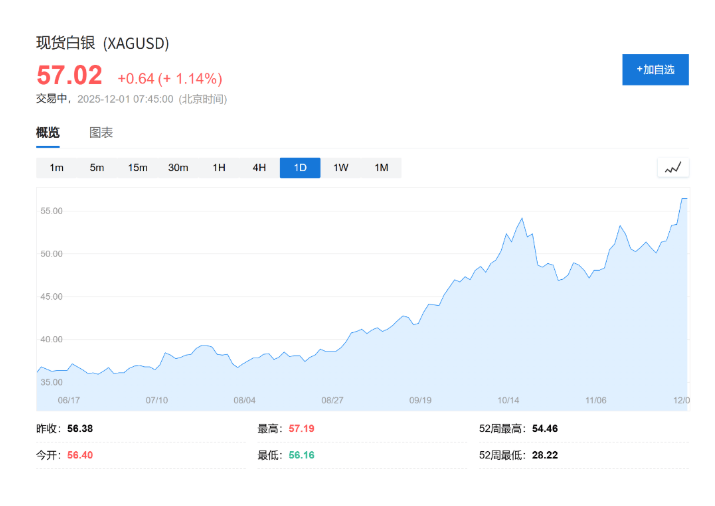
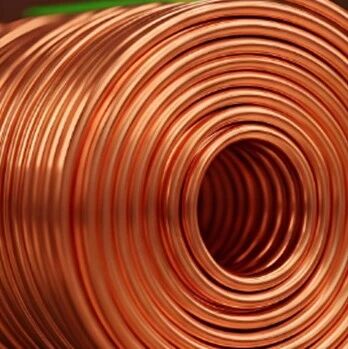
Group 1 - Silver prices reached an all-time high of $57 per ounce, while Comex silver futures hit a record of $57.81, indicating a significant surge in the commodity market [3] - Copper prices also rose sharply, reaching $11,210.5 per ton, contributing to a heated commodity market as 2024 approaches [3] - The current price surge is attributed to a combination of global inventory shifts, structural shortages, and a dovish turn from the Federal Reserve [4] Group 2 - China's silver exports surged to 660 tons in October, marking a historical peak, while Shanghai Gold Exchange's inventory fell below 716 tons, the lowest since 2016 [5] - Concerns over potential tariffs have led traders to move silver and copper from Asian warehouses to the U.S. to lock in price premiums, resulting in a more than 40% drop in London copper inventories since late August [5] - Codelco, the world's largest copper producer, plans to increase its annual premium for copper shipments to China from $89 per ton to $350 per ton, reflecting heightened anxiety over raw material supply [5] Group 3 - Expectations for interest rate cuts have strengthened, with market bets on a 25 basis point cut by the Federal Open Market Committee in December rising to 80% [6] - The low interest rate environment reduces the opportunity cost of holding silver, leading to increased net long positions in ETFs and hedge funds, which have reached a four-year high [6] - The simultaneous decline in exchange inventories, Chinese social inventories, and bonded warehouses, combined with the expectation that new mining capacity in South America will not materialize until at least Q2 2025, is likely to amplify price volatility [7] Group 4 - Analysts expect London copper to challenge $12,000, while silver could reach $60 if it maintains above $57, indicating a potential new commodity supercycle [7] - The linkage between silver and copper prices is seen as a signal of a new phase in the commodity market, beyond the simple resonance between precious and industrial metals [7]