商品

Search documents
曾准确预测1987年全球股灾和2008年美国次贷危机,84岁“商品大王”:我清空了美股,但绝不会卖掉金银铜
Mei Ri Jing Ji Xin Wen· 2026-02-10 12:36
Group 1: Investment Strategy - Jim Rogers has liquidated all his U.S. stock holdings and views gold, silver, and copper as "perfect insurance" for potential economic crises, planning to pass them on to future generations [3][4] - He emphasizes the importance of holding physical metals, stating that they serve as a crucial safeguard in times of economic turmoil and can also appreciate in value during stable periods [4][5] Group 2: Market Insights - Silver experienced a significant price increase of 147% in 2025, driven by industrial demand, but Rogers maintains that he will not trade silver for short-term profits, preferring to hold it long-term [5][6] - Copper prices have reached historical highs due to its essential role in electric vehicles and infrastructure, with Rogers advising investors to retain their copper holdings due to increasing demand and limited new supply [6][7] Group 3: Economic Concerns - Rogers warns that the U.S. national debt, currently at $38 trillion, poses a severe risk, predicting that the next financial crisis could be the worst he has ever witnessed, rooted in overwhelming global debt levels [3][10][12] - He draws parallels between the current U.S. debt situation and historical precedents, suggesting that excessive national debt often leads to significant economic crises [9][10] Group 4: Views on China - Rogers has been a long-time bull on the Chinese economy, citing its unique resilience and potential for recovery after downturns, and expresses optimism about sectors like tourism and agriculture in China [16][17] - He believes that external pressures can stimulate innovation within China, particularly in technology sectors, including artificial intelligence [17][19]


融智投资FOF市场周报2026年01月第5周
私募排排网· 2026-02-03 01:40
Investment Rating - The report does not explicitly provide an investment rating for the industry Core Insights - The A-share market is experiencing a volatile adjustment, with major indices mostly declining, yet maintaining an average daily trading volume above 3 trillion yuan, indicating active market participation [2] - The market is shifting its focus from cyclical sectors to technology growth, with significant sector differentiation observed [5] - The adjustment in the market is influenced by two main factors: a sharp decline in precious metal prices and a return of the PMI data to contraction territory, raising concerns about the economic fundamentals [5] - The 10-year government bond yield has decreased by approximately 1.86 basis points to 1.81%, primarily due to the "stock-bond seesaw" effect from the equity market adjustment [5] - The report highlights a significant drop in gold prices, with London spot gold experiencing a single-day decline of over 9%, marking the largest drop in nearly 40 years [5] - Lithium carbonate prices have also fallen sharply, with a weekly decline of over 18%, driven by profit-taking and stricter regulatory measures [5] Market Overview - The A-share market is characterized by a mixed performance, with the Shanghai Composite Index slightly down by 0.44% and the Shenzhen Component Index down by 1.62%, while the ChiNext Index showed relative resilience [5] - The market's adjustment is attributed to the volatility in precious metals and economic data, particularly the PMI returning to a contraction phase, which has dampened overall risk appetite [5] - The report notes that the central bank's actions to inject liquidity through open market operations are aimed at stabilizing the funding environment ahead of the upcoming government bond supply peak [5] Sector Performance - The report indicates that sectors such as oil and petrochemicals, telecommunications, and coal have shown strong performance, while previously high-performing sectors like defense, electric equipment, and automotive have seen notable corrections [5] - The report emphasizes the need for investors to focus on sectors with genuine technological breakthroughs and solid order backing, particularly in the context of the commercial aerospace and artificial intelligence themes [9] Economic Indicators - The report mentions that the January PMI data has intensified market concerns regarding economic fundamentals, necessitating close attention to potential growth-stabilizing policies [9] - The report also highlights the importance of monitoring the central bank's liquidity management and government bond issuance pressures in the near term [5][9]
How the Fed impacts stocks, bonds, crypto and other investments
Yahoo Finance· 2026-01-28 18:52
Cryptocurrency Market - In 2022, cryptocurrency prices struggled due to rising interest rates, but began to recover in 2023 and 2024 following the introduction of bitcoin ETFs [1] - By the end of 2025, cryptocurrency prices deteriorated while precious metals reached new highs [1] - The performance of major cryptocurrencies like bitcoin and ethereum has been volatile, with many coins failing to keep pace with the rise of precious metals [11][12] Stock Market Performance - Major stock indexes, including the S&P 500, experienced a downturn in 2022 but rebounded significantly in 2023, with a 24% increase [2] - The S&P 500 continued to rise by 23% in 2024 and ended 2025 with a 16% annual return after recovering from a downturn related to President Trump's tariffs [2] - The stock market outlook improved as investors gained clarity on the end of rising interest rates in 2023 [3] Interest Rate Impact - The Federal Reserve raised interest rates 11 times starting in 2022, which significantly affected various asset classes, including stocks, bonds, and cryptocurrencies [4][7] - Interest rates are a primary tool for the Fed to influence economic activity, with lower rates stimulating growth and higher rates slowing it down [5] - The Fed has cut interest rates six times since September 2024, indicating a shift in monetary policy [5] Labor Market and Economic Conditions - The labor market showed signs of slowing but may be at a turning point, with inflation decreasing from its 2025 peak [6] - Economic conditions remain uncertain as policymakers await new data before making further decisions [6] Commodities Market - Precious metals have shown strong performance, while oil prices fluctuated between $70 and $85 in 2024, dropping below $60 in 2025 due to economic concerns [10][14] - The performance of commodities has been mixed, with gold and silver reaching record highs while oil faced challenges [10][14]
证券研究报告、晨会聚焦:固收吕品:商品行情“缩圈”,关注债市长端品种走势分化-20260119
ZHONGTAI SECURITIES· 2026-01-19 14:27
Core Insights - The report highlights a "contraction" in commodity markets, with a focus on the differentiated performance of long-end bonds in the debt market [3][4] - Recent macro data has shown positive trends, with social financing and export figures exceeding expectations, indicating a recovery in economic sentiment [3][4] - The report notes a significant increase in foreign exchange settlements, reaching the highest monthly value since 2014, driven by strong export growth and expectations of RMB appreciation [3][4] Commodity Market Analysis - Commodity prices have cooled down recently, with a notable "contraction" in market activity, particularly in the precious and non-ferrous metals sectors [3][4] - The South China Commodity Index has risen by 3.7%, with precious metals and non-ferrous metals leading the gains, while energy, black metals, and agricultural products have shown weaker performance [3][4] - The report identifies a divergence in the performance of different metal categories, with precious metals outperforming non-ferrous and black metals [4] Debt Market Insights - The debt market is currently in a relatively balanced range, with 30-year government bond yields around 2.3% and 10-year yields returning to the central bank's target range of approximately 1.85% [4][5] - There is limited room for further declines in short-term bond yields, as market participants shift from a bearish to a more neutral stance [5] - The report suggests that the recent buying activity from major banks, particularly in the 7-10 year maturity range, is providing crucial support for current interest rates [5] Investment Strategies - The report recommends focusing on high-odds, trading-oriented small metals and silver if risk preferences shift, while suggesting a focus on high-probability copper and aluminum if conditions remain stable [4][5] - The performance of perpetual bonds and secondary capital bonds is highlighted as a key area to watch, with strong buying interest from specific investor segments [6]
核心是能够找到多少“预期差”!淡水泉赵军与陶冬最新对话,细谈2026年投资机会
聪明投资者· 2026-01-19 07:03
Core Viewpoint - The dialogue emphasizes a pragmatic and optimistic investment approach, focusing on identifying and leveraging "expectation gaps" in low-attention assets as key investment opportunities for 2026 [4][6]. Group 1: Market Outlook for 2026 - Investor sentiment towards Chinese assets is warming, with expectations for a "slow bull" market emerging as macroeconomic and geopolitical concerns become less pressing [5][9]. - The market logic is shifting from valuation recovery to profit-driven growth, necessitating a more nuanced understanding of industry and company performance [5][9]. - Liquidity is expected to be a significant supportive factor for the stock market, with both institutional and individual investors showing increased willingness to allocate funds to equities [13][14]. Group 2: Investment Opportunities - The focus for the next 6-12 months is on identifying "expectation gaps" in various sectors, particularly in low-attention assets that have not been fully recognized by the market [6][16]. - Key areas of interest include AI applications, innovative pharmaceuticals, and new consumer trends, with a particular emphasis on structural opportunities that arise from supply-demand constraints [7][22]. - The commodity bull market narrative is being driven by AI and material demand, with potential investment opportunities in mining and exploration sectors expected to yield significant returns [25]. Group 3: Consumer Trends - The concept of "new consumption" is evolving, with structural changes in consumer demographics and preferences creating new investment opportunities [27][28]. - The "people, place, and goods" framework is used to analyze consumption opportunities, highlighting the importance of understanding consumer behavior and market connections [28][29]. - Sustainable growth in consumer sectors is anticipated, particularly in areas that cater to younger and older demographics, as well as products that enhance personal satisfaction [30][31]. Group 4: Risk Management and Investment Strategy - The importance of recognizing crowded trades and consensus risks is emphasized, as these can lead to market volatility when expectations shift [32]. - Developing investment contingency plans and maintaining a proactive approach to market changes are crucial for navigating uncertainties [33]. - The company advocates for a team-based investment approach, leveraging diverse expertise to adapt to complex market scenarios [37].

圣保罗大范围停电或导致商贸和服务行业损失15亿雷亚尔
Shang Wu Bu Wang Zhan· 2025-12-17 16:44
Core Insights - The widespread power outage in the São Paulo region since December 10 has significantly impacted the local economy, particularly in the commerce and services sectors [1] Group 1: Economic Impact - The São Paulo State Federation of Commerce, Services, and Tourism estimates total losses could reach 1.5 billion Brazilian Reais, with the services sector accounting for approximately 1 billion Reais and the commerce sector around 510 million Reais [1] - If inventory and fixed costs are included, the actual impact on the economy may be even higher [1] Group 2: Sector-Specific Losses - The São Paulo Commercial Association reported that the commerce sector experienced sales losses of about 51.7 million Reais within two days [1] - The state hotel, restaurant, and bar association estimates that over 5,000 businesses have been affected, with related losses exceeding 100 million Reais [1]
政策助力下,中长期有望“稳中有进”
Datong Securities· 2025-12-16 07:55
Group 1 - The overall asset performance indicates that various asset classes have entered a period of fluctuation, with the equity market experiencing a high-level consolidation phase, primarily driven by the technology sector, while consumer and cyclical sectors remain weak [1][6]. - The Federal Reserve's recent interest rate cut was weaker than expected, limiting its positive impact on the U.S. and global economies, which in turn affects the capital markets [1][6]. - The Central Economic Work Conference in China reiterated a stable growth approach, with a focus on expanding domestic demand and improving investment, although the implementation of these policies may take time to materialize [2][10]. Group 2 - The A-share market is currently in a high-level consolidation phase, with limited substantial positive news and a preference for stability as the new year approaches [2][10]. - The report suggests a "barbell strategy" for asset allocation, recommending maintaining positions in the technology sector while cautiously considering opportunities in the consumer sector due to recent positive macro data [2][11]. - The technology sector is expected to remain a core driver of market performance, with significant opportunities arising from national competition and domestic innovation [10][11]. Group 3 - The bond market is following the trends of the equity market, showing a clear negative correlation, and is expected to remain under pressure without significant positive catalysts [3][32]. - The bond market's configuration suggests limited upward potential in the short term, but it may serve as a stabilizing option against equity market volatility [32]. Group 4 - The commodity market is experiencing a return to a fluctuating trend, with precious metals like silver supporting the upward movement of the precious metals index, while energy and chemical commodities are underperforming [4][41]. - The report anticipates that gold may continue to rise in the long term, driven by a decoupling from the U.S. dollar, although the overall strength of the commodity market will depend on the performance of metals and agricultural products [41][45].
A股市场关键时刻,最新研判
Zhong Guo Ji Jin Bao· 2025-12-08 01:37
Core Viewpoint - The investment outlook for 2026 suggests a focus on equity assets, particularly those with high price correlation, as the macroeconomic environment stabilizes and policy support continues [9][14][12]. Group 1: Macroeconomic Outlook - The macroeconomic environment is expected to maintain stability, with a key focus on whether the real estate market can stabilize and support further economic recovery [10][11]. - The A-share market may experience continued fluctuations in the first half of 2026, with potential upward movement in the second half driven by economic recovery expectations [3][10]. - The policy environment is anticipated to remain supportive, particularly as the "14th Five-Year Plan" begins [9][10]. Group 2: Asset Allocation Strategy - The preference for asset allocation in 2026 leans towards equities over fixed income, with a focus on sectors that are expected to perform well based on price dynamics [12][14]. - The ranking for asset allocation is suggested as commodities over Hong Kong stocks, which in turn are preferred over A-shares, followed by bonds [14][21]. - The equity market is expected to offer better value compared to fixed income assets, which may face challenges due to rising inflation and valuation constraints [13][14]. Group 3: Sector and Style Preferences - Growth styles are expected to outperform value styles in 2026, particularly in sectors related to AI and technology [15][16]. - There is a balanced outlook for both growth and value styles, with specific attention to sectors that are closely tied to price movements, such as new energy and consumer services for growth, and chemicals and construction materials for value [17][18]. - The cyclical sector is anticipated to perform well due to low price-to-book ratios and expected improvements in profit growth [12][18]. Group 4: Fixed Income Market Insights - The bond market is expected to experience fluctuations, with a focus on short to medium-duration bonds as the preferred investment choice [19][20]. - The current low yield environment for bonds suggests limited upside potential, making careful selection of bond funds crucial [20][21]. - The anticipated rise in inflation may impact the performance of long-duration bonds, leading to a preference for short-duration strategies [19][20]. Group 5: Commodity and Global Market Considerations - Commodities, particularly precious metals like gold and silver, are expected to remain attractive due to global liquidity conditions and potential price recovery [21][22]. - The performance of Hong Kong stocks, especially those of mainland companies, is likely to benefit from domestic economic growth and favorable global liquidity [5][21]. - The outlook for U.S. Treasuries is positive, especially in the context of a slowing U.S. economy, which may enhance their appeal as a safe-haven asset [23][24].

2026年全球资产配置展望
2025-11-24 01:46
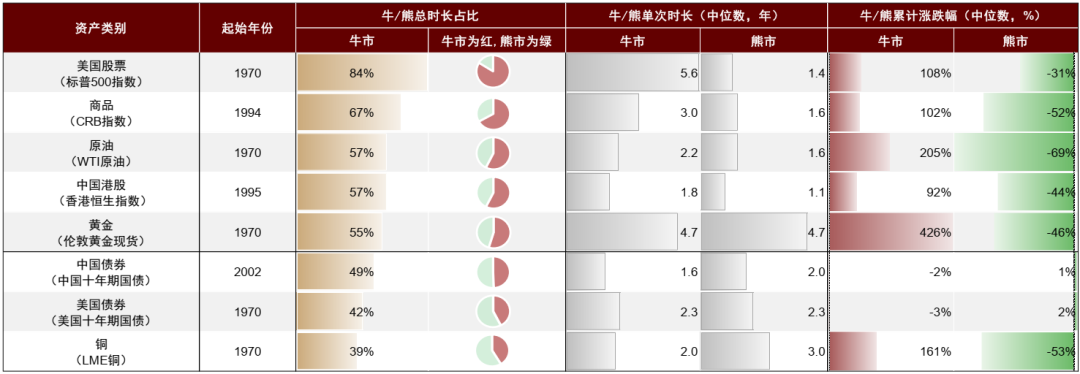
Summary of Key Points from the Conference Call Industry or Company Involved - The discussion primarily revolves around global asset allocation, focusing on the stock and gold markets, particularly in the context of China and the United States. Core Insights and Arguments 1. **Global Market Trends**: The global stock and gold markets are benefiting from a technological revolution, with growth stocks outperforming value stocks. Chinese stocks are performing better than U.S. stocks. Recommendations include overweighting gold and Chinese tech stocks while underweighting commodities and U.S. dollar assets, a strategy that has been validated by market prices [1][2][28]. 2. **Current Market Conditions**: U.S., A-share, and Hong Kong stocks are in a bull market, with A-share and Hong Kong stocks nearing historical medians. The U.S. stock market and gold have had prolonged bull markets but still have room for growth. The key to determining the peak of Chinese stocks lies in economic policies, liquidity, and earnings valuations [1][6][18]. 3. **Investment Concerns for 2026**: Two main concerns for 2026 are whether the bull markets in stocks and gold can continue and what measures to take if market conditions change. Recent pullbacks in Chinese, U.S. stocks, and gold indicate that the market is contemplating potential changes in future trends [3][4]. 4. **Valuation Analysis**: Current valuations show that gold, U.S. stocks, and Chinese bonds are relatively high, while U.S. bonds and commodities are undervalued. A-shares and Hong Kong stocks are at moderate valuations. The geopolitical events can impact markets, typically negatively affecting stocks while boosting gold and commodities [4][22][23]. 5. **Asset Class Switching Patterns**: Historical data indicates that U.S. stocks have a longer bull market duration (84% of the time) compared to the more volatile Chinese stocks. The switching patterns of different asset classes require careful monitoring of market peaks [5][6]. 6. **Top Prediction Challenges**: Predicting market tops is complicated by various bullish narratives and the difficulty of timely decision-making even when correct signals are received. The need for a multi-dimensional approach to analyze market signals is emphasized [10][11][12]. 7. **Impact of U.S. Federal Reserve Policies**: The Fed's monetary policy is crucial for asset prices. Current loose policies support asset prices, but potential tightening could pressure both stocks and gold. The Fed's personnel changes may lead to a more dovish stance in the long term [20][21]. 8. **China's Economic Policy Influence**: China's incremental policies must meet expectations to avoid negative impacts on macro liquidity. The government is committed to stabilizing growth, which is expected to support the economy and maintain stable M1 and M2 growth rates [21][24]. 9. **Geopolitical Events**: Recent geopolitical events, such as trade wars, have significantly influenced market trends, generally negatively impacting stocks while benefiting gold and commodities [23]. 10. **Valuation Concerns**: High valuations in gold and U.S. stocks increase the risk of market corrections. However, there is no clear evidence that these factors will reverse the current bull market trends, suggesting a continued overweight in Chinese stocks and gold [25][28]. Other Important but Possibly Overlooked Content 1. **Commodity Allocation Strategy**: Increasing commodity allocations is recommended to hedge against potential changes in stock and gold bull markets. Commodities are currently undervalued and could benefit from various scenarios, including better-than-expected economic performance or geopolitical shocks [26][29]. 2. **Specific Asset Class Recommendations**: - **Chinese Stocks**: Maintain an overweight position with a more balanced style, anticipating value and cyclical sectors to catch up. - **Chinese Bonds**: Downgrade from standard to underweight due to better opportunities in other assets. - **U.S. Stocks**: Maintain a standard allocation, given the high valuations and better performance of non-dollar assets. - **Gold**: Continue to overweight but be cautious of volatility, suggesting a strategy of buying on dips rather than chasing prices [27][29].
中金2026年大类资产展望:超配中国股票与黄金 标配美股与美债
智通财经网· 2025-11-17 00:40
Group 1 - The article discusses the importance of identifying market tops for Chinese stocks and gold, emphasizing that economic and policy signals are crucial for making accurate predictions [1][10][40] - It highlights that the U.S. stock market has a long bull market duration, while Chinese stocks experience more frequent bull-bear switches, making timing more critical for Chinese stocks [5][10] - The analysis indicates that gold's bull and bear markets are lengthy with low switching frequency, suggesting that identifying tops is also significant for gold [1][5] Group 2 - Four key factors are identified that could potentially alter the bull market trends for stocks and gold in 2026: growth direction, tightening policies, high valuations, and geopolitical shocks [2][39] - The current economic conditions in China are characterized as a "weak recovery," while the U.S. is moving towards "stagflation," which could impact the performance of stocks and gold differently [2][41] - The article suggests that while there are no immediate signals indicating a top for the current bull markets, high valuations for gold may lead to increased volatility in the future [26][36][40] Group 3 - The asset allocation recommendation includes overweighting Chinese stocks and gold, while maintaining a neutral position in U.S. stocks and bonds, and adjusting commodity exposure to neutral [3][4] - The rationale for these recommendations is based on the ongoing AI technology wave and liquidity conditions benefiting Chinese stocks, while gold is supported by the current monetary policy environment [3][4] - The article notes that despite potential volatility, there are no clear signals indicating a market top for Chinese stocks or gold at this time [25][36]