公用事业

Search documents
华源晨会-20250818
Hua Yuan Zheng Quan· 2025-08-18 13:06
Fixed Income - Economic pressure is expected to rise in the second half of the year, with a focus on the bond market as a favorable investment opportunity. The current economic recovery is influenced by price adjustments, and the "anti-involution" policy has become a priority. The overall CPI and PPI improvements were below expectations in July, indicating a potential shift in economic growth momentum and income distribution structure [2][7][10] - The 10Y government bond yield is projected to fluctuate between 1.6% and 1.8% in the second half of the year, with current yields around 1.75%, presenting a favorable price-performance ratio. The report suggests a bullish outlook on long-duration municipal and capital bonds, as well as specific bank perpetual bonds [10][14] Nutritional Functional Food Industry - The nutritional functional food market in China is rapidly developing, with a market size projected to grow from CNY 233.1 billion in 2024 to CNY 349.9 billion by 2029, representing a compound annual growth rate (CAGR) of 8.5%. The overall market for nutritional health foods is expected to reach CNY 522.3 billion in 2024 and CNY 720.3 billion by 2029, with a CAGR of 6.6% [16][17] - Key players in the nutritional functional food sector include Kangbiter (brand operator), Wuxi Jinghai (raw material supplier), and Hengmei Health (contract manufacturer), indicating a well-structured industry chain [17] Pharmaceutical Industry - The pharmaceutical index increased by 3.08%, outperforming the CSI 300 index by 0.7%. Companies such as Sino Medical, Innovation Medical, and Guangsheng Tang saw significant stock price increases, indicating a broadening market trend in the pharmaceutical sector [26][27] - The report highlights the potential of tri-antibody therapies in cancer immunotherapy, with specific attention on Shanghai Yizhong's YXC-001 and other combinations, suggesting a promising future for these treatments [28][29] Metals and New Materials - The rare earth market is experiencing price increases, particularly for praseodymium and neodymium oxides, driven by improved export volumes. The price of tungsten concentrate has also surpassed CNY 200,000 per ton due to supply constraints and rising demand [21][22] - The report notes that the controlled nuclear fusion industry is accelerating towards commercialization, with significant opportunities for upstream materials suppliers [24] Public Utilities and Environmental Protection - The demand for Solid Oxide Fuel Cells (SOFC) is expected to rise, particularly in data center applications, presenting opportunities for domestic companies to expand internationally. The report emphasizes the importance of companies that supply upstream equipment and materials for SOFC [20][21] - Shaan Energy's new project in Guangdong aims to integrate power generation and data center operations, which is expected to enhance the company's growth prospects in the context of increasing green energy demand [5][6]

个人消费贷贴息政策出台,可关注哪些机会?
Datong Securities· 2025-08-18 13:06
Market Review - The equity market indices continued to strengthen, with the ChiNext Index showing the largest increase of 8.58% [4] - The bond market saw an increase in both short and long-term interest rates, with the 10-year government bond rising by 5.74 basis points to 1.747% [10] - The fund market experienced mixed results, with equity funds rising while medium and short-term pure bond fund indices declined [18] Equity Product Allocation Strategy - Event-driven strategies include focusing on the semiconductor sector due to the upcoming China Semiconductor Ecosystem Development Conference and the newly introduced personal consumption loan interest subsidy policy [21][20] - Asset allocation strategy suggests a balanced core plus a barbell strategy, emphasizing dividend and technology sectors [23] - Recommended funds include those focused on consumer and infrastructure sectors, as well as technology growth styles [23][27] Stable Product Allocation Strategy - The central bank's recent operations indicate a net withdrawal of 414.9 billion yuan, maintaining a balanced liquidity environment [29] - Economic data for July shows a year-on-year industrial value-added growth of 5.7% [29] - Social financing data indicates a total stock of 431.26 trillion yuan, with a year-on-year growth of 9% [29] Key Focus Products - Recommended products include short-term bond funds like Nord Short Bond A and Guotai Li'an Medium and Short Bond A, as well as funds benefiting from convertible bonds and equity market opportunities [2][34]
8月18日沪深两市强势个股与概念板块
2 1 Shi Ji Jing Ji Bao Dao· 2025-08-18 10:33
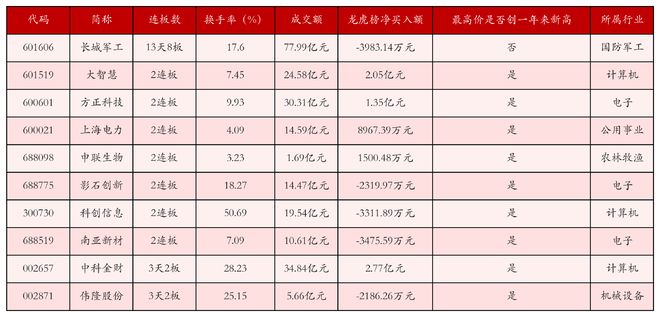
Strong Stocks - As of August 18, the Shanghai Composite Index rose by 0.85% to 3728.03 points, the Shenzhen Component Index increased by 1.73% to 11835.57 points, and the ChiNext Index climbed by 2.84% to 2606.2 points [1] - A total of 118 stocks in the A-share market hit the daily limit, with the top three strong stocks being: Great Wall Military Industry (601606), Da Zhi Hui (601519), and Founder Technology (600601) [1] - Great Wall Military Industry had 13 trading days with 8 limit-ups, a turnover rate of 17.6%, and a transaction amount of 7.799 billion yuan [1] - Da Zhi Hui achieved 2 consecutive limit-ups, with a turnover rate of 7.45% and a transaction amount of 2.458 billion yuan [1] - Founder Technology also had 2 consecutive limit-ups, with a turnover rate of 9.93% and a transaction amount of 3.031 billion yuan [1] Strong Concept Sectors - The top three concept sectors with the highest increase in A-shares are: Liquid Cooling Servers, Sci-Tech New Stocks, and Huawei HiSilicon Concept Stocks [2] - The Liquid Cooling Servers sector saw a decline of 6.31%, with 96.55% of its constituent stocks rising [2] - The Sci-Tech New Stocks sector experienced a decline of 5.51%, with 93.33% of its constituent stocks increasing [2] - The Huawei HiSilicon Concept Stocks sector had a decline of 4.93%, with 94.0% of its constituent stocks rising [2] - Other notable sectors include F5G Concept and Short Drama Games, both with declines of 4.61% but high percentages of rising constituent stocks [2]


中期市场展望:居民资金入市与“慢牛”格局的正反馈逻辑
Sou Hu Cai Jing· 2025-08-18 10:28
Macroeconomic Background - The A-share market has gradually emerged from a period of volatility since 2025, showing a relatively stable upward trend supported by domestic economic resilience and external environmental changes [1][3] - Global trade uncertainties have increased, but the impact of tariff shocks has not led to systemic risks, as domestic investors have shown confidence in China's economic fundamentals [1][3] - The domestic economy is undergoing a structural transformation, with manufacturing upgrades and capital market reforms providing new growth opportunities [3][4] Funding Logic - As of mid-2025, Chinese households have accumulated significant excess savings, with household deposits exceeding the trend line from 2011 to 2019 by over 50 trillion yuan, indicating a large potential fund pool for the stock market [4][5] - The ratio of A-share total market value to household deposits is at a historical low, suggesting that the transition of household funds into the market is just beginning [5][6] Institutional and Reform Dynamics - The direction of capital market reforms since 2024 has become clearer, focusing on "increasing investor returns" through improved dividend policies and optimized delisting systems [7][8] - Institutional reforms are reshaping perceptions of Chinese assets, leading to a decrease in risk premiums and creating long-term space for valuation expansion [7][8] Industry Allocation New Growth Directions - The AI industry is entering a phase of accelerated industrialization, with domestic supply chains rapidly innovating and replacing foreign counterparts [9] - The manufacturing upgrade trend is expected to drive the adoption of industrial and service robots, supported by policy emphasis on new productivity [10] - Solid-state batteries are anticipated to be a breakthrough in electric vehicles, with key domestic companies accelerating R&D [12] - The pharmaceutical sector is benefiting from aging populations and rising health demands, with innovative drugs showing growth potential [13] Financial Sector - The financial sector is poised to benefit from increased market activity as household funds enter the market [14] - Brokerage firms will see enhanced trading activity and expansion in investment banking services [15] - Insurance companies will experience improved returns due to favorable interest rates and a recovering equity market [16] - Banks remain attractive for defensive allocations due to stable dividends and low valuations [17] Thematic Opportunities - The military industry is expected to grow due to geopolitical uncertainties, with a focus on self-sufficiency in critical technologies [18] - Emerging industries like drones and general aviation are gaining traction with significant policy support [19] - Marine technology sectors are projected to grow under the "blue economy" strategy [20] Defensive Allocation - High-dividend assets are becoming preferred defensive options in a declining risk-free interest rate environment, with sectors like coal, oil, and utilities offering attractive yields [21] Conclusion - The mid-term outlook for the A-share market remains positive, supported by economic resilience, household funding potential, and institutional reforms [26] - A virtuous cycle is expected as household deposits gradually shift to the stock market, leading to steady index growth and low volatility [26] - The market is anticipated to present structural opportunities across various sectors, making it an optimal time for long-term investors to gradually position themselves [26]
天津津燃公用(01265.HK)8月28日举行董事会会议审议及批准中期业绩
Ge Long Hui· 2025-08-18 09:44
Core Viewpoint - Tianjin Jinan Public Utilities (01265.HK) announced a board meeting scheduled for August 28, 2025, to review and approve the interim results for the six months ending June 30, 2025, and to consider the proposal for an interim dividend, if any [1] Summary by Relevant Categories - **Company Announcement** - The company will hold a board meeting on August 28, 2025, to discuss its interim performance and potential dividend distribution [1] - **Financial Reporting** - The meeting will include the review and approval of the interim results for the six months ending June 30, 2025 [1] - **Dividend Consideration** - The agenda will also consider the proposal for an interim dividend, subject to approval [1]
加仓!加仓!净买入超6400亿元
Zhong Guo Ji Jin Bao· 2025-08-18 09:33
Core Insights - The insurance industry is experiencing steady growth in key metrics, driven by sustained savings demand and the implementation of the "reporting and operation integration" policy [1] - Insurance funds are increasingly adopting a "barbell" investment strategy, enhancing allocations in both bonds and equities [3] Group 1: Industry Performance - As of mid-2025, the total assets of the insurance industry grew by 9.2% year-on-year, with total premium income increasing by 5.1% [1] - The growth in premium income is primarily driven by life insurance, with a reported growth rate of 5.4% for the first half of the year, up from 3.3% in the previous month [1] Group 2: Investment Allocation - By the end of Q2 2025, the balance of insurance funds reached 36.23 trillion yuan, a year-on-year increase of 17.39%, with a quarter-on-quarter growth of 3.7% [1] - The allocation to equities has significantly increased, with a total stock balance of 3.07 trillion yuan, representing an 8.8% share of the total investment, and a net increase of 640.6 billion yuan in the first half of the year [2] - The bond allocation remains the primary focus, accounting for over 51% of the total, with a bond balance of 17.87 trillion yuan, marking a new high [2] Group 3: Market Trends - The stock balance has surged by 47.57% compared to the previous year, outpacing the overall growth of insurance fund allocations [2] - The low interest rate environment has led to an "asset shortage," prompting insurance funds to increase their equity allocations and engage in long-term investment strategies [2] - Insurance funds are actively participating in the capital market through shareholding and private fund establishment, reflecting confidence in the recovery and long-term value of the insurance sector [3]
衰退式降息阴云笼罩,欧股牛市逻辑面临重估?
Hua Er Jie Jian Wen· 2025-08-18 06:38
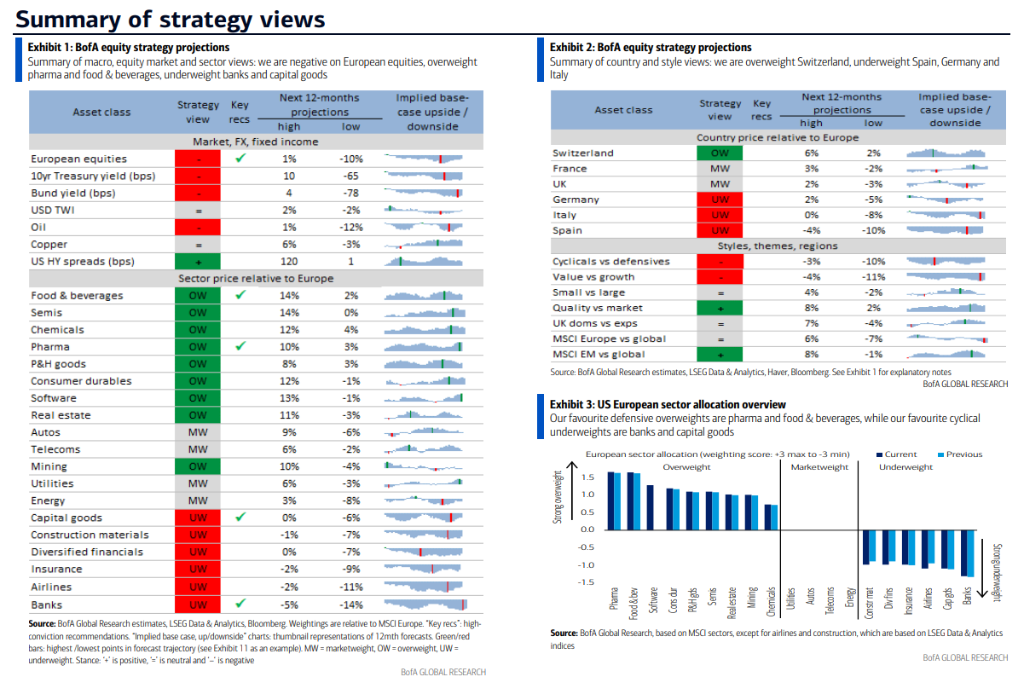
Group 1 - The U.S. labor market is significantly slowing down, with the average employment growth over the past three months dropping to only 35,000, well below last year's levels, raising concerns about the Federal Reserve potentially implementing "bad rate cuts" in response to labor market deterioration rather than inflation decline [1] - European equities are expected to face approximately a 10% correction pressure, with defensive sectors likely to benefit from this environment [1] - The decline in bond yields is anticipated to lead to downward adjustments in earnings expectations and valuation multiples, resulting in a stock market downturn amid slowing economic growth [1] Group 2 - If central banks adopt a more dovish stance due to falling inflation ("good rate cuts"), the decline in risk-free rates may not lead to a corresponding rise in risk premiums, thus supporting market growth [5] - Conversely, if rate cuts are in response to labor market and broader economic weakness ("bad rate cuts"), risk premiums are likely to rise, leading to a decrease in stock market valuations during economic slowdowns [5] - The global composite PMI new orders are projected to decline from the current 52 points to 49 points by the first quarter of next year, indicating rising risk premiums and downward adjustments in EPS expectations [5][6] Group 3 - The Stoxx 600 index is projected to face about a 10% downside, potentially dropping to 490 points by early next year, with a year-end target of 520 points [8][14] - European cyclical sectors are expected to decline relative to defensive sectors, with value stocks projected to underperform growth stocks by about 10% [8] - The pharmaceutical and food & beverage sectors are viewed positively, while the banking and capital goods sectors are expected to lag due to their recent strong performance [17]
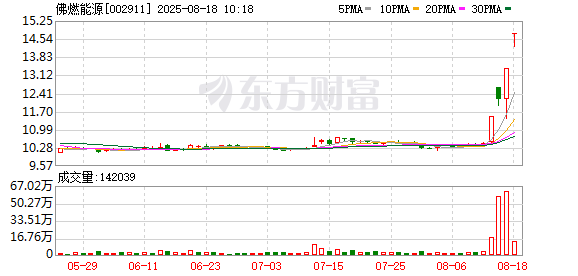
佛燃能源股价创新高,融资客抢先加仓
Zheng Quan Shi Bao Wang· 2025-08-18 02:17
Company Performance - 佛燃能源's stock price reached a historical high, increasing by 10.00% to 14.74 yuan, with a trading volume of 12.15 million shares and a transaction amount of 179 million yuan [2] - The company reported a total revenue of 15.34 billion yuan for the first half of the year, representing a year-on-year growth of 8.59%, and a net profit of 309 million yuan, up 7.13% year-on-year [2] - The basic earnings per share were 0.2000 yuan, with a weighted average return on equity of 5.28% [2] Industry Overview - The public utility sector, to which 佛燃能源 belongs, experienced an overall increase of 0.36%, with 98 stocks rising, including 佛燃能源, which had the highest increase [2] - Other notable stocks in the sector included 升达林业 and 上海电力, with increases of 9.92% and 9.18% respectively [2] - In contrast, 22 stocks in the sector saw declines, with 建投能源, 新筑股份, and ST金鸿 experiencing the largest drops of 1.88%, 1.75%, and 1.74% respectively [2] Financing Activity - As of August 15, the margin trading balance for 佛燃能源 was 58.24 million yuan, with a financing balance of 57.71 million yuan, reflecting an increase of 19.73 million yuan over the past 10 days, a growth of 51.92% [2]
美国经济:零售保持韧性
Zhao Yin Guo Ji· 2025-08-18 02:05
Retail Performance - In July, U.S. retail and food service sales increased by 0.5% month-on-month, slightly below the market expectation of 0.6%[5] - The average monthly growth rate of retail sales rose from 0% in January-May to 0.7% in June-July, indicating a recovery in consumer demand[2] - Automotive sales rebounded, with a month-on-month growth rate increasing from 1.4% in June to 1.6% in July after a cumulative decline of 4.6% in the first five months of 2023[5] Industrial Output - Industrial production fell by 0.1% month-on-month in July, primarily due to declines in mining and utilities, which dropped to -0.4% and -0.2% respectively[5] - Manufacturing output remained flat at 0% month-on-month, with significant increases in medical equipment (2.6%) and semiconductors (2.9%), while apparel and automotive sectors saw declines[5] Economic Outlook - Federal Reserve Chair Jerome Powell's upcoming speech at Jackson Hole is expected to defend the independence of the central bank and reduce market expectations for significant interest rate cuts[2] - With inflation expected to rebound and unemployment rates remaining low, the Federal Reserve is anticipated to keep interest rates unchanged in September, followed by rate cuts in October and December[2]
就在今天|国泰海通 ·2025研究框架培训“洞察价值,共创未来”
国泰海通证券研究· 2025-08-17 22:48
Group 1 - The article outlines a comprehensive research framework training program titled "洞察价值,共创未来" (Insight Value, Co-create Future) scheduled for August 18-19 and August 25-26, 2025, focusing on various sectors including macroeconomics, consumption, finance, cycles, medicine, technology, and manufacturing [18][19]. - The training sessions will cover a wide range of topics, with specific time slots allocated for each area of research, such as food and beverage, internet applications, and renewable energy [14][15][16]. - The event will take place at the Guotai Junan Financial Bund Plaza in Shanghai, emphasizing the importance of in-depth analysis across all sectors [18]. Group 2 - The training program is designed to enhance the research capabilities of analysts and is led by various chief analysts specializing in different fields, ensuring a comprehensive approach to industry analysis [8][10]. - Participants will have the opportunity to engage with experts in macroeconomic research, strategy, fixed income, and various sector-specific studies, fostering a collaborative learning environment [14][15][16]. - The program aims to equip analysts with the necessary tools and insights to navigate the complexities of the financial markets and identify potential investment opportunities [18].