有色金属

Search documents
向新向优 点燃发展引擎
Ren Min Ri Bao· 2026-02-10 23:13
Group 1 - The article emphasizes the importance of developing new quality productivity as a strategic focus for high-quality economic development in China, particularly in the context of the 14th Five-Year Plan [8] - Various regions are implementing tailored strategies to enhance new quality productivity based on their unique resources, industrial foundations, and research capabilities [8] Group 2 - In Beijing's Changping District, the transformation of old factories into modern laboratories is highlighted, showcasing collaboration between local government and Tsinghua University to foster innovation and advanced manufacturing [9][10] - The establishment of the Beijing Tsinghua Frontier Interdisciplinary Innovation Research Institute aims to enhance the efficiency of the entire chain from basic research to technology transfer [10][11] Group 3 - In Luoyang, digital technology is being utilized to create immersive experiences in cultural tourism, significantly enhancing visitor engagement and driving economic growth [12] - The city has seen over 6 billion visitors and nearly 480 billion yuan in tourism revenue during the 14th Five-Year period, indicating a robust growth in the tourism sector [12] Group 4 - Harbin's Deep Ha Industrial Park is becoming a hub for technological innovation, with a focus on developing high-value industries and fostering collaboration between universities and enterprises [13][14] - The region has seen a significant increase in high-tech enterprises and a substantial number of technology achievements being transformed into economic benefits [14] Group 5 - In Guangxi, the introduction of AI in sugarcane farming has improved efficiency and reduced costs, with the "Didi Agricultural Machinery" platform facilitating the digitalization of farming operations [15][16] - The city has implemented numerous technological upgrades in sugar production, leading to a significant increase in production efficiency and output value [16] Group 6 - The establishment of the Xiaoshan Membrane Material Town in Hangzhou marks a shift towards industrial cluster development in membrane materials, with a projected industrial output of 6.7 billion yuan by 2025 [17][18] - The company involved has made significant investments in R&D, leading to a comprehensive innovation ecosystem in the membrane materials sector [18] Group 7 - The National Ocean Comprehensive Test Field in Sanya is advancing deep-sea exploration and development, with a focus on building a robust marine technology industry chain [19][20] - The region is expected to support over 2,000 scientific research voyages by 2025, indicating a growing emphasis on marine research and technology [20] Group 8 - In Chongqing, technological advancements in film production are significantly reducing production time and costs, with a complete industrial chain for film and television being established [21][22] - The region has attracted numerous film projects, enhancing its reputation as a technology-driven film production hub [22] Group 9 - In Gansu, collaborative innovation is driving the development of a modern copper smelting factory, showcasing the integration of new technologies and local resources [23][24] - The establishment of a local supply chain for key materials has led to reduced manufacturing costs and increased efficiency in production [24] Group 10 - Xinjiang is enhancing its green energy capabilities with the construction of a pumped storage power station, which acts as a "super battery" for stabilizing energy supply [25][26] - By 2025, the region aims to achieve significant milestones in renewable energy generation and storage capacity, contributing to a sustainable energy future [26][27]


2026开年开门红陷阱?美联储风暴来袭,存款搬家后,A股/黄金/美股该抄底还是离场?
Sou Hu Cai Jing· 2026-02-10 16:57
Group 1 - The market's strong start in 2026 is characterized by structural opportunities rather than a broad bull market, with significant gains in specific sectors like metals, media, and oil [2][3] - In the A-share market, the metals sector saw a remarkable increase of 22.59%, with notable stocks like Zhizhi New Materials rising by 234.08% [2] - The AI sector also experienced explosive growth, with multiple stocks achieving over 20% gains in a single day [2] Group 2 - The U.S. stock market is on a steady upward trend, benefiting from stable economic activity and employment expectations, but the gains are more moderate compared to A-shares [2] - Gold prices have surged, reaching historical highs due to geopolitical uncertainties and expectations of interest rate cuts by the Federal Reserve [2][3] Group 3 - The A-share market shows a mixed performance, with sectors like banking and home appliances declining, indicating a "two extremes" market condition [3] - The Federal Reserve's policies, influenced by external pressures, are creating uncertainty in the U.S. market, which may limit upward momentum [3][6] Group 4 - The Federal Reserve's current stance is described as "hawkish adjustment," with expectations of only 1-2 rate cuts in 2026, affecting the dollar's long-term outlook [8] - The "shadow banking" sector is gaining attention, with rising risks as financing costs increase, potentially impacting global liquidity [7][8] Group 5 - Domestic fiscal policies are clearly defined, focusing on boosting consumption, which provides a solid foundation for the A-share market [10] - Key sectors to watch include home appliances, new energy vehicles, and smart home technologies, which are expected to benefit directly from government incentives [10][11] Group 6 - The investment landscape in 2026 is marked by a trend of "deposit migration," with residents shifting savings into various investment markets [16] - A-share market is anticipated to continue its structural trend driven by consumption recovery and technological self-reliance, with cyclical industries also expected to benefit [16][17] Group 7 - The U.S. stock market is expected to face challenges due to the uncertainty surrounding Federal Reserve policies and external pressures, making it difficult to achieve a broad bull market [17] - Gold is viewed as a long-term investment opportunity, despite potential short-term corrections, due to its status as a safe-haven asset [17] Group 8 - The dollar is projected to experience short-term fluctuations but may weaken in the long term due to anticipated Federal Reserve rate cuts and global de-dollarization trends [18] - The bond market is not necessarily weak, as institutional investors continue to allocate funds to bonds for risk diversification [18] Group 9 - The Hong Kong stock market is expected to see valuation recovery in 2026, benefiting from domestic economic recovery and supportive policies [18]
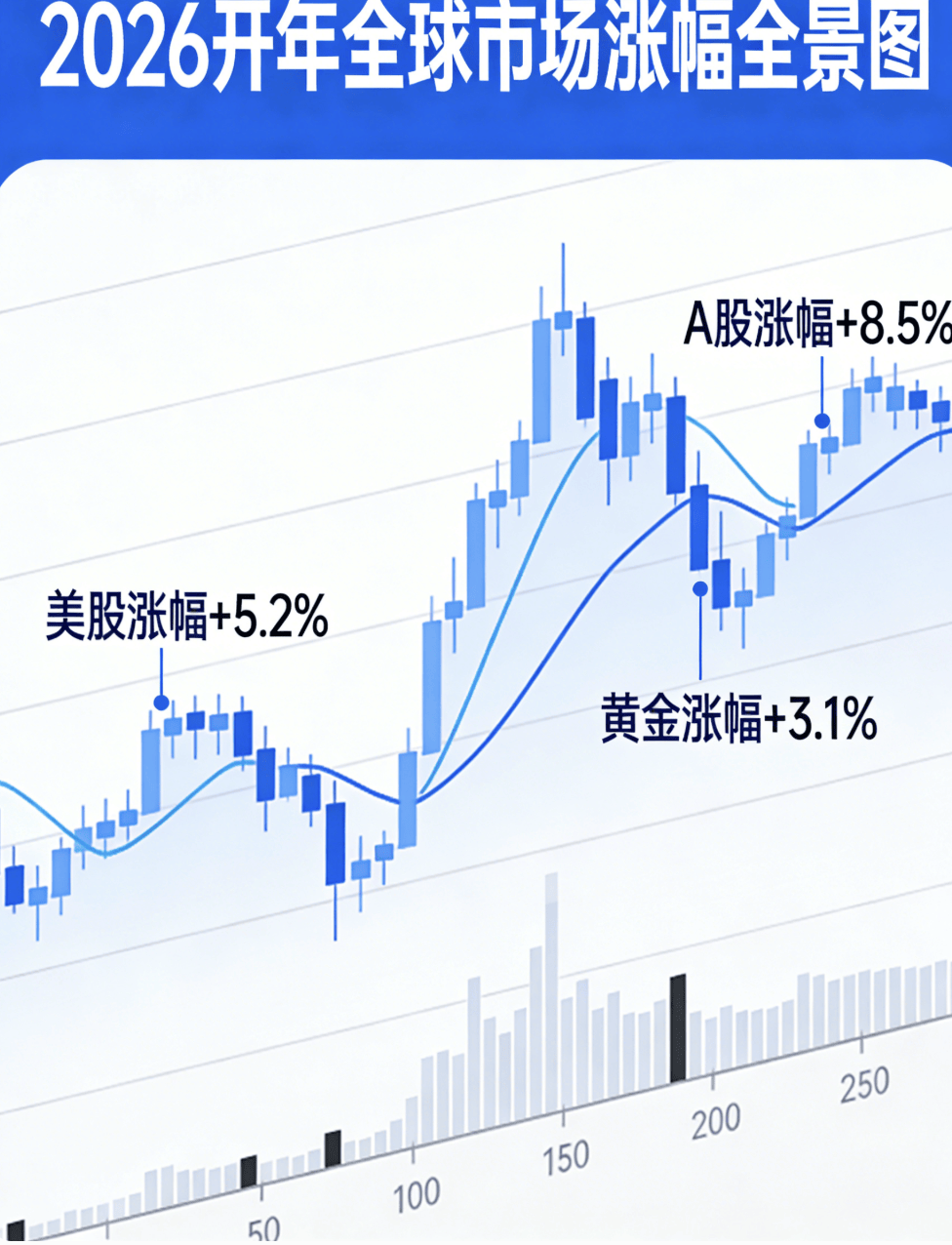
新材料2026年度策略:11种有色金属核心逻辑分析(附PPT)
材料汇· 2026-02-10 15:37
Global Economic Outlook - Global output growth is projected to slow down from 3.3% in 2024 to 3.1% in 2026, with developed economies growing at 1.8% in 2024 and emerging markets at 4.3% [3] - The U.S. economy is expected to grow by 2.8% in 2024, while China and India are projected to grow by 5.0% and 6.5% respectively [3] Inflation and Monetary Policy - Inflation levels in most economies remain above pre-pandemic levels, with core inflation in the Eurozone, U.S., and U.K. expected to stabilize around 3% [11] - Central banks are currently in a monetary easing cycle, but uncertainties around tariffs are constraining their ability to lower interest rates [11][12] - The U.S. Federal Reserve is expected to maintain a cautious approach to interest rate cuts, with potential cuts in 2026 and 2027 [32] Trade and Tariff Impact - The WTO forecasts global merchandise trade growth to slow from 2.8% in 2024 to 0.5% in 2026, influenced by higher tariffs and trade policy uncertainties [12] - Tariff impacts are expected to shift into 2026, with risks of trade restrictions spreading to more economies and sectors [12] Commodity Market Outlook - A potential super cycle for commodities is anticipated, driven by supply constraints and geopolitical factors [11] - Demand for metals such as copper, lithium, and tungsten is expected to rise due to new energy technologies and infrastructure investments [58] - The price of gold is likely to be supported by both monetary easing and inflationary pressures [29][33] Fiscal Policy and Debt Levels - Fiscal policies in developed economies are expected to remain neutral to slightly accommodative, with public debt levels projected to rise significantly by 2030 [12] - The U.S. public debt is expected to increase from 122% of GDP in 2024 to 143% by 2030, while the Eurozone's debt-to-GDP ratio is projected to reach 92% by 2030 [12] Real Estate Market - The real estate market in China is expected to continue a weak recovery, with policies aimed at stabilizing the market and addressing systemic risks [20]

2025年A股年报业绩预告点评:全A盈利有望延续改善,关注涨价链、出海链/TMT领域
CMS· 2026-02-10 14:04
Group 1 - The overall performance of A-shares is expected to continue improving, with a projected net profit growth rate of 26.8% for 2025, indicating a single-digit growth trend [5][23][27] - Approximately 2954 A-share companies have disclosed their 2025 annual performance forecasts, with a disclosure rate of about 54% and a positive forecast rate of 36.9%, which is lower than the mid-year report but higher than the same period last year [12][18][23] - Key sectors expected to see performance improvement include the price increase chain, overseas expansion chain, and TMT (Technology, Media, and Telecommunications) sectors, driven by demand from AI and new energy [2][29][30] Group 2 - The major industry performance rankings for 2025 are led by Information Technology, followed by Healthcare, Midstream Manufacturing, Resource Products, Financial Real Estate, and Public Utilities [26][27] - The sectors with the highest expected profit growth include non-bank financials, beauty care, textiles, retail, and non-ferrous metals, with non-bank financials showing a positive forecast rate of 87.5% [18][20] - The price increase chain, which includes industrial metals, energy metals, and chemical products, is expected to benefit from limited capacity expansion and demand driven by AI and new energy, leading to improved performance [29][31] Group 3 - The TMT sector is projected to maintain high growth due to strong demand for AI computing and storage, with specific areas like semiconductors and communication devices expected to see significant profit increases [29][30] - The overseas expansion chain, including automotive parts and medical devices, is anticipated to benefit from stable domestic demand and improving external demand [29][30] - Other sectors such as personal care products, medical services, and seasoning products are also recommended for attention due to their potential for performance improvement [2][29]
企业用期货·2026|北方铜业、森麒麟、铭利达套期保值公告
Sou Hu Cai Jing· 2026-02-10 12:02
Core Viewpoint - Companies are increasingly recognizing the importance of price risk management due to global commodity price fluctuations, engaging in futures and derivatives trading to safeguard high-quality development [1] Group 1: North Copper Industry - North Copper Industry announced plans to mitigate operational risks from price fluctuations of main products by engaging in copper, gold, and silver futures contracts through the Shanghai Futures Exchange, with a margin investment not exceeding RMB 700 million [2] - The company aims to align its futures hedging activities with its operational business to maximize the hedging of price volatility risks and has established a hedging management system to enhance internal controls and risk prevention measures [2] Group 2: Senqilin - Qingdao Senqilin Tire announced its intention to utilize the hedging functions of the futures market to effectively control market risks and mitigate adverse impacts from significant raw material price fluctuations, with a maximum margin and premium limit of RMB 200 million for its hedging activities [3] - The company will engage in futures contracts related to natural rubber and other commodities directly linked to its production operations, ensuring that the scale of its hedging activities matches its business operations [3] Group 3: Minglida - Minglida announced plans to conduct futures hedging activities to effectively address raw material price volatility risks, stabilize production costs, and enhance the predictability of its profitability, with a maximum margin and premium limit of RMB 250 million [4] - The company will limit its hedging activities to futures contracts for aluminum, aluminum alloys, and copper traded on domestic commodity exchanges, establishing a management system that outlines approval authority, operational processes, and risk control measures [4]


【10日资金路线图】两市主力资金净流出超320亿元,传媒等行业净流入居前
证券时报· 2026-02-10 11:49
Market Overview - On February 10, A-shares experienced a narrow range consolidation, with AI applications seeing a surge while sectors like photovoltaic and consumer goods weakened. The Shanghai Composite Index rose by 0.13%, the Shenzhen Component Index increased by 0.02%, and the ChiNext Index fell by 0.37%. The total trading volume for A-shares was 2.12 trillion yuan, down from 2.27 trillion yuan the previous day [2]. Capital Flow - The net outflow of main funds from the Shanghai and Shenzhen markets exceeded 32 billion yuan, with an opening net outflow of 14.475 billion yuan and a closing net outflow of 4.452 billion yuan, totaling 32.204 billion yuan for the day [3]. - Over the last five trading days, the main funds have shown a consistent trend of outflow, particularly in the ChiNext, which saw a net outflow of 131.42 billion yuan on February 10 [4][5]. Sector Performance - The media sector led in net inflows, with a 5.22% increase and a net inflow of 8.613 billion yuan, primarily driven by Light Media. Other sectors with positive inflows included computer (0.74%, 1.780 billion yuan) and banking (0.20%, 1.486 billion yuan) [6]. - Conversely, the power equipment sector experienced the largest net outflow, declining by 0.82% with a net outflow of 12.059 billion yuan, followed by the electronics sector with a net outflow of 11.110 billion yuan [6]. Institutional Activity - The top stocks with significant institutional net purchases included JuLi SuoJu (8.212 million yuan), Hangdian Co. (7.610 million yuan), and Xibu Materials (4.821 million yuan) [8]. - Notable stocks with high institutional interest also included AoFei Entertainment, which saw a 10.01% increase, and Wanxiang Qianchao, which rose by 10.03% [9]. Analyst Ratings - Recent analyst ratings highlighted several stocks with potential upside, including Nanwei Medical (target price 97.65 yuan, current price 82.38 yuan, upside 18.54%), and BaLong ChuangYuan (target price 31.36 yuan, current price 24.92 yuan, upside 25.84%) [10].

MONGOL MINING(00975):深度报告:从Coking变Mining,综合矿业龙头崛起
Guolian Minsheng Securities· 2026-02-10 11:37
Investment Rating - The report gives a "Buy" rating for MONGOL MINING (0975.HK) with a current price of HKD 11.79 [3]. Core Insights - MONGOL MINING has transitioned from a single coking coal producer to a diversified mining company, now involved in gold and copper production, with significant growth potential in these sectors [8][10]. - The company has a strong cost advantage in its coal operations, with a significant increase in coal production and sales expected in the coming years, particularly as it benefits from improved pricing dynamics in the Chinese market [10][52]. - The company is expected to initiate dividend distributions in 2026, with a projected dividend yield of up to 8.7% based on anticipated profit growth [8][10]. Company Overview - MONGOL MINING is the largest privately-owned mining company in Mongolia, focusing on high-quality coking coal, gold, and copper [15]. - The company has undergone significant changes since its IPO in 2010, evolving through various phases including resource integration, debt restructuring, and diversification into precious metals [15][24]. Coal Operations - The company has substantial coal resources, with a total resource volume of 916 million tons and a reserve of 612 million tons, primarily from its UHG and BN coal mines [8][34]. - The coal production is expected to reach 14.67 million tons in 2025, with a focus on increasing the washing rate to enhance product quality and sales [8][42]. Financial Performance - The company has shown a recovery in its financials post-debt restructuring, with a projected net profit of USD 242 million in 2024, increasing to USD 383 million by 2027 [3][10]. - The earnings per share (EPS) are expected to rise from USD 0.23 in 2024 to USD 0.37 in 2027, reflecting strong operational performance and cost management [3][10]. Market Dynamics - The pricing of Mongolian coal is expected to align more closely with the spot market prices in China, benefiting from a reduction in supply and increased demand [10][52]. - The company is well-positioned to capitalize on the anticipated supply shortages in the coking coal market in Inner Mongolia and Hebei, which are projected to continue through 2029 [49][50]. Future Prospects - The BKH gold mine is expected to contribute significantly to profits, with a projected output of 76,500 ounces in 2026, potentially generating USD 97 million in net profit [8][10]. - The company is also exploring further expansion in copper mining, with significant resources identified in its White Hill project [8][10].
2026年2月资产配置月报:全球风险资产波动加剧,宏观政策定调提质增效
Jin Rong Jie· 2026-02-10 10:12
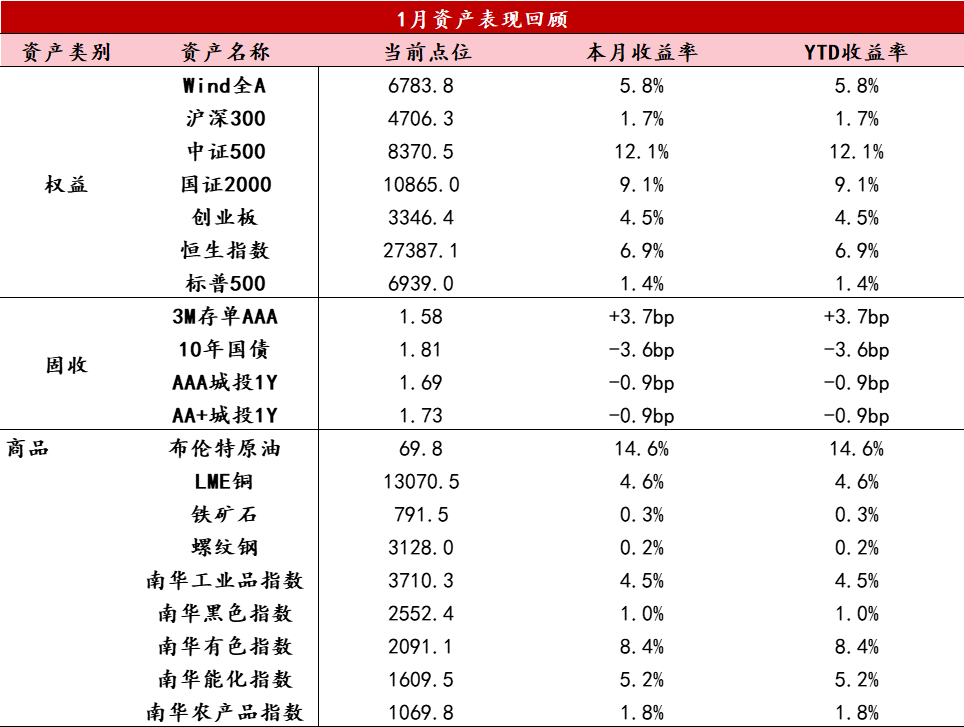
Asset Overview - In January, global risk assets experienced increased volatility due to changes in Federal Reserve interest rate expectations and geopolitical conflicts, with US stocks showing a strong upward trend [1] - The domestic market saw a return of funds, with equity assets continuing the upward trend from the end of last year, although regulatory measures led to a slowdown in growth [1] - The Wind All A index rose by 5.83% for the month, with the CSI 500 and CSI 1000 indices increasing by 12.12% and 8.68% respectively [1] - 80% of the Shenwan first-level industries saw gains, with strong performances in non-ferrous metals (+22.59%) and oil and petrochemicals (+16.31%) [1] - The Hang Seng Index rose by 6.85% in January, with a net inflow of 61.7 billion HKD from southbound funds [1] Bond Market Review - The bond market saw a downward adjustment followed by recovery, with most yield rates declining [2] - The 10-year government bond yield fell by 3.6 basis points to 1.81% during January [2] Commodity Market Review - The commodity market was generally bullish in January, with precious metals leading the gains; London gold prices rose by 13.01% to $4,880 per ounce [3] - Brent crude oil prices increased by 14.64% to $69.83 per barrel, while copper prices also saw gains [3] Macroeconomic Performance - The macroeconomic data for December indicated resilience in production, supported by external demand, while internal demand remained weak [5] - Industrial enterprises' profit margins showed positive growth for several months, with a 5.2% year-on-year increase in industrial value added [5] - Exports continued to exceed expectations, with a 6.6% year-on-year increase in December, driven by strong performance in machinery and high-tech products [6] Policy Outlook - Local government meetings have emphasized a "steady progress" approach, with an average GDP growth target of 5.0% for 2026 [10] - The focus of macroeconomic policy has shifted towards enhancing the quality of internal growth rather than merely expanding scale [10] Asset Allocation Analysis - The current economic environment is characterized by "strong supply, weak demand, and price stabilization," indicating an early recovery phase [24] - The asset performance ranking is expected to be bonds, stocks > commodities in the current phase [24]
节前金属价格走势预测:铅、锡、镍谁有机会?
Xin Lang Cai Jing· 2026-02-10 09:49
Group 1: Core Insights - The metal market is experiencing significant divergence, with tin prices surging past 390,000 yuan per ton, lead prices rising steadily, and nickel prices under pressure, highlighting a critical focus for year-end market dynamics [1][2][3] Group 2: Tin Market Analysis - Tin prices have skyrocketed to an average of 390,000 yuan per ton, with a single-day increase of 17,250 yuan, driven by low overseas inventory, pre-holiday demand from electronics manufacturers, and tightening logistics [1] - Despite the surge, there are concerns about potential price corrections as the recent rally may have exhausted some upward momentum, suggesting caution against chasing high prices [1] Group 3: Nickel Market Analysis - Nickel prices are underperforming, with an average price of 139,650 yuan per ton, reflecting a daily decline of 700 yuan, primarily due to high overseas inventory and weakened demand from domestic nickel-iron production [2] - The outlook for nickel remains bleak, with insufficient growth in demand from the renewable energy sector and significant pressure from pre-holiday cash flow needs, making a rebound unlikely in the short term [2] Group 4: Lead Market Analysis - Lead prices are showing a stable upward trend, averaging 16,750 yuan per ton with a daily increase of 150 yuan, supported by consistent demand from lead-acid battery manufacturers [2] - The supply of lead concentrate remains stable, contributing to a balanced supply-demand dynamic that supports lead prices, making it a more reliable investment option compared to the volatility in tin and the weakness in nickel [2][3] Group 5: Overall Market Summary - The pre-holiday metal market is characterized by "strong volatility in tin, weak pressure in nickel, and stable support in lead," indicating a need for cautious investment strategies [3] - Investors are advised to prioritize opportunities in lead due to its stability, exercise caution with the volatile tin market, and avoid risks associated with declining nickel prices to secure year-end profits [3]

铝 | 氧化铝:亏损面加大,价格有望否极泰来
中金有色研究· 2026-02-10 09:02
Industry Overview - As of January 2026, China's metallurgical-grade alumina production decreased by 1.8% month-on-month and 2.6% year-on-year, with a total capacity of 110.32 million tons, reflecting a slight contraction in supply [1] - The industry faces significant losses, with 62.85 million tons of production capacity (64.9%) operating at a complete cost loss and 23.05 million tons (23.8%) at a cash cost loss, indicating a widening loss margin compared to December 2025 [1] Commentary - The expanding loss margin in the alumina industry suggests that supply contraction may stimulate a price rebound. Although the industry currently maintains a supply surplus, the high percentage of loss-making capacity indicates that prolonged losses could lead to production shutdowns, which would drive prices up. Short-term supply contraction is evident as maintenance capacity has started to increase, reaching 1.5 million tons (1.6%) in the last week of January 2026 [2] - The trend of "anti-involution" in the alumina industry is expected to reshape the market dynamics, focusing on stricter management and optimized project layouts. This includes rigorous compliance checks and monitoring of existing projects, as well as ensuring new projects meet national regulatory requirements to prevent chaotic investments, which may suppress future supply and reshape the supply-demand balance [2] Guinea's Impact - Guinea significantly influences global bauxite supply, accounting for 40.6% of global production and 74.3% of China's imported bauxite in 2025. The potential changes in mining policies following the new president's inauguration in 2026 could disrupt the global bauxite supply landscape, potentially leading to a price reversal [3]