
外卖

Search documents
中国公司全球化周报|美团Keeta在卡塔尔上线并计划进入巴西/长城汽车巴西工厂竣工投产
3 6 Ke· 2025-08-24 11:25
Company Developments - Meituan's international delivery brand Keeta has officially launched in Doha, Qatar, with plans to expand into more Gulf Cooperation Council (GCC) countries and enter the Brazilian market in a few months [2] - Great Wall Motors has completed the construction and production launch of its factory in Brazil, located in Iracemapolis, São Paulo, with an annual production capacity of 50,000 vehicles [2] - AliExpress has launched its "overseas hosting" model in Australia, following its implementation in several other countries including the US and Mexico [2] - Cha Bai Dao has announced the opening of its first North American store in New York, marking its entry into the US market, following successful expansions in Singapore and France [2] Strategic Expansion - Lenovo Group plans to establish a regional headquarters in Riyadh, Saudi Arabia, and has begun construction on a manufacturing facility expected to start trial production in 2026 [3] - MINISO's founder expressed intentions to expand the MINISO LAND stores overseas, emphasizing the importance of proprietary IP alongside global IP [3] - Leap Motor has achieved a milestone by reporting its first half-year profit, with overseas markets becoming a significant growth driver [3] - Pop Mart aims to expand into emerging markets such as the Middle East and South Asia, expecting to exceed 200 overseas stores by the end of the year [4] Financial Performance - Pop Mart reported a revenue of 13.88 billion yuan for the first half of 2025, a year-on-year increase of 204.4%, with adjusted net profit rising by 362.8% [4] - Xiaomi's automotive division is expected to start generating profits in the second half of the year, with plans to avoid price wars [4] - XGIMI's Vietnam factory has launched its first projector, with overseas revenue projected to reach 1.086 billion yuan in 2024, marking an 18.94% year-on-year increase [5] Market Trends - The user-side energy storage market is showing signs of recovery, with a focus on high-growth new markets and a concentration of market players [8] - Chinese innovative pharmaceutical companies are transitioning from followers to leaders in the market, with a focus on internationalization [8] - The global photovoltaic industry is experiencing increased competition, prompting Chinese companies to accelerate their global expansion efforts [9][10]




专访黄勇:行业“反内卷”需规避垄断风险
经济观察报· 2025-08-24 08:48
Core Viewpoint - The article emphasizes that "anti-involution" should not be equated with "anti-competition" and requires systematic measures to address its complex causes rather than simplistic solutions like price increases or capacity reduction [1][3][15]. Summary by Sections Involution in Industries - Involution-style competition has been spreading across various industries, characterized by price mechanism failures, low innovation, and market disorder, indicating systemic issues like insufficient effective demand and inefficient resource allocation [2][16]. - The Central Economic Work Conference in December 2024 proposed comprehensive measures to rectify involution-style competition, prompting responses from various ministries and industry associations [2][6]. Role of Industry Associations - Industry associations and leading enterprises are taking initiatives to address involution through self-regulation agreements on price and capacity, although these may raise antitrust concerns [2][7]. - Huang Yong, a professor specializing in antitrust law, warns that some actions by industry associations may already pose legal risks under China's Antitrust Law [3][5]. Antitrust Concerns - Antitrust behavior is categorized into three types: inherently illegal actions, core behaviors, and those subject to reasonable analysis [3]. - Current initiatives by industry associations focusing on price and capacity coordination may violate antitrust regulations, leading to significant compliance risks for Chinese industries [3][7]. Types of Involution - Huang categorizes involution into three types: 1. Policy-driven involution, often seen in traditional manufacturing and AI sectors, where local government interventions distort market competition [16][19]. 2. Market distortion involution, prevalent in e-commerce and platform industries, where price competition overshadows quality and innovation [16][18]. 3. Behavior infringement involution, characterized by low-quality products flooding the market, marginalizing quality enterprises [18][19]. Systematic Solutions - Addressing involution requires a multifaceted approach that respects market dynamics and promotes innovation, including enhancing intellectual property protection and improving regulatory capabilities [19]. - The article stresses the importance of a coordinated policy framework that integrates competition, industrial, fiscal, and employment policies to effectively tackle involution [19].

科技周报| 阿里重新归纳业务板块,智元称现金流至少能撑三年
Di Yi Cai Jing· 2025-08-24 04:23
Group 1 - Ride-hailing platforms including Didi and T3 have collectively announced a reduction in commission rates to protect driver rights, with Didi lowering its maximum commission from 29% to 27% by year-end [7] - Apple is facing a lawsuit from Apple against a former employee who allegedly stole trade secrets before joining OPPO, highlighting the intense competition in the wearable technology sector [5] - Honor has launched the Magic V Flip2, expanding its presence in the foldable smartphone market, where it holds a 7.6% market share, second only to Huawei [6] Group 2 - Alibaba has restructured its business segments on its official website, reflecting a strategic realignment of its resources amid changing market conditions, with a clearer distinction between core and non-core businesses [2] - Zhiyuan Robotics claims its cash flow can sustain operations for three years without revenue, indicating a significant investment in early-stage projects to build an industrial ecosystem [3] - TCL Electronics reported a 67.8% increase in net profit for the first half of 2025, driven by a strong performance in its television business, which saw a 20.4% revenue growth [14][15] Group 3 - Jinshan Office reported a 10.12% year-on-year increase in revenue for the first half of 2025, with AI monthly active users reaching 29.51 million, up from 19.68 million in 2024 [12] - Deep Tianma achieved profitability in the first half of 2025, with a revenue increase of 9.93% and a net profit of 206 million yuan, supported by a strong position in the small and medium-sized display panel market [17] - The gaming industry is witnessing a surge in interest with the release of the new game "Black Myth: Zhong Kui," which has quickly gained popularity on social media [8]


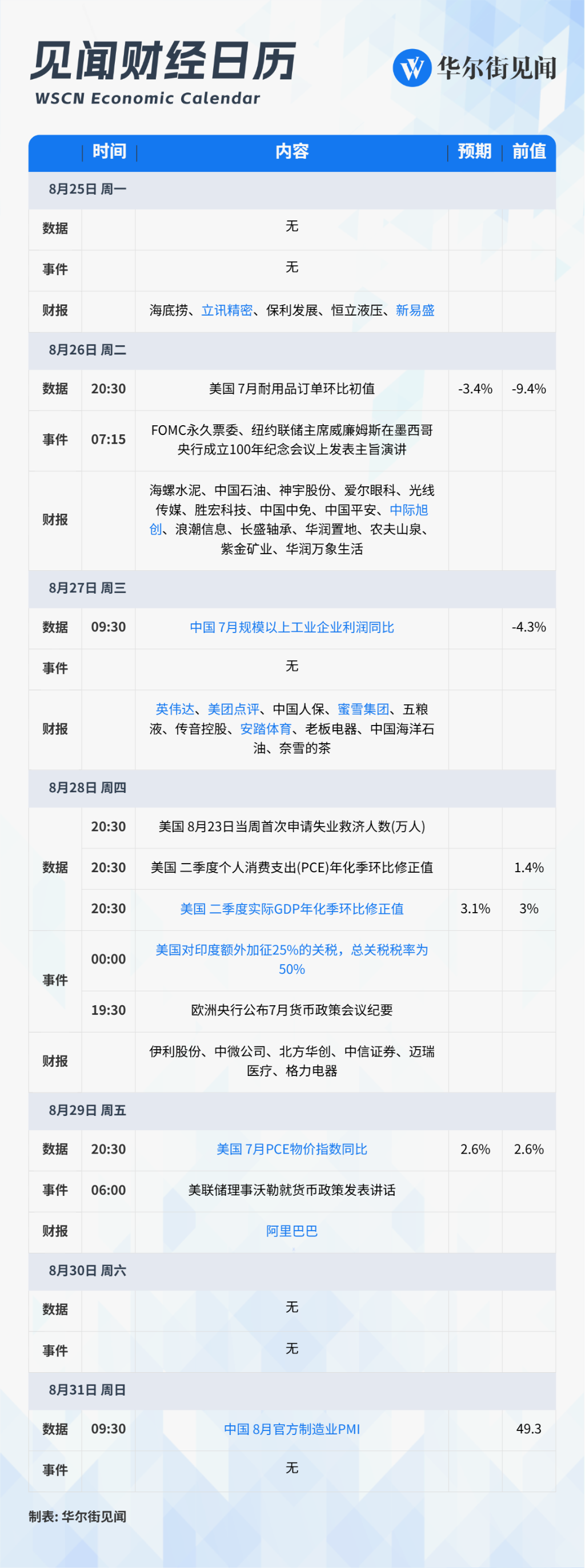
下周重磅日程:“全市场最重要的财报”来了
Hua Er Jie Jian Wen· 2025-08-24 03:49
Economic Indicators - The U.S. July PCE price index year-on-year was reported at 2.6%, higher than the expected 2.5% and revised up from the previous value of 2.3% [7] - The U.S. Q2 actual GDP annualized quarter-on-quarter revised value was 3.1%, exceeding the market expectation of 2.6% [4][7] - The U.S. July durable goods orders month-on-month preliminary value showed a decline of 3.4%, following a significant drop of 9.4% in June [3][9] Company Earnings - Nvidia is set to release its latest earnings report, with a focus on its Q3 guidance, which may exclude direct revenue from the Chinese market due to U.S. export restrictions [14] - Alibaba's Q1 FY2026 earnings report is anticipated to reflect the impact of its 500 billion yuan subsidy plan, with total revenue expected to reach 249 billion yuan, a 2% year-on-year increase, but adjusted EBITA expected to decline by 15% [18] - Meituan's Q2 earnings report is expected to show revenue growth between 924.04 billion yuan and 956.70 billion yuan, but net profit is projected to decline significantly due to intense competition in the food delivery sector [19] Industry Developments - UBS predicts that the U.S. GDP growth rate will slow from 2.0% in Q2 to 0.9% in Q4, citing factors such as demand depletion before tariff increases and the exhaustion of excess savings [8] - The manufacturing PMI in China for August dropped to 49.3%, indicating a slowdown in manufacturing market demand [10] - Lixun Precision has submitted an application for H-share listing in Hong Kong, with projected revenues of 214 billion yuan, 231.9 billion yuan, and 268.8 billion yuan for 2022 to 2024 [21][22]


竞争残酷,价格战惨烈,咋办?让任正非告诉你:如何驾驭价格竞争
Sou Hu Cai Jing· 2025-08-24 02:15
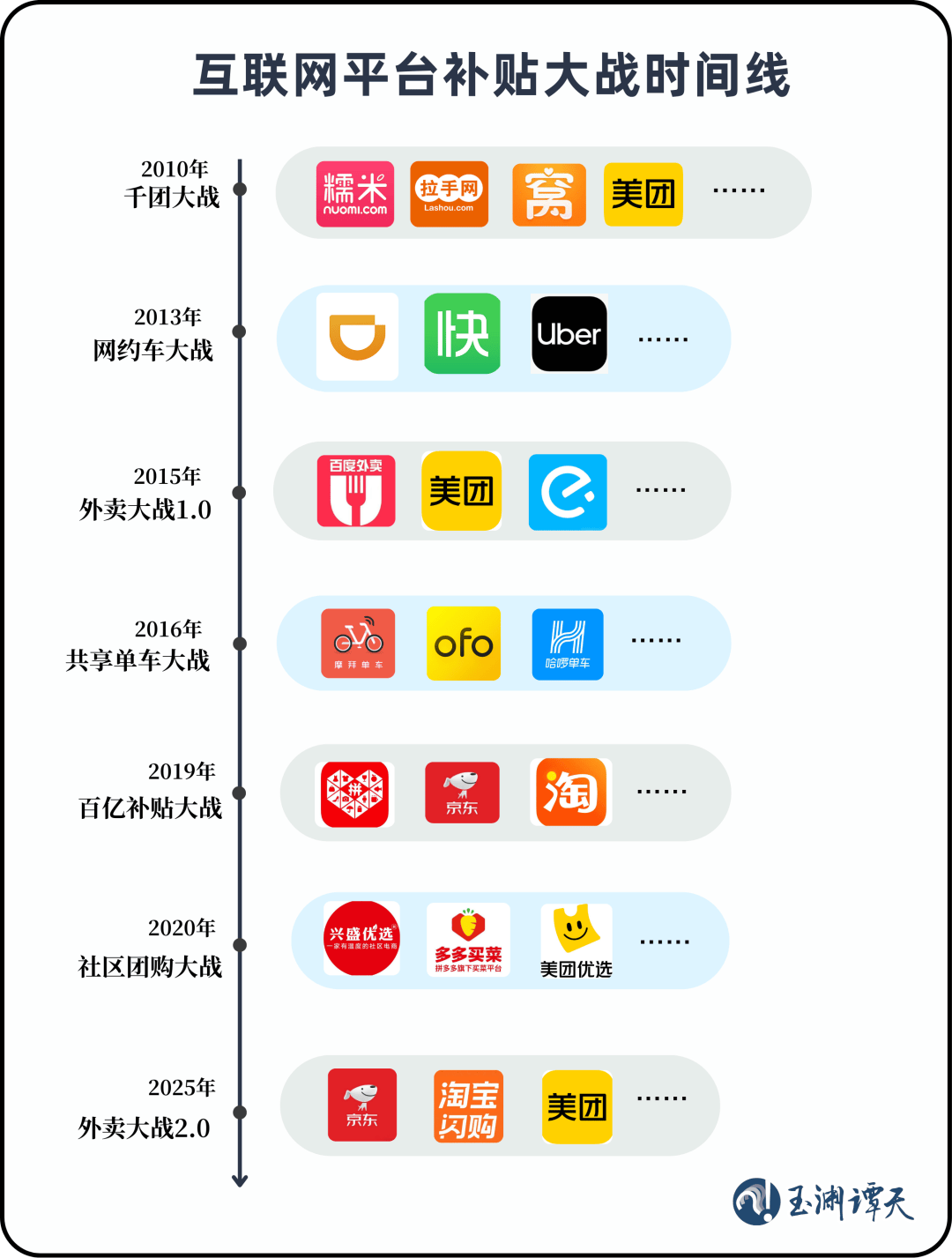
Core Viewpoint - The current market is experiencing intense price wars across various industries, leading to unsustainable pricing that raises concerns about quality and profitability [1] Group 1: Price Wars and Industry Impact - Many industries, including food delivery and electric vehicles, are engaged in fierce price competition, resulting in prices that are often unreasonably low [1] - The example of a dish priced at 50-60 yuan, when it should reasonably be 100-200 yuan, illustrates the irrationality of current pricing strategies [1] - In the electric vehicle sector, some brands are reportedly selling cars at a loss, with costs exceeding 200,000 yuan but prices dropping to around 100,000 yuan [1] Group 2: Strategies for Coping with Price Competition - Companies must adopt effective business models and strategies to navigate the competitive landscape, as highlighted by Huawei's approach [4] - Huawei emphasizes the importance of product, technology, and performance leadership, alongside robust marketing and optimization of mature products to maintain market dominance [4] - The focus should be on building competitive advantages in technology, quality, cost, and service to foster a positive cycle of growth [4] Group 3: The Dangers of Zero-Sum Thinking - Viewing competitors as enemies leads to a zero-sum mentality, which is detrimental to long-term success and industry health [9] - The belief that one company's gain is another's loss can trap businesses in a narrow mindset, hindering overall industry growth [9][10] - A collaborative approach, where companies recognize mutual benefits, is essential for sustainable industry development [10] Group 4: The Importance of Cooperation - Cooperation and win-win strategies are vital for maintaining industry health and avoiding destructive price wars [12] - Companies should focus on enhancing quality, reducing costs, and improving services rather than engaging in price-cutting tactics that harm the entire industry [12][13] - Maintaining reasonable profit margins and avoiding market disruption is crucial for long-term survival and success [12]
媒体报道 | 对于互联网平台竞争,不是叫停而是规范
Sou Hu Cai Jing· 2025-08-23 15:20
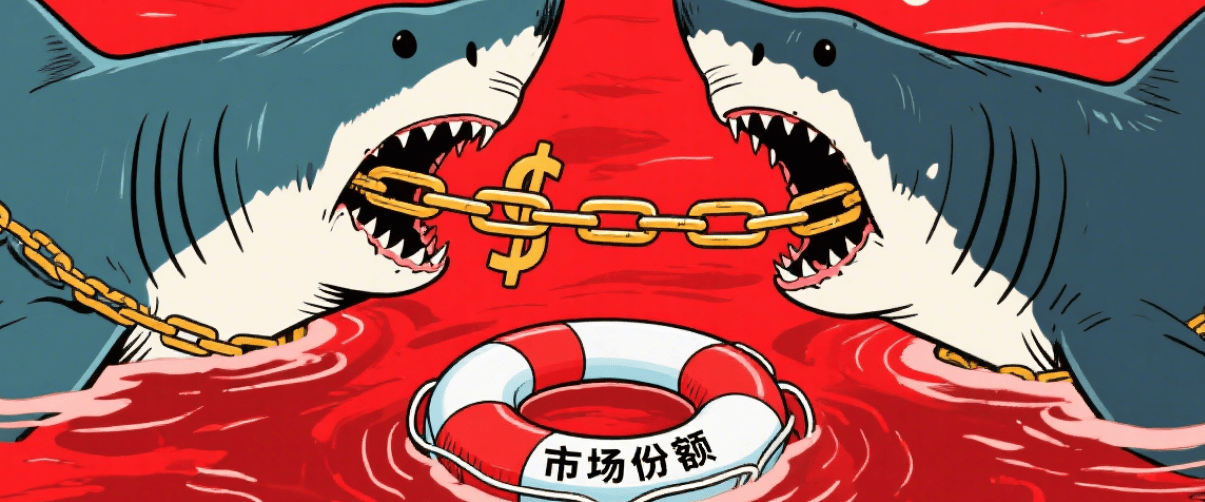
Core Viewpoint - The document titled "Internet Platform Pricing Behavior Rules (Draft for Public Comment)" was jointly released by three departments, focusing on the pricing behaviors of internet platforms, which are directly related to everyday apps used by consumers [1][3]. Group 1: Pricing Behavior - Pricing behavior includes price marking and price competition, with promotional events like "Double 11" and "618" being significant examples [2]. - The draft emphasizes preemptive guidance, requiring relevant parties to self-regulate their behaviors [3]. Group 2: Subsidy Wars - The ongoing "takeout war" among major platforms like Meituan, Ele.me, and JD.com has led to an estimated total investment of 25 billion yuan in the second quarter [4]. - This competition has resulted in substantial consumer benefits, with daily order volumes in the instant retail market increasing from 100 million to 250 million [5]. Group 3: Regulation and Compliance - The draft does not explicitly prohibit subsidies but mandates platforms to disclose rules for subsidy promotions and prohibits false advertising or exaggeration of subsidy amounts [6][12]. - The rules aim to protect the legitimate rights of consumers and operators by regulating pricing behaviors related to subsidies [12][18]. Group 4: Impact on Small Businesses - Small businesses, referred to as "couple shops," may bear 70%-80% of the subsidy costs, creating a dilemma where participation in subsidy activities leads to higher losses [15][17]. - The draft emphasizes the protection of pricing autonomy for platform operators, prohibiting unreasonable restrictions on pricing behaviors [18][19]. Group 5: Market Dynamics - The "takeout war" is fundamentally about competing for user traffic rather than market share, as platforms seek to enhance user engagement through their main apps [8][10]. - The draft aims to create a fair competitive environment by preventing platforms from using unfair pricing practices and ensuring transparency in promotional activities [32][34].

巨亏147亿!刘强东天塌了
商业洞察· 2025-08-23 09:28
Core Viewpoint - JD.com reported its Q2 2025 earnings, showcasing strong revenue growth but significant losses in new business segments, particularly in food delivery, raising concerns about its long-term profitability strategy [4][7][19]. Group 1: Financial Performance - JD.com achieved a record revenue of 356.7 billion RMB in Q2 2025, marking a 22.4% year-on-year increase [4]. - The core retail business generated 310.1 billion RMB, with a growth rate of 20.6% and an operating profit margin of 4.5%, the highest in the company's history for any promotional quarter [4][10]. - However, the new business segment, including food delivery, incurred a loss of 14.777 billion RMB, leading to an overall operating loss of 900 million RMB compared to a profit of 10.5 billion RMB in the same quarter last year [7][19]. Group 2: Business Segments - The retail and logistics segments remained robust, with retail revenue growing by 20.6% and logistics revenue increasing by 16.6% to 51.564 billion RMB [10][15]. - The food delivery service, despite generating 13.852 billion RMB in revenue (up nearly 200% year-on-year), faced substantial losses, with an operating profit margin plummeting to -106.7% [17][19]. - The average loss per food delivery order was reported to be around 5 to 6 RMB, indicating a significant financial burden on the company [17]. Group 3: Strategic Insights - JD.com's entry into the food delivery market is seen as a long-term strategic move to enhance user engagement and drive traffic to its core e-commerce platform [22][30]. - The company aims to leverage high-frequency food delivery transactions to convert users into long-term customers across its retail ecosystem [26][30]. - JD.com is committed to investing heavily in this segment, with management indicating a willingness to sacrifice short-term profits for long-term growth [32][34]. Group 4: Competitive Positioning - JD.com maintains a competitive edge through its supply chain advantages and self-operated model, which have contributed to a consistent increase in gross margins over 13 consecutive quarters [34][38]. - The company has focused on differentiated product offerings and enhanced service experiences to avoid price wars with competitors [38][42]. - JD.com is also expanding its logistics network globally, aiming to replicate its domestic success in international markets [42].

外卖混战中的宿迁餐饮业:泡沫是如何破灭的?
Xin Lang Cai Jing· 2025-08-23 05:14
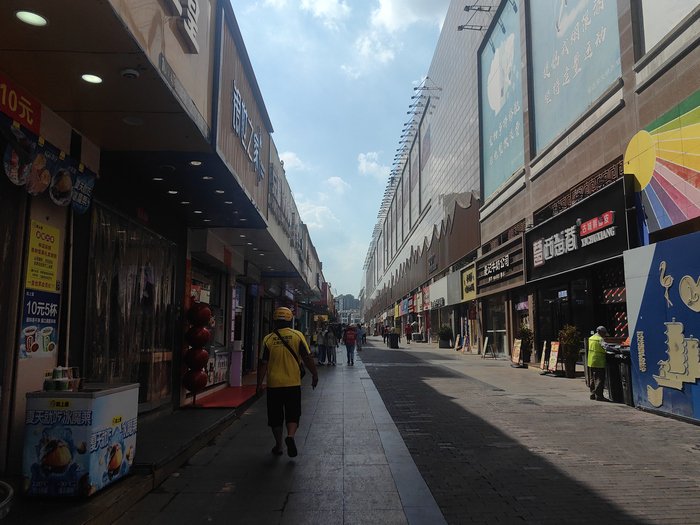
Core Viewpoint - The article discusses the impact of aggressive food delivery subsidies in Suqian, leading to a distorted restaurant ecosystem where traditional dining is declining while delivery services are booming, creating a bubble that ultimately burdens all participants in the market [1][24][25]. Group 1: Market Dynamics - Suqian has become a battleground for food delivery services, with major players like JD.com and Alibaba engaging in intense subsidy wars, resulting in unsustainable pricing and a shift in consumer behavior towards lower-priced meals [1][9][24]. - The influx of subsidies initially benefited many restaurants, leading to a surge in delivery orders and profits, but this was short-lived as the market became saturated and competition intensified [7][8][20]. Group 2: Impact on Traditional Dining - Traditional dining establishments are suffering as foot traffic declines, with many restaurants closing or struggling to maintain profitability due to the overwhelming preference for cheaper delivery options [2][4][10]. - The article highlights the plight of restaurant owners like Chen Li, who, despite initial success, faced declining sales and ultimately had to close her restaurant due to unsustainable business conditions [2][15][25]. Group 3: Economic Consequences - The aggressive subsidy strategies have led to a significant increase in operational costs for restaurants, as they are now required to absorb part of the subsidy costs while facing reduced profit margins [20][23]. - The overall economic environment for the food service industry in Suqian is deteriorating, with many businesses unable to adapt to the new market realities, leading to a wave of closures and a challenging landscape for remaining operators [24][26].

滴滴巴西狙击美团,中国企业出海何时告别“内卷外化”?
Xin Lang Cai Jing· 2025-08-23 04:05
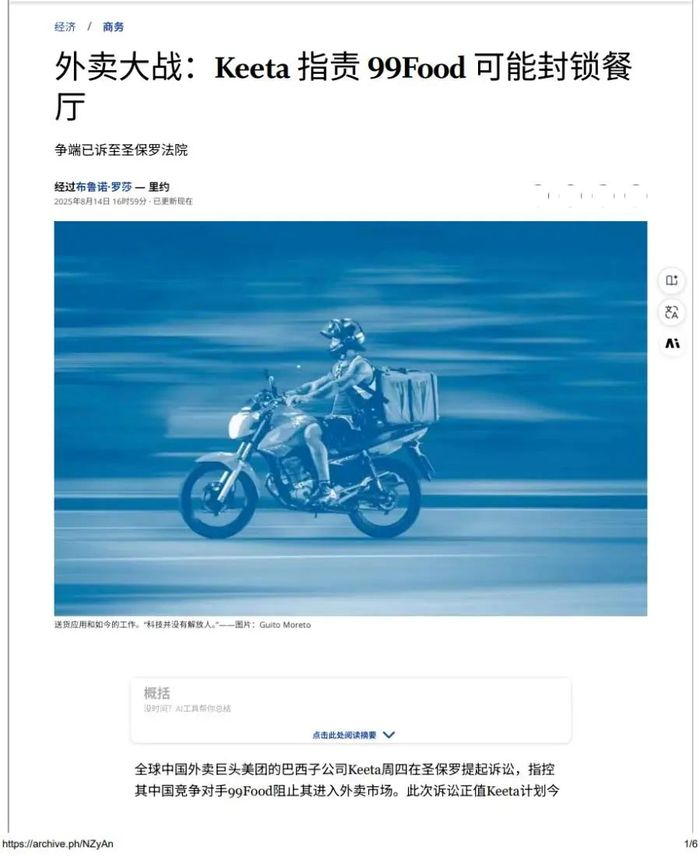
Core Viewpoint - The competition between Chinese companies Didi's 99Food and Meituan's Keeta in Brazil has escalated into a fierce internal struggle, diverting focus from the dominant local player iFood, which holds over 80% market share [1][4][12]. Group 1: Competitive Actions - Meituan's Keeta has filed a lawsuit against Didi's 99Food, alleging that it has engaged over 100 restaurant chains with exclusive contracts worth over 10 billion RMB, aimed at undermining Keeta [1][10]. - Didi's strategy includes offering substantial cash incentives to restaurants to sign exclusive agreements that prohibit collaboration with Meituan while allowing partnerships with iFood [6][10]. - Didi has also attempted to confuse users by purchasing high-ranking search keywords related to "Keeta," leading to a court ruling against this practice [10][11]. Group 2: Market Dynamics - The Brazilian food delivery market is valued at approximately 86 billion RMB, with iFood as the clear leader, making the competition between Didi and Meituan particularly puzzling [12][13]. - Despite the low market share of both Didi and Meituan in Brazil, their internal competition has inadvertently benefited iFood, which is now positioned to capitalize on their conflict [17][18]. Group 3: iFood's Response - In response to the competition from Chinese firms, iFood announced a historic investment plan of 170 billion BRL (approximately 220 billion RMB) to enhance its market position and user engagement [20][21]. - iFood aims to increase its monthly order volume from 12 million to 20 million and expand its active user base from 55 million to 80 million over the next three years [20][21]. Group 4: Strategic Implications - The ongoing internal competition between Didi and Meituan reflects a broader issue of "involution" among Chinese companies abroad, reminiscent of past price wars in other markets [21][22]. - The need for Chinese companies to shift from zero-sum competition to collaborative strategies is emphasized, as cooperation could yield better outcomes against dominant local players like iFood [22].
市场监管总局公布2025“守护消费”铁拳行动典型案例(第一批)
Yang Shi Wang· 2025-08-23 02:18
Core Viewpoint - The State Administration for Market Regulation (SAMR) is intensifying efforts to protect consumer rights and ensure food safety by cracking down on illegal activities in the food industry, including the illegal addition of harmful substances, "ghost takeout" services, and trademark infringements [1][2]. Group 1: Illegal Additives in Food Products - In Jiangxi Province, a case was reported where a company illegally added tadalafil to a liquor product, with a detected concentration of 151 mg/kg, leading to a total value of 1.9386 million yuan for 450 units produced [1]. - In Fujian Province, a business was found to be using meat products containing harmful substances like morphine and codeine, with sales exceeding 1 million yuan [3]. - In Liaoning Province, a duck neck shop was caught using food additives beyond legal limits, with nitrite levels ranging from 1.5 mg/kg to 17 mg/kg, and a total illegal revenue exceeding 200,000 yuan [3][4]. Group 2: Ghost Takeout Services - In Guangxi Province, a restaurant was penalized for operating "ghost takeout" services by using forged food business licenses, resulting in a fine of 7,000 yuan [5]. - In Anhui Province, a restaurant was found to be operating multiple online takeout services without the necessary food business licenses, leading to fines and warnings [6]. - In Beijing, two major food delivery platforms were investigated for failing to verify the licenses of their merchants, resulting in fines totaling 200,000 yuan [7][8]. Group 3: Trademark Infringement - In Shanghai, a construction company was caught selling counterfeit paint products under the "Nippon" trademark, with a total illegal revenue of 32,800 yuan [9]. - The investigation led to the dismantling of three counterfeit production sites, with significant quantities of infringing goods seized [9]. Group 4: Quality Control Violations - In Shandong Province, a gas station was found using modified fuel dispensers, resulting in illegal earnings of 786,800 yuan [10][11]. - In Jiangsu Province, a company was penalized for selling substandard gas stoves and hoses, with a total value of 65,000 yuan for the non-compliant products [12].