原油

Search documents
本周汇市攻略 这些跟钱有关的事你必须知道
Sou Hu Cai Jing· 2025-06-16 04:02
Market Overview - Recent market activity has been characterized by significant volatility, particularly in gold, which experienced a price swing of over $100 in one day. This was preceded by a sharp decline of over $30 during the afternoon session, likely triggered by profit-taking from institutional positions near previous highs [1] - The subsequent rise in gold prices was largely driven by geopolitical tensions, specifically an Israeli attack on Iran, which spurred safe-haven buying. This was reflected in a simultaneous 7% increase in oil prices, indicating a strong correlation between geopolitical events and market movements [1] Upcoming Economic Events - The upcoming week is expected to feature major economic announcements, including the Federal Reserve's interest rate decision and the OPEC monthly report, which are critical for market participants [3][4] - The OPEC monthly report will provide insights into member countries' oil production, inventory, and export dynamics, serving as a key indicator for traders assessing future supply-demand balances in the oil market [4] Key Economic Indicators - On Tuesday, the Bank of Japan's interest rate decision will be closely monitored, as the central bank's stance on its ultra-loose monetary policy could significantly impact the yen and broader market sentiment [6] - The U.S. retail sales data, known as "the terror data," will be released on the same day, directly reflecting consumer spending strength, which is a crucial component of GDP. Stronger-than-expected results could bolster the dollar and suppress gold prices, while weaker results may heighten market concerns about economic prospects [7] Oil Market Dynamics - On Wednesday, the EIA will release its weekly oil inventory report, which will provide a clear picture of supply-demand dynamics in the U.S. energy market. A significant drop in inventory levels typically indicates rising demand or constrained supply, which is bullish for oil prices [8] - Current market focus is on Middle Eastern geopolitical developments, U.S. shale oil recovery, and the pace of global demand recovery, all of which could influence OPEC's outlook for oil prices in the second half of the year [5] Federal Reserve and Bank of England Decisions - Thursday will feature the Federal Reserve's interest rate decision, which is anticipated to be a major market event. The accompanying dot plot and economic projections will be critical for understanding the Fed's future policy direction [10] - The Bank of England will also announce its interest rate decision on the same day, with potential for significant volatility in the pound if unexpected policy shifts occur [12] Trading Considerations - Traders are advised to be cautious during the upcoming week due to the anticipated volatility from major economic data releases. Proper position sizing and risk management strategies are essential to navigate the expected market fluctuations [17]


安粮观市:宏观、产业、技术面面俱到
An Liang Qi Huo· 2025-06-16 03:05
Group 1: Macro and Index Futures - The stock index futures market has shown certain volatility recently, with the main contracts rising to varying degrees. The trading volume and open interest have increased, indicating rising attention to small and medium - cap index products. However, the basis is generally at a discount, and the market is expected to fluctuate within a range in the short term. It is advisable to hold a light position and make low - level layouts [2]. Group 2: Crude Oil - The escalation of the Middle East situation has led to concerns about oil supply disruptions and driven up oil prices. Fundamentally, the approaching summer peak season and declining US inventories support price increases, but in the medium - term, the reaction of the Middle East situation and the outcome of the US - Iran nuclear agreement negotiation are crucial. OPEC+ plans to increase production in July. WTI should pay attention to the pressure around $78 per barrel, and in the long - term, the upside of oil prices is limited without major geopolitical impacts on supply [3]. Group 3: Gold - The Middle East conflict has broken the consolidation of international gold prices. On June 13, spot gold prices soared by 1.7% intraday, approaching the April high. Investors should pay attention to geopolitical situations, the Fed's FOMC meeting in July, and the US - EU tariff negotiation deadline. Gold prices may face technical corrections [4][5]. Group 4: Silver - Affected by the Middle East situation, silver prices rose but were restricted by industrial attributes. The Shanghai Futures Exchange's silver futures warehouse receipts decreased, and trade policy uncertainties suppressed industrial demand. Sprott's silver trust received a net inflow of $500 million. Silver prices are supported by geopolitical risks but may face technical overbought corrections. Attention should be paid to Iran's retaliatory actions, the Fed's FOMC meeting, and the US - EU tariff negotiation [6]. Group 5: Chemicals PTA - The price of PTA is supported by the rising cost of crude oil due to the Middle East situation, but the upside is limited. In June, PTA device maintenance and restart were concurrent, with an overall operating rate of 83.25%. The polyester and textile industries are in the off - season, and the market lacks positive stimuli. PTA supply and demand are in a tight balance, and it may fluctuate with the cost side in the short term [7]. Ethylene Glycol - The supply of ethylene glycol has increased slightly, with an overall operating load of 55.07%. The inventory in East China's main ports has decreased. The demand side is weak, and it may fluctuate with the cost side in the short term [8]. PVC - The supply of PVC has decreased slightly, and the demand from downstream enterprises has not improved significantly. The social inventory has decreased. The futures price is affected by market sentiment and may oscillate at a low level due to weak fundamentals [9][10]. PP - The supply of PP has increased, with the average capacity utilization rate rising to 78.64%. The demand from downstream industries has decreased slightly, and the inventory has decreased. The futures price may oscillate at a low level due to weak demand [11][12]. Plastic - The supply of plastic has increased, with the production enterprise capacity utilization rate rising to 79.17%. The demand from downstream industries has decreased, and the inventory has decreased. The futures price may oscillate in the short term due to weak fundamentals [13]. Soda Ash - The supply of soda ash has increased, with the overall operating rate rising to 84.9%. The factory inventory has increased, and the social inventory has decreased. The demand is average, and the futures price may continue to oscillate at the bottom in the short term [14]. Glass - The supply of glass has remained relatively stable, with a slight decrease in weekly output. The inventory has decreased slightly, but the pressure during the rainy season cannot be ignored. The demand is weak, and the futures price may oscillate weakly in the short term [15][16]. Rubber - The price of rubber is affected by the repeated trade war situation and the oversupply fundamentals. The domestic and Southeast Asian production areas are in the harvest season, and the supply is abundant. The downstream tire operating rate has decreased. Rubber may show a pattern of slow rise and sharp fall under weak fundamentals [17]. Methanol - The spot price of methanol has decreased, while the futures price has increased. The port inventory has increased, and the supply pressure is high. The demand from the MTO device has recovered, but the traditional downstream demand is in the off - season. The futures price may oscillate strongly, and attention should be paid to the inventory accumulation speed and the impact of the Middle East situation on oil prices [18]. Group 6: Agricultural Products Corn - The USDA's June report has limited positive support. Domestically, the corn market is in the transition period between old and new grains, with a potential shortage of supply. Wheat may replace corn in the feed field, and weather may affect prices. The downstream demand is weak. Corn may oscillate between 2300 - 2400 yuan per ton in the short term [19]. Peanut - In the long - term, the domestic peanut planting area is expected to increase in 2025. Currently, the market is in the inventory consumption period, with low inventory levels. The demand is in the off - season, and the price may be pushed up by restocking demand. The short - term price may weaken, and attention should be paid to the support at 8200 yuan per ton [20]. Cotton - The US cotton planting and budding rates are slightly slower than in previous years. In the long - term, the cotton supply is expected to be abundant, and the price may remain low. Currently, the import is low, and the commercial inventory is lower than usual, providing support. The downstream textile market is in the off - season, and the demand is weak. Cotton may oscillate strongly in the short term [21]. Pig - The government's reserve release has sent a positive signal, but the market supply is sufficient, and the consumer demand is weak. The futures contract 2509 should pay attention to whether it can break through the upper pressure level of 14000, and the pig slaughter situation needs continuous attention [22]. Egg - The supply of eggs is sufficient due to high laying - hen inventory. The demand is weak due to difficult storage in hot and humid weather. The current futures price is undervalued, and it is recommended to wait and see [23]. Soybean No. 2 - The market has digested the positive impact of the China - US trade talks. The USDA's June report is neutral. The US soybean planting is progressing smoothly, and the Brazilian soybean is in the peak export season. It may oscillate in the short term [24][25]. Soybean Meal - The global geopolitical situation is unstable. The market has digested the China - US trade talks. The US soybean planting is good, and the Brazilian soybean is in the export peak. Domestically, the supply pressure of soybean meal is increasing, and the downstream demand is weak. It may oscillate in the short term [26]. Soybean Oil - The international oil price increase has driven up the domestic soybean oil market. The US soybean planting is progressing well, and the Brazilian soybean is in the export peak. Domestically, the oil - mill operating rate is high, and the demand is in the off - season. The inventory pressure is increasing. It may oscillate strongly in the short term [27]. Group 7: Metals Shanghai Copper - The complexity of the 2025 interest - rate cut path, global tariff conflicts, and the Middle East risk may affect market sentiment. Domestically, policy support is strong. The copper market is in a stage of resonance, and it is advisable to hold for now, with the defense line moved to the lower neckline of the island pattern [28]. Shanghai Aluminum - The macro - sentiment is boosted by the China - US economic and trade consultation and the US interest - rate cut expectation. The supply of electrolytic aluminum is stable, and the demand is in the off - season. The price may oscillate within a range [29][30]. Alumina - The supply of alumina is sufficient, and the demand is mainly for rigid needs. The inventory has increased slightly. The price is under pressure, and the futures contract 2509 may show a weak adjustment trend [31]. Cast Aluminum Alloy - The cost of cast aluminum alloy is supported by the tight scrap - aluminum market, but the supply is excessive. The demand from the new - energy vehicle industry may slow down in the second half of the year. The inventory is relatively high, and the futures contract 2511 may operate weakly [32]. Lithium Carbonate - The raw - material prices in the lithium industry chain have stabilized, and the supply is stable with a structural adjustment. The demand is weak. The market may continue to oscillate at the bottom in the short term, and it is recommended that conservative investors wait and see, while aggressive investors can conduct range operations [33]. Industrial Silicon - The supply of industrial silicon has increased slightly, and the demand is weak. The inventory digestion is slow, and the price is under pressure. Aggressive investors can short at high prices [34]. Polysilicon - The supply of polysilicon is stable, and the demand is weak overall. The export volume has decreased. The market supply - demand contradiction is still prominent, and the futures contract 2507 may oscillate, with attention paid to the previous low - point support [35]. Group 8: Black Metals Stainless Steel - The technical trend of stainless steel may shift from a one - sided decline to a low - level oscillation. The cost support is weak, the supply pressure remains, and the demand is weak. It is recommended to wait and see [36]. Rebar - The rebar futures may shift from a resistive decline to an oscillation under a high basis. The cost is stable, the demand is in the off - season, and the inventory is low. It is recommended to take a light - position, low - level, long - biased approach in the short term [37]. Hot - Rolled Coil - The technical trend of hot - rolled coil is stabilizing. The cost is stable, the apparent demand has recovered, and the inventory is low. It is recommended to take a light - position, low - level, long - biased approach in the short term [38]. Iron Ore - The supply of iron ore has increased, and the demand has decreased slightly. The port inventory is still at a relatively high level, and the inventory pressure is emerging. The market sentiment is boosted by the easing of China - US tariffs, but the export sustainability is uncertain. The futures contract 2509 may oscillate in the short term, and attention should be paid to the inventory digestion speed and the steel - mill restart rhythm [39][40]. Coal Mine - The supply of coking coal is expected to contract due to production accidents and new regulations. The demand for coking coal and coke is weak. The futures contracts of coking coal and coke may oscillate recently, and attention should be paid to the steel - mill inventory digestion and policy implementation [41].
能源化工板块日报-20250616
Zhong Hui Qi Huo· 2025-06-16 02:58
1. Report Industry Investment Ratings - Not provided in the given content 2. Report Core Views Energy and Chemicals - **Crude Oil**: High - level oscillation. The core driver has shifted from supply - demand to geopolitics, and the Israel - Iran conflict will dominate oil prices [3][4]. - **LPG**: Bullish in the short - term. The strengthening of upstream crude oil drives up the cost, and the fundamentals are improving marginally [6][8]. - **L**: Bearish rebound. Cost support has improved, but there are risks of continued inventory accumulation in the middle - stream [10][11]. - **PP**: Bearish rebound. Spot high - price transactions are weak, and there is pressure on inventory accumulation in the middle - stream [13][14]. - **PVC**: Bearish rebound. The cost of ethylene - based plants has increased, and the market is in a situation of weak supply and demand [15]. - **PX**: Cautiously long at low levels. Supply and demand are both increasing, and the fundamentals are improving in May [16][17]. - **PTA**: Bullish in the short - term but with a weakening fundamental outlook. Supply pressure is expected to increase, and downstream demand is weakening [19][20]. - **Ethylene Glycol (MEG)**: Cautiously long at low levels. Supply pressure has eased, and inventory is continuously decreasing [22][23]. Building Materials - **Glass**: Weak and oscillating. Enterprises are reducing prices to clear inventory, and the fundamentals are weak [25][27]. - **Soda Ash**: Weakly seeking the bottom. Supply is increasing, and inventory is accumulating [28][30]. - **Caustic Soda**: Suppressed by the moving average. Supply is expected to increase, and demand is weakening [31][33]. - **Methanol**: Bullish in the short - term. Affected by geopolitical conflicts, but there are concerns about negative feedback from MTO demand [34] 3. Summaries by Variety Crude Oil - **Market Review**: International oil prices rose significantly on June 13. WTI rose 4.78%, Brent rose 7.02%, and SC rose 4.74% [3]. - **Basic Logic**: The core driver is geopolitics. The Israel - Iran conflict is uncertain, and in extreme cases, Iran may block the Strait of Hormuz. Supply is stable, and demand is expected to increase slightly. Inventory data shows a decline in US commercial crude oil inventory [4]. - **Strategy Recommendation**: In the long - term, supply is expected to be in excess, and the price range is estimated to be between $55 - 65. In the short - term, prices are expected to oscillate at a high level. SC is recommended to focus on the range of [530 - 570] [5]. LPG - **Market Review**: On June 13, the PG main contract closed at 4275 yuan/ton, up 3.06%. Spot prices in Shandong, East China, and South China all increased [7]. - **Basic Logic**: The strengthening of upstream crude oil drives up the cost. Supply has decreased slightly, demand from downstream chemical industries has increased, and inventory has decreased [8]. - **Strategy Recommendation**: In the long - term, the valuation is high. In the short - term, affected by geopolitics, buy put options. PG is recommended to focus on the range of [4300 - 4400] [9]. L - **Market Review**: Cost support has improved, and both futures and spot prices have risen. The North China basis is - 18 (down 17 from the previous period) [11]. - **Basic Logic**: Supply pressure will decrease next week, but the market is still consuming low - price spot inventory. It is in the traditional off - season, and there is a risk of continued inventory accumulation in the middle - stream [11]. - **Strategy Recommendation**: Short - term geopolitical conflicts are unclear, so reduce short positions. Upstream enterprises can sell for hedging when the basis is negative. L is recommended to focus on the range of [7000 - 7200] [11]. PP - **Market Review**: Cost support has improved, and the rebound continues. Spot high - price transactions are weak, and the East China basis is 62 (down 81 from the previous period) [14]. - **Basic Logic**: Demand is weak, and it is in the consumption off - season. Supply is expected to increase in June - July, and there is pressure on inventory accumulation in the middle - stream [14]. - **Strategy Recommendation**: Reduce short positions. Downstream enterprises can buy for hedging when the basis is high. PP is recommended to focus on the range of [7000 - 7150] [14]. PVC - **Market Review**: The cost of ethylene - based plants has increased, and the Changzhou basis is - 109 (down 3 from the previous period) [15]. - **Basic Logic**: Domestic PVC supply has decreased slightly due to maintenance. Demand has weakened in some domestic industries due to the off - season and rainy season. The market is expected to continue to fluctuate within a range [15]. - **Strategy Recommendation**: There is insufficient driving force for continuous upward movement. Rebound and go short. V is recommended to focus on the range of [4750 - 4900] [15]. PX - **Market Review**: On June 13, the spot price in East China was 6900 yuan/ton (unchanged), and the PX09 contract closed at 6780 yuan/ton (+244). The basis has converged [16]. - **Basic Logic**: Domestic and overseas PX device loads have increased, supply pressure has increased, and demand is expected to improve. Inventory has decreased but is still at a relatively high level. The PXN spread has compressed, and the basis has converged [17]. - **Strategy Recommendation**: Focus on the opportunity to go long at low levels. PX is recommended to focus on the range of [6730 - 6880] [18]. PTA - **Market Review**: On June 13, the spot price in East China was 5015 yuan/ton (+160), and the TA09 contract closed at 4782 yuan/ton (+162). The basis and monthly spread have strengthened [19]. - **Basic Logic**: Supply pressure is expected to increase as maintenance devices restart and new capacities are put into production. Downstream demand is weakening, but inventory is decreasing. Processing fees are high [20]. - **Strategy Recommendation**: Focus on the opportunity to go short at high levels. TA is recommended to focus on the range of [4750 - 4880] [21]. MEG - **Market Review**: On June 13, the spot price in East China was 4426 yuan/ton (+79), and the EG09 contract closed at 4334 yuan/ton (+100). The basis and monthly spread are strong [22]. - **Basic Logic**: Device maintenance has increased, and the arrival volume is low, so supply pressure has eased. Downstream demand is weakening, but inventory is decreasing [23]. - **Strategy Recommendation**: Continue to focus on the opportunity to go long at low levels. EG is recommended to focus on the range of [4270 - 4350] [24]. Glass - **Market Review**: Spot market prices have been reduced, the futures price has fallen under pressure, the basis has widened, and the number of warehouse receipts has remained unchanged [26]. - **Basic Logic**: Geopolitical risks have led to a decrease in market risk appetite. Domestic private credit expansion is blocked, and the demand for glass is shrinking. Enterprises are reducing prices to clear inventory, and the fundamentals are weak [27]. - **Strategy Recommendation**: FG is recommended to focus on the range of [960 - 990], and it is expected to oscillate weakly under the pressure of the 1000 - yuan mark [27]. Soda Ash - **Market Review**: The spot price of heavy soda ash has been reduced, the futures price has broken through and fallen, the main - contract basis has widened, the number of warehouse receipts has decreased, and the number of valid forecasts has remained unchanged [29]. - **Basic Logic**: The market supply has increased as maintenance devices restart and new capacities are put into production. Demand is weak, inventory is at a high level, and the cost center has moved down [30]. - **Strategy Recommendation**: SA is recommended to focus on the range of [1140 - 1180], suppressed by the 5 - day and 10 - day moving averages [30]. Caustic Soda - **Market Review**: The spot price of caustic soda has remained stable, the futures price has been weak, the basis has strengthened, and the number of warehouse receipts has remained unchanged [32]. - **Basic Logic**: The price of liquid chlorine has risen, and some enterprises may postpone maintenance. Supply is expected to increase, and demand from the alumina industry is weakening [33]. - **Strategy Recommendation**: No specific strategy recommendation is provided in the given text. Methanol - **Market Review**: On June 13, the spot price in East China was 2439 yuan/ton (+108), and the main 09 - contract closed at 2389 yuan/ton (+99). The basis and monthly spread have changed [34]. - **Basic Logic**: Affected by geopolitical conflicts, the price has risen, but there are concerns about negative feedback from MTO demand. Supply pressure is increasing, and demand improvement is limited [34]. - **Strategy Recommendation**: No specific strategy recommendation is provided in the given text.
金信期货日刊-20250616
Jin Xin Qi Huo· 2025-06-16 02:35
Report Summary 1. Report Industry Investment Rating No relevant content provided. 2. Core View of the Report - Crude oil futures prices rose significantly on June 12 and 13, 2025, with the WTI July crude oil futures up 4.88% on the 12th, closing at $68.15 per barrel, and domestic crude oil futures hitting the daily limit on the 13th. Geopolitical tensions, supply - demand imbalances, and positive progress in Sino - US economic and trade negotiations contributed to the price increase. The subsequent rise in crude oil prices may push up inflation and increase downstream enterprise costs [3]. - For stock index futures, next week's market is expected to continue to fluctuate at a high level [6]. - Gold is still bullish, and it's only a matter of time to reach a new high. A low - buying strategy is more prudent [10][11]. - Iron ore is a strong variety in the black series, but it has been rising weakly recently and should be viewed as a volatile market [14][15]. - Glass should be viewed with a short - term volatile mindset, waiting for the effect of real - estate stimulus or major policy announcements [17][18]. - Urea prices are in a weak adjustment. When reaching the previous support area, short - position holders should be wary of a strong rebound from the long side [21]. 3. Summary by Related Catalogs Crude Oil Futures - On June 12 and 13, 2025, crude oil futures prices rose significantly. Geopolitical tensions, such as the uncertainty of the US - Iran nuclear negotiation and threats of conflict, led to concerns about supply disruptions. From the supply - demand perspective, the peak travel season in the US and the peak power - consumption season in the Middle East increased demand, while the US commercial crude oil inventory decreased by 3.6 million barrels last week. Positive progress in Sino - US economic and trade negotiations also boosted prices. The price increase may push up inflation and increase downstream costs [3]. Stock Index Futures - After Israel attacked Iran, the three major A - share indexes opened lower and closed with a mid -阴线, with a slight rebound at the end. Next week, the market is expected to continue to fluctuate at a high level [6][7]. Gold - Due to Israel's surprise attack on Iran, geopolitical risks increased. The overseas gold market is approaching a new high, and Shanghai gold, although relatively weak, is also rising. Gold is still bullish, and reaching a new high is just a matter of time. A low - buying strategy is more prudent [10][11]. Iron Ore - At the end of the quarter, mines are still ramping up shipments, and iron - water production is seasonally weak, increasing the over - valuation risk of iron ore. However, the continuous decline in port inventory supports the market. It is a strong variety in the black series, but has been rising weakly recently and should be viewed as a volatile market [14][15]. Glass - There has been no significant cold - repair situation due to losses on the supply side, factory inventories are still high, and downstream deep - processing orders have weak restocking motivation. The market should be viewed with a short - term volatile mindset, waiting for the effect of real - estate stimulus or major policy announcements [17][18]. Urea - The domestic daily urea production is about 205,600 tons, with an operating rate of about 87.23%. Agricultural demand progress is slow, and downstream players are less involved. Urea prices are in a weak adjustment. When reaching the previous support area, short - position holders should be wary of a strong rebound from the long side [21].
山海:本周黄金以地缘变化为主导,涨跌均有机会!
Sou Hu Cai Jing· 2025-06-16 01:35
Group 1: Gold Market Analysis - The recent geopolitical tensions in the Middle East have led to a significant increase in gold prices, rising from 3400 to 3446, driven primarily by market sentiment and news events [2][3] - The gold market is expected to maintain a bullish trend, with key support levels at 3420 and 3380, indicating that as long as these levels hold, the bullish sentiment will persist [4] - The strategy for the upcoming week is to remain bullish on gold, focusing on low-entry positions while avoiding chasing highs, with a target of 3500 if the geopolitical situation escalates [2][5] Group 2: Silver Market Outlook - The silver market has shown a correction after reaching a peak of 37, with a recommendation to avoid chasing highs and consider light short positions around 36.5 [6] - The support level for silver is identified at 35.2, and a break below this level could indicate a shift in market sentiment [6] - Domestic silver prices should not be pursued above 9000, with a suggestion to consider short positions above 8900 to capture potential adjustments [6] Group 3: Oil Market Trends - The oil market has been on a strong upward trend, reaching a high of 77.5, with expectations for continued bullish momentum [7] - Key support levels for oil are set at 72 and 68, with a strategy to buy on dips as long as these levels hold [7] - Domestic fuel oil has also shown bullish behavior, with a recommendation to maintain long positions, targeting new highs above 3200 [7]

格林大华期货早盘提示-20250616
Ge Lin Qi Huo· 2025-06-15 23:46
Report Industry Investment Rating - Not provided Core Viewpoints - The upward trend of the global economy remains unchanged despite the significant escalation of geopolitical risks in the Middle East and the inflationary impact caused by rising oil prices [1] - The pulse-like increase in crude oil prices is likely to exceed expectations, and the surge in crude oil may drive a collective rise in commodities [1][2] - Safe-haven assets such as gold and silver are performing strongly, and the escalation of the Middle East situation is beneficial to the freight rates of container shipping on the European route [2] - Global large institutional investors are continuously reducing their holdings of US assets and shifting to European and Chinese stock markets, which is favorable for the A-share market [2] Summary by Related Catalogs Important Information - Israel launched a strike on Iran on the early morning of June 13th local time, and the military operation against Iranian nuclear facilities will continue for several days [1] - Iran is seriously considering whether to block the Strait of Hormuz [1] - In the worst-case scenario of the Strait of Hormuz being blocked, Iranian oil exports may decrease by 2.1 million barrels per day, and oil prices could soar to the range of $120 - $130 [1] - The US will not change the current level of tariffs on Chinese goods even if the trade agreement between the two countries is not finalized [1] - European pension funds have started to increase foreign exchange hedging, leading to a large amount of US dollar selling [1] - Trump's tariffs will cause the US inflation rate to rise by at least 3% year-on-year and cost ordinary households $1000 in income [1] - US President Trump must hand over the command of the California National Guard to Governor Newsom [1] Global Economic Logic - Geopolitical risks in the Middle East have significantly escalated, but the global economic outlook has been stabilized by the China-US phased framework agreement [1] - The US May Markit manufacturing PMI final value was 52.0, indicating continued expansion, and consumer credit in April doubled to $17.9 billion [1] - The spot price of 40 - foot containers on the Shanghai - US West Line has exceeded $5000 [1] - China is addressing cut - throat competition, and the European Central Bank's 8th interest rate cut and Germany's 30% expansion of military scale have promoted the recovery of European manufacturing [1] Global Asset Allocation - The attack on Iranian nuclear facilities by Israel will likely cause a more intense and extensive pulse - like increase in crude oil prices [1] - Gold and silver, as safe - haven assets, are performing strongly, and silver is expected to start a trending upward movement [2] - The escalation of the Middle East situation is beneficial to the freight rates of container shipping on the European route [2] - The surge in crude oil may drive a collective rise in commodities [2] - Global large institutional investors are shifting from US assets to European and Chinese stock markets, which is favorable for the A - share market [2] - The global market has entered an inflation shock mode, and the A - share market has entered a defensive state [2]
弘则研究 中东局势风云再起,大类资产如何演绎?
2025-06-15 16:03
Summary of Key Points from Conference Call Records Industry Overview - The conference call primarily discusses the impact of geopolitical tensions in the Middle East, particularly the conflict between Israel and Iran, on various asset classes, especially oil and commodities [1][2][7]. Core Insights and Arguments - **Oil Price Dynamics**: Initial expectations of rising oil prices due to the Israel-Iran conflict were tempered by limited Iranian retaliation, leading to a price drop of three to four dollars after an initial spike [4]. Future oil price trends depend on the evolution of the conflict, with extreme scenarios including a full-scale war and blockade of the Strait of Hormuz being deemed unlikely [5]. A neutral expectation suggests high volatility followed by a gradual decline, while an optimistic scenario involves a softening of Iran's stance and potential agreements with the U.S. [5][6]. - **Macroeconomic Environment**: The current macroeconomic environment is uncertain, but there is a general optimism for oil prices in June due to seasonal demand returning and the realization of production increases [6]. The geopolitical premium on oil prices is expected to diminish, but prices are unlikely to return to previous lows [6][8]. - **Inflation and Interest Rates**: Geopolitical tensions are hindering the reduction of inflation expectations in the U.S., which may delay interest rate cuts until September [8]. The high-interest rate environment is expected to suppress global demand, impacting overall economic activity [8]. - **Commodity Market Pressures**: The commodity cycle appears weak, with U.S. inventory levels peaking and a decline in Chinese domestic demand expected to pressure commodity prices [3][12]. The domestic refined oil market is experiencing limited price increases, with a weak outlook for automotive demand [15]. - **Gold Market Trends**: The gold market is driven by geopolitical factors, with central banks, including the People's Bank of China, increasing gold reserves, indicating a strong price trend for gold [10]. Additional Important Insights - **Impact on Chemical Products**: The conflict is affecting the chemical sector, particularly methanol, where Iran is a major supplier to China. Any escalation in conflict could disrupt methanol shipments [17][18]. The market for polypropylene (PP) and polyethylene (PE) is facing oversupply and weak downstream demand, leading to profit compression [20]. - **Historical Context**: The current geopolitical situation is compared to past conflicts, such as the Israel-Palestine conflict, suggesting that while volatility may spike, a return to stability is likely [9]. - **Shipping and Logistics**: The conflict has not significantly impacted container shipping, with no immediate effects on major shipping routes [25]. However, the potential closure of the Strait of Hormuz could affect regional throughput, though the probability remains low [26]. - **Market Sentiment and Strategy**: The overall sentiment in the market is cautious, with a focus on monitoring geopolitical developments closely. Strategies may need to be adjusted based on the evolving situation, particularly in the oil and chemical markets [23][28]. This summary encapsulates the key points discussed in the conference call, highlighting the implications of the Middle East conflict on various sectors and the broader economic landscape.
行业比较周跟踪:A股估值及行业中观景气跟踪周报-20250615
Shenwan Hongyuan Securities· 2025-06-15 11:30
Valuation Summary - The overall PE of the A-share market is 18.7 times, positioned at the historical 71st percentile [2][5] - The PE of the Shanghai 50 Index is 10.9 times, at the historical 52nd percentile [2][5] - The PE of the ChiNext Index is 31.0 times, at the historical 11th percentile, indicating a relatively low valuation compared to historical levels [2][5] - The PE of the Science and Technology Innovation 50 Index is 137.9 times, at the historical 98th percentile, suggesting a high valuation [2][5] Industry Valuation Comparison - Industries with PE valuations above the historical 85th percentile include Real Estate, Steel, Power Equipment (Photovoltaic Equipment), National Defense, and Pharmaceuticals [2][6] - No industries have PB valuations above the historical 85th percentile [2][6] - Industries with both PE and PB valuations below the historical 15th percentile include Agriculture, Forestry, Animal Husbandry, and Medical Services [2][6] Industry Midstream Economic Tracking New Energy - The price of polysilicon futures decreased by 2.4%, while spot prices remained stable [2][3] - The retail sales of new energy vehicles in May 2025 increased by 28.2% year-on-year, although the growth rate has slowed compared to previous months [2][3] Real Estate Chain - The price of rebar fell by 0.8%, and iron ore prices decreased by 1.9% [2][3] - The national cement price index rose by 0.1%, indicating some stability in the cement market [2][3] Consumption - The average price of live pigs decreased by 0.2%, and the wholesale price of pork fell by 1.0% [2][3] - The wholesale price index for liquor dropped by 0.17% in early June 2025 [2][3] Midstream Manufacturing - Excavator sales in May 2025 increased by 2.1% year-on-year, but the growth rate has slowed significantly [2][3] Cyclical Industries - Brent crude oil futures closed at $75.18 per barrel, up 12.8%, driven by geopolitical tensions [2][3] - The Baltic Dry Index rose by 20.5%, indicating an increase in shipping rates [2][3]
【广发宏观团队】严格账期是“反内卷”的第一步
郭磊宏观茶座· 2025-06-15 11:24
广发宏观周度述评(第18期) 广发宏观周度述评(第1-17期,复盘必读) 内容 第一, 严格账期是"反内卷"的第一步。 从实际增长来说,"924"以来的宏观经济政策已有明显成效,GDP同比已从2024年三季度低点的4.6%重新回升至5%以 上。这意味着后续更多政策可能会更集中于解决名义增长问题。所以今年二季度以来,我们看到政策关于"反内卷"的信号显著升温。 主要行业中,哪些"反内卷"的问题最为紧迫?我们理解包括钢铁(前5个月PPI同比-10.0%)、煤炭(前5个月PPI同比-14.1%)、光伏(电气机械行业前5个月 PPI同比-1.5%)、汽车(前5个月PPI同比-3.2%)等。 上周起,多家汽车企业相继宣布将供应商账期控制在60天以内[1]。 我们理解这一举动一则有助于产业链中小企业现金流的改善,有助于稳市场主体、稳就业;二则它实际上是"反内卷"的重要组成部分。 账期长意味着生产企业对于供应链企业资金存在额外的占用时间,客观上相当于微观层面叠加一层加杠杆。汽车行业严格账期相当于强制整车企业微观去杠杆,从 而可以显著降低企业价格"内卷"的能力。 严格账期只是"反内卷"的开始,基于行业数据特征,我们估计后续政策 ...

股市上涨的压力是什么?【下周展望2025-6-13】
Sou Hu Cai Jing· 2025-06-13 14:26
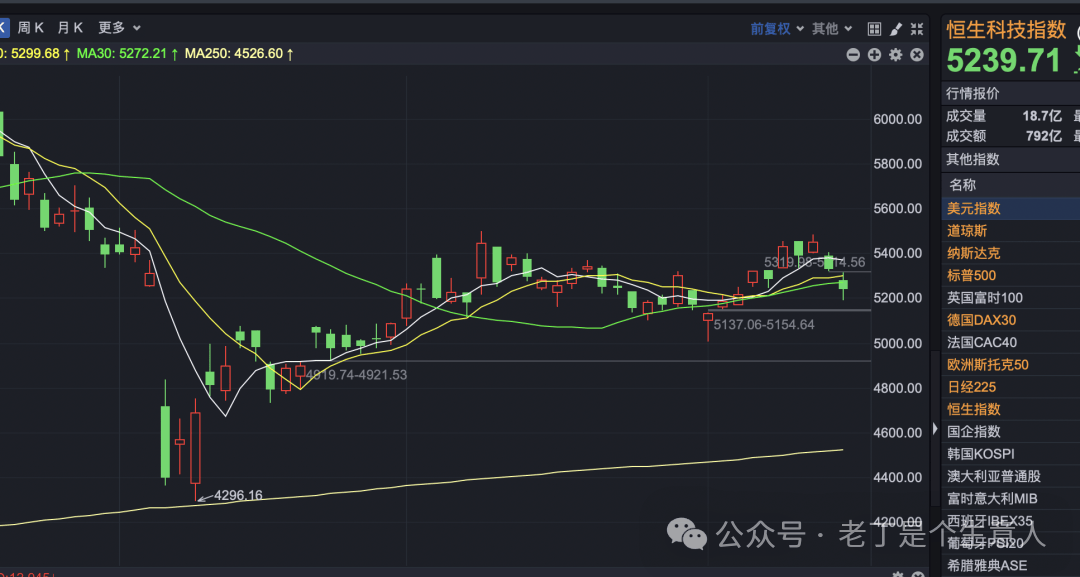
宏观不变,股市不改! 在本周我进行过一次试仓香港,但是在进去之后,它没有走出来该有的样子,所以在次日便下结论,市场还是涨不起来,不会走出趋势。 其实,市场对今后还是有期待的,但是上方压力还是太大,这就意味着,这一场横盘的调整,还未结束… 大家好,我是老丁 看一下本周整体的大盘情况,本周上证指数下跌0.25%,创业板指上涨0.21%,恒生科技指数下跌0.89%,恒生指数上涨0.42%,纳斯达克上涨0.68(截止 周五盘前)。 现在各个市场都还是很值得说一说的,因为局势有可能距离临界点越来越近了!临界点就是要么上涨,要么下跌,在美股、商品、A股中的个别板块都开 始有逐渐的显现。 A股港股在本周都是冲高回落的状态(如图),表现出有所疲软,但其实它往下跌也跌不下去多少,我们能看到横盘的这个上下范围区间,开始越来越窄 了。这对于行情来说,其实算是一件好事,横盘的区间越来越窄,后续往往是市场开始有方向的一个前兆。 盘面还有一个现象,就是美股在昨天出现了巨量的放量,资金在这阶段也遇到了分歧。中国股市、美国股市都逼近了要重新选择方向的时期,越来越近 了。 核心观点和我前两天发的朋友圈是一个意思,就是说,当下中国并没有复苏的迹 ...