轻工

Search documents
贸易战再升级,欧美联手打压中国,中国靠一招完成逆袭
Sou Hu Cai Jing· 2025-09-24 21:55
Group 1 - The core viewpoint of the article highlights China's significant role in global trade, with the country accounting for 14.2% of the world's exports in 2023, maintaining its position as the largest exporter for 15 consecutive years [3][4] - China's trade surplus has been consistent for over three decades, with a notable acceleration post-2005, particularly after joining the WTO, which opened up global markets for Chinese textiles [7][9] - The manufacturing sector has evolved, showcasing a comprehensive industrial system that allows for rapid production and adaptation to market demands, which has become a core competitive advantage for China [9][11] Group 2 - China's export landscape is shifting, with emerging markets such as Uzbekistan, Kazakhstan, and Mexico gaining traction, while traditional markets like the US and EU are experiencing declines in export growth [11][13] - The composition of exports has also changed, with a significant increase in high-tech products such as electric vehicles and batteries, reflecting a transition from low-end to high-quality goods [13][15] - Small and medium-sized enterprises (SMEs) are increasingly becoming key players in exports, leveraging specialization and agility to meet niche market demands, supported by favorable conditions in coastal provinces [15][19] Group 3 - The article emphasizes the importance of innovation and R&D in driving the success of SMEs, with companies investing a significant portion of their sales into research to compete in global markets [17][19] - The growth of cross-border e-commerce has simplified logistics and payment processes, enabling even small businesses to access global customers, which was previously unimaginable [19][21] - The overall increase in exports in the first half of 2024, despite global economic challenges, underscores the resilience and adaptability of China's export sector, driven by numerous SMEs and their evolving product offerings [19][21]


烟台市外贸进出口由2020年3243.1亿元增至2024年4723.4亿元
Da Zhong Ri Bao· 2025-09-19 04:16
Core Insights - Yantai's foreign trade import and export increased from 324.31 billion yuan in 2020 to 472.34 billion yuan in 2024, with actual foreign investment exceeding 9.5 billion USD [1] - The city has implemented various policies to enhance its open economy, including measures for foreign trade stability and integrated investment [2] - Yantai has focused on attracting major projects and enhancing its global investment network, resulting in significant foreign investment and project approvals [3] - The development of industrial parks has been prioritized, with several parks recognized for their unique characteristics and contributions to the local economy [4] Group 1: Foreign Trade and Investment - Yantai's total foreign trade import and export is projected to reach 472.34 billion yuan by 2024, up from 324.31 billion yuan in 2020, with a growth of 18.2% in the first seven months of this year [1] - Actual foreign investment in Yantai reached 6.86 million USD in the first seven months of this year, ranking third in the province [1] - The city has cumulatively attracted 72.7 million USD in foreign investment and 13.7 million USD in outbound investment, reflecting a growth of 6.7% [1] Group 2: Policy and Structural Reforms - Yantai has established a comprehensive open economy framework, integrating internal and external trade, investment, and resource sharing [2] - The city has introduced seven policy measures aimed at stabilizing foreign trade and optimizing its structure, with over 200 policy trials and 2.25 billion yuan in funding secured during the "14th Five-Year Plan" period [2] - The implementation of the "Double Hundred Project" has supported the growth of key enterprises, with an average of over 1,000 new foreign trade companies established annually [2] Group 3: Investment Attraction - Yantai has focused on 16 key industrial chains to attract significant projects, hosting over 30 major investment activities annually [3] - The city has signed agreements with 132 business associations globally, enhancing its international investment network [3] - A total of 366 foreign enterprises have expanded their investments in Yantai, with a contractual foreign investment of 4.93 billion USD during the "14th Five-Year Plan" [3] Group 4: Industrial Park Development - Yantai has prioritized the development of industrial parks, with five parks recognized for their unique characteristics, leading the province in this regard [4] - The Yantai Development Zone ranked eighth nationally in comprehensive development performance evaluation for 2024 [4] - The establishment of the "Blue Granary" marine economic development zone has set a precedent for national marine construction [4]
知名央企发布声明!深圳多家公司被点名
Nan Fang Du Shi Bao· 2025-09-18 01:07
Core Viewpoint - China Poly Group Corporation has issued a stern statement regarding the emergence of fraudulent companies impersonating it, emphasizing that these entities have no affiliation or investment relationship with the group [1][4]. Group 1: Company Identity and Fraudulent Activities - Several companies have been identified as fraudulent, using the name of Poly Group to conduct business and promotional activities without authorization [1]. - A list of fraudulent companies has been provided, including their names, registration codes, and locations, indicating a widespread issue of impersonation [2][3]. - The phenomenon of fake state-owned enterprises has been noted as a growing concern, with over a thousand "fake state-owned enterprises" reported by the State-owned Assets Supervision and Administration Commission from 2021 to 2023 [3]. Group 2: Company Background - China Poly Group Corporation is a large central enterprise managed by the State-owned Assets Supervision and Administration Commission, with a diverse business portfolio including international trade, real estate development, and cultural arts [6]. - The group operates ten main subsidiaries and has five publicly listed companies both domestically and internationally [6].

如何看2025年8月消费数据
2025-09-15 14:57
Summary of Key Points from Conference Call Records Industry Overview - **Consumer Retail Sector**: In August 2025, the total retail sales of consumer goods grew by approximately 3.4% year-on-year, with offline sales showing resilient growth while online sales remained stable [2][4]. - **Restaurant Industry**: Restaurant revenue increased by 2.1% year-on-year, influenced by factors such as the alcohol ban, improved weather, and a low base from the previous year [1][5]. - **Hotel Industry**: The hotel sector experienced a decline in occupancy rates due to weak summer travel demand and oversupply, but a slowdown in supply may lead to a long-term reversal [1][6]. - **Automotive Market**: The automotive market's retail sales totaled approximately 409.3 billion yuan in August, with a year-on-year growth of 0.8%. Notably, passenger car exports surged by 22% [1][8][9]. Core Insights and Arguments - **Automotive Trends**: The rise of high-end domestic brands, particularly in the 200,000 yuan and above segment, is driving the penetration of new energy vehicles (NEVs), which saw sales of 1.28 million units in August, a 22% increase year-on-year [1][10]. - **New Energy Vehicles**: NEVs accounted for about 50% of total vehicle sales in August, with cumulative sales from January to August reaching approximately 893,000 units, reflecting a 34% year-on-year growth [9]. - **High-End Market Dynamics**: The ultra-luxury car market continues to grow, with brands like Zun Jie performing exceptionally well in deliveries [10][11]. - **Component Sector Focus**: The future of the automotive components sector is centered on smart driving, robotics, and liquid cooling technology, with the latter expected to see a tenfold increase by 2026 [12][13]. Additional Important Insights - **Investment Recommendations**: For the upcoming months, it is suggested to focus on high-performing stocks that may experience pullbacks and to position for stocks with strong earnings visibility in the fourth quarter [4]. - **Household Appliances**: The household appliance sector saw a year-on-year retail growth of 14.3% in August, with significant performance variations across product categories [23][24]. - **Cleaning Products**: The cleaning product category showed remarkable growth, with online sales of robotic vacuums and floor washers increasing by over 80% [25][26]. - **Textile and Apparel Sector**: The textile and apparel industry showed good retail performance in August, with many brands experiencing a rebound, potentially influenced by the stock market's wealth effect [15][16]. Future Trends and Strategies - **Consumer Goods**: The consumer goods sector is expected to continue its recovery, with a focus on companies that can maintain pricing power and cost transfer capabilities [22]. - **Light Industry**: Investment strategies in the light industry should focus on new product penetration and international expansion opportunities [18][19]. - **Food and Beverage Sector**: The food and beverage sector is projected to maintain steady growth, with a focus on high-end brands and those benefiting from supply chain standardization [20][22]. This summary encapsulates the key points from the conference call records, highlighting the performance and trends across various industries, along with strategic insights for future investments.
14家企业获云南省先进级智能工厂认定
Zhong Guo Jin Rong Xin Xi Wang· 2025-09-13 09:27
Group 1 - The core viewpoint of the news is the recognition of 14 enterprises in Yunnan Province as advanced intelligent factories for 2025, showcasing the province's progress in digitalization and intelligent transformation across various key industries [1][2] - The recognized enterprises span multiple sectors including chemicals, non-ferrous metals, pharmaceuticals, tobacco, light industry, new energy, and building materials, indicating a diversified exploration in the transformation and upgrading of traditional industries in Yunnan [1][2] - This recognition marks a new phase of large-scale promotion and systematic breakthroughs in the intelligent transformation of Yunnan's manufacturing industry, injecting strong momentum into the province's high-quality industrial development [1] Group 2 - The 14 recognized enterprises include notable companies such as Yunnan Yuntianhua Petrochemical Co., Ltd., Yunnan Wenshan Aluminum Co., Ltd., and Kunming Pharmaceutical Factory Co., Ltd., each implementing advanced technologies like digital twins and AI-driven management [2] - The implementation plan for the "Yunnan Province Intelligent Factory Gradient Cultivation Work (2025-2027)" aims to focus on key areas such as tobacco, deep processing of non-ferrous metals, and new energy batteries, promoting the establishment of benchmark intelligent factories [3] - By 2027, Yunnan Province aims to achieve the recognition of over 80 advanced intelligent factories and develop more than 10 domestically leading excellent intelligent factories, fostering replicable and promotable experiences and models [3]
消费行业联合行业深度:十五五系列报告解读(51页附下载)
Sou Hu Cai Jing· 2025-09-10 11:41
Core Insights - The importance of the "14th Five-Year Plan": The upcoming "14th Five-Year Plan" is expected to significantly impact China's economic and social development over the next five years, shifting focus from production to a balance between production and consumption due to the current issue of insufficient effective demand [1] - Strengthening consumption policies: Starting in 2024, consumption policies will be significantly enhanced, including the allocation of special government bond funds to support consumption upgrades. Continued funding is expected in 2025 and 2026 [1] - Potential of service consumption: China's service consumption still lags behind developed economies, indicating a substantial opportunity for growth in this sector to stimulate consumer interest and optimize the consumption environment [1] - Rise of technology consumption: With a rapid technological development and an engineering talent surplus, products like robotic vacuum cleaners and drones are gaining market attention, likely creating new consumer demand [1] - Optimization of the overall consumption mechanism: Measures such as consumption tax reform will encourage local governments to transition from production-oriented to service-oriented, promoting the internationalization of quality consumption companies and enhancing residents' consumption capacity [1] Investment Recommendations - Food and Beverage: Recommended companies include Dongpeng Beverage and Lihigh Food, with a focus on Youran Dairy and Bairun Co [2] - Service Sector: Recommended companies include Guming, Mixue Group, and Bubugao, with a focus on Zhongsheng Holdings [2] - Light Industry: Companies to watch include Hengfeng Paper and Xilinmen [3] - Trendy Toys: Recommended companies include Pop Mart and Blokus [4] - Home Appliances: Recommended companies include Midea Group, Haier Smart Home, TCL Electronics H, Roborock, and Ecovacs, with a focus on Yingshi Innovation [5] - Agriculture: Recommended companies include Zhongchong Co, Petty Co, Muyuan Foods, and Haida Group [11] - Textile and Apparel: Recommended companies include Anta Sports, Xtep International, 361 Degrees, and Hailan Home, with a focus on Li Ning and Sanfu Outdoor [11] Report Content Analysis - Expanding consumption share: The report emphasizes that expanding consumption share is essential for achieving Chinese-style modernization, as China's consumption rate is significantly lower than that of developed countries [9] - Shift in fiscal spending: During the "14th Five-Year Plan" period, fiscal spending will shift from material investments to human capital investments, increasing support for education, healthcare, and housing [9] - Promotion of common prosperity: The report highlights the need for income distribution reform and the promotion of the Zhejiang common prosperity model to achieve balanced development [9] - Consumption tax reform: The report suggests that consumption tax reform will help local governments transition from production-oriented to service-oriented, enhancing the consumption environment [9] - Transition from traditional to new consumption: The report analyzes the maturation of traditional consumption markets and the rise of new consumption, which is characterized by a focus on quality and personal satisfaction [9] - Stimulating interest in service consumption: The report indicates that the shift from physical to service consumption is crucial for expanding domestic demand, with growing demand for events and performances benefiting local consumption [9]






银河基金施文琪:在经济复苏和结构性行情中寻找新消费新机遇
Shang Hai Zheng Quan Bao· 2025-09-07 18:36
Core Viewpoint - The stock market reflects the steady recovery of the real economy, with the new consumption trend gaining momentum, driven by policy support and evolving consumer behavior [1] Group 1: Market Trends - Since August, the new consumption trend has shown a resurgence, with certain trendy toy IP companies experiencing a maximum increase of over 30% [2] - The macroeconomic environment indicates a moderate recovery, with a consensus on expanding domestic demand, suggesting that the consumer sector is in a phase of stabilization and potential growth [2] - The current consumption landscape differs from the 2019-2020 period, characterized by a shift towards emotional spending and cultural confidence, requiring fund managers to adopt a bottom-up stock selection approach [2][3] Group 2: Investment Opportunities - Three main investment themes in new consumption are identified: spiritual consumption products like trendy gold jewelry, cost-effective mass consumer goods, and domestic beauty and personal care products [2][3] - The demand for trendy gold jewelry is shifting from traditional wedding uses to self-indulgence, with brands offering affordable, aesthetically pleasing products that appeal to younger consumers [3] - Cost-effective consumer goods are gaining traction as consumers prioritize value over brand loyalty, with strategies like bulk purchasing and reduced distribution costs enhancing market penetration [3] Group 3: Performance and Strategy - The funds managed by the company have shown significant growth, with net value growth rates of 29.50% and 23.84% for two products, outperforming their respective benchmarks [4] - The company aims to continue selecting companies with strong competitive advantages and barriers to entry in thriving industries to drive portfolio returns [4]
内卷还是外卷?-基于利润率的比较视角
2025-09-07 16:19
Summary of Key Points from Conference Call Records Industry Overview - The records discuss the trends and impacts of Chinese companies expanding overseas, particularly in the context of the "Belt and Road" initiative and the effects of the COVID-19 pandemic on international operations [1][6][8]. Core Insights and Arguments - **Stages of Overseas Expansion**: Chinese companies have experienced two phases of overseas expansion: the first phase began in 2014 driven by the "Belt and Road" initiative, leading to a significant increase in overseas revenue; the second phase, post-pandemic, has been accelerated by domestic overcapacity and international policy restrictions [1][6][7]. - **Profit Margin Improvement**: Generally, overseas expansion tends to enhance profit margins for companies, particularly in high-value and high-tech sectors. For instance, Taiwanese chemical and leather industries saw significant profit margin increases after going international [4][5][11]. - **Sector-Specific Performance**: The automotive and light industries are leaders in overseas revenue, while electronics and electrical machinery have higher export revenue but still possess substantial future overseas potential [1][9][10]. - **Positive Correlation**: There is a positive correlation between the degree of overseas expansion and profit margins, although this relationship weakened during the pandemic. Industries like light manufacturing, chemicals, pharmaceuticals, and non-ferrous metals have shown notable profit margin improvements with increased overseas activities [11][12]. Additional Important Insights - **Emerging Markets**: Southeast Asian companies are increasingly looking to expand overseas due to rising domestic costs and changing external environments, often starting with labor-intensive industries before moving to technology-intensive sectors [2]. - **Sector Growth Potential**: Non-ferrous metals and food and beverage sectors show significant growth potential due to global energy transitions and expanding Chinese market influence, respectively [3][14]. - **Profitability Trends**: The food and beverage industry has seen profit margins rise both domestically and internationally, while the electronics and textile sectors have faced declining margins due to overcapacity and trade policy restrictions [15]. - **Automotive Sector Dynamics**: The automotive industry has seen a recovery in domestic profit margins due to policy support, but overseas margins have declined due to tariffs and initial investment costs in new energy vehicles. However, there is potential for significant improvement in overseas profit margins as high-tech products gain traction [16][17]. Conclusion - The records highlight the strategic importance of overseas expansion for Chinese companies across various sectors, emphasizing the need for innovation, cost optimization, and adaptation to global market dynamics to enhance profitability and sustain growth in the face of domestic challenges and international competition [5][18].
13.2万亿元、50.6%……多领域活力数据折射经济强大韧性与潜力
Yang Shi Wang· 2025-09-07 01:53
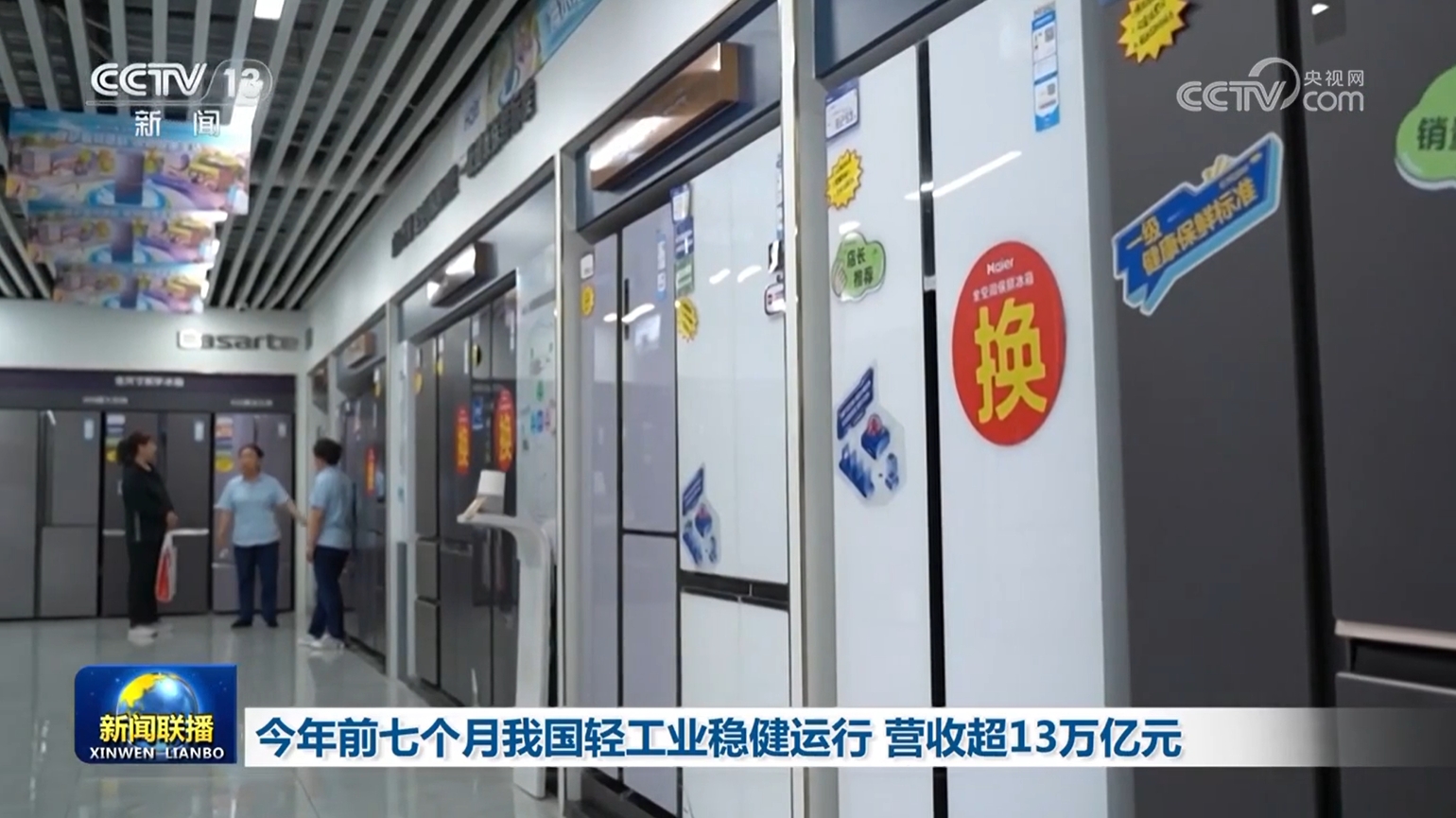
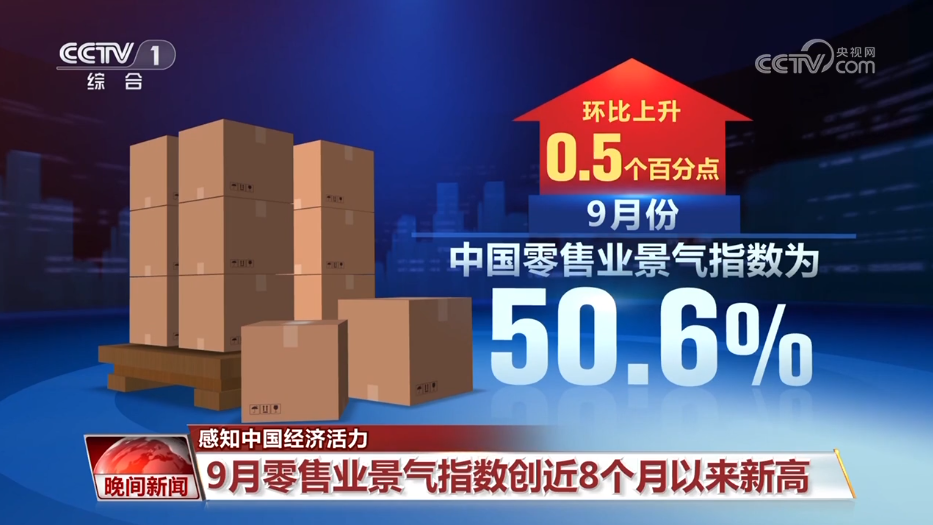
Economic Resilience and Retail Sector - In September, China's retail industry prosperity index reached 50.6%, an increase of 0.5 percentage points month-on-month, marking the highest level in eight months, indicating a positive trend in retail development [3] - The retail sector's performance is supported by policies aimed at expanding domestic demand and promoting consumption, with retail sales of 11 categories of light industrial goods reaching 4.9 trillion yuan, a year-on-year increase of 11.4% [8] Logistics and Transportation - In August, 15 new international air cargo routes were opened, with over 30 round-trip flights added weekly, totaling 152 new routes in the first eight months of the year [5] - The road logistics price index for August was reported at 105.1 points, reflecting a month-on-month increase of 0.01% and a year-on-year increase of 0.8%, indicating a vibrant road logistics market [7] Light Industry Performance - In the first seven months of the year, China's light industry maintained steady operation with a total revenue of 13.2 trillion yuan and a profit of 760.1 billion yuan, supported by strong production and market scale [8] - The investment growth in the light industry remains robust, with major sectors experiencing double-digit growth rates, surpassing the national fixed asset investment and manufacturing investment growth rates [10] Export Dynamics - Light industry exports reached 535.75 billion USD in the first seven months, accounting for 25.1% of the national total, with 11 out of 21 major categories showing growth [12] Foreign Investment in Guangdong - Guangdong province saw a 32.7% year-on-year increase in the number of newly established foreign-funded enterprises, totaling 17,000 in the first seven months [13][14] - The actual use of foreign capital in Guangdong reached 65.67 billion yuan, an increase of 8.2% year-on-year, with the manufacturing sector accounting for 29.1% of the total [16] Customs Special Supervision Areas - The comprehensive bonded zones and bonded logistics parks have contributed significantly to foreign trade, accounting for one-fifth of the national import and export value despite occupying less than 0.02% of the land area [16][18] - By 2024, the import and export value of customs special supervision areas is expected to grow by over 30% compared to 2020 [16]
今年前七个月我国轻工业稳健运行 营收超13万亿元
Yang Shi Wang· 2025-09-06 12:00
Core Insights - The light industry in China has shown robust performance in the first seven months of the year, supported by policies aimed at expanding domestic demand and promoting consumption [1][3][4] Group 1: Production and Revenue - The added value of the light industry increased by 6.7% year-on-year, with total operating revenue reaching 13.2 trillion yuan and profits amounting to 760.11 billion yuan [1] - Retail sales of 11 categories of light industry products totaled 4.9 trillion yuan, reflecting a year-on-year growth of 11.4%, accounting for 17.4% of total retail sales of consumer goods [3] Group 2: Investment Growth - Investment in major sectors of the light industry maintained a double-digit growth rate, surpassing the national fixed asset investment and manufacturing investment growth rates [4] Group 3: Export Performance - Light industry exports reached 535.75 billion USD, representing 25.1% of the national total exports, with a year-on-year growth of 1.1%; 11 out of 21 major categories of products experienced growth [6]