农产品

Search documents
美财长:不再考虑对华加征100%关税
Sou Hu Cai Jing· 2025-10-27 12:04
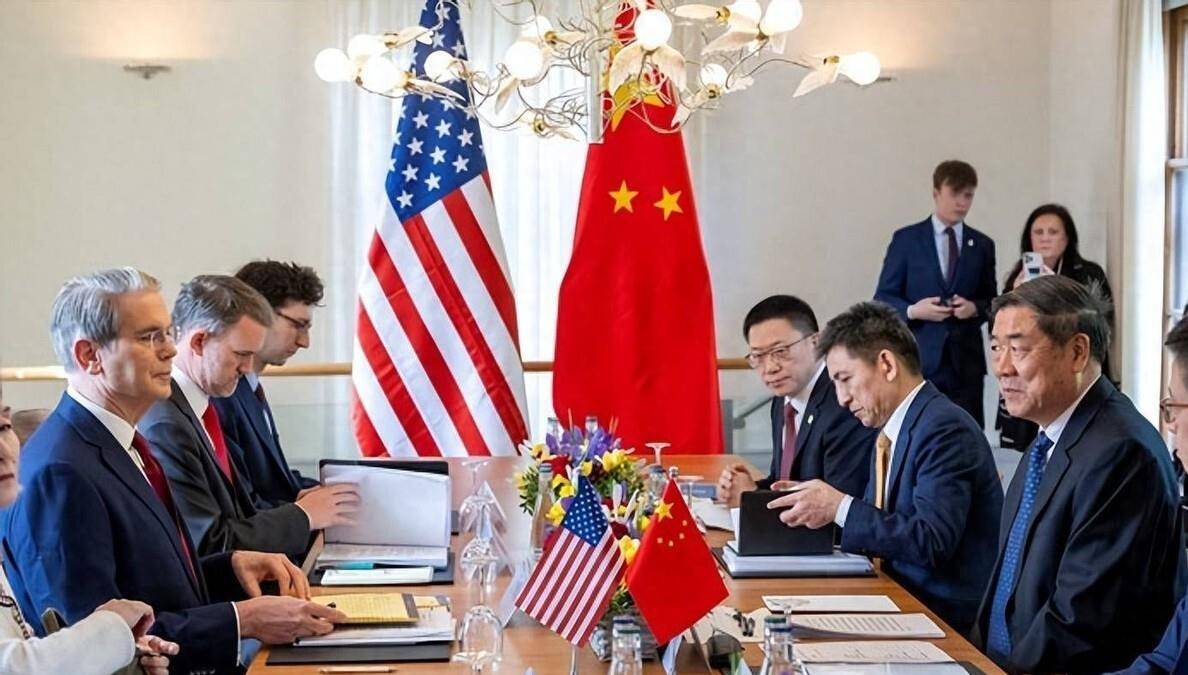
Core Points - The recent two-day trade talks between China and the U.S. in Kuala Lumpur resulted in a basic consensus on key economic issues, including maritime logistics, shipbuilding, and agricultural trade [1][2][3] - Both sides emphasized the importance of mutual respect and cooperation to resolve trade disputes, highlighting the significance of the U.S.-China economic relationship on a global scale [2][5] - The discussions were described as constructive, with both parties expressing a commitment to further detail and internal approval processes for the agreements reached [1][4] Group 1 - The talks were led by China's Vice Premier He Lifeng and U.S. Treasury Secretary Steven Mnuchin, lasting over five hours on the first day [2][3] - The U.S. Treasury Secretary stated that a "very successful framework" was established during the negotiations, which could pave the way for a meeting between the two countries' leaders [3][4] - The outcome of the talks is seen as a sign of easing tensions between the two largest economies, with the current suspension of tariffs set to expire on November 10 [4][5] Group 2 - The discussions covered a wide range of topics, including export controls, the extension of tariff suspensions, and cooperation on fentanyl issues, indicating a comprehensive approach to trade relations [2][5] - Analysts noted that the timing of the talks before the APEC meeting could signal a positive development in U.S.-China relations, which is crucial for global economic stability [5][6] - The upcoming APEC meeting is expected to be influenced by the outcomes of the U.S.-China discussions, with South Korea playing a pivotal role as the host [6][7]
湖南省茶陵县市场监督管理局关于食品抽检情况的公告(2025年第4号)
Zhong Guo Zhi Liang Xin Wen Wang· 2025-10-27 08:51
Summary of Key Points Core Viewpoint - The announcement from the Tea Ling County Market Supervision Administration highlights the results of food safety inspections conducted in the second quarter of 2025, revealing that 3 out of 62 food samples tested were found to be non-compliant with national standards. Group 1: Inspection Results - A total of 62 food samples were tested during the inspections [2] - Out of these, 3 samples were identified as non-compliant [2] - The non-compliant samples included products with excessive levels of harmful substances such as cadmium and antibiotics [2] Group 2: Consumer Advisory - Consumers are advised to report any non-compliant food products they encounter in the market by calling the complaint hotline 12331 [2] - The announcement emphasizes the importance of food safety and consumer vigilance in identifying potentially harmful products [2] Group 3: Specific Non-Compliant Products - Specific non-compliant products included: - "Chili Pepper" with cadmium levels at 0.117 mg/kg, exceeding the standard of 0.05 mg/kg [2] - "Bullfrog" with enrofloxacin levels at 797 µg/kg, surpassing the permissible limit of 100 µg/kg [2] - Another batch of "Chili Pepper" with cadmium levels at 0.169 mg/kg [2] Group 4: Compliance and Testing Standards - The inspection covered various harmful substances including benzimidazole, chlorpyrifos, and other pesticides [2] - The testing was conducted according to national food safety standards, ensuring a systematic approach to food safety [2]


高频数据跟踪:原油焦煤大幅上涨,铜价持续上行
China Post Securities· 2025-10-27 07:25
Report Information - Report Title: Fixed Income Report - Release Time: October 27, 2025 - Analysts: Liang Weichao, Cui Chao - SAC Registration Numbers: S1340523070001, S1340523120001 - Email: liangweichao@cnpsec.com, cuichao@cnpsec.com [2] Core Viewpoints - High - frequency economic data focuses on four aspects: steel production is stable with a slight increase, asphalt开工率 is continuously declining at a high level, PX and PTA开工率 remain flat, and tire开工率 slightly increases; the real estate market shows marginal improvement with increases in both commercial housing transactions and land supply areas; overall prices are rising, with significant increases in crude oil and coking coal prices, continuous increase in copper prices, and accelerated upward movement in overall agricultural product prices; domestic and international freight rate indices show a divergent trend, with BDI changing from rising to falling and domestic SCFI and CCFI both rising. Short - term attention should be paid to the implementation of anti - involution and incremental policies and the recovery of the real estate market [2][30] Summary by Section Production - Steel production is stable with a slight increase, and tire开工率 is generally on the rise. In the week of October 24, the coke oven capacity utilization rate decreased by 0.83 pct, the blast furnace开工率 increased by 0.44 pct, and the rebar production increased by 5.91 tons; the petroleum asphalt开工率 decreased by 4.7 pct; the chemical PX and PTA开工率 remained the same as the previous week; the full - steel tire开工率 of automobiles increased by 1.06 pct, and the semi - steel tire开工率 increased by 0.95 pct [2][3][9] Demand - The real estate market shows marginal improvement, and SCFI continues to rise. In the week of October 19, the commercial housing transaction area continued to recover, the inventory - to - sales ratio increased, the land supply area recovered, and the residential land transaction premium rate increased; the movie box office decreased by 1.19 billion yuan compared with the previous week; the daily average retail sales of automobile manufacturers decreased by 21,000 vehicles, and the daily average wholesale sales increased by 11,000 vehicles. In the week of October 24, the shipping index SCFI increased by 7.11%, CCFI increased by 2.02%, and BDI decreased by 3.77% [2][3][12] Prices - Crude oil, coking coal, and non - ferrous metals all increased, and the upward movement of agricultural products accelerated. On October 24, the Brent crude oil price increased by 7.59% to $65.94 per barrel, the coking coal futures price increased by 5.66% to 1,251.5 yuan per ton, the LME copper, aluminum, and zinc futures prices changed by +3.21%, +2.81%, and +2.62% respectively, and the domestic rebar futures price increased by 0.23%; the overall agricultural product prices increased, with the agricultural product wholesale price 200 index increasing by 2.11%. The prices of pork, eggs, vegetables, and fruits changed by -1.66%, -1.99%, +5.92%, and -1.40% respectively compared with the previous week [3][20][23] Logistics - The number of domestic flights slightly recovered, and the peak congestion index in first - tier cities continued to decline. In the week of October 24, the subway passenger volume in Beijing slightly increased and that in Shanghai slightly decreased, the number of domestic flights increased while the number of international flights decreased, and the peak congestion index in first - tier cities continued to decline [3][26][27] Summary - Crude oil and coking coal prices significantly increased, and copper prices continued to rise. High - frequency economic data focuses on production, demand, prices, and logistics. Short - term attention should be paid to policy implementation and the real estate market recovery [30]
突发特讯!特朗普通告全球:再对加拿大征收10%关税,罕见措辞引发美西方高度关注
Sou Hu Cai Jing· 2025-10-27 07:16
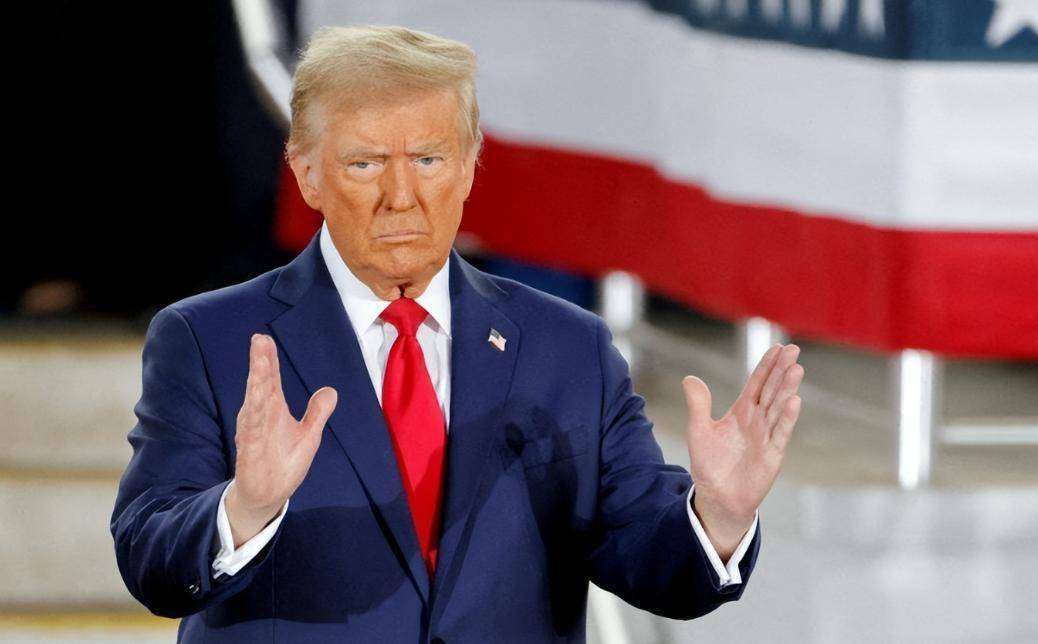
Group 1 - The diplomatic crisis between the US and Canada was triggered by a tweet from Trump, indicating a potential 10% tariff increase due to perceived hostile actions from Canada [1][3] - The conflict originated from an anti-tariff advertisement aired by Ontario, which referenced a speech by former President Reagan, highlighting the negative impact of high tariffs on the US economy [3] - Trump's response to the advertisement included halting negotiations and refusing to meet with Canadian Prime Minister, showcasing a pattern of retaliatory diplomacy [3] Group 2 - The 10% tariff increase is seen as a political maneuver rather than an economic decision, linking trade policy to personal grievances [3] - The relationship between the US and Canada, historically viewed as a strong alliance, is deteriorating under Trump's "America First" policy, leading to a transactional approach to diplomacy [3] - The silence from traditional allies like the EU and Australia reflects a deeper anxiety about the unpredictability of US trade policies and their implications for global alliances [4] Group 3 - The irony of using Reagan's pro-free trade rhetoric against the US highlights the shifting dynamics of globalization and trade relations [5] - The immediate impact of the tariff increase will be detrimental to Canadian export industries, while US consumers will face rising prices [5] - Long-term consequences may include Canada accelerating its efforts to diversify trade partnerships away from the US, while the US risks losing its leadership in the global trade system [5]
Amspec:马来西亚10月1-25日的棕榈油出口量为1182216吨
Xin Hua Cai Jing· 2025-10-27 06:36
马来西亚独立检验机构Amspec表示,马来西亚10月1-25日的棕榈油出口量为1182216吨,较上月同期环 比减少0.27%。 (文章来源:新华财经) ...
粕类周报:短期震荡,关注中美政策-20251027
Guo Mao Qi Huo· 2025-10-27 05:44
1. Report Industry Investment Rating - The investment view of the report is "oscillation", and the trading strategy suggests "oscillation" for single - sided trading and "wait - and - see" for arbitrage [5]. 2. Core View of the Report - The market shows short - term oscillation, and attention should be paid to Sino - US policies. Before the Sino - US meeting, due to the hedging demand for policy uncertainty, short - covering led to a rebound, but the overall oscillatory trend remains unchanged. Traders should focus on the progress of Sino - US trade negotiations and weather changes in South America [5]. 3. Summary by Relevant Catalogs 3.1 Main Views and Strategy Overview - **Supply**: The supply factor is rated as neutral. USDA estimates the ending inventory of US soybeans in the 25/26 marketing year at 300 million bushels, and the expected yield of 53.5 bushels per acre may be lowered. Exports depend on Sino - US policies. As of the week of October 18, 2025, the planting rate of Brazilian soybeans in the 2025/26 season was 21.7%. Although there has been dry weather in Brazilian soybean - producing areas recently, its impact is expected to be limited. In November, domestic soybean meal is expected to start destocking, but the supply in the fourth quarter is still expected to be abundant. If China cannot purchase US soybeans, the supply in the first quarter of next year needs to be supplemented, and the source is uncertain. Under the current Sino - Canadian trade policy, the supply of imported rapeseed meal and rapeseed in China is expected to shrink. The opening of Australian rapeseed imports is expected to supplement the domestic rapeseed meal supply in the fourth quarter [5]. - **Demand**: The demand for soybean meal is slightly bullish, while that for rapeseed meal is slightly bearish. Livestock and poultry are expected to maintain high inventory in the short term, which supports feed demand. However, current breeding profits are in the red, and national policies tend to control the inventory and weight of live pigs, which may affect future supply. The cost - effectiveness of soybean meal has decreased. The downstream trading volume of soybean meal is normal, and the pick - up is good, while the downstream trading volume and pick - up of rapeseed meal are cautious [5]. - **Inventory**: The inventory factor for soybean meal is slightly bearish, and for rapeseed meal is slightly bullish. Domestic soybean and soybean meal inventories are at historically high levels, and the inventory days of feed enterprises' soybean meal have dropped to a low level. Domestic rapeseed inventory has declined to a low level, and rapeseed meal inventory is being destocked, but the inventory level is still at a high level compared to the same period in previous years [5]. - **Basis/Spread**: The basis is rated as neutral [5]. - **Profit**: The profit factor is slightly bullish. The crushing profit of Brazilian soybean purchases is poor, while that of Canadian rapeseed is good [5]. - **Valuation**: The valuation is rated as neutral. From the perspective of crushing profit, the futures price of soybean meal is at a relatively low valuation; from the perspective of basis, the recent futures price of soybean meal is at a neutral valuation [5]. - **Macro and Policy**: The macro and policy factor is slightly bullish. From October 24th to 27th, China and the US will hold economic and trade talks in Malaysia, and a meeting between the Chinese and US presidents is expected at the APEC Summit on October 30th [5]. 3.2 Fundamental Supply - Demand Data of Meal Products - **Inventory - to - Consumption Ratio**: In September, the inventory - to - consumption ratio of US soybeans in the 25/26 marketing year increased, while the global soybean inventory - to - consumption ratio decreased. The inventory - to - consumption ratio of rapeseed increased [32][38]. - **Soybean Production and Sales**: The US soybean sowing rate and excellent - good rate data are presented. The domestic crushing profit of US soybeans has declined. Data on NOPA soybean crushing volume, USDA monthly US soybean crushing volume, and US soybean export sales are also provided, but this week's US soybean export sales data has not been released [47][52][65]. - **Import and Cost**: The CNF premium of soybeans and the gross profit of imported soybean futures are shown. The CFR price of Canadian rapeseed and the crushing profit of imported Canadian rapeseed are also presented, along with the US dollar - to - real exchange rate [72][75]. - **Domestic Inventory and Consumption**: Domestic soybean and soybean meal inventories are at high levels, while the inventory of feed enterprises is at a low level. The inventory of imported rapeseed and rapeseed meal in China is also analyzed. The opening rate and crushing volume of major domestic oil mills are provided. The trading volume and pick - up of soybean meal are normal and at a high level, respectively, while those of rapeseed meal are cautious. Feed monthly output data is also presented [81][102][114]. - **Livestock and Poultry Breeding**: The breeding profits of live pigs, broilers, and laying hens are analyzed. The price of live pigs has slightly rebounded, and the weight reduction is not obvious. Data on the inventory and slaughter volume of livestock and poultry are also provided [116][120][123]
玉米周报:现实博弈,震荡筑底-20251027
Guo Mao Qi Huo· 2025-10-27 05:43
投资咨询业务资格:证监许可【2012】31号 【玉米周报】 现实博弈,震荡筑底 国贸期货 农产品研究中心 2025-10-27 国贸期货研究院 农产品研究中心:黄向岚 从业资格证号:F03110419 投资咨询证号:Z0021658 本报告非期货交易咨询业务项下服务,其中的观点和信息仅供参考,不构成任何投资建议;期市有风险,投资需谨慎 01 PART ONE 主要观点及策略概述 玉米:现实博弈,震荡筑底 | 影响因素 | 驱动 | 主要逻辑 | | | --- | --- | --- | --- | | 供给 | 偏空 | (1)东北产地仍面临集中上量压力,华北质量偏差的潮粮也面临保管压力,渠道上量恢复,建议关注11月的产地卖压;(2)25/26年度种植成本继续下降, | | | | | 播种面积稳中略减,单产表现良好,整体维持丰产预期;(3)进口谷物政策限制持续,进口谷物供应缩量。 | | | | | (1)据饲料工业协会数据,2025年8月,全国工业饲料产量2936万吨,环比增长3.7%,同比增长3.8%。饲料企业生产的配合饲料中玉米用量占比为32.9%; (2)畜禽短期预期维持高存栏,产能去化尚不明显, ...
长江期货粕类油脂周报-20251027
Chang Jiang Qi Huo· 2025-10-27 05:31
1. Report Industry Investment Rating No relevant content provided. 2. Core Views of the Report - The trade expectation between China and the US has improved, leading to increased volatility in the futures prices of oils and fats, and cost - driven upward movement in soybean meal prices [2][5]. - For soybean meal, the price of the M2601 contract is expected to rise slightly, but the short - term strengthening range is limited. For oils and fats, the market is expected to be more volatile in the short term, and a bullish outlook is recommended in the long term [7][85]. 3. Summary by Relevant Catalogs 3.1 Soybean Meal 3.1.1 Periodic and Spot Market - As of October 25, the East China spot price was 2910 yuan/ton, up 40 yuan/ton week - on - week; the M2601 contract closed at 2933 yuan/ton, up 65 yuan/ton week - on - week; the basis price decreased by 20 yuan/ton. The domestic soybean meal futures price followed the upward trend of US soybeans, while the spot price was restricted by inventory pressure [7][9]. 3.1.2 Supply - The USDA October report was postponed. There is an expectation of a decrease in US soybean yield. Brazilian soybean planting is progressing faster than last year. The domestic supply was abundant in October, with arrivals of about 8.5 million tons, but is expected to decrease to less than 8 million tons in November [7]. 3.1.3 Demand - In 2025, the domestic breeding profit improved, and the high inventory of pigs and poultry supported the demand for feed. The demand for soybean meal is expected to increase by more than 5% year - on - year in the fourth quarter [7]. 3.1.4 Cost - The planting cost of US soybeans in the 25/26 season is 1135 cents/bushel, and the bottom price is expected to be around 980 cents/bushel. The domestic soybean meal cost is calculated to be 3080 yuan/ton [7]. 3.1.5 Market Outlook and Strategy - The price of the US soybean 01 contract is expected to fluctuate around 1020 cents/bushel. The domestic soybean meal price is expected to rise in November. It is recommended to pay attention to the pressure at 3000 for M2601 long positions, gradually take profits at high prices, and lightly build long positions for M2605 and M2901 at low prices [7]. 3.2 Oils and Fats 3.2.1 Periodic and Spot Market - As of the week of October 24, the main 01 contracts of palm oil, soybean oil, and rapeseed oil all declined. The spot prices of corresponding oils also decreased, and the basis prices showed different trends [85][87]. 3.2.2 Palm Oil - In October, the production of Malaysian palm oil increased, while the export growth slowed down, leading to inventory accumulation. However, the Southeast Asian palm oil production will enter the reduction season in November. In Indonesia, the implementation of B50 in the second half of 2026 is planned, which is bullish for palm oil prices [85]. 3.2.3 Soybean Oil - The price of US soybeans was strong due to the Sino - US talks, but there are still uncertainties in Sino - US relations. The domestic soybean oil inventory is high in the short term, and the supply gap after November is expected to be narrowed [85]. 3.2.4 Rapeseed Oil - The relationship between China and Canada has slightly improved, but the supply gap of rapeseed oil in China before November is difficult to solve, and the supply is still expected to be tight after November [85]. 3.2.5 Market Outlook and Strategy - After the Sino - US talks on October 26, the market sentiment improved, but there are still uncertainties at the APEC meeting at the end of October. It is recommended to pay attention to the support levels of 8050 - 8150, 8900 - 9000, and 9650 - 9500 for soybean, palm, and rapeseed oil 01 contracts, and adopt a long - at - low strategy [85].
印度神操作!部长放话:想签协议别指手画脚,俄油我们照买不误!
Sou Hu Cai Jing· 2025-10-27 05:11
Core Insights - The India-US bilateral trade agreement appears to be nearing completion, with most issues reportedly agreed upon, but India emphasizes that any decision will prioritize national interests over external pressures [1][3][4] - Tariff issues are central to the negotiations, with the US imposing high tariffs on Indian exports, leading to a significant drop in India's exports to the US [4][7] - India is considering some concessions, such as relaxing import restrictions on corn and soybean meal, while firmly protecting its agricultural markets to safeguard local farmers [6][10] Trade Negotiation Dynamics - The US has imposed tariffs of up to 50% on Indian goods, severely limiting market access for Indian products [4] - India's exports to the US fell from $6.87 billion in August to $5.43 billion in September, a decrease of $1.4 billion in just one month [4] - India is unlikely to compromise on agricultural products, as approximately 60% of its population relies on agriculture, with 85% being small farmers [6][10] Energy Procurement Issues - The procurement of Russian oil remains a contentious topic, with the US pressuring India to reduce its purchases, but India maintains that its energy security is paramount [9][12] - Despite US sanctions on Russian oil producers, India has reduced its Russian oil imports from 1.2 million barrels per day in September to 800,000 barrels per day in October, which may be seen as a gesture towards the US [12] Conclusion on Negotiation Strategy - India's approach to the negotiations is cautious, balancing the need for trade agreements with the protection of domestic interests [13] - The potential for an agreement hinges on mutual concessions, particularly regarding tariffs and agricultural imports, with both parties needing to demonstrate goodwill for a successful outcome [13]
美国终于找到了反制稀土的新办法,接连出手三招,逼中方就范!
Sou Hu Cai Jing· 2025-10-27 04:41
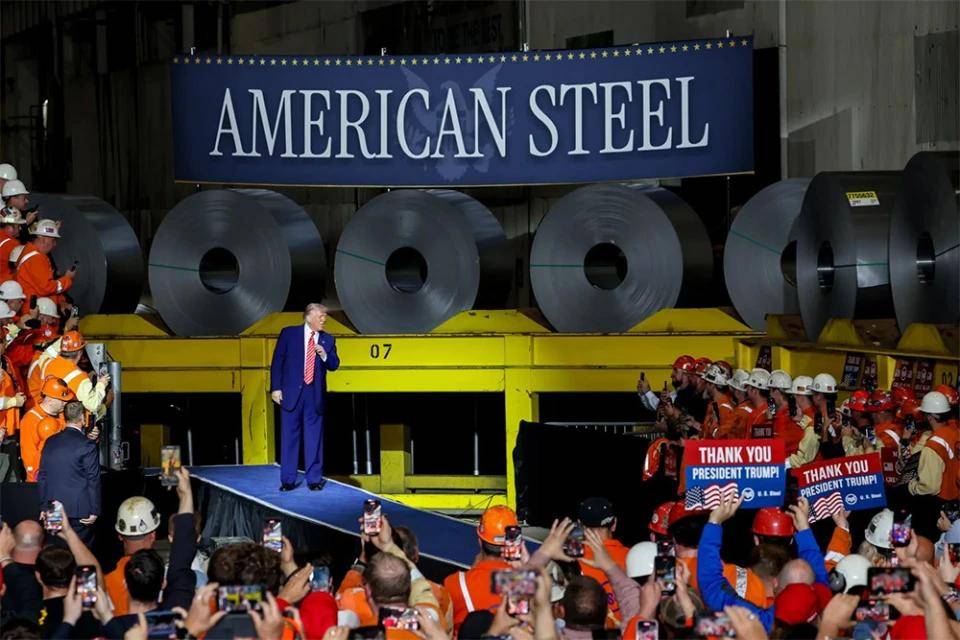
Core Points - The ongoing US-China talks in Malaysia focus on three main issues, including China's stricter rare earth export controls, which the US fears could disrupt supply chains in critical sectors like semiconductor manufacturing and defense [3] - The US aims to pressure China into relaxing these export restrictions to ensure stable raw material supplies for industries such as electric vehicles and semiconductors [3] - The US also seeks to increase Chinese imports of agricultural products like soybeans to alleviate export barriers faced by American farmers [3] - A significant goal of these talks is to prepare for a meeting between the two countries' leaders at the upcoming APEC summit in South Korea [3] Measures Taken by the US - US Treasury Secretary Mnuchin announced that if China does not lift its rare earth controls, the US will collaborate with the G7 to impose software export restrictions on China, targeting its high-tech development [4] - The US has initiated an investigation into whether China has complied with trade agreement terms signed during Trump's first term, with potential additional sanctions if non-compliance is found [7] - Starting November 1, the US plans to impose a 100% tariff on Chinese goods, a measure linked to China's rare earth export controls, which could be used as leverage in negotiations [7] China's Response - China is portrayed as a responsible nation that has historically adhered to international agreements, contrasting with the US's inconsistent approach [9] - Despite the US's pressure tactics, China remains steadfast in its negotiation stance, having learned from past experiences where it made concessions that were not reciprocated by the US [9] - The US's traditional methods of negotiation, characterized by threats and tariffs, are viewed as ineffective against China, as evidenced by the reduction of a lengthy sanctions list during the talks [9] Conclusion - The resolution of US-China differences is suggested to require equal treatment and mutual benefit, rather than unilateral pressure and sanctions, as trade wars yield no winners [11]