有色

Search documents
华泰证券:继续布局春季行情,成长和周期均衡配置
Xin Lang Cai Jing· 2026-01-09 00:07
Core Viewpoint - The report from Huatai Securities indicates that the industry prosperity index shows initial signs of a turning point in December, corroborated by an unexpected rebound in PMI [1] Sector Summaries - **Upstream Resources and Public Industries**: Significant improvement in the last three months, particularly in sectors such as non-ferrous metals, coal, certain chemical products, paper, and ordinary steel driven by price increases [1] - **TMT (Technology, Media, and Telecommunications)**: Accelerated progress in AI applications, leading to improved conditions in gaming and software, with a positive trend in computing power storage and passive components [1] - **Capital Goods and Intermediate Products**: Improvement noted in sectors like new energy, automation equipment, and engineering machinery, with export orders potentially being advanced due to the later timing of the 2026 Spring Festival [1] - **Consumer Goods**: Recovery observed in dairy products, beer, and livestock sectors [1] - **Infrastructure Chain**: The construction PMI rose above the threshold in December, indicating a recovery in the construction industry [1] - **Independent Prosperity Cycle**: Notable performance in sectors such as military electronics [1] Investment Recommendations - The report suggests continuing to position for the spring market with a balanced allocation between growth and cyclical sectors, recommending a focus on non-ferrous metals, chemicals, military, storage, gaming, new energy (batteries/wind power), and pharmaceuticals at a monthly level [1] - Additionally, short-term thematic investments are favored, with a focus on humanoid robots, brain-machine interfaces, and domestic computing power, considering trading congestion [1]

国信策略:2026年入市增量资金有望超两万亿
Xin Lang Cai Jing· 2026-01-08 23:30
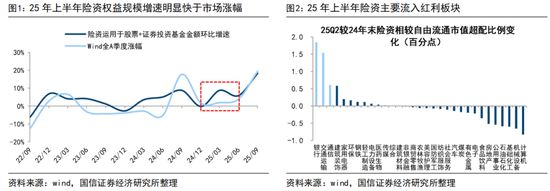
Group 1 - The core conclusion indicates that in 2025, the A-share market shows distinct characteristics of incremental capital, with leveraged funds and private equity becoming the main forces entering the market, while public funds experienced net redemptions [1][29] - Current incoming funds are primarily sourced from high-net-worth individuals, and as the risk appetite of most residents gradually recovers from low levels, ordinary residents' funds are expected to become the main source of market entry in 2026 [1][29] - The macro and micro background of 2025 shares similarities with 2020, but the structure of incremental capital differs, with an estimated total incremental capital of 2 trillion yuan expected in 2026 as the process of resident funds entering the market progresses [1][29] Group 2 - The report highlights that the A-share market is expected to enter the second half of a bull market in 2026, driven by the recovery of fundamentals and the further entry of resident funds [2][30] - In 2025, the A-share market saw a significant performance, with the Wind All A Index rising by 28% throughout the year, supported by abundant liquidity [3][32] - The inflow of funds in 2025 can be divided into two phases, with the first half characterized by a recovery in market sentiment and various funds entering the market due to policy support and industrial catalysts [3][32] Group 3 - In the first half of 2025, the main sectors attracting incremental funds included technology and dividend sectors, with significant inflows into banks and materials [4][33] - By the third quarter of 2025, the market experienced a surge, primarily driven by private equity and leveraged trading, with a notable increase in risk appetite among investors [6][36] - The third quarter saw substantial inflows into sectors such as non-ferrous metals, electronics, and new energy, reflecting the ongoing demand for these industries [7][37] Group 4 - The report indicates that the entry of resident funds into the market is still in its early stages, primarily coming from high-net-worth individuals, as the majority of residents have not yet made significant market entries [11][41] - Evidence suggests that the risk appetite of residents is gradually improving, with a notable increase in the willingness to invest in high-risk assets such as stocks and funds [9][42] - Despite the recovery in risk appetite, many residents remain cautious, with a significant portion of their funds still allocated to low-risk products [15][46] Group 5 - The forecast for 2026 anticipates a net inflow of incremental capital reaching 2 trillion yuan, driven by active retail funds, continued high inflows from insurance capital, and improvements in public and foreign capital [19][52] - The report outlines that the inflow of funds will come from various sources, including retail investors, leveraged funds, and domestic institutional funds, while outflows will primarily be directed towards equity financing and capital reductions [48][49] - The overall funding inflow situation in 2025 is similar to that of 2020, but the structure of incremental capital has changed significantly, with leveraged funds and private equity playing a more prominent role [20][49]

核心机会在中盘蓝筹!东方证券黄燕铭最新观点出炉
券商中国· 2026-01-08 23:29
Core Viewpoint - The A-share market is expected to experience a "sideways fluctuation with slight strengthening" in the first half of 2026, with core opportunities focusing on mid-cap blue chips, particularly in the cyclical (chemicals, non-ferrous) and manufacturing (new energy, robotics) sectors [2][3][4]. Market Outlook - The market is currently in an adjustment phase following the bull market of 2025, requiring three key tasks: transitioning from old to new driving forces, switching market hotspots to find new breakthrough directions, and redistributing stock chips to form a trading foundation [3]. - The previous bull market was driven by rising expectations rather than improvements in the real economy, indicating a need to return to observing the real economy for new expectations to form [3][4]. Investment Strategy - The focus for investment should be on mid-cap blue chips, which are characterized by moderate risk, solid performance, and potential for growth. Key sectors include cyclical industries (chemicals, non-ferrous) and manufacturing (new energy, robotics) [4][5]. - The market has shown a polarization trend from April 2023 to November 2025, with funds either flowing into low-risk, high-dividend stocks or chasing high-risk, high-growth tech stocks. This trend is beginning to change, indicating a return of risk appetite towards mid-cap blue chips [4][5]. Sector Insights - In the technology sector, while it remains a long-term focus, a short-term correction is necessary due to previous rapid increases in stock prices [6]. - The A-share market's selection strategy has shifted from performance-based to style-based, focusing on factors like EPS, ROE, and growth potential [6]. Economic Context - The macroeconomic environment is expected to show a "front low, back high" trend in GDP growth, estimated between 4.5% and 5.0% for the first half of 2026, with support from consumption, investment, and exports [7]. - The geopolitical landscape, particularly the U.S.-China dynamics, is anticipated to influence market stability and investment flows, with China positioned as a relatively stable market amid global uncertainties [7]. Industry Opportunities - In the AI sector, there is a genuine and sustained demand for domestic AI solutions, with a focus on advanced processing and chip technologies [8]. - The copper market is expected to see continued price increases due to strong demand and supply shortages, while lithium carbonate is projected to remain tight in supply [8][9]. - The new energy sector is focusing on storage, lithium battery materials, nuclear fusion, and solid-state batteries, with significant growth anticipated in storage solutions [8]. - The robotics industry is transitioning to a mid-stage focus, with key components like joint assemblies and dexterous hands being highlighted as important areas for investment [9].


平安基金研究总监张晓泉 科技和周期股将双轮驱动
Shen Zhen Shang Bao· 2026-01-08 18:13
Core Insights - The A-share market is expected to present investment opportunities in 2026, driven by both technology and cyclical sectors, with a strong market performance anticipated as the Shanghai Composite Index approaches 4100 points [3][4]. Group 1: Market Dynamics - Multiple factors are contributing to the strong market performance at the beginning of 2026, including the reallocation of insurance funds to equity assets, the appreciation of the RMB, and increased market interest in technology sectors such as commercial aerospace and brain-computer interfaces [4]. - The market's rebound is supported by improved liquidity, heightened risk appetite, and ongoing technological narratives, creating a favorable environment for investment [4]. Group 2: Sector Opportunities - The technology sector continues to show strong trends without significant valuation bubbles, making it a key investment focus for 2026, while cyclical sectors are also expected to present opportunities [5]. - The cyclical industry is anticipated to benefit from reduced debt pressure and favorable overseas demand, particularly due to expectations of continued Federal Reserve rate cuts and potential economic recovery following a ceasefire in the Russia-Ukraine conflict [5]. - Specific sectors to watch include chemicals, non-ferrous metals, agriculture, and construction materials, as they are likely to experience noticeable demand changes due to the cyclical recovery [5]. Group 3: Long-term Investment Themes - In the long term, potential structural beneficiaries in AI applications are identified, with key areas including consumer-facing AI, multi-modal AI applications, AI companionship products, and AI-driven enhancements to traditional enterprise resource planning (ERP) software [5].

“15连阳”下分化加剧 A股短期何去何从?
Xin Lang Cai Jing· 2026-01-08 16:56
Market Overview - The A-share market showed a mixed performance on Thursday, with the Shanghai Composite Index experiencing a slight decline of 0.07% to close at 4082.98 points, while the Shenzhen Component and ChiNext Index fell by 0.51% and 0.82%, closing at 13959.48 points and 3302.31 points respectively [1] - The total trading volume in the Shanghai and Shenzhen markets reached 28.265 billion yuan, a decrease of 55.2 billion yuan compared to Wednesday [1] - Despite the overall decline, over 3700 stocks rose, with more than 110 stocks hitting the daily limit [1] Market Sentiment - The market is experiencing increased divergence, with the Shanghai Composite Index managing to maintain a "15 consecutive days of gains" despite fluctuations, leading to heightened discussions about the sustainability of this trend and potential short-term technical adjustments [1][2] - The combination of market divergence and shrinking trading volume has amplified cautious sentiment among investors [2] Economic Data Impact - January is traditionally a "data verification period" for the A-share market, with upcoming releases of key macroeconomic data such as PMI, social financing, and consumption expected to influence market volatility [2] - If the economic data underperforms, it may exacerbate short-term fluctuations and trigger technical adjustments; conversely, better-than-expected data could provide new momentum for the ongoing rally [2] Technical Analysis - The market is currently in a phase of adjustment, with all three major indices showing slight declines, yet still maintaining a trading volume above 2.8 trillion yuan [3] - There is a notable divergence between large-cap and small-cap stocks, with significant activity in sectors like commercial aerospace, brain-computer interfaces, and AI applications, while large financials and materials sectors are facing corrections [3] Investment Strategy - Investors are advised to manage their positions carefully and respond rationally to market conditions, rather than engaging in panic selling or chasing high-flying stocks [3] - A recommended strategy is to maintain a position size of around 50-60%, reducing leverage and exposure to high-volatility stocks to mitigate potential risks [3]
A股增量资金空间测算-居民存款与机构资金潜力展望
2026-01-08 16:02
Summary of Key Points from the Conference Call Industry Overview - The focus is on the A-share market in China, particularly regarding the inflow of incremental funds and the impact of various financial instruments and investor behaviors on the stock market. Core Insights and Arguments - **Incremental Funds from Resident Deposits**: It is estimated that the scale of resident deposit migration will reach between 1 trillion to 4 trillion yuan by 2026, with an annual inflow of approximately 1 trillion yuan into the stock market. This migration is expected to enhance M2 growth, providing additional funds for the stock market [1][2] - **Insurance Funds as a Stable Investment Source**: Insurance funds are projected to contribute over 1 trillion yuan annually to the stock market. By Q3 2025, the equity asset allocation of life and property insurance companies has significantly increased, indicating a strong trend towards stock and fund holdings [1][5] - **Growth of Private and Public Funds and ETFs**: The rapid development of private equity, public funds, and ETFs is noted, with ETFs attracting many investors due to their flexibility and low costs. The annual growth potential in these areas is estimated to be between 1 trillion to 2 trillion yuan [1][6][12] - **IPO Contributions to Market Liquidity**: A-share IPOs are expected to inject several hundred billion yuan into the market annually, particularly benefiting hard manufacturing and hard technology companies during favorable market conditions [3][10] - **Impact of Resident Deposit Migration on Stock Market**: The migration of resident deposits is a crucial indicator, with significant increases in non-bank financial institution deposits suggesting that funds are gradually entering the stock market. The ratio of new resident deposits to GDP is expected to decline, indicating more funds will be available for investment [4][15] - **Long-term Role of Insurance Funds**: Insurance funds are seen as a key driver for medium to long-term capital entering the market. The allocation towards technology stocks has increased, with expectations of substantial funds waiting to enter the market in the coming years [5][8] - **Market Outlook and Slow Bull Trend**: The A-share market is anticipated to enter a slow bull phase, with long-term funds gradually allocating to equity assets. The market is expected to rely on technology and new consumption sectors in 2025, shifting focus to manufacturing in 2026 [1][7] - **Contributions from Active Funds and Private Equity**: Active funds in the secondary market contribute approximately 100 billion yuan, while private equity could bring in over 1 trillion yuan annually, especially considering stock price increases [11] - **Financing Balance and Market Expansion**: The financing balance is currently high but not at peak levels seen in 2015, indicating potential for upward movement. The annual incremental space for financing balance is estimated at around 100 billion yuan [13][14] Other Important Insights - **Investment Behavior Trends**: The gradual shift of long-term funds into equity assets is a notable trend not seen in the past two decades, with policy direction favoring a slow bull market rather than a rapid rise [7] - **Sector-Specific Investment Focus**: Future allocations by insurance funds are expected to diversify beyond financial stocks to include leading companies in sectors with favorable economic conditions [8][9]
国泰海通:A股春季行情延续,看好科技、非银、消费三大主线
Xin Lang Cai Jing· 2026-01-08 09:35
Core Viewpoint - The A-share market is expected to welcome a "spring opening red" in 2026, driven by positive signals from policy expectations, liquidity, and fundamentals, with a focus on technology, non-bank financials, and consumer sectors [1][8]. Group 1: Spring Market Logic - Three main supporting factors for the spring market include: 1. Increased expectations for overseas liquidity easing, particularly with the upcoming announcement of the new Federal Reserve chair, leading to hopes for U.S. interest rate cuts in 2026 [2][9]. 2. Continuous inflow of incremental funds, exemplified by over 96 billion yuan net inflow into the A500 ETF since December, alongside insurance capital's demand for "opening red" allocations [2][9]. 3. Strengthened policy expectations, with the government emphasizing the need to stabilize investment and improve the real estate market outlook, indicating a trend towards a "transformation bull" market [2][9]. Group 2: Price Increase Signals - The importance of price signals is highlighted, with the central bank's fourth-quarter meeting focusing on promoting stable economic growth and reasonable price recovery. Price increase logic is gradually emerging in certain sectors since the second half of 2025 [3][10]. - Key sectors to watch include: 1. Chemical sector with improving demand but contracting supply, such as organic silicon, refrigerants, pesticides, and lithium carbonate in the new energy sector [3][10]. 2. TMT supply chain experiencing rapid demand expansion, leading to supply shortages in areas like storage chips and electronic materials [3][10]. 3. Non-ferrous metals sector benefiting from both financial and demand attributes, including precious metals and industrial metals [3][10]. Group 3: Industry Configuration - Three main investment themes identified: 1. Technology growth, driven by global chip technology breakthroughs and ongoing price increases in storage, with recommendations for sectors like internet, electronics, and manufacturing [4][11]. 2. Non-bank financials, benefiting from the shift of household deposits and growing wealth management needs, with recommendations for insurance and brokerage sectors [4][11]. 3. Cyclical opportunities, with low valuations and improving economic conditions, focusing on tourism, hospitality, and consumer goods, as well as tight supply in commodities like chemicals and metals [4][11]. Group 4: Thematic Investment Opportunities - Investment opportunities are emerging in AI applications, robotics, and commercial aerospace, which are expected to see significant catalysts [5][12].

淘气天尊:大盘无惧外围调整,强收15连阳!(01.08)
Jin Rong Jie· 2026-01-08 07:51
Market Overview - The market exhibited a mixed performance with the Shanghai Composite Index opening lower by 8 points at 4077 and the ChiNext Index down by 20 points at 3308, ultimately closing at 4082 and 3302 respectively, with the former down by 2 points and the latter down by 27 points [1] - A total of 3731 stocks rose, with 135 stocks increasing by over 9% and 784 stocks by over 3%, while 1595 stocks declined, with 6 stocks dropping by over 9% and 192 stocks by over 3% [1] Sector Performance - The heavyweights in the market, including sectors like materials and finance, led the decline, while the commercial aerospace sector saw significant gains [1] - Precious metals such as platinum, silver, gold, and aluminum futures experienced notable declines after previous surges, indicating a correction in the materials sector [1] Investor Sentiment - Many investors expressed confusion regarding the market dynamics, particularly why certain stocks were rising while their own holdings were not performing similarly [1] - The commentary highlighted the phenomenon where stocks in a booming sector could see drastic corrections, potentially trapping investors who entered at high prices [1] Technical Analysis - The market has been in a phase of high volume and price convergence for three consecutive trading days, suggesting a potential short-term adjustment is on the horizon [1] - Investors are advised to be patient and wait for clearer signals from market leaders regarding the timing of any potential corrections [1] Future Outlook - The commentary suggests that while the market remains resilient, the timing for adjustments may require careful observation, with the potential for more aggressive movements as the market dynamics evolve [1] - Investors are encouraged to make informed decisions based on their individual stock positions and market conditions, balancing risk and opportunity [1]
国泰海通晨报-20260108
GUOTAI HAITONG SECURITIES· 2026-01-08 02:19
Group 1: Strategy Research - The report highlights a differentiated macroeconomic environment, with significant growth in tourism and cultural sectors during the New Year period, alongside notable increases in inbound and outbound travel demand [2][9] - The technology hardware and certain industrial raw materials continue to see price increases, driven by trends in the AI industry and tight supply in chemical and non-ferrous materials [2][9] - The real estate and durable goods sectors remain under pressure, with weak demand in the real estate construction chain [2][9] Group 2: Tourism and Travel - During the 2026 New Year holiday (January 1-3), daily cross-regional personnel flow in China reached 198 million, a year-on-year increase of 19.5%, with daily inbound and outbound travel averaging 2.205 million, up 28.6% year-on-year [3][10] - Domestic daily tourism participation and revenue increased by 5.2% and 6.3% respectively compared to the 2024 New Year holiday, with average spending per person rising by 1.1% [3][10] - The improvement in tourism demand is attributed to optimized service supply and the implementation of vacation policies, as well as enhanced inbound travel policies [3][10] Group 3: Downstream Consumption - The price of live pigs increased by 3.9% as of December 28, driven by improved downstream demand due to New Year stocking [4][11] - In 30 major cities, the transaction area of commercial housing decreased by 26.0% year-on-year, with first, second, and third-tier cities seeing declines of 31.8%, 14.0%, and 45.5% respectively [4][11] - The average daily retail of passenger cars fell by 12% year-on-year, indicating a continued decline in the automotive circulation industry [4][11] Group 4: Technology and Manufacturing - The electronic industry remains buoyant, with AI infrastructure investments driving growth; as of January 2, the average spot prices for DRAM memory (DDR3, DDR4, DDR5) increased by 2.6%, 6.0%, and 7.1% respectively [5][12] - Chemical raw material prices are showing mixed performance, with PX prices rising by 6.4% while PTA prices fell by 0.3%; lithium carbonate prices increased by 5.9% due to supply concerns [5][12] - Coal prices stabilized with a 0.9% increase, while industrial metal prices continued to rise due to supply disruptions and expectations of interest rate cuts [5][12] Group 5: Company Announcements - The report discusses Zhongxin Co., Ltd. (603091) planning to establish a wholly-owned manufacturing base in the U.S., with an investment of up to $36 million for a project producing 20,000 tons of pulp molded tableware annually [13][14] - The company maintains its earnings forecast, projecting EPS of 3.32, 5.65, and 7.37 yuan for 2025-2027, and sets a target price of 99.68 yuan, maintaining an "Accumulate" rating [13][14] - The company is focusing on enhancing its supply chain resilience and expanding its overseas production capacity to adapt to market demands [14][15]
国泰海通 · 晨报260108|元旦文旅景气增长,科技周期延续涨价
国泰海通证券研究· 2026-01-07 15:07
Core Viewpoint - The article highlights the growth in tourism and cultural activities during the New Year period, alongside the continuation of price increases in the technology sector, indicating a mixed performance in the macroeconomic landscape [3]. Group 1: Tourism and Cultural Activities - The New Year holiday saw a significant increase in travel demand, with an average daily cross-regional flow of 198 million people, up 19.5% year-on-year, and an average daily entry-exit figure of 2.205 million, up 28.6% year-on-year [4]. - Domestic tourism showed improvement, with average daily tourist numbers and revenue increasing by 5.2% and 6.3% respectively compared to the previous year, driven by enhanced service supply and flexible holiday arrangements [4]. - Shanghai Disneyland's congestion index rose by 128.8% year-on-year during the last week of 2025, indicating a surge in visitor numbers [4]. Group 2: Downstream Consumption - The price of live pigs increased by 3.9% as of December 28, driven by improved demand for New Year preparations [5]. - Real estate sales remain under pressure, with transaction volumes in 30 major cities down 26.0% year-on-year, and significant declines observed across first, second, and third-tier cities [5]. - Retail sales of passenger vehicles decreased by 12% year-on-year during the last week of December 2025, reflecting ongoing challenges in the durable goods sector [5]. Group 3: Technology and Manufacturing - The electronic industry continues to thrive, with prices for DRAM memory chips increasing by 2.6% to 7.1% across different types as of January 2 [6]. - Chemical raw material prices showed mixed performance, with PX prices rising by 6.4% while PTA prices slightly declined [6]. - Industrial metal prices have continued to rise due to supply disruptions and expectations of interest rate cuts, with coal prices stabilizing at a 0.9% increase [6].