非银金融

Search documents
央行2026年政策定调 降准降息可期
Sou Hu Cai Jing· 2026-01-06 16:33
[ 曾刚认为,在现行框架下,央行的流动性工具主要针对商业银行,非银机构只能通过银行间接获得流 动性支持,或者依赖自身的资产变现能力。这种间接机制在常态下可以运作,但在市场压力情景下,可 能因为银行的风险规避行为而失效。 ] 2026年中国人民银行工作会议于1月5日至6日召开,会议部署全年七大重点工作,围绕货币政策实施、 金融服务实体经济、风险防控、金融改革开放等核心领域明确行动路径。 央行明确2026年七大重点工作。 其中,在货币政策方面,会议强调,把促进经济高质量发展、物价合理回升作为货币政策的重要考量, 灵活高效运用降准降息等多种货币政策工具。 业内专家认为,适度宽松的货币政策将兼顾总量调节与结构优化,人民币汇率有望维持温和升值态势, 但考虑到潜在的不确定性,市场不宜押注单边行情。 适度宽松的货币政策 2026年适度宽松的货币政策将有两个主要方向:首先是总量政策,其次是结构性政策。 会议明确,2026年继续实施适度宽松的货币政策,将促进经济高质量发展、物价合理回升作为核心考 量,灵活高效运用降准降息等多种货币政策工具,保持流动性充裕,保持社会融资条件相对宽松,引导 金融总量合理增长、信贷投放均衡,使社会融 ...
1月6日信用债异常成交跟踪
SINOLINK SECURITIES· 2026-01-06 15:08
1. Report Industry Investment Rating No relevant content provided. 2. Core Viewpoints of the Report - Credit - related data shows that among discounted - traded bonds, "23 Chanjin 09" has a large deviation in bond valuation price; among bonds with rising clean prices, "22 Vanke 06" ranks high in valuation price deviation; among secondary and perpetual bonds with falling clean prices, "22 Industrial Bank Secondary 01" has a small valuation price deviation; among commercial financial bonds with falling clean prices, "25 Weihai Bank Small - and - Micro - enterprise Bond" has a small valuation price deviation; among bonds with a trading yield higher than 5%, real - estate bonds rank high [2]. - Credit bond valuation yield changes are mainly distributed in the (0, 5] range. Non - financial credit bond trading terms are mainly distributed between 2 and 3 years, with the 3 - to 4 - year variety having the highest proportion of discounted trades; secondary and perpetual bond trading terms are mainly distributed between 4 and 5 years. By industry, bonds in the agriculture, forestry, animal husbandry, and fishery industry have the largest average valuation price deviation [2]. 3. Summary According to Relevant Catalogs 3.1 Discounted - Traded Bond Tracking - Bonds such as "23 Chanjin 09", "24 Chanjin 08", etc. in the non - bank financial industry have relatively large valuation price deviations, with "23 Chanjin 09" having a deviation of - 1.05% and a remaining term of 2.69 years, and a trading volume of 16 million yuan [4]. - Bonds in other industries like "20 Boshui 02" in agriculture, forestry, animal husbandry, and fishery, and "Shaanxi Coal KY13" in the coal industry also have certain valuation price deviations [4]. 3.2 Tracking of Bonds with Rising Clean Prices - "22 Vanke 06", "22 Vanke 04", and "22 Vanke 02" in the real - estate industry have large positive deviations in valuation prices, with "22 Vanke 06" having a deviation of 4.15% and a trading volume of 297 million yuan [5]. - Many urban investment bonds also show positive deviations in valuation prices, such as "20 Zunhe 02" and "25 Raochuang 04" [5]. 3.3 Secondary and Perpetual Bond Trading Tracking - Secondary and perpetual bonds of various banks, including state - owned banks, joint - stock banks, and city commercial banks, have a valuation price deviation of - 0.01%. For example, "22 Industrial Bank Secondary 01" has a trading volume of 112,946 million yuan [6]. 3.4 Commercial Financial Bond Trading Tracking - "25 Weihai Bank Small - and - Micro - enterprise Bond" and "25 Weihai Bank Green Bond" have a valuation price deviation of 0.00%, with trading volumes of 32,901 million yuan and 11,966 million yuan respectively [7]. - Some commercial financial bonds have a valuation price deviation of - 0.01%, such as "23 Beijing Rural Commercial Small - and - Micro - enterprise Bond" and "25 CITIC Baixin Bank Small - and - Micro - enterprise Bond 01" [7]. 3.5 Tracking of Bonds with a Trading Yield Higher than 5% - Real - estate bonds like "22 Vanke 06", "22 Vanke 04", etc., and non - bank financial bonds such as "23 Chanjin 05", "23 Chanjin 13" are among the bonds with a trading yield higher than 5% [8]. 3.6 Distribution of Credit Bond Trading Valuation Deviations on the Day - Credit bond valuation yield changes are mainly distributed in the (0, 5] range [2]. 3.7 Distribution of Non - financial Credit Bond Trading Terms on the Day - Non - financial credit bond trading terms are mainly distributed between 2 and 3 years, and the 3 - to 4 - year variety has the highest proportion of discounted trades [2]. 3.8 Distribution of Secondary and Perpetual Bond Trading Terms on the Day - Secondary and perpetual bond trading terms are mainly distributed between 4 and 5 years [2]. 3.9 Discounted - Trade Ratio and Trading Volume of Non - financial Credit Bonds in Each Industry - Bonds in the agriculture, forestry, animal husbandry, and fishery industry have the largest average valuation price deviation, while different industries have different trading volumes [2][18].


央行部署2026年重点工作 非银机构流动性机制性安排有望破题
2 1 Shi Ji Jing Ji Bao Dao· 2026-01-06 14:44
例如,2024年10月,中国人民银行会同有关部门创设了支持资本市场稳定发展的两项工具,即证券、基 金、保险公司互换便利和股票回购增持再贷款,首期额度分别为5000亿元和3000亿元。 1月5日至6日,2026年中国人民银行工作会议在北京召开。会议明确,建立在特定情景下向非银机构提 供流动性的机制性安排,发挥好两项支持资本市场的货币政策工具作用。 此前,中国人民银行行长潘功胜在金融街论坛年会上宣布,人民银行将综合平衡维护金融市场稳定运行 和防范金融市场道德风险,探索在特定情景下向非银机构提供流动性的机制安排,引发市场的广泛关 注。 对此,远东资信研究院副院长、首席宏观研究员张林告诉记者,传统的央行流动性投放工具主要面向商 业银行等一级交易商,非银机构作为资金链的末端,通过银行间市场拆借、回购等渠道间接获得流动 性。这种传导机制在市场正常运行时有效,但在压力情景下容易出现传导不畅,导致非银机构面临流动 性紧张。 张林指出,所谓"特定情景",通常指市场出现系统性压力、正常流动性渠道受阻、单一机构或机构群体 面临流动性危机且可能引发系统性风险的情况,也包括为了稳定权益市场的超调,通过调节非银金融机 构的流动性实现市场 ...
降准降息可期!央行2026年政策定调
第一财经· 2026-01-06 13:25
Core Viewpoint - The People's Bank of China (PBOC) has outlined seven key priorities for 2026, focusing on monetary policy implementation, financial services for the real economy, risk prevention, and financial reform and opening-up [3]. Group 1: Monetary Policy - The PBOC will continue to implement a moderately accommodative monetary policy in 2026, emphasizing the promotion of high-quality economic development and reasonable price recovery as core considerations [5]. - The monetary policy will utilize various tools such as reserve requirement ratio (RRR) cuts and interest rate reductions to maintain ample liquidity and ensure that social financing conditions remain relatively loose [5]. - Structural policies will be refined to provide targeted support to key areas, including expanding domestic demand, technological innovation, and small and micro enterprises [6]. Group 2: Exchange Rate Management - The RMB has shown a strong recovery, with the offshore RMB/USD exchange rate breaking 6.97 for the first time in two and a half years, indicating a potential for moderate appreciation in 2026 [8]. - The PBOC aims to maintain the RMB exchange rate at a reasonable and balanced level while preventing excessive fluctuations, with a focus on managing market expectations [9]. Group 3: Financial Risk Prevention - The PBOC has prioritized the prudent resolution of financial risks in key areas, including financing platform debts and small financial institutions, and has proposed mechanisms for providing liquidity support to non-bank financial institutions under specific scenarios [11]. - The exploration of liquidity support mechanisms for non-bank institutions is seen as a proactive response to potential systemic risks, given the growing scale of these institutions in the financial market [12].

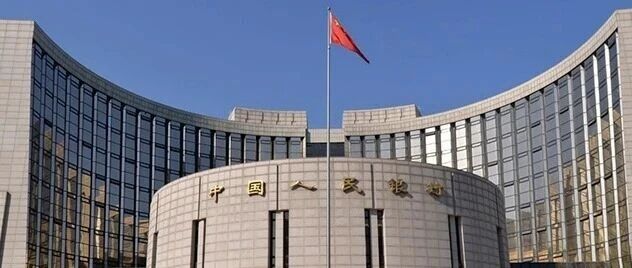
2026年大类资产配置展望:守正出奇,于结构分化中掘金
CMS· 2026-01-06 12:46
- The report discusses the construction of a "ROIC Model" for interest rate predictions. The model calculates the implied ROIC of the bond market and compares it with the equity market's ROIC to estimate the interest rate midpoint. The formula used is: $ ROIC = (Risk-free rate + Equity risk premium) × Equity proportion + (Risk-free rate + Credit risk premium) × Debt proportion $ Here, the risk-free rate is represented by the 30-year government bond yield, and the credit risk premium is derived from AAA corporate bond spreads. The model uses data from A-share listed companies (excluding financials) and large-scale industrial enterprises to calculate ROIC values. The results show a long-term downward trend in both equity and bond market ROICs, with equity ROIC consistently higher by an average of 50 basis points over the past decade[51][52][56] - The "Multi-cycle Interest Rate Timing Strategy" is introduced, which employs kernel regression algorithms to identify support and resistance levels in interest rate trends. This strategy is applied to 5-year, 10-year, and 30-year government bond yields. The annualized returns for the strategy are 2.19%, 2.48%, and 3.26%, respectively, with maximum drawdowns of 0.72%, 0.97%, and 1.71%. The strategy demonstrates stable performance, with probabilities of achieving positive absolute and excess returns close to 100% since 2008[75][77][81] - A "Pure Bond CARRY Strategy" is also highlighted, which leverages dynamic leverage to enhance returns. The strategy allocates 140% to bonds when borrowing costs (R007) are below the 80th percentile of historical levels and 100% otherwise. Over the past decade, the strategy has delivered an annualized return of 5.56%, with a return-to-drawdown ratio of 0.92. In 2023-2025, the strategy achieved annual returns of 7.21%, 7.39%, and 2.25%, respectively, with excess returns of 84 basis points, 121 basis points, and 21 basis points[83][84][88] - The "Momentum and Fundamental Composite Factor" is used for sector rotation strategies. This factor combines "Net Profit Growth Rate (QoQ)" and "ROA TTM Growth Rate (QoQ)" to rank industries. Historical backtests from 2008 to 2025 show strong performance, with an average annualized return of 18.60% and an excess return of 8.49% over the benchmark. In 2025, industries such as electronics, computers, media, defense, non-ferrous metals, and new energy equipment ranked high in both valuation and fundamental improvement metrics, making them recommended sectors for Q1 2026[45][46][47] - The "PB-ROE Framework" is applied to identify undervalued industries. By comparing the PB and ROE levels of various sectors as of December 31, 2025, industries like non-bank financials, home appliances, agriculture, basic chemicals, and light manufacturing are identified as having relatively low PB but high ROE expectations. These sectors are considered undervalued and are recommended for investment in 2026[48][49][50]
【6日资金路线图】非银金融板块净流入逾186亿元居首 龙虎榜机构抢筹多股
Zheng Quan Shi Bao· 2026-01-06 12:42
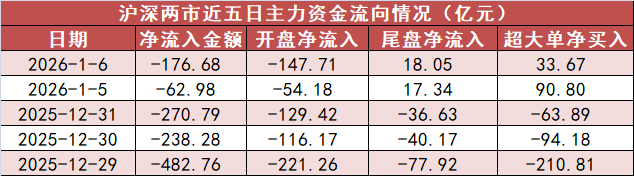
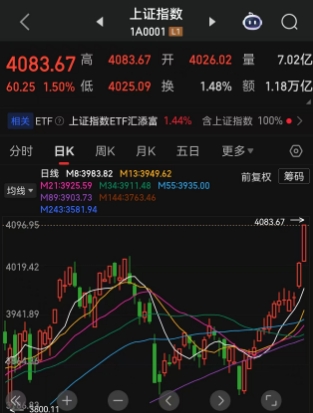
2. 沪深300今日主力资金净流出40亿元 沪深300今日主力资金净流出40亿元,创业板主力资金净流出100.57亿元,科创板主力资金净流出17.63亿元。 1月6日,A股市场整体上涨。 截至收盘,上证指数收报4083.67点,上涨1.5%,深证成指收报14022.55点,上涨1.4%,创业板指收报3319.29点,上涨0.75%,北证50指数上涨1.82%。A 股市场合计成交28324.97亿元,较上一交易日增加2650.87亿元。 1. A股市场全天主力资金净流出176.68亿元 今日A股市场主力资金开盘净流出147.71亿元,尾盘净流入18.05亿元,A股市场全天主力资金净流出176.68亿元。 | | | 沪深两市近五日主力资金流向情况(亿元) | | | | --- | --- | --- | --- | --- | | 日期 | | | 净流入金额 开盘净流入 尾盘净流入 超大单净买入 | | | 2026-1-6 | -176. 68 | -147.71 | 18. 05 | 33. 67 | | 2026-1-5 | -62.98 | -54. 18 | 17. 34 | 90. 80 | | ...
A股13连阳关键时刻,央行开年第一会释放重磅消息!再提“向非银机构提供流动性的机制性安排”,或成我国中央银行制度又一项重大改革
Jin Rong Jie· 2026-01-06 12:36
Group 1 - The People's Bank of China (PBOC) emphasizes a stable yet progressive monetary policy for 2026, focusing on high-quality economic development and reasonable price recovery while maintaining ample liquidity [1] - The PBOC plans to implement a mechanism for providing liquidity to non-bank financial institutions under specific scenarios, which is crucial for supporting capital markets [1][5] - Non-bank institutions, including brokerages, funds, and insurance companies, are highlighted as key players in the financial system, necessitating direct liquidity support from the central bank [6][7] Group 2 - The introduction of two monetary policy tools in 2024 significantly reversed the downward trend in the A-share market, marking the beginning of the "924 market" rally [2][3] - The PBOC's creation of liquidity support tools for non-bank financial institutions aims to enhance the stability of capital markets and is seen as a long-term mechanism [2] - The PBOC's previous liquidity support measures have been effective in stabilizing market sentiment, indicating a shift towards a more inclusive monetary policy framework [8]
降准降息可期!央行2026年政策定调,非银流动性机制有望破题
Di Yi Cai Jing Zi Xun· 2026-01-06 12:15
Group 1: Monetary Policy Direction - The People's Bank of China (PBOC) emphasizes promoting high-quality economic development and reasonable price recovery as key considerations for monetary policy in 2026, utilizing various tools such as reserve requirement ratio (RRR) cuts and interest rate reductions flexibly and efficiently [1][2] - The 2026 monetary policy will focus on both total and structural policies, maintaining ample liquidity and relatively loose social financing conditions to align the growth of social financing and money supply with economic growth and price level expectations [2][3] Group 2: Exchange Rate Management - The PBOC aims to maintain the stability of the RMB exchange rate at a reasonable and balanced level while preventing excessive fluctuations, with recent trends showing a strong recovery of the RMB against the USD [4][5] - Analysts predict that the RMB may experience moderate appreciation in 2026, supported by a favorable external environment, including the ongoing easing cycle of the Federal Reserve [4][6] Group 3: Financial Risk Prevention - The PBOC identifies the resolution of financial risks in key areas as a top priority for 2026, with measures to address risks related to financing platforms, small financial institutions, and financial markets [7] - A proposed mechanism for providing liquidity support to non-bank financial institutions in specific scenarios aims to enhance the financial stability framework, responding to potential systemic pressures [7][8]
博时市场点评1月6日:两市继续上涨,沪指创逾十年新高
Xin Lang Cai Jing· 2026-01-06 11:51
每日观点 今日沪深三大指数继续上涨,沪指收获十三连阳,并创下逾十年新高。两市成交大幅放量至2.8万亿以 上,创逾三个月新高。海外方面,美国总统特朗普近期或将指定美联储新主席人选,但从两位候选人哈 塞特和沃什的背景和政策立场来看,上台后或不会做出激进宽松举动,对于美联储独立性或许不必过度 担忧。国内方面,近期政策层面靠前发力,发改委提出已下达2026年"两重"提前批项目和中央预算内投 资计划,共计约2950亿元。财政部、发改委也发布今年"两新"政策,早于过往、力争"开门红",总体 看,"两新"继续扩围,但补贴力度可能有所减弱。市场方面,年末制造业PMI超季节性反弹,供需双双 回暖,建筑业PMI环比大幅回升,基建有望先行发力托底经济。市场方面,元旦期间港股市场与人民币 汇率走强提振投资者信心,海外资金和长线资金入市有望对市场资金面形成支撑。 【博时市场点评1月6日】两市继续上涨,沪指创逾十年新高 市场成交额为28325.64亿元,较前一交易日上涨。两融余额昨日收报25606.48亿元,较前一交易日上 涨。 数据来源:同花顺,截至2026年1月6日。基金有风险,投资需谨慎。基金管理人承诺以诚实信用、勤勉 尽责的原则 ...
【6日资金路线图】非银金融板块净流入逾186亿元居首 龙虎榜机构抢筹多股
证券时报· 2026-01-06 11:47
1月6日,A股市场整体上涨。 截至收盘,上证指数收报4083.67点,上涨1.5%,深证成指收报14022.55点,上涨1.4%,创业板指收报3319.29点,上涨0.75%,北证50 指数上涨1.82%。A股市场合计成交28324.97亿元,较上一交易日增加2650.87亿元。 1. A股市场全天主力资金净流出176.68亿元 今日A股市场主力资金开盘净流出147.71亿元,尾盘净流入18.05亿元,A股市场全天主力资金净流出176.68亿元。 | | | 沪深两市近五日主力资金流向情况(亿元) | | | | --- | --- | --- | --- | --- | | 日期 | | 净流入金额 开盘净流入 | | 尾盘净流入 超大单净买入 | | 2026-1-6 | -176. 68 | -147.71 | 18. 05 | 33. 67 | | 2026-1-5 | -62.98 | -54. 18 | 17. 34 | 90. 80 | | 2025-12-31 | -270. 79 | -129.42 | -36. 63 | -63.89 | | 2025-12-30 | -238.28 | ...