农业

Search documents
引导多方力量投身乡村建设 | 市委书记抓乡村振兴(2026.01.19-01.26)
Nan Fang Nong Cun Bao· 2026-01-26 06:30
引导多方力量投 身乡村建设 | 市 委书记抓乡村振 兴(2026.01.19- 01.26)_南方+_ 南方plus 本文收录于专辑 2026年1月19 日-26日,广东 多地聚焦乡村振 兴与"百千万工 程"精准发力。 广州深化"头 雁"工程,选优 配强基层党组织 书记;珠海壮大 特色产业集群, 引导多方力量投 身乡村建设;汕 头以党建赋能发 展,开展干部联 村进万家活动; 韶关抓好村民小 组长队伍建设, 推进乡村绿化美 化;梅州探 索"第六产业" , 强化党建促乡村 振兴;惠州推动 产业园扩能增 效,深化城乡融 合;汕尾健全县 镇村三级关工委 组织体系;江门 推进集成式改 革,发展经济林 带动增收;湛江 做强县域经济, 做好"土特产"文 章;茂名聚焦罗 非鱼全产业链, 打造水产产业高 地;肇庆以农文 旅融合为路径, 建设西江旅游风 情带;清远健 全"以贸兴农、 以工带农"机 式;潮州做大海 洋经济,打造生 态发展带;揭阳 制,积极探 索"强村公司"模 培育县域经济, 持续推进新型城 镇化。 广州市委书记冯 忠华: 深化"头雁"工程 1月20日,全市 推进"百县千镇 万村高质量发展 工程"促进城乡 区域协调发 ...


贵州省两会启幕,政协委员登上“委员通道”话发展路径
Zhong Guo Xin Wen Wang· 2026-01-26 06:11
Group 1: Technology and Innovation - Guizhou is transitioning from a "follower" to a "pathfinder" in technology, particularly in the field of black phosphorus new materials, which is expected to drive a trillion-level industry [2] - The "3M model" developed by Guizhou Minzu University promotes collaboration between young teachers and top-tier institutions to address industry needs and enhance technological capabilities [2] - Guizhou's agricultural modernization leverages technology to transform local specialties into large-scale industries, aiming to turn "green mountains and clear waters" into "golden mountains and silver mountains" [5] Group 2: Aviation Industry - Guizhou is one of the few provinces in China capable of independently manufacturing aircraft, with a focus on enhancing its aviation industry through innovation and technology [3] - The establishment of research institutes in major cities aims to fill domestic technological gaps and break foreign monopolies, contributing to national strategic needs [3][4] - The goal is to cultivate a hundred billion-scale industrial cluster in the aviation sector over the next decade, emphasizing innovation and manufacturing [4] Group 3: Agriculture - Over the past five years, Guizhou Agricultural Science Academy has developed over 300 new crop varieties, promoting efficient agricultural practices across 50 million acres [6] - The integration of technology in agriculture is crucial for rural revitalization, enabling farmers to improve their livelihoods [6] Group 4: Traditional Industries - Traditional industries in Guizhou are being revitalized through technological upgrades, with automation leading to a 15% increase in production efficiency and a 5% improvement in product quality [7] - The focus is on combining traditional craftsmanship with modern technology to enhance productivity and innovation [7] Group 5: Cultural and Tourism Development - Guizhou is aiming to become a world-class tourist destination by integrating cultural and tourism industries, with significant growth in visitor numbers [8] - The local government is promoting accessible cultural experiences and events to enhance community engagement and economic vitality [8][9]

国投期货综合晨报-20260126
Guo Tou Qi Huo· 2026-01-26 05:27
Report Industry Investment Ratings No relevant content provided. Core Views of the Report - Geopolitical conflicts and supply disruptions are major factors affecting the prices of commodities such as crude oil, precious metals, and base metals [2][3]. - The supply - demand relationship and seasonal factors have significant impacts on various commodities, including metals, energy, and agricultural products [15][16][35]. - Macroeconomic factors, such as interest rate policies and geopolitical events, influence the performance of financial markets, including stocks and bonds [47][48]. Summary by Categories Energy - **Crude Oil**: US sanctions on Iran and the fire at Tengiz oilfield have raised concerns about supply disruptions, leading to a recent rebound in oil prices. However, the high inventory pressure in Q1 2026 restricts the upward space of oil prices [2]. - **Fuel Oil & Low - Sulfur Fuel Oil**: Low - sulfur fuel oil is回调 due to the fading of cold wave speculation and EIA's unexpected inventory build - up. High - sulfur fuel oil remains strong due to geopolitical tensions in the Middle East [22]. - **Natural Gas**: The cold wave in the US has caused a sharp rise in natural gas prices, which also boosts the demand for crude oil as heating oil [2]. - **Coal (Coking Coal and Coke)**: The supply of carbon elements is abundant, and the downstream iron - making is in the off - season. The prices of coking coal and coke are likely to fluctuate within a range, with the market having certain expectations for "anti - involution" policies [17][18]. - **Liquefied Natural Gas**: No relevant content provided. - **Petroleum Products (e.g., Asphalt)**: The cost of asphalt is still supported, but the terminal demand is weak, and high - priced resources have poor sales. In the short term, asphalt is expected to fluctuate strongly [23]. Metals - **Precious Metals (Gold and Silver)**: Geopolitical risks have pushed up the prices of gold and silver. After breaking through key integer levels, there may be fluctuations due to profit - taking, and it is advisable to wait for a stable period before participating [3]. - **Base Metals**: - **Copper**: The price of Shanghai copper has been boosted by the trading sentiment of precious metals and the weak US dollar. Attention should be paid to the impact of strikes in small Chilean copper mines and road blockades on large - scale copper mines [4]. - **Aluminum**: Shanghai aluminum rebounded on Friday. Geopolitical games have made the financial market sentiment volatile, and the price of Shanghai aluminum is in a high - level shock. Attention should be paid to the direction change of gold and silver after breaking through integer levels [5]. - **Zinc**: The road blockage at NEXA's Atacocha mine has little impact on zinc prices. The weakening of the US dollar index supports the strong operation of non - ferrous metals. High zinc prices have a negative impact on the consumption side, and the price of Shanghai zinc is expected to fluctuate within the range of 24,000 - 25,000 yuan/ton [8]. - **Lead**: The resumption of production of primary lead smelters has increased, and the profit of secondary lead smelters is under pressure. The price of Shanghai lead is expected to fluctuate within the range of 17,000 - 17,800 yuan/ton [9]. - **Nickel and Stainless Steel**: Shanghai nickel has risen sharply, and the market trading is active. The high - price resistance of downstream stainless steel consumption is increasing, and the negative feedback risk is accumulating. In the short term, it is still dominated by policy sentiment [10]. - **Tin**: The price of tin has been rising, driven by investment funds. The LME spot discount has widened, and the domestic social inventory has increased [11]. - **Alumina**: The domestic alumina production capacity is in a state of significant surplus, and the price is under pressure. Before large - scale production cuts, the weakness is difficult to change, and the upward space of the futures price is limited [7]. - **Silicon (Industrial Silicon)**: The supply - demand pattern of industrial silicon has an improvement expectation, but it is restricted by the weak supply - demand situation, and the inventory removal process is restricted. In the short term, the futures price is running strongly, and attention should be paid to the breakthrough of the 9,000 yuan/ton mark [14]. - **Manganese (Silicon Manganese)**: The manganese ore port inventory has a structural problem. The iron - making production has decreased seasonally. The weekly output of silicon manganese has decreased slightly, and the inventory has also decreased slightly. It is recommended to short on rebounds [19]. - **Ferrosilicon**: Affected by relevant policy documents, the price is relatively strong. The demand has certain resilience, the supply has decreased significantly, and the inventory has decreased slightly. It is recommended to short on rebounds [20]. Chemicals - **Carbonate Lithium**: The price of carbonate lithium has reached a new high, but the downstream acceptance of high prices is weak, and the market is in a high - level shock. Short - term uncertainty is extremely high [12]. - **Polysilicon**: The spot trading of polysilicon is weak, and the market expects the price to weaken. The futures price still faces pressure to rise [13]. - **Methanol**: Geopolitical situations have increased the volatility of methanol futures. Although there is a strong expectation of a significant reduction in imports in the first quarter and the macro - environment is favorable, the high port inventory may suppress the market [25]. - **Pure Benzene**: The upward momentum of pure benzene has weakened, but the short - term market is in a strong shock due to improved supply - demand and macro - sentiment [26]. - **Styrene**: The price of styrene has risen rapidly, but the downstream's fear of high prices may restrict its upward space, and the supply - demand game may intensify [27]. - **Polypropylene, Plastic, and Propylene**: The supply of propylene has no obvious pressure, and the demand of polyethylene and polypropylene is weak. The supply of polypropylene has some support, but the overall demand is weak [28]. - **PVC and Caustic Soda**: PVC is running strongly, and there is still inventory pressure. Caustic soda is in a shock trend, and the chlor - alkali integrated profit may continue to be compressed [29]. - **PX and PTA**: In the short term, the chemical sentiment has improved, and PX and PTA have increased in price. In the second quarter, there are opportunities for long - positions based on PX maintenance and polyester load - increasing expectations [30]. - **Ethylene Glycol**: The supply and demand of ethylene glycol are both decreasing, and there is an expectation of inventory build - up around the Spring Festival. In the second quarter, there is an expectation of supply - demand improvement, but the long - term pressure still exists [31]. - **Short - Fiber and Bottle Chip**: The short - fiber price has risen with the raw materials, and the bottle - chip price has risen with the market sentiment. However, the long - term capacity pressure still exists [32]. Agricultural Products - **Soybeans and Soybean Meal**: The South American soybean harvest is affected by weather, and the progress is slow. The import of Canadian rapeseed and rapeseed meal may impact the domestic soybean meal price [35]. - **Edible Oils (Soybean Oil and Palm Oil)**: The prices of domestic soybean oil and palm oil are strong. The US biomass diesel policy is favorable, and the supply - demand structure of Malaysian palm oil has improved marginally [36]. - **Rapeseed and Rapeseed Oil**: The supply of Canadian rapeseed is abundant, but the export is sluggish. The supply of rapeseed oil may be slightly more tense than that of rapeseed meal. The overall trend of the rapeseed sector is expected to be in a bottom - level shock [37]. - **Soybean No. 1**: The price of domestic soybean futures has rebounded from a low level. Attention should be paid to policy and spot guidance [38]. - **Corn**: The price of corn is relatively strong due to the reduction of available grain sources and pre - holiday inventory replenishment demand. It is expected to fluctuate in the short term [39]. - **Livestock (Pigs)**: The spot price of pigs has strengthened recently. Before the Spring Festival, the supply and demand are both strong, but after the Spring Festival, the price is expected to be weak. The industry still needs to reduce production capacity [40]. - **Poultry (Eggs)**: The price of eggs is strong due to pre - holiday stocking and a decrease in supply. In the long - term, the fundamentals are improving, and the strategy is to go long at low prices [41]. - **Cotton**: The US cotton price has fallen back, and the Zhengzhou cotton price is in a high - level shock. The demand is stable, and the impact of the reduction in Xinjiang's planting area is uncertain [42]. - **Sugar**: The international sugar production situation varies, and the domestic sugar price is under pressure in the short term. Attention should be paid to the production progress [43]. - **Apples**: The futures price of apples is in a shock. The market focus has shifted to demand, and the high - price and low - quality situation may affect the inventory removal speed [44]. - **Timber**: The futures price of timber is at a low level. The low inventory provides some support, and it is advisable to wait and see [45]. - **Pulp**: The pulp futures price is in a shock. The downstream demand is weak, and the port inventory has increased. Attention should be paid to the price increase of downstream base paper [46]. Financial Products - **Stock Index**: The A - share market is generally strong, and the index may change from a rapid upward trend to a shock - strong trend. Attention should be paid to the Fed's interest - rate meeting and geopolitical issues [47]. - **Treasury Bonds**: The bond market has been strong recently. In the short term, the medium - and long - term yields are likely to fluctuate, and the short - term yields are more certain to rise. Attention should be paid to the curve - steepening and flattening opportunities [48]. Shipping - **Container Shipping Index (European Line)**: The market is in a shock pattern. The "weak reality" suppresses the futures price, and the suspension of CMA CGM's service provides short - term upward momentum. The market is expected to be in a shock - weak trend in the future [21].
贵州省两会启幕 政协委员登上“委员通道”话发展路径
Zhong Guo Xin Wen Wang· 2026-01-26 04:45
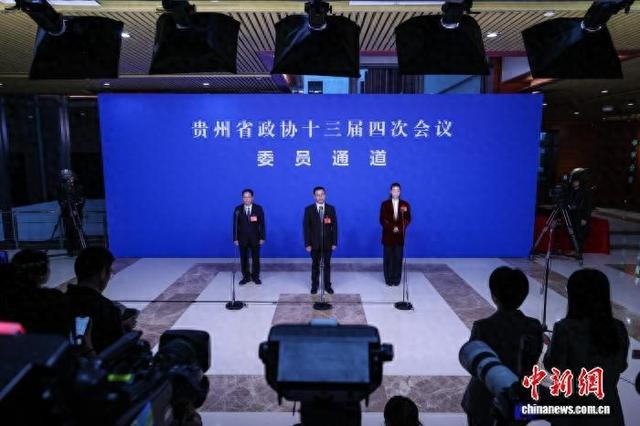
中新网贵阳1月26日电 (记者 杨茜)26日,贵州省2026年两会启幕。在贵州省政协十三届四次会议开幕会 之前,6位贵州省政协委员登上"委员通道",直面媒体提问,围绕科技创新、产业振兴、文旅融合等话 题,分享履职实践,展望发展路径。 新材料工艺、农业增产、黔港澳同心、破解航空产业技术难题……"在2026年贵州省两会第一场"委员通 道"集体采访活动上,贵州省政协委员用发展成就与前景展望,勾勒出贵州高质量发展新路径。 从"追赶者"到"探路人" "我手里这一小块不起眼的黑磷,放在以前,是我省企业馋到眼红却啃不动的'硬骨头'。现在,提纯后 的黑磷新材料有望撬动千亿级产业!"贵州省政协委员、贵州民族大学党委书记吕国富如是说。 吕国富介绍,贵州民族大学创新形成"民大+名校+名企"3M模式,让本校40名青年教师与北大团队"一对 一"结对,共同扎根实验室开展技术攻关,深入厂区一线调研生产实践;同时携手中国科学院院士、欧 洲科学院院士等12名高层次人才,共建团队、搭建平台、传授方法,精准补齐学科短板,精准对接产业 需求。 通过"精准滴灌"的组团式帮扶,从过去的化学工程与技术学科的"追赶者",到现在正逐步成为参与产业 升级的"探 ...
宁夏国资委监管企业经济运行量质齐升
Sou Hu Cai Jing· 2026-01-26 03:04
Group 1 - The Ningxia Hui Autonomous Region's State-owned Assets Supervision and Administration Commission (SASAC) has focused on high-quality development, achieving significant growth in key performance indicators despite economic challenges, with a target of 369.12 billion yuan in revenue and 32.26 billion yuan in profit by 2025, marking a 21.2% and 60.8% year-on-year increase respectively [1] - The total asset scale of state-owned enterprises in the region has surpassed 320 billion yuan, with profit growth outpacing revenue growth by 39.6 percentage points, indicating a substantial improvement in profitability and operational efficiency [1] Group 2 - State-owned enterprises have completed fixed asset investments of 22.5 billion yuan, a 75% increase year-on-year, supporting regional economic stability, with significant projects in infrastructure and clean energy [2] - The Ningxia State-owned Capital Operation Group has invested over 13 billion yuan in renewable energy projects, while the Ningxia Transportation Construction Investment Company has advanced the approval of key logistics projects [2] - In social responsibility, state-owned enterprises have made notable contributions in tax revenue, employment, and food security, with the National Grain Reserve completing a task of 171,000 tons of grain storage [2] Group 3 - The energy and agriculture sectors have shown strong performance, with the Ningxia State-owned Capital Operation Group increasing its renewable energy capacity by 5.99 million kilowatts, contributing to a total of 25.73 billion kilowatt-hours of electricity generated [3] - The Agricultural Reclamation Group has stabilized its dairy cattle inventory at 158,000 heads, achieving a 21% increase in fresh milk sales, while also generating revenue from wine sales [3] - By the end of 2025, the total assets of SASAC-regulated enterprises are projected to reach 320.95 billion yuan, with revenue increasing from 22.37 billion yuan to 36.91 billion yuan and profit rising from 0.89 billion yuan to 3.23 billion yuan, reflecting significant growth in state-owned economic strength during the 14th Five-Year Plan period [3]
河南:2025年多项经济指标增长,争取超千亿政策资金
Sou Hu Cai Jing· 2026-01-26 03:04
Core Insights - The report from the Henan Provincial Government outlines ambitious economic targets for 2025, including a GDP growth target of 5.6% and an industrial value-added growth of 8.4% [1] - The province aims to secure over 100 billion yuan in national policy funds and issue 132.7 billion yuan in local government special bonds for project construction [1] - Henan is focusing on diversifying its overseas markets in response to U.S. trade pressures, with trade in non-U.S. regions showing significant growth [1] Economic Indicators - The industrial investment in Henan is projected to grow by 13.3% in 2025 [1] - The total retail sales of consumer goods are expected to increase by 5.6% [1] - The total import and export value is anticipated to rise by 14.1% [1] - Grain production is forecasted to reach 1,350.97 billion jin [1]
宏观金融类:文字早评2026/01/26星期一-20260126
Wu Kuang Qi Huo· 2026-01-26 02:50
文字早评 2026/01/26 星期一 宏观金融类 股指 【策略观点】 近期政策更多是担心市场短期过热,慢牛才是政策的长期导向。中长期看政策支持资本市场的态度未变, 短期关注市场的节奏,策略上以逢低做多的思路为主。 【行情资讯】 国债 1、银河航天徐鸣:太空新基建迎万亿市场 2035 年全球太空经济将达 1.8 万亿美元; 2、星河动力总工李君:液体回收火箭智神星二号预计今年首飞; 3、AI:元宝官宣 2 月 1 号开启新春 10 亿红包活动;百度文心助手将发放 5 亿现金; 4、马斯克:星舰今年目标完全复用 进入太空成本将降至目前的 1%; 5、报道称三星电子将一季度 NAND 价格上调 100%。 期指基差比例: IF 当月/下月/当季/隔季:0.03%/0.14%/-0.32%/-1.18%; IC 当月/下月/当季/隔季:0.77%/0.79%/-0.13%/-1.15%; IM 当月/下月/当季/隔季:0.72%/0.54%/-1.23%/-2.97%; IH 当月/下月/当季/隔季:0.01%/0.19%/0.13%/-0.86%。 基本面看,12 月经济数据显示生产端有所回暖,外需方面出口数据超 ...
宏观周周谈-当前的核心矛盾是什么
2026-01-26 02:49
Summary of Key Points from Conference Call Records Industry and Company Overview - The discussion primarily revolves around macroeconomic trends, inflation expectations, and the performance of various industries in the context of the Chinese and U.S. markets. [1][2][3] Core Insights and Arguments Market Sentiment - Market sentiment has improved, particularly in second and third-tier cities, indicating a recovery in market activity to about 50-66% of previous levels. [2] Inflation Expectations - A "pork-oil resonance" phenomenon is anticipated in 2026, signaling the end of deflation and a return to inflation, with a CPI central tendency expected to reach 0.5% and PPI likely turning positive in Q3. [1][3][4] Industry Focus - Industries that may benefit from the positive PPI include resource-related sectors and raw materials, while the technology sector's valuations are no longer seen as advantageous. [1][4] U.S. Stock Market Outlook - The U.S. stock market is expected to experience a rally from May to August 2026, potentially boosting related sectors such as computing power. However, the main focus remains on the implications of PPI turning positive. [1][6] PPI Impact on Industries - Positive PPI is expected to favor industries such as construction materials, non-ferrous metals, steel, and basic chemicals, while sectors like machinery, automotive, electronics, pharmaceuticals, and home appliances show strong alpha correlation but weak beta correlation. [1][7][8] Currency Exchange Rate - The Chinese yuan is projected to appreciate significantly, with the effective exchange rate expected to return to levels seen at the end of 2024. This appreciation will benefit yuan-denominated assets, including Hong Kong stocks. [1][9] Geopolitical Risks - Geopolitical risks are increasing due to the disintegration of the old international order, U.S. strategic adjustments, and rising global political uncertainties. Key areas of concern include the Russia-Ukraine conflict, the situation in Iran, and developments in U.S.-China relations. [1][10][11] Other Important but Potentially Overlooked Content Specific Industry Dynamics - The relationship between PPI and various industries has shifted, with some sectors like real estate losing their previous correlation with PPI, while others have become more competitive due to changes in consumer behavior and market dynamics. [1][7][8] Recent Developments in Geopolitical Situations - The situation in Greenland has shown signs of easing, with diplomatic negotiations taking precedence over military threats. However, tensions remain in the Middle East, particularly regarding Iran and the ongoing Russia-Ukraine conflict. [10][11][12][14] U.S.-China Relations - Recent developments indicate a potential stabilization in U.S.-China relations, with high-level diplomatic engagements expected to continue throughout the year. [15][16]
期货市场交易指引2026年01月26日-20260126
Chang Jiang Qi Huo· 2026-01-26 02:44
Report Industry Investment Ratings - **Macro Finance**: Bullish on stock indices in the medium to long term, suggesting buying on dips; expecting government bonds to trade in a range [1] - **Black Building Materials**: Short - term trading for coking coal, range trading for rebar, and waiting and seeing for glass [1] - **Non - ferrous Metals**: Waiting and seeing or holding long positions lightly and rolling for copper; strengthening waiting and seeing for aluminum; waiting and seeing for nickel; range trading or taking profit on previous long positions for tin; range trading for gold; bullish trend for silver; range - bound oscillation for lithium carbonate [1] - **Energy and Chemicals**: Range trading for PVC, caustic soda, benzene, rubber, urea, methanol; weak oscillation for polyolefins; waiting and seeing for soda ash [1] - **Cotton Textile Industry Chain**: Oscillatory adjustment for cotton and cotton yarn; weak oscillation for apples and jujubes [1] - **Agriculture and Animal Husbandry**: Short - selling opportunities on rebounds for hogs; not advisable to chase short positions in the short term for eggs; being cautious about chasing high prices and waiting for rebounds to hedge at high prices for corn; shorting on rallies for soybean meal; weak oscillation for rapeseed oil, limited rebounds for soybean oil and palm oil [1] Core Views - Geopolitical disturbances are increasing, which strengthens the precious metals sector. Stock indices may trade in a range, and government bonds are expected to oscillate. The coal market has a wait - and - see sentiment due to weak fundamentals. Rebar is in a short - term range - bound state. Glass is expected to oscillate weakly. Copper is affected by the game between macro - level support and weak fundamentals. Aluminum may continue high - level adjustments. Nickel is affected by various factors and is recommended to be observed. Tin supply is tight, and it is recommended for range trading. Silver and gold are affected by geopolitical and economic factors, with their medium - term price centers moving up. Lithium carbonate is expected to oscillate strongly. PVC may have bottomed out. Caustic soda has short - term delivery pressure. Benzene styrene has a high valuation and is recommended to be cautious about chasing up. Rubber has cost support and may continue to rise. Urea supply is increasing, and prices are expected to oscillate. Methanol is affected by supply and demand and geopolitical factors. Polyolefins are expected to oscillate weakly. Soda ash has supply - demand contradictions, and it is recommended to wait and see. Cotton and cotton yarn have long - term optimistic expectations. Apples and jujubes are in a weak oscillation state. Hogs are in a bottom - building stage, with different strategies for different periods. Eggs are not advisable to chase short positions in the short term. Corn is in a short - term balance and has a loose supply - demand pattern in the medium to long term. Soybean meal has different trends for different contracts. Oils have different trends, with rapeseed oil being weak and soybean and palm oil having limited rebounds [1][5][6][8][10][11][13][14][15][16][17][19][20][21][22][24][25][26][27][30][33][34][35][36][37][43][44] Summary by Directory Macro Finance - **Stock Indices**: Medium - to long - term bullish, suggesting buying on dips. Geopolitical disturbances increase, and the precious metals sector strengthens, causing stock indices to potentially trade in a range [1][5] - **Government Bonds**: Expected to trade in a range. The long - end and ultra - long - end of government bonds face resistance in further decline, while short - end varieties have strong allocation enthusiasm [1][6] Black Building Materials - **Coking Coal**: Short - term trading. The coal market has a wait - and - see sentiment due to weak fundamentals, with supply disturbances potentially limiting the downside, but demand weakness is the dominant factor [8] - **Rebar**: Range trading. The price rebounded on Friday, with a slightly low static valuation. In the short term, it is in a range - bound state due to a short - term policy vacuum and small supply - demand contradictions [8] - **Glass**: Waiting and seeing. The price is expected to oscillate weakly within the range of 1050 - 1070. The manufacturer's shipping speed slows down, and the market lacks upward momentum [9][10] Non - ferrous Metals - **Copper**: Waiting and seeing or holding long positions lightly and rolling. The price is in a high - level oscillation, with strong macro - level support but weak fundamentals. It is necessary to be vigilant against the risk of long - position profit - taking before the Spring Festival [11] - **Aluminum**: Strengthening waiting and seeing. The price may continue high - level adjustments due to factors such as changes in supply and demand and macro - level sentiment [13] - **Nickel**: Waiting and seeing. Affected by factors such as Indonesia's quota reduction and weak fundamentals, the price has risen, but it is recommended to wait and see as the market has fully priced in [14] - **Tin**: Range trading or taking profit on previous long positions. The supply is tight, and the downstream maintains rigid demand. It is recommended to pay attention to supply resumption and downstream demand [15][16] - **Silver**: Bullish trend. Affected by geopolitical and economic factors, the medium - term price center moves up, and it is recommended to hold long positions and be cautious about opening new positions [16] - **Gold**: Range trading. Affected by geopolitical and economic factors, the medium - term price center moves up, and it is recommended to trade in a range and be cautious about chasing high prices [16][17] - **Lithium Carbonate**: Range - bound oscillation. The supply and demand are both strong, and the price is expected to oscillate strongly. It is necessary to pay attention to the disturbance of Yichun's mining end [17] Energy and Chemicals - **PVC**: Range trading. The bottom may have been reached. The supply - demand situation is still weak, but there are opportunities for structural upgrading. It is recommended to take a long - term low - buying approach [17][19] - **Caustic Soda**: Waiting and seeing. There is short - term delivery pressure, and the upside is limited. It is necessary to pay attention to supply - side adjustments and other factors [19] - **Benzene Styrene**: Range trading. The price has rebounded, but the valuation is high. It is recommended to be cautious about chasing up and pay attention to cost and supply - demand changes [20][21] - **Rubber**: Range trading. The cost support is strong, and the price may continue to rise. It is necessary to pay attention to inventory and downstream demand [20][21] - **Urea**: Range trading. The supply is increasing, and the price is expected to oscillate within the range of 1730 - 1830. It is necessary to pay attention to factors such as compound fertilizer production and export policies [22][23] - **Methanol**: Range trading. The supply in the inland area recovers, and the demand is mixed. The price in some areas is strong due to geopolitical and supply factors [24] - **Polyolefins**: Weak oscillation. The cost support is strengthened, but the supply increases and the demand is weak. It is recommended to short on rallies [24][25] - **Soda Ash**: Waiting and seeing. The supply - demand contradiction is relieved, and the downside is limited. It is recommended to wait and see [26] Cotton Textile Industry Chain - **Cotton and Cotton Yarn**: Oscillatory adjustment. The long - term expectation is optimistic, but it is recommended to be cautious in the short term [27] - **Apples**: Weak oscillation. The Spring Festival stocking is in progress, but the trading of farmers' goods is slow, and the prices in some areas are loose [27] - **Jujubes**: Weak oscillation. The acquisition in Xinjiang is almost over, and the market trading is stable [29][30] Agriculture and Animal Husbandry - **Hogs**: Short - selling opportunities on rebounds. The supply pressure is large in the short term, and the price is expected to oscillate weakly. In the long term, the production capacity is being reduced, but it is still above the equilibrium level, and it is recommended to hedge at high prices [30][31][33] - **Eggs**: Not advisable to chase short positions in the short term. The short - term price may rise seasonally, but the supply is sufficient. In the long term, the production capacity needs time to clear, and it is necessary to pay attention to external factors [33][34] - **Corn**: Being cautious about chasing high prices and waiting for rebounds to hedge at high prices. The short - term supply - demand is balanced, and the medium - to long - term supply - demand pattern is loose [35][36] - **Soybean Meal**: Shorting on rallies. The short - term support is strong, but the long - term price is under pressure. Different strategies are recommended for different contracts [36] - **Oils**: Weak oscillation for rapeseed oil, limited rebounds for soybean and palm oil. It is recommended to be cautious about chasing up for soybean and palm oil and pay attention to spread trading [37][43][44]
撒哈拉以南非洲经济有望保持温和增长
Xin Lang Cai Jing· 2026-01-26 01:29
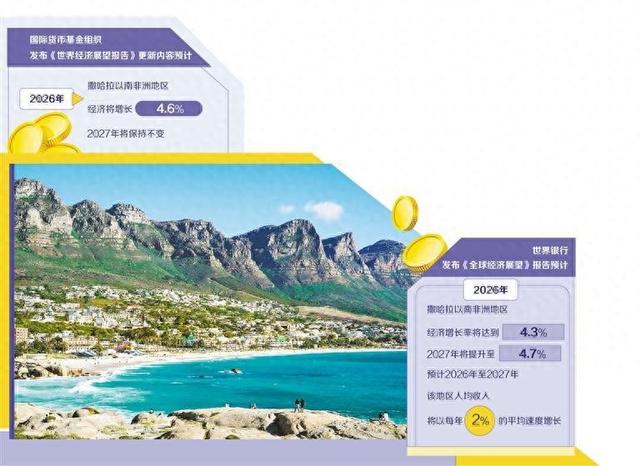
Core Insights - The economic growth in Sub-Saharan Africa is projected to remain moderate and above the global average, with various international economic organizations forecasting a growth rate of 4.6% in 2026, up from 4.4% in 2025 [3][4] - Major economies in the region, such as Nigeria and South Africa, are expected to show varying growth rates, with Nigeria at 4.4% and 4.1% for 2026 and 2027 respectively, while South Africa is projected at 1.4% and 1.5% for the same years [3] - The region's economic performance is supported by improved macroeconomic stability, increased investment, and a recovery in agriculture, despite facing challenges such as domestic security issues and geopolitical conflicts [5][7] Economic Forecasts - The International Monetary Fund (IMF) predicts that Sub-Saharan Africa's economic growth will accelerate to 4.6% in 2026, maintaining this rate into 2027, driven by macroeconomic stability and reforms [3] - The World Bank has adjusted its forecasts, expecting the region's growth to reach 4.3% in 2026 and 4.7% in 2027, bolstered by stronger investment and export performance [4] - The United Nations Conference on Trade and Development (UNCTAD) anticipates a slight increase in Africa's economic growth from 3.9% in 2025 to 4.0% in 2026, supported by improved macroeconomic stability and consumer demand [6] Positive Economic Indicators - Key economies like Nigeria and South Africa are experiencing positive trends such as reduced inflation and increased fiscal revenues, contributing to overall economic growth [5] - The region benefits from factors like stable electricity supply, recovery in agriculture, and expansion in the service sector, particularly in finance and information technology [5] - Improved financial conditions have allowed several economies, including Angola and Kenya, to regain access to international capital markets [5] Challenges and Risks - Economic growth in the region is still vulnerable to domestic security and geopolitical conflicts, which may hinder progress [7] - The anticipated growth rates are insufficient to make significant strides in reducing extreme poverty, particularly in conflict-affected areas [7] - A significant reduction in official development assistance (ODA) since 2024 has limited fiscal space for many countries, weakening their ability to withstand adverse shocks [7] - The region's economies remain heavily reliant on a limited number of export markets, particularly the United States, which poses risks to economic stability [7] - Employment generation remains a challenge, with growth not keeping pace with labor force increases, leading to limited job opportunities [7]