
有色金属冶炼

Search documents
跃升“十四五”科技成就|高水平创新引领八桂大地破浪前行
Ke Ji Ri Bao· 2025-11-18 06:47
Core Insights - Guangxi has achieved significant technological innovations, including the world's first "island-style" manufacturing assembly plant and the first large-power intelligent hybrid hydrogen fuel engine system, contributing to high-quality industrial development [1][7] - By the end of 2024, Guangxi has implemented 220 major projects in seven key areas, resulting in over 50% contribution of new industries and products to industrial growth [2][7] - The number of high-tech enterprises in Guangxi surpassed 4,000 in 2024, indicating a robust growth in technological capabilities [2][10] Technological Innovations - The "AI Smelting Brain" project in the non-ferrous metal industry has successfully transitioned from concept to reality, enhancing energy efficiency and product output [4] - The world's first electric unmanned mining loader developed by LiuGong Machinery Co., Ltd. showcases advancements in autonomous machinery, capable of operating in challenging conditions [6][7] - Guangxi's first large-scale civil aviation tire production line and the first domestic injection-grade sucrose production line are among the notable innovations supporting industrial growth [7] AI and Data Integration - The "AI Zhuanggui" platform integrates data from 41,700 businesses, significantly improving tourist experiences in Guangxi [3] - Guangxi is focusing on AI development through the "Artificial Intelligence+" action plan, targeting key industries such as power equipment and non-ferrous metals [3][4] - The establishment of the China-ASEAN Large Model Application Laboratory aims to foster international cooperation in AI applications across various sectors [4] Industry Support and Collaboration - The introduction of technology special commissioners has facilitated the integration of research and production, exemplified by the development of gradient-controlled fermentation technology for the production of sour bamboo shoots [8][9] - Guangxi's enterprises are increasingly taking the lead in technology innovation, with R&D expenditure reaching 18.21 billion yuan in 2023, marking a significant growth in research capabilities [10] - Policies have been implemented to enhance the role of enterprises in technology innovation, with a focus on aligning with national needs and regional capabilities [10]
广发早知道:汇总版-20251118
Guang Fa Qi Huo· 2025-11-18 00:51
Report Industry Investment Rating The document does not provide the industry investment rating. Core Viewpoints of the Report The report comprehensively analyzes various sectors including financial derivatives, precious metals, shipping, non - ferrous metals, ferrous metals, agricultural products, and energy chemicals. It assesses the market conditions, supply - demand relationships, and price trends of each sector, and provides corresponding investment suggestions. Summary by Directory Financial Derivatives Financial Futures - **Stock Index Futures**: A - share market showed narrow - range fluctuations. TMT sectors rose, while pro - cyclical sectors pulled back slightly. The four major index futures contracts declined with the index, and the basis discount fluctuated narrowly. It is recommended to wait for stabilization and mainly adopt a wait - and - see strategy, and consider deploying a bull spread of put options in case of a sharp decline [2][3][4]. - **Treasury Bond Futures**: The equity market declined, and treasury bond futures oscillated strongly. The bond market was in a state of narrow - range oscillation due to the unclear expectation of loose money. It is recommended to operate within the range for the TL2512 contract [5][6]. Precious Metals - **Gold and Silver**: Fed officials' attitudes towards the December interest - rate cut were still divided. Precious metals maintained a weak oscillation. In the long - term, precious metals are expected to enter a bull market, but in the short - term, market fluctuations may intensify. It is recommended to buy on dips for gold and try to go long in small positions for silver [7][8][9]. Shipping - **Container Shipping Index (European Line)**: The SCFIS European Line Index and the SCFI Composite Index declined. The futures market rose on the previous day, but the significant decline in the SCFIS European Line after the market may lead to a short - term correction followed by an upward movement. It is expected to oscillate upward in the short - term [10][11]. Non - Ferrous Metals - **Copper**: The market was cautious, and copper prices oscillated. The supply of copper concentrate was tight, and the downstream demand was resilient. The copper price is expected to oscillate within the range of 85000 - 87500 [11][13][14]. - **Alumina**: The market was in a state of loose supply and demand, and the price oscillated at a low level. It is expected to continue to oscillate weakly, with the main contract ranging from 2750 - 2900 yuan/ton [16][17][18]. - **Aluminum**: After breaking through the 22000 mark, it adjusted downward. It is expected to oscillate widely, with the main contract ranging from 21400 - 22000 yuan/ton. It is recommended to go short on rallies [18][19][20]. - **Aluminum Alloy**: It adjusted following the aluminum price, and the spot trading was cold at high prices. It is expected to oscillate widely, with the main contract ranging from 20600 - 21200 yuan/ton [21][22][23]. - **Zinc**: The LME delivery expectation increased, and zinc prices oscillated and adjusted. It is expected to oscillate weakly, with the main contract ranging from 22000 - 22800 [23][24][26]. - **Tin**: The supply side remained tight, and tin prices oscillated at a high level. It is recommended to adopt a strategy of buying on dips after the market sentiment stabilizes [26][27][29]. - **Nickel**: The market was weak, and the fundamental improvement was insufficient. It is expected to oscillate weakly, with the main contract ranging from 116000 - 122000 [30][31][32]. - **Stainless Steel**: The macro - drive weakened, and the raw materials were under pressure. It is expected to oscillate weakly, with the main contract ranging from 12300 - 12700 [33][34][36]. - **Lithium Carbonate**: The market was strong, and multiple contracts hit the daily limit. It is recommended to wait and see, and the market is expected to oscillate widely [37][38][40]. - **Polysilicon**: The demand was weak, and the futures price oscillated and declined. It is expected to oscillate at a high level [41][42][43]. - **Industrial Silicon**: It oscillated, and attention should be paid to the organic silicon production cuts. It is expected to oscillate within the range of 8500 - 9500 yuan/ton [43][44][45]. Ferrous Metals - **Steel**: The apparent demand declined, the hot - rolled coil supply was not cleared, and the spread between hot - rolled and rebar converged. It is recommended to try short - selling [46][47][49]. - **Iron Ore**: The shipment increased, the arrival decreased, the port inventory rose, and the molten iron increased. It is expected to oscillate at a high level, and it is recommended to wait and see [50][52][53]. - **Coking Coal**: The spot price fluctuated, and the demand for replenishment was bearish. It is expected to oscillate weakly, with the range of 1100 - 1250, and it is recommended to wait and see [54][55][59]. - **Coke**: The fourth round of price increase was fully implemented, and the port trading price declined. It is expected to oscillate weakly, with the range of 1600 - 1750, and it is recommended to wait and see [60][61][64]. Agricultural Products - **Meal**: The monthly report lacked positive factors, and both domestic and foreign markets adjusted. The soybean meal market is expected to oscillate widely [65][66][68]. - **Live Pigs**: The supply and demand were loose, and the pig price oscillated weakly. It is recommended to hold the 3 - 7 reverse spread [69][70]. - **Corn**: There was a short - term supply shortage, and the price rebounded and oscillated. Attention should be paid to the selling rhythm and procurement progress [71][72]. - **Sugar**: The raw sugar price was bearish, and the domestic market oscillated at the bottom. It is expected to maintain the bottom - oscillation trend [73][74][75]. - **Cotton**: The US cotton oscillated at the bottom, and the domestic new - cotton harvest was coming to an end. The cotton price is expected to be under pressure and run weakly in the short - term [75][76]. - **Eggs**: The egg price was stable with a slight decline, and the overall pressure was still high. It is recommended to gradually close short positions below 3000 for the 2512 contract [77]. - **Oils and Fats**: The Malaysian palm oil oscillated and adjusted, and the Dalian palm oil maintained range - bound trading. The soybean oil market was supported. The palm oil is expected to oscillate at a low level, and the soybean oil is expected to maintain a stable supply - demand situation [78][79][80]. - **Jujubes**: The spot price was weak, and the market oscillated weakly. It is expected to continue to oscillate weakly, and attention should be paid to the acquisition progress and terminal demand [81]. - **Apples**: There was a small amount of trading of stored apples, and the demand for high - quality apples was good. The price of high - quality apples in the western region was stable, and the inventory of small apples in Shandong began to be traded [83]. Energy Chemicals - **PX**: The overseas blending - oil demand boosted the short - term trend, but the driving force was limited. It is expected to oscillate at a high level, and attention should be paid to the pressure above 6800 [84][85]. - **PTA**: The blending - oil demand and the cancellation of the Indian BIS certification supported the short - term trend, but the upward driving force was limited. It is expected to oscillate within the range of 4500 - 4800, and the TA1 - 5 spread should be treated with a rolling reverse - spread strategy [86][87]. - **Short - Fiber**: The supply - demand expectation was weak, and the processing fee was gradually compressed. It is recommended to do the same as PTA for the unilateral strategy and shrink the processing fee on rallies [88]. - **Bottle - Chip**: The supply - demand situation in November remained loose, and the price and processing fee followed the cost. It is recommended to do the same as PTA for the unilateral strategy, and the processing fee is expected to oscillate within the range of 300 - 450 yuan/ton [89][90]. - **Ethylene Glycol**: The short - term rigid demand was supported, but the supply was high, and the port inventory increased. It is recommended to hold out - of - the - money call options with a strike price not lower than 4100 for the EG2601 contract and conduct a reverse - spread operation on rallies for the EG1 - 5 spread [92]. - **Pure Benzene**: The blending - oil demand provided support, but the supply - demand was loose, and the rebound space was limited. It is recommended to wait and see for the BZ2603 contract [93]. - **Styrene**: The blending - oil demand provided support, but the maintenance might be postponed, and the rebound space was limited. The EB12 price may be strong, and attention should be paid to the pressure around 6600 - 6700 [94][95]. - **LLDPE**: The price changed little, and the trading was weak. It is recommended to reduce short positions around 6800 [96]. - **PP**: There were many unexpected maintenance events, and the downward space was limited. It is recommended to wait and see [97]. - **Methanol**: The port market continued to weaken, and the trading was average. Attention should be paid to the 05MTO spread contraction [98][99]. - **Caustic Soda**: The supply - demand pressure still existed, and it is expected to run weakly [99][100]. - **PVC**: The supply - demand surplus situation remained unchanged, and the market oscillated weakly. It is expected to continue the bottom - weakening trend [101]. - **Soda Ash**: After the spot price dropped, the alkali factory's pending - delivery days increased, and the market rebounded. It is recommended to wait and see and wait for the opportunity to short on rallies [102][103]. - **Glass**: The spot sales weakened significantly, and the market was under pressure to correct. It is recommended to treat it weakly in the short - term [102][104]. - **Natural Rubber**: The overseas raw materials were firm, and the rubber price rose slightly. It is expected to oscillate within the range, and attention should be paid to the raw - material output in the peak - production season [104][105][106]. - **Synthetic Rubber**: The supply - demand boost was limited, and the cost side was weak. It is recommended to adopt a strategy of shorting on rallies for the BR2601 contract and pay attention to the pressure around 10800 [107][108][109].
锌:结构≠方向
Xin Lang Cai Jing· 2025-11-17 11:45
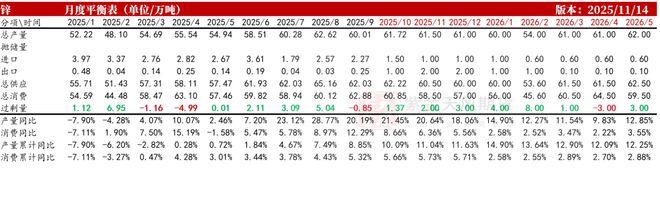
Group 1 - The core viewpoint indicates that the domestic smelting plants have limited production cuts this year, leading to persistent oversupply expectations, while seasonal demand is significantly declining, resulting in passive inventory accumulation [1][2] - The supply side shows that despite high production from domestic smelting plants, there is a shortage in the mining sector, with expectations of significant production cuts in the first quarter of next year due to low processing fees and winter storage [1][2] - The macroeconomic environment is characterized by mixed signals, with the U.S. ending a government shutdown and injecting liquidity, but facing hawkish Federal Reserve signals and concerns over AI bubble risks affecting market sentiment [1] Group 2 - The monthly balance sheet indicates that total production is expected to fluctuate, with a projected output of 52.22 million tons in January 2025, decreasing to 48.10 million tons in February, and then gradually increasing [3] - The overall consumption is projected to be 54.59 million tons in January 2025, with a slight increase in subsequent months, indicating a potential recovery in demand [3] - The production and consumption year-on-year comparisons show a decline in production by 7.90% in January 2025, but a recovery in consumption by 1.90% in the same month [3] Group 3 - Recent data from Peru shows a 13% month-on-month decrease in zinc concentrate production for September 2025, while year-to-date production has increased by 17.5% [9] - Domestic zinc concentrate production in October was reported at 330,800 tons, reflecting a 5.18% month-on-month increase and a 12.33% year-on-year increase, slightly above expectations [9] - The import and export dynamics indicate a significant increase in imports, with September 2025 imports reaching 505,400 tons, a 24.94% year-on-year increase [12] Group 4 - The weekly operational rates for downstream zinc processing enterprises are at a historical low of 47.38%, indicating weak demand and passive inventory accumulation [25] - The weekly operating rate for galvanizing enterprises has increased to 57.59%, but overall demand remains subdued, limiting recovery [28] - The overall inventory levels for zinc ingots are high, with a reported total of 100,900 tons as of November 14, indicating continued accumulation despite seasonal demand pressures [44]

美联储降息预期降温 沪铜偏弱运行【11月17日SHFE市场收盘评论】
Wen Hua Cai Jing· 2025-11-17 09:24
Core Viewpoint - Copper prices in Shanghai opened lower and continued to decline, closing down by 0.91% due to weakened macroeconomic sentiment and cooling expectations for a Federal Reserve interest rate cut [1] Group 1: Macroeconomic Factors - Recent hawkish statements from some Federal Reserve officials have contributed to a decline in interest rate cut expectations for December, leading to weakened risk appetite in the market [1] - Precious metals have seen significant corrections, and non-ferrous metals are generally softening as a result of the macroeconomic environment [1] Group 2: Supply and Demand Dynamics - Domestic copper concentrate processing fees remain around -40 USD per dry ton, indicating a tight supply situation that is unlikely to improve significantly [1] - Despite high copper prices, social inventory depletion has been limited, and the recent drop in copper prices has led to an expansion of spot premiums [1] - Feedback from downstream sectors indicates some improvement in consumption performance, but the extent and sustainability of this improvement remain uncertain [1] Group 3: Future Outlook - The financial reports from mining companies suggest limited adjustments in copper mine increments, maintaining the logic of raw material tightness [1] - The smelting sector is expected to see a continued month-on-month decline in production [1] - Import and export dynamics indicate a potential slight decrease in arrivals in November, while domestic exports may continue [1] - The market outlook suggests a high-level fluctuation in copper prices in the short term, with no significant downward pressure anticipated [1]
2025年11月17日:期货市场交易指引-20251117
Chang Jiang Qi Huo· 2025-11-17 03:44
Report Industry Investment Ratings Macro Finance - **Stock Index**: Mid-to-long term bullish, buy on dips [1][5] - **Treasury Bonds**: Range-bound [1][5] Black Building Materials - **Coking Coal**: Range trading [1] - **Rebar**: Range trading [1][7] - **Glass**: Sell call options [1][8] Non-Ferrous Metals - **Copper**: Short-term range trading [1][11] - **Aluminum**: Suggest buying on dips [1][12] - **Nickel**: Suggest waiting and seeing or shorting on rallies [1][17] - **Tin**: Range trading [1][17] - **Gold**: Range trading [1][19] - **Silver**: Range trading [1][18] Energy Chemicals - **PVC**: Range-bound with a weak bias, 01 contract pay attention to the 4700 resistance level [21][23] - **Caustic Soda**: Range-bound with a weak bias, 01 contract pay attention to the 2400 resistance level [24][25] - **Soda Ash**: Bearish strategy for the 01 contract [1][35] - **Styrene**: Range-bound with a weak bias, pay attention to the 6500 resistance level [26][27] - **Rubber**: Range-bound, pay attention to the 15000 support level [27][28] - **Urea**: Range-bound [30][31] - **Methanol**: Range-bound [31][32] - **Polyolefins**: Weak range-bound, L2601 pay attention to the 6800 support level, PP2601 pay attention to the 6500 support level [33][34] Cotton Textile Industry Chain - **Cotton and Cotton Yarn**: Range-bound [36] - **PTA**: Low-level range-bound, pay attention to the 4400 - 4700 range [36] - **Apple**: Range-bound with a strong bias [38] - **Red Dates**: Range-bound with a weak bias [38] Agricultural Livestock - **Hogs**: Rebound under pressure [1][40] - **Eggs**: Limited upside [1][43] - **Corn**: Range-bound at the bottom [46][47] - **Soybean Meal**: Range-bound [48] - **Oils and Fats**: Limited rebound [1][48] Core Views The report provides investment strategies and market analyses for various futures products across different industries. Market conditions are influenced by a variety of factors including macroeconomic policies, supply and demand fundamentals, and geopolitical events. Each product's investment strategy is based on its specific market situation and outlook [1][5][7]. Summary by Directory Macro Finance - **Stock Index**: Mid-to-long term bullish, but may range-bound in the short term due to rapid market hot - spot rotation and unclear main lines [5] - **Treasury Bonds**: Range-bound. The third - quarter monetary policy report maintains a moderately loose tone, and the possibility of using aggregate monetary policy tools this year is relatively limited. The market is in a range - bound and wait - and - see state [5][6] Black Building Materials - **Coking Coal and Rebar**: Range trading. Coking coal market has weak demand and price cuts, while rebar is undervalued but has limited upside due to weakening demand and potential production cuts [7][8] - **Glass**: Sell call options. End - of - year demand may weaken further, with high inventory and delivery pressure. Technical indicators show a bearish trend [8] Non - Ferrous Metals - **Copper**: High - level range - bound. The US government's situation and economic data add uncertainty, while the long - term demand outlook is positive but short - term consumption is suppressed [11] - **Aluminum**: Suggest waiting and seeing. Supply and demand fundamentals are complex, and there is a risk of over - trading the market's expectations [12][13] - **Nickel**: Suggest waiting and seeing or shorting on rallies. The new RKAB policy brings supply uncertainty, and the medium - to - long - term supply is in surplus [16][17] - **Tin**: Range trading. Supply is expected to improve, and downstream consumption is weak, but prices are supported [17] - **Gold and Silver**: Range trading. Uncertainty about the Fed's December interest - rate decision and concerns about the US economy support prices in the medium term but are in a short - term adjustment [18][19] Energy Chemicals - **PVC**: Range - bound with a weak bias. High supply, weak domestic demand, and uncertain export growth [23] - **Caustic Soda**: Range - bound with a weak bias. High inventory in the alumina industry and potential negative feedback in the industrial chain [25] - **Soda Ash**: Bearish for the 01 contract. Supply is in surplus, and although cost increases, supply pressure remains high [35] - **Styrene**: Range - bound with a weak bias. Weak chemical fundamentals and uncertain cost factors [27] - **Rubber**: Range - bound. High raw material prices, seasonal inventory accumulation, and weak terminal demand [28] - **Urea**: Range - bound. Supply increases, demand is driven by agriculture and industry, and inventory changes need attention [30][31] - **Methanol**: Range - bound. Supply increases, demand weakens, and inventory accumulates [31][32] - **Polyolefins**: Weak range - bound. Supply pressure increases, demand has no obvious increase, and cost pressure exists [33][34] Cotton Textile Industry Chain - **Cotton and Cotton Yarn**: Range - bound. Global cotton supply and demand are both increasing, and the end - of - season inventory is decreasing [36] - **PTA**: Low - level range - bound. Oil prices are weak, supply and demand are in a state of inventory accumulation, and downstream procurement is weak [36] - **Apple**: Range - bound with a strong bias. Production and quality decline, which may support prices [38] - **Red Dates**: Range - bound with a weak bias. Acquisition prices are slightly adjusted, and market sentiment is cautious [38] Agricultural Livestock - **Hogs**: Rebound under pressure. Short - term price fluctuations are limited, and medium - to - long - term supply remains high before the first half of next year [40][42] - **Eggs**: Limited upside. Supply is sufficient in the short term, and long - term supply pressure reduction requires time [43][45] - **Corn**: Range - bound at the bottom. Short - term supply is abundant, and long - term cost support exists, but demand growth is limited [46][47] - **Soybean Meal**: Range - bound. US soybean supply and demand are expected to tighten, but Brazilian production may limit the upside [48] - **Oils and Fats**: Limited rebound. Short - term reports have a neutral impact, and long - term potential factors need attention [54]
银河期货每日早盘观察-20251117
Yin He Qi Huo· 2025-11-17 03:33
Group 1: Financial Derivatives - Investment Rating: Not provided - Core View: The technology stocks continue to face pressure, and the stock index is expected to test the support again. The bond market's unilateral trend may be entangled in the short - term [19][21] - Summary of Related Catalogs: - **Stock Index Futures**: The market remained high - volatile last week, with severe differentiation. Technology stocks are under pressure, and the stock index is expected to test the support. The basis of futures first converged and then expanded, and IC's net short - position increased. Suggested strategies include high - level oscillation, paying attention to the 60 - day moving average support, and appropriate long - position building at low levels; IM\IC long 2512 + short ETF cash - and - carry arbitrage; and bullish spread at low levels [19] - **Treasury Futures**: The 10 - month macro - financial and economic indicators are weak, and the policy expectation has slightly increased. However, the probability of monetary policy strengthening is not high. The bond market's unilateral trend is entangled. Suggested strategies include waiting and seeing; holding (TL - 3T) positions and trying to go long on the T - contract current - next quarterly spread [21] Group 2: Agricultural Products - Investment Rating: Not provided - Core View: Different agricultural products have different market trends, mainly including price fluctuations, supply - demand imbalances, etc. [25][30][34] - Summary of Related Catalogs: - **Soybean Meal**: The monthly supply - demand report has limited bullishness, and the international soybean is in a high - yield pattern. The domestic supply pressure is large, and the crushing profit is under pressure. Suggested strategies include waiting and seeing; selling wide - straddle options [25] - **Sugar**: The Brazilian sugar - making ratio has decreased, and the international sugar price has risen sharply. The global sugar production increase is being realized, and the domestic sugar price is expected to fluctuate in the short - term and may be affected by foreign prices in the long - term. Suggested strategies include short - term slightly bullish international sugar price, domestic sugar price range operation; waiting and seeing for arbitrage [30] - **Oilseeds and Oils**: The palm oil is in the off - season, and the de - stocking is slow. The soybean oil follows the overall trend, and the rapeseed oil is expected to continue de - stocking. Suggested strategies include waiting and seeing or high - selling and low - buying [34] - **Corn/Corn Starch**: The CBOT corn futures are down, and the domestic corn spot price is rising, with the futures showing a strong - side oscillation. Suggested strategies include short - term long - position building for the 12 - month CBOT corn on dips, waiting and seeing for the 01 - month contract, and waiting for dips for the 05 and 07 - month contracts; narrowing the 01 - month corn - starch spread [36] - **Hogs**: The overall supply pressure exists, and the pig price is expected to face pressure. Suggested strategies include short - position building; selling wide - straddle options [39] - **Peanuts**: The spot price is strong, but the short - term is still in the bottom - side oscillation. Suggested strategies include long - position building for the 05 - month contract on dips; 15 - month peanut reverse arbitrage; selling pk601 - P - 7600 options [41] - **Eggs**: The demand is average, and the egg price is stable with a slight decline. Suggested strategies include waiting and seeing [48] - **Apples**: The new - season apple inventory is announced, and the price is stable with a slight increase. The supply is relatively tight, and the price is expected to be strong. Suggested strategies include long - position building on dips [50] - **Cotton - Cotton Yarn**: The fundamental contradiction is not significant, and the cotton price oscillates. The new - season cotton supply is large, and the demand is in the off - season. Suggested strategies include waiting and seeing [54] Group 3: Black Metals - Investment Rating: Not provided - Core View: The steel price is in the range - side oscillation, and the double - coking coal has support at the bottom, while the iron ore is considered from a bearish perspective [59][62][64] - Summary of Related Catalogs: - **Steel**: The steel production resumes, and the steel price is in the range - side oscillation. The supply - demand structure suppresses the steel price, but the cost has support. Suggested strategies include range - side oscillation; long - position building on the coil - rebar spread; waiting and seeing [59] - **Double - Coking Coal**: The bottom has support, and the short - term drive is not obvious. The mid - term may have opportunities for long - position building on dips. Suggested strategies include waiting and seeing in the short - term; holding the coking coal 1/5 reverse arbitrage; waiting and seeing [62] - **Iron Ore**: The market is in a weak state. The supply is high in the fourth quarter, and the demand is weak. Suggested strategies include a bearish approach [64] - **Ferroalloys**: The supply and demand are both weak, and the price oscillates in the range with cost support. Suggested strategies include bottom - side oscillation; selling out - of - the - money straddle option combinations [67] Group 4: Non - ferrous Metals - Investment Rating: Not provided - Core View: Different non - ferrous metals have different trends, including price fluctuations, supply - demand changes, etc. [70][73][77] - Summary of Related Catalogs: - **Precious Metals**: The Fed issued hawkish signals, and the precious metals tumbled. The market will focus on US non - farm data and NVIDIA's performance. Suggested strategies include temporary exit and waiting and seeing [70] - **Copper**: The short - term oscillates. The Fed's hawkish remarks and supply - demand factors affect the price. Suggested strategies include waiting and seeing; long - position building at low levels in the long - term [73] - **Alumina**: Pay attention to the implementation of production cuts and beware of the selling pressure driven by the basis. The supply is in surplus, and the price may oscillate at the bottom before production cuts expand. Suggested strategies include short - term bottom - side oscillation; waiting and seeing [77] - **Electrolytic Aluminum**: Pay attention to this week's economic data, and the fundamentals are still strong. Suggested strategies include realizing profits gradually and maintaining a mid - term bullish view on dips [81] - **Cast Aluminum Alloy**: The alloy price mainly follows the aluminum price. The cost provides support, but the market trading activity has declined. [87] - **Zinc**: It oscillates in a wide range. The domestic mine is tight, and the price may be affected by macro factors. Suggested strategies include waiting and seeing; holding the SHFE long - LME short arbitrage [92] - **Lead**: It oscillates in the range. The domestic social inventory is increasing, and the price has limited upward momentum. Suggested strategies include partial profit - taking on short positions; selling out - of - the - money call options [94] - **Nickel**: The cost is loosening, and the price oscillates downward. The supply - demand surplus is obvious, and the cost support is weakened. Suggested strategies include short - position building on rebounds [97] - **Stainless Steel**: The supply and demand are both weak, and the raw materials are under pressure. The inventory is increasing, and the price may continue to decline. [100] - **Industrial Silicon**: It oscillates weakly. The demand is weakening, and the price is in the range of (8500, 9400). Suggested strategies include short - position building on rebounds [102]
金融期货早评-20251117
Nan Hua Qi Huo· 2025-11-17 03:17
Report Industry Investment Ratings No specific industry investment ratings are provided in the report. Core Views of the Report - Overseas, the end of the US government shutdown requires attention to economic data release and its impact on the economy. In the US, the potential replacement of the Atlanta Fed President by a dovish candidate and the uncertainty of the next Fed Chair's identity could affect the interest - rate cut outlook. Domestically, the economic data shows a marginal slowdown, and the strength and effectiveness of policy support are key concerns [2]. - For the RMB exchange rate, it broke through the 7.10 mark due to the weak US dollar index, and is expected to get some support from seasonal effects. Export enterprises are advised to lock in forward exchange settlement at 7.12, and import enterprises can adopt a rolling purchase strategy at 7.07 [6]. - The stock index is expected to continue to fluctuate due to the weak recovery of the domestic fundamentals and the influence of external factors such as US officials' hawkish remarks and the release of key US economic data [7]. - For treasury bonds, mid - term long positions can be held, and short - term investors can buy on dips [8]. - In the container shipping market, the EC2602 contract's last trading day is confirmed. The market is affected by both macro and fundamental factors, with multiple long and short factors in play. Trend traders are advised to wait and see, and arbitrageurs can focus on specific spreads [9][10][11]. - For precious metals, in the short - term, the adjustment may continue. Long - term factors still support the upward movement of precious metal prices. Specific support and resistance levels are provided for gold and silver [17]. - For copper, the macro - environment is mixed, and the fundamental de - stocking limits the price increase. The copper price is expected to find a balance based on downstream procurement, with different price ranges predicted [20][21]. - For aluminum, it is expected to fluctuate at a high level. Alumina is expected to be weak, and cast aluminum alloy is expected to fluctuate at a high level [22][24]. - For zinc, it is expected to show a relatively strong and fluctuating trend, with support at the bottom in November [24]. - For tin, it is recommended to enter the market on dips as the supply is weak compared to demand in the short - term [25]. - For industrial silicon and polysilicon, the fundamentals are weak, and they are expected to show wide - range fluctuations. Attention should be paid to market sentiment and policies [28]. - For lead, it is expected to fluctuate strongly, and opportunities at the lower level can be noted [29]. - For steel products (rebar and hot - rolled coil), they are expected to fluctuate within a certain range, with the lower limit supported by raw material costs and the upper limit restricted by inventory [32]. - For iron ore, the short - term supply and demand are both weak, and the inventory is accumulating, but there is a structural shortage. It is recommended to reduce short positions at low prices for better risk - return [34][36]. - For coking coal and coke, the short - term prices may adjust, but in the long - term, they may strengthen with the implementation of policies and winter storage demand. Specific price ranges are provided for investment [37][38]. - For ferroalloys (silicon iron and silicon manganese), they are expected to fluctuate weakly due to high inventory and weak demand [39]. - For crude oil, it is expected to fluctuate at a low level between 60 - 65 dollars, with key attention on geopolitical and risk - aversion factors [44]. - For LPG, it is expected to show a relatively strong and fluctuating trend, with a high valuation [46]. - For PTA - PX, they are expected to fluctuate strongly with the cost side, but the PTA surplus expectation restricts the processing fee recovery [50]. - For MEG - bottle chips, the long - term supply - demand surplus remains, and it is recommended to short at high prices. Specific price levels are provided for operation [53]. - For urea, it is expected to continue to fluctuate, with the downward space supported and the upward space pressured [55]. - For PP, the short - term supply - demand situation improves, and the PP1 - 5 positive spread is supported [58]. - For PE, it shows a bottom - up trend, but the upward space is limited due to the long - term weak supply - demand pattern [61]. - For pure benzene and styrene, they rebounded at a low level, but the fundamental surplus situation remains, and the rebound height is limited [62][63]. - For fuel oil, the high - sulfur cracking is bearish, and the low - sulfur fuel oil is expected to be at a low - level consolidation with upward drivers [65][66]. - For asphalt, it is expected to fluctuate in the short - term, and attention should be paid to the winter storage situation [69]. - For rubber and 20 - grade rubber, the supply and demand are affected by multiple factors, and the price may face pressure during the upward process [70]. - For glass, soda ash, and caustic soda, the fundamentals are weak. Soda ash is cost - priced, glass may decline towards the end of the 01 contract, and caustic soda has a weak supply - demand pattern in the long - term [71][72][73]. - For pulp and offset paper, they are expected to continue wide - range fluctuations with a slightly downward - shifted center [75]. - For logs, long - term strategies such as 01 - 03 reverse spreads can be considered [76]. - For propylene, it is expected to fluctuate, with the supply side being the main source of price fluctuations [78]. - For hogs, the near - term pressure is large. It is recommended to wait and see and participate in reverse spreads appropriately [83]. - For oilseeds, the USDA report's bullish effect was less than expected. The domestic soybean meal shows a pattern of near - strong and far - weak, and the rapeseed meal is in a state of weak supply and demand in the fourth quarter [84][85][86]. - For oils, they are expected to fluctuate in the short - term, and attention should be paid to the upward opportunities of the far - month 05 contract [88]. - For soybeans, the bullish trend continues with strong capital buying willingness [90]. - For corn and starch, they are expected to fluctuate strongly at the bottom, with limited one - way upward movement [92]. - For cotton, the domestic supply pressure is increasing, and the price may fluctuate weakly in the short - term, but there is still some support from the demand side [94]. - For sugar, attention should be paid to the performance around 5500 [96]. - For eggs, the long - term egg - laying hen capacity is still excessive, and it is recommended to participate in long positions lightly if betting on a rebound [97]. - For apples, the recent trend remains strong [99]. - For jujubes, the new - season production is still uncertain. The price may have limited downward space during the purchase season, and attention should be paid to the commodity rate and purchase situation [101]. Summaries According to Related Catalogs Financial Futures - **Macro**: Key events include the publication of important articles on new - quality productivity, government meetings on promoting consumption, and the release of China's October economic data. The US has a schedule for releasing important economic data, and there are developments in trade agreements and Fed interest - rate cut expectations [1]. - **RMB Exchange Rate**: The previous trading day's exchange rate data is provided. It is affected by the US dollar index and domestic policies. The key is to follow economic data and domestic enterprise settlement intentions [3][4][6]. - **Stock Index**: The previous trading day's stock index was weak, and the trading volume decreased. The release of October financial and economic data shows that the domestic fundamentals are in a weak - recovery state, and the index is expected to continue to fluctuate [6][7]. - **Treasury Bonds**: The previous week's treasury bonds fluctuated, and the market lacked trading hotspots. The 10 - month economic and financial data were mostly disappointing, but the market reaction was limited. It is recommended to hold mid - term long positions [7][8]. - **Container Shipping (European Line)**: The last trading day of the EC2602 contract is confirmed. The market is affected by both macro and industry fundamentals, with multiple long and short factors [9][10]. Commodities Non - Ferrous Metals - **Gold & Silver**: Last week, the prices of precious metals rose and then fell. The long - term factors support the upward movement, but the short - term adjustment may continue [15][17]. - **Copper**: The domestic and international copper prices had different performances last week. The macro - environment is mixed, and the fundamental de - stocking limits the price increase [18][20]. - **Aluminum**: The price and position of Shanghai aluminum reached a high this week, and then some long positions left. The overseas supply is expected to tighten, but the downstream demand is weak. Alumina is in an oversupply situation, and cast aluminum alloy follows the trend of aluminum [21][22][23]. - **Zinc**: The zinc price adjusted at a high level. The smelting end may reduce production in November, and the inventory has the possibility of de - stocking. It is expected to show a relatively strong and fluctuating trend [24]. - **Tin**: The tin price adjusted intraday. The supply is weak compared to demand in the short - term, and it is recommended to enter the market on dips [25]. - **Industrial Silicon & Polysilicon**: The industrial silicon market has a weak supply - demand pattern, and the polysilicon industry is in a state of production reduction and inventory accumulation. They are expected to show wide - range fluctuations [25][28]. - **Lead**: The lead price adjusted slightly. The supply was tight in October, and it is gradually returning to balance. It is expected to fluctuate strongly in the short - term [29]. Black Metals - **Rebar & Hot - Rolled Coil**: Last week, the steel products fluctuated, and the bottom support was strong. The supply and demand of rebar are improving marginally, while the hot - rolled coil has high inventory pressure. The price is expected to fluctuate within a certain range [30][31][32]. - **Iron Ore**: The supply and demand are both weak in the short - term, and the inventory is accumulating, but there is a structural shortage. It is recommended to reduce short positions at low prices [34][36]. - **Coking Coal & Coke**: The recent price increase of coking coal and thermal coal has led to a wait - and - see attitude in the market. The demand for coking coal is seasonally weak, but the long - term supply may be restricted, and it is recommended to consider long positions at appropriate price ranges [37][38]. - **Silicon Iron & Silicon Manganese**: The steel mill profitability is declining, and the demand for ferroalloys is expected to decrease. The inventory is at a high level, and they are expected to fluctuate weakly [39]. Energy and Chemicals - **Crude Oil**: The previous week's oil price showed an N - shaped fluctuation and moved down. The current supply is loose, and the price is expected to fluctuate at a low level, with key attention on geopolitical and risk - aversion factors [41][43][44]. - **LPG**: It is expected to show a relatively strong and fluctuating trend, with a high valuation and a neutral - to - positive fundamental situation [45][46]. - **PTA - PX**: The PX supply is expected to be high in the fourth quarter, and the PTA has many maintenance plans in November. The PX - TA is expected to fluctuate strongly with the cost side, but the PTA surplus restricts the processing fee [47][50]. - **MEG - Bottle Chips**: The supply side has many unexpected events, and the demand side is relatively stable. The long - term supply - demand surplus remains, and it is recommended to short at high prices [52][53]. - **Urea**: The daily production is expected to remain high in November, but the export policy alleviates the pressure. The price is expected to continue to fluctuate [54][55]. - **PP**: The short - term supply - demand situation improves, but the long - term demand growth is limited. The PP1 - 5 positive spread is supported [57][58]. - **PE**: It shows a bottom - up trend, but the long - term supply - demand pattern is weak, and the upward space is limited [59][61]. - **Pure Benzene & Styrene**: They rebounded at a low level, but the fundamental surplus situation remains, and the rebound height is limited [62][63]. - **Fuel Oil**: The high - sulfur cracking is bearish, and the low - sulfur fuel oil is expected to be at a low - level consolidation with upward drivers [65][66]. - **Asphalt**: The price fell last week, and the supply increased while the demand was weak. It is expected to fluctuate in the short - term, and attention should be paid to the winter storage situation [67][69]. - **Rubber & 20 - Grade Rubber**: The supply and demand are affected by weather, downstream demand, and inventory. The price may face pressure during the upward process [69][70]. - **Glass, Soda Ash, & Caustic Soda**: The fundamentals are weak. Soda ash is cost - priced, glass may decline towards the end of the 01 contract, and caustic soda has a weak supply - demand pattern in the long - term [71][72][73]. - **Pulp & Offset Paper**: They are expected to continue wide - range fluctuations with a slightly downward - shifted center, affected by factors such as spot prices, port inventory, and macro - environment [74][75]. - **Logs**: The price and inventory data are provided. It is recommended to consider long - term strategies such as 01 - 03 reverse spreads [76]. - **Propylene**: It is expected to fluctuate, with the supply side being the main source of price fluctuations [78]. Agricultural Products - **Hogs**: The near - term pressure is large, and the far - term supply may be affected by policies. It is recommended to wait and see and participate in reverse spreads appropriately [81][83]. - **Oilseeds**: The USDA report's bullish effect was less than expected. The domestic soybean meal shows a pattern of near - strong and far - weak, and the rapeseed meal is in a state of weak supply and demand in the fourth quarter [84][85][86]. - **Oils**: The USDA report was disappointing, and the oils are expected to fluctuate in the short - term. Attention should be paid to the upward opportunities of the far - month 05 contract [87][88]. - **Soybeans**: The bullish trend continues with strong capital buying willingness, and the supply structure has changed [89][90]. - **Corn & Starch**: The prices are expected to fluctuate strongly at the bottom, with limited one - way upward movement. The corn supply has converged, and the starch is supported by the raw material price [91][92]. - **Cotton**: The US cotton production is expected to increase, and the domestic supply pressure is increasing. The price may fluctuate weakly in the short - term, but the downstream demand has some resilience [93][94]. - **Sugar**: The international and domestic sugar market information is provided. Attention should be paid to the performance around 5500 [95][96]. - **Eggs**: The long - term egg - laying hen capacity is still excessive, and it is recommended to participate in long positions lightly if betting on a rebound [97]. - **Apples**: The recent trend remains strong [98][99]. - **Jujubes**: The new - season production is still uncertain. The price may have limited downward space during the purchase season, and attention should be paid to the commodity rate and purchase situation [100][101].
有色金属日报-20251117
Wu Kuang Qi Huo· 2025-11-17 02:47
Group 1: Report Industry Investment Rating - No relevant content found Group 2: Report Core View - Copper prices are expected to continue a volatile and slightly stronger trend, with the Shanghai Copper main contract operating in the range of 85,800 - 87,400 yuan/ton and LME Copper 3M in the range of 10,720 - 11,000 US dollars/ton [4] - Aluminum prices are strongly supported. Although the short - term rise has slowed down, if domestic inventories can be effectively reduced, the prices may strengthen further after consolidation. The Shanghai Aluminum main contract is expected to operate in the range of 21,650 - 22,000 yuan/ton and LME Aluminum 3M in the range of 2,830 - 2,890 US dollars/ton [6] - Lead prices are expected to slow down in growth and enter a volatile state [8] - Zinc prices are expected to be weak in the short term [10] - Tin prices are expected to be mainly in a strong and volatile state, and it is recommended to go long on dips. The domestic main contract is expected to operate in the range of 285,000 - 300,000 yuan/ton, and overseas LME Tin in the range of 37,000 - 39,000 US dollars/ton [12] - Nickel prices are under fundamental pressure. The short - term decline space is expected to be limited, and it is recommended to wait and see. If the nickel - iron price stabilizes and the nickel price drops enough (around 115,000 yuan/ton), light - position long positions can be gradually established. The short - term Shanghai Nickel main contract is expected to operate in the range of 115,000 - 120,000 yuan/ton, and LME Nickel 3M in the range of 14,500 - 15,000 US dollars/ton [15][16] - For lithium carbonate, the current market contradiction is concentrated on the demand side. The short - term upside space may be limited without continuous driving forces. It is recommended to pay attention to changes in lithium - battery materials in December, battery production in the first quarter, and the equity market atmosphere. The Guangzhou Futures Exchange lithium carbonate main contract is expected to operate in the range of 85,300 - 89,900 yuan/ton [19] - For alumina, it is recommended to wait and see in the short term. The domestic main contract AO2601 is expected to operate in the range of 2,600 - 2,900 yuan/ton, and attention should be paid to supply - side policies, Guinea's ore policy, and the Fed's monetary policy [22] - Stainless steel prices are expected to continue the downward trend under the background of high supply, weak demand, and insufficient cost support [25] - Cast aluminum alloy prices are expected to continue to follow the trend of aluminum prices in the short term [28] Group 3: Summary by Related Catalogs Copper - **Market Information**: Fed rate - cut expectations weakened, leading to a correction in precious - metal prices. On Friday, copper prices declined and then rebounded. LME Copper 3M contract closed down 0.12% at 10,846 US dollars/ton, and the Shanghai Copper main contract closed at 86,680 yuan/ton. LME copper inventories decreased by 450 to 135,725 tons. The proportion of cancelled warrants declined, and Cash/3M changed from a discount to a slight premium. Shanghai Futures Exchange inventories decreased week - on - week, and warehouse receipts increased by 0.6 to 50,000 tons. The spot premium in Shanghai rose to 55 yuan/ton, and the trading sentiment warmed up. Inventories in Guangdong decreased, and the spot premium was 15 yuan/ton. The domestic copper spot import loss was about 800 yuan/ton, and the refined - scrap price difference was 3,480 yuan/ton, narrowing week - on - week [3] - **Strategy View**: The US government reopened, but there are some headwinds at the geopolitical level. The impact on sentiment is expected to be limited. In terms of the industry, the supply of copper raw materials remains tight. After the price correction, the spot market has improved marginally. The short - term pressure on refined copper inventory accumulation is not large, and copper prices are expected to continue a volatile and slightly stronger trend [4] Aluminum - **Market Information**: On Friday, market risk appetite weakened, and aluminum prices declined. LME Aluminum closed down 0.64% at 2,858 US dollars/ton, and the Shanghai Aluminum main contract closed at 21,795 yuan/ton. The position of the Shanghai Aluminum weighted contract decreased by 4.4 to 784,000 lots, and the futures warehouse receipts remained unchanged at 65,000 tons. Domestic inventories of aluminum ingots and aluminum rods increased, and the processing fee of aluminum rods fluctuated and declined. The market trading was still poor. The spot price of electrolytic aluminum in East China was at par with the futures, and downstream buyers mainly made rigid - demand purchases. LME aluminum inventories decreased by 0.1 to 552,000 tons, the proportion of cancelled warrants declined, and the Cash/3M discount widened [5] - **Strategy View**: The reopening of the US government, combined with the expectation of tight overseas supply and low domestic inventories, led to a significant increase in positions and a sharp rise in Shanghai Aluminum. Currently, domestic aluminum - ingot inventories are relatively volatile, and overseas aluminum inventories are still at a low level, strongly supporting aluminum prices. Although the short - term decline in market risk appetite has slowed down the rise of aluminum prices, if domestic inventories can be effectively reduced, aluminum prices still have the hope of further strengthening after consolidation [6] Lead - **Market Information**: Last Friday, the Shanghai Lead index closed down 0.91% at 17,501 yuan/ton, with a total unilateral trading position of 123,600 lots. As of 15:00 last Friday, LME Lead 3S fell 20.5 to 2,068 US dollars/ton compared with the previous day, with a total position of 158,500 lots. The average price of SMM 1 lead ingots was 17,425 yuan/ton, the average price of recycled refined lead was 17,325 yuan/ton, and the refined - scrap price difference was 100 yuan/ton. The average price of waste electric - vehicle batteries was 10,025 yuan/ton. The Shanghai Futures Exchange lead - ingot futures inventory was 31,000 tons, the domestic basis was - 280 yuan/ton, and the spread between consecutive contracts was - 50 yuan/ton. LME lead - ingot inventories were 224,000 tons, and LME lead - ingot cancelled warrants were 95,300 tons. The overseas cash - 3S contract basis was - 24.26 US dollars/ton, and the 3 - 15 spread was - 94.4 US dollars/ton. After excluding exchange rates, the Shanghai - London price ratio was 1.193, and the lead - ingot import profit and loss was - 315.86 yuan/ton. According to Steel Union data, domestic social inventories slightly increased to 40,900 tons [7] - **Strategy View**: Lead - ore inventories increased slightly, but the TC of lead concentrates continued to decline. Waste - battery inventories increased slightly, and the supply of domestic lead raw materials remained tight. The profits of primary and secondary smelting were good, the operating rate of primary smelting remained high, and the operating rate of secondary smelting continued to rise. The operating rate of downstream battery enterprises improved marginally. Overall, domestic lead - ingot social inventories increased marginally. Last week, lead prices tried to break through the 17,800 - yuan level again. However, with the hawkish remarks of Fed officials, the sentiment in the precious - metal and non - ferrous - metal markets declined, and the main long - position holders quickly reduced their positions. The net long position of the top 20 in Shanghai Lead changed from long to short. It is expected that the growth rate of lead prices will slow down, and the prices will enter a volatile state [8] Zinc - **Market Information**: Last Friday, the Shanghai Zinc index closed down 1.39% at 22,455 yuan/ton, with a total unilateral trading position of 226,700 lots. As of 15:00 last Friday, LME Zinc 3S fell 63 to 3,026 US dollars/ton compared with the previous day, with a total position of 228,200 lots. The average price of SMM 0 zinc ingots was 22,490 yuan/ton, the basis in Shanghai was - 30 yuan/ton, the basis in Tianjin was - 70 yuan/ton, the basis in Guangdong was - 60 yuan/ton, and the Shanghai - Guangdong spread was 30 yuan/ton. The Shanghai Futures Exchange zinc - ingot futures inventory was 71,800 tons, the domestic basis in Shanghai was - 30 yuan/ton, and the spread between consecutive contracts was - 55 yuan/ton. LME zinc - ingot inventories were 37,800 tons, and LME zinc - ingot cancelled warrants were 3,900 tons. The overseas cash - 3S contract basis was 121.49 US dollars/ton, and the 3 - 15 spread was 49.15 US dollars/ton. After excluding exchange rates, the Shanghai - London price ratio was 1.048, and the zinc - ingot import profit and loss was - 4,292.04 yuan/ton. According to Shanghai Non - Ferrous Metals data, domestic social inventories slightly decreased to 157,900 tons [9] - **Strategy View**: Zinc - ore inventories increased slightly, but zinc ore remained in short supply during the winter stockpiling period of smelters. The TC of zinc concentrates continued to decline, and the profits of zinc smelting were damaged. The supply of zinc ingots decreased marginally. The downstream operating rate remained stable, and the growth of domestic zinc - ingot social inventories slowed down. In the LME market, zinc - ingot warrants slowly increased, and the LME zinc monthly spread decreased marginally. With the hawkish remarks of Fed officials last Friday, the sentiment in the precious - metal and non - ferrous - metal markets declined, and the main long - position holders quickly reduced their positions. The net long position of the top 20 in Shanghai Zinc quickly declined. It is expected that zinc prices will be weak in the short term [10] Tin - **Market Information**: On November 14, 2025, the closing price of the Shanghai Tin main contract was 291,450 yuan/ton, down 2.24% from the previous day. The registered warehouse receipts of Shanghai Futures Exchange futures increased by 234 tons to 5,498 tons. The upstream 40% tin concentrate in Yunnan was quoted at 280,100 yuan/ton, down 3,900 yuan/ton from the previous day. In terms of supply, with the end of the seasonal maintenance of large smelters in Yunnan, the operating rates of tin - ingot smelters in Yunnan and Jiangxi provinces have stabilized, but the overall operating level is still at a historical low. The core reason is that the problem of tight supply of tin - ore raw materials has not been fundamentally resolved. Although the mining licenses in the Wa State of Myanmar have been approved, affected by the rainy season and the slow actual resumption of production, the export volume of tin ore is still far below the normal level and cannot effectively make up for the supply gap. According to customs data, in September 2025, China's import volume of tin - concentrate physical quantity reached 8,714 tons, a significant decline from the previous month. In terms of demand, although the consumption in traditional fields such as consumer electronics and tinplate is slightly weak, the long - term demand expectation brought by emerging fields such as new - energy vehicles and AI servers provides support for tin prices. In October, the operating rate of domestic tin - solder enterprises showed a slight warming trend. Downstream enterprises mainly replenished their inventories on dips [11] - **Strategy View**: In the short term, the supply and demand of tin are in a tight - balance state, and the price is expected to be mainly in a strong and volatile state. In terms of operation, it is recommended to go long on dips. The domestic main contract is expected to operate in the range of 285,000 - 300,000 yuan/ton, and overseas LME Tin in the range of 37,000 - 39,000 US dollars/ton [12] Nickel - **Market Information**: On Friday, nickel prices fell sharply. At 3 pm, the closing price of the Shanghai Nickel main contract was 117,080 yuan/ton, down 1.56% from the previous day. In the spot market, the premium of each brand was relatively strong. The average premium of Russian nickel to the nearby contract was 500 yuan/ton, up 100 yuan/ton from the previous day, and the average premium of Jinchuan nickel was 3,900 yuan/ton, up 100 yuan/ton from the previous day. In terms of cost, the overall trading atmosphere in the nickel - ore market was okay this week, and nickel - ore prices were stable with a slight upward trend. The ex - factory price of 1.6% - grade Indonesian domestic - trade laterite nickel ore was 52.8 US dollars/wet ton, unchanged from last week; the ex - factory price of 1.2% - grade Indonesian domestic - trade laterite nickel ore was 23 US dollars/wet ton, unchanged from last week; and the CIF price of 1.5% - grade nickel ore from the Philippines was 58 US dollars/ton, unchanged from last week. In terms of nickel - iron, prices fell rapidly. The ex - factory price of domestic high - nickel pig iron was 905.5 yuan/nickel point, with the average price down 3.5 yuan/nickel point from the previous day [14] - **Strategy View**: The recent decline in nickel prices is due to the superposition of fundamental pressures. First, refined - nickel inventories have been increasing since October, directly suppressing nickel prices. Second, nickel - iron prices have been falling rapidly since November, and the expectation of RKEF production lines switching to high - grade nickel matte has increased. The supply of refined nickel is expected to increase significantly. In addition, the demand for nickel sulfate is gradually weakening, and with the expected commissioning of the Indonesian MHP project, the supply of refined - nickel raw materials has been further supplemented. Considering that the current profit level of nickel - iron is already at an absolute low, it is expected that the short - term decline space of nickel prices is limited. However, it is also necessary to guard against the negative - feedback risk caused by the decline in nickel - ore prices. In terms of operation, it is recommended to wait and see in the short term. If the nickel - iron price stabilizes and the nickel price drops enough (around 115,000 yuan/ton), light - position long positions can be gradually established. The short - term Shanghai Nickel main contract is expected to operate in the range of 115,000 - 120,000 yuan/ton, and LME Nickel 3M in the range of 14,500 - 15,000 US dollars/ton [15][16] Lithium Carbonate - **Market Information**: On November 14, the evening quotation of the Wuganglian Lithium Carbonate Spot Index (MMLC) was 86,543 yuan, down 1.14% from the previous working day and up 7.34% for the week. The MMLC battery - grade lithium carbonate was quoted at 86,200 - 87,300 yuan, with the average price down 1,000 yuan (- 1.14%) from the previous working day. The industrial - grade lithium carbonate was quoted at 85,200 - 85,700 yuan, with the average price down 1.16% from the previous day. The closing price of the LC2601 contract was 87,360 yuan, down 0.55% from the previous closing price and up 6.15% for the week. The average premium of battery - grade lithium carbonate in the trading market was - 250 yuan. The CIF price of SMM Australian - imported SC6 lithium concentrate was quoted at 1,040 - 1,070 US dollars/ton, with the average price up 0.48% from the previous day and up 12.23% for the week [18] - **Strategy View**: The current market contradiction is concentrated on the demand side. The production and sales of new - energy vehicles and energy - storage batteries have reached new highs, and the high - level consumption has driven the bullish sentiment in the lithium - battery material and raw - material markets. In the short term, the domestic lithium - carbonate production is approaching the upper limit, the capacity utilization rates of all links in the industrial chain are at the annual peak, the lithium - salt spot is in short supply, and the inventory days have reached the lowest level since data records began. At the same time, the expected accelerated inventory reduction in the market has been fully traded, and the peak season is in
广西涉重金属环境安全隐患排查整治工作取得阶段性成效
Guang Xi Ri Bao· 2025-11-17 02:35
Core Insights - The autonomous region has prioritized the investigation and remediation of heavy metal environmental safety risks, achieving significant progress this year [1][2][3] Group 1: Environmental Safety Measures - A leadership group was established to oversee the investigation and remediation of heavy metal risks, with the main leaders of the autonomous region taking charge [1] - An information management system utilizing AI has been developed to enhance decision-making in the remediation process [1] - A comprehensive list of heavy metal pollution sources has been compiled, with ongoing dynamic assessments and risk categorization based on a color-coded system [1][2] Group 2: Progress and Challenges - As of November 10, 3,438 pollution sources related to heavy metals have been identified, with 3,005 issues already rectified [2] - The State Council's inspection report identified 24 issues, with 9 of the 10 immediate rectification tasks completed [2] - There are still challenges such as insufficient awareness, lack of precise risk assessment, and slow implementation of remediation efforts [3][4] Group 3: Future Development Plans - The region is also focusing on the high-quality development of the non-ferrous metal industry, particularly key metals, with a dedicated working group established for strategic planning [2] - A series of development plans, including the "14th Five-Year Plan" for key metal industries, have been introduced to outline the growth trajectory [2] - The aim is to integrate resources and promote the transformation of the non-ferrous metal industry towards higher-end, intelligent, green, and large-scale development [2]
氧化铝周报:弱现实与减产预期博弈,氧化铝弱势震荡不改-20251117
Tong Guan Jin Yuan Qi Huo· 2025-11-17 01:50
1. Report Industry Investment Rating - No information provided regarding the industry investment rating. 2. Core Viewpoints of the Report - The alumina market is characterized by a game between weak reality and production - cut expectations, with the price in a weak oscillation. The reduction in alumina production is limited, supply remains abundant, and the supply - demand balance shows a surplus. Social and warehouse - receipt inventories continue to increase, putting significant pressure on prices. However, as the spot price approaches the cost line and the winter heating - limit production policy may be approaching, the market's expectation of production cuts is strengthening [2][6]. 3. Summary by Relevant Catalogs 3.1 Transaction Data | Category | 2025/11/7 | 2025/11/14 | Change | Unit | | --- | --- | --- | --- | --- | | Alumina Futures (Active) | 2783 | 2822 | 39 | Yuan/ton | | Domestic Alumina Spot | 2873 | 2868 | - 5 | Yuan/ton | | Spot Premium | 138 | 78 | - 60 | Yuan/ton | | Australian Alumina FOB | 320 | 320 | 0 | US dollars/ton | | Import Profit and Loss | 8.43 | 16.21 | 7.8 | Yuan/ton | | Exchange Warehouse Inventory | 253654 | 253654 | 0 | Tons | | Exchange Factory Warehouse | 0 | 0 | 0 | Tons | | Bauxite (Shanxi, 6.0≤Al/Si<7.0) | 600 | 600 | 0 | Yuan/ton | | Bauxite (Henan, 6.0≤Al/Si<7.0) | 590 | 590 | 0 | Yuan/ton | | Bauxite (Guangxi, 6.5≤Al/Si<7.5) | 460 | 460 | 0 | Yuan/ton | | Bauxite (Guizhou, 6.5≤Al/Si<7.5) | 510 | 510 | 0 | Yuan/ton | | Guinea CIF | 71 | 71 | 0 | US dollars/ton | [3] 3.2 Market Review - Alumina futures' main contract rose 1.4% last week, closing at 2,822 yuan/ton. The national weighted average of the spot market was reported at 2,868 yuan/ton on Friday, down 5 yuan/ton from the previous week. - In the bauxite market, domestic mines in inland areas are still in short supply, and prices remain stable due to a combination of multiple factors. The revocation of the industrial development license of AXIS Mining Company in Guinea has limited impact on the current import market, and it is expected to remain stable in the short term. - On the supply side, the supply of alumina has slightly decreased. Alumina plants in Guangxi and Shanxi have carried out maintenance this week, resulting in a phased reduction in supply. As of November 13, China's alumina production capacity was 114.8 million tons, the operating capacity was 95.9 million tons, and the operating rate was 83.54%. - On the consumption side, electrolytic aluminum enterprises have not increased or decreased production, and the supply has remained stable compared to last week. Some electrolytic aluminum enterprises have started to prepare for winter storage, but the actual spot fixed - price transactions are limited due to the rising alumina quotation. - In terms of inventory, the alumina futures warehouse - receipt inventory increased by 30,282 tons to 254,000 tons last Friday, while the factory warehouse remained at 0 tons [4]. 3.3 Market Outlook - At the mining end, domestic bauxite is in short supply, and prices remain stable. The revocation of the industrial development license of AXIS Mining Company has limited impact on current imports. The demand side expects abundant ore supply and is cautious in purchasing, so ore prices remain under pressure. - On the supply side, alumina plants in Guangxi and Shanxi have carried out maintenance, and the alumina supply has slightly decreased. The operating capacity last week was 95.9 million tons, a decrease of 0.4 million tons. - On the consumption side, the operating capacity of the electrolytic aluminum industry has remained stable, and the demand has changed little. - The warehouse - receipt inventory increased by 30,282 tons to 254,000 tons during the week, and the factory warehouse remained at 0 tons. Overall, the scale of alumina production cuts is limited, the supply is still abundant, the supply - demand balance is in surplus, and social and warehouse - receipt inventories continue to increase, putting pressure on prices. However, as the spot price approaches the cost line and the winter heating - limit production policy may be approaching, the market's expectation of production cuts is strengthening, and the game between weak reality and strong expectations is more obvious. Alumina prices are weakly oscillating, and attention should be paid to the progress of production cuts [6]. 3.4 Industry News - AGB2A - GIC in Guinea has applied to the Ministry of Mines and Geology for a reasonable extension of the measure to withdraw its mining equipment from the mining area previously allocated to Axis Minerals. The company has invested over $300 million in the area, especially in strategic infrastructure construction, including a modern port. It still holds 6 million tons of bauxite inventory in the mining area and is formulating a business continuity plan. - Guinea will accelerate the development of alumina refineries to end decades of exporting only raw ore. The Guinean Minister of Mines said that the government has signed the first alumina refinery agreement with an investment company, and the project is under construction, expected to be completed by the end of 2027. The country aims to build five to six alumina refineries by 2030, increasing the domestic annual processing capacity to about 7 million tons [7]. 3.5 Related Charts - The report includes multiple charts showing the trends of alumina futures prices, spot prices, spot premiums, inter - period spreads, domestic and imported bauxite prices, caustic soda prices, thermal coal prices, alumina exchange inventories, and alumina cost - profit [9][12][14][15][17][20][22][25].