消费

Search documents
本次冲击或将小于“4·7行情”!把握黄金坑机会
Zheng Quan Shi Bao Wang· 2025-10-13 03:39
Group 1 - The traditional manufacturing sector in China is poised to benefit from the current geopolitical climate, as it can leverage its advantages to gain pricing power and move away from intense competition [2] - Recent export controls and licensing systems are aimed at protecting national interests and may help leading companies secure stable overseas market shares and better profitability [2] - The capital expenditure in traditional industries is showing signs of stabilization and recovery, providing a favorable environment for companies to improve their profit margins [2] Group 2 - External shocks leading to asset declines present a buying opportunity in the Chinese market, as the current trade risks are clearer compared to previous disruptions [3] - The demand for quality assets in China is surging, driven by the ongoing transformation of the economy and capital market reforms [3] - The focus remains on sectors that align with industrial development and stability, particularly in emerging technologies and cyclical finance [3] Group 3 - The market is expected to experience a short-term adjustment, but the overall resilience remains strong, with potential for new highs post-adjustment [5] - The current market conditions are more favorable than previous shocks, with investor sentiment and institutional support strengthening [5] - Key sectors to watch include military, semiconductors, and new consumption, which are positioned for marginal improvements [5] Group 4 - The core drivers of the current market rally remain unchanged, with a focus on medium to long-term policy expectations and liquidity trends [6] - Attention should be directed towards sectors with strong performance certainty, such as new productivity themes and large consumption [6] - Investment opportunities are identified in metals, agriculture, and energy sectors [6] Group 5 - The recent volatility in the technology sector is not expected to lead to significant long-term declines, as the market has learned from past experiences [7] - The focus should be on sectors that can benefit from domestic policies and self-sufficiency, including non-ferrous metals, banking, and agriculture [7] - Opportunities may arise from market corrections, particularly in sectors with strong growth potential [7] Group 6 - The mid-term outlook for A-shares remains optimistic despite external uncertainties, with a focus on traditional value sectors such as real estate and consumption [8] - The market is showing signs of a shift towards value-oriented investments, indicating a potential rebalancing of investment styles [8] - The gold market is expected to maintain a positive outlook, with no immediate signs of a peak [8] Group 7 - The current market environment is characterized by a lack of panic, suggesting that adjustments in global risk assets will be manageable [9] - The focus should be on domestic policies and the recovery of internal demand, which are expected to gain more attention in the market [9] - The recovery of manufacturing activities and investment acceleration are seen as key themes for future growth [9] Group 8 - The upcoming APEC summit is anticipated to be a significant event for potential shifts in the geopolitical landscape, impacting market sentiment [12] - The market is expected to respond positively to the stabilization of industry chains and economic resilience amid ongoing trade tensions [12] - Investment strategies should focus on sectors that align with anti-tariff measures and self-sufficiency, such as agriculture and military [12]

阿里、腾讯、中芯国际、小米、美团集体下挫
第一财经· 2025-10-13 01:34
Market Overview - The Hong Kong stock market opened lower on October 13, with the Hang Seng Index dropping by 2.5% and the Hang Seng Tech Index declining by 2.43% [1][2]. Sector Performance - Technology stocks experienced a significant downturn, with Bilibili falling over 5%, Xiaomi Group down more than 4%, and both Alibaba and Tencent Holdings decreasing by over 3% [2]. - The financial sector also faced widespread declines, with China Pacific Insurance and Guotai Junan International both dropping by 6% [2]. Stock Rankings - Notable stock performances included: - Alibaba-W (9988.HK) at a price of 159.000, down 3.87% - Tencent Holdings (0700.HK) at 630.000, down 3.30% - SMIC (0981.HK) at 75.500, down 2.64% - Xiaomi Group-W (1810.HK) at 49.700, down 4.51% - Pop Mart (9992.HK) at 251.600, down 3.08% - Vanke Enterprises (2202.HK) at 4.970, down 4.61% - Meituan-W (3690.HK) at 98.550, down 3.10% [3].

布局AI龙头巅峰之战!全市场唯一香港大盘30ETF(520560)今日荣耀上市
Sou Hu Cai Jing· 2025-10-13 00:49
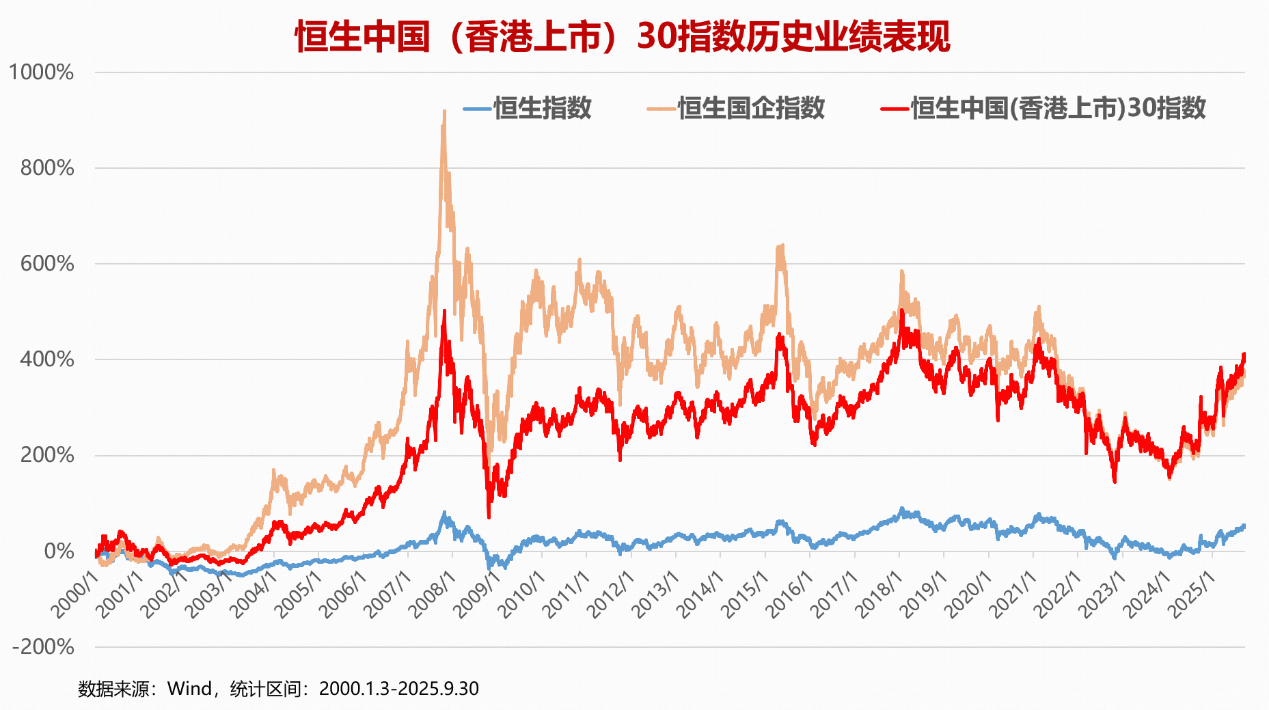
Core Insights - The surge of AI technology in China and the influx of southbound capital into Hong Kong stocks have made AI tech giants like Alibaba a focal point for global capital allocation in Chinese assets [1][8] - As of September 30, 2025, southbound capital net inflow reached a historical high of 1.17 trillion HKD, with Alibaba being the most favored stock in the tech sector [3][4] Group 1: Market Performance - Alibaba's stock price reached a nearly four-year high of 186.20 HKD on October 3, 2025, reflecting strong investor confidence [1][3] - The Hang Seng Index and the Hang Seng China Enterprises Index saw year-to-date gains of 33.88% and 31.08%, respectively, as of September 30, 2025 [1] Group 2: ETF Developments - The Hong Kong Large Cap 30 ETF (520560) was launched, tracking the Hang Seng China (Hong Kong Listed) 30 Index, which includes the largest 30 companies listed in Hong Kong [1][2] - Alibaba holds a significant weight of over 18% in the Hang Seng China (Hong Kong Listed) 30 Index, making it the largest component [2] Group 3: Investment Trends - In September 2025 alone, southbound capital saw a net inflow of 188.5 billion HKD, with Alibaba receiving a net buy of approximately 757.09 billion HKD, ten times that of Tencent [3][4] - The focus on technology stocks, particularly AI leaders like Alibaba, indicates a strong trend in investment preferences [3][4] Group 4: Strategic Initiatives - Alibaba announced a partnership with NVIDIA for Physical AI collaboration, aiming to enhance its AI infrastructure with a planned investment of 380 billion CNY [4][7] - The company is also advancing its AI capabilities with the launch of its largest and most powerful models, Qwen3-Max and Qwen3-Omni [4][7] Group 5: Historical Performance - The Hang Seng China (Hong Kong Listed) 30 Index has outperformed both the Hang Seng Index and the Hang Seng China Enterprises Index since its inception, with a cumulative return of 412.75% from January 3, 2000, to September 30, 2025 [5][6]
政治僵局会如何拖累法国经济字
Xin Hua Cai Jing· 2025-10-13 00:07
Group 1 - The political deadlock in France, exacerbated by President Macron's dissolution of the National Assembly, has led to significant economic and financial instability, with the 2026 budget draft still not released [1] - The recent resignation of Prime Minister Le Cornu has intensified market volatility, causing the CAC40 index to drop by 2% and the 10-year government bond yield to exceed 3.6% [1] - The French central bank forecasts a mere 0.7% economic growth for 2025, attributing this to declining investment willingness from businesses and households, rising savings rates, and the impact of economic slowdown on employment [1] Group 2 - The political crisis is projected to reduce France's economic growth by approximately 0.5 percentage points by the end of 2025, equating to a loss of about €15 billion [1] - Household consumption of goods in France is expected to decline by 0.5% from Q1 2024 to August 2025, with a high savings rate of 19%, indicating a conservative spending approach due to political and economic uncertainties [2] - The instability in the French political landscape is anticipated to result in a GDP reduction of around €9 billion for the current year, with France lagging behind other major European economies [2] Group 3 - The political crisis in France has also affected the Eurozone economy, with the sudden resignation of Le Cornu causing a near 0.8% drop in the euro against the dollar, reflecting market concerns over potential political vacuum in the EU's second-largest economy [2] - Analysts warn that the uncertainty surrounding the French government could pose spillover risks to the broader Eurozone economy [2]
A股投资策略周报:本轮中美关税复盘及市场影响预判-20251012
CMS· 2025-10-12 08:35
Core Insights - The recent escalation of the US-China supply chain and tariff conflict is a continuation of trade frictions since 2018, and it is not a new negative factor for the A-share market. Historical experience shows that such shocks often create phase low points and investment opportunities [2][6][10] - Compared to the tariff shock in April this year, the current market has more favorable conditions, including investor expectations of tariff threats and stronger market resilience due to key resistance levels being surpassed [4][10] - Short-term adjustments are inevitable, but the market still shows resilience, with the potential for new highs after the shock ends. This adjustment may serve as an opportunity to optimize the investment structure [2][10] Industry and Company Analysis - The classic response strategy to the US-China conflict emphasizes self-sufficiency and domestic circulation, suggesting a focus on sectors with relatively low positions and marginal improvements, such as military industry, semiconductors, software self-sufficiency, new consumption, and non-ferrous metals [2][10] - The current market sentiment is bolstered by a stronger willingness of residents to invest, increased protective actions from important institutional investors, and accelerated trends in new industries like artificial intelligence and semiconductors, which provide long-term value during corrections [4][10] - The average guarantee ratio in the market has significantly improved from 261% in April to 287%, enhancing the market's ability to withstand downturns despite a larger scale of financing [4][9][10] - The recent market dynamics indicate that sectors such as gold, copper, cobalt, photovoltaic batteries, lithium battery equipment, wind power, semiconductors, and automotive are experiencing improvements or high levels of prosperity [4][10]
光大证券:市场短期内或进入宽幅震荡阶段
Xin Lang Cai Jing· 2025-10-12 00:21
Core Viewpoint - The market is expected to enter a phase of wide fluctuations in the short term due to high valuations and cautious capital, alongside uncertainties in US-China relations [1] Market Conditions - Recent market increases have led to relatively high valuations, causing some capital to be cautious [1] - Uncertainties in US-China relations may lead to a decline in market risk appetite [1] Policy and Economic Factors - The upcoming 20th Central Committee's Fourth Plenary Session is likely to raise market policy expectations [1] - The Federal Reserve still has room for interest rate cuts within the year, which may support the market [1] Sector Focus - In the short term, the focus should be on high-dividend and consumer sectors [1] - In the medium term, attention should shift to TMT (Technology, Media, and Telecommunications) and advanced manufacturing sectors [1]

策略解读:贸易摩擦升级对A股有何影响
Guoxin Securities· 2025-10-11 11:58
Core Insights - The report indicates that despite the recent escalation in trade tensions, the medium-term outlook for the A-share market remains positive, with a focus on a style rebalancing towards traditional value sectors in Q4, such as real estate, brokerage, and consumer stocks [3][4][6]. Impact of Trade Tensions - The report highlights that the recent threats of tariffs from the U.S. have led to significant declines in major U.S. stock indices, with the Dow Jones falling by 878.82 points (1.90%), the S&P 500 down by 182.60 points (2.71%), and the Nasdaq dropping by 820.20 points (3.56%) on October 10 [3][4]. - The report notes that Trump's statements regarding potential tariffs, including a proposed 10% baseline tariff on all imports and up to 60% on goods from China, have heightened concerns about global trade tensions and inflation [4]. A-share Market Resilience - The report references past instances where A-shares experienced significant declines due to trade tensions, such as a 7.34% drop in the Shanghai Composite Index in April 2025, but subsequently rebounded due to supportive domestic monetary policies [5][6]. - It emphasizes that the current policy environment remains conducive to a bullish outlook for A-shares, with expectations for policy measures to counteract price declines [5]. Style Rebalancing in Q4 - The report observes a notable shift from technology stocks to value stocks in the A-share market, with the ChiNext and STAR 50 indices falling by 5.61% and 4.55%, respectively, while real estate and brokerage indices saw slight increases [6]. - Historical comparisons are made to previous market phases, indicating that increased volatility often accompanies a shift back to value stocks, as seen in the second phase of the 1999 bull market and during periods of heightened volatility in 2020 [6].

“黑色星期五”全球资产大跌,有人却逆势加仓
3 6 Ke· 2025-10-11 10:14
10月10日,国庆节后第二个交易日,A股市场风格转变,没有延续前一日的上涨态势,从ETF的表现来 看,前期涨势较好的电池、芯片、信息技术等ETF大幅回调,不少行业ETF单日跌超7%;而已经回调了 一段时间的建材、高股息、农业ETF等领涨。 个股方面,华虹公司、亿纬锂能等前期涨幅较大的公司回调较深,单日跌幅均超10%。港股也同样遭遇 回调,10月10日,港股科技股同步下跌。截至当日收盘,恒生指数跌1.73%,恒生科技指数跌3.27%。 药明生物、中芯国际、紫金矿业、百度集团-SW、快手-W跌幅靠前。 当日晚间美股开盘后也"上演黑色星期五",股指大跳水,截至当日美股收盘,道指下跌878.82点跌 1.90%;纳指下跌3.56%;标普500指数下跌2.71%。其中,标普500指数和纳指均创下自4月10日以来的 最大单日跌幅。 值得关注的是,与国内市场关联更为紧密的纳斯达克中国金龙指数当日则下跌6.10%,空方力量强劲。 阿里巴巴与百度集团股价均暴跌超8%,京东集团跌超6%。 有投资者牛市急跌中加仓 也有投资经验超过15年的资深投资人表示,"最近市场热度太高,尤其是一些重点板块,适量降温有助 于市场稳定走高,从这个角 ...
AH股市场周度观察(10月第1周)-20251011
ZHONGTAI SECURITIES· 2025-10-11 04:09
A-Share Market - The A-share market showed a mixed performance with the Shanghai Composite Index slightly up by 0.37%, while the ChiNext Index fell significantly by 3.86, indicating notable internal market differences [5][6] - Value stocks generally rose, particularly mid-cap value stocks, while growth stocks experienced a broad pullback. The average daily trading volume for the week was 2.6 trillion yuan, showing a slight increase compared to the previous period [5][6] - The market volatility increased post-National Day, influenced by rising prices of industrial and precious metals, with gold surpassing 4000 USD per ounce. The non-ferrous metals sector saw a cumulative increase of 4.35% during the week [5][6] Hong Kong Market - The Hong Kong market faced downward pressure, with the Hang Seng Index declining by 3.13% and the Hang Seng Tech Index dropping by 5.48%. Traditional value sectors showed relative resilience, while technology, consumer, and healthcare sectors experienced significant declines, with non-essential consumer and healthcare sectors falling over 6% [7] - The adjustment in the Hong Kong market was primarily driven by external uncertainties and internal sector rotations, particularly due to the tightening of US-China relations. The announcement of a 100% tariff on all brand or patented drug imports by the US significantly impacted the healthcare sector [7] - Looking ahead, the Hong Kong market is expected to be heavily influenced by US-China relations, with potential risks from increased tariffs on Chinese goods. Focus should be on dividend-paying sectors less affected by these relations, especially cyclical sectors benefiting from anti-involution policies [7]
今年以来港股已出现20多起私有化相关案例 涵盖金融等多个领域
Zheng Quan Shi Bao Wang· 2025-10-10 23:55
Core Viewpoint - HSBC Holdings announced a plan to privatize Hang Seng Bank at a premium of over 30%, leading to a 25.88% surge in Hang Seng Bank's stock price on the same day, highlighting a growing trend of privatization in the Hong Kong stock market [1] Group 1: Privatization Trends - There have been over 20 privatization-related cases in the Hong Kong stock market this year, spanning various sectors including finance, real estate, and consumer goods [1] - The privatization activities are reshaping the equity structure of listed companies and serve as a key window to observe market valuation logic and capital movements [1] Group 2: Market Reactions - The announcement by HSBC triggered significant market interest in privatization, as evidenced by the immediate stock price reaction of Hang Seng Bank [1] - The performance of stocks related to privatization varies significantly, with some companies experiencing drastic changes in their stock prices [1]