
传媒

Search documents
金融工程专题研究:公募FOF基金2025年四季报解析
Guoxin Securities· 2026-01-27 14:18
- The report categorizes FOFs into three types based on the proportion of equity assets: debt-biased FOFs, balanced FOFs, and equity-biased FOFs[2][13] - The total number of FOF products established by the end of Q4 2025 is 549, with a combined scale of 2441.88 billion yuan, an increase of 26.20% compared to Q3 2025[2][12] - The scale of debt-biased FOFs, balanced FOFs, and equity-biased FOFs in Q4 2025 are 1611.13 billion yuan, 454.77 billion yuan, and 375.98 billion yuan respectively[2][13] - The median returns for debt-biased FOFs, balanced FOFs, and equity-biased FOFs in Q4 2025 are 0.33%, -0.64%, and -1.21% respectively[2][24] - The most heavily allocated active equity funds by FOFs are 富国稳健增长A, 博道久航C, and 中欧红利优享A[3][32] - The active equity funds with the largest FOF holdings are 兴全商业模式优选A, 易方达信息行业精选C, and 易方达科融[3][33] - The most heavily allocated passive index equity funds by FOFs are 永赢中证沪深港黄金产业股票ETF, 华夏恒生科技ETF, and 富国中证港股通互联网ETF[36] - The passive index equity funds with the largest FOF holdings are 华夏恒生ETF, 永赢中证沪深港黄金产业股票ETF, and 华夏恒生科技ETF[36] - The most heavily allocated enhanced index funds by FOFs are 汇添富国证2000指数增强A, 招商沪深300指数增强C, and 招商中证500等权重指数增强C[37] - The enhanced index funds with the largest FOF holdings are 汇添富国证2000指数增强A, 国泰海通中证500C, and 汇添富中证1000指数增强A[37] - The most heavily allocated bond funds by FOFs are 广发纯债A, 易方达岁丰添利A, and 兴全稳泰A[40] - The bond funds with the largest FOF holdings are 国泰利享中短债A, 富国国有企业债C, and 富国产业债A[40] - The most heavily allocated "fixed income+" funds by FOFs are 景顺长城景颐双利A, 西部利得汇享A, and 华泰保兴尊合A[42] - The "fixed income+" funds with the largest FOF holdings are 富国天利增长债券A, 易方达裕祥回报A, and 易方达稳健收益A[42] - The active equity funds with the highest estimated net increase in FOF holdings in Q4 2025 are 易方达改革红利, 景顺长城稳健回报C, and 中欧小盘成长C[44][48] - The active equity funds with the largest estimated net increase in FOF holdings in Q4 2025 are 景顺长城稳健回报C, 国泰海通量化选股D, and 西部利得研究精选C[44][48] - The bond funds with the highest estimated net increase in FOF holdings in Q4 2025 are 天弘信利C, 华夏短债A, and 鹏华丰恒A[50] - The bond funds with the largest estimated net increase in FOF holdings in Q4 2025 are 国泰利享中短债A, 富国国有企业债C, and 富国产业债A[50] - The top three active equity fund managers with the most FOF allocations in Q4 2025 are 杨梦, 范妍, and 刘健维[52][53] - The top three "fixed income+" fund managers with the most FOF allocations in Q4 2025 are 李怡文, 王晓晨, and 彭成军[54] - By the end of Q4 2025, 168 FOFs directly invested in stocks, with balanced FOFs having the highest proportion of stock investments, followed by equity-biased FOFs[60][61] - The top three stocks most heavily allocated by FOFs are 紫金矿业, 宁德时代, and 寒武纪-U[63] - The stocks with the largest FOF holdings are 宁德时代, 中国东航, and 盛达资源[63]






天威视讯(002238.SZ):预计2025年亏损1.6亿元-2.2亿元
Ge Long Hui A P P· 2026-01-27 14:11
Core Viewpoint - Tianwei Vision (002238.SZ) expects a significant loss in 2025, with projected losses ranging from 160 million to 220 million yuan, primarily due to market changes and increased competition in the data center sector [1] Financial Projections - The company forecasts a total operating revenue between 1.15 billion and 1.45 billion yuan for 2025 [1] - Expected net profit attributable to shareholders is projected to be a loss, with non-recurring losses estimated between 184 million and 244 million yuan [1] Reasons for Projected Losses - The decline in rental prices for general data center cabinets in the Guangzhou and Shenzhen areas, despite efforts from the sales team, has led to underperformance in sales from key data centers [1] - Traditional revenue streams, such as cable television and broadband services, have seen a decrease due to changes in consumer habits and market conditions [1] - The company plans to recognize impairment losses on certain assets based on cautious accounting principles, influenced by reduced government subsidies compared to the previous year [1]

公募主动权益基金2025年四季报解析:有色金属大幅加仓,中际旭创成第一大重仓股
Huaan Securities· 2026-01-27 10:25
Investment Rating - The report indicates a strong performance of public actively managed equity funds in 2025, with a notable increase in the allocation to non-ferrous metals and non-bank financials, while reducing exposure to media and electronics sectors [1][3][40]. Core Insights - Public actively managed equity funds showed robust excess returns in 2025, with the mixed equity fund index (885001.WI) rising by 33.19%, outperforming major broad-based indices [1][14]. - The allocation to Hong Kong stocks decreased significantly, while the proportion of investments in the ChiNext board increased [2][30]. - There was a substantial increase in allocations to non-ferrous metals and non-bank financials, while reductions were seen in media and electronics sectors [3][42]. Summary by Sections Fund Performance - As of Q4 2025, the total scale of public actively managed equity funds is approximately 3.90 trillion, reflecting a quarter-on-quarter decrease of 4.10% [1][12]. - The share of public actively managed equity funds decreased by 2.53% in Q4 2025 [18]. Sector Allocation Changes - The allocation to non-ferrous metals increased to 8.03%, up by 2.14 percentage points from the previous quarter, marking a continuous rise over four quarters [42]. - The allocation to the electronics sector decreased to 23.78%, down by 1.85 percentage points [43]. - The proportion of investments in the ChiNext board rose from 23.72% in Q3 to 24.91% in Q4 2025 [2][30]. Top Holdings - The top individual stock in public fund allocations is Zhongji Xuchuang, with a holding ratio of 4.04%, primarily due to its price increase rather than new acquisitions [4][40]. - The most actively increased holdings include China Ping An (+0.43 percentage points) and Dongshan Precision (+0.41 percentage points) [4].




粤开市场日报-20260127-20260127
Yuekai Securities· 2026-01-27 07:49
Market Overview - The A-share market showed mixed performance today, with the Shanghai Composite Index slightly up by 0.18% closing at 4139.9 points, and the Shenzhen Component Index up by 0.09% closing at 14329.91 points. The ChiNext Index increased by 0.71% to 3342.6 points, while the STAR 50 Index rose by 1.51% to 1555.98 points. Overall, there were 1928 stocks that rose and 3450 that fell, with a total trading volume of 28950 billion yuan, a decrease of 3532 billion yuan from the previous trading day [1][2]. Industry Performance - Among the Shenwan first-level industries, electronics, communications, defense and military industry, machinery equipment, and media sectors led the gains with increases of 2.27%, 2.15%, 1.65%, 0.64%, and 0.48% respectively. Conversely, the coal, agriculture, forestry, animal husbandry and fishery, steel, beauty care, and pharmaceutical biotechnology sectors experienced declines, with decreases of 2.27%, 1.95%, 1.34%, 1.22%, and 1.11% respectively [1][2]. Concept Sector Performance - The concept sectors that saw the highest gains today included cultivated diamonds, superhard materials, advanced packaging, optical chips, memory, analog chips, BC batteries, automotive chips, semiconductor silicon wafers, MCU chips, semiconductor selections, optical modules (CPO), wafer industry, and IGBT. In contrast, sectors such as cobalt mining, animal health selections, major infrastructure central enterprises, lithium battery anodes, and central enterprise coal experienced pullbacks [2].
可转债周报20260117:政策讯号下看当前转债估值-20260127
Changjiang Securities· 2026-01-27 06:34
1. Report Industry Investment Rating - The document does not mention the industry investment rating. 2. Core View of the Report - The increase in the margin ratio for margin trading may suppress the short - term sentiment of convertible bonds. With the market premium rate approaching the previous high, there is a need to be vigilant about the risk of a correction. Structurally, medium - and large - cap convertible bonds have led the valuation increase after the new year, the valuation of low - rated varieties has increased, while the valuation of small - cap and high - rated varieties is relatively underestimated. In a high - valuation market, it is necessary to prevent the premium compression caused by forced redemptions. [2][4] - The A - share market was volatile and differentiated during the week, with the mid - cap and science and technology innovation indices outperforming. Sectors such as media and computer in the technology growth direction led the gains, and the congestion degree was differentiated. [2][4] - The convertible bond market strengthened, with small - and medium - cap convertible bonds outperforming large - cap ones. The valuation generally stretched, the implied volatility and the median market price remained at a high level, and some high - price and high - premium targets led the gains. [2][4] - The primary market issuance was relatively stable with sufficient reserves. Clause games remained the focus, with a weak willingness to lower the conversion price and intensified redemption games. Attention should be paid to the forced redemption risk of large - scale high - rated varieties. [2][4] 3. Summary According to the Directory 3.1 Policy Signals and Convertible Bond Valuation - Historically, the convertible bond market has been more cautious about adjustments to the margin ratio for margin trading. On January 14, 2026, the Shanghai, Shenzhen, and Beijing Stock Exchanges announced an increase in the minimum margin ratio for margin trading from 80% to 100%. In the past, the convertible bond market was generally cautious in the short - term regarding such adjustments, with only a rise on the first trading day after the margin ratio was lowered in September 2023. [15] - The market - wide par - value premium rate has approached the previous high. In 2026, it has widened again, indicating that the overall valuation of the convertible bond market is at a relatively high level. [16] - Currently, the valuation of small - cap and high - rated convertible bonds is relatively low. Medium - and large - cap convertible bonds (over 500 million) have been the main force driving the market valuation up in 2026, with their premium rates significantly widening and remaining above 30%. The valuation of small - cap convertible bonds has been compressed to around 20%. In terms of credit ratings, the market risk appetite has increased, the valuation of low - credit - rated convertible bonds has risen significantly, while the premium rate of high - rated varieties is relatively low. [19] - In the current high - valuation context, the market is more sensitive to forced - redemption - counting varieties. The significant compression of the premium rate often occurs in the last five trading days of convertible bonds with forced - redemption counting. [22] 3.2 Market Theme Weekly Review - From January 11 to January 17, 2026, the equity market strengthened overall. Themes in the Internet and computer directions performed strongly, while those in the commercial aerospace direction, such as the large - aircraft index, aerospace technology index, and aerospace science and industry index, were under pressure. [24] 3.3 Market Weekly Tracking 3.3.1 Main Index Differentiation, Strong Performance of Science and Technology Innovation and Mid - cap Indices - The main A - share indices strengthened during the week. The Shenzhen Component Index and the ChiNext Index oscillated upwards, while the Shanghai Composite Index rose first and then fell. In terms of style, the CSI 500 Index and the Science and Technology Innovation 50 Index outperformed other major scale indices. [27] - In terms of capital, the average daily trading volume of the market increased significantly, and the net outflow of main funds expanded slightly. [27] - The technology - growth sectors in the A - share market were strong during the week. Sectors such as media, computer, electronics, and machinery and equipment led the gains, while banks, agriculture, forestry, animal husbandry, and fishery, and non - bank finance performed weakly. The trading volume was mainly concentrated in the computer, electronics, and power equipment sectors, with the electronics sector accounting for over 15% of the average daily trading volume. [30] - The market sector congestion degree was still significantly differentiated. The congestion degree in the media, computer, communication, and social service directions rebounded, while that in manufacturing sectors such as automobiles, basic chemicals, and petroleum and petrochemicals declined. [33] 3.3.2 The Convertible Bond Market Strengthened Overall, with the Small - Cap Index Performing Strongly - From January 11 to January 17, 2026, the convertible bond market strengthened. The CSI Convertible Bond Index rose, with the small - cap convertible bond index performing relatively strongly and the large - cap convertible bond index under some pressure. The trading volume expanded, and the average daily trading volume exceeded 10 billion. [36] - In terms of valuation, the convertible bond market valuation stretched overall. By par - value range, the conversion premium rates in the 120 - 130 yuan and 140 - 150 yuan par - value ranges were compressed, and those in the ranges below 90 yuan and above 150 yuan were significantly compressed. By market - price range, the conversion premium rates in the 110 - 120 yuan and 130 - 140 yuan market - price ranges were compressed, while those in the 100 - 110 yuan and over 150 yuan ranges stretched significantly. [39] - The weighted implied volatility of the convertible bond market balance oscillated weakly and remained at a historically high level. The median market price of convertible bonds oscillated upwards and reached a previous high. [42][43] - Convertible bonds in technology - growth sectors were more elastic. Sectors such as communication, computer, media, machinery and equipment, and electronics led the gains. The trading volume was mainly concentrated in the electronics, pharmaceutical biology, and power equipment sectors, with the combined trading volume of these three sectors accounting for over 30%. [47] - Most individual convertible bonds recovered during the week. The number of convertible bonds with a range increase of 0 or more was 294, accounting for 76.0% of the total number of outstanding convertible bonds in the market. The top five convertible bonds in terms of cross - week gains were Huayi Convertible Bond, Shengxun Convertible Bond, Weice Convertible Bond, Haohan Convertible Bond, and Zhenhua Convertible Bond. The top five in terms of cross - week losses were Saili Convertible Bond, Songsheng Convertible Bond, Guanglian Convertible Bond, Tianjian Convertible Bond, and Zai 22 Convertible Bond. The top five gainers generally had the characteristics of high market price and high conversion premium rate. [49] 3.4 Convertible Bond Issuance and Clause Tracking 3.4.1 Primary Market Issuance Plan - From January 11 to January 17, 2026, 3 convertible bonds were listed (Jin 05 Convertible Bond, Aohong Convertible Bond, and Shuangle Convertible Bond), and 2 were available for subscription (Naipu Zhuan 2 and Shangtai Convertible Bond). [53] - A total of 15 listed companies updated their convertible bond issuance plans during the week, including 4 in the approved - for - registration stage, 4 in the exchange - acceptance stage, 3 in the shareholders' - meeting - passed stage, and 4 in the board - of - directors' - plan stage. The total scale of projects in the exchange - acceptance and subsequent stages has reached 8.1 billion yuan. [54][55] 3.4.2 Clause - Related Announcements - **Lower - conversion - price announcements**: 6 convertible bonds announced that they were expected to trigger a lower conversion price, with a market - value - weighted average PB of the underlying stocks of 2.2; 4 announced that they would not lower the conversion price, with a market - value - weighted average PB of 5.4; 1 proposed to lower the conversion price, with a PB of the underlying stock of 2.0. [59][60][61] - **Redemption - related announcements**: 7 convertible bonds announced that they were expected to trigger redemption; 4 announced that they would not redeem in advance; 4 announced early redemption. [64][65][67]
市场情绪平稳,价量一致性高位震荡——量化择时周报20260125
申万宏源金工· 2026-01-27 01:03
Core Viewpoint - The market sentiment is stable with high price-volume consistency, indicating a sideways trend in the market [1] Group 1: Market Sentiment Indicators - The market sentiment indicator value as of January 23 is 2.35, a slight increase from 2.25 the previous week, indicating a neutral sentiment [3] - Key indicators such as the proportion of transactions in the Sci-Tech 50 and inter-industry trading volatility have shown signs of recovery, suggesting a marginal improvement in market risk appetite [6][15][17] - The price-volume consistency indicator remains high, reflecting a strong correlation between market attention and stock price movements, indicating active market sentiment [9] - The financing balance ratio has shown a slight upward trend, indicating that leveraged funds are maintaining a high level of sentiment, suggesting overall market risk appetite remains positive [22] Group 2: Industry Trends and Performance - The scoring model indicates that non-ferrous metals, communication, and defense industries are leading in trend scores, with non-ferrous metals achieving a short-term score of 100.00, the highest among industries [30][31] - The average industry congestion level is highest in utilities, computers, media, banks, and oil and petrochemicals, while the lowest is in environmental protection, textiles, and light manufacturing [33] - The correlation between industry congestion and weekly price changes is negligible, indicating that high congestion sectors like oil and petrochemicals are experiencing significant price increases, while sectors with low congestion are lagging [35] Group 3: Technical Indicators - The RSI indicator has shown a decline, suggesting a decrease in short-term upward momentum and an increase in selling pressure, indicating a potential weakening of market sentiment [25][37] - The model indicates that small-cap and growth styles are currently favored, although there are signs of weakening in the short-term signals for these styles [38]


东吴证券晨会纪要2026-01-27-20260127
Soochow Securities· 2026-01-27 00:26
证券研究报告 东吴证券晨会纪要 东吴证券晨会纪要 2026-01-27 宏观策略 [Table_MacroStrategy] 宏观量化经济指数周报 20260126:二手房销售景气度明显回暖 2026 年"经济开门红"的可能性仍在提升 海外周报 20260126:海外宏观与交易复盘:特朗普再度"TACO",金银 续创新高 核心观点:本周海外市场由特朗普针对格陵兰岛的关税威胁及其后 "TACO"行为、以及日本财政风波所主导,贵金属和大宗商品领涨,全 球股票、债券和美元指数表现不佳,其中美国一度遭遇股债汇三杀,随后 在特朗普"TACO"、以及延续稳健的美国经济数据后回暖。下周关注可 能公布的美联储主席人选,以及美国政府关门风波。我们认为,在中期选 举临近的当下,两党大概率将致力于避免政府停摆,且即使政府停摆,其 影响相较去年 11 月也更小。 金融产品周报 20260125:持续看多,关注周期行业的长期机会 市场行情展望:(2026.1.26-2026.1.30) 观点:持续看多,关注周期行业 的长期机会 1 月整体走势判断:2026 年 1 月,宏观择时模型的月度评 分是 0 分,历史上该分数万得全 A 指数后 ...
歌华有线:公司正在研究相关GEO优化对AI结果的影响
Zheng Quan Ri Bao Zhi Sheng· 2026-01-26 14:14
Group 1 - The core viewpoint of the article highlights that Gehua Cable is committed to providing authoritative and impartial information content as a service aggregation platform for users [1] - The company is currently researching the impact of GEO optimization on AI results, aiming to enhance service quality in intent recognition, scenario adaptation, and credibility building [1]

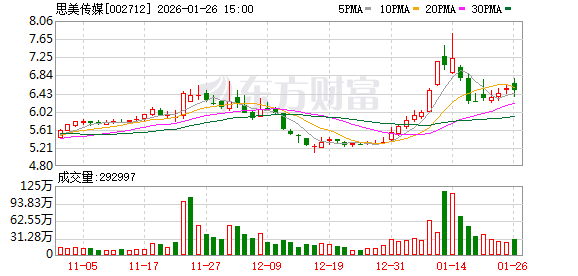
思美传媒:截至2026年1月20日公司股东总户数为31808户
Zheng Quan Ri Bao· 2026-01-26 13:45
Group 1 - The core point of the article is that Simai Media reported a total of 31,808 shareholders as of January 20, 2026 [2]

北交所周报(2026年1月第3周):北证日均成交金额有所回落,北证50指数单周上涨2.60%-20260126
GUOTAI HAITONG SECURITIES· 2026-01-26 12:51
Trading Activity - The average daily trading volume on the Beijing Stock Exchange (BSE) decreased by 34.33% to 26.407 billion yuan compared to the previous week[7] - The weekly turnover rate for the BSE was 26.05%, leading among the three major exchanges[7] - The BSE's market share of total trading volume fell to 0.94%, down from approximately 1% since Q4 2025[9] Index Performance - The BSE 50 Index rose by 2.60% during the week, reflecting a mixed performance across major indices[13] - The BSE 50 Index has shown a cumulative increase of 14.48% from December 1, 2025, to January 23, 2026[13] Sector Analysis - The median price increase for stocks across most sectors on the BSE was positive, with the media sector leading at a median increase of 28.00%[18] - The computer sector had the highest median price-to-earnings (P/E) ratio at 171.35 times, while the construction and decoration sector had a relatively low median P/E ratio of 31.20 times[18] New Listings - One new stock was offered and two new stocks were listed on the BSE during the week, with first-day average price increases exceeding 150%[1]