
汽车

Search documents
汽车行业周报(20260302-20260308):26年重卡出口思考(1):非洲重卡市场空间及格局分析-20260308
Hua Yuan Zheng Quan· 2026-03-08 08:59
Investment Rating - The investment rating for the automotive industry is "Positive" (maintained) [1] Core Insights - The report highlights that China's heavy truck exports are expected to grow significantly in 2025, primarily driven by markets in Africa and Asia, with notable increases in countries like Vietnam and Nigeria. Despite a sharp decline in exports to Russia, total heavy truck exports are projected to reach 341,000 units, a year-on-year increase of 17% [3][7] - The African heavy truck market is anticipated to have substantial growth potential in the medium to long term, benefiting from the current cycle of rising mineral resource prices. The report draws parallels between Africa's current economic development and China's past growth, indicating that infrastructure and logistics in Africa still have significant room for improvement [3][16] - The report emphasizes that Chinese heavy truck brands have considerable potential to replace second-hand trucks in Africa, as they dominate the new truck market in certain regions. China's direct investment in Africa remains high, particularly in the mining sector, which could further enhance the demand for Chinese heavy trucks [3][30] Summary by Sections Section 1: Heavy Truck Exports - In 2025, China's heavy truck export growth will be primarily from Africa and Asia, with Vietnam and Nigeria showing significant increases. The total heavy truck exports are expected to be 341,000 units, reflecting a 17% year-on-year growth [3][7][12] Section 2: African Heavy Truck Market - The African heavy truck market is projected to have several times the potential for growth, with infrastructure development lagging behind. The report notes that the logistics system in Africa is still heavily reliant on road transport, which constitutes about 80% of freight and 90% of passenger transport [16][24] - The market is expected to benefit from rising mineral prices, which will drive demand for heavy trucks in mining operations. The report indicates that many African countries have significant mining output contributing to their GDP, suggesting a strong correlation between mineral price increases and economic growth [24][30] - Chinese heavy truck brands are well-positioned to capture market share from second-hand trucks, as they are already leading in new truck sales in certain markets. China's ongoing investments in Africa's mining sector are likely to facilitate the adoption of Chinese heavy trucks [30][31]
面对面问计,点对点作答!潘功胜逐一回应民企诉求,释放重磅信号
第一财经· 2026-03-08 08:01
Core Viewpoint - The People's Bank of China (PBOC) is committed to maintaining a moderately loose monetary policy to support stable growth in the real economy, responding to the needs of private enterprises for financial policy support [4][6]. Group 1: Monetary Policy and Financial Support - The PBOC will continue to implement a moderately loose monetary policy, ensuring relatively loose social financing conditions to create a favorable monetary environment for stable economic growth [4][8]. - Representatives from private enterprises expressed appreciation for financial policies such as tax rebates and interest rate cuts, which have significantly reduced interest expenses and helped maintain profit margins [7]. - The PBOC's tools, such as the 1.25% re-lending rate and 1.5% re-discount rate, are effectively supporting small and private enterprises, reducing financing costs and revitalizing financial assets [7][8]. Group 2: Financing Costs and Market Needs - Enterprises are calling for further reductions in financing intermediary fees to ensure that policy benefits reach small and private market entities directly [8]. - The PBOC acknowledges that while financing costs are historically low, it aims to balance the overall financing environment [8]. Group 3: Exchange Rate Risk Management - The PBOC encourages enterprises to utilize exchange rate hedging tools to manage risks associated with currency fluctuations, which have impacted profit margins for foreign trade companies [10]. - Currently, about 30% of enterprises are using hedging tools, and over 60% of cross-border trade is less affected by exchange rate fluctuations, with expectations for further improvement [10][11]. Group 4: Accounts Receivable Management - The PBOC is addressing issues related to non-compliance in accounts receivable management among enterprises, particularly concerning the practices of core enterprises that may unfairly burden smaller suppliers [13]. - A regulatory framework is being established to standardize electronic receivables and ensure fair practices in financing [13]. Group 5: Illegal Financial Activities in the Gold Sector - The PBOC is intensifying efforts to combat illegal financial activities in the gold sector, particularly as gold prices fluctuate and related risks emerge [15][16]. - There is a need for enhanced monitoring and early warning systems to identify and prevent illegal financial activities in non-financial enterprises involved in gold trading [16].


宏观周报(3月2日-3月8日):两会定调开局,外部变局加剧-20260308
Yin He Zheng Quan· 2026-03-08 07:56
Economic Policy and Growth Targets - The GDP growth target for 2026 is set in the range of 4.5%-5%[1] - The government emphasizes a more proactive fiscal policy and moderately loose monetary policy to support economic stability and growth[1] Domestic Demand and Consumption - Domestic cinema box office revenue averaged 21.32 million yuan per day, a 72.2% increase year-on-year[3] - The average number of domestic flights increased by 15.5% compared to March of the previous year, averaging 14,200 flights[3] External Demand and Geopolitical Risks - The Baltic Dry Index (BDI) averaged 2162.0, a 5.6% increase month-on-month and a 40.9% increase year-on-year[3] - Oil prices surged due to geopolitical tensions, impacting external demand and supply chain expectations[1] Production and Industrial Performance - The steel industry saw a decrease in operating rates, with blast furnace utilization dropping by 2.55 percentage points to 77.69%[3] - Chemical production remained strong, supported by high oil prices, with PTA production increasing by 106,300 tons[3] Price Trends - The Consumer Price Index (CPI) showed a week-on-week decline in pork prices by 3.92% and vegetable prices by 4.07%[4] - The Producer Price Index (PPI) was affected by rising oil prices, with WTI crude oil increasing by 19.0% and Brent crude by 17.5%[5] Fiscal Policy and Government Spending - The government issued 149 billion yuan in general bonds and 781.7 billion yuan in new special bonds this week[6] - Total public budget expenditure reached a record high of 30 trillion yuan for 2026[6] Monetary Policy and Liquidity - The People's Bank of China announced an 800 billion yuan reverse repurchase operation, maintaining liquidity in the market[7] - The 10-year government bond yield stabilized around 1.8%[7] International Economic Conditions - The U.S. non-farm payrolls for February showed a decrease of 92,000 jobs, significantly below market expectations[7] - The Eurozone faces rising inflation risks alongside economic slowdown due to geopolitical tensions[7] Risk Factors - Risks include potential underperformance of policy implementation and slower-than-expected recovery in consumer confidence[7]
陆家嘴财经早餐2026年3月8日星期日
Wind万得· 2026-03-07 22:30
Group 1 - The "14th Five-Year Plan" aims to foster emerging industries such as marine biomedicine and enhance key technologies in integrated circuits, telecommunications, and internet sectors [3][4] - The Ministry of Civil Affairs plans to establish a three-tier elderly care service network by the end of the "14th Five-Year Plan" [3] - The Ministry of Human Resources and Social Security is developing an employment plan to enhance job creation and improve employment policies [3] Group 2 - China's foreign exchange reserves have increased for seven consecutive months, reaching $34,278 billion, with a rise of $287 billion in February [4][5] - The gold reserves have also grown for 16 months, totaling 7,422 million ounces, with an increase of 3 million ounces month-on-month [5] Group 3 - The People's Bank of China will implement a moderately loose monetary policy to maintain favorable social financing conditions [6] - The central bank is focusing on regulating non-standard practices in accounts receivable management [6] Group 4 - The Shanghai Stock Exchange supports financing and mergers for technology innovation and transformation enterprises, particularly those achieving breakthroughs in key technologies [7] - The Shenzhen Stock Exchange is preparing for reforms in the ChiNext board to enhance the capital market's service to the real economy [7] Group 5 - The "14th Five-Year Plan" includes major projects like "Yaxia Hydropower" and renewable energy bases, aiming for a 25% share of non-fossil energy consumption by 2030 [8] - The Ministry of Human Resources and Social Security is exploring the role of artificial intelligence in job creation and traditional job enhancement [8] - Domestic tourism during the recent Spring Festival reached 596 million trips, generating over 800 billion yuan, marking a historical high [8]

从废墟中爬出来的它,如今成了110岁的跨界造车鼻祖!
电动车公社· 2026-03-07 15:53
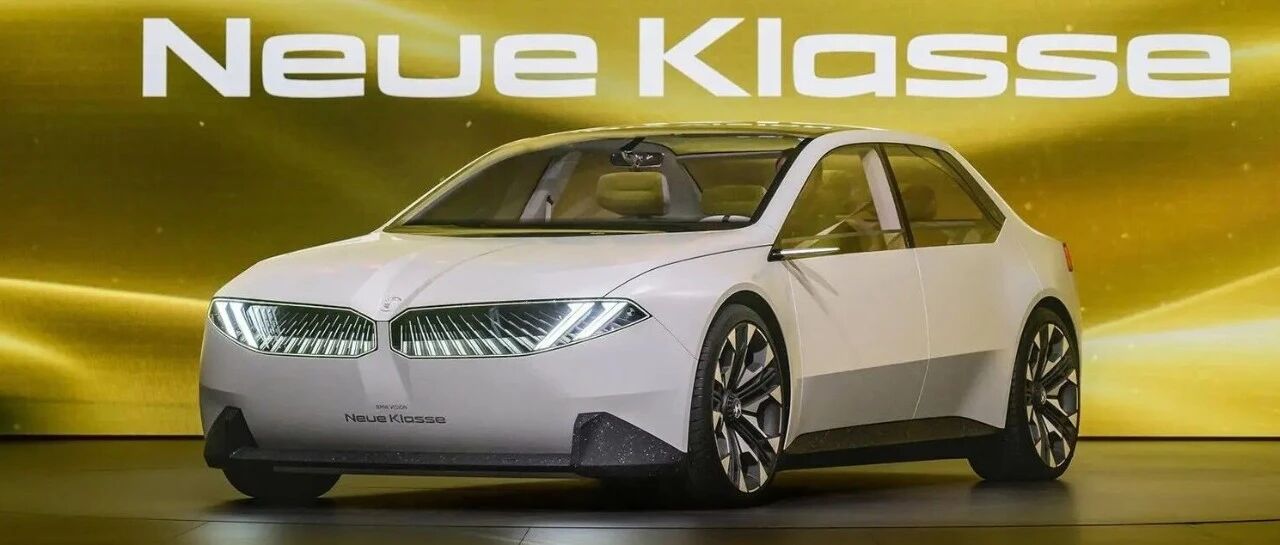
Core Viewpoint - The article discusses the challenges and successes of BMW as a pioneer in the automotive industry, emphasizing its resilience and ability to adapt through various historical crises, including two world wars and market fluctuations. It highlights BMW's evolution from a manufacturer of aircraft engines to a symbol of "sporty luxury" in the automotive sector, while also addressing the criticisms and changes in its product line over the years [1][64]. Group 1: Historical Background - BMW was founded in 1916 as the Bavarian Aircraft Factory, initially focusing on aircraft engines before transitioning to motorcycles and eventually automobiles due to historical circumstances [5][14]. - The company faced significant challenges during and after both World Wars, including being forced to pivot from luxury vehicles to basic industrial products and suffering extensive damage to its facilities [24][25][29]. - BMW's survival through these crises was marked by strategic decisions, such as acquiring existing production lines and focusing on motorcycle manufacturing before entering the automotive market [14][29]. Group 2: Product Evolution - BMW's first motorcycle, the R32, launched in 1923, set the stage for its dominance in the motorcycle industry, leading to a successful transition into car manufacturing [12][14]. - The introduction of the 320 series in 1932 marked BMW's first major foray into automobiles, followed by the iconic 328 sports car, which established BMW's reputation in motorsports [15][17]. - The 1500 sedan, launched in 1962, initiated the "New Class" platform, which differentiated BMW from competitors by emphasizing sporty luxury and performance [34][36]. Group 3: Market Position and Strategy - BMW's strategy has evolved to focus on a balance between luxury and sportiness, appealing to a broad consumer base while maintaining a distinct brand identity [34][36]. - The introduction of the 3 Series in 1975 became a cornerstone of BMW's lineup, with multiple generations adapting to market demands while retaining core performance characteristics [39][41]. - Recent models, including the seventh generation of the 3 Series, have faced criticism for shifting towards comfort over sportiness, yet they continue to perform well in sales, indicating a successful adaptation to consumer preferences [59][63]. Group 4: Innovation and Future Directions - BMW has a history of innovation, being an early adopter of electric vehicle technology and continuously evolving its product offerings to include hybrid and fully electric models [66][68]. - The upcoming "Neue Klasse" platform aims to further enhance BMW's electric vehicle lineup, showcasing the company's commitment to sustainability and technological advancement [66][68]. - The article suggests that BMW's ability to adapt while maintaining its core values serves as a lesson for new entrants in the automotive industry, emphasizing the importance of innovation and resilience [68].

大类资产月度策略(2026.3):政策定调寻主线,资产博弈迎变阵-20260307
Guoxin Securities· 2026-03-07 09:52
Group 1 - The report indicates a sustained "wide monetary + wide credit" environment, with China's new social financing in January reaching 72,208 billion yuan, exceeding expectations, and new RMB loans at 47,100 billion yuan, also above forecasts, suggesting a low risk of tightening funds [1][13] - The asset price outlook suggests a convergence of styles, with a focus on low valuation and high-performance stocks as external uncertainties rise, indicating a shift from high-risk trading to assets with higher safety margins [2][19] - The report highlights the performance of various asset classes in February, with the stock market showing differentiation, the bond market strengthening, and commodities experiencing volatility, while the RMB appreciated against the USD [30][41] Group 2 - The report provides quantitative asset allocation recommendations, suggesting an aggressive allocation of 10% in stocks, 45% in bonds, 15% in oil, and 30% in gold under an optimistic scenario, while a conservative scenario suggests 10% in stocks, 85% in bonds, 1.7% in oil, and 3.3% in gold [5][22] - The report notes that the stock-bond valuation ratio has decreased, indicating a reduced attractiveness of stocks relative to bonds, with the stock risk premium showing a historical low [44][47] - The report emphasizes the importance of monitoring macroeconomic indicators and market sentiment through various indices, which can help investors make informed decisions regarding asset allocation [53][55]
一笔100辆车的订单,卡在霍尔木兹海峡
第一财经· 2026-03-07 09:33
Core Viewpoint - The geopolitical risks stemming from the conflict in the Middle East are significantly impacting the automotive industry, particularly affecting production and export plans for companies exporting to the region [3][4]. Group 1: Impact on Chinese Automotive Exports - The Middle East is a key market for Chinese automotive exports, with rapid growth in export volumes from 226,000 units in 2021 to an expected 1.4 million units in 2025 [6]. - Major Chinese automakers like Great Wall, Chery, and Geely have established sales channels and local production in the Middle East, enhancing their competitive edge [6]. - The current conflict has led to increased shipping costs and delays, prompting companies to adjust their production schedules and explore alternative shipping routes [7][8]. Group 2: Response from Automotive Companies - Companies are shifting to alternative ports in Oman and Jordan and increasing the use of multi-modal transport to mitigate the impact of the conflict [7]. - The crisis is expected to compress profit margins for Chinese automakers, but their scale and efficiency may still provide a competitive advantage [8]. - If the blockade lasts over three months, significant delays and order cancellations could occur, potentially leading to a downward adjustment in export expectations [7]. Group 3: Broader Industry Implications - The conflict is affecting not only Chinese automakers but also multinational companies like Toyota, which has announced production cuts of nearly 40,000 vehicles for the Middle East market due to logistics concerns [11]. - Indian automakers are also postponing shipments to the Middle East and North Africa, facing increased shipping costs and tight container availability [12]. - The rising costs of energy and logistics due to the conflict are expected to have a cascading effect on the entire automotive supply chain, impacting raw material prices and availability [13].


地平线、鸿蒙智行智驾双雄再攀高峰,比亚迪闪充终结电动化上半场
Ju Chao Zi Xun· 2026-03-07 06:49
Core Insights - The domestic electric vehicle industry in China is experiencing a wave of technological releases, showcasing strong innovation driven by electrification and intelligence [2] - Horizon and HarmonyOS represent two distinct paths in the smart driving sector, with Horizon focusing on widespread adoption and HarmonyOS pushing the boundaries of smart driving capabilities [3][4] - BYD has announced the completion of the first half of electrification with its second-generation blade battery and fast-charging technology, marking a significant milestone in the transition from fuel vehicles [5][6] Smart Driving Developments - Horizon has launched the HSD (Horizon SuperDrive™) system, featuring a single chip with 560 TOPS of computing power and 27 high-precision sensors, achieving ultra-low latency and a response speed 42% faster than humans [3] - The HSD system reduces poor driving behaviors by over 90% and supports a full-scenario driving experience without relying on high-definition maps [3] - HarmonyOS has introduced a new generation of laser radar with 896 lines, enhancing imaging resolution by four times and significantly improving active safety capabilities [4] Electrification Milestones - BYD's second-generation blade battery allows for rapid charging, achieving 10% to 70% in just 5 minutes and 10% to 97% in 9 minutes, even in extreme cold [5][6] - The energy density of the second-generation blade battery has increased by over 5%, with vehicles like the Tengshi Z9GT achieving a range of over 1000 kilometers [6] - BYD plans to establish 20,000 fast-charging stations across China, enhancing the charging infrastructure and user experience [6] Industry Trends - The recent product launches signal a shift in the electric vehicle industry from merely existing to focusing on quality and user experience [7] - The advancements in smart driving and charging technologies are expected to redefine the competitive landscape, diminishing the advantages of fuel vehicles [7] - The Chinese electric vehicle industry is positioning itself as a global leader, leveraging technology to enhance human experience and redefine future mobility [7]

比亚迪(002594)重大事项点评:第二代刀片电池、兆瓦闪充引领行业技术新纪元
Xin Lang Cai Jing· 2026-03-07 06:30
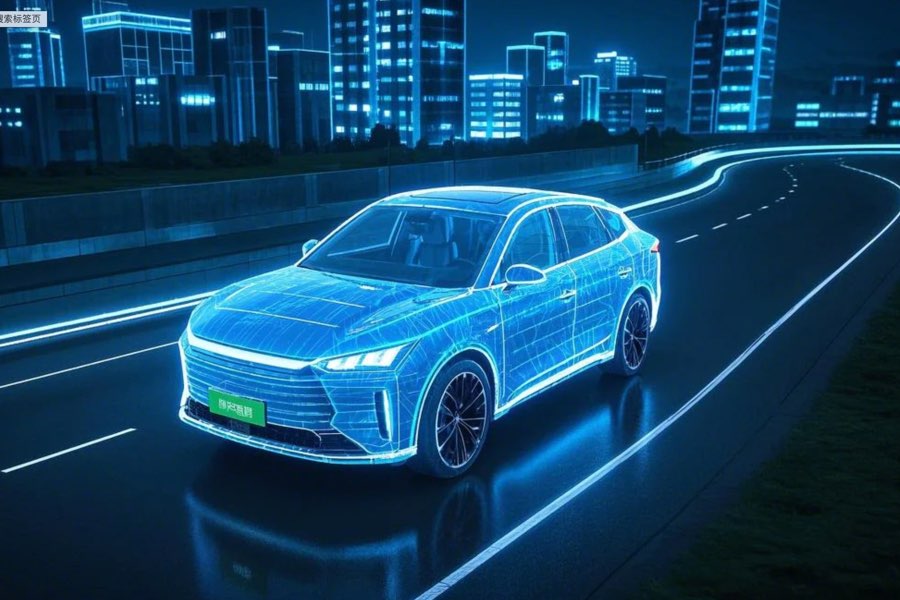
Core Viewpoint - BYD has showcased its second-generation blade battery and megawatt flash charging technology, highlighting its leading technological capabilities in the electric vehicle industry [2][3]. Group 1: Technological Advancements - The second-generation blade battery has made comprehensive breakthroughs in efficiency, lifespan, safety, and energy density, achieving a charging efficiency of 10%-70% in 5 minutes and 10%-97% in 9 minutes at room temperature. In extreme cold conditions of -20℃ and -30℃, it can charge from 20%-97% in 12 minutes [2]. - The lifespan of the battery has improved, with the warranty capacity retention rate increasing from 75% to 77.5% for 6 years or 150,000 kilometers, thanks to advanced temperature control technology. The energy density has increased by 5% compared to the first generation, allowing the Tengshi Z9GT to achieve a pure electric range of 1,036 km [2][3]. - The company has launched the world's first mass-produced 1,500 kW supercharging pile, which supports dual-gun simultaneous flash charging and includes user-friendly designs [2]. Group 2: Market Performance - In February, BYD's total wholesale sales reached 190,000 units, a year-on-year decrease of 41% and a month-on-month decrease of 9.5%, primarily due to the impact of the Spring Festival holiday. However, overseas sales reached 101,000 units, a year-on-year increase of 50%, marking the first time overseas sales surpassed domestic sales [3][4]. - The company plans to build 20,000 flash charging stations by 2026, with 4,239 already completed. The goal is to have 1,000 high-speed flash charging stations operational by May and 2,000 by the end of the year, achieving an average of one station every 100 kilometers [2][3]. Group 3: Growth Strategy - BYD's technological advancements are expected to address industry pain points such as range anxiety and slow charging, creating a core competitive barrier and differentiation advantage. The new technologies will first be mass-produced in models like the Yangwang U7/U8 and Tengshi Z9GT, with plans to extend to mainstream models priced between 100,000 to 200,000 yuan by 2026 [3][4]. - The company is focusing on international markets as a core growth engine, projecting overseas sales to reach 1.05 million units by 2025, a year-on-year increase of 150%. The average selling price (ASP) and profitability of overseas units are significantly higher than domestic ones, which will further optimize the profit structure [4]. Group 4: Financial Outlook - Based on recent sales and the technology launch, BYD has adjusted its net profit forecasts for 2025-2027, increasing them to 39 billion, 48 billion, and 65.7 billion yuan respectively. The company is switching to a PE valuation method, setting a target price of 105.3-115.8 yuan for A-shares and 108.7-119.5 Hong Kong dollars for H-shares, maintaining a "strong buy" rating [5].
全国人大代表、广汽集团董事长冯兴亚:加快自动驾驶立法 护航汽车电动化智能化转型
Shang Hai Zheng Quan Bao· 2026-03-07 06:14
Core Viewpoint - The development of the autonomous driving industry is crucial for the transformation and upgrading of the automotive sector, with significant market potential and responsibilities for high-quality manufacturing [1] Group 1: Legislative and Standardization Needs - The establishment of a unified national standard and evaluation system is essential to address the bottlenecks in the industry's development [1] - Clear legal definitions regarding accident liability, road usage permissions, and data security management are necessary for the widespread adoption of autonomous vehicles [1] - A comprehensive legal framework is considered the "safety bottom line" for the large-scale implementation of autonomous driving [1] Group 2: Industry Competitiveness and Technological Advancements - The global autonomous driving industry is at a critical competitive stage, with China having developed its own advantages in smart driving technology [1] - Major automotive companies are increasing their R&D investments, with some achieving L4 level mass production capabilities [1] - The cost of Robotaxi models has significantly decreased, and commercial operations are beginning to scale [1] Group 3: Safety and Consumer Trust - Safety remains a fundamental principle in the automotive industry and is non-negotiable [1] - As the industry transitions to electrification and intelligence, the concept of safety is evolving [1] - Automotive companies must prioritize user safety in their technological innovations and enhance the safety of intelligent features to ensure secure smart travel for users [1]
