消费

Search documents
公募二季报两大看点!港股配置逼近20%关口,“易中天”三兄弟成新宠
Hua Xia Shi Bao· 2025-07-27 07:50
Core Viewpoint - The report highlights a significant shift in public fund allocations, with a notable increase in Hong Kong stock investments and a rebalancing of sector allocations, particularly favoring communication and financial sectors while reducing exposure to traditional consumer and renewable energy stocks [1][2][3]. Group 1: Fund Allocation Trends - Public funds have increased their allocation to Hong Kong stocks, with the proportion rising from 8.66% at the end of 2023 to 19.91% by the end of Q2 2025, marking a new high [2]. - The number of Hong Kong stocks held by actively managed equity funds has increased to 360, with a total market value of 326.5 billion yuan [2]. - The allocation to the ChiNext board has rebounded, increasing by 2.35 percentage points to 18.93%, while the main board has seen a decline for the fourth consecutive quarter, dropping by 2.71 percentage points to 65.39% [3][4]. Group 2: Sector and Industry Focus - The communication sector has seen a significant increase in allocation, with a market value share rising by 2.40 percentage points, while the financial sector also gained traction with increases of 1.13 percentage points for banks and 0.76 percentage points for non-bank financials [5][6]. - The healthcare and financial sectors have become the main battlegrounds for southbound capital, with their market value shares increasing by 6.01 and 2.26 percentage points, respectively [2]. - Notable individual stocks that have gained favor include biotech firms such as Innovent Biologics and 3SBio, while tech giants like Alibaba and Tencent have faced significant reductions in holdings [2][6]. Group 3: Market Dynamics and Sentiment - The market is experiencing a recovery in risk appetite, but there remains a cautious approach, with funds focusing on sectors with stable growth prospects or potential policy improvements [7]. - The consumer sector, particularly food and beverage, has seen significant reductions in holdings, reflecting a broader market concern regarding the recovery of consumer spending [7][8]. - The report indicates that the market's response to tariff policies has become less sensitive, with expectations that risks related to tariffs may not escalate further unless unexpected policy changes occur [8].
量化择时周报:上行趋势中看好什么板块?-20250727
Tianfeng Securities· 2025-07-27 07:41
Quantitative Models and Construction 1. Model Name: Timing System Model - **Model Construction Idea**: This model uses the distance between the short-term moving average (20-day) and the long-term moving average (120-day) of the WIND All A Index to determine the market trend. If the short-term moving average is above the long-term moving average and the absolute distance exceeds 3%, the market is considered to be in an upward trend[2][10][16] - **Model Construction Process**: 1. Calculate the 20-day moving average (short-term) and the 120-day moving average (long-term) of the WIND All A Index 2. Compute the percentage difference between the two moving averages: $ \text{Distance} = \frac{\text{20-day MA} - \text{120-day MA}}{\text{120-day MA}} \times 100\% $ - 20-day MA: Short-term moving average - 120-day MA: Long-term moving average 3. If the distance is greater than 3% and the short-term moving average is above the long-term moving average, the market is in an upward trend[2][10][16] - **Model Evaluation**: The model effectively identifies upward market trends and provides a clear signal for timing decisions[2][10][16] 2. Model Name: Industry Allocation Model - **Model Construction Idea**: This model identifies sectors with potential for outperformance based on medium-term trends and specific themes, such as "distressed reversal" and "high elasticity" sectors[3][11][16] - **Model Construction Process**: 1. Analyze sector performance and valuation metrics 2. Identify sectors with medium-term growth potential, such as distressed reversal sectors (e.g., Hong Kong innovative drugs, Hong Kong securities, and Hang Seng consumption) 3. Highlight high-elasticity sectors like technology, military, AI applications, and solid-state batteries based on the TWO BETA model[3][11][16] - **Model Evaluation**: The model provides actionable insights for sector allocation during upward market trends, focusing on high-growth and high-elasticity sectors[3][11][16] 3. Model Name: Position Management Model - **Model Construction Idea**: This model determines the optimal stock allocation ratio based on valuation levels and short-term market trends[3][11] - **Model Construction Process**: 1. Assess the valuation levels of the WIND All A Index using PE and PB metrics 2. Combine valuation levels with short-term market trends to recommend stock allocation ratios 3. Current recommendation: Allocate 80% of absolute return products to stocks based on the WIND All A Index[3][11] - **Model Evaluation**: The model provides a systematic approach to managing stock positions, balancing valuation levels and market trends[3][11] --- Model Backtesting Results 1. Timing System Model - **Distance between Moving Averages**: 5.21% (greater than the 3% threshold, indicating an upward trend)[2][10][16] 2. Industry Allocation Model - **Recommended Sectors**: - Distressed reversal sectors: Hong Kong innovative drugs, Hong Kong securities, Hang Seng consumption - High-elasticity sectors: Technology, military, AI applications, solid-state batteries[3][11][16] 3. Position Management Model - **Stock Allocation Recommendation**: 80% allocation to stocks based on the WIND All A Index[3][11]
2025年H1共137家中企境内外IPO,募集资金共计1311.36亿元人民币丨睿兽分析IPO半年报
创业邦· 2025-07-26 01:02
Overall Overview - In the first half of 2025, the number of Chinese companies going public (IPO) decreased to 137, a decline of 56.78% compared to 317 in the first half of 2021, but an increase of 37.00% from 100 in the first half of 2024 [3] - The proportion of companies listed in Hong Kong and the United States increased, with Hong Kong accounting for 29.93% and the U.S. for 32.85% of the total [3] - Among the 137 companies that went public, 51 were listed on the A-share market, 41 on the Hong Kong market, and 45 on the U.S. market. The total fundraising amounts were 37.065 billion RMB for A-shares, 87.798 billion RMB for Hong Kong, and 6.273 billion RMB for U.S. markets [3] Industry/Region Distribution Overview - Among the 137 companies that completed IPOs in the first half of 2025, traditional industries were prominent with 29 companies, accounting for 21.17% of the total. Other notable sectors included healthcare (14 companies), consumer goods (14 companies), smart manufacturing (13 companies), and automotive transportation (13 companies) [7] - The top five industries by fundraising scale were energy and power (34.742 billion RMB), consumer goods (20.220 billion RMB), healthcare (15.453 billion RMB), smart manufacturing (14.446 billion RMB), and traditional industries (13.228 billion RMB) [7] - In terms of regional distribution, Zhejiang led with 25 companies, representing 18.25% of the national total. Other regions included Jiangsu (21 companies), Hong Kong (19 companies), and Guangdong (16 companies). Fujian had the highest fundraising amount at 33.416 billion RMB, followed by Zhejiang (25.124 billion RMB), Jiangsu (18.514 billion RMB), and Guangdong (17.912 billion RMB) [7] Institutional Performance Overview - Out of the 137 companies that went public, 77 had received prior investments, resulting in an institutional penetration rate of 56.20%. Among these, 75 had received VC/PE investments and 38 had received CVC investments, with penetration rates of 54.74% and 27.74% respectively [14] - In the A-share market, 38 out of 51 companies had received prior investments, leading to a penetration rate of 74.51%. This included 37 companies with VC/PE investments and 19 with CVC investments, with respective penetration rates of 72.55% and 37.25% [16] - In the Hong Kong market, 30 out of 41 companies had received prior investments, resulting in a penetration rate of 73.17%. This included 29 companies with VC/PE investments and 15 with CVC investments, with penetration rates of 70.73% and 36.59% respectively [16] - In the U.S. market, only 9 out of 45 companies had received prior investments, leading to a penetration rate of 20.00%. All 9 had received VC/PE investments, and 4 had received CVC investments, with respective penetration rates of 20.00% and 8.89% [16]


[7月25日]指数估值数据(债券基金下跌,还能投资吗;港股指数估值表更新;抽奖福利)
银行螺丝钉· 2025-07-25 13:58
Market Overview - The overall market experienced a slight decline, closing at 4.7 stars [1] - Large-cap stocks like the CSI 300 fell, while small-cap stocks saw minor gains [2] - Value style stocks showed relative resilience against the downturn [3] Pharmaceutical Sector - The pharmaceutical sector has remained strong over several trading days [4] - Hong Kong's pharmaceutical stocks have outperformed A-share pharmaceutical indices by nearly 50% this year [5] - After a recent rise, Hong Kong pharmaceutical stocks have reached a high valuation [6] - A-share pharmaceutical stocks have begun to recover recently [7] - Despite a recent overall decline, Hong Kong stocks managed to reduce their losses by the end of the trading day [8][9] Bond Market Insights - The stock market has been strong this year, while bonds have been relatively weak [13] - Different types of bond funds exhibit significant performance variations [13] - Short-term pure bond funds, such as 90-day combinations, show minimal volatility with long-term returns slightly higher than money market funds [16] - Long-term pure bond funds, like 7-10 year government bonds, have greater volatility [17][20] - "Fixed income plus" funds, which include a mix of bonds and stocks, have performed well this year [26] Investment Strategies - The performance of long-term pure bond funds has declined recently, while "fixed income plus" strategies have thrived [24][26] - The shift in performance is attributed to lower interest rates affecting long-term bonds, which previously benefited from higher yields [28][32] - The current low-interest environment has led to increased investment in income-generating assets, including dividend and cash flow index funds [36] - The attractiveness of long-term pure bonds is closely tied to the yield of 10-year government bonds, with yields below 2% being less appealing [40][42] Valuation Metrics - Various indices and their valuation metrics are provided, including P/E ratios, dividend yields, and ROE percentages for different sectors [11][55] - The valuation data indicates a range of investment opportunities across sectors, with some indices showing high P/E ratios and others indicating potential undervaluation [55]

刘元春:下半年我国经济面临的四大挑战
和讯· 2025-07-25 09:45
Core Viewpoint - The article discusses the resilience and challenges of the Chinese economy in the second half of the year, emphasizing the need for proactive policies to address potential downturns and maintain stability [2][13]. Group 1: Real Estate Market - The real estate market has likely passed its most dangerous phase, with a soft landing expected, despite concerns about its impact on the macro economy [3][5]. - The contribution of real estate to GDP has significantly decreased, projected to be around 13 trillion yuan, or 9.6% of GDP in 2024, down from approximately 14.5% in previous years [3]. - The "gray rhino" effect, particularly regarding debt repayment issues faced by companies like Vanke, has not worsened as anticipated, with liquidity issues being managed through asset disposal rather than relying solely on sales [4][5]. Group 2: Export Challenges - Exports are expected to face challenges in the second half, but fears of a drastic decline may underestimate China's export resilience and overestimate the "export rush" effect [6][7]. - The "export rush" phenomenon contributed an estimated 3-10 percentage points to the 7.2% year-on-year export growth in the first half, but its overall impact may be less significant than previously thought [6]. - The potential for a "cliff-like" drop in exports is unlikely, as negotiations regarding tariffs and trade with the U.S. have shown some signs of resolution, and there is growth potential in exports to regions like Latin America and ASEAN [7]. Group 3: Consumption Policies - Expanding consumption is a strategic focus, with ongoing policies expected to support a trend towards increased consumer spending [8][10]. - The "old-for-new" policy has shown positive results, driving sales of approximately 1.1 trillion yuan and boosting retail sales growth by nearly 2 percentage points [9]. - The remaining fiscal funds for consumption policies are projected to leverage around 1.1 trillion yuan in sales, with a broader range of policies aimed at enhancing consumer spending capacity and addressing supply constraints [9][10]. Group 4: Price Effects and Economic Stability - Addressing low price effects is a core focus of current policies, with attention on macro debt rates, profit margins, and cost trends [11]. - Despite some improvements in technology and industry upgrades, profit levels have not improved sufficiently, leading to concerns about the "involution" issue affecting pricing [11]. - The negative growth of the GDP deflator index highlights the need for macro policy responses to prevent accelerated economic contraction [11][12].

富途发布上半年IPO报告:消费股市场青睐,机构资金涌入新股市场
3 6 Ke· 2025-07-25 07:43
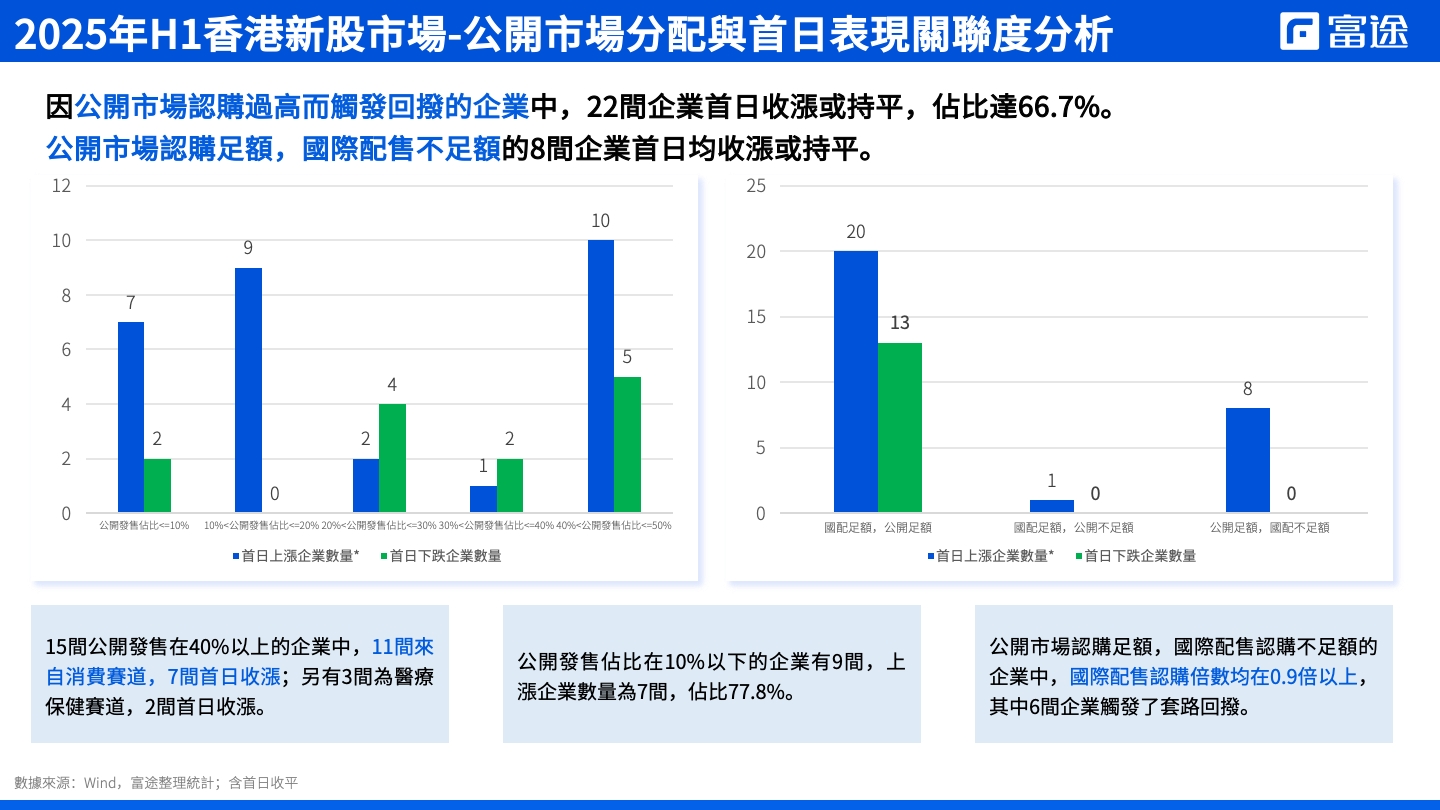
Core Insights - The report by Futu highlights a robust IPO market in Hong Kong for the first half of 2025, with Hong Kong reclaiming the top position globally in terms of IPO fundraising [1][2] - The report indicates a strong demand for consumer sector IPOs, with significant interest from both institutional and retail investors [2][5] Hong Kong IPO Market - In H1 2025, Futu acted as an underwriter for 19 Hong Kong IPOs, collaborating with notable projects such as Mixue Group and Blooko [1] - The total fundraising amount in the Hong Kong IPO market reached a significant level, with 54.8% of companies achieving over 100 times subscription rates [1][2] - The consumer sector led the IPO market, while healthcare, industrial, and information technology sectors are expected to gain traction in the latter half of the year [1][2] Subscription Trends - The report notes a high subscription sentiment in the Hong Kong IPO market, with 23 companies achieving over 100 times subscription and 5 companies exceeding 1,000 times [2] - The "money-making effect" from new stocks has created a positive feedback loop, with 30 companies seeing a high first-day closing price, a significant increase from 19 in the previous year [2][5] A+H Listings - Seven A-share companies listed in Hong Kong during H1 2025, contributing over HKD 77 billion, which accounted for 72.2% of total fundraising in the Hong Kong market [8] - There are over 50 A-share companies planning to pursue IPOs in Hong Kong, indicating a continuation of the A+H listing trend [8] US IPO Market - The number of Chinese concept stocks listed in the US increased to 40 in H1 2025, up from 25 in the previous year, although total fundraising decreased to USD 880 million [9] - The first-day performance of Chinese concept stocks improved, with only 32.5% of companies falling below their offering price, a decrease from 44% in the previous year [9] Futu's Market Position - Futu has provided IPO services to over 327 companies across various sectors, maintaining a leading position among Hong Kong tech brokers [10] - The platform's subscription amount accounted for over 20% of the market, with 40 companies achieving more than 40% of the market's subscription amount [10]

短线波动加大
Qi Huo Ri Bao· 2025-07-25 03:07
Group 1 - The recent increase in risk appetite has led to a strong stock market, which has put pressure on the bond market, raising questions about the sustainability of the current stock-bond switch and whether the "bond bull" trend has ended [1] - Since mid-July, the A-share market has shown significant strength, with the Shanghai Composite Index breaking through key levels of 3500 and 3600 points, and trading volume reaching 1.93 trillion yuan on July 22, the highest since March 7 [1] - Despite the stock market's performance, the bond market has not experienced panic selling, with the yield on 10-year government bonds only rising by 5.45 basis points in July, indicating a cautious market outlook on growth and inflation factors [1] Group 2 - The strong performance of the A-share market this year has been primarily driven by bank stocks and small-cap stocks, while cyclical sectors such as steel, coal, real estate, and consumer goods have lagged behind [2] - The "anti-involution" policy signals and the development of hydropower projects have boosted market expectations for economic fundamentals, but the sustainability of cyclical stock and commodity price increases remains uncertain due to challenges in capacity reduction policies and weak demand [2] - The economic fundamentals show a mixed picture, with external uncertainties and a need for stronger domestic demand, while monetary policy remains accommodative [3] Group 3 - Current price levels are low, with CPI and core CPI remaining subdued, and PPI showing an expanding year-on-year decline, which affects corporate revenue and consumer confidence [3] - The government is actively increasing leverage, but the willingness of the real economy to expand credit remains insufficient, leading to weak demand for credit from enterprises and households [3] - Although local government bond issuance has accelerated, it mainly addresses refinancing of hidden debts, with new bond issuance lagging behind historical averages, potentially delaying economic support [3] Group 4 - Overall, the market environment for the "bond bull" has not fundamentally changed, but short-term fluctuations in the bond market may increase due to low long-term interest rates and heightened attractiveness of the stock market [4]
好的面首都身怀绝技
猛兽派选股· 2025-07-24 18:24
Group 1 - The article suggests that the sectors of civil explosives, cement, and shield tunneling related to the Yajiang theme are unattractive, with a majority of players lacking the necessary qualities for investment [1] - The market is believed to be entering a second phase, with a reference to historical experience indicating that the starting point for this phase is in July [1] - Key industries discussed include innovative pharmaceuticals, upstream computing power (such as optical connections and PCBs), banking, consumption, and wind power, with cyclical basic industries expected to shine in the second phase [1] Group 2 - The article indicates that non-ferrous metals have shown significant recovery, which is seen as a characteristic of the bull market entering its second phase [1] - The innovative pharmaceutical sector is linked to the CXO model, which is also breaking into the second phase, indicating a broader expansion of this sector [1] - The article emphasizes the importance of selecting stocks that show strong volume and a significant breakthrough into new highs, suggesting that only those with exceptional performance should be considered for investment [1]

今年上半年新疆地区生产总值同比增长5.7%
Zhong Guo Xin Wen Wang· 2025-07-24 15:49
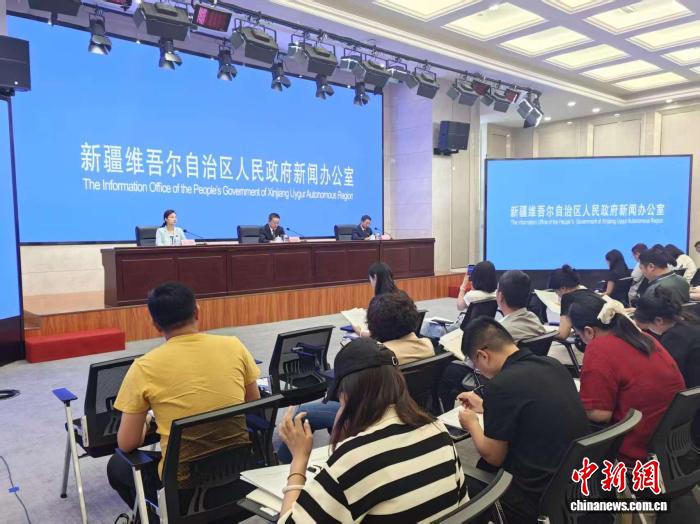
Economic Overview - In the first half of the year, Xinjiang's GDP reached 984.648 billion yuan, with a year-on-year growth of 5.7% at constant prices [1][2] Sector Performance - The primary industry added value was 64.043 billion yuan, growing by 5.2% [2] - The secondary industry added value was 387.614 billion yuan, with a growth of 5.9% [2] - The tertiary industry added value was 532.991 billion yuan, increasing by 5.5% [2] Agricultural and Industrial Output - The total output value of agriculture, forestry, animal husbandry, and fishery was 129.575 billion yuan, with a year-on-year increase of 5.6% [2] - The industrial added value above designated size grew by 7.4%, supported by key industries [2] Consumer Market Trends - The total retail sales of consumer goods reached 189.358 billion yuan, with a year-on-year growth of 7.5%, an increase of 0.8 percentage points compared to the first quarter [2] - The "old-for-new" policy showed significant effects, with retail sales of communication equipment, home appliances, furniture, and cultural office supplies increasing by 137.2%, 112.9%, 78%, and 72.8% respectively [2] - The retail sales of automobiles increased by 8.8%, with new energy vehicle sales surging by 47.9% [2] Economic Policy Impact - The macroeconomic policies have shown effectiveness, contributing to a stable and positive economic trend, demonstrating strong resilience and vitality [2]
[7月24日]指数估值数据(大盘继续涨,隐忧在哪里;自由现金流指数估值如何;指数日报更新)
银行螺丝钉· 2025-07-24 14:02
Market Overview - The A-share market has seen a continuous rise for five weeks, with a notable shift in the types of stocks driving the increase, moving from dividend stocks to speculative loss-making stocks recently [6][8]. - The overall market sentiment remains positive, with the growth in the pharmaceutical sector being particularly significant [3][10]. Stock Performance - Small and mid-cap stocks have outperformed large-cap stocks in the recent rally [2]. - Value stocks have slightly declined, with banks experiencing a 5-6% pullback after reaching overvalued levels [3][6]. - The recent surge in loss-making stocks is reminiscent of previous speculative trends, indicating a potential market peak [7][9]. Investment Strategy - The company maintains a focus on value stocks and high-performing companies, avoiding participation in speculative loss-making stocks [7][9]. - The market is expected to face some corrections, particularly among stocks with poor fundamentals, but the overall trend remains upward as long as corporate earnings continue to grow [11][12]. Free Cash Flow Index - A new index tracking free cash flow has been introduced, which selects stocks with high free cash flow rates, providing an alternative to traditional dividend indices [13][23]. - Free cash flow is defined as the cash available after necessary operational expenditures, which is crucial for assessing a company's financial health [20][21]. - The free cash flow index is seen as a valuable complement to dividend indices, particularly as it excludes financial sector stocks [28][33]. Market Sentiment and Future Outlook - The current market environment is characterized by a combination of valuation expansion and fundamental recovery, suggesting that the upward trend is likely to continue [10][11]. - Investors are advised to prepare for short-term volatility, but the long-term outlook remains positive as corporate profitability is expected to drive market growth [12][11].