
Qi Huo Ri Bao Wang

Search documents
期货衍生品成聚酯产业企业生存发展“必需品”
Qi Huo Ri Bao Wang· 2025-09-17 23:56
Core Viewpoint - The polyester industry is facing significant challenges due to price volatility across the supply chain, but the integration of futures and options is fundamentally changing the landscape by providing companies with tools to manage costs and stabilize profits [1][2][3] Group 1: Impact of Derivatives on Cost Management - Futures and options help companies lock in processing fees and control raw material costs, allowing them to focus on technology development and market expansion rather than engaging in price wars [1] - Companies can utilize hedging strategies, such as selling futures to secure prices and profits for inventory, which mitigates the risk of production losses when market prices decline [1][2] Group 2: Pricing Logic and Market Efficiency - The introduction of a basis pricing model, which combines futures prices with spot adjustments, has improved pricing efficiency in the polyester supply chain, reducing information asymmetry and enhancing price discovery [2] - This new pricing mechanism allows upstream and downstream companies to operate more efficiently, with better capacity utilization and reduced risks of overpaying for raw materials [2] Group 3: Risk Management and Industry Integration - The development of a comprehensive risk management framework through futures and options has led to a more integrated and collaborative industry structure, with tools available for managing risks from raw materials to finished products [2][3] - Leading companies are leveraging derivatives to enhance their operational efficiency and drive collaboration across the supply chain, thereby increasing the overall resilience of the industry [3] Group 4: Future Outlook - The reliance on derivatives is shifting from being an optional strategy to a necessity for stability and competitiveness in the polyester industry, indicating a move towards more stable and higher-quality growth [3]
美联储重启降息 人民币升值持续性如何?
Qi Huo Ri Bao Wang· 2025-09-17 23:52
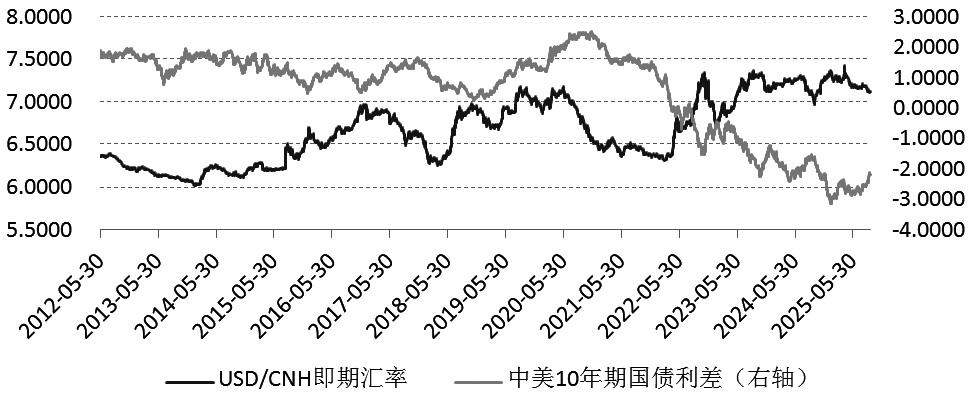
Group 1: Currency Exchange Trends - The RMB has appreciated against the USD since late August, with a 1.21% increase in August and a further 0.19% increase by September 16 [1] - The appreciation of the RMB is driven by multiple factors, including the Federal Reserve's interest rate cuts, reforms in cross-border investment and financing foreign exchange management, and increased foreign capital inflow into Chinese assets [1][9] - The RMB is expected to maintain its strength in the near future, although there are concerns about the pressure on exports due to the appreciation [1] Group 2: Federal Reserve's Interest Rate Cuts - The Federal Reserve's recent interest rate cuts have led to a weakening of the USD, with historical patterns indicating that such cuts typically follow rising unemployment rates [2] - As of September 15, the yield spread between US and Chinese 10-year government bonds has narrowed to 2.1864 percentage points, down from 3.1504 percentage points in January [2] - The current economic environment in the US is characterized by stagflation, with high inflation pressures complicating the Fed's monetary policy decisions [4][5] Group 3: Economic Indicators in the US - Despite signs of economic weakness, the US economy shows resilience, with retail sales increasing by 0.6% in August, marking the third consecutive month of exceeding expectations [4] - Inflation pressures are evident, particularly in goods prices, which rose by 0.5% in August, driven by tariffs and other factors [5] - The Fed's approach to interest rate adjustments may involve a combination of preventive and reactive measures based on inflation and unemployment trends [5] Group 4: Foreign Investment in China - Chinese assets are increasingly attractive to foreign investors, supported by favorable macroeconomic policies and high risk appetite in the A-share market [6] - Recent government initiatives aim to enhance coordination between fiscal and monetary policies, focusing on financial market operations and government bond management [6][7] - The Chinese government is also promoting reforms in cross-border investment and financing foreign exchange management to attract more foreign capital [9]

基本面的驱动效应有望增强
Qi Huo Ri Bao Wang· 2025-09-17 23:43
Economic Overview - In August, the national industrial added value increased by 5.2% year-on-year, with a slight month-on-month growth of 0.37%, supported by high growth in equipment manufacturing and high-tech manufacturing [1] - The total retail sales of consumer goods reached 39,668 billion yuan in August, growing by 3.4% year-on-year, while the growth rate of commodity retail decreased by 0.4 percentage points to 3.6% [1] - Fixed asset investment from January to August was 326,111 billion yuan, with a year-on-year growth of 0.5%, reflecting a decline in real estate development investment and a slight decrease in infrastructure and manufacturing investment [1] Foreign Trade - In August, exports grew by 4.4% year-on-year, down from 7.2% in the previous month, with strong performance in electromechanical products and ship exports [2] - High-tech products, integrated circuits, and ship exports contributed 4.1 percentage points to the overall export growth [2] Policy Measures - A comprehensive policy initiative was announced on September 16 to stimulate service consumption, including 19 specific measures aimed at enhancing supply and demand [3] - The initiative focuses on increasing the supply of high-quality services and reducing consumption barriers through fiscal incentives and innovative credit options [3] - The Ministry of Commerce has introduced over 30 policies to establish a "1+N" policy system for service consumption, with plans for further targeted documents to promote high-quality development in the accommodation sector and integration of railways and tourism [3] Real Estate and Fiscal Policy - Major cities like Beijing, Shanghai, and Shenzhen have implemented new policies to relax purchase and loan restrictions in the real estate sector, with more measures expected to stabilize the market [4] - The Ministry of Finance emphasized maintaining continuity and stability in fiscal policy while enhancing flexibility and foresight to support high-quality economic development [4] Market Outlook - The stock index has shown a fluctuating upward trend driven by valuation, with economic fundamentals and corporate earnings not significantly impacting the index [4] - Future improvements in economic fundamentals and A-share profitability are anticipated, supported by coordinated policy efforts and a low base effect from the previous year [4]
有利于资产价格上行和投资意愿回升
Qi Huo Ri Bao Wang· 2025-09-17 23:41
Group 1 - The Chinese government is implementing multiple policies to boost service consumption, emphasizing the importance of collaboration among various departments to enhance economic growth and improve living standards [1] - Weak demand is identified as a major issue affecting China's economic recovery, and releasing consumption demand is expected to promote economic growth, asset price increases, and investment willingness [1] - The overall performance of the economy remains stable, with the A-share market not experiencing unexpected impacts despite a hot stock market [1] Group 2 - The A-share market's optimistic sentiment persists despite a relatively mild economic recovery, similar to historical instances where stock indices rose during ROE downtrends [2] - Central fiscal policy is expected to play a crucial role in the coming years, with a shift in focus towards enhancing residents' income levels and promoting high-end manufacturing transformation [2] - The current economic data may not fully reflect the positive impacts of these policies, which are anticipated to materialize gradually over the next few years [2] Group 3 - Overseas liquidity easing is also beneficial for the A-share market, with expectations of multiple interest rate cuts by the Federal Reserve, which could positively influence global equity markets [3] - The potential for a significant rate cut by the Federal Reserve is seen as a "preventive rate cut," which may lead to a rapid rebound in U.S. inflation and positively affect global tech stock valuations [3] - Following the Fed's rate cut, it is anticipated that China's central bank may introduce new rate cuts and reserve requirement ratio reductions to alleviate domestic debt pressure [3]
资金动态20250918
Qi Huo Ri Bao Wang· 2025-09-17 23:32
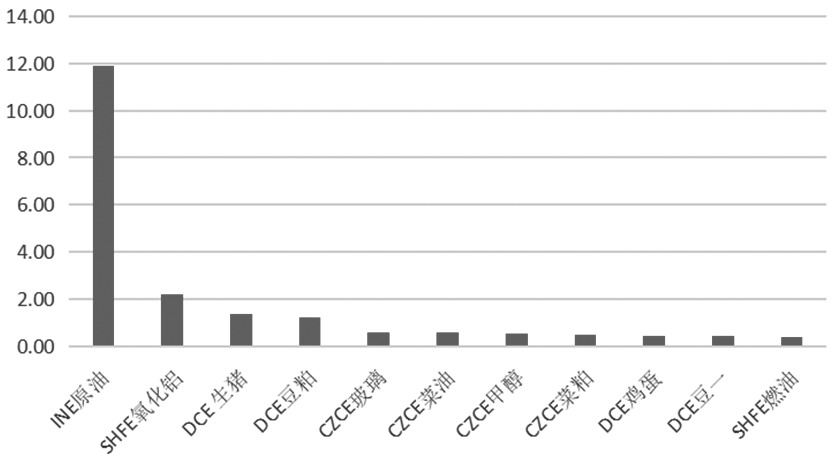
Core Insights - The main focus of the article is on the recent capital flow trends in commodity futures, highlighting significant inflows and outflows across various sectors and specific commodities [1]. Capital Inflows - The commodities with the highest capital inflows include crude oil (1.191 billion), aluminum oxide (218 million), live pigs (137 million), soybean meal (121 million), and glass (57 million) [1]. - The chemical and agricultural sectors are experiencing a net inflow of capital, with particular attention on crude oil, live pigs, soybean meal, and glass [1]. Capital Outflows - The commodities with the largest capital outflows are gold (933 million), copper (747 million), silver (525 million), aluminum (175 million), and nickel (119 million) [1]. - The financial sector, non-ferrous metals, and black metals are showing a net outflow, with a focus on the significant outflows from gold, copper, and silver [1]. Overall Market Trends - Overall, the commodity futures market is experiencing a slight net outflow, with notable outflows in the non-ferrous metals and black metal sectors [1]. - Attention is drawn to the reverse trends, such as the inflow into aluminum oxide and aluminum alloys, and the outflow from palm oil [1]. - The financial sector highlights the focus on the CSI 300 index futures and 10-year treasury futures [1].
金融工具成农民稳收增收“新农具”
Qi Huo Ri Bao Wang· 2025-09-17 20:24
Core Viewpoint - The article highlights the successful implementation of the "Silver Insurance + Futures" project in the agricultural sector, particularly focusing on the benefits it brings to the North Anshi Modern Agricultural Machinery Cooperative in stabilizing income and managing risks associated with crop production and sales [1][8]. Group 1: Project Implementation and Impact - The "Silver Insurance + Futures" project has expanded its coverage from 75,000 acres in 2023 to 100,000 acres in 2024, with a total premium of 4.6512 million yuan, of which 50% is subsidized by the Dalian Commodity Exchange [4]. - The project has effectively guaranteed farmers' operating income, with a total compensation of 4.5188 million yuan and over 13,800 tons of orders acquired [4][7]. - The cooperative has successfully utilized the project to secure loans, with 3.7 million acres insured and loans amounting to 3.4 million yuan for one cooperative and 9.2 million yuan for another, exceeding the maximum credit limit of 2 million yuan for large agricultural operators [4][8]. Group 2: Risk Management and Financial Stability - The cooperative faced significant challenges in 2013 and 2019 due to adverse weather conditions, leading to substantial losses, which underscored the importance of risk management tools like the "Silver Insurance + Futures" project [2][3]. - The project has provided a dual guarantee of income through insurance and forward purchase orders, enhancing the security of bank loans and ensuring a stable supply of grain for purchasing enterprises [8][9]. - The cooperative's participation in the project has allowed it to mitigate risks associated with fluctuating market prices and adverse weather, ensuring a basic level of income even in challenging years [7][9]. Group 3: Future Prospects and Expansion - The cooperative has expanded its planting area to over 100,000 acres and plans to continue participating in the "Silver Insurance + Futures" project, which has now included corn as an insurable crop [9]. - The Dalian Commodity Exchange has extended the secondary pricing period from 2 months to 6 months to better align with farmers' selling habits and market volatility [8][9]. - The cooperative's leader expresses optimism about the future, highlighting the increasing reliance on futures and insurance for agricultural development [9].
河南:延伸期货产业链
Qi Huo Ri Bao Wang· 2025-09-17 20:24
《实施方案》提出,打造现代金融体系。积极引进境内外各类金融机构、金融资本,丰富河南省金融业 态和金融产业链。支持郑州商品交易所丰富区域特色期货品种,发展"保险+期货",延伸期货产业链。 9月17日,河南省人民政府办公厅印发《河南省金融服务"两高四着力"实施方案》(下称《实施方 案》)。《实施方案》提出,未来3至5年,实现金融要素配置与"两高四着力"有机融合,金融"五篇大 文章"提质增效,直接融资占比明显提升,更多长期资本、耐心资本集聚发展,金融机构竞争力和影响 力明显增强,金融风险大幅收敛,现代金融体系更加完善、金融服务实体经济更加高效、金融生态环境 更加优良的金融业发展新格局基本形成。 (文章来源:期货日报网) ...
中国人民银行:加大消费领域信贷投放
Qi Huo Ri Bao Wang· 2025-09-17 20:17
Core Viewpoint - The Chinese government is implementing policies to expand service consumption and boost domestic demand through financial support measures [1] Group 1: Financial Support Policies - The People's Bank of China has introduced structural monetary policy tools, including loans for service consumption and elderly care, as well as loans for technological innovation and transformation [1] - Financial institutions are being guided to innovate products and services while increasing credit allocation in the consumption sector [1] - The government emphasizes the importance of policy synergy and is working to broaden financing channels for financial institutions to enhance funding capabilities in the consumption sector [1]
前8个月证券交易印花税同比增长81.7%
Qi Huo Ri Bao Wang· 2025-09-17 20:17
Core Insights - The Ministry of Finance reported the fiscal revenue and expenditure situation for January to August 2025, indicating a slight growth in public budget revenue [1] Revenue Breakdown - Total national general public budget revenue reached 148,198 billion yuan, reflecting a year-on-year increase of 0.3% [1] - Tax revenue amounted to 121,085 billion yuan, showing a marginal increase of 0.02% year-on-year [1] - Non-tax revenue was 27,113 billion yuan, which represents a year-on-year growth of 1.5% [1] Central vs Local Revenue - Central general public budget revenue was 64,268 billion yuan, experiencing a year-on-year decline of 1.7% [1] - Local general public budget revenue reached 83,930 billion yuan, marking a year-on-year increase of 1.8% [1] Key Tax Revenue Items - Stamp duty revenue totaled 2,844 billion yuan, with a significant year-on-year increase of 27.4% [1] - Specifically, securities transaction stamp duty was 1,187 billion yuan, reflecting a remarkable year-on-year growth of 81.7% [1]