Qi Huo Ri Bao Wang

Search documents
国办印发《关于进一步促进民间投资发展的若干措施》:引导民间资本有序参与低空经济等领域建设
Qi Huo Ri Bao Wang· 2025-11-10 10:41
Group 1 - The State Council has issued measures to stimulate private investment and promote its development, outlining 13 targeted policy initiatives [1] - The measures encourage private capital participation in key sectors such as railways and nuclear power, specifying shareholding ratios and requirements [1] - Local governments are urged to involve private capital in smaller, profitable urban infrastructure projects [1] Group 2 - The measures aim to protect the legal rights of private enterprises in areas like electricity grid operation and oil and gas pipeline usage [2] - Support is provided for private enterprises to establish major pilot platforms and receive market-oriented trial services from state-owned enterprises and research institutions [2] - The initiative includes a push for digital empowerment of small and medium-sized enterprises (SMEs) through comprehensive digital platforms [2] Group 3 - Increased support for eligible private investment projects through central budget investments and new policy financial tools is emphasized [2] - Financial institutions are encouraged to set annual service goals for private enterprises to meet their reasonable credit needs [2] - The measures call for enhanced service, guidance, and management of private investment by local governments and relevant departments [2]
期权工具助力鸡蛋企业管理价格风险
Qi Huo Ri Bao Wang· 2025-11-10 01:05
Core Viewpoint - The domestic egg market is experiencing significant price volatility around the 2025 Spring Festival, with a pattern of "temporary stabilization before the festival and continuous decline after" impacting companies like Anhui Yuemu Agricultural Development Co., Ltd. The company successfully hedged price risks using options, providing a practical model for similar enterprises [2][3][4]. Market Background and Company Pain Points - After the 2025 Spring Festival, egg demand enters a traditional off-season, with household reserves from the festival expected to meet 15-20 days of demand, leading to a consumption gap [3]. - Supply-side pressures are exacerbated by delayed culling of old hens and high inventory levels, resulting in a significant imbalance in the egg market [3]. - The average daily circulation of eggs in major production areas increased by 8-10% compared to January, contributing to market pressure [3]. - The price of eggs is influenced by multiple factors, including the cycle of laying hens, feed costs, seasonal consumption, and disease, leading to significant volatility [4]. Core Operational Pain Points - Price volatility risks are squeezing profit margins, particularly during the post-festival demand slump in February 2025 [4]. - The company's sales model primarily relies on "spot retail" with a "cost-plus pricing" strategy, where feed costs account for 70% of total breeding costs. Rising feed prices could create a "scissors gap" between rigid costs and selling prices, severely impacting profits [5]. - Previous hedging attempts, such as adjusting inventory and futures hedging, have limitations due to the lag in inventory adjustments and high capital requirements for margin [6]. Options Strategy Development - To address the need for hedging against price declines while retaining upside potential, the company collaborated with Everbright Futures to develop a "buy put option" strategy [7]. Strategy Design Logic - The selected tool, put options, offers a non-linear profit and loss structure that aligns with the company's needs, allowing for profit from price declines while preserving gains from price increases [8]. - The strike price for the options was set at 3200 yuan/500kg, above the market forecast for February, ensuring coverage of potential losses [9]. - The options have a lower premium cost compared to at-the-money options, optimizing cost control [9]. Execution of the Strategy - On February 11, the company purchased 100 lots of put options at a premium of 62 yuan/500kg, matching its production scale while minimizing cash flow pressure [12]. - The strategy included dynamic tracking services from Everbright Futures, providing market insights and analysis to support decision-making [12]. Strategy Execution Results - In February 2025, egg prices fell from 3450 yuan/500kg at the end of January to 2950 yuan/500kg by the end of February, with the futures contract reaching the strike price multiple times [13]. - The company realized a net profit of 49,000 yuan after deducting the premium, effectively hedging against the decline in egg prices [13]. Comparative Analysis and Insights - A comparison of three hedging methods highlighted the strengths and weaknesses of each approach, emphasizing the suitability of put options for the company's specific risk profile [14]. - The insights suggest that matching tools to needs is crucial, with put options recommended for scenarios with a high probability of price declines [15]. - The strategy's design ensures that the strike price covers the breakeven point and the expiration date aligns with the risk period, maintaining continuity in hedging [16]. - Smaller enterprises can leverage futures companies for market analysis and professional guidance, reducing barriers to using derivatives [17]. Summary - The company effectively used a put option strategy to hedge against price declines in the egg market, resulting in a net profit that mitigated some of the losses from the spot market. This approach aligns with the needs of small to medium-sized egg enterprises for manageable risk, flexible returns, and low capital requirements, indicating a growing maturity in the egg options market [18].


2025实体企业衍生品风险管理创新研讨会在京举行
Qi Huo Ri Bao Wang· 2025-11-10 01:01
Core Insights - The seminar held on November 7 in Beijing focused on "Integrating Innovation and Moving Forward" to enhance risk management strategies for enterprises [1][2] - The strategic value of the derivatives market is emphasized as a crucial tool for risk management amid increasing uncertainties in the global supply chain and market volatility [2][4] Group 1: Seminar Objectives and Themes - The seminar aimed to foster deep cooperation and collaborative development in risk management among various stakeholders in the industry [1] - The theme "Integration" includes deep integration between industry and finance, collaboration between on-exchange and off-exchange markets, and the intersection of technology and risk management tools [3] - "Innovation" is seen as a key response to contemporary challenges, involving product upgrades, service model transformations, and talent development [3] Group 2: Market Trends and Developments - The derivatives market in the Asia-Pacific region is experiencing strong growth, with China's derivatives market being a significant highlight [4] - Over the past 20 years, China's futures and options markets have seen substantial growth in product variety and trader numbers, aided by regulatory advancements [4][5] - The introduction of new laws and regulations aims to align China's derivatives market with international standards, enhancing its attractiveness to global investors [4] Group 3: Risk Management Practices - The seminar discussed the shift in derivatives risk management from a traditional "cost center" approach to a modern "strategic tool" perspective [6] - Participants highlighted the importance of using derivatives to manage price volatility and stabilize profits, particularly in sectors like lithium hydroxide and cobalt [7] - Companies are encouraged to adopt flexible hedging strategies and utilize derivatives to navigate complex market conditions, especially in agricultural imports [8] Group 4: Regulatory and Compliance Aspects - State-owned enterprises are advised to adhere strictly to internal control and financial processing norms in their hedging activities to ensure compliance and risk management [9] - The CME Group has established a regulatory outreach team to enhance market participants' understanding of trading rules and maintain market order [9]
本周热点前瞻20251110
Qi Huo Ri Bao Wang· 2025-11-10 00:58
Group 1: Financial Data Release - In November, the People's Bank of China is expected to release financial statistics for October, including social financing scale, M2, and new RMB loans, with anticipated figures of 16,500 million yuan for social financing and 4,700 million yuan for new loans, both lower than previous values [1] - The M2 balance is projected to grow by 8.0% year-on-year, a decrease from the previous growth rate of 8.4% [1] - A decline in these financial metrics may slightly suppress the rise of commodity futures and stock index futures, while supporting the increase in government bond futures [1] Group 2: Oil Market Reports - OPEC is set to release its monthly oil market report, which will be closely monitored for its impact on oil and related commodity futures prices [2] - The EIA will announce the weekly change in U.S. crude oil inventories, with a previous increase of 5.202 million barrels; further increases may hinder the rise in oil and related commodity futures prices [4] Group 3: U.S. Economic Indicators - The U.S. Labor Department will publish the October CPI, with expectations of a year-on-year increase of 3.0%, consistent with the previous value [3] - The core CPI is also expected to rise by 3.0% year-on-year, with a month-on-month increase of 0.2% [3] - If the U.S. government continues its shutdown, the release of the CPI data may be delayed [3] Group 4: Domestic Economic Performance - A press conference will be held to discuss the national economic performance for October, with expectations of a 5.5% year-on-year increase in industrial value added, down from 6.5% [5] - Retail sales are projected to grow by 2.8% year-on-year, slightly lower than the previous 3.0% [5] - The urban fixed asset investment for January to October is expected to decline by 0.8%, compared to a 0.5% drop for January to September [5]
资金动态20251110
Qi Huo Ri Bao Wang· 2025-11-10 00:56
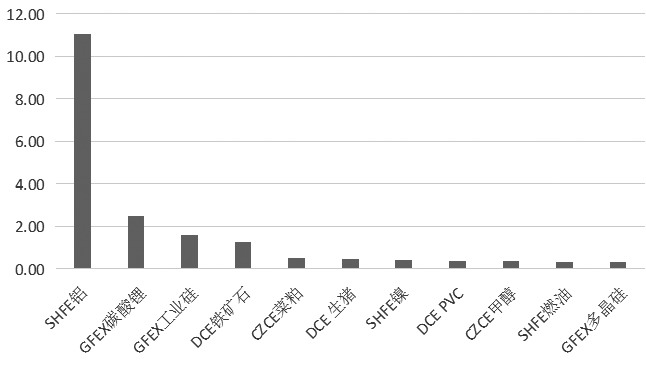
Group 1 - On November 7, the main inflows in commodity futures (main contracts) were observed in aluminum, lithium carbonate, industrial silicon, iron ore, and rapeseed meal, with inflows of 1.105 billion, 0.250 billion, 0.157 billion, 0.128 billion, and 0.052 billion respectively [1] - The main outflows were in coking coal, copper, rebar, gold, and crude oil, with outflows of 0.352 billion, 0.172 billion, 0.115 billion, 0.114 billion, and 0.096 billion respectively [1] - The overall analysis indicates a slight inflow of funds into the commodity futures market on November 7, with the non-ferrous metals sector showing inflows, particularly in aluminum, lithium carbonate, industrial silicon, and nickel, while copper and gold experienced outflows [1] Group 2 - The chemical, agricultural, and black metal sectors showed outflows, with significant outflows in coking coal, rebar, crude oil, and eggs, while iron ore, rapeseed meal, and methanol saw inflows [1] - The financial sector highlights the focus on CSI 1000 index futures and 30-year treasury futures [1]
在行情波动中精准捕捉交易机会
Qi Huo Ri Bao Wang· 2025-11-10 00:55
Core Insights - Liu Lin achieved the fifth place in the lightweight group of the 19th National Futures (Options) Live Trading Competition, showcasing a unique trading style and robust risk management [1] Group 1: Trading Strategy - Liu Lin focuses on popular trading products such as polysilicon, CSI 1000, and gold, believing that identifying leading products and trends increases the probability of profit [2] - His trading strategy is primarily based on market volatility, emphasizing that as long as there is market fluctuation, there is room for options trading [2] - Liu Lin employs an intraday short-term strategy, primarily engaging in buying positions and avoiding overnight trades, aligning his strategy with his personal trading style [2][3] Group 2: Risk Management - Liu Lin's trading career began with ETF options, and he transitioned to commodity options after experiencing a lack of market activity, accumulating about one year of trading experience [3] - He emphasizes the importance of strict position management and timely stop-loss measures to control drawdowns, which he views as essential for long-term success [3] - His trading philosophy includes a short holding period and profiting from volatility, with a strong focus on the necessity of stop-loss strategies to prevent significant losses [3] Group 3: Future Outlook - Liu Lin views his competition results as a new starting point and plans to further optimize his intraday short-term strategy while monitoring potential market opportunities from 2025 to 2026 [4] - He highlights the significance of policy changes and market sentiment fluctuations as key factors that will create more trading opportunities [4] - Liu Lin advises traders to experiment with various strategies to find their personal trading style and to prioritize profit-taking to build trading confidence [4]
在不确定的市场找到属于自己的“锚”
Qi Huo Ri Bao Wang· 2025-11-10 00:55
Core Insights - The article highlights the trading strategies and philosophies of Li Chengjie, who won the second place in the asset management product group of the 19th National Futures (Options) Live Trading Competition, emphasizing risk control and trading rhythm [1][2]. Trading Philosophy - Li Chengjie's trading style is characterized by a combination of trend-following and swing trading, where trends provide direction and swings offer space for trading [1]. - He emphasizes the importance of time and patience over merely identifying market direction, especially in a less trend-driven market expected in 2025 [1]. Trading Strategy - The core strategy is "defense first, then offense," with a focus on strict adherence to stop-loss levels, position limits, and liquidity requirements [2]. - Li Chengjie employs a three-part position management approach: 30% for testing, 50% for holding, and 20% for defense, ensuring a sense of security during market fluctuations [2]. Emotional Control - Emotional control is deemed more challenging than technical skill in trading, with practices such as mandatory breaks after significant gains or losses and daily physical exercise to maintain mental clarity [3]. - The recent award is viewed as a new starting point, with plans to systematize successful strategies into quantitative models to minimize emotional interference in trading [3]. Market Outlook - For the fourth quarter of 2025 to 2026, the market outlook is cautiously optimistic, with a focus on precious metals, energy, and agricultural products while maintaining a defensive mindset [3].
依托河南临港产业规划 打造大宗商品交易平台
Qi Huo Ri Bao Wang· 2025-11-10 00:53
Core Viewpoint - The establishment of a bulk commodity trading platform is crucial for enhancing port service capabilities and driving the development of the port industry in Henan Province, aligning with national strategies for transportation and market integration [1][3]. Group 1: Development Planning - The Henan Provincial Government has released the "Henan Provincial Port Industry Development Plan (2025-2035)", which emphasizes the construction of a modern, high-quality comprehensive transportation network [1]. - The plan proposes a "1+6+N" development system for the port industry, focusing on logistics as the leading industry and six categories of manufacturing, including advanced equipment and new energy vehicles [2]. Group 2: Importance of Bulk Commodity Trading Platform - A multi-layered bulk commodity market system is essential for stabilizing the supply chain, reducing logistics, transaction, and financing costs, which are critical for enhancing the competitiveness of the manufacturing sector [2]. - The plan includes specific measures for building a trading platform that integrates trading, information, storage, and logistics services, aiming to create specialized trading markets for various bulk commodities [2]. Group 3: Economic and Industrial Impact - The trading platform is expected to facilitate large-scale distribution of bulk commodities at ports, thereby boosting related industries such as loading, storage, and logistics [3]. - By integrating production, circulation, trade, and finance, the platform will enhance resource allocation efficiency and help local enterprises reduce costs and increase efficiency [3]. Group 4: Regional Logistics and Infrastructure - The plan outlines a hierarchical port structure and a comprehensive logistics network to ensure coordinated development across the province [4][5]. - The use of advanced technologies like blockchain and IoT in the trading platform will transform traditional logistics into a smart supply chain hub, promoting high-end and intelligent development of the port industry [5]. Group 5: Case Studies and Examples - The example of Zhoukou and Luohe illustrates how the trading platform can facilitate large-scale procurement of agricultural products and improve logistics efficiency through direct waterway connections [6]. - The success of Zhejiang and Shandong in building integrated trading platforms serves as a model for Henan to enhance its port capabilities and market influence [11]. Group 6: Future Outlook - The establishment of a comprehensive trading platform is a key task for Henan in the near future, with plans to introduce diverse trading varieties to strengthen regional economic influence [11]. - The opening of new ports and the development of a multi-modal transport network will significantly reduce logistics costs and enhance the competitiveness of the region's bulk commodity market [12].
前10个月我国进出口增长3.6%
Qi Huo Ri Bao Wang· 2025-11-10 00:51
Core Insights - China's goods trade maintained steady growth in the first ten months of 2025, with a total import and export value of 37.31 trillion yuan, an increase of 3.6% year-on-year [1] Trade Performance - Exports reached 22.12 trillion yuan, growing by 6.2% year-on-year [1] - Imports totaled 15.19 trillion yuan, remaining stable compared to the same period last year [1] - In October, the total value of goods trade was 3.7 trillion yuan, a slight increase of 0.1% [1] - October exports were 2.17 trillion yuan, down by 0.8%, while imports were 1.53 trillion yuan, up by 1.4%, marking five consecutive months of growth [1] Commodity Import Trends - Major commodity import prices declined: - Iron ore imports were 1.029 billion tons, up by 0.7%, with an average price drop of 10.7% [1] - Crude oil imports reached 471 million tons, increasing by 3.1%, with an average price drop of 12.1% [1] - Coal imports decreased by 11% to 388 million tons, with an average price drop of 24.5% [1] - Natural gas imports fell by 6.2% to 103 million tons, with an average price drop of 8.8% [1] - Soybean imports increased by 6.4% to 95.682 million tons, with an average price drop of 11.1% [1] - Refined oil imports decreased by 16.3% to 34.193 million tons, with an average price drop of 4.6% [1] - Primary form plastic imports fell by 7.6% to 22.12 million tons, with an average price drop of 0.6% [1] - Copper and copper products imports decreased by 3.1% to 4.456 million tons, with an average price increase of 5.7% [1]
进博会解锁“从农场到餐桌”的健康密码
Qi Huo Ri Bao Wang· 2025-11-09 16:36
Core Insights - The eighth China International Import Expo (CIIE) took place from November 5 to 10, showcasing over 2,000 enterprises, marking the largest scale in its history [1] - The theme of this year's expo was "From Global Farms to Chinese Tables," highlighting the journey of food across borders [1] - The event coincided with China's "Weight Management Year," reflecting a shift towards healthier and lighter food options among Chinese consumers [1] Company Highlights - Yihai Kerry Arawana Holdings, a long-time participant, showcased its "Golden Dragon Fish Fengyi Hall" functional products, emphasizing health and safety in food [1][2] - The company introduced plant sterol protein milk and glycerol diester oil, targeting health-conscious consumers and aligning with national health initiatives [2] - Louis Dreyfus Company presented its "Soyadoc" specialty feed protein brand, focusing on enhancing animal nutrition and health through innovative products [3] - Cargill displayed a range of innovative products, including new frying oils and functional ingredients, to meet the diverse health needs of Chinese consumers [4]