
Qi Huo Ri Bao

Search documents
中信期货黑龙江分公司两产业帮扶项目圆满结项 助力乡村振兴与县域经济高质量发展
Qi Huo Ri Bao· 2025-09-29 15:22
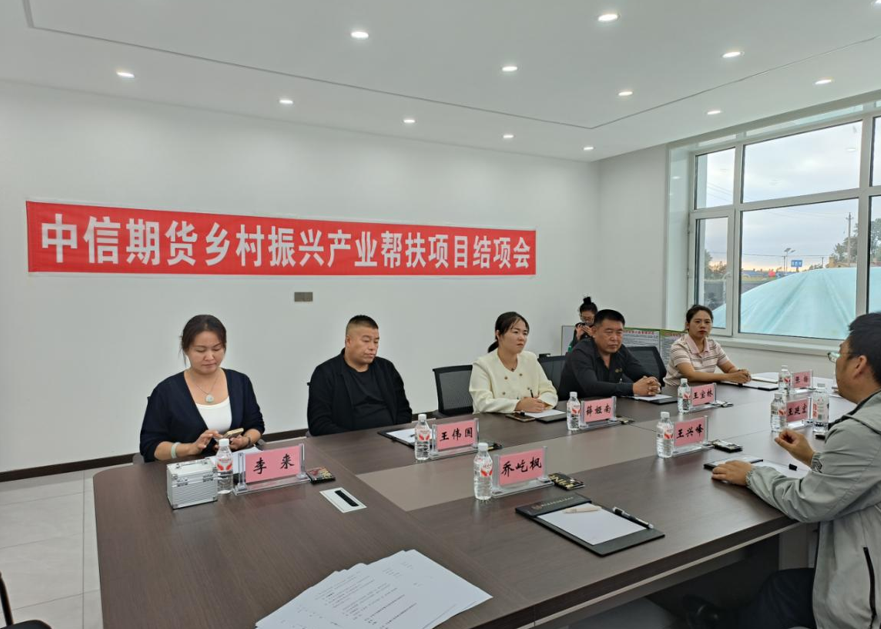
Core Insights - The successful implementation of two industrial assistance projects by CITIC Futures in Heilongjiang province demonstrates the company's commitment to supporting national rural revitalization strategies and enhancing county-level economic development [1][5]. Group 1: Project Details - The corn processing equipment construction project in Huachuan County addresses local issues of low added value in the corn industry by introducing automated processing equipment, creating a full-service chain from planting to processing and sales [3]. - The project is expected to significantly increase the daily processing capacity of the Hui Shui Grain Processing Plant and enable the development of upgraded deep-processing products, covering 4,000 acres of farmland through a contract farming model, leading to an increase in farmers' income by over 150 yuan per acre [3]. - The sales revenue of the enterprise is projected to exceed 30 million yuan annually, establishing a diversified industrial structure characterized by standardized planting, refined processing, and diversified sales [3]. Group 2: Infrastructure Development - The solar streetlight installation project in Tuanjie Village, Tongyuan County, focuses on improving rural infrastructure by installing 120 solar streetlights along 5.2 kilometers of main roads, addressing safety concerns for villagers during nighttime travel and autumn harvest transportation [3]. - The project features an intelligent control system that adjusts brightness based on light intensity, saving over 30,000 kWh of electricity annually, reflecting a commitment to green and low-carbon development [3]. - The completion of the streetlight project not only enhances living conditions but also stimulates local economic activity, improving nighttime transportation efficiency for agricultural products and laying the groundwork for rural tourism development [3][5]. Group 3: Future Plans - CITIC Futures plans to continue leveraging its expertise in futures trading to deepen business models such as "insurance + futures" and "orders + futures," focusing on industrial upgrades and increasing farmers' income [5].

期债 四季度有望先抑后扬
Qi Huo Ri Bao· 2025-09-29 09:40
Group 1 - In the third quarter, the bond market experienced fluctuations and a downward trend due to multiple factors including "anti-involution" trading, a rebound in risk appetite, and new regulations on fund redemption fees [1] - In July, signals of "anti-involution" were released, leading to rising inflation and expectations for incremental policies on the demand side, which put pressure on the bond market while commodities and stocks rose [1] - By August, "anti-involution" trading cooled down, and while the commodity market saw fluctuations, the stock market continued to rise, causing government bonds to decline further [1] Group 2 - In the fourth quarter, the remaining quota for local special bonds and government bonds is around 2 trillion yuan, indicating a significant reduction in supply pressure compared to the third quarter [2] - The potential incremental policy for the fourth quarter includes 500 billion yuan in policy financial instruments, focusing on supporting emerging industries and infrastructure [2] - The overall monetary policy remains moderately loose, with a focus on structural monetary policy to support key economic areas [2] Group 3 - The capital market in the third quarter was primarily driven by macro expectations, while the bond market's response to fundamentals was muted, following stock market fluctuations [3] - In October, favorable policies may continue to drive stock market gains, while the bond market may experience weak fluctuations [3] - After adjustments in the third quarter, bond market valuations have entered a reasonable range, improving the cost-performance ratio for allocations [3]
纯碱基本面偏弱
Qi Huo Ri Bao· 2025-09-29 07:05
Core Viewpoint - The cost of soda ash fuel has been rising since September, leading to a slight price increase; however, most companies continue to operate at a loss [1] Supply Side - It is expected that the overall production of soda ash will remain high in October, with supply issues being a significant constraint on price stability [1] Demand Side - Short-term changes in downstream demand are minimal, with users actively stocking up before the holiday, resulting in increased raw material inventory [1] - As the National Day holiday approaches, downstream activities are likely to focus on inventory consumption, which may lead to accumulation of soda ash inventories among companies [1] Market Outlook - The fundamentals of the soda ash market appear weak, with high supply pressure and a lack of upward price drivers in the spot market; low downstream profits may lead to potential negative feedback effects in the future [1]
白银创2010年以来新高 后市还有哪些投资机会?
Qi Huo Ri Bao· 2025-09-29 03:04
Core Viewpoint - The international silver price has surged, reaching a new high since 2010, driven by macroeconomic factors, strong industrial demand, and increased investment interest in silver assets [1][2][3]. Group 1: Price Movement - On September 26, the London spot silver price broke through $46 per ounce, peaking at $46.62, marking a 30% increase over the past six months and a 59% rise year-to-date, outperforming most commodities [1]. - The price of silver has been significantly influenced by the Federal Reserve's anticipated interest rate cuts, which enhance the appeal of dollar-denominated silver [2][4]. Group 2: Supply and Demand Dynamics - Industrial demand for silver remains robust, particularly in sectors like photovoltaics, electric grid upgrades, and automotive electronics, despite ongoing efforts to reduce silver usage in photovoltaic cells [3]. - The silver market is experiencing a persistent supply gap, with strong industrial demand supporting price increases [2][3]. Group 3: Investment Trends - Silver ETFs have seen substantial inflows, with over 95 million ounces net inflow in the first half of the year, surpassing the total for the previous year, indicating a revival in investment demand [3]. - The Indian market has shown increased investment buying and inventory replenishment, contributing to the upward pressure on silver prices [3]. Group 4: Future Outlook - Short-term silver prices are expected to remain influenced by macroeconomic conditions and gold price movements, with potential for further increases if the Fed maintains a dovish stance [4][5]. - The silver market is projected to remain in a supply-demand deficit, although the gap may decrease from 2024's high levels [4].
行业连续8周去库 “锂”面有啥变化?
Qi Huo Ri Bao· 2025-09-29 00:44
Core Viewpoint - The lithium carbonate industry has been experiencing a continuous destocking trend for eight weeks since August, driven by stronger demand growth compared to supply [1][2]. Demand Side Summary - In August, the production of lithium iron phosphate reached 316,000 tons, an increase of 9% month-on-month; battery production was 160 GWh, up 11%; and energy storage battery production was 50 GWh, up 13% [1]. - Cumulatively, demand data from January to August showed a year-on-year growth rate higher than the same period last year [1]. - The traditional peak demand season in September and October is expected to maintain positive month-on-month growth, with demand growth exceeding market expectations [1]. Supply Side Summary - Following the suspension of the Jiangxiawo project by CATL on August 9, domestic lithium carbonate production from the mica source decreased significantly from a peak of 5,000 tons per week to 2,500 tons, but has since rebounded to 2,800 tons after the resumption of Yichun Silver Lithium [2]. - The lithium spodumene source's weekly production increased from 9,000 tons in July to 13,000 tons, compensating for the reduction from the mica source and resulting in a total weekly supply exceeding 20,000 tons, a historical high [2]. - The inventory structure in the lithium carbonate industry is improving, with upstream inventory decreasing and downstream inventory increasing. Upstream smelter inventory fell from 51,000 tons to 33,000 tons (a 35% decrease), while downstream inventory rose from 48,000 tons to 61,000 tons (a 27% increase) [2]. Market Dynamics - The purchasing willingness of material manufacturers has increased due to sustained demand, with pre-holiday stocking driving procurement efforts. The inventory cycle for downstream material manufacturers has slightly increased from under 14 days to 15-16 days [3]. - As of September 26, lithium carbonate futures prices remained stable around 73,000 yuan per ton, with a slight decrease of 0.95% [3]. - Analysts suggest that while the destocking trend continues, the overall inventory reduction is limited due to the balance between demand improvement and supply increase [3]. Future Outlook - Attention should be paid to the sustainability of demand after the peak season in September and October. If demand weakens, the industry may shift from destocking to restocking, potentially leading to a downward adjustment in lithium carbonate futures prices [3]. - The upcoming October may see supply disturbances as mining companies enter the certification process, which could lead to a return to a more relaxed supply outlook, putting pressure on lithium carbonate prices [3].
行业连续8周去库,“锂”面有啥变化?
Qi Huo Ri Bao· 2025-09-28 23:36
供应端,自宁德时代(300750)枧下窝项目8月9日宣布停产以来,国内碳酸锂云母端来源产量明显走 弱,从高峰时期周产5000吨下降至2500吨,但后续随着宜春银锂检修完毕复产,周产回升至2800吨水 平。相关数据显示,枧下窝项目停产后,锂云母端的碳酸锂月度产量下降约9000吨。"这一变化,符合 市场预期,但锂辉石端带来的增量,使得供应端的总量不减反增。"据余烁介绍,当前,锂辉石端的碳 酸锂周度产量,已从7月份的9000吨升至13000吨,这不仅弥补了锂云母端的减量,还带来额外增量。在 这一趋势下,供应端的周度总产量也突破2万吨,创历史新高。 自8月份以来,碳酸锂行业已连续8周呈现去库态势。数据显示,9月26日当周碳酸锂的周度库存为13.68 万吨,较8月7日当周的14.24万吨,下降4%。 创元期货分析师余烁向期货日报记者表示,碳酸锂行业呈现连续去库态势,主要是因为在当前供需"双 旺"的市场格局下,需求端的增速更快。当前的去库态势,只是阶段性回调,并非行业回暖的信号。 需求端,余烁表示,今年8月份需求端各数据环比走强明显。其中,磷酸铁锂产量为31.6万吨,环比增 加9%;电池产量为160GWh,环比增加11% ...


白糖期货波动加大 关注系列期权参与机会
Qi Huo Ri Bao· 2025-09-28 23:29
Group 1 - The core viewpoint of the articles highlights the impact of Brazil's sugar production data on sugar futures prices, leading to increased volatility and potential investment strategies using sugar options [1][6] - Sugar series options are the first short-term commodity options in China, with a shorter duration of approximately 2.5 months compared to conventional options, allowing investors to realize strategies and returns in a shorter trading window [2] - The cost advantage of sugar series options is significant, as their premiums are generally lower due to reduced time value, making them cost-effective tools for risk management and investment, especially for short-term hedging needs [2][5] Group 2 - Sugar series options exhibit a higher Theta value, indicating faster time decay, which provides differentiated opportunities for investors; sellers can benefit from quicker time value gains, while buyers may achieve better returns during rapid market fluctuations [3] - The implied volatility curve of sugar series options is typically steeper due to the short duration, reflecting market sentiment and risk events more rapidly, which can enhance opportunities for volatility trading and various strategies [4] - Sugar series options are particularly suitable for capturing event-driven market movements and managing short-term price volatility risks, making them ideal tools for efficient risk management in rapidly changing markets [5] Group 3 - Brazil's sugar production data shows an increase in sugar output and cane crushing, but concerns remain about the sustainability of this growth due to economic factors favoring ethanol production over sugar [6] - Investors can consider strategies such as buying call options at a strike price of 5700 yuan/ton to capture potential price increases while minimizing margin requirements, or purchasing put options at 5300 yuan/ton to protect long positions [7] - Current sugar volatility is at a medium level, and if volatility decreases, there may be potential losses on call options, indicating the need for careful consideration of volatility when making investment decisions [7]
“银十”可期 甲醇中长线可布局多单
Qi Huo Ri Bao· 2025-09-28 23:29
Group 1 - The core viewpoint indicates that methanol futures have rebounded from low levels, but high port inventories continue to suppress prices in the short term [1] - Domestic methanol prices have slightly decreased due to weak port market conditions, while coal prices have rebounded, narrowing the profit margin for coal-based methanol to around 400 yuan/ton, although this remains historically high [1] - The total maintenance scale for methanol is approximately 9.5 million tons per year, with non-integrated facility maintenance amounting to about 7 million tons per year after excluding synchronized maintenance capacities [1] Group 2 - In Iran, the Kimiya methanol facility is operating at reduced capacity due to technical issues, while other facilities are functioning normally, resulting in a daily production of 35,000 tons, which is still sufficient to meet export demands to China [1] - Speculation about potential early gas supply restrictions in Iran has arisen due to maintenance issues at the Kimiya facility, which could marginally reduce methanol imports to China [1] - International methanol plant operating rates have begun to decline, but external market inventories remain high, and terminal demand continues to be weak [2] Group 3 - The production profits for downstream products such as formaldehyde and dimethyl ether have recovered above the breakeven line, indicating an overall industry nearing breakeven [2] - The upcoming winter season is expected to bring additional fuel demand for methanol, although this demand will take time to materialize [2] - The MTO facilities in Central Plains and Zhejiang have restarted, but the overall performance of downstream products remains weak, limiting operational enthusiasm among MTO enterprises [3] Group 4 - The port inventory accumulation continues to negatively impact methanol prices, while the overall economic conditions remain weak, affecting MTO enterprises' operational decisions [3] - Despite the opening of arbitrage opportunities from ports to inland areas, the reality of weak performance persists due to high port inventories [3] - The market for methanol is currently in a state of contention between weak realities and strong expectations, suggesting a cautious approach to trading strategies [3]
稳预期提信心 碳酸锂期货护航锂企“出海”
Qi Huo Ri Bao· 2025-09-28 16:08
Group 1 - The rapid development of the new energy vehicle and lithium battery industries in China has led to a significant demand for lithium carbonate, positioning it as a core raw material with immense market potential [1] - Chinese lithium mining companies are actively expanding into overseas markets to secure high-grade lithium resources through investments in foreign lithium mining enterprises [1][2] - The listing of lithium carbonate futures has provided a protective mechanism for Chinese lithium mining companies, enabling effective risk management and stabilization of operational expectations [1][4] Group 2 - The influx of capital into the lithium battery industry has resulted in an oversupply situation, causing lithium carbonate prices to drop sharply from a peak of 600,000 yuan per ton [2][4] - Companies engaged in international lithium ore trade are experiencing a shift from a "no sales worries" phase to a "difficulty in selling goods" phase due to changing supply-demand dynamics [2][3] - The use of lithium carbonate futures has allowed companies to lock in sales prices in advance, reducing risks associated with price fluctuations and enhancing market competitiveness [1][5] Group 3 - The transportation and processing cycles for lithium carbonate are lengthy, leading to significant losses for companies during price downturns [3][4] - A case study illustrates how a company utilized futures to hedge against price declines, successfully covering losses from inventory through strategic trading [4][5] - The growing influence of lithium carbonate futures is reshaping pricing dynamics in the African trade market, enhancing the bargaining power of Chinese companies [5][6] Group 4 - The "Assist Green to New" industry service plan initiated by the exchange aims to support the green low-carbon transition and enhance the ability of industries to utilize futures tools [10][11] - The collaboration between companies and futures service providers is crucial for developing tailored risk management strategies and improving operational efficiency [8][11] - The ongoing training and support provided by industry leaders are fostering a deeper understanding of futures markets among enterprises, leading to increased participation and confidence in risk management practices [6][8]
聚酯产业:期现结合打开破局新路径
Qi Huo Ri Bao· 2025-09-28 16:05
Core Insights - The polyester industry is undergoing unprecedented profit restructuring due to global economic fluctuations and industrial adjustments, with the integration of futures and spot markets becoming crucial for stabilizing profits and ensuring operations [1] Industry Overview - The entire polyester supply chain is experiencing low profit levels, leading to increased pressure on companies. Both upstream PX and PTA producers and downstream polyester chip and weaving factories are facing challenges, with terms like "thin profits" and "high pressure" frequently mentioned by industry participants [2] - The industry is currently grappling with dual pressures of oversupply and insufficient demand, particularly during a global economic downturn, resulting in a continuous compression of processing profits across the supply chain [2][3] Profit Distribution - There is a noticeable divergence in profit distribution along the polyester supply chain, with upstream profits experiencing a brief recovery while downstream polyester product profits remain under pressure [3] - Some companies are shifting from traditional business models to explore new paths centered around the integration of futures and spot markets to address ongoing challenges [3] Risk Management Strategies - Companies are urged to build diversified hedging systems to better manage risks in a low processing fee environment. This includes dynamic inventory management, combination hedging strategies, and collaborative models with downstream clients to stabilize prices and expand processing profit margins [4] - The use of futures tools has become essential for companies to lock in future sales prices and raw material costs, helping them navigate the challenges posed by price volatility [5][6] Market Adaptation - The integration of futures tools has transitioned from being optional to a necessity for companies in the polyester industry, as they increasingly consider both spot and futures markets in their operations [7] - The high concentration of the polyester industry enhances the need for effective risk management, driving deeper application of futures tools across the supply chain [7][8] Future Outlook - The polyester industry's capacity utilization and concentration levels provide a strong self-regulating ability, with potential for production cuts to stabilize prices during loss periods [8] - Companies are encouraged to utilize futures tools to lock in prices and profits during profitable periods and to manage production levels during losses, ensuring supply stability for downstream clients [8][9]