
Qi Huo Ri Bao

Search documents
学习贯彻党的二十届三中全会精神,推动完善合规与风险管理工作
Qi Huo Ri Bao· 2025-09-30 09:05
Core Insights - The 20th National Congress of the Communist Party of China presents new opportunities and challenges for the futures industry, emphasizing comprehensive reform, industry culture construction, and risk management [1] Group 1: Compliance and Risk Management - Futures companies must ensure compliance as a key to market stability and customer interests, integrating compliance culture into daily operations and decision-making [2] - A systematic risk management framework should be established, focusing on risk identification, assessment, control, and reporting, while enhancing internal controls to mitigate internal risks [3] Group 2: Talent Development - Strengthening talent development is crucial for enhancing core competitiveness, requiring optimization of talent structure and ongoing training in finance, law, compliance, and risk management [4] Group 3: Corporate Culture - Cultivating a corporate culture aligned with socialist core values is essential, promoting compliance, integrity, and prudent operations to enhance employee engagement and responsibility [5] Group 4: Technological Advancement - Digital transformation is vital for improving competitiveness, necessitating the integration of information technology in risk control, compliance services, and auditing processes [6] Group 5: High-Quality Development - Futures companies should focus on high-quality development that serves the real economy, customizing risk management solutions for enterprises and fostering business innovation [7] - The industry should adhere to the "Five Musts and Five Must Nots" of Chinese financial culture, ensuring that core values of compliance, integrity, professionalism, prudence, and responsibility are embedded in all operations [8]
走近山东港口集团青岛港:航运指数期货运用场景不断得到拓展
Qi Huo Ri Bao· 2025-09-30 08:29
Core Insights - The article discusses the impact of shipping index futures on the logistics and shipping industry, particularly in Qingdao Port, which is a significant trade hub in northern China. The introduction of shipping index futures has allowed companies to manage price volatility and enhance their risk management capabilities [1][8]. Group 1: Shipping Industry Performance - Qingdao Port has seen a positive performance in cargo throughput, achieving 434 million tons in the first seven months of the year, a year-on-year increase of 2.1%. Container throughput reached 19.24 million TEUs, up 7.8% year-on-year [1]. - The proportion of container transport to the US has decreased due to tariff impacts, while the share for European and Mediterranean routes has increased significantly [1]. Group 2: Challenges Faced by Freight Forwarders - Freight forwarders are facing increased cost pressures due to fluctuating shipping rates and changing US tariff policies, leading to lower profit margins in traditional business models [2][3]. - The lack of strong customer loyalty and the unpredictable nature of shipping rates have resulted in intense competition among freight forwarders, further squeezing profit margins [2]. Group 3: Adoption of Shipping Index Futures - The introduction of shipping index futures has provided freight forwarders with tools to hedge against price volatility, enhancing their ability to manage risks associated with shipping rates [2][4]. - By utilizing futures contracts, freight forwarders can offer more competitive long-term pricing to clients, thereby improving their market position and customer retention [3][4]. Group 4: Case Study of Risk Management - A case study highlights a downstream agricultural processing export company that successfully used shipping index futures to hedge against rising logistics costs, effectively controlling their shipping expenses [6][7]. - The company established futures positions before actual shipping, which allowed them to offset increased spot market costs with profits from the futures market, demonstrating the effectiveness of this risk management strategy [7]. Group 5: Future Outlook - The successful implementation of shipping index futures has led to positive feedback from local companies, indicating a strong potential for broader adoption in the industry [8]. - There is an expectation that more freight forwarders and foreign trade enterprises will utilize shipping index futures for risk management, contributing to the development of Qingdao as an international shipping center [8].

中信期货2025年秋季策略会圆满收官
Qi Huo Ri Bao· 2025-09-30 05:33
Core Insights - The 2025 Autumn Strategy Conference by CITIC Futures focused on the theme "Tides Surge, Breakthroughs and Innovations," analyzing investment opportunities across various sectors for Q4 and 2026 [1] Macro and Precious Metals Forum - The macroeconomic outlook for Q4 is characterized by a "steady progress" approach, with policies aimed at stabilizing growth through 500 billion yuan in financial tools and potential interest rate cuts [2] - Gold is expected to show a strong oscillation in Q4, with long-term strategic allocation opportunities due to the anticipated decline in real interest rates and ongoing geopolitical tensions [2] Financial Forum - Equity assets are projected to perform positively in Q4, driven by new capital inflows and policy expectations, with a focus on IM long positions and strategies to capitalize on market movements [3] - The bond market may shift from a weak stance, with a potential recovery in bullish sentiment, although the 10-year government bond yield is expected to fluctuate between 1.65% and 1.95% [3] Energy and Chemical Forum - The energy and chemical sectors are facing slightly weak supply and demand dynamics in Q4, with oil prices influenced by geopolitical factors and supply disruptions [4] - The chemical industry is under pressure from increasing production capacities, particularly in PVC and styrene, which may hinder demand growth without supportive consumption policies [4] Non-Ferrous Metals Forum - The non-ferrous metals sector is expected to see a positive shift in Q4, with copper, aluminum, and tin being highlighted as potential bullish opportunities due to supply disruptions and macroeconomic support from interest rate cuts [5][6] - Industrial silicon and lithium carbonate may face downward pressure, while polysilicon is expected to benefit from supply-side contraction policies [6] Agricultural Forum - Agricultural products are in a transitional phase between old and new crops, with inventory dynamics and international trade relations significantly impacting market conditions [7] - The soybean market is expected to remain stable, while palm oil may see bullish opportunities due to seasonal production declines [7] Black Metals Forum - The black metals market is anticipated to experience a mixed trend, with short-term price support from a favorable macro environment, but potential long-term weakness due to inventory pressures [8] - Iron ore prices are expected to fluctuate widely, while coal and coke prices may initially rise before facing downward pressure [8] Innovation Forum - The energy sector is under pressure from oversupply, with fossil fuels facing challenges, while the demand for new energy sources is expected to grow steadily [9] - The shipping market is projected to perform strongly due to production increases and sanctions, with coal supply tightening expected to support prices [9]
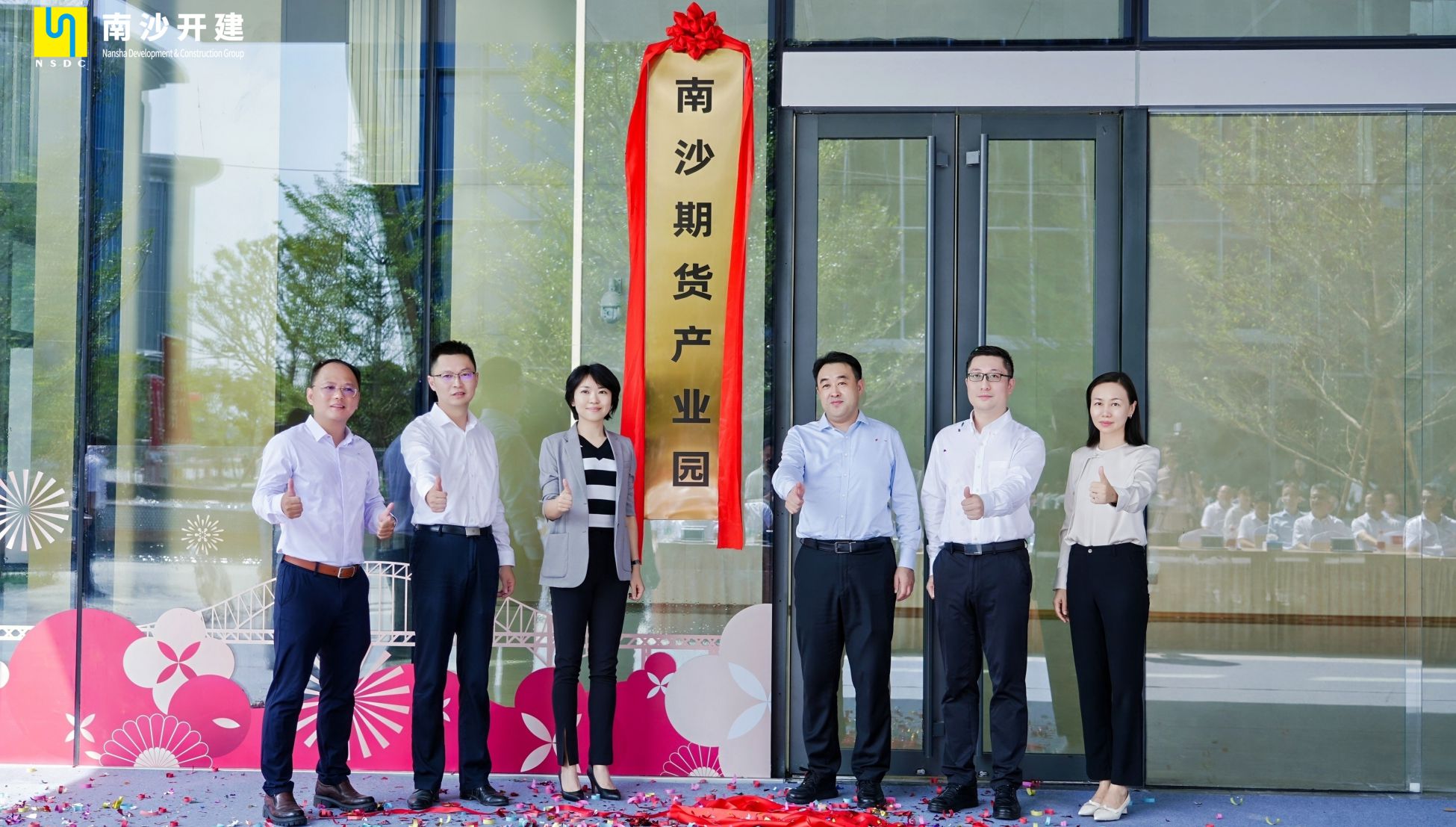
大湾区期货金融新高地!南沙期货产业园正式开园
Qi Huo Ri Bao· 2025-09-30 05:20
Core Insights - The Nansha Futures Industry Park, the first comprehensive futures financial industry park in China, officially opened on September 30, 2023, in Guangzhou Nansha [1] Group 1: Strategic Importance - Nansha serves as a national new area, free trade pilot zone, and a demonstration area for comprehensive cooperation in the Guangdong-Hong Kong-Macao Greater Bay Area, aiming to deepen reform and promote integration [3] - The establishment of the Nansha Futures Industry Park is a key initiative to implement the "Nansha Plan" and the "30 Financial Policies of Nansha," enhancing the region's financial innovation and development [3] Group 2: Infrastructure and Facilities - The park covers a total construction area of approximately 150,000 square meters, featuring eight buildings, including three high-rise office towers and a cultural exchange center [5] - The park is designed with a focus on green and digital technologies, aiming to create a "zero-carbon building" and integrating smart management systems for efficient operations [7] Group 3: Economic Impact - The park has already attracted 12 futures institutions, including the Guangzhou Futures Exchange and Morgan Stanley Futures, indicating a growing financial ecosystem [3][6] - The "Pearl Bay Financial Innovation Cluster," which has been operational since 2021, has attracted over 50 financial enterprises with a revenue scale exceeding 30 billion yuan, contributing to a robust industrial ecosystem [6] Group 4: Community and Lifestyle - The park aims to create a high-quality living and working environment, featuring amenities such as smart restaurants, shared meeting rooms, and fitness centers, promoting a blend of work and life [7][8] - The park's location within a high-end business ecosystem, alongside the Nansha International Convention Center and Lingnan Oriental Hotel, enhances its attractiveness as a comprehensive business destination [8] Group 5: Ongoing Development - The park's opening is seen as a starting point, with plans for continuous service optimization, including improved transportation and support for businesses [9] - The marketing center of the Nansha Futures Industry Park has officially opened, further enhancing its operational capabilities [10]

沪铜 底部支撑较为牢固
Qi Huo Ri Bao· 2025-09-30 01:29
Group 1: Copper Market Dynamics - The Grasberg copper mine in Indonesia has temporarily halted operations due to a serious mudflow accident, leading to a strong rebound in copper prices, with the main contract reaching a six-month high of 83,090 CNY/ton [1] - Global copper supply is tightening, with the International Copper Study Group (ICSG) projecting a 7.2% year-on-year increase in global mine output to 2.0124 million tons by July 2025 [1] - Freeport-McMoRan has lowered its copper and gold sales forecasts for Q3 2023 due to the accident, with a potential production recovery timeline extending to 2026 for certain areas of the Grasberg mine [1] Group 2: Processing Fees and Inventory Trends - The copper concentrate treatment charge (TC) has dropped significantly, reaching negative values for the first time in 2023, with the index reported at -40.36 USD/dry ton as of September 26 [2] - Global copper inventories across major exchanges have increased to 535,500 tons, with COMEX inventories rising for seven consecutive months [2] - Domestic electrolytic copper inventories have decreased to 140,100 tons as of September 25, indicating a trend of inventory reduction despite limited copper imports [2] Group 3: Demand and Production Challenges - The operating rate of domestic copper cable enterprises was reported at 65.44%, reflecting a significant year-on-year decline of 32.24%, with expectations of further decreases due to the upcoming holidays [3] - The copper smelting sector is under pressure due to negative processing fees and declining sulfuric acid prices, which are squeezing profit margins [3] - Despite entering the traditional peak consumption season, downstream demand remains weak, with a slow recovery pace observed in overall consumption [3] Group 4: Industry Challenges and Future Outlook - China's copper industry faces three main challenges: increasing reliance on foreign resources, overcapacity in the midstream processing sector, and suppressed downstream demand due to high copper prices [4] - The Shanghai Nonferrous Metals Network has collaborated with industry players to create a bilingual distribution map of the Chinese copper industry chain to assist in navigating these challenges [4] - The outlook for copper prices post-holiday is expected to remain strong, with a projected range of 80,400 to 83,350 CNY/ton for the main contract [4]

底部支撑较为牢固 节后沪铜或震荡偏强为主
Qi Huo Ri Bao· 2025-09-29 23:33
Group 1 - The Grasberg copper mine in Indonesia, the world's second-largest, has temporarily halted production due to a serious mudflow accident, leading to a significant rebound in copper prices in Shanghai [1][2] - The accident at Grasberg has exacerbated the global copper supply shortage, with Freeport-McMoRan reducing its copper and gold sales forecasts for Q3 2023 due to force majeure [2] - Global copper mine production is expected to rise by 7.2% year-on-year to 201.24 million tons by July 2025, but the Grasberg incident is projected to reduce copper concentrate output by 250,000 to 260,000 tons from previous estimates [2] Group 2 - The processing fee for copper concentrate has dropped sharply since 2023, reaching negative values, with the import copper concentrate index reported at -40.36 USD per dry ton as of September 26 [3] - Global copper inventories across three major exchanges totaled 535,500 tons as of September 26, showing a year-on-year increase of 36,200 tons [3] - Domestic electrolytic copper social inventory has been decreasing, with a reported decline to 140,100 tons as of September 25, indicating a tightening supply situation [3] Group 3 - The operating rate of domestic copper cable enterprises was reported at 65.44%, a significant year-on-year decrease of 32.24 percentage points, reflecting weak demand in key sectors such as electricity, construction, and automotive [4] - Despite entering the traditional consumption peak season, downstream orders remain weak, and many enterprises plan to halt production for the upcoming holidays, further constraining operational rates [4] - The structural tightening of supply is expected to provide solid support for copper prices, with the Shanghai copper main contract projected to trade in a range between 80,400 and 83,350 RMB per ton [4]
短期供应压力较大 豆粕反弹乏力
Qi Huo Ri Bao· 2025-09-29 23:33
Core Viewpoint - Argentina's government announced the cancellation of export tariffs on soybeans, soybean meal, and soybean oil starting September 23, lasting until October 31 or until export declarations reach $7 billion, raising concerns about the outlook for U.S. soybean exports [1] Group 1: Export Tariff Changes - Argentina temporarily reduced soybean export tariffs from 26% to 0%, and soybean meal and oil tariffs from 24.5% to 0%, leading to a significant drop in Argentina's soybean premium [2] - Following the announcement, Argentina's soybean premium fell to 207 cents per bushel, while Brazil's soybean premium dropped to 289 cents per bushel [2] - By September 25, Argentina reported that the $7 billion export application quota was filled, with approximately 3 million tons of soybean export applications [2] Group 2: Domestic Market Impact - Domestic soybean meal futures in Dalian fell to 2,907 yuan per ton, a decrease of 190 yuan per ton from earlier highs, reflecting a 6.13% drop [1] - The domestic soybean meal inventory days increased to 9.6 days, indicating a higher inventory level compared to the previous year [3] - The current soybean meal price in East China is 2,910 yuan per ton, down 80 yuan per ton from early September, with a basis of 60 yuan per ton above the futures contract [3] Group 3: Supply and Demand Outlook - Forecasts indicate that soybean arrivals in China for September to November will be lower than the previous year, with expected arrivals of 10 million tons, 9.5 million tons, and 8.5 million tons respectively [3] - The anticipated soybean import gap for the first quarter of next year is projected to be between 4 million to 5 million tons, although this gap may narrow due to Argentina's tariff reduction [2][3] - The outlook for soybean prices remains uncertain, with potential downward pressure on domestic soybean meal prices if U.S. soybean purchases resume and South American soybean yields are strong [4]
聚乙烯“银十”值得期待
Qi Huo Ri Bao· 2025-09-29 23:33
Core Viewpoint - In the third quarter, driven by the "anti-involution" trend, overall commodity prices have stopped declining and rebounded. However, polyethylene has underperformed, especially during the traditional peak season of "Golden September and Silver October," where demand did not improve significantly, leading to price declines, with prices nearing 7000 yuan/ton [1]. Group 1: Demand and Supply Dynamics - The traditional peak demand season for polyethylene, "Golden September and Silver October," has not shown significant characteristics this year, with delayed demand for agricultural films and low purchasing enthusiasm from downstream sectors [1]. - As of late September, the polyethylene operating rate was around 83%, marking a historical low for the same period, due to increased unplanned maintenance [2]. - Despite the weak demand, supply pressure has eased significantly, as there has been no new capacity impact in the second half of the year, and the overall operating rate has rebounded to around 90% in August before declining again in September [2]. Group 2: Price and Cost Factors - The cost support for polyethylene is gradually strengthening, with oil-based polyethylene experiencing losses exceeding 500 yuan/ton, while coal-based processes remain profitable [2]. - The market anticipates a potential demand surge post-National Day, with low inventory levels and the possibility of a sustained demand increase for agricultural films until late November [1][2]. - The "anti-involution" policy in the chemical sector is expected to be implemented, which may gradually change the current weak market situation for polyethylene [2].
基本面延续宽松格局 纯碱难以走出独立行情
Qi Huo Ri Bao· 2025-09-29 23:28
Core Viewpoint - The supply-side contraction expectations and seasonal demand improvement have slowed the decline in soda ash prices, but the weak market structure is unlikely to change due to high supply and inventory levels [1][2]. Supply and Production - Current production levels of soda ash remain high, with a weekly output of 776,900 tons as of September 25, marking a historical peak [2]. - New soda ash capacity additions are expected in the fourth quarter, with a 2.8 million ton natural soda project by Yuanxing Energy successfully ignited, potentially increasing capacity by over 7% [2]. - The Ministry of Industry and Information Technology has issued a plan to regulate cement and flat glass production capacity, prohibiting new capacity while promoting the exit of outdated capacity [1]. Raw Material Prices - Raw material prices have remained firm, but recent trends indicate a potential decline in coal prices due to improved supply conditions as previously shut coal mines resume production [2]. - The current theoretical profit for soda ash production using the lithium carbonate method is -77.5 yuan/ton, while the ammonia soda method is -37.20 yuan/ton, indicating a low profit environment [1]. Demand Dynamics - The demand for heavy soda ash is primarily driven by the glass industry, with recent improvements in photovoltaic glass production supporting a slight recovery in demand [3]. - However, the demand for heavy soda ash has softened due to a slowdown in the daily melting volume of photovoltaic glass and reduced purchasing enthusiasm from downstream component manufacturers [3]. - The real estate market is experiencing an adjustment phase, with new construction area and investment declining, which may limit the demand for soda ash [3]. Inventory Levels - As of September 25, domestic soda ash inventory stood at 1.6515 million tons, a decrease of 216,000 tons or 11.56% from the previous period, although inventory levels remain high compared to previous years [2][3]. - Despite the reduction in inventory, the overall supply situation remains high, and the upcoming natural soda project is expected to exacerbate supply pressures [3].
共同探讨期货纠纷多元化调解机制与技巧
Qi Huo Ri Bao· 2025-09-29 16:03
海通期货合规法务部总经理张元豪介绍了上海辖区构建的"多元化纠纷调解工作机制"。该机制通过建立 多个第三方调解平台,并与法院系统联动,有效化解了大量矛盾纠纷。他认为,当前期货纠纷已从传统 经纪业务扩展至风险管理子公司等创新业务领域,特别是场外衍生品业务纠纷呈现上升趋势。 多位专家表示,优秀的投诉处理不仅在于事后化解,而且需建立坚实的事前防范体系。瑞达新控资本副 总经理陆海川认为,没有客诉的公司不是好公司,企业应将客诉视为改进服务的重要契机。他建议引入 会计师事务所、律师事务所等第三方专业机构审视制度落实,从源头杜绝违规操作。 中证资本市场法律服务中心调解部负责人张静建议,期货公司应加强与调解机构的事前沟通,遇到潜在 纠纷可提前咨询专业意见;进入调解程序后,应准备具有灵活性的阶段性解决方案,便于第三方协助逐 步降低投资者预期,最终促成和解。她还提出,期货公司需要建立总部集中管理的纠纷处理机制,确保 全国各营业部的纠纷案件能够及时汇总、专业应对。 近日,由中国期货市场监控中心与资本市场学院联合主办的"期货公司高质量发展合规管理高级研修班 (第一单元)"在深圳举行。本次培训吸引了来自监管机构、自律组织、期货公司及法律 ...