
Qi Huo Ri Bao

Search documents
首创期货孙伏鲲:把握宏观逻辑、洞察产业矛盾、警惕突发冲击是交易的关键
Qi Huo Ri Bao· 2025-12-13 23:43
Core Insights - The discussion focuses on the analysis of the 2025 futures market, highlighting ten classic cases that illustrate market trends, reversals, and volatility, providing traders with a clear understanding of market dynamics [2] Group 1: Trend Analysis - The "Trend King" for 2025 is identified as commodities that exhibit sustained single-direction trends due to macroeconomic forces and deep-seated industrial contradictions [3] - Gold prices unexpectedly surged in 2025, driven by increased demand for safe-haven assets due to geopolitical conflicts, changes in interest rates from the Federal Reserve, and ongoing central bank purchases reflecting a shift away from the US dollar [3] - Silver prices showed greater elasticity alongside gold, supported by tight circulating inventories and rising demand from emerging industries like photovoltaics, as well as favorable conditions from the Federal Reserve's monetary policy [3] Group 2: Reversal Analysis - The "Reversal King" is characterized by how policy expectations and market microstructures can significantly alter price trends, with coking coal exemplifying this dynamic through a "V" shaped price recovery influenced by "anti-involution" policies [5] - The price of polysilicon reversed from bearish to bullish primarily due to policy-driven changes, despite a backdrop of oversupply and high inventories [5] - Industrial silicon and lithium carbonate are also affected by "anti-involution" policy expectations, with industrial silicon facing severe overcapacity and lithium carbonate requiring attention to supply elasticity and demand forecasts [5] Group 3: Volatility Analysis - The "Volatility King" is crude oil, which experienced wide price fluctuations in 2025 due to the interplay of Federal Reserve monetary policy, US energy and trade policies, and geopolitical conflicts [6] - The supply surplus in the oil market is unlikely to change fundamentally, with geopolitical tensions remaining a primary driver of price volatility [6] Group 4: Market Dynamics - The analysis reveals that different market characteristics are driven by distinct underlying logic: trend markets are influenced by long-term narratives and solid industrial contradictions, reversal markets are catalyzed by strong policy expectations and unique market structures, while high-volatility markets are closely tied to unpredictable external shocks [7] - Understanding and differentiating these market types and their core drivers is essential for traders to identify opportunities and manage risks effectively [7]


化工行业集中检修期到来!这些品种基本面有变?
Qi Huo Ri Bao· 2025-12-13 01:57
Core Insights - The chemical industry is experiencing a significant differentiation in maintenance schedules due to profit declines and overcapacity, breaking the traditional maintenance rhythm typically seen in the second and third quarters [1][2] - The maintenance ratio this year is notably higher than in previous years, directly linked to supply surplus caused by rapid capacity growth in certain products [1][2] Group 1: Maintenance Trends - The traditional maintenance period for the petrochemical industry is usually concentrated in the second and third quarters, with the fourth quarter expected to see increased operational loads; however, this year, profit declines have disrupted this pattern [1] - PX is one of the few products increasing operational loads despite the overall trend, with its operational load at a near five-year high due to improved fundamentals and favorable production profits [1] - In contrast, PTA, ethylene glycol, and styrene have seen operational loads decrease due to profit pressures, with PTA's operational load dropping to a lower-than-average level for the past five years [1][2] Group 2: Ethylene Glycol and Other Products - Ethylene glycol's maintenance logic is complex, with operational loads dropping from high levels due to maintenance of ethylene-based facilities, followed by a new wave of maintenance due to profit declines in gas-based facilities [2] - Seasonal maintenance patterns are observed across various chemical products, with significant maintenance occurring in methanol, PP, and PE, while PTA has seen increased maintenance and unplanned outages [2] Group 3: Profitability and Market Dynamics - Despite a decrease in PTA's operational load since November, its processing margin remains in the loss zone, indicating an imbalance in profit distribution within the industry [3] - New capacity in ethylene glycol has led to record low prices, and while recent production cuts have marginally improved the fundamentals, inventory pressures persist [3] - The overall decline in chemical product prices has led to compressed production profits, with potential for further maintenance if prices continue to drop excessively [3][5] Group 4: Future Outlook - The outlook for chemical products suggests limited price rebound potential unless there is an unexpected contraction in supply or a change in inventory accumulation patterns [4] - The continuation of unplanned maintenance will depend on production profits and fundamental market conditions, which will dictate the year-end market trends for chemicals [4]
刚刚 崩了!银价暴跌 金价跳水!利空来袭
Qi Huo Ri Bao· 2025-12-13 01:55
早上好,先来关注下重要消息。 银价暴跌,金价跳水 12日晚,现货白银价格盘中涨逾2%,再创历史新高。不过,美股盘中,现货白银突然跳水,一度跌超4%,纽约期银日内大跌5%。 截至发稿,现货白银价格收跌2.56%,现货黄金价格收涨0.44%。COMEX黄金期货收涨0.39%,本周累计上涨2.42%;COMEX白银期货收跌3.88%,本周 累计上涨5.59%。 消息面上,据媒体报道,甲骨文已将为OpenAI开发的部分数据中心完工日期从2027年推迟至2028年。这一消息叠加博通与甲骨文财报不及预期,投资者 对AI热潮的担忧再度加剧,美股科技股承压,多家AI概念的科技巨头股价纷纷下挫。继甲骨文股价周四暴跌后,博通股价也成为关注焦点,跌幅约为 10%。 | Sandisk Corporation | 214.38 | -11.27% | | --- | --- | --- | | US SNDK | | | | 博通 | 364.80 | -10.23% | | US AVGO | | | | 美光科技 | 245.33 | -5.08% | | us MU | | | | 甲骨文 | 192.21 | -3.34% ...
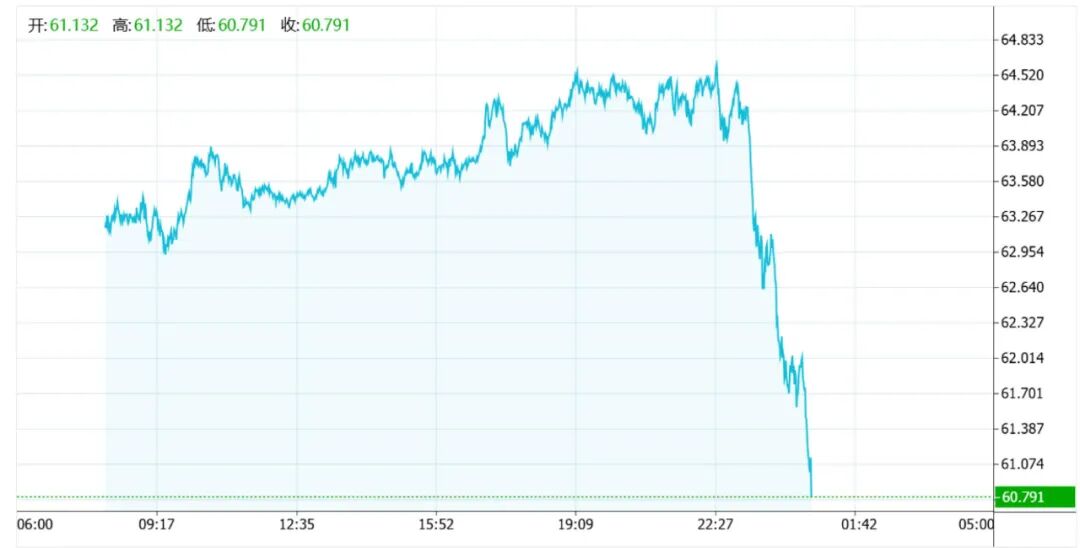
刚刚,崩了!银价暴跌,金价跳水!利空来袭→
Qi Huo Ri Bao· 2025-12-13 00:23
Market Overview - Silver prices experienced a significant drop after reaching a historical high, with a decline of over 4% during trading, while gold prices also fell sharply after touching $4,350 per ounce [4][5] - The recent performance of tech stocks in the U.S. has been negatively impacted by concerns over AI investments, particularly following disappointing earnings reports from Oracle and Broadcom [5][6] Silver and Gold Demand - The demand for silver in AI hardware and data centers is robust, with annual growth rates exceeding 20%, and projections suggest a 35% increase by 2026 [7] - The World Gold Council reported that global physical gold ETF inflows reached $5.2 billion in November, marking six consecutive months of inflows [8] Federal Reserve Insights - Several Federal Reserve officials expressed a preference for maintaining a slightly tight monetary policy, citing persistent inflation above the 2% target [10][11] - The recent rate cuts have been met with opposition from some officials who advocate for a wait-and-see approach regarding further monetary easing [11][12] Tin Market Dynamics - Tin prices have surged, with the Shanghai tin price stabilizing above 330,000 yuan per ton, driven by supply concerns and positive macroeconomic sentiment [13][16] - Analysts indicate that the tin market is experiencing a tight supply situation, exacerbated by geopolitical tensions and reduced imports from Myanmar [17][18] Long-term Outlook for Tin - The long-term outlook for tin suggests a potential easing of supply constraints by 2026, with expectations of increased production from Myanmar and a stabilization of geopolitical tensions [18] - The demand for tin is expected to grow, particularly in technology and renewable energy sectors, despite ongoing supply challenges [18]


锚定产业需求 碳酸锂期货基准交割品指标升级 服务实体效能再提升
Qi Huo Ri Bao· 2025-12-12 11:29
Core Viewpoint - The Guangzhou Futures Exchange has revised the business rules for lithium carbonate futures and options, aligning the quality standards of the benchmark delivery product with the new industry standard YS/T 582-2023, which will enhance the futures market's ability to serve the real economy and manage industry risks [1][2]. Group 1: Regulatory Changes - The revision of the rules applies to the lithium carbonate LC2612 contract and subsequent contracts, with specific changes to the quality standards for benchmark delivery products [1]. - The quality standards for benchmark delivery products have been tightened, including limits on magnetic substances, moisture content, sodium, magnesium, calcium, nickel, boron, and particle size [1][2]. Group 2: Industry Context - The original industry standard for battery-grade lithium carbonate was established in 2013, and the new standard categorizes lithium carbonate into three grades (D1, D2, D3) based on market needs, refining the elemental content requirements [2]. - The adjustments in the quality requirements align with the D2 grade level, which is relevant for lithium iron phosphate batteries, thereby enhancing the relevance of futures prices to the actual market [2][3]. Group 3: Market Impact - Since its launch in July 2023, lithium carbonate futures have provided stable price references for the spot market and tools for price risk management, gradually fulfilling their intended roles [3]. - The adjustment of the benchmark delivery product's quality standards is expected to improve the engagement of downstream enterprises in the futures market, as it aligns more closely with the quality requirements of the industry [3].
A股三大指数集体回升,电力板块活跃
Qi Huo Ri Bao· 2025-12-12 10:54
Group 1: Market Overview - The A-share market saw a collective rebound with the Shanghai Composite Index rising by 0.41%, the Shenzhen Component increasing by 0.84%, and the ChiNext Index up by 0.97% [1] - The total market turnover was approximately 2.11 trillion yuan [1] Group 2: Power Sector Activity - The electricity chain remained active, with the controllable nuclear fusion sector showing strong performance, particularly Tianli Composite hitting a historical high with a 30% limit up, and a five-day increase of 117.21% [1] - Other active sectors included nuclear power, power grid equipment, superconducting concepts, and new metal materials, with multiple stocks such as Zhongneng Electric and Tongguang Cable reaching their daily limit up [1] Group 3: Energy Demand and Supply Dynamics - According to Tianfeng Securities, rising electricity demand, increased power generation, and rapid changes in energy structure are posing challenges for U.S. power operators, who face low flexibility and high volatility in resource combinations [1] - Major tech companies like Amazon and Google are utilizing gas turbines as core backup or primary power sources for new data centers to ensure continuous power support for AI services [1] - It is projected that by 2027, global gas turbine supply will reach 87 GW, with a net increase of 26 GW, indicating a supply-demand gap compared to the expected annual average of over 100 GW from 2026 to 2035 [1] Group 4: Semiconductor Sector Activity - The semiconductor sector was active, with stocks like Jingfeng Mingyuan hitting a 20% limit up, and several others such as Yandong Micro and Xindong Link exceeding 10% gains [2]
党建引领聚合力 金融助农显担当——华泰期货云南勐腊天然橡胶“保险+期货”项目再续新篇
Qi Huo Ri Bao· 2025-12-12 09:03
Core Viewpoint - The collaboration between Huatai Futures and various organizations in Yunnan aims to integrate party building with business operations, enhancing support for rubber farmers through an "insurance + futures" project [1][2] Group 1: Project Implementation - Huatai Futures, in partnership with Huatai Great Wall Capital and Pacific Property Insurance, launched an "insurance + futures" initiative in Mengla County, Yunnan, focusing on rubber farmers [1] - The project has been ongoing since 2018, with Huatai Futures providing financial services to the natural rubber industry, helping 594 farmers manage 4,000 tons of rubber and 113,948 acres of rubber trees [2] Group 2: Training and Support - The initiative includes systematic training for local government, Yunnan Rubber Group, and rubber farmers, clarifying the operational model of the "insurance + futures" product and its risk management features [1] - The training emphasizes the importance of selecting appropriate insurance products and correcting misconceptions about investment returns, thereby enhancing farmers' risk management capabilities [1] Group 3: Future Directions - The signing of party building agreements marks a new phase of deep integration between party building and industry, with plans for ongoing collaboration focused on organizational development, industry support, and cultural exchange [2] - Huatai Futures aims to leverage political advantages from party organizations to promote rural industry and increase farmers' income, contributing to the high-quality development of the rubber industry and rural revitalization strategies in Mengla County [2]
从会议精神中凝聚信心 于国家战略中找准方向 在服务大局中彰显使命担当
Qi Huo Ri Bao· 2025-12-12 08:33
Core Viewpoint - The Central Economic Work Conference has outlined the overall requirements, policy orientations, and eight key tasks for economic work in 2026, reinforcing confidence and direction for the new year [1] Group 1: Economic Environment and Policy - The conference emphasized the importance of a stable, transparent, and predictable policy environment for various markets, including commodities, to bolster confidence in economic development [1] - The recognition of the indispensable value of the futures and derivatives market in the modern economic system highlights its role as a "financial main force" in serving national strategies [1] Group 2: Strategic Direction and Market Development - The concept of a "financial power" has been integrated into the national "14th Five-Year Plan," indicating the need for a mature and efficient futures and derivatives market to provide risk management and price signals for high-quality economic development [2] - The company, Yong'an Futures, aims to embed itself deeply within key industrial chains to assist enterprises in navigating the challenges of transformation and upgrading [2] - Yong'an Futures has established an overseas presence in Hong Kong, Singapore, and London, utilizing a "four-wheel development" model to help enterprises manage risks associated with overseas procurement and sales [2] Group 3: Mission and Corporate Goals - Yong'an Futures aims to align its goals with national development objectives, focusing on becoming a "first-class derivatives investment bank" while adhering to a mission of "finance for good and futures for reality" [3] - The company plans to implement significant reforms centered on customer needs, positioning itself as a risk manager for industrial chains and a comprehensive financial service expert [3] - A commitment to compliance, integrity, professionalism, and risk management culture is emphasized, with the goal of enhancing risk control through financial technology [3]

以期货之力固链强链 以金融之智赋能实体
Qi Huo Ri Bao· 2025-12-12 08:32
Core Viewpoint - The recent Central Economic Work Conference has set clear goals for economic development in 2026, emphasizing the need for financial institutions to support key areas such as domestic demand expansion, technological innovation, and small and medium-sized enterprises, thereby providing guidance for the futures market [1] Group 1: Service to Regional Economic Development - The company has committed to serving the regional economic development by leveraging its financial advantages since its change of control to Wuhan Financial Holding Group in 2023, focusing on the local economy [1] - A comprehensive service system named "1+N" has been established, centered around Yangtze River International Trade Group, extending services to upstream and downstream enterprises and local key industry clients, creating an ecosystem that promotes production through finance [1] - The integration of futures, spot, insurance, and credit tools aims to provide a one-stop financial and derivative solution for real enterprises, helping them manage price volatility risks and stabilize operational expectations [1] Group 2: Enhancing Supply Chain Resilience - The company emphasizes risk management capability as a core focus, providing tailored hedging solutions and optimizing inventory management to enhance supply chain risk prevention [2] - Efforts are made to lower participation barriers and organize specialized training for small and medium-sized enterprises to encourage the effective use of futures tools for stable operations [2] Group 3: Digital Transformation and Data Empowerment - The company is implementing a technology innovation strategy by utilizing big data and artificial intelligence to improve risk warning mechanisms and enhance the precision and timeliness of financial services [2] - Aiming to build an intelligent service model that covers the entire industry chain, the company focuses on ensuring financial resources are accurately directed to key areas and weak links in the real economy [2] - Collaboration with universities and research institutions is being deepened to cultivate interdisciplinary professionals, providing strong talent support for high-quality industry development [2] Group 4: Open Development and Financial Collaboration - The company is committed to an open cooperation development philosophy, actively learning from international best practices and deepening strategic collaboration with banks, insurance, and securities institutions [3] - Focus areas include technology finance, green finance, and inclusive finance, with efforts to enhance the effectiveness of financial services in supporting the real economy [3] - The company aims to improve political awareness, strengthen responsibility, deepen reform and innovation, and enhance professional capabilities to contribute to national strategies and high-quality economic development [3]
以专业之长服务时代之需 奋力谱写期货行业新篇章
Qi Huo Ri Bao· 2025-12-12 08:26
12月11日闭幕的中央经济工作会议,系统擘画了2026年乃至更长时期我国经济社会发展的宏伟蓝图,明 确了"稳中求进、提质增效"的政策取向并作出一系列关键部署。会议不仅为新一年宏观经济把脉定向, 也为金融和期货行业的高质量发展提供了根本纲领。 三是深化科技赋能,加快构建"AI+期货"智能服务体系。会议明确提出"创新科技金融服务"的重点任 务,为公司的高质量发展提供了关键指引。2025年以来,方正中期期货陆续推出"AI智选""夜讯晨读"两 款对客智能体应用,助力客户优化交易决策、提升信息获取效率。未来,我们将持续围绕客户实际需 求,打造更多场景化、工具化的智能应用,切实解决客户需求痛点,夯实公司在数字化发展中的核心竞 争力。 展望2026年的新征程,方正中期期货将以中央经济工作会议精神为根本遵循,坚守金融服务实体经济初 心,以科技赋能服务,以专业创造价值,全力服务国家战略部署,在提升产业韧性、稳定市场运行中彰 显担当。方正中期期货期待与各方携手,为助力实现"十五五"良好开局、推动经济持续稳中向好发展贡 献坚实的期货力量。 面对新形势新要求,期货公司应坚决摒弃同质化、"内卷式"竞争,坚定走特色化、专业化、精细化的发 ...