Tai Mei Ti A P P

Search documents
原材料暴涨,今年的羽绒服会越来越贵吗?
Tai Mei Ti A P P· 2025-11-22 14:15
Core Insights - The price of down jackets in China has been steadily increasing, with average prices rising from 438.6 yuan in 2015 to 656 yuan in 2020, and currently ranging from 500 to 800 yuan in 2023 [2] - The cost of down materials has surged significantly, with white duck down prices increasing from approximately 350 yuan/kg to 500 yuan/kg, and white goose down from 700 yuan/kg to 1100 yuan/kg from January 2023 to November 2024 [3][8] - The market share of down jackets priced between 1000 to 2000 yuan has notably increased, reflecting a shift towards higher-priced products [2] Price Trends - The average selling price of down jackets is projected to rise again in 2024, with various price segments seeing increased market share [2] - The price of down materials has been influenced by a decrease in supply due to lower demand for duck and goose meat, resulting in a 12.2% decline in the compound annual growth rate of meat duck output over the past five years [5][6] Industry Dynamics - The implementation of new national standards for clothing has raised production costs and reduced the quantity of down available, further driving up prices [6] - Brands like Bosideng have successfully transitioned to a higher-end market by increasing prices and enhancing brand image, leading to significant revenue growth [9][10] Consumer Behavior - There is a growing consumer sentiment against brand markups, as evidenced by discussions on social media platforms regarding the value of domestic brands compared to international ones [12] - The competitive landscape is shifting, with domestic brands gaining market share in the mid to high-end segments, while international brands maintain high premiums [10][12] Market Outlook - Predictions suggest that extreme cold weather this winter could further elevate down jacket prices [7] - The balance between brand value and cost-effectiveness is becoming increasingly important for both consumers and brands in the current market [13]


BMW新世代四大技术上车:电动化能否守住“宝马味”?
Tai Mei Ti A P P· 2025-11-22 10:11
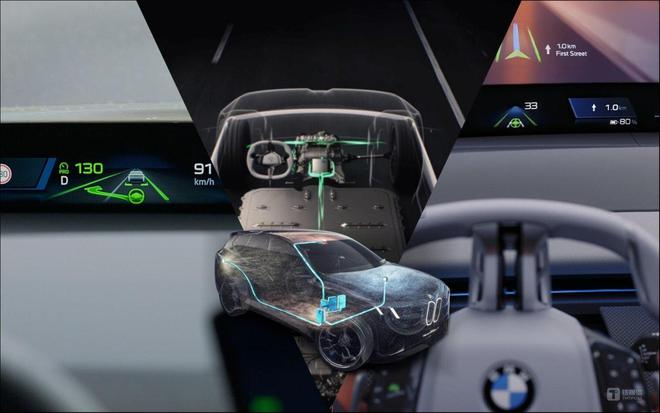
Core Insights - BMW showcases its new generation technology cluster at the 2025 Guangzhou Auto Show, emphasizing its advancements in electric and intelligent driving technologies [2] - The new generation BMW iX3 will be the first model to feature these technologies, set to be produced in 2026 at BMW's Shenyang plant, representing a significant step in BMW's future direction [2] Electric Drive System - The sixth-generation eDrive system is highlighted as a "performance champion," featuring a 46mm standard diameter cylindrical battery that achieves a 20% increase in energy density [3] - The system supports an 800V high-voltage platform, allowing for a 400km range increase with just 10 minutes of charging, and a CLTC range exceeding 900km [3] Driving Control Technology - The BMW Driving Control Super Brain integrates AI algorithms and hardware to replicate the driving feel of traditional fuel vehicles, addressing common issues in electric vehicle handling [3][4] - It processes data from 23 sensing units to perform 1000 dynamic calculations per second, enabling real-time adjustments to torque distribution, suspension damping, and steering force [3] Intelligent Cockpit and User Experience - The new panoramic iDrive system focuses on user-centered, scenario-based simplification, utilizing AR technology to enhance information accessibility while maintaining driving safety [5] - BMW collaborates with Huawei to integrate HarmonyOS NEXT for features like the BMW digital key and HUAWEI HiCar, tailored for local user habits [5] AI and Smart Driving Solutions - BMW partners with Alibaba to develop an intelligent cockpit system based on AI technology, aiming to create a new BMW personal assistant with advanced communication capabilities [6] - The collaboration with Momenta focuses on developing a new generation of intelligent driving assistance solutions, designed specifically for the Chinese market [6][7] Integration and Synergy of Technologies - The four key technologies form a synergistic effect, enhancing the overall driving experience by integrating electric drive, driving control, and intelligent assistance [8] - The system's ability to adjust based on real-time conditions, such as wet road surfaces, exemplifies the interconnectedness of these technologies [8] Market Position and Future Outlook - BMW's new generation technology cluster indicates its commitment to maintaining driving pleasure while addressing the challenges of electric and intelligent vehicle markets [9] - The success of these innovations will depend on their real-world performance and the company's ability to adapt to the rapidly evolving competitive landscape in China [9]
用AI视角看灿谷,矿企重估的开始
Tai Mei Ti A P P· 2025-11-22 08:16
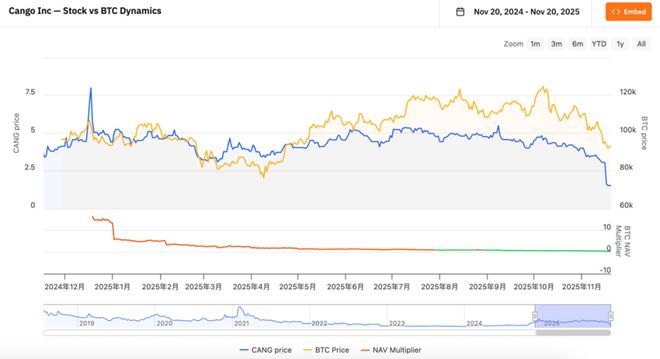
Core Viewpoint - The market perception of the company has shifted from being viewed as a traditional mining enterprise to being recognized as a potential player in the AI and HPC (High-Performance Computing) data center space, with management emphasizing the transition towards energy and AI/HPC business models [1][6][11]. Group 1: Market Position and Valuation - The company's stock price has closely followed Bitcoin's price movements, and its market capitalization of $500 million is currently less than the value of its 6,644 BTC holdings [3]. - The market assigns a NAV (Net Asset Value) multiple of 0.6-1.2 for mining companies, while companies with more owned mining facilities can achieve multiples of 1.5-2.5 [5]. Group 2: AI/HPC Data Center Transition - The company is positioning itself as a future AI data center platform, with a focus on energy and HPC, which is gaining traction in the market [6][11]. - The construction costs for AI data centers have risen to $9.3-15 million per MW, leading developers to relocate to secondary and tertiary markets [9]. - The company has been acquiring assets that align with AI data center requirements, such as large-scale power supply and cooling capabilities, exemplified by its recent acquisition of a 50MW facility in Georgia [14]. Group 3: Operational Advantages - The company possesses operational capabilities that are advantageous for AI/HPC, such as high-density power management and advanced cooling systems, which are critical for AI data centers [12][15]. - The transition to AI data centers is facilitated by the company's existing infrastructure and operational expertise, allowing for a smoother shift from mining to AI applications [18]. Group 4: Strategic Moves and Future Outlook - The company has made strategic moves, including direct listing on the NYSE and restructuring its shareholder base, to enhance its appeal to AI clients and energy funds [17]. - The asset structure is evolving to resemble that of an infrastructure company, positioning the company for long-term contracts in the AI/HPC space [16][18].

微软CEO纳德拉最新万字访谈:AI时代,范式正确不代表就能赢
Tai Mei Ti A P P· 2025-11-22 06:05
Group 1 - The future of software is envisioned as a task control center that integrates various interfaces, allowing professionals from different fields to micro-steer numerous AI agents [1][5][18] - Companies should focus on building their own AI factories rather than envying others, emphasizing the importance of organizing data to meet intelligent demands [1][8] - The concept of "company sovereignty" is redefined, highlighting the value of internal tacit knowledge and the need for companies to own their foundational models to protect their unique advantages [3][28][30] Group 2 - The current infrastructure build-out is characterized as a "capacity hell," contrasting with the 2000 internet bubble, as all computational resources are sold out, with bottlenecks in power and supply [4][26][27] - Microsoft is developing a two-layer AI stack, focusing on capital efficiency in the infrastructure layer and maximizing the value of tokens in the application layer [4][26] - The return of Integrated Development Environments (IDEs) is anticipated, where every professional will have their own IDE to manage AI interactions effectively [5][18] Group 3 - Historical lessons from Microsoft's past, particularly regarding the internet, emphasize that recognizing the right paradigm is crucial, but the specific architectural choices and business models ultimately determine success [6][20][23] - The emergence of a new organizational layer in the AI era is expected, with the potential for new entities to dominate, similar to how search engines did in the past [7][24] Group 4 - The integration of AI into enterprise environments is still in its early stages, with challenges in data governance and the need for better data architecture to facilitate AI's effectiveness [10][11] - The future of software interfaces will blend various formats, creating a more intuitive user experience that allows for seamless interaction with AI agents [5][18][36] Group 5 - The concept of "agentic commerce" is gaining traction, where AI can facilitate transactions and enhance user experiences in e-commerce [34][37] - The importance of data sovereignty is highlighted, with companies needing to navigate regulatory landscapes while building their AI capabilities [28][29]

当存储涨疯了,国产屏的红利缓解了手机、PC厂商的焦虑
Tai Mei Ti A P P· 2025-11-22 04:04
Group 1: Storage Market Dynamics - The recent surge in storage prices and the volatility of related company stocks have drawn renewed attention to the industry chain [2] - The demand for HBM storage driven by AI development is squeezing DRAM production capacity, leading to increased costs for smartphones and PCs [2][8] - TrendForce has revised down its global smartphone and laptop production forecasts for 2026, projecting declines of 2% and 2.4% respectively [2][11] Group 2: Display Panel Industry Growth - Over the past two decades, China's display panel industry has transformed from dependency on imports to becoming the world's largest manufacturing base [3][4] - The domestic display supply chain is more stable and complete compared to storage chips, giving Chinese manufacturers greater control [3] - The market size of China's display panel industry reached 396.2 billion yuan, accounting for 68.2% of the global market [5] Group 3: OLED Technology Advancements - Chinese manufacturers are heavily investing in OLED technology, with companies like Tianma and BOE establishing advanced production lines [5][7] - By the first half of 2025, Chinese manufacturers are expected to hold a 51.7% share of the global AMOLED smartphone panel market [7] - The demand for AMOLED panels is rising, while LCD panels maintain stable shipments in entry-level markets [7][11] Group 4: Cost Pressures and Strategic Responses - The increase in storage chip prices is expected to raise the BOM cost of smartphones by approximately 5-7% next year [8][9] - The share of storage in laptop BOM costs is projected to exceed 20% by 2026, leading to potential price increases of 5-15% for laptops [9][11] - Manufacturers are adjusting their product strategies, potentially reducing screen quality in lower-end models to manage costs [11][12] Group 5: Collaboration and Innovation - Companies are moving towards deep collaboration with panel manufacturers, shifting from traditional supplier relationships to joint technology development [16][20] - Xiaomi has established joint laboratories with panel manufacturers to enhance the entire supply chain [20][21] - The shift towards a collaborative model is seen as essential for competing with global leaders like Apple and for driving innovation in the display industry [21]




抖音“铁腕”封禁60万账号,1499元飞天茅台“消失”!|焦点
Tai Mei Ti A P P· 2025-11-21 11:24
Core Viewpoint - Douyin is actively combating the sale of counterfeit and low-priced Moutai products on its platform, reflecting a broader effort within the liquor industry and e-commerce platforms to address issues of low pricing, counterfeit goods, and tax evasion [2][3][4]. Group 1: Douyin's Actions - Douyin has banned 600,000 accounts involved in selling counterfeit Moutai and low-priced products this year, and has removed over 2,000 illegal items and expelled 690 merchants in the last three months [2][4][6]. - The platform has initiated a series of announcements and actions targeting false marketing and unauthorized sales, including a warning on November 10 and a follow-up notice on November 11 detailing the focus on low-price gimmicks and false advertising [4][6]. - Douyin's crackdown has led to the disappearance of the previously common 1,499 yuan per bottle Moutai listings, with official flagship stores now listing prices above 1,700 yuan [3][6]. Group 2: Market Impact - The price of the 2024-2025 Moutai has risen to over 1,700 yuan, with older vintages exceeding 2,000 yuan, aligning with offline market prices [7]. - The crackdown has resulted in a shift in the e-commerce landscape for liquor, with authorized stores becoming more prominent and unauthorized sellers being removed from the platform [7][9]. - Other premium liquors, such as Wuliangye and Guojiao, still have products listed below 900 yuan, indicating ongoing pricing discrepancies in the market [7]. Group 3: Regulatory Environment - The implementation of the "E-commerce Tax" regulation on October 1, 2025, aims to combat issues like unreported sales and low-price dumping by requiring platforms to report merchant income [8]. - The liquor industry is witnessing a coordinated effort to establish a transparent and regulated e-commerce environment, with major brands releasing official lists of authorized sellers to guide consumers [9].


罕见资本接力,大股东解禁日反向“输血”,品高股份 4 亿急攻 AI 算力
Tai Mei Ti A P P· 2025-11-21 11:16
Core Viewpoint - Pingao Co., Ltd. executed a rare capital operation in the A-share market by rapidly cashing out on the day of the lifting of the lock-up period for its shares, raising 499 million yuan, with a significant portion reinvested into the AI chip company Jiangyuan Technology [2][3]. Group 1: Capital Operation - On November 20, the controlling shareholder of Pingao Co., Ltd., Beijing Shangao Enterprise Management Co., Ltd., transferred 12% of its shares at a price of 36.817 yuan per share, totaling 499 million yuan [3]. - The funds raised were quickly funneled back into Pingao Co., Ltd. as a non-interest-bearing loan to invest 400 million yuan in Jiangyuan Technology [3][5]. Group 2: Financial Context - Pingao Co., Ltd. has faced challenges in its core business, with a significant decline in gross profit margins from 41.39% in 2022 to an expected 35.35% in 2024 due to intensified competition in the cloud computing sector [6]. - The company reported a projected revenue of 520 million yuan in 2024, a year-on-year decrease of 4.81%, and a loss of 64.05 million yuan, reflecting a 499% decline [6]. Group 3: Investment in AI Sector - Jiangyuan Technology, established in November 2022, focuses on the development of domestic AI chips and has seen its valuation increase by 40% since the beginning of the year, reaching a pre-investment valuation of 24.139 billion yuan [7][9]. - The investment in Jiangyuan Technology aligns with Pingao Co., Ltd.'s strategic shift towards the AI sector, especially as Jiangyuan Technology's first AI chip product has recently completed its trial production [9]. Group 4: Strategic Partnerships - Pingao Co., Ltd. has previously established a strategic partnership with Jiangyuan Technology, becoming its primary agent for product sales and committing to purchase at least 2,000 units annually during the cooperation period from 2025 to 2027 [9].


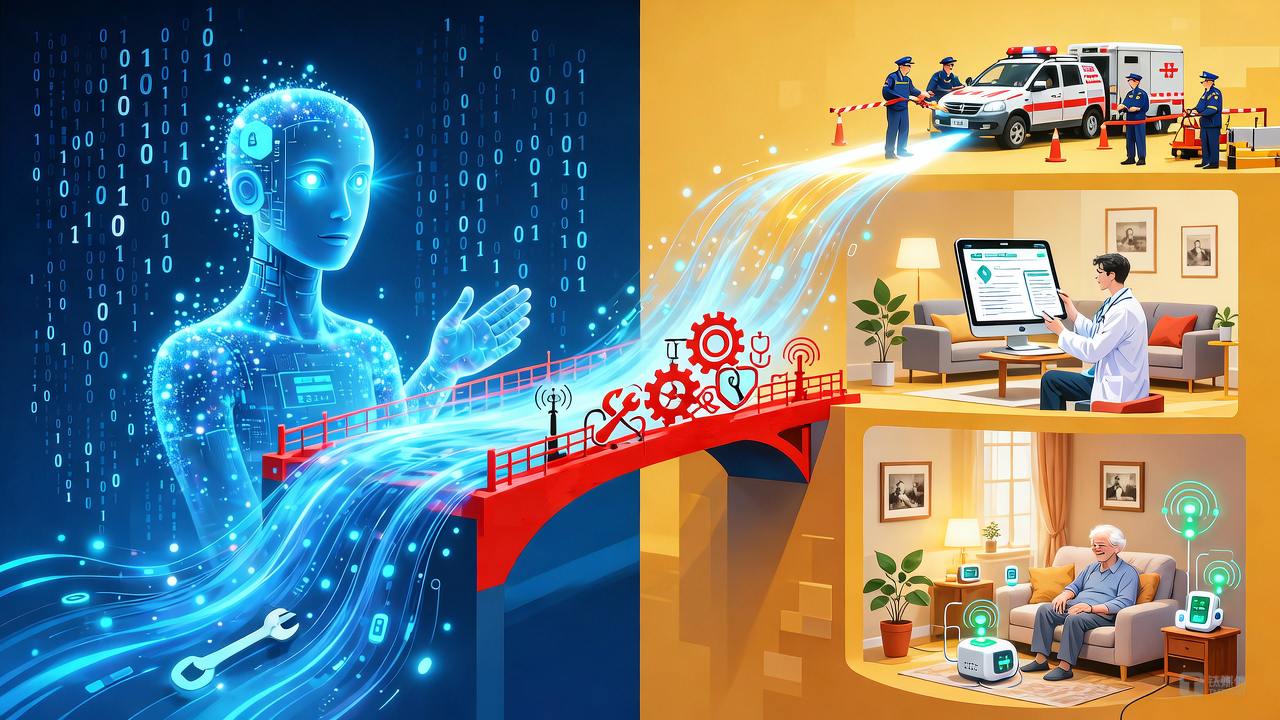
当AI走向“解决问题”:平安如何打造“超级有用”的智能体?
Tai Mei Ti A P P· 2025-11-21 11:08
Core Insights - The article highlights the emergence of "AI Super Customer Service" by Ping An, showcasing a shift towards AI that not only understands and expresses but also plans and executes tasks, marking 2025 as the "Year of Intelligent Agents" [2][3] - Ping An's AI strategy focuses on practical applications in finance, healthcare, and elderly care, aiming to provide quick and effective solutions rather than just information exchange [3][4] Group 1: AI Service Matrix - Ping An has introduced a comprehensive AI service matrix, including AI Super Customer Service, AI Family Doctor, and AI Elderly Care Manager, to enhance user experience and service efficiency [2][4] - The transition from a "one-stop service platform" to an "AI concierge experience" reflects a paradigm shift where AI evolves from a passive responder to an active problem-solver [5][6] Group 2: Technological Advancements - The article discusses three foundational technological transformations enabling this shift: expansion of boundaries, intelligent leaps, and role redefinition of AI as a responsible partner rather than just a tool [5][6] - Ping An has digitized over 500 online and offline services, allowing the AI to understand, match, schedule, and execute tasks effectively [6][11] Group 3: Human-Machine Collaboration - In critical sectors like finance and healthcare, Ping An emphasizes a "human-machine collaboration" model, where AI assists in standard tasks while human experts retain decision-making authority [9][10] - The AI Family Doctor system exemplifies this collaboration, efficiently triaging patients and connecting them with specialists when necessary [10][11] Group 4: Productivity Transformation - The integration of AI is transforming productivity within Ping An, with a significant portion of customer service tasks now handled by AI, leading to cost optimization and improved service standards [13][14] - This shift is prompting a re-evaluation of organizational structures, moving from a reliance on human labor to leveraging computational power for enhanced efficiency [14][15] Group 5: Accessibility of Services - Ping An's AI initiatives aim to democratize access to high-quality financial, healthcare, and elderly care services for its 250 million customers, addressing the issue of professional scarcity [15]

荃银高科获超22亿要约收购背后,解决同业竞争迫在眉睫
Tai Mei Ti A P P· 2025-11-21 08:33
Core Viewpoint - Zhongzhong Group plans to acquire 20% of Qianyuan High-Tech's shares for 2.245 billion yuan, increasing its stake to 40.51%, reflecting confidence in the company's future prospects [1][3]. Group 1: Acquisition Details - Zhongzhong Group intends to issue a partial tender offer to all shareholders of Qianyuan High-Tech, targeting 189 million shares, which represents 20% of the total issued shares [2]. - The tender offer price is set at 11.85 yuan per share, which is approximately 16.63% higher than the market price of 10.16 yuan as of November 20 [2]. - Following the acquisition, Zhongzhong Group will hold a maximum of 384 million shares, equating to 40.51% of Qianyuan High-Tech's total share capital [3]. Group 2: Industry Context - Zhongzhong Group is a leading state-owned enterprise in the seed industry, managing the seed business of Syngenta Group in China, and has a broad portfolio covering rice, corn, wheat, vegetables, and oilseeds [4]. - Qianyuan High-Tech, known as the "first stock in the seed industry" on the Growth Enterprise Market, has a leading position in hybrid rice technology and operates in over 20 countries [4]. Group 3: Competitive Landscape - There is a degree of overlap in the agricultural seed business between Zhongzhong Group and Qianyuan High-Tech, particularly in the domestic rice and wheat seed markets [5]. - The deadline for resolving competitive issues between the two companies is approaching, making this acquisition a crucial step in fulfilling previous commitments to address competition [6]. Group 4: Financial Performance - Qianyuan High-Tech reported a revenue of 1.934 billion yuan for the first three quarters of 2025, a year-on-year decline of 5.90%, with a net loss of 180 million yuan, a significant increase of 113.45% in losses compared to the previous year [6]. - The company has faced challenges due to falling seed prices and increased competition, prompting a need for improved operational conditions, which Zhongzhong Group may help facilitate [6].

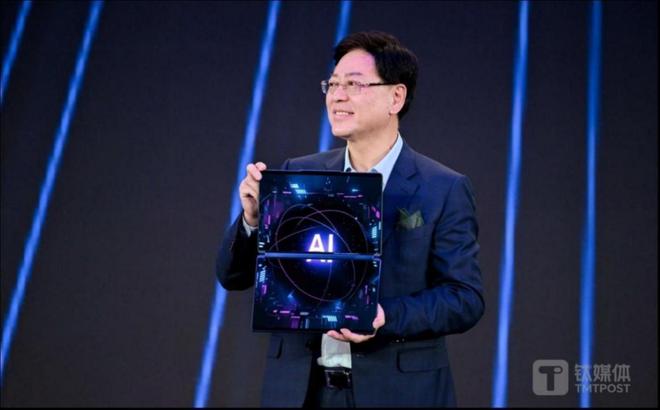
对话杨元庆:AI不存在泡沫,2026年存储芯片价格还会持续上涨
Tai Mei Ti A P P· 2025-11-21 07:15
Core Insights - Lenovo Group reported a record high revenue of 146.4 billion yuan for Q2 of FY2025/26, marking a 15% year-on-year increase, with adjusted net profit rising 25% to 3.66 billion yuan [2] - The company's IDG smart device business generated 108.1 billion yuan, a 12% increase, while the ISG infrastructure solutions business saw a 24% rise to approximately 29.3 billion yuan [2] - AI-related business revenue now accounts for 30% of total revenue, up 13 percentage points year-on-year, indicating AI as a significant growth driver for Lenovo [3] Revenue Breakdown - IDG smart device business revenue: 108.1 billion yuan, up 12% [2] - ISG infrastructure solutions business revenue: approximately 29.3 billion yuan, up 24% [2] - SSG solutions and services business revenue: nearly 20% year-on-year growth [2] AI and Market Trends - AI's growth is expected to be sustainable, with significant demand for memory, flash, and solid-state drives, leading to rising storage chip prices [3][4] - Morgan Stanley indicates that the AI-driven memory supercycle is real, with potential for stronger and longer-lasting impacts than anticipated [4] - The global traditional PC market is projected to grow by 5% to 10%, driven by AI PC demand, which is expected to account for 31% of global PC shipments by 2025 [6][8] Supply Chain and Pricing - Lenovo has secured optimal contracts with key component suppliers, ensuring sufficient supply despite rising prices [5][6] - The company is well-positioned to manage supply shortages and price increases better than competitors due to strong supplier relationships [5] Future Outlook - Lenovo plans to focus on personal and enterprise intelligence, with expectations of continued growth in both areas [7] - The global server market is projected to grow by approximately 44.6% by 2025, with AI servers expected to see a 46.7% increase, driving overall market expansion [8]