半导体芯闻

Search documents
美国对华 GPU 关税豁免,延期
半导体芯闻· 2025-06-04 10:20
Core Points - The U.S. Trade Representative (USTR) announced a three-month suspension of the planned 25% tariffs on certain Chinese imports, including chips and semiconductor components like GPUs and motherboards, originally set to take effect on June 1, 2025, now extended to August 31, 2025 [1] - The USTR's decision is based on public feedback regarding the extension of previously restored exemptions and new COVID-related exemptions, indicating a careful consideration of the impact on U.S. businesses [1] - The tariffs were initially imposed under Section 301 of the Trade Act of 1974 during the Trump administration, but the Biden administration has continued to extend these exemptions due to their importance to U.S. enterprises [1] Summary by Sections Tariff Suspension - The USTR has decided to extend the exemption period for 164 previously restored exemptions and 14 new exemptions for an additional three months, reflecting ongoing evaluations of public comments [1] - This extension delays potential price increases for GPUs and motherboards, which have been a concern for manufacturers and consumers alike [1] Historical Context - The implementation of Section 301 tariffs has been ongoing for over six years, with many chip manufacturers relocating from China to countries like Vietnam due to these tariffs [2] - The initial tariffs were part of a broader strategy by the Trump administration to address trade imbalances, which included a 10% base tariff on nearly all imports [2] - Despite legal challenges to the tariffs, they remain in effect, highlighting the complexities of U.S.-China trade relations [2]

华虹半导体总裁白鹏:中国的半导体市场也将持续迎来增长
半导体芯闻· 2025-06-04 10:20
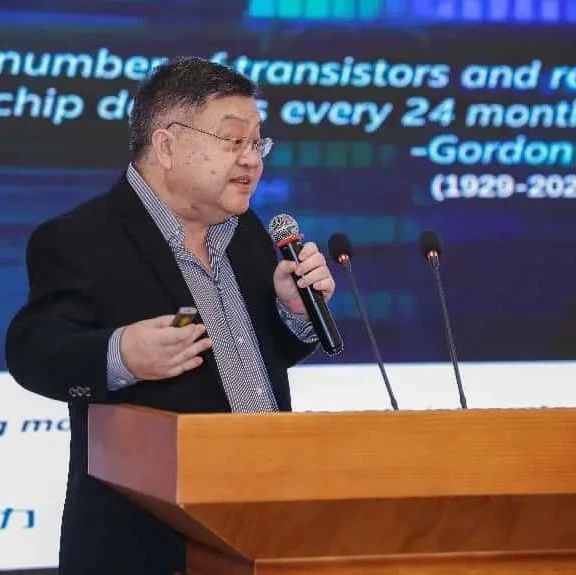
如果您希望可以时常见面,欢迎标星收藏哦~ 来源:内容来自 复旦大学, 作者:祁金, 谢谢 。 讲座最后,白鹏介绍了华虹半导体的技术布局,并对半导体行业的未来进行了展望。他表示,世界 运行于硅基之上,半导体行业还将继续蓬勃发展,中国的半导体市场也将持续迎来增长。目前,中 国半导体产业链尚有缺口,他期待同学们加入产业界,共同迎接挑战,携手走通半导体全产业链。 6月3日,华虹半导体执行董事及总裁白鹏到访复旦,在邯郸校区光华楼东辅楼202报告厅为集成电 路与微纳电子创新学院师生带来一场题为"创芯者的战略解码"的讲座。复旦大学集成电路与微纳电 子创新学院院长、中国科学院院士刘明主持讲座。 在讲座中,白鹏从摩尔定律的解读、其在半导体行业的职业发展、华虹集团的技术布局以及半导体 行业的未来等四个方面切入,与在场师生深入分享在集成电路制造领域从业多年的经验与心得。 什么是摩尔定律?"芯片上的晶体管数量每两年会翻一番。" 讲座之初,白鹏引用英特尔公司创始 人之一戈登·摩尔对半导体行业的洞察,向同学们解释摩尔定律的来源与内涵。 (图源:复旦大学) 他表示,晶体管尺寸微缩是摩尔定律的基础,晶体管尺寸微缩的两大核心优势是单个晶体管成 ...
SK海力士,首超三星
半导体芯闻· 2025-06-04 10:20
Core Viewpoint - SK Hynix has surpassed Samsung Electronics to become the leading DRAM manufacturer in the first quarter of 2023, marking a significant shift in market leadership [1][2]. Market Share Analysis - In Q1 2023, SK Hynix achieved a DRAM market sales revenue of $9.72 billion, capturing a market share of 36%, while Samsung Electronics held a 33.7% share and Micron had 24.3% [1]. - The market share of SK Hynix slightly decreased from 36.6% in Q4 2022, while Samsung's share dropped significantly from 39.3% [1][2]. - In Q1 2022, Samsung's market share was 43.9% compared to SK Hynix's 31.1%, indicating a rapid narrowing of the gap over the past year [2]. Product Development and Strategy - The shift in market dynamics is attributed to the increased shipment of high-value products like HBM3E by SK Hynix, while Samsung faced challenges in selling HBM products to China, leading to a decline in HBM3E shipments [2]. - SK Hynix is currently the exclusive supplier of NVIDIA's fifth-generation HBM3E and has provided samples of the next-generation HBM4 [2]. - Samsung is implementing a strategy to regain competitiveness in the HBM sector by reducing production of older HBM models and focusing on the latest products, particularly HBM4 [3]. Market Outlook - The global DRAM market sales in Q1 2023 decreased by 5.5% to $27.01 billion due to falling contract prices and reduced HBM shipments [3]. - TrendForce predicts a recovery in the DRAM market in Q2 2023 as PC and smartphone manufacturers adjust inventory and increase production [4].
AI芯片,下一个关键战场
半导体芯闻· 2025-06-04 10:20
Core Viewpoint - The article discusses the emerging trend of ASIC (Application-Specific Integrated Circuit) chips in the AI chip market, highlighting NVIDIA's introduction of NVLink Fusion and the competitive landscape between NVIDIA and the UALink alliance [1][3][4]. Group 1: NVIDIA's Position and Strategy - NVIDIA has entered the ASIC market with NVLink Fusion, allowing various processors from companies like MediaTek and Qualcomm to connect to NVIDIA's AI data centers [1]. - NVIDIA's CEO Jensen Huang stated that 90% of ASIC projects are likely to fail, emphasizing the competitive edge of NVIDIA's ASICs over others [3]. - NVIDIA's gross margin remains high at 60%, indicating strong profitability and competitive positioning in the ASIC market [4]. Group 2: Market Growth and Future Projections - The market for cloud-based ASIC chips is projected to exceed $40 billion by 2028, as noted by MediaTek's chairman [3]. - Major cloud service providers are developing their own ASIC chips to create a competitive advantage, with companies like Google, Microsoft, Meta, AWS, and Apple actively involved in this trend [6]. Group 3: Competitive Landscape - The UALink alliance, which includes major companies like Alibaba, AWS, AMD, Apple, Cisco, Google, HPE, Meta, Intel, Microsoft, and Synopsys, is positioning itself against NVIDIA by promoting an open standard for AI chip interconnects [4]. - The competition between NVIDIA's NVLink and UALink is creating two distinct ecosystems in the cloud ASIC chip market [4]. Group 4: Supply Chain and Development - The development of ASIC chips heavily relies on the Taiwanese semiconductor supply chain, with companies like TSMC and others involved in the production process [7]. - The number of AI ASIC servers is expected to surpass 50% of the overall market by 2028, indicating a significant shift towards ASIC technology in AI applications [7].

前四个月集成电路产量,1509亿块
半导体芯闻· 2025-06-03 10:39
Group 1 - The core viewpoint of the article highlights the growth in the electronic information manufacturing industry, with a year-on-year increase of 11.3% in value added from January to April 2025, outperforming the overall industrial and high-tech manufacturing sectors by 4.9 and 1.5 percentage points respectively [1] - In April, the electronic information manufacturing industry saw a year-on-year increase of 10.8% in value added [1] - Key product outputs from January to April include 105 million microcomputer devices (up 4.7% year-on-year), 454 million mobile phones (down 6.8% year-on-year), and 150.9 billion integrated circuits (up 5.4% year-on-year) [1] Group 2 - Export statistics for January to April show that 43.84 million notebook computers were exported (down 0.4% year-on-year), 22.4 million mobile phones (down 7.1% year-on-year), and 106.3 billion integrated circuits (up 20% year-on-year) [1]

韩国芯片销量,创历史新高
半导体芯闻· 2025-06-03 10:39
Core Viewpoint - The export data from South Korea for May indicates growing concerns about the country's economic trajectory, with overall exports declining despite a surge in semiconductor exports driven by AI technology demand [1][2]. Export Performance - In May, South Korea's semiconductor exports rose by 21.2% year-on-year, reaching $13.79 billion, marking the second-highest monthly export figure on record [1]. - However, overall exports fell into negative territory, with 10 out of 15 major export categories experiencing year-on-year declines [1][2]. - Exports to the three major trading partners— the United States, China, and ASEAN— also contracted, with a slight increase in exports to the EU primarily due to a low base effect from the previous year [1]. Sector-Specific Challenges - Key sectors such as electric vehicles (EVs) and steel faced significant declines, with steel exports down 12.4% and automotive exports down 4.4% [2]. - The automotive sector, being South Korea's largest export category, saw exports to the U.S. plummet by 32% to $1.84 billion, largely due to a 25% tariff imposed by the U.S. government [2][3]. - Semiconductor shipments to China fell by 14.6%, as China increases domestic production of mid-to-low-end chips, potentially reducing reliance on South Korean exports [3]. Economic Outlook - The Korea International Trade Association predicts a 2.1% decline in total exports for the year, with automotive exports expected to drop by 8% due to stagnant demand and tariff impacts [3]. - The short-term recovery outlook appears limited amid weakened competitiveness and ongoing trade policy uncertainties [3].
三星挖角台积电高管
半导体芯闻· 2025-06-03 10:39
Core Viewpoint - Samsung's semiconductor foundry business is facing significant challenges, particularly in the advanced 3nm process, where its yield is only 50%, compared to TSMC's 90% yield, leading to the loss of major clients to TSMC [1][4]. Group 1: Challenges in Semiconductor Foundry - Samsung's 3nm yield is significantly lagging behind TSMC, which poses a risk of losing key customers [1]. - Major clients such as Google, Qualcomm, and AMD have shifted their production to TSMC due to Samsung's low yield [1]. - China's SMIC is making progress in 5nm and 7nm processes, adding competitive pressure on Samsung's foundry business [1]. Group 2: Strategic Moves - Samsung has hired former TSMC executive Margaret Han to lead its North American foundry business, aiming to enhance customer engagement and competitiveness [2][4]. - The appointment of Margaret Han is seen as a strategic move to rebuild trust with North American clients and attract new orders from major tech companies like NVIDIA, AMD, Tesla, and Amazon [4]. - Samsung is investing $17 billion in a new advanced foundry facility in Taylor, Texas, to strengthen its position in the U.S. market [4].


电动车制造商,收购芯片设备公司
半导体芯闻· 2025-06-03 10:39
Core Viewpoint - The article discusses the planned acquisition of at least 51% of Jiangsu Damo Semiconductor Technology Co., Ltd. by Lvtong Technology, marking a strategic shift from electric vehicle business to the semiconductor sector [1][2]. Group 1: Acquisition Details - Lvtong Technology aims to acquire a controlling stake in Damo Semiconductor to diversify its business and create new profit growth points [1]. - The acquisition is still in the planning stage, and its completion is uncertain [1]. - Damo Semiconductor, established in April 2017, specializes in front-end measurement and repair equipment for integrated circuits and semiconductor wafers [1]. Group 2: Financial Performance - Damo Semiconductor's projected revenues for 2023 and 2024 are 231 million yuan and 270 million yuan, respectively, with net profits of approximately 58.57 million yuan and 65.11 million yuan [2]. - Lvtong Technology has experienced a decline in performance since its listing, with a 23.15% drop in revenue to 831 million yuan and a 45.98% decrease in net profit to 142 million yuan in 2024 [2]. - In Q1 2025, Lvtong Technology's revenue slightly decreased by 0.06%, while net profit fell by 26.16% year-on-year [2].

邹世昌:“两弹一星”与集成电路研制
半导体芯闻· 2025-06-03 10:39
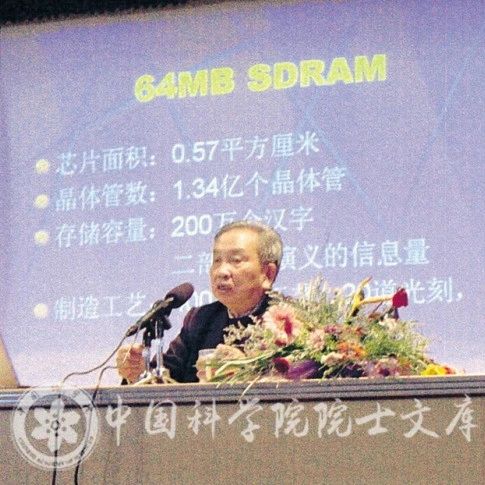
Core Viewpoint - The article discusses the historical development and achievements of China's semiconductor industry, highlighting the challenges faced and the importance of innovation and self-reliance in technology advancement [10][11]. Group 1: Historical Context - The article reflects on the impact of the "Two Bombs, One Satellite" project, which positioned China among the few countries with nuclear capabilities, contrasting it with the slower development of the integrated circuit industry [10]. - The author participated in both the nuclear project and the semiconductor field, emphasizing the need for China to catch up with countries like Singapore and Malaysia in semiconductor technology [10]. Group 2: Technological Achievements - In 1965, the Shanghai Metallurgical Institute and Shanghai Component Factory jointly developed China's first integrated circuit, nearly simultaneously with Japan [10]. - The establishment of the first 8-inch integrated circuit production line in 1999 marked a significant milestone, enabling China to produce deep submicron ultra-large-scale integrated circuits [11]. Group 3: Industry Development - The semiconductor industry in Shanghai has grown to include over 300 companies across various sectors, accounting for approximately one-third of the national production capacity [11]. - Despite the growth, over 80% of the production capacity serves foreign design companies, with China's self-supply ratio remaining around 15% [11]. Group 4: Future Directions - The article emphasizes the need for innovation and the integration of design and manufacturing processes to enhance the semiconductor industry [11]. - The author expresses a commitment to continue contributing to independent research and talent cultivation in the semiconductor field [11].
台积电被质疑“血汗工厂”,魏哲家回应:我这么胖,怎么可能
半导体芯闻· 2025-06-03 10:39
Core Viewpoints - TSMC's chairman, Wei Zhejia, refuted claims of the company being a "sweatshop," emphasizing that not all 90,000 employees are overworked and highlighting the company's commitment to employee well-being [1][4][11] - TSMC is cautious about AI chip supply and capacity planning, ensuring thorough communication with major clients and cloud service providers to avoid overcapacity issues [4][5][11] - The company anticipates strong growth in AI demand, with expectations for revenue growth of 24% to 26% this year, driven by advancements in AI applications across various sectors [12][11] Employee Treatment and Company Culture - Wei Zhejia stated that TSMC values integrity, innovation, and commitment from its employees, fostering a positive work environment [1][4] - The company recruits like-minded individuals, with approximately 9,000 new employees joining annually [1] AI and Market Position - TSMC is positioned as a leader in technology and manufacturing, with a strong outlook as long as AI remains integral to daily life [2][11] - The company is enhancing its production capabilities to meet the growing demand for AI, with advanced process sales expected to account for 69% of total wafer sales in 2024 [11][12] Financial Outlook - Despite economic uncertainties, TSMC expects to achieve record revenue and earnings this year, with a focus on maintaining high production capacity to meet AI demand [8][11] - The chairman humorously addressed shareholder suggestions for price increases, indicating the company's focus on value and technology leadership [8] Environmental and Regulatory Considerations - TSMC is investing in green energy and addressing ESG concerns, while also navigating regulatory frameworks in Taiwan regarding self-built power plants [9][11] Technology Protection - Wei Zhejia assured shareholders that TSMC's technology is secure, emphasizing the extensive effort and resources required to develop and produce their advanced technologies [14][15] - The company maintains a complex and integrated technology system that is difficult to replicate or steal, reinforcing confidence in its global operations [15][16]