吴晓波频道

Search documents
上半年GDP增长5.3%,英伟达将恢复销售中国版芯片 | 财经日日评
吴晓波频道· 2025-07-16 00:24
Economic Growth - China's GDP grew by 5.3% year-on-year in the first half of 2025, with the primary, secondary, and tertiary industries increasing by 3.7%, 5.3%, and 5.5% respectively [1] - Industrial output increased by 6.4%, while service sector output rose by 5.5% [1] - Retail sales totaled 245,458 billion yuan, up 5% year-on-year, with fixed asset investment growing by 2.8% [1] Consumer Market - Retail sales in June reached 42,287 billion yuan, growing by 4.8%, with a year-to-date growth of 5.0% [3] - The contribution of consumption to GDP growth was 52%, highlighting the importance of domestic demand [3] - The "old-for-new" policy has positively impacted retail sales, particularly in home appliances and furniture [3] Real Estate Sector - Real estate development investment fell by 11.2% in the first half of the year, with residential investment down by 10.4% [5] - New housing sales decreased by 3.5%, indicating ongoing challenges in the real estate market [5] - The decline in prices is slowing, but sales and investment remain under pressure [6] Technology and AI - Nvidia has received approval to resume sales of its H20 chip to China, which is designed to comply with U.S. export restrictions [7] - The H20 chip is a modified version aimed at the Chinese market, but it has limitations in performance compared to higher-end models [7] - The ongoing U.S. restrictions may accelerate the shift towards domestic alternatives in China's tech sector [8] Autonomous Vehicles - CATL has partnered with T3 Mobility to advance the development of Robotaxi services, utilizing its advanced battery technology [9] - The collaboration aims to streamline the manufacturing and operational processes for autonomous vehicles [9] - Despite the growing interest in Robotaxi, profitability remains uncertain due to high initial costs and safety concerns [10] Internet Content Creation - Shanghai has introduced measures to support high-quality internet content creation, including financial incentives for creators [11] - The initiative aims to enhance the city's appeal as a hub for content creators and improve the local digital ecosystem [12] Financial Risks - Multiple cities have issued warnings about the risks associated with stablecoin scams, highlighting the need for caution among investors [13][14]



人民币“保7争6”?
吴晓波频道· 2025-07-15 00:17
Core Viewpoint - The article discusses the anticipated appreciation of the Chinese yuan against the US dollar, with predictions from major financial institutions indicating a potential rise to 7.0 in the next 12 months and further to 6.7 by the end of 2026 [1][7]. Group 1: Factors Influencing Yuan Appreciation - The People's Bank of China emphasizes that it does not seek to gain international competitive advantage through currency depreciation, indicating a commitment to market-driven exchange rates [2][3]. - Since April, the yuan has appreciated approximately 1.4% against the dollar, surpassing the 7.15 mark, the highest since November of the previous year [4][17]. - Market sentiment has shifted positively, with institutions like Deutsche Bank and Morgan Stanley raising their growth forecasts for the Chinese economy and becoming bullish on the yuan [6][7]. Group 2: Economic and Market Dynamics - The exchange rate is fundamentally determined by supply and demand; a stronger outlook for the yuan leads to increased demand for it [9][10]. - The interest rate differential between China and the US plays a significant role; currently, Chinese banks offer about 0.95% for one-year deposits, while US banks offer over 3%, making holding dollars more attractive [11][12]. - A narrowing interest rate gap between China and the US could enhance the attractiveness of the yuan, leading to its appreciation [13][20]. Group 3: Impact of Global Events - The US-China trade tensions and the recent decline in the US dollar index, which has dropped nearly 11 points over six months, have contributed to the weakening of the dollar [18][20]. - Expectations of potential interest rate cuts by the Federal Reserve have also influenced the market, making the dollar less appealing [20][48]. - The ongoing trade negotiations between the US and China, despite challenges, have provided a supportive backdrop for the yuan's strength [24][26]. Group 4: Challenges for Export Enterprises - The appreciation of the yuan poses challenges for export enterprises, as it reduces the amount of yuan received from dollar-denominated sales, potentially impacting profit margins significantly [30][31]. - Exporters may struggle to adjust prices quickly due to long contract cycles, leading to potential losses if the yuan appreciates rapidly [32][34]. - The rising yuan could diminish the price competitiveness of Chinese products in international markets, increasing export pressures [34][36]. Group 5: Long-term Outlook and Strategic Adjustments - Analysts suggest that the yuan's appreciation may have a lagging effect on exports, providing time for companies to adapt [39]. - The shift towards higher-value exports, particularly in technology and capital-intensive goods, may mitigate some negative impacts of currency appreciation [40][41]. - Companies are encouraged to explore new markets and enhance product competitiveness to navigate the challenges posed by currency fluctuations [50][56].

上半年出口同比增长7.2%,年内第四只基金发行失败 | 财经日日评
吴晓波频道· 2025-07-15 00:17
Group 1: Trade and Economic Performance - In the first half of the year, China's goods trade exports increased by 7.2% year-on-year, with total exports reaching 13 trillion yuan and imports at 8.79 trillion yuan, a decline of 2.7% [1] - The trade scale showed stable growth, with a diverse trading network and a shift towards higher-quality exports, particularly in electromechanical products, which accounted for 60% of total exports [1][2] - Domestic demand growth has been slow, and while exports have outperformed imports, this trend may reverse in the second half of the year due to potential impacts from U.S. trade agreements with Southeast Asian countries [2] Group 2: Financial Data and Monetary Policy - The social financing scale increased by 22.83 trillion yuan in the first half of the year, with a notable rise in RMB loans and deposits [3] - The People's Bank of China has emphasized a supportive monetary policy, although the implementation of total monetary policy has been slow, focusing more on structural tools [4] - Market expectations for further interest rate cuts or reserve requirement ratio reductions are low as the financial landscape stabilizes [4] Group 3: Robotics Industry Developments - Shanghai Zhiyuan and Hangzhou Yushu Technology won a significant contract worth 1.24 billion yuan for humanoid robot manufacturing, marking a milestone in the commercialization of humanoid robots in China [7] - The humanoid robot market is projected to reach nearly 38 billion yuan by 2030, with sales expected to grow significantly [7][8] - The large-scale production of humanoid robots is anticipated to reduce unit costs and enhance their capabilities through real-world data feedback [8] Group 4: E-commerce and Delivery Market Competition - A renewed competition in the food delivery market has led to significant promotional activities, with Meituan and JD.com launching aggressive discount campaigns [9] - The market for instant retail is projected to grow substantially, but current investments may be seen as overly aggressive if market expectations are not met [9][10] - The ongoing competition among major internet companies is more about defending existing market shares rather than expanding into new markets [10] Group 5: Luxury Goods Market Trends - Singapore has retained its position as the most expensive city for luxury goods consumption for the third consecutive year, with London and Monaco following [11] - The global luxury market is facing challenges due to economic uncertainties, with a notable decline in high-end consumer confidence [12][13] - Changes in consumer behavior and the impact of tax policies have diminished the appeal of traditional luxury markets like Hong Kong and Shanghai [12][13] Group 6: Fund Market Dynamics - The year has seen the failure of four public fund issuances, with a notable number being bond funds, reflecting challenges faced by smaller fund management companies [14][15] - The bond market has shifted from a booming phase to a more differentiated structure, increasing competition among fund managers [15]

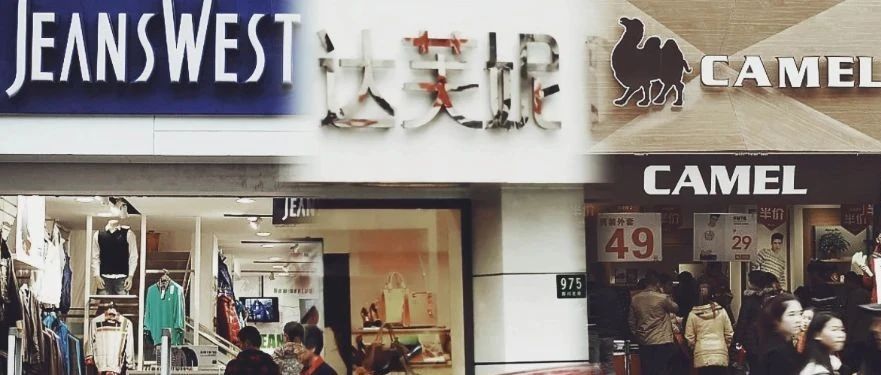
真维斯、达芙妮、骆驼们卷土重来
吴晓波频道· 2025-07-13 15:45
Core Viewpoint - The article discusses the resurgence of once-popular brands in the fashion industry, highlighting their strategies for adaptation and transformation in response to changing consumer preferences and market dynamics [1][2][3]. Group 1: Brand Resurgence - Many once-familiar brands have shown remarkable performance in recent years, with Daphne leading the women's shoe sales on Douyin, and brands like Meisibangwei and True Vivus experiencing significant online sales growth [5][6]. - Brands such as Camel and others are beginning to show signs of recovery despite undergoing painful transformations [6]. Group 2: Transformation Strategies - The article categorizes the transformation strategies of these brands into four types: Dolphin, Belt Fish, Octopus, and Flounder, each representing different approaches to adaptation [8]. - Dolphin-type brands actively explore new fields and shed their old images, exemplified by Camel's shift to outdoor apparel and collaborations with young influencers [8][9]. - Belt Fish-type brands focus on downsizing and outsourcing production, as seen with Daphne and Huili, which have reduced their physical stores significantly while enhancing brand management [9][11]. - Octopus-type brands, like Meisibangwei, aim to expand their reach by reopening stores in lower-tier markets while leveraging online promotions to drive foot traffic [11][12]. - Flounder-type brands, such as Bannilu and True Vivus, maintain a low profile, focusing on existing operations without aggressive expansion or contraction [12]. Group 3: Embracing E-commerce - The brands have recognized the necessity of embracing e-commerce to compete effectively, leveraging their established brand recognition to drive online sales [15]. - True Vivus has amassed 5 million followers on Taobao, with e-commerce sales accounting for over 80% of its revenue, while Daphne has developed a robust live-streaming strategy [16][18]. Group 4: Supply Chain and Product Innovation - Brands are investing in digital technologies and AI tools to enhance their supply chain efficiency, reducing design cycles and improving inventory turnover [18][21]. - Belle has successfully shortened its design cycle from 45 days to 15 days and has implemented a custom shoe service based on user data, increasing the price point of its products [18][20]. Group 5: Market Positioning and Consumer Engagement - The brands are focusing on creating premium experiences in flagship stores, which can generate significantly higher average transaction values compared to regular stores [21][22]. - In lower-tier markets, the strategies differ, with Belt Fish brands outsourcing production, which may dilute brand identity, while Octopus brands face challenges in maintaining consumer engagement [24][25]. Group 6: Future Outlook - The article suggests that the next phase of industry evolution is approaching, driven by improved logistics and changing consumer behaviors, particularly with the rise of instant retail [26][35]. - Brands must address supply chain weaknesses and re-establish connections with consumers to avoid fading into obscurity, emphasizing the importance of adapting to new market realities [37].

高温下的东北空调荒
吴晓波频道· 2025-07-12 15:48
Core Viewpoint - The article discusses the significant disparity in air conditioning (AC) availability across different regions in China, particularly highlighting the recent surge in demand for AC units in Northeast China due to unprecedented high temperatures. It emphasizes the role of China's robust power system in supporting this demand and the broader implications for infrastructure and consumer behavior in a warming climate [1][8][50]. Group 1: Air Conditioning Availability and Demand - Northeast China has a notably low average air conditioning ownership, with only 56.8 units per 100 households, compared to 218.8 units in Zhejiang [3][20]. - The recent heatwave has led to a dramatic increase in AC sales, with sales in Heilongjiang and Jilin provinces seeing year-on-year growth of 817.68% and 788.4%, respectively [11][10]. - The overall AC market during the "618" shopping festival reached sales of 485 billion yuan, with a 16.3% year-on-year increase [10][12]. Group 2: Consumer Behavior and Market Trends - Consumers are increasingly seeking high-efficiency and smart features in air conditioning units, with a significant rise in demand for models priced above 4,500 yuan [13][29]. - The installation of AC units has surged, with installation orders increasing by 300% year-on-year, highlighting the challenges faced by installation teams [16][18]. - The article notes that the average household in China now owns approximately 1.5 AC units, with total AC ownership exceeding 700 million units nationwide [25][26]. Group 3: Global Perspective on Air Conditioning - In comparison to China, the air conditioning penetration in the U.S. and Japan is around 90%, while in Europe, it remains low, with countries like the UK and Germany having less than 5% penetration [31][36]. - The article points out that despite rising temperatures in Europe, the high costs of purchasing and installing AC units, along with expensive electricity, hinder widespread adoption [36][37]. - China's air conditioning exports to Europe have increased by 31.5% in early 2025, indicating a growing demand for AC units in response to climate change [39][41]. Group 4: Power Supply and Infrastructure - The article highlights that China's power grid has successfully managed record electricity demands, with a peak load of 14.65 billion kilowatts, primarily driven by air conditioning usage [44][45]. - The efficiency of China's ultra-high voltage power transmission system allows for rapid electricity distribution across vast distances, supporting the increased demand for cooling [48][49]. - The article concludes that the ability to provide cooling in the face of climate change is a testament to national strength, social collaboration, and technological innovation [51][52].

今天和大家聊聊如何更好地表达“爱”
吴晓波频道· 2025-07-11 18:13
Core Viewpoint - The article discusses the concept of "love" in interpersonal relationships and introduces Gary Chapman's "Five Love Languages" as a framework for better expressing and understanding love in various relationships [4][6]. Summary by Sections Introduction - The article begins with a personal note from the author, celebrating the 9th anniversary of the program "Every Day Hearing Wu Xiaobo" and expressing gratitude to the audience for their support [2]. The Challenge of "Love Misalignment" - It addresses the common struggle of feeling unrecognized or unappreciated in relationships, highlighting the importance of understanding how love is expressed and received [3]. The Five Love Languages - The article outlines the five primary ways people express and perceive love: affirming words, quality time, receiving gifts, acts of service, and physical touch [5]. Detailed Explanation of Each Love Language 1. **Affirming Words**: Expressing appreciation and praise can significantly enhance collaboration and reduce employee turnover. For instance, specific affirmations can lower turnover rates by 41% and increase customer satisfaction by 22% [8]. 2. **Quality Time**: Focusing attention on someone during interactions is a valuable emotional investment, enhancing feelings of worth and intimacy [8]. 3. **Receiving Gifts**: The act of gift-giving activates a natural reciprocity instinct, strengthening relational bonds. Couples who exchange gifts on anniversaries report 47% higher relationship satisfaction [8]. 4. **Acts of Service**: Taking initiative in helping others, such as managing household tasks, fosters mutual understanding and support. This principle is also applied in corporate management to enhance employee satisfaction [9]. 5. **Physical Touch**: Touch has a profound psychological impact, as demonstrated by a classic experiment with monkeys, indicating that warmth and comfort can be more significant than basic needs [10][11]. Conclusion - The article emphasizes that knowing how to express love is not enough; practical application is essential for meaningful relationships [13][14].

股民疯抢中国“银伟达”
吴晓波频道· 2025-07-11 18:13
点击上图▲立即收听 " 不论是中国和美国股市,它们的关键都在于三个点 ' 利率、风险偏好和企业利润 ' 。 文 / 巴九灵(微信公众号:吴晓波频道) 年少不知工行香,错把科技加满仓。 年少不知农行好,错把汽车当成宝。 年少不知中行醉,错把白酒当安慰。 年少不知建行强,错把芯片当栋梁。 当西方投资者为英伟达冲上 4 万亿美元市值而欢呼时,太平洋对岸的中国投资者,也迎来了自己的"银伟达"。 2025 年 7 月 9 日晚,全球芯片巨头英伟达股价触及 164.42 美元,总市值突破 4 万亿美元大关,创下历史纪录。 美国纽约证 券 交易大厅上显示英伟达公司 " 随后两个交易日, A 股银行板块持续走强, 工农中建四大行股价持续创下历史新高。 由于今年银行股的涨势过于疯狂,股民开始把 " 银行 " 与 " 英伟达 " 结合起来,将银行股称为 "银伟达" ,把上证指数叫作"银斯达克"。 在大金融的带领之下,上证指数成功突破关键点位,稳稳站上 3500 点大关,尽管在周五,早盘的过猛攻势导致银行板块有所回落,但"银伟达"的 迅猛势头依然牢牢吸引了市场的目光。 再说个冷知识, A股35年历史中,真正站稳过3500点就三次, ...




险资长钱长投新规出台,良品铺子或将易主 | 财经日日评
吴晓波频道· 2025-07-11 18:13
Group 1: Pension Adjustments - The basic pension for retirees will be increased by 2% starting January 1, 2025, for those who retired by the end of 2024 [1] - The adjustment method combines fixed adjustments, linkage adjustments, and appropriate tilt towards lower pension groups [1] - In 2024, the urban employee basic pension insurance fund had an income of 7.5 trillion yuan and expenditures of 6.8 trillion yuan, resulting in a slight surplus [1] Group 2: State-Owned Capital and Emerging Industries - The State-owned Assets Supervision and Administration Commission (SASAC) emphasizes the need to concentrate state-owned capital on strategic emerging industries [3] - The focus is on accelerating the development of strategic emerging industries and future industries, enhancing national strategic security [3] - The shift towards emerging industries is expected to strengthen the resilience of the industry and enhance national competitiveness [4] Group 3: New Energy Vehicle Subsidies - The Ministry of Industry and Information Technology announced a reduction of approximately 860 million yuan in subsidies for new energy vehicles from 2016 to 2020 due to non-compliance in documentation [5] - Companies like BYD and Beijing New Energy Vehicle Co. experienced significant reductions in their subsidy amounts compared to their applications [5] - The tightening of subsidy policies may accelerate the elimination of less competitive companies in the new energy vehicle sector [7] Group 4: High-Speed Maglev Train - A 600 km/h superconducting electric maglev train was showcased, potentially reducing travel time between Beijing and Shanghai to 2.5 to 3 hours [8] - The technology promises high efficiency, safety, and environmental benefits, but faces challenges in terms of cost and operational feasibility [9] - The economic viability of maglev trains remains uncertain due to high infrastructure costs and previous operational losses in similar projects [9] Group 5: Good Products' Control Change - Good Products announced a potential change in control, with its stock price surging prior to the announcement, raising regulatory scrutiny [10] - The company has faced continuous operational challenges, recording losses in 2024 and Q1 2025 despite attempts to reverse the trend [10] - The shift in leadership has not significantly improved the company's performance, indicating deeper issues within its business model [11] Group 6: Insurance Fund Investment Regulations - The Ministry of Finance issued new guidelines to optimize performance assessments for state-owned insurance companies, extending evaluation periods [12] - The new assessment framework aims to encourage long-term investment strategies and reduce short-term performance pressures [13] - This change is expected to enhance the investment landscape for insurance funds in the A-share market [13] Group 7: Quantitative vs. Subjective Hedge Funds - The number of billion-yuan quantitative hedge funds has surpassed subjective hedge funds for the first time, indicating a shift in investment strategies [14] - Quantitative funds outperformed subjective funds in the first half of the year, achieving an average return of 13.54% [14] - The trend suggests a growing preference for quantitative strategies in a volatile market environment [15] Group 8: Stock Market Performance - The stock market experienced a mixed performance with significant trading volume, indicating active market participation [16] - The banking sector showed signs of weakness, while other sectors like rare earths and internet finance performed well [16] - The overall market sentiment remains cautious, with a focus on sector rotation and potential future performance [17]


国办发布19条稳就业举措,沪指重新站上3500点 | 财经日日评
吴晓波频道· 2025-07-10 17:28
Group 1: Employment Policies - The State Council issued 19 policy measures to stabilize employment, including expanding loan support and increasing unemployment insurance refunds for small and medium enterprises from a maximum of 60% to 90% [1] - The policy also includes a one-time expansion subsidy of up to 1500 yuan for enterprises hiring unemployed youth aged 16-24 [1] - The measures aim to support employment during a critical transition period for graduates and to provide financial assistance to businesses, particularly private enterprises [1][2] Group 2: Nvidia's Market Performance - Nvidia's stock price reached a record high of $164.42, pushing its market capitalization to over $4 trillion, making it one of the most influential companies in the S&P 500 [3] - The stock has increased by over 20% since the beginning of the year and more than 1000% since January 2023, with its market value doubling within a year [3] - Nvidia's growth is attributed to strong profit increases and continued investment in AI infrastructure by major clients like Microsoft and Meta [3][4] Group 3: BYD's Sales Performance - BYD reported sales of 2,145,954 vehicles in the first half of the year, achieving a year-on-year growth of 33%, but only reaching about 39% of its annual sales target of 5.5 million vehicles [5] - The company saw significant growth in overseas sales, with a 132% increase, indicating potential for meeting future sales goals [5][6] - The competitive landscape in the automotive industry is shifting, with calls for a halt to price wars, which may impact BYD's growth trajectory [6] Group 4: Grok 4 AI Model Release - xAI launched Grok 4, an advanced AI chatbot trained on the world's largest supercomputer, showcasing significant improvements in reasoning capabilities [7] - Grok 4's subscription model includes a standard version at $30/month and a multi-agent version at $300/month, with enhanced performance in various benchmarks [7][8] - The release aims to highlight the importance of computational power in AI model development and may also serve to shift public attention from previous controversies surrounding the company [8] Group 5: Silicon Wafer Price Increases - Several silicon wafer manufacturers raised prices by 8% to 11.7%, with specific increases noted for various wafer sizes [9] - The price hikes are attributed to prolonged losses in the polysilicon sector and the need to align prices with production costs [9][10] - Despite the increases, the downstream market remains cautious, with many companies not yet willing to accept the higher prices [10] Group 6: Amazon's Prime Day Sales - Amazon's extended Prime Day saw a 41% drop in sales on the first day compared to the previous year, as consumers opted for a more cautious approach to shopping [11][12] - The promotional strategy faced challenges from competitors and consumer behavior, leading to a lackluster performance despite the extended sale period [12][13] - The results reflect broader consumer confidence trends and the impact of external factors such as trade negotiations on purchasing decisions [13] Group 7: Bitcoin Price Surge - Bitcoin's price reached a new high of $112,052.24, driven by stable demand from institutional investors and a shift in market perception towards digital currencies [14][15] - The cryptocurrency has seen a nearly 20% increase since the beginning of the year, with significant inflows into Bitcoin ETFs [14] - The growing recognition of Bitcoin as a strategic asset by companies and its potential as a hedge against inflation are attracting more long-term investments [15]



吴晓波对话李斌:时代终究不会辜负认认真真做原创的人
吴晓波频道· 2025-07-10 17:28
Core Viewpoint - NIO represents a compelling narrative of innovation and resilience in the Chinese automotive industry, showcasing its commitment to sustainability and advanced manufacturing techniques, while also addressing public skepticism regarding the quality and safety of electric vehicles [4][8][40]. Group 1: Company Overview - NIO was founded by Li Bin, who transitioned from a traditional automotive marketing platform to creating electric vehicles, driven by a vision for a cleaner environment [8][9]. - The company emphasizes its brand philosophy, which translates to "the blue sky has arrived," reflecting its commitment to sustainability [9]. - NIO's manufacturing facility, known as the F2 factory, is designed to be environmentally friendly, featuring solar power generation and a zero-waste production process [9][10]. Group 2: Manufacturing Innovations - The F2 factory utilizes advanced robotics, with 941 robots handling many labor-intensive tasks, resulting in a clean and orderly production environment [10][11]. - NIO's stamping workshop boasts a 99.3% recycling rate for waste materials, making it the world's first nearly zero-waste stamping workshop [14]. - The painting process employs eco-friendly water-based paints and advanced dry spray systems, significantly reducing waste and emissions [14][15]. Group 3: Production Efficiency - NIO has implemented a flexible production system that allows for rapid model changes, reducing mold change time to just 3 minutes, which is one-tenth of traditional methods [21]. - The company has developed a unique "Magic Cube" storage system that enhances efficiency in vehicle painting and customization, allowing for simultaneous processing of multiple color options [21][22]. - The assembly process is designed to accommodate customization without halting production lines, enabling a delivery time of under 14 days from order to vehicle pickup [22]. Group 4: Market Position and Challenges - NIO has achieved a 40% market share in the high-end electric vehicle segment, with a consistent annual growth rate of 40% [26][34]. - Despite its successes, NIO faces ongoing skepticism regarding the quality and safety of its vehicles, which can impact consumer confidence and sales [26][27]. - The company has invested heavily in a nationwide battery swap network, with over 3,400 stations established, enhancing the convenience of electric vehicle ownership [28][29]. Group 5: Research and Development - NIO has invested over 60 billion yuan in original technology development, focusing on creating proprietary systems and components [34][35]. - The company holds over 12 core technologies and more than 10,000 patents, positioning itself as a leader in innovation within the Chinese electric vehicle market [35][36]. - NIO's flagship ET9 model incorporates over 1,000 patents, including several industry-first technologies, underscoring its commitment to high-end, innovative automotive solutions [36][39].