经济观察报

Search documents
开“卷”?能源巨头涌入钙钛矿
经济观察报· 2025-06-24 11:10
Core Viewpoint - The enthusiasm for perovskite technology among companies stems from the realization that investments in crystalline silicon are often unprofitable, while the photovoltaic market presents significant opportunities, making perovskite the "only choice" [1][4]. Industry Trends - In the past three years, major photovoltaic companies and energy firms have entered the perovskite sector, with expectations for mass production to begin in 2025 [7]. - Companies like GCL-Poly and several startups are building gigawatt-level production lines, indicating a strong commitment to perovskite technology [3][8][9]. - Leading crystalline silicon manufacturers, including LONGi Green Energy and Trina Solar, have also invested in perovskite-silicon tandem cell research, with some already establishing hundred-megawatt production lines [10]. Market Space - Many domestic perovskite companies are targeting applications in areas like streetlights and carports, aiming to penetrate markets that crystalline silicon cannot easily cover [14]. - GCL-Poly has opted to replace crystalline silicon components directly in photovoltaic power plants, indicating a strategic focus on larger-scale applications [15]. - The efficiency of perovskite-silicon tandem cells is projected to reach up to 43%, significantly higher than current crystalline silicon efficiencies, which have not surpassed 26% [18][10]. Technological Complexity - Perovskite technology is considered more complex than crystalline silicon, which may delay the onset of competitive "involution" seen in the crystalline silicon market [5][24]. - The production of perovskite involves significant material innovations, requiring flexible manufacturing capabilities to adapt to new formulations [25][26]. - The transition from single-junction to tandem cells is crucial, as tandem cells can achieve higher efficiencies, but they also present additional technical challenges [28][29]. Future Outlook - The perovskite sector is expected to evolve significantly over the next decade, with the potential for substantial growth and innovation, unlike the stagnation seen in the crystalline silicon market [31].








理解宏观金融崩溃
经济观察报· 2025-06-24 11:10
Core Viewpoint - The article discusses the lessons learned from the 2008 financial crisis and other macroeconomic crises over the past three decades, emphasizing the interconnectedness of financial markets and the real economy, as well as the mechanisms that lead to financial crises [2][3]. Mechanisms of Crisis Formation - The 2008 crisis was primarily triggered by subprime mortgages linked to the real estate market, a pattern observed in various financial crises throughout history, including the Southeast Asian financial crisis [5]. - Real estate booms often result from capital inflows, as real estate is a favored collateral for financial institutions due to its stable value, leading to a misallocation of funds away from productive sectors like manufacturing [5]. - The definition and identification of bubbles are debated, but they are characterized by irrational investor behavior and speculative price increases, which can persist for extended periods based on collective beliefs [6]. - Financial crises manifest as bank runs or "runs" on shadow banking institutions, where liquidity issues can escalate into solvency crises, particularly when banks rely on short-term wholesale funding [7][9]. - The relationship between banks and sovereign debt is crucial, as systemic banking crises can lead to sovereign debt crises, creating a vicious cycle that exacerbates economic instability [10]. Policy Responses - Central banks play a critical role in responding to macroeconomic crises by providing liquidity and distinguishing between liquidity shortages and solvency issues, which can prevent systemic crises [12][13]. - The use of unconventional monetary policies, such as quantitative easing and interest on reserves, has become standard practice to stimulate the economy during crises [13]. - Fiscal policies, including running deficits and increasing public spending, are recommended to counteract the effects of reduced private sector consumption during crises [14]. - Emerging economies are advised against devaluing their currencies as a means to stimulate exports, as this can worsen the financial health of institutions with foreign currency liabilities [15]. - Innovative fiscal measures, such as automatic triggers for subsidy disbursement based on early recession indicators, and proposals to shift monetary policy targets to nominal GDP, are being discussed as potential future tools for crisis management [16].

AI商业化:一场创新投入的持久战
经济观察报· 2025-06-24 11:10
Core Viewpoint - The efficiency revolution driven by AI is a long-term battle requiring continuous investment and innovation, with companies needing to explore maximizing technology utilization within limited resources while seeking deep integration with business needs [1] Group 1: AI Commercialization and Challenges - The concept of AI was formally introduced in 1956, but its commercialization progressed slowly due to limitations in computing power and data scale until breakthroughs in deep learning and the advent of big data in the 21st century [2] - The commercialization of AI faces multiple challenges, including technological, commercial, and social ethical dilemmas [3] - Early AI applications were concentrated in specific verticals, enhancing industry efficiency through automation and data-driven techniques [5] Group 2: Investment Trends and Market Dynamics - The efficiency revolution has led to a surge in capital market financing, with significant investments such as Databricks raising $10 billion and OpenAI achieving a valuation of $157 billion after a $6.6 billion funding round [8] - In the domestic AIGC sector, there were 84 financing events in Q3 2024, with disclosed amounts totaling 10.54 billion yuan, averaging 26 million yuan per deal [8] Group 3: Industry Ecosystem and Fragmentation - The fragmented nature of application scenarios poses a challenge for AI technology to transition from laboratory to large-scale implementation [9] - Variations in manufacturing conditions can lead to model failures, increasing development costs, but advancements in AI capabilities are gradually addressing these challenges [10] - The lack of unified industry standards and data silos further complicates the situation, necessitating the establishment of an open technical ecosystem and data sharing [10] Group 4: Resource Concentration and Market Effects - The release of ChatGPT has led to a significant number of AI-related companies being registered and subsequently facing closure, indicating a concentration of resources among leading firms [11] - The capital is increasingly flowing towards top companies, creating a positive cycle of financing, research, and market presence, while smaller firms face systemic challenges [13] - A layered support system is needed to maintain the international competitiveness of leading firms while preserving innovation among smaller enterprises [14] Group 5: Data Privacy and Ethical Considerations - Data has become a core resource driving innovation in AI, but privacy issues are emerging as a significant concern [17] - AI companies face a dilemma between needing vast amounts of data for model training and the risks associated with data privacy breaches [18] - The rapid increase in sensitive data uploads by employees highlights the urgent need for ethical governance in AI development [19] Group 6: Future Directions and Innovations - AI technology is entering the market as an efficiency tool, but high costs and slow commercialization progress pose challenges [32] - Major players are engaging in price wars to stimulate market demand, with price reductions reaching over 90% [34] - Innovations like DeepSeek demonstrate that performance can be achieved at a fraction of the cost through algorithmic innovation and limited computing power [36] - The establishment of open-source ecosystems can foster cross-industry collaboration and spur innovation [37]

倾听尼山2025|王学典:在东西方文化交融中探索人类文明新形态
经济观察报· 2025-06-23 11:11
Core Viewpoint - The theme of the 11th Nishan World Civilization Forum is "Each Beauty is Beautiful, and All Beauties Share Together - The Relationship Between Civilizations and Global Modernization," focusing on constructing a new form of human civilization amidst complex geopolitical landscapes and increasing trade barriers [4][7]. Group 1: Forum Overview - The 11th Nishan World Civilization Forum will be held from July 9 to 10, 2025, in Qufu, Shandong, and has become a significant platform for global dialogue on civilization since its inception in September 2010 [3][5]. - The forum has evolved from a few hundred participants to nearly 400 attendees from 63 countries in its 10th edition, with over 50% being international scholars [5][6]. Group 2: Themes and Subtopics - This year's forum will address pressing issues such as the origins and future development of civilizations, the global significance of Confucian culture, and the role of artificial intelligence in human civilization [4][7]. - The forum aims to explore how different civilizations can coexist and learn from each other to create a better future [4][19]. Group 3: Historical Context and Evolution - The themes of past forums reflect changes in the global landscape, transitioning from cultural discussions to addressing governance and contemporary challenges like ecological crises and geopolitical tensions [21][22]. - The forum has shifted from focusing solely on cultural values to integrating governance and practical solutions for global issues [21][22]. Group 4: Cultural Dialogue and Mutual Learning - The forum emphasizes the importance of cultural diversity as a source of human progress and advocates for mutual respect and understanding among different civilizations [32][34]. - It promotes the idea that human civilization's development is a unity of diversity and commonality, encouraging dialogue to foster progress [32][34]. Group 5: Future Challenges and Opportunities - The rise of artificial intelligence presents significant challenges for human civilization, necessitating discussions on ethical boundaries and governance [35][36]. - The integration of traditional Confucian values with modern governance is seen as essential for addressing contemporary societal needs [36][39].

创新药经不起大起大落
经济观察报· 2025-06-23 11:11
Core Viewpoint - The current state of the innovative drug market is uncertain, with investors questioning whether the recent downturn is a temporary fluctuation or a sign of a prolonged decline. The hope is for a gradual upward trend in the market [2][3]. Group 1: Market Dynamics - The innovative drug sector in China has only been active in the secondary market for seven years, experiencing significant volatility that typically takes decades in other industries. From 2020 to 2021, the sector saw explosive growth, with many companies doubling their stock prices, but this was followed by a sharp decline, reaching historical lows by July 2024, with most companies trading below their initial offering prices [3][4]. - The recent recovery in the Hong Kong stock market for innovative drugs began in early 2025, spurred by significant business development (BD) transactions involving companies like 3SBio and CSPC Pharmaceutical Group, leading to a bullish sentiment in the A-share market [4][5]. Group 2: Investment Sentiment - Despite the recent market recovery, caution is warranted as the previous surge taught investors that only a small fraction of the thousands of drug pipelines are securing large deals, raising concerns about market viability for many others [5][6]. - The innovative drug industry in China is recognized for its potential, even if much of its current innovation is in the form of fast-follow strategies. Recent record-breaking BD transactions and the emergence of the first domestic "billion-dollar molecule" demonstrate that Chinese innovation can gain international recognition [6][7]. Group 3: Future Outlook - The development of innovative drugs is a long-term endeavor, typically requiring an average of ten years and one billion dollars to bring a new drug to market. The industry is still in its growth phase, and the next decade is expected to see a more rational valuation from the capital market, with a call for patience and longer growth cycles [6][7]. - A stable policy environment is crucial for fostering a "slow bull" market in the innovative drug sector. Recent initiatives from the National Healthcare Security Administration to explore new payment models for innovative drugs and the reduction of clinical trial review times are seen as positive steps [7][8]. - A collaborative approach among companies, investors, and regulators, emphasizing long-termism, is essential for the emergence of more internationally competitive innovative drugs. A focus on steady progress rather than rapid growth is advocated to ensure sustainable development [8].

美国钻地弹炸开了战争之门,还是炸开了谈判大门?
经济观察报· 2025-06-23 11:11
Core Viewpoint - The article discusses the recent U.S. military action against Iran's nuclear facilities and its implications for potential conflict or negotiation between the two nations [1][7][10]. Summary by Sections U.S. Military Action - On June 22, U.S. President Trump ordered a surprise bombing of Iranian nuclear facilities, utilizing over 125 aircraft and a submarine, resulting in the destruction of three nuclear sites [2][3]. - The operation was named "Midnight Hammer" and involved the deployment of 14 Gbu-57 bombs and 24 cruise missiles [2]. International Reactions - The U.S. action was met with global condemnation, including a strong denunciation from China, which highlighted violations of international law and the potential for nuclear disaster [4][5][6]. Potential Consequences - The article posits that the key indicator of future relations will be whether Iran retaliates against U.S. military bases in the region [7][8]. - Iran's Revolutionary Guard has threatened severe retaliation, labeling U.S. personnel in the region as legitimate targets [8]. Iran's Possible Responses - Iran has two potential responses: a limited, symbolic retaliation or a decision to refrain from further conflict [12][14]. - The article suggests that Iran may choose to avoid escalation, as indicated by their communication to the International Atomic Energy Agency that radiation levels remained stable post-attack [15][16]. Future Negotiations - Despite the military action, the article concludes that the door for negotiations regarding the Iran nuclear issue has not yet opened, primarily due to ongoing hostilities between Israel and Iran [17][18].

二代接班,企一代不放心
经济观察报· 2025-06-23 11:11
Core Viewpoint - The transition of management rights from the first generation to the second generation in Chinese family businesses is fraught with emotional complexities and challenges, as the first generation is often hesitant to fully hand over control despite their desire for their children to succeed [1][6][8]. Group 1: Transition Challenges - The management transition process is intertwined with various emotions and conflicts, including the first generation's worries and distrust, the second generation's internal struggles, and conflicts with the existing management team [3][4]. - Many first-generation entrepreneurs express concerns about their children's management capabilities, despite recognizing their digital skills [6][7]. - The second generation often faces challenges in aligning their modern management philosophies with the traditional views of the existing management team, leading to potential conflicts [7][10]. Group 2: The Role of External Managers - A significant trend in family businesses globally is the appointment of external professional managers, especially from the third generation onward, to ensure effective management and avoid potential pitfalls of relying solely on family members [9][10]. - The introduction of external managers is seen as a necessary step for family businesses to adapt to modern management practices and maintain long-term prosperity [10][11]. - Many first-generation entrepreneurs express a lack of confidence in the success of external managers, often feeling compelled to intervene in management decisions even after stepping back [11][12]. Group 3: Recommendations for Succession - To ensure the long-term stability of family businesses, it is crucial to establish clear governance structures and differentiate the roles of management and the board [14][18]. - The focus should be on the potential of the second generation rather than solely on their existing experience, emphasizing the importance of leadership development and providing opportunities for growth [16][17]. - Family businesses should consider allowing the second generation to gain experience in different roles or external companies to broaden their perspectives and enhance their leadership capabilities [17][18].

看剑南春如何让千年技艺"酿"出时代新味
经济观察报· 2025-06-22 12:40
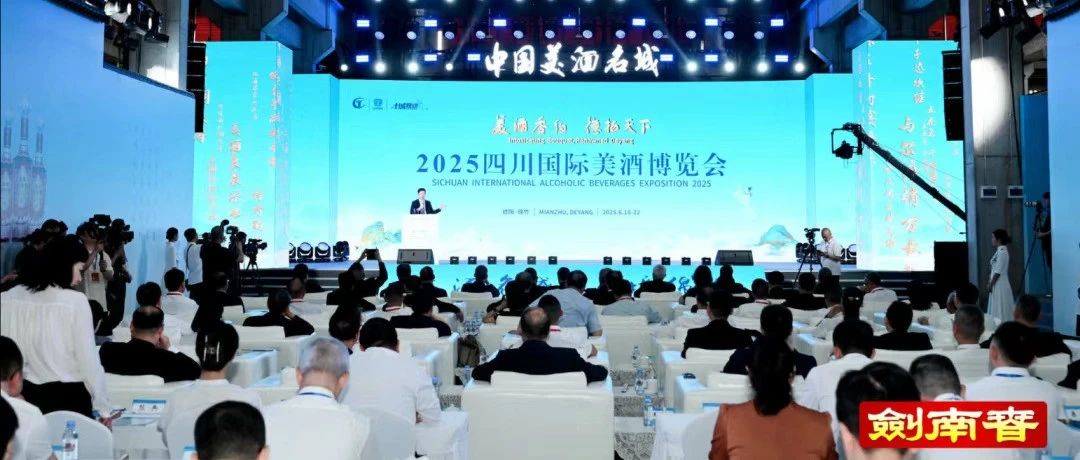
Core Viewpoint - The article highlights the significant developments and cultural initiatives of Jian Nan Chun, a leading company in the Chinese liquor industry, particularly during the 2025 Sichuan International Wine Expo and the "Hua Xia Aesthetics" conference, showcasing its commitment to innovation and tradition in liquor production [2][11]. Group 1: Company Developments - Jian Nan Chun's new phase of the Da Tang National Liquor Ecological Park has been inaugurated, which will add 30,000 to 50,000 tons of high-quality liquor production capacity, marking a key step in the company's high-quality development [2][6]. - The total investment for the Da Tang National Liquor Ecological Park phase II project is 1.667 billion yuan, expected to boost annual industrial output value by over 10 billion yuan [6]. - The company has established a full lifecycle traceability platform covering quality control, production management, logistics, and marketing, enhancing product quality and production efficiency through data integration [10]. Group 2: Cultural and Historical Significance - Jian Nan Chun's history dates back 1,500 years, with its origins as the imperial liquor of the Tang Dynasty, which adds a prestigious quality to its brand [13]. - The company has developed a complete product matrix to meet diverse consumer needs, including collaborations with cultural institutions to enhance brand value through cultural products [13][14]. - The establishment of the Tian Yi Lao Hao Museum in Jian Nan Old Street showcases the rich history of Chinese liquor, integrating cultural heritage with modern branding efforts [17][18]. Group 3: Industry Context - The Deyang region, where Jian Nan Chun is located, has been recognized as a "Chinese Famous Wine City" and is experiencing significant growth, with a projected output value of over 30 billion yuan for the local liquor industry by 2024 [19][20]. - The region's favorable natural conditions, including its location in the golden liquor-making belt, contribute to its reputation and production capabilities, with a 31.2% year-on-year increase in liquor production [19][20]. - Experts suggest that Deyang should leverage its brand advantages to enhance regional development and expand into international markets [20].
多地汽车“国补”暂停,都是价格战惹的祸?
经济观察报· 2025-06-22 02:41
Core Viewpoint - The suspension of the "old-for-new" subsidy for cars in various regions is primarily due to a mismatch between the demand for subsidies and the phased funding mechanism, despite strong demand for vehicle replacements. The marginal effectiveness of the policy is diminishing due to factors such as price wars in the automotive market [1][3][4]. Summary by Sections Suspension of Subsidies - From mid-May to June 15, multiple regions across the country announced the suspension of applications for the "old-for-new" subsidy due to exhausted funds [2]. - Regions such as Zhengzhou, Luoyang, and others have reported that the suspension is due to the "subsidy funds being used up" [2][8]. Market Reaction - The suspension of the "old-for-new" subsidy has caused unrest in the automotive market, with dealers using the news to encourage consumers to make purchases quickly [3]. - The actual impact of the subsidy policy is more favorable for low-end models, as consumer purchasing power declines and price wars intensify, leading to a decrease in the policy's stimulating effect [4]. Sales Data and Trends - From January to May, automotive sales increased by 3.5 percentage points year-on-year, significantly aided by the "old-for-new" policy. However, the suspension of subsidies and ongoing price wars have led to increased consumer hesitation [5][17]. - The overall retail sales of automobiles remained stagnant, with a total automotive consumption value of 1,884.7 billion yuan, showing zero growth year-on-year [17]. Funding Mechanism - The "old-for-new" subsidy is part of a larger funding pool of 3 trillion yuan for various consumer goods, with the distribution of funds being a challenge due to the mismatch between local demand and the phased release of funds [11][12]. - As of June 18, the central government has allocated 1,620 billion yuan of the planned 3 trillion yuan, with the remaining funds to be distributed in the latter half of the year [6][11]. Future Implications - The marginal effectiveness of the "old-for-new" policy is expected to continue diminishing, with consumers adopting a wait-and-see attitude due to aggressive price cuts in the market [16]. - The automotive market is facing pressure for growth, with expectations for more robust policies to stimulate demand, such as tax reductions and incentives for purchasing vehicles [16][18].

跨国公司新意思|特别报道
经济观察报· 2025-06-22 02:41
Core Viewpoint - The continuous improvement of China's high-level opening policies and business environment has created stable expectations for economic development, making it highly attractive for foreign investment [10][25]. Group 1: Foreign Investment Trends - Many foreign companies are increasing their R&D investments in China, integrating into the country's innovation system [3][15]. - In 2024, actual foreign investment in the medical equipment and instruments manufacturing industry, professional technical services, and computer and office equipment manufacturing grew by 98.7%, 40.8%, and 21.9% respectively [8]. - The proportion of foreign investment in high-tech industries in Shandong reached 46.5% in 2024, indicating a shift towards high-tech sectors such as pharmaceuticals and aerospace [22]. Group 2: Shandong's Investment Environment - Shandong has attracted significant foreign investment in emerging industries like high-end manufacturing and biomedicine, with 236 Fortune 500 companies investing a total of $105.9 billion [9][22]. - The provincial government has implemented policies to enhance the business environment, including the "Service Guarantee for Foreign Enterprises" initiative [25]. - Companies like AstraZeneca have invested heavily in Shandong, with a total investment of $750 million in their inhalation aerosol production base [18]. Group 3: R&D and Innovation - From 2013 to 2023, the number of R&D personnel in foreign-funded industrial enterprises in China increased from 629,000 to 838,000, a growth of 33.2% [15]. - The effective invention patents of foreign-funded industrial enterprises rose from 75,000 to 327,000, a 336% increase, indicating a significant enhancement in innovation output [16]. - Companies are increasingly localizing their R&D efforts, with some achieving up to 100% local R&D capability for certain products [14]. Group 4: Future Opportunities - Foreign companies are focusing on sectors such as healthcare, environmental protection, and sustainable development, reflecting a shift in investment priorities [9][19]. - The ongoing push for dual carbon goals and sustainable development strategies in China is influencing foreign companies' product development and market strategies [22][25]. - The rapid growth of the hydrogen fuel cell market in China is seen as a significant opportunity for foreign companies to explore [22].