美股IPO

Search documents
SAP和OpenAI宣布合作,计划推出"德国版OpenAI"
美股IPO· 2025-09-24 12:52
Core Viewpoint - The collaboration between SAP, OpenAI, and Microsoft aims to launch a "German version of OpenAI" by 2026, specifically designed to provide AI technology services to the German public sector, ensuring data sovereignty and compliance with strict legal standards [3][4][7]. Group 1: Project Overview - The project involves a clear division of responsibilities: SAP will provide enterprise application expertise and sovereign cloud infrastructure, OpenAI will contribute advanced AI technology, and Microsoft will support the Delos Cloud on its Azure platform [3][7]. - The initiative is aligned with Germany's national AI strategy, which aims for AI-driven value creation to reach 10% of GDP by 2030 [3]. Group 2: Investment and Infrastructure - SAP has allocated €20 billion to support the global promotion of its sovereign cloud products, with existing services in 10 regions including the US and Europe [9]. - To support the German AI project, SAP plans to expand its Delos Cloud infrastructure to 4,000 GPUs for AI workloads [10]. Group 3: Market Response and Future Plans - Following the announcement, SAP's stock price rose over 2%, reflecting positive market sentiment towards the company's strategic shift towards generative AI [4]. - SAP is also accelerating its sovereign cloud product layout globally, having launched services in India to meet regulatory demands [8][9].




“可以继续享受AI牛市”,但野村警告:现在不能放弃对冲
美股IPO· 2025-09-24 12:52
Core Viewpoint - Despite the solid foundation of the AI-driven bull market in the U.S. stock market, significant downside risks have accumulated, and abandoning hedging strategies is deemed dangerous [1][3][18] Group 1: Market Dynamics - The current bull market is supported by multiple factors, including a shift in the Federal Reserve's focus from combating inflation to monitoring the labor market, which has created a dovish outlook [7] - Ongoing fiscal stimulus and large-scale deficit spending in the U.S. and globally continue to bolster the market [7] - High-income consumers in the U.S. are driving consumption, supported by a favorable financial environment characterized by a weaker dollar and narrow corporate credit spreads [7] - The "AI halo" effect from large tech companies is a core theme driving market risk appetite, with strong cash flows supporting capital expenditures and unprecedented stock buybacks [7] Group 2: Investor Behavior and Sentiment - Investors are currently exhibiting a strong bullish sentiment, as evidenced by a sharp increase in demand for call options relative to put options, indicating a strong inclination towards upward market movement [5][12] - Despite the potential risks, investors are increasing leverage and pursuing high-beta, high-volatility stocks, reflecting a disregard for underlying vulnerabilities [10][12] Group 3: Warning Signals - The emergence of a concerning "circular investment" model among tech giants, where substantial funds are cycled between companies for capital restructuring, raises alarms about market sustainability [8] - The current market structure is extremely fragile, with a significant accumulation of long gamma positions near at-the-money options, which suppresses short-term volatility and creates a "slow grind" upward [14][16] - Systematic capital flows are preparing for asymmetric selling pressure, with a sell-to-buy demand ratio nearing 2:1, indicating substantial deleveraging liquidity risks [16]

德银:“资本开支牛市”的宿命--运河、铁路和电信技术革命中的股市沉浮
美股IPO· 2025-09-24 10:53
Core Viewpoint - The report highlights a significant AI capital expenditure race among major tech giants like Microsoft, Meta, Google, and Amazon, warning that such technology-driven capital spending booms often lead to "boom-bust" cycles, resulting in stock market bubbles and substantial investor losses [1][6]. Group 1: Capital Expenditure Trends - Since 2015, capital expenditures by the "Big Four" tech companies have been on a continuous rise, with an explosive growth expected to exceed $200 billion in 2024 and approach $400 billion in 2025 [2]. - This growth trend is projected to continue at least until 2030, with total annual capital expenditures potentially surpassing $500 billion by that year [3]. Group 2: Historical Context and Lessons - The report draws parallels with historical capital expenditure bubbles, specifically the "Canal Mania" of the late 18th century and the "Railway Mania" of the 19th century, both of which saw significant stock price surges followed by rapid collapses [7][8]. - It emphasizes that while canals and railways permanently altered economic landscapes, investors who bought at the peak suffered substantial financial losses, illustrating the disconnect between technological advancement and investor returns [11]. Group 3: Recent Warnings from the Telecom Bubble - The 2000 telecom bubble serves as a more recent cautionary tale, where despite the widespread adoption of telecom technology, stock prices in the sector have not returned to their peak levels from that era, highlighting the disparity between technology success and early investor returns [14]. Group 4: Current Market Dynamics - The report notes that the current AI-driven market has reached extreme valuation levels, with the CAPE ratio nearing historical highs, suggesting potential negative returns in the following decade [17]. - Additionally, market concentration is a significant concern, as the top five companies in the S&P 500 now account for nearly 30% of the index, indicating a heavy reliance on a few firms for overall market performance [19]. Group 5: Investor Caution - The historical analysis serves as a wake-up call for investors, urging caution regarding the potential detachment of capital expenditure-driven stock price surges from fundamental values, as the end of such fervor often leads to harsh corrections [20].


美光电话会:2025财年资本支出将大幅增长,继续集中在HBM上,先进制程供应紧张
美股IPO· 2025-09-24 10:53
美光预计,2025财年资本支出将大幅增长,占收入比重将达到35%左右,预计新建晶圆厂和HBM资本支 出投资的增长将占增长的绝大部分;先进制程的供应非常紧张,在2022年和2023 年随着资本支出的减 少,以及全行业向新技术节点的转型,晶圆产能已从峰值水平大幅下降。供应紧张不仅存在于HBM市场, 也存在于非HBM市场。 AI需求强劲支撑上,存储芯片巨头美光交了一份亮眼的成绩单,上季营收劲增46%,而且指引碾压预期 再创新高,并预期资本支出将进一步增长。 在财报发布后的财报电话会中,美光表达了乐观的预期,2025财年资本支出将大幅增长,占收入比重将 达到35%左右,2025财年预计实现数十亿美元的HBM收入;先进制程的供应非常紧张,供应紧张不仅存 在于HBM市场,也存在于非HBM市场。 以下是电话会要点: 1、美光在2024财年的资本支出为81亿美元,根据目前的资本支出和收入预期,预计 2025财年的资本支出将大 幅增长,占收入比重将达到 35%左右,预计新建晶圆厂和HBM资本支出投资的增长将占增长的绝大部分。将继 续把资本支出集中在 HBM 投资上,HBM 是一种高价值的解决方案,而且产品往往会增加利润率。 2 ...

暴涨超9%!一天涨3000亿!直击阿里2025云栖大会:在3800亿上追加资本支出,和英伟达达成物理AI合作
美股IPO· 2025-09-24 10:53
Core Viewpoint - Alibaba Cloud is positioning itself as a leading full-stack AI service provider, integrating advanced AI capabilities and infrastructure to support the next generation of computing and AI applications [1][4][10]. Group 1: AI Infrastructure and Partnerships - Alibaba Cloud's AI platform PAI will integrate NVIDIA's Physical AI software stack, providing comprehensive services for data preprocessing, simulation data generation, model training evaluation, and more [1][5][22]. - The company plans to increase its capital expenditure beyond the previously announced 380 billion yuan to enhance AI infrastructure, anticipating a tenfold increase in global data center energy consumption by 2032 [18][39]. - Alibaba Cloud has showcased its upgraded AI infrastructure, including high-density AI servers and a new high-performance network architecture, to support large-scale AI applications [35][36]. Group 2: AI Model Developments - The launch of the Qwen3-Max model, which outperforms competitors like GPT-5 and Claude Opus 4, positions Alibaba among the top three in global large language models [5][24][25]. - The company has released over 300 open-source models, achieving more than 600 million downloads, making it the leading provider of open-source models globally [20][30]. - New models such as Qwen3-VL and Qwen3-Omni have demonstrated significant advancements in visual understanding and multi-modal capabilities, enhancing the potential for diverse applications [27][28]. Group 3: Future Vision and Market Position - Alibaba's CEO emphasizes that large models will serve as the next generation of operating systems, with the potential for only a handful of super cloud computing platforms globally [10][15]. - The company aims to leverage AI to enhance human capabilities, predicting a future where AI agents and robots will assist in various tasks, significantly amplifying human intelligence [19][12]. - Alibaba Cloud currently holds a 35.8% market share in China's AI cloud market, significantly outpacing competitors, and plans to invest heavily in cloud and AI infrastructure over the next three years [39].

花旗:2026年—智能眼镜的“普及转折点”?
美股IPO· 2025-09-24 07:19
Core Viewpoint - Citi believes that Meta's long-term layout in the smart glasses sector is entering a critical harvest period, predicting that smart glasses may become mainstream within the next 12-24 months and could reach a key inflection point by 2026 [1][2]. Market Potential and Growth - The report indicates that Meta's smart glasses are moving towards a critical commercialization phase driven by AI features, with expectations for a mainstream market breakthrough in 2026 [2]. - Meta's Ray-Ban smart glasses saw a threefold increase in sales in the first half of 2025, with plans to achieve an annual production capacity of 10 million units by the end of 2026 [1][2]. - The potential adoption curve for smart glasses is compared to the explosive growth of smartwatches and wireless earbuds, suggesting a similar trajectory in the coming years [2][7]. Consumer Sentiment and Demand - A consumer survey revealed that approximately 12% of respondents plan to purchase Ray-Ban Meta smart glasses, while only about 5% currently own the product [9]. - Analysts predict that by 2030, smart glasses could contribute around €3.7 billion to EssilorLuxottica's revenue, accounting for about 10% of total sales, with expected revenue of less than €300 million in 2024 [9]. Development Phases of Smart Glasses - The adoption of smart glasses is expected to occur in three core phases: 1. "Hands-free moments" where voice commands are used for photography and video [5]. 2. "AI-powered experiences," which is the core of making glasses "smart" [5]. 3. "Digital overlay," which is just beginning, with the potential for AI interaction experiences [5]. Challenges and Competitive Landscape - Key hardware challenges affecting widespread adoption include appearance, battery life, and weight, with 50 grams being the maximum tolerable weight for users [10]. - The second-generation Ray-Ban Meta glasses have doubled battery life to approximately 6-8 hours, but a full AR experience may require all-day battery life [10]. - Meta is considered to be years ahead of competitors in defining the smart glasses category, although competition is intensifying from companies like Google, Snap, and Apple [11][12][13][14].

大摩:谁来买单“AI资本狂潮”?未来三年,硅谷出1.4万亿美元,华尔街筹1.2万亿美元
美股IPO· 2025-09-24 07:19
Core Insights - Morgan Stanley predicts that global spending on AI data centers and chips will reach $2.9 trillion by 2028, with tech giants responsible for approximately $1.4 trillion of this amount [3][4] - The remaining funding gap is expected to be filled through debt financing, estimated at $1.2 trillion, with private credit funds anticipated to provide $800 billion of this total [3][4] Group 1: Investment Landscape - A powerful alliance of global banks, private credit giants, and specialized lending institutions is forming to meet the unprecedented capital demand driven by AI [3][4] - Innovative financing structures, such as using AI chips as collateral, are being actively explored, exemplified by JPMorgan's nearly $10 billion loan to OpenAI [3][4] Group 2: Traditional Banks' Role - JPMorgan has taken an aggressive stance in AI data center financing, agreeing to bear all financing risks for a $9.4 billion loan to Crusoe for data center development [4] - The bank has also led the underwriting of $38 billion in loans for Oracle's data center projects, aiming to solidify its position in this sector [4][5] Group 3: Japanese Banks' Competitive Edge - Japanese banks, particularly Mitsubishi UFJ Financial Group and Sumitomo Mitsui Banking Corporation, are becoming significant players in the data center financing market due to their cost advantages from low interest rates [5] - These banks have participated in major transactions, including a $3.1 billion loan for Rowan Digital Infrastructure [5] Group 4: Private Credit's Dual Role - Blackstone is playing a dual role in the data center sector as both an owner and a lender, leading a $7.5 billion debt financing for CoreWeave, secured by high-performance Nvidia chips [6] - This "chip collateral loan" model carries risks but offers high returns, with interest rates reaching 10.5% [6] Group 5: Emergence of Alternative Investors - Alternative investors like PIMCO are entering the market, providing critical capital for early-stage, higher-risk projects, such as a $26 billion debt financing for Meta Platforms' new data center [7] - Macquarie Bank is known for supporting early projects, offering various financing options, including a $5 billion preferred equity investment in Applied Digital [7][8] Group 6: Notable Private Credit Firms - Blue Owl and Magnetar Capital are noteworthy private credit firms, with Blue Owl investing over $600 million in data center projects and Magnetar participating as a major investor in CoreWeave's innovative loan transactions [8]

华尔街热议“AI闭环”:看多者“压制ASIC,英伟达长牛”,看空者“给客户贷款,和当年思科一样”
美股IPO· 2025-09-24 07:19
Core Viewpoint - Nvidia plans to invest up to $100 billion in OpenAI, which will use the funds to purchase Nvidia's chips, raising concerns on Wall Street about a potential repeat of the internet bubble [1][2][4][5] Group 1: Investment Structure - The investment structure involves Nvidia providing up to $100 billion for non-voting shares in OpenAI, which will then use this capital to buy Nvidia chips and deploy at least 10 GW of Nvidia systems [2][13] - This "supplier financing" model has led to significant stock price increases in the AI sector but has also raised alarms among seasoned market participants [4][5] Group 2: Market Reactions - Critics liken this transaction to practices before the 2000 tech bubble, where companies like Cisco provided loans to customers who then repurchased their products, suggesting a potentially negative outcome for all involved [8][12] - Supporters argue that this move is a strategic step for Nvidia to solidify its dominance in the GPU market and suppress competition from ASICs, signaling to the market that orders must be placed now to secure chips [6][12] Group 3: Energy Consumption Concerns - The scale of the project is staggering, with OpenAI's deployment of at least 10 GW of Nvidia systems requiring energy equivalent to that produced by 10 nuclear reactors [13][15] - This highlights the significant energy demands of AI infrastructure and the necessity for investors to consider energy costs and infrastructure feasibility in evaluating the future of the AI industry [15]


芯片狂潮向内存蔓延,大摩:NAND好于DRAM,存在显著上涨潜力
美股IPO· 2025-09-24 04:35
Core Viewpoint - The AI-driven chip investment frenzy is shifting from GPUs to the memory sector, particularly NAND flash memory, which is expected to show significant upward potential due to a drastic change in supply-demand dynamics [1][4][5]. Group 1: Market Dynamics - The memory market, especially NAND, is in the early stages of a sustained upward cycle driven by strong demand from AI data centers [3][5]. - Samsung has significantly raised prices for memory and flash products, with DRAM prices increasing by up to 30%, and lead times extending from one month to over six months [3][19]. - The current market is at a critical turning point, with expectations of a recovery cycle for memory prices by 2026 after a double-bottom formation [1][13]. Group 2: Supply and Demand - The NAND market is expected to experience a supply-demand imbalance, with cloud service providers (CSPs) placing large orders for enterprise solid-state drives (eSSD) ahead of traditional timelines, creating a significant supply gap [19][20]. - Orders for NL eSSD from major clients have reached approximately 200 exabytes (EB), with an additional 150 EB related to AI demand, indicating a potential 7% supply shortfall by 2026 [23][30]. - Despite the surge in demand, supply-side responses have been restrained, with manufacturers maintaining strict capital discipline and prioritizing DRAM investments over NAND [27][28]. Group 3: Price Trends - Memory pricing is anticipated to face a "double bottom" scenario, with a rebound followed by a potential decline before entering a sustained upward trend [15][18]. - The average selling price for DRAM is expected to rise by 3-8% in Q2 2025, although some categories may see flat or slightly declining prices in Q4 2025 before stronger increases in 2026 [16][18]. - Flash memory prices are projected to increase by 15-20% in the first half of 2026, following near double-digit increases in Q4 2025 [25]. Group 4: Investment Opportunities - Key investment targets include pure flash manufacturers like KIOXIA and SanDisk, as well as major players like Samsung and SK Hynix, which are expected to benefit from the overall strengthening of the storage commodity cycle [4][32][33]. - KIOXIA is positioned well in the eSSD market due to its advanced technology, while SanDisk is expected to benefit significantly from the overall price increases in flash memory [32][33]. - Module manufacturers such as Longsys and Phison are also likely to gain from rising flash memory prices [34].

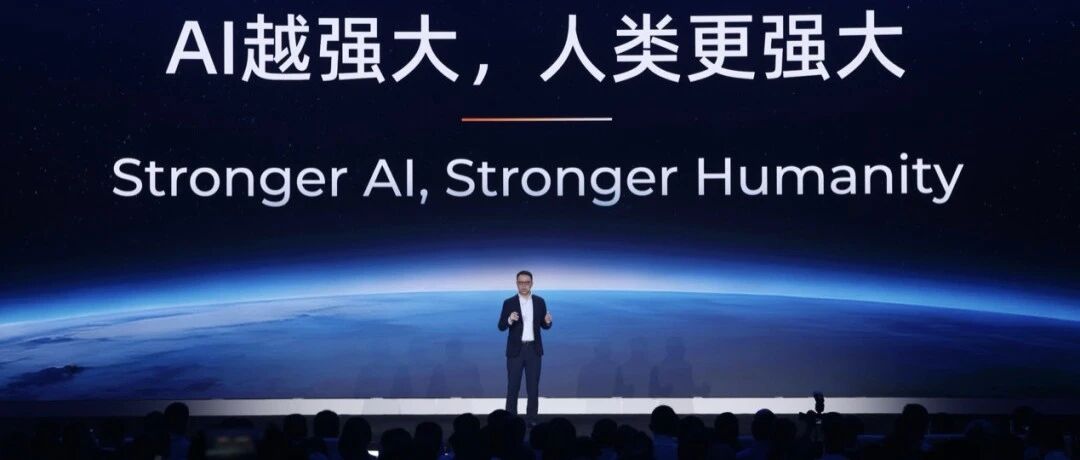
阿里吴泳铭::资本开支会在3800亿基础上,增加更多的投入(附2025云栖大会演讲全文)
美股IPO· 2025-09-24 04:35
Core Viewpoint - The realization of Artificial General Intelligence (AGI) is seen as a certainty, marking the beginning of a journey towards Super Artificial Intelligence (ASI), which aims to surpass human capabilities and achieve self-iteration [1][7]. Summary by Sections Stages of AI Evolution - The evolution towards ASI consists of three stages: 1. "Intelligent Emergence," where AI learns from vast human knowledge to develop generalized intelligence [3][9]. 2. "Autonomous Action," where AI gains the ability to use tools and programming to assist humans, representing the current stage of the industry [4][10]. 3. "Self-Iteration," where AI connects with the physical world for self-learning, ultimately achieving superiority over human intelligence [5][12]. Strategic Path of Alibaba Cloud - Alibaba Cloud aims to be a "full-stack AI service provider" through two core strategies: 1. Committing to an open-source approach with Tongyi Qianwen, aspiring to create "the Android of the AI era" [5][18]. 2. Building a super AI cloud as the "next-generation computer" to provide a global intelligent computing network [20][22]. Investment in AI Infrastructure - Alibaba is actively pursuing a three-year plan with an investment of 380 billion yuan in AI infrastructure, with expectations that energy consumption in global data centers will increase tenfold by 2032 compared to 2022 [5][23]. AI's Role in Future Society - The future will see AI as a core driver of productivity, with the potential to create "super scientists" and "full-stack super engineers" who can solve complex problems at unprecedented speeds [7][25]. - AI will transform the relationship between humans and machines, enabling a collaborative environment where AI significantly amplifies human productivity [25][26].