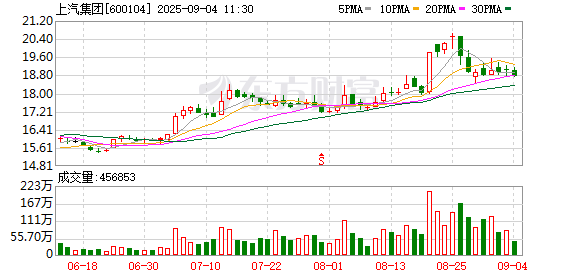
SAIC MOTOR(600104)

Search documents
每日报告精选-20250905
GUOTAI HAITONG SECURITIES· 2025-09-05 06:46
Group 1: Overseas Strategy Research - The current AH premium level still has some room to decline, with the narrowing mainly contributed by traditional industries. Traditional industries like real estate and banking still have room for further narrowing, while emerging industries such as semiconductors and hardware are expected to see a gradual narrowing in the future. A-share first-listed companies have a greater downward space for AH premium [3]. Group 2: Strategy Special Report - The structural recovery continues, with AI + overseas expansion being the core prosperity clues in the second-quarter reports. The performance growth of all A non-financial oil and petrochemical (All A two non) slowed down in 25Q2, but the prosperity clues within the technology growth sector accelerated their spread. The global AI industry resonance and overseas expansion are the core prosperity clues. Mid-cap growth stocks have outstanding performance growth, and the prosperity of hard technology and non-banking sectors is dominant [5][6]. Group 3: Industry Strategy - Comprehensive - Interferon α1b, suitable for the Chinese population, has the advantages of low antigenicity and few adverse reactions. It can be used for common viral diseases and malignant tumors, especially in children. The market is mainly in China and India, with a good competitive landscape. Some injections have been included in the medical insurance, and future demand is expected to increase [10]. Group 4: Industry Tracking Report - Military - The military parade demonstrated the high prosperity of the military industry. New and advanced military equipment was showcased, reflecting China's military technological innovation and strategic deterrence capabilities. The industry demand is highly certain, and with the acceleration of reform and innovation, it is expected to maintain high prosperity. Recommended stocks include AVIC Shenyang Aircraft, AVIC Optoelectronics, etc. [13][14][15]. Group 5: Industry Special Research - Household Appliances - The domestic subsidy effect continues, but the marginal effect is decreasing, and the tariff impact on exports is expected to ease. The overseas revenue proportion of the household appliance sector is increasing, and many companies are expanding into new fields. The performance of some companies in Q2 exceeded expectations, mainly in small household appliances and cleaning appliances. Four investment lines are recommended [18][19][20]. Group 6: Industry Strategy - Textile and Apparel - In 2025, the cumulative export of textiles and clothing in China and Vietnam increased year-on-year. In Q2, the revenue growth of many companies slowed down or declined, and the profit margin was under greater pressure. The short-term tariff impact will end at the end of the year, and future order prosperity is the core variable. Recommended stocks include Bailong Eastern, Jiuxing Holdings, etc. [25][26][27]. Group 7: Industry Tracking Report - Social Services - The investment view recommends AI applications, new retail and renovation, and emotional and experiential consumption stocks. The performance of the retail and consumer service sectors last week was ranked 9th and 14th respectively. Key industry information and company announcements were updated [29][30][31]. Group 8: Industry Semi-annual Report - Textile and Apparel - In 25H1, the Hong Kong stock sports sector led the industry in revenue and net profit growth, while the A-share brand performance was divided. The market expectations for brands after the semi-annual reports were mostly revised downwards, but the sports sector showed more resilience. Four investment lines are recommended [34][35][37]. Group 9: Industry Weekly Report - Petroleum - This week, crude oil trading returned to fundamental factors. The probability of interest rate cuts in the US has increased in the medium and long term, and the demand for crude oil has weakened. Recommended stocks include Xin凤鸣, Tongkun Co., Ltd., etc. [39]. Group 10: Company Semi-annual Report Comment - Quicktron Intelligent - The company achieved steady growth in 25H1, with high growth in contract liabilities laying a foundation for future growth. Benefiting from the high prosperity of the downstream AI industry, the demand for its main business continues to grow. The TCB prototype is expected to be launched within this year, expanding the semiconductor packaging map [40][41][42]. Group 11: Company Semi-annual Report Comment - Runhe Software - In 2025H1, the company's non-recurring profit increased significantly, and the intelligent IoT business maintained high prosperity. The company is making efforts in open-source Hongmeng, open-source Euler, and enterprise-level AI to create new driving forces, and is building an AI full-stack technology system [44][45][46]. Group 12: Overseas Report - China Everbright Holdings - The company is a leader in the private equity industry, with both the asset and liability sides showing improvement inflection points. It focuses on technological innovation and is gradually entering the harvest period. A "buy" rating is given for the first coverage, with a target price of HK$14.18 [49][50][51]. Group 13: Company First Coverage - Hanbell Precise Machinery - The company is a leader in the compressor industry, with healthy operating indicators and strong cash flow generation ability. The demand for data centers is surging, and the demand for magnetic levitation compressors is expanding. The company is expected to benefit from the industry's development, and a "buy" rating is given for the first coverage [54][55][56]. Group 14: Company Semi-annual Report Comment - Ruijie Networks - The company's data center business accounts for more than 50% of its revenue, showing strong income elasticity. The net profit margin shows an inflection point trend, and the expense ratio has decreased. A "buy" rating is maintained, with an upward adjustment of the performance forecast [59][60][61]. Group 15: Company Semi-annual Report Comment - Zhonggong International - The company's semi-annual report shows a decline in net profit but an improvement in gross profit margin and cash flow. Newly signed contracts increased by 33%. It has technical and brand advantages in细分 fields, and its investment and operation business in engineering has achieved multi-point breakthroughs. A "buy" rating is maintained [62][63][64]. Group 16: Company Semi-annual Report Comment - Jiuli Special Material - The company's overseas revenue exceeded domestic revenue in the first half of 2025, indicating significant international development achievements. The composite pipe orders were released, and the welding pipe gross profit margin decreased. The power equipment industry is booming, and the alloy company continues to grow. A "buy" rating is maintained [68][69][70]. Group 17: Company Semi-annual Report Comment - MEI Airtech - The company's operation is stable, and its performance is growing steadily. It actively responds to the overseas expansion of new energy and accelerates global layout to expand downstream markets. Solid-state batteries require higher cleanliness, and the company's clean equipment is expected to benefit first. A "buy" rating is maintained [72][73][74]. Group 18: Company Semi-annual Report Comment - Haimuxing - The company's performance was under pressure in 25H1, but it is expected to improve in the future. Its globalization strategy has achieved remarkable results, and its non-lithium battery business is advancing steadily. With sufficient orders, it has strong performance elasticity. A "buy" rating is given [77][78][79]. Group 19: Company First Coverage - FAW Jiefang - The company is a leading enterprise in China's commercial vehicle industry. Its 2025 semi-annual report was under pressure, but with the recovery of the domestic and overseas markets, its profitability is expected to improve. It is accelerating overseas layout to enhance its profitability. A "buy" rating is given for the first coverage [80][81][83]. Group 20: Company Semi-annual Report Comment - Shenzhou Information - The company's revenue increased steadily in the first half of 2025, and its profit in Q2 significantly reduced losses. Its financial software and service business grew steadily against the trend, and its large customer strategy achieved remarkable results. It has deeply explored the "AI + finance" application, and two strategic products have been implemented in scenarios. A "buy" rating is maintained [84][85][86]. Group 21: Company Semi-annual Report Comment - SAIC Motor - The company's reform results are emerging, and its performance is stabilizing and rebounding. The Huawei project is progressing smoothly, and the first model of the SAIC Shangjie brand is worth looking forward to. A "buy" rating is maintained [89][90]. Group 22: Company Semi-annual Report Comment - China World Trade Center - The company's revenue and profit decreased year-on-year in 2025H1, and the rent and occupancy rate of each business format fluctuated. The China World Trade Center supports its core revenue. A "buy" rating is maintained [92][93][94].





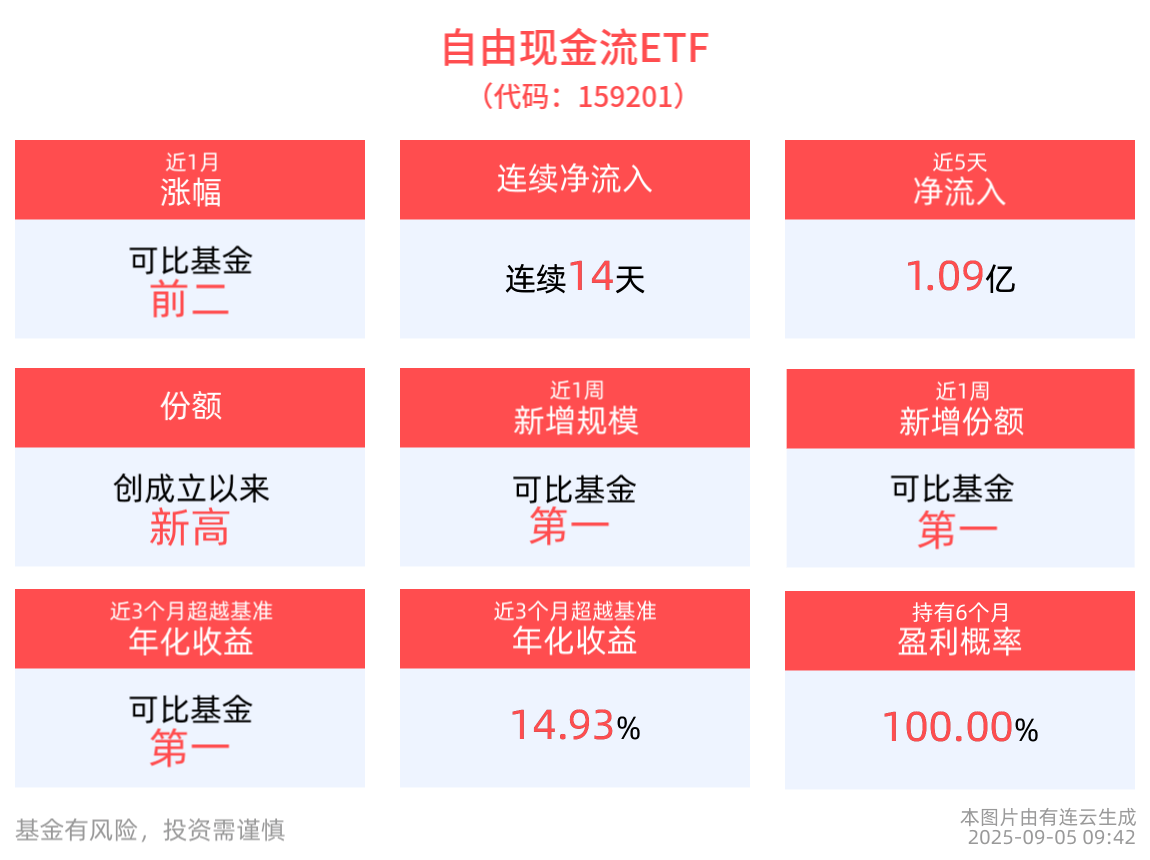
自由现金流ETF(159201)近14天获得连续资金净流入,合计“吸金”7.25亿元
Sou Hu Cai Jing· 2025-09-05 02:18
Core Viewpoint - The Free Cash Flow ETF has shown strong performance with significant inflows and high returns, indicating a favorable investment environment for companies with stable cash flow [1][3][4]. Group 1: ETF Performance - As of September 5, 2025, the National Index of Free Cash Flow increased by 0.1%, with constituent stocks like Anfu Technology rising by 7.79% [1]. - The Free Cash Flow ETF (159201) has seen an average daily trading volume of 349 million yuan over the past month, ranking first among comparable funds [1]. - In the last 14 days, the Free Cash Flow ETF has attracted a total net inflow of 725 million yuan, reaching a record high of 4.111 billion shares since its inception [1]. Group 2: Leverage and Returns - Leverage funds have been actively buying into the Free Cash Flow ETF, with a net purchase of 10.5771 million yuan on the highest single day, bringing the latest financing balance to 54.4918 million yuan [3]. - Since its inception, the Free Cash Flow ETF has achieved a maximum monthly return of 7%, with the longest consecutive monthly gains being 4 months and a maximum increase of 16.68% [3]. - The ETF has a historical monthly profit probability of 81.2% and a 100% probability of profit over a 6-month holding period [3]. Group 3: Fee Structure and Tracking Accuracy - The management fee for the Free Cash Flow ETF is 0.15%, and the custody fee is 0.05%, making it the lowest among comparable funds [3]. - The tracking error for the Free Cash Flow ETF over the past month is 0.066%, indicating the highest tracking precision among comparable funds [3]. Group 4: Index Composition - The National Index of Free Cash Flow reflects the price changes of listed companies with high and stable free cash flow levels in the Shanghai and Shenzhen stock exchanges [4]. - As of August 29, 2025, the top ten weighted stocks in the index include SAIC Motor, China National Offshore Oil, Midea Group, and others, collectively accounting for 57.95% of the index [4][6].





多维度透视沪深2025年中报:谁在领衔增长?
2 1 Shi Ji Jing Ji Bao Dao· 2025-09-04 23:09
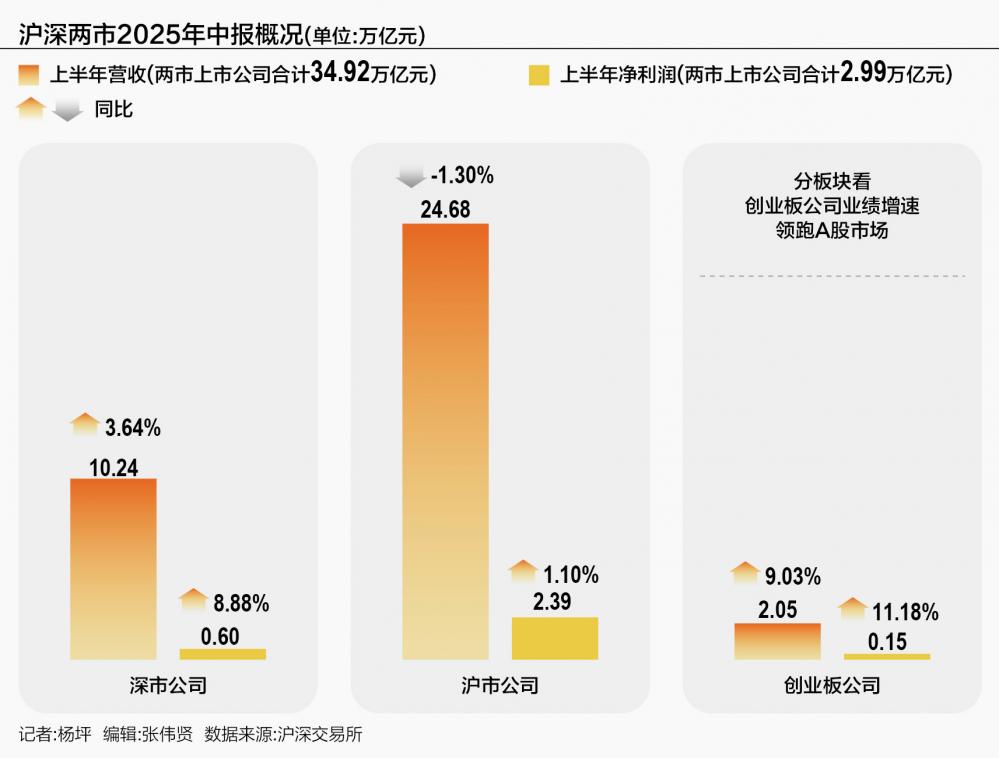
Group 1: Overall Performance of Listed Companies - The total operating revenue of listed companies in Shanghai and Shenzhen reached 34.92 trillion yuan, with a net profit of 2.99 trillion yuan for the first half of 2025 [1] - Shenzhen companies achieved a total operating revenue of 10.24 trillion yuan, a year-on-year increase of 3.64%, and a net profit of 595.46 billion yuan, up 8.88% [1] - Shanghai companies reported operating revenue of 24.68 trillion yuan, a slight decrease of 1.3%, with a net profit of 2.39 trillion yuan, an increase of 1.1% [1] Group 2: Sector Performance - Emerging industries such as semiconductors, electronics, pharmaceuticals, and new energy are rapidly rising, while traditional industries like steel and machinery are seeking transformation [2] - The electronics sector in Shenzhen saw 253 companies generate 984.76 billion yuan in revenue, a 14.1% increase, and a net profit of 454.57 billion yuan, up 24.59% [3] - The computer industry in Shenzhen reported 501.25 billion yuan in revenue, a 13.74% increase, and a net profit of 122.85 billion yuan, up 26% [5] Group 3: R&D Investment - Shenzhen companies invested a total of 352.97 billion yuan in R&D, with significant contributions from companies like BYD and ZTE [9] - The R&D investment in strategic emerging industries in Shenzhen reached 92.46 billion yuan, a year-on-year increase of 22.36% [9] - Shanghai's R&D investment also hit a record high of 432.6 billion yuan, growing by 1% [9] Group 4: International Expansion - Over 830 manufacturing companies in Shanghai achieved overseas revenue of 1.1 trillion yuan, a 5% increase [11] - Shenzhen's strategic emerging industries reported overseas income of 434.66 billion yuan, a 23.59% increase, with a 29.22% share of total revenue [11] - Companies are diversifying their overseas markets, with significant growth in exports from firms like Huayou Cobalt and Quectel [12] Group 5: Dividend and Shareholder Returns - A total of 794 listed companies in Shanghai and Shenzhen announced mid-term dividends amounting to 643.81 billion yuan [12] - Shenzhen companies saw an 18.04% increase in the number of mid-term dividends declared, with a 49.51% increase in dividend amounts [12] - Companies are also increasing share buybacks, with Shenzhen firms announcing 230 buyback plans totaling 68.21 billion yuan [13]




汽车与汽车零部件半年报总结:竞争加剧,分化加剧!
2025-09-04 14:36
Summary of Automotive and Auto Parts Industry Conference Call Industry Overview - The automotive industry experienced accelerated revenue growth in Q2 2025, but overall performance declined by 25% year-on-year. The passenger vehicle sector saw an 11.2% revenue increase compared to Q1, while the commercial vehicle sector showed a 2.3% sales growth but a significant profit decline of 51.6% [2][3][4]. Key Company Performances Ideal Automotive - Ideal Automotive faced pressure in Q2 2025, with expectations for improved performance in Q4 due to the large-scale launch of the L8 and I8 models [1][4]. Xpeng Motors - Xpeng Motors reported a 200% year-on-year increase in Q2 sales, reaching 103,000 units, with a narrowing loss. The company is expected to achieve quarterly profitability in Q4 [1][4]. BYD - BYD's Q2 net profit fell below market expectations, impacted by a price war leading to a decline in gross margin. However, improvements are anticipated in Q3 and Q4 as production scales up [1][4]. SAIC Motor Corporation - SAIC reported a strong Q2 net profit of approximately 3 billion yuan, with a non-recurring profit of 2.5 billion yuan. The company implemented inventory reduction and management improvements, expecting significant revenue growth from new vehicle launches in H2 2025 [1][7]. Geely Automobile - Geely's performance remained strong in Q2 and Q3, benefiting from internal integration of brands. The company is expected to maintain a positive growth trend [1][8]. Leap Motor - Leap Motor achieved quarterly profitability in Q2 2025, with a competitive advantage in the 100,000-200,000 yuan price range [1][9]. Great Wall Motors - Great Wall Motors improved its sales structure in Q2, with positive impacts from the Russian market. The new Tank 500 model is expected to enhance sales further in Q3 and Q4 [1][10]. Commercial Vehicle Sector - The commercial vehicle sector outperformed the passenger vehicle and parts sectors, with expectations for continued growth, particularly in heavy trucks [2][15][16]. Auto Parts Industry Insights - The auto parts sector saw a revenue growth of approximately 7% in Q2 2025, with significant internal differentiation. Large companies faced pressure, while medium-sized firms performed better than expected [1][3][11]. - Notable performers included Desay SV and Jingwei Hirain, with Desay SV achieving a 41% profit growth and a 16% revenue increase [12][13]. Market Trends and Future Outlook - The market for intelligent driving hardware is stabilizing, with a clear trend of performance improvement among leading companies [14]. - The commercial vehicle sector, especially heavy trucks, is expected to maintain strong growth momentum in the upcoming quarters [15][16]. Investment Recommendations - In the Hong Kong stock market, companies like Geely, Xpeng, and Ideal Automotive are recommended for attention, with Ideal expected to recover as electric vehicle production ramps up [2][18]. - In the auto parts sector, companies such as Fuyao Glass and medium-sized firms like Bojun Technology and Wuxi Zhenhua are highlighted for their strong growth potential [19]. Conclusion - The automotive and auto parts industries are experiencing significant changes, with varying performances across different companies and sectors. The focus on new models, market expansion, and technological advancements will be crucial for future growth and investment opportunities [1][2][4][15].
8月新能源车企销量普涨,多个品牌同比翻倍
经济观察报· 2025-09-04 12:07
Core Viewpoint - The article highlights the strong sales performance of various new energy vehicle companies in August, with many experiencing significant year-on-year growth, while traditional automakers also showed positive trends, except for a few exceptions [2][4]. New Energy Vehicle Companies - In the new car manufacturing sector, all companies except Li Auto and Zeekr showed growth, with some brands achieving over 100% year-on-year increase [2][4]. - Leap Motor led the new car manufacturers with an August delivery of 57,000 units, an 88% increase year-on-year, and a cumulative sales of 329,000 units from January to August, marking a 136% increase [3][4]. - Xiaopeng Motors reported a strong performance with 38,000 units sold in August, a 169% increase, and a total of 272,000 units sold from January to August, reflecting a 252% increase [4][5]. - NIO also saw a recovery with 31,000 units sold in August, a 55% increase, supported by new models like the L90 [4][5]. - Li Auto's sales were 29,000 units in August, down 41% year-on-year, and a total of 263,000 units from January to August, down 9% [4][5]. Traditional Automakers - Among traditional automakers, BYD maintained its leading position with 374,000 units sold in August, showing a slight increase of 0.1% year-on-year [7][8]. - Geely's sales reached 147,000 units in August, a 95% increase, while Changan and Chery also reported significant growth of 80% and 53%, respectively [8][9]. - GAC Aion experienced a decline of 24% in August sales, but future performance is anticipated to improve due to ongoing reforms within GAC Group [9].




跑输大盘!新能源车要歇歇脚?私募这样看
Zhong Guo Zheng Quan Bao· 2025-09-04 09:41
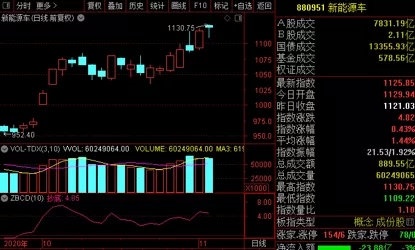
Group 1 - The A-share new energy vehicle sector has recently experienced a pullback after a strong performance, influenced by the realization of favorable policy news [1][3] - Leading stocks in the sector, such as BYD, SAIC Motor, and CATL, have shown signs of weakness despite previous gains [6][7] - The new energy vehicle sector index has outperformed major indices like the CSI 300 and Shanghai Composite Index, with increases of 3.44%, 15.79%, and 44.61% for November, the fourth quarter, and the year-to-date, respectively [7] Group 2 - Multiple private equity firms remain optimistic about the new energy vehicle sector, viewing it as a key driver for China's automotive industry and energy conservation efforts [2][10] - The recent issuance of the "New Energy Vehicle Industry Development Plan (2021-2035)" is expected to have a long-term positive impact on the sector, promoting electric vehicle adoption and cost reductions [8][9] - The market sentiment around new energy vehicles is currently strong, with expectations for continued interest from institutional investors, particularly in leading companies like BYD and Great Wall Motors [9][10] Group 3 - The new energy vehicle sector is anticipated to become a major focus for investors, potentially emerging as the fourth popular sector after consumption, technology, and pharmaceuticals [2][10] - The sector's growth is driven by unexpected demand increases and a target of 20% penetration for new energy vehicles by 2025, compared to the current 5% [10] - Investment opportunities are seen in both the midstream and upstream segments of the industry, with a focus on components and traditional automakers' technological advancements [11]



新能源汽车新材料研究之八:汽车轻量化进入“镁”时代,车企竞逐百亿镁合金蓝海
Minmetals Securities· 2025-09-04 09:14
Investment Rating - The report rates the automotive industry as "Positive" [2] Core Insights - The magnesium alloy market is projected to reach a potential market size of 39.758 billion yuan, with a significant increase in usage in the automotive sector [11][26][30] - The total weight of magnesium alloy components currently used, being replaced, or in trial in domestic vehicles is approximately 106.47 kg per vehicle, indicating a market space of 1.37 million tons per year starting in 2024, which is seven times the production of magnesium alloy die-cast parts in 2023 [11][26] - The cost advantage of magnesium alloys over aluminum alloys is expected to become more pronounced after magnesium prices fall below aluminum prices in 2024 [11] - Breakthroughs in corrosion resistance of magnesium alloys are opening new opportunities for their application in automotive parts, expanding from closed areas to open areas [11][26] Summary by Sections 1. Magnesium Alloy Corrosion Resistance Improvement - The application of magnesium in vehicles is expanding from closed areas to non-closed areas due to improved corrosion resistance [11] - The cost advantage of magnesium alloy components is becoming more evident as magnesium prices drop below aluminum prices [11] 2. Market Space for Trial Magnesium Alloy Components - Magnesium alloys are currently in the experimental verification stage for parts like shock towers and integrated die-cast floors [13] - The market space for magnesium alloy integrated die-cast floors is estimated at 9.667 billion yuan per year based on 2024 projections [15] 3. Market Space for Replacement Magnesium Alloy Components - Magnesium alloy electric drive housings are entering mass replacement applications, with significant weight reduction and cost savings [18][20] 4. Mature Applications of Magnesium Alloy Components - Established applications include parts like instrument panel beams and steering wheel frames, with a market size of approximately 2.169 billion yuan per year [21] 5. Planned Magnesium Alloy Components - Ongoing trials for complex-shaped components such as battery pack housings and control arms are underway, with significant potential market sizes projected [22][24][25] 6. Potential Market Size for Magnesium Alloys in Automotive Applications - The overall potential market size for magnesium alloy components in the automotive sector is estimated at 39.758 billion yuan, with a total potential usage of approximately 2.1165 million tons [26][30] 7. Magnesium Alloy Component Manufacturing Industry Chain - The industry chain includes upstream raw magnesium and magnesium alloy smelting, midstream magnesium alloy component manufacturing, and downstream users such as automotive companies [32][33]


一周一刻钟,大事快评(W122):重点公司中报总结
Shenwan Hongyuan Securities· 2025-09-04 06:43
Investment Rating - The report maintains a positive outlook on the automotive industry, recommending a focus on domestic leading manufacturers and companies involved in smart technology and state-owned enterprise reforms [4][5][6]. Core Insights - The report emphasizes the dual themes of technology and state-owned enterprise reform as key drivers for investment opportunities in the automotive sector [4]. - It highlights specific companies such as BYD, Geely, and Xpeng as strong alpha manufacturers, while also pointing out the importance of smart technology trends represented by Huawei's HarmonyOS [4]. - The report suggests that companies with strong performance growth and capabilities in robotics or overseas expansion, such as Fuyao Glass and New Spring, are worth attention [4][5]. Summary by Relevant Sections Key Company Performance - BYD's Q2 gross margin was significantly below expectations, but overseas sales are projected to reach 1 million units this year [5][6]. - Geely's overall performance is good, with a noticeable improvement in product structure, indicating potential for sustained profit [5][6]. - SAIC Motor shows significant growth in both domestic and overseas markets, aided by management optimization from Huawei [5][6]. - New Spring achieved profitability in Q2, driven by cost control and scale effects [5][6]. - Fuyao Glass exceeded expectations in Q2, with a projected revenue compound growth rate of over 18% [5][6]. - Ideal Auto's performance met expectations, but guidance for the second half is below market expectations [5][6]. - Long-term growth is anticipated for companies like Xingyu and Kobot, which are expanding their market presence and product offerings [7][8]. Financial Metrics - The report provides a valuation table for key automotive companies, indicating projected net profit growth rates and price-to-earnings ratios for 2024 to 2026 [15][16]. - For instance, BYD is expected to have a net profit of 402.5 billion in 2024, with a growth rate of 34% [15]. - SAIC Motor's projected net profit for 2025 is 114 billion, reflecting a significant recovery from previous years [15]. Market Trends - The report notes a trend towards high-end models and smart technology integration in the automotive sector, with companies like Great Wall and Xpeng focusing on premium offerings [12][14]. - The competitive landscape is characterized by price wars, but companies like Tuhu are showing resilience with a 20% growth in paid users [6][7].
8月多家车企销量创新高 新能源汽车和海外市场表现成亮点
Zhong Guo Zhi Liang Xin Wen Wang· 2025-09-04 05:00
Group 1: Overall Market Performance - The automotive market in August showed strong performance, with many traditional and new energy vehicle companies achieving record sales [1][2] - The growth in sales was significantly supported by the performance of new energy vehicles and overseas markets [1] Group 2: Major Traditional Automakers - BYD's August sales reached 373,600 units, nearly flat compared to the same month last year, with cumulative sales of 2.864 million units from January to August, a 23% year-on-year increase [1] - SAIC Motor's total vehicle sales in August were 363,400 units, up 41.04% year-on-year, with new energy vehicle sales of 129,800 units, a 49.89% increase [1] - Geely's August sales were 250,200 units, a 38% increase, with new energy vehicle sales reaching 147,300 units, up 95% and accounting for 59% of total sales [1] Group 3: Emerging Automakers - Chery Group's August sales were 242,700 units, a 14.6% increase, with new energy vehicle sales of 71,200 units, up 53.1% [2] - Changan Automobile's August sales reached 233,000 units, with new energy vehicle sales of 88,000 units, an 80% increase [2] - Great Wall Motors achieved its best August sales with 115,600 units, a 22.33% increase, and new energy vehicle sales of 37,500 units, up 50.92% [2] Group 4: New Energy Vehicle Segment - New energy vehicle sales are a key driver for many automakers, with significant growth observed across various companies [1][2] - New entrants like Leap Motor achieved record deliveries of 57,100 units in August, an 88% year-on-year increase, while XPeng Motors delivered 37,700 units, a 169% increase [3] - NIO delivered 31,300 units in August, a 55.2% increase, marking a historical high for the company [3]

荣威“大乘用车”M7 DMH亮相 上汽乘用车体系化重构成果落地 |聚焦2025成都车展
Hua Xia Shi Bao· 2025-09-04 04:43
Core Insights - The domestic sedan market is at a crossroads of technological iteration and user demand upgrades, with a focus on long-range hybrid vehicles and a shift from price competition to experience revolution [2][3][6] Group 1: Market Dynamics - The competition in the plug-in hybrid market has entered a "pseudo-involution" phase, where some manufacturers reduce battery capacity and pure electric range to lower prices, negatively impacting user experience [3][6] - Users prioritize three main concerns when choosing hybrid vehicles: long pure electric range, low fuel consumption, and reliable vehicle assurance [3][6] Group 2: Technological Advancements - The core technology of the new M7 DMH model is based on SAIC's self-developed DMH 6.0 super hybrid system, featuring an industry-first 21-in-1 hybrid management system that integrates multiple energy management components into a single chip [4][6] - The DMH system achieves a significant reduction in energy loss by 30% compared to traditional architectures, enhancing power response speed to the microsecond level [4][6] Group 3: Strategic Initiatives - SAIC has initiated a "large passenger vehicle integration" reform, consolidating its brands into a unified operational system to enhance efficiency and responsiveness [5][6] - The company aims to address traditional management issues by deeply integrating R&D, marketing, and supply chain processes, transitioning from "closed-door manufacturing" to "open-definition" [5][6] Group 4: Market Performance - In 2024, SAIC's passenger vehicle retail sales exceeded 814,000 units, with a year-on-year growth of 9.8% in the first half of 2025 [6] - The launch of the M7 DMH is seen as a significant step in the transition from price competition to a comprehensive competition based on technology, experience, and value [7][6]