Tsingtao Brewery(600600)

Search documents
青岛饮料集团已整体划入青岛啤酒集团,青岛啤酒控股股东未来将加码葡萄酒和威士忌新赛道?
Mei Ri Jing Ji Xin Wen· 2025-04-15 11:53
Core Viewpoint - Qingdao Beer Company reported a decline in revenue and sales for 2024, while net profit showed a slight increase, indicating challenges in the domestic beer market and the need for strategic restructuring with Qingdao Beverage Group [1][2][4]. Financial Performance - In 2024, Qingdao Beer achieved a total product sales volume of 7.538 million kiloliters, with revenue approximately 32.138 billion yuan, a year-on-year decrease of 5.3%. Net profit attributable to shareholders was about 4.345 billion yuan, an increase of 1.81% year-on-year [1]. - The fourth quarter revenue was 3.179 billion yuan, showing a year-on-year growth of approximately 7.47%, but the net loss attributable to shareholders was 645 million yuan, slightly higher than the previous year's loss of 640 million yuan [3]. Sales and Market Trends - For 2024, both the flagship Qingdao brand and other brands experienced declines in production and sales. Qingdao brand production was 4.26 million kiloliters (down 2%), and sales were 4.34 million kiloliters (down 4.84%). Other brands, represented by Laoshan, had production of 2.97 million kiloliters (down 2.96%) and sales of 3.2 million kiloliters (down 7.2%) [2]. - The company anticipates that the effects of national policies aimed at boosting consumption and expanding domestic demand will gradually manifest, potentially leading to market recovery [2][4]. Strategic Restructuring - Qingdao Beverage Group is being integrated into Qingdao Beer Group as part of a strategic restructuring, which is expected to enhance operational efficiency and market positioning [5][6]. - The restructuring aligns with the government's decision to transfer Qingdao Beverage Group to Qingdao Beer Group, indicating a focus on deep integration at the group level [2][5]. Future Outlook - The company expects a decline in raw material costs for 2025, as procurement for major materials has been largely secured at favorable rates [4]. - The beer industry is seen as entering a stable development phase, with a clearer competitive landscape and a trend towards high-end, green, and intelligent development [4].

白酒出清筑底,大众渐次改善
Huachuang Securities· 2025-04-15 09:45
Investment Rating - The report maintains a "Recommendation" rating for the food and beverage industry, particularly highlighting the white wine sector as it is expected to clear and stabilize, with gradual improvements in the mass market [1]. Core Insights - The white wine sector is currently in a clearing and bottoming phase, with expectations for marginal improvement in the second half of the year. The industry has seen risks transition from off-balance sheet channels to on-balance sheet for most listed companies, leading to a slight slowdown in payment and delivery progress in Q1. However, leading companies have largely completed their initial targets for the year [4][9]. - In the mass market, beer shows signs of marginal improvement, with standout performance in the snack category, particularly for konjac products. The dairy sector is expected to rebound in Q2 after a period of adjustment [19][25]. Summary by Sections White Wine Sector - The white wine sector is in a clearing and bottoming phase, with expectations for improvement in the second half of the year. Q1 saw a slowdown in payment and delivery, but leading companies have met their initial targets [4][9]. - High-end brands like Moutai and Wuliangye are expected to see revenue and profit growth of approximately 9% and 10%, and 4% and 3% respectively in Q1 [10][12]. - The mid-range segment is experiencing varied performance, with brands like Fenjiu and Gujing showing growth, while others like Yanghe are facing challenges [10][12]. Mass Market - The beer sector is showing signs of recovery, with leading brands like Qingdao and Yanjing achieving revenue growth of 4% and 6% respectively in Q1 [26][29]. - The snack segment, particularly konjac products, is performing well, with brands like Salted and Wei Long seeing significant growth [19][25]. - The dairy sector is expected to improve as inventory levels stabilize, with companies like Yili and Mengniu showing resilience [25]. Investment Recommendations - The report suggests bottom-fishing in the white wine sector, with a focus on brands like Moutai, Wuliangye, and Fenjiu, while also recommending attention to the mass market for potential turning points in beer and dairy [5][19].



直击青岛啤酒业绩会:充分发挥品牌、品质、渠道网络等优势开拓市场 全面发力开辟新增长空间
Quan Jing Wang· 2025-04-15 09:00
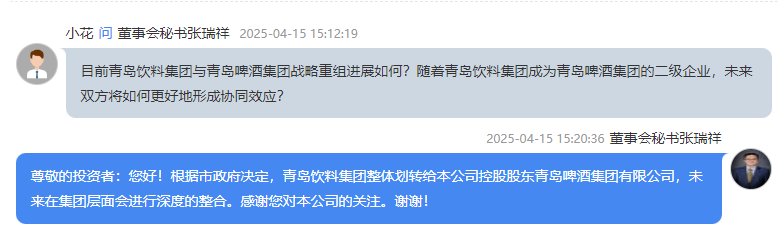
Core Viewpoint - Qingdao Beer aims to drive high-quality development through innovation, focusing on product, quality, brand, and marketing model innovations, achieving record sales and profits in 2024 [1][2]. Group 1: Financial Performance - In 2024, Qingdao Beer achieved a product sales volume of 7.538 million kiloliters and a revenue of 32.14 billion yuan, with a net profit attributable to shareholders of 4.34 billion yuan, marking a historical high [1]. - The company reported a 21% year-on-year increase in online product sales, maintaining growth for 12 consecutive years [1]. Group 2: Market Strategy - The company is expanding its market presence by leveraging its brand and quality advantages, focusing on the "one vertical and two horizontal" market strategy, and enhancing its base market position [1]. - Qingdao Beer is actively pursuing new business models and retail expansions, including fresh delivery services in 24 cities to meet diverse consumer demands [1]. Group 3: International Expansion - Qingdao Beer has established a presence in 120 countries and regions, focusing on high-quality, high-price, and high-visibility product positioning in international markets [2]. - The company is enhancing brand promotion and product marketing through innovative products and immersive experiences, further increasing brand influence [2]. Group 4: Strategic Restructuring - A strategic restructuring is underway between Qingdao Beer Group and Qingdao Beverage Group, with plans for deep integration at the group level as per the municipal government's decision [3].
走进青岛啤酒,探寻指数化投资与消费龙头的协同发展密码
Cai Jing Wang· 2025-04-15 06:47
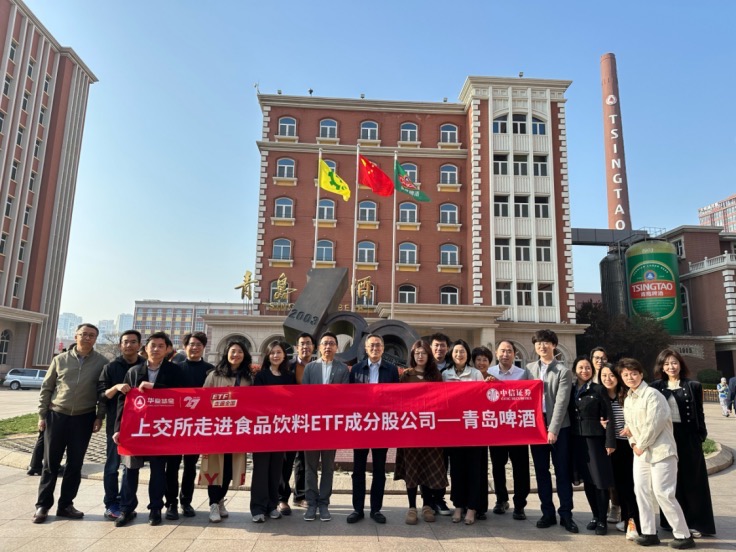
2025年4月10日,上海证券交易所走进ETF成分股公司活动来到青岛,开展走进青岛啤酒专场活动。活动聚焦指数化投 资与实体经济深度融合,通过政策解读、行业研讨及企业调研,推动ETF市场创新发展,为投资者提供更优质的财富管 理工具与服务。 华夏基金资深策略分析师计晟灵看好消费类ETF的潜力。他分析称,中国目前面临外需的极大不确定性,将以更大力度 的内需去对冲外需的不确定性。未来一段时间,中国可能出台大量更进一步扩内需促消费的政策,啤酒等与居民休戚相 关的日常消费品极有可能被纳入新一轮消费补贴的范畴之内。 此次青岛啤酒专场活动,既是上交所深化ETF市场服务的实践,也是资本市场服务实体经济的生动缩影,能够让投资者 更生动地了解指数产品的深层运作机制与增长逻辑。未来,上交所将继续携手市场各方,推动ETF市场与国家战略同频 共振,为投资者创造可持续的财富价值。 作为中国资本市场的重要一员,上海证券交易所持续推进落实相关举措,政策效果日益显现,市场生态持续改善。近五 年来,境内ETF市场资金净流入逐年递增;境内挂牌上市的ETF数量迈入"千只时代";境内ETF总规模达3.8万亿元。相 较于发达资本市场,境内ETF市场在股票 ...
食品饮料2025年一季报业绩前瞻:白酒报表维持增长,食品表现分化
Shenwan Hongyuan Securities· 2025-04-14 13:40
Investment Rating - The investment rating for the food and beverage industry is "Overweight" indicating that the industry is expected to outperform the overall market [2][19]. Core Insights - The report highlights a mixed performance in the food and beverage sector, with significant growth in certain companies while others face declines. The overall sentiment is that the industry has defensive characteristics, particularly in the context of recent market adjustments [3][11]. - The report emphasizes the potential for recovery in the liquor segment, particularly if economic conditions improve in the latter half of 2025. Key recommendations include major liquor brands such as Kweichow Moutai and Wuliangye [3][4]. - The analysis suggests that the food and beverage sector is currently attractive from a valuation, dividend, and institutional holding perspective, with a focus on both traditional and emerging consumer trends [3][6]. Summary by Sections 1. Earnings Forecast for Food and Beverage Companies - The report forecasts net profit growth for 31 tracked A-share listed food and beverage companies in Q1 2025, with two companies expected to exceed 50% growth: Morning Light Biological (180%) and Yanjing Beer (62%). A total of 20 companies are projected to have growth below 20%, while 8 companies are expected to experience declines [3][5]. 2. Key Company Profitability Predictions - Specific companies such as Kweichow Moutai, Wuliangye, and Shanxi Fenjiu are highlighted for their expected revenue and profit growth in Q1 2025, with Kweichow Moutai projected to achieve a revenue of 51.13 billion and a profit of 26.23 billion, reflecting a 10% and 9% year-over-year increase respectively [5][6]. 3. Sector Analysis - The report notes that the food and beverage sector is characterized by a defensive nature during market adjustments, with a focus on consumer staples. The liquor segment is expected to show greater price elasticity as economic conditions stabilize [3][4]. - The report also identifies growth opportunities in the dairy and beer sectors, driven by new retail formats and changing consumer preferences towards health and convenience [3][6].



壹点企讯丨青岛饮料集团成青啤集团二级企业,刘富华任董事长
Qi Lu Wan Bao· 2025-04-14 07:29
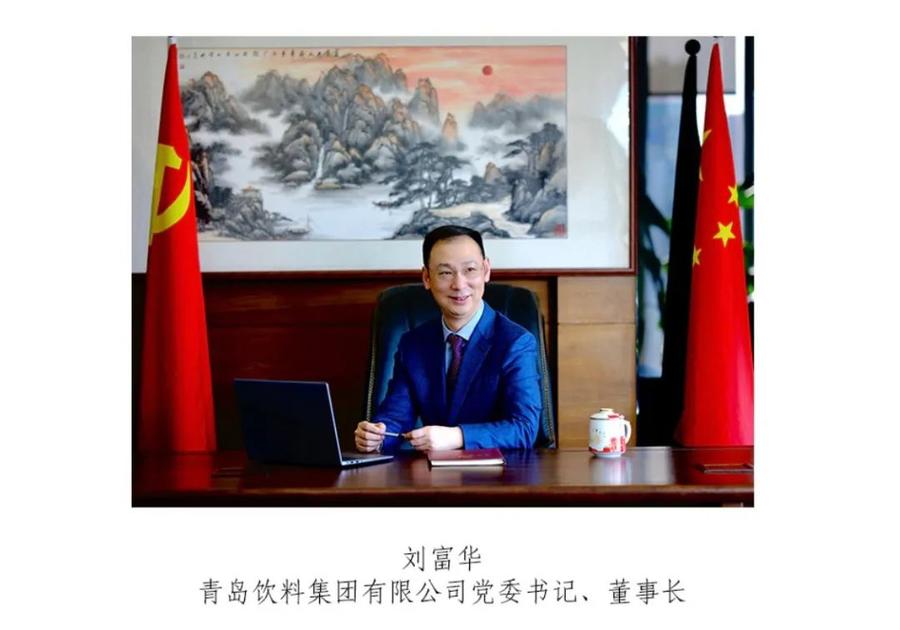
Core Viewpoint - The restructuring and integration of Qingdao Beverage Group and Qingdao Beer Group is a strategic move to optimize the layout and structure of state-owned enterprises in Qingdao, aligning with national economic goals [5][6]. Group 1: Leadership Changes - Liu Fuhua has been appointed as the new Party Secretary and Chairman of Qingdao Beverage Group, previously serving as the Deputy General Manager of Qingdao Metro Group [5]. - The position of Chairman at Qingdao Beverage Group was vacant since the resignation of former Chairman Wang Da at the end of last year [5]. Group 2: Strategic Restructuring - The integration of Qingdao Beverage Group as a secondary enterprise under Qingdao Beer Group is part of a broader initiative to enhance the food and beverage industry in Qingdao [5][6]. - This restructuring is seen as a significant step in implementing the directives from the 20th National Congress of the Communist Party of China regarding the strengthening of state-owned enterprises [5]. Group 3: Business Overview - Qingdao Beverage Group operates in various sectors including mineral water, beverages, wine, food machinery manufacturing, international trade, cultural tourism, and ecological planting [6]. - The group owns two century-old brands, Laoshan Mineral Water and Qingdao Wine, with a combined brand value of 44 billion yuan, both ranked among the "Top 500 Chinese Brands" [6]. Group 4: Future Plans - Liu Fuhua outlined plans to position Laoshan Mineral Water as the "No. 1 high-end mineral water brand in China" and to develop a product matrix centered around health [6]. - The company aims to cultivate a tiered product lineup focusing on distinctive single products, establishing a development model centered on health [6].
食品饮料行业报告:关注内需,建议积极布局(附重点标的一季度预测)
China Post Securities· 2025-04-14 03:23
Industry Investment Rating - The investment rating for the food and beverage industry is "Outperform the Market" and is maintained [1] Core Viewpoints - The report emphasizes the focus on domestic demand due to tariff events, with food and beverage companies primarily targeting the domestic market, leading to better stock performance. It outlines four main investment themes centered on domestic circulation, highlighting short-term catalysts for stock prices, medium to long-term growth prospects, and high dividend yield assets [3][4][19] Summary by Relevant Sections Industry Overview - The closing index for the food and beverage sector is 18005.21, with a 52-week high of 20128.95 and a low of 14118.56 [1] Investment Highlights - Short-term catalysts include the gradual digestion of pressure from snack quarterly reports and the arrival of buying opportunities, with beer entering its peak season and cost improvements continuing. Companies like Dongpeng Beverage and Chengde Lulux are highlighted for their strong performance and attractive valuations [3] - Medium to long-term prospects are positive for companies like Angel Yeast, which is expected to benefit from strong overseas demand and cost improvements, and dairy companies like Yili and New Dairy, which are anticipated to recover profitability due to improved milk prices and demand from birth subsidy policies [3] - High dividend yield assets include brands like Master Kong (5.73%), Uni-President (5.56%), and Chengde Lulux (4.92%) [3] Weekly Performance Review - The food and beverage sector performed well, with the industry index showing a weekly increase of +0.20%, ranking 4th among 30 sectors, outperforming the CSI 300 index by 3.07%. The current dynamic PE ratio is 22.15, which is considered low historically [7][32] Company-Specific Forecasts - Guizhou Moutai is expected to see a revenue growth of 7% and a net profit growth of 8% in Q1 2025, with a focus on maintaining price stability [20] - Yili's revenue is projected to remain flat with a significant drop in net profit due to previous asset transfers, while New Dairy is expected to see a profit increase of 18-20% [22][30] - Dongpeng Beverage is forecasted to achieve a revenue growth of 30% and a net profit growth of 36% in Q1 2025, driven by strong demand for its products [23][30] Market Trends - The report notes a trend towards rational growth in the liquor sector, with major brands like Moutai and Wuliangye maintaining competitive valuations and dividend yields, indicating resilience and risk management capabilities [19][30]




2025年食品饮料行业策略:年胜一年,内外兼修方得大成之道
LIANCHU SECURITIES· 2025-04-14 02:21
Group 1 - The report highlights that in 2024, the total demand in the food and beverage industry is under pressure, with a year-on-year growth of 3.5% in social retail consumption, reflecting a significant slowdown compared to previous years [3][12] - The report anticipates that the food and beverage sector will see steady progress in 2025, supported by three main factors: increased consumer subsidies, potential valuation recovery, and accelerated industry innovation [3][4] - The report emphasizes that the food and beverage industry is expected to benefit from a combination of internal and external factors, leading to a more resilient market outlook [3][36] Group 2 - The report identifies that the performance of the food and beverage sector has been mixed, with essential goods showing resilience while discretionary spending remains volatile [12][30] - It notes that the liquor segment may see a strategic shift, with a focus on demand cultivation as the key to future growth [4][31] - The report suggests that the condiment sector could benefit from the recovery of the restaurant industry and the acceleration of chain operations, leading to increased market concentration [4][31] Group 3 - The report indicates that the dairy sector is poised for growth driven by strong domestic demand and a focus on product upgrades, presenting opportunities for domestic replacements and demand expansion [4][31] - It highlights that the snack food market remains fragmented, with supply chain advantages becoming more pronounced, and emphasizes the importance of revenue growth following scale expansion [4][31] - The beer segment is noted for its stable production but faces pressure on sales volume and pricing, with a focus on innovation and structural upgrades [4][31] Group 4 - The report discusses the overall market performance, indicating that the food and beverage sector experienced a cumulative decline of 8% in 2024, ranking it among the lowest in the industry [23][30] - It mentions that the food and beverage sector's revenue growth has been primarily driven by supply-side optimization, with demand remaining weak [30][31] - The report provides insights into the performance of various sub-sectors, with soft drinks and snacks showing double-digit growth, while liquor and processed foods faced declines [30][31]

招商证券:内需有望发力 重申食品饮料板块配置价值
Zhi Tong Cai Jing· 2025-04-13 23:33
五粮液:五粮液计划6个月内增持5-10亿元。集团公司计划自公告之日起6个月内通过深圳证券交易所交 易系统增持公司股票,拟增持金额不低于5亿元,不超过10亿元。截至公告日,五粮液集团公司持有公 司股份7.95亿股,占公司总股本的20.49%。在本次公告前的12个月内,五粮液集团公司累计增持公司股 份340.67万股,占公司总股本的0.09%,增持金额为人民币5亿元。 投资建议 招商证券发布研报称,本周受贸易摩擦影响板块震荡。从Q1情况来看,高端白酒需求相对稳定,次高 端酒企表现分化,整体边际改善。食品板块需求企稳,调味品、乳制品、啤酒等板块轻装上阵全年业绩 改善确定性更高,而零食、饮料赛道仍然延续高景气。当前茅台、五粮液(000858)纷纷出台回购方 案,龙头底线价值清晰,白酒位置进可攻退可守,食品把握趋势向上及高景气赛道。内需有望发力背景 下,该行重申板块配置价值。 招商证券主要观点如下: 核心公司跟踪:重啤维持高位分红,中炬全年稳健收官 重庆啤酒(600132):分红维持高位,结构表现依旧承压。公司24年高档酒结构表现仍然承压,带动吨 价同比下滑,税收政策及诉讼费用影响盈利,收入/归母净利润同比-1.2%/ ...


海通国际:下调青岛啤酒目标价至88.0元,给予增持评级
Zheng Quan Zhi Xing· 2025-04-13 01:37
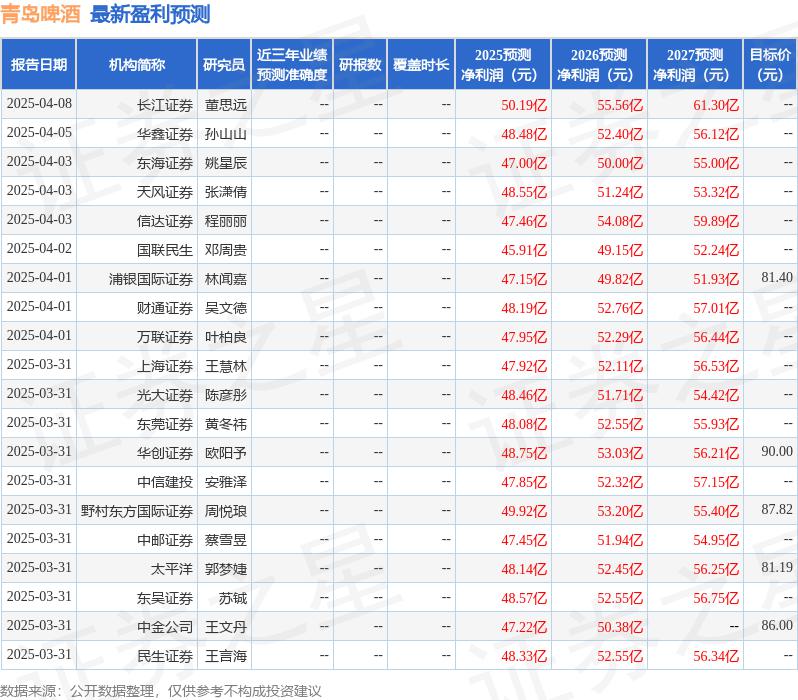
海通国际证券集团有限公司闻宏伟,芮雯近期对青岛啤酒(600600)进行研究并发布了研究报告《销量企稳,蓄势 待发》,下调青岛啤酒目标价至88.0元,给予增持评级。 青岛啤酒 董事长换届、饮料并入推动组织焕新,顺应行业发展新趋势。2025年作为姜宗祥董事长上任的第一年,组织内部 动能充足,考核优化有望刺激青啤市场份额修复。3月宣布青岛啤酒集团与青岛饮料集团实施战略性重组整合, 通过整合渠道和产业链资源,构建覆盖酒精与非酒精饮品的全产业链生态,既巩固啤酒主业优势,又拓展健康饮 品等高成长性赛道。在营销创新方面,公司大力推进O2O、B2B、即时零售、社区团购等业务,多渠道满足互联 网时代消费者的购买需求和消费体验,24年餐饮、夜场等即饮市场销量占比约41.2%;KA、流通等非即饮市场销 量占比约58.8%。 24年销量虽承压,结构升级与降本增效支撑盈利韧性。24年公司营收/归母净利润/扣非归母净利润321.4/43.4/39.5 亿元,同比-5.3%/+1.8%/+6.2%。尽管由于销量承压导致收入下滑,但产品结构升级、成本下行和费用合理管控支 撑公司利润率展现较强韧性。24年公司啤酒销量同比-5.9%至753.8 ...