
CSEC,China Shenhua(601088)

Search documents
如何看待煤价近期加速下跌?
Changjiang Securities· 2025-05-11 09:45
Investment Rating - The report maintains a "Positive" investment rating for the coal industry [9]. Core Viewpoints - The recent acceleration in coal price decline is primarily attributed to a post-holiday drop in demand (seasonal factors and reduced expectations for inventory replenishment) and increased supply (production and transportation volume) leading to a higher port inventory and a willingness to sell at lower prices. However, with the upcoming peak summer demand and relatively stable supply, the report suggests that the coal prices are likely to stabilize during the peak season [2][7]. Summary by Sections Market Performance - The coal index (Yangtze) increased by 1.40% this week, underperforming the CSI 300 index by 0.60 percentage points, ranking 24th out of 32 industries. The thermal coal market price as of May 9 is 630 CNY/ton, down 20 CNY/ton week-on-week [6][30]. Supply and Demand Analysis - As of May 8, the daily coal consumption across 25 provinces was 484.9 million tons, a week-on-week increase of 9.9% but a year-on-year decrease of 2.4%. The coal supply was 486.3 million tons, a decrease of 0.6% from May 1. The total inventory was 114.3 million tons, down 0.1% [48][49]. Price Trends - The market price for 5500 kcal thermal coal at Qinhuangdao port is 630 CNY/ton, reflecting a decrease of 20 CNY/ton (-3.08%) compared to April 30. The report indicates that the price support remains due to cost factors from production and imports, despite the high inventory levels [55][30]. Future Outlook - The report anticipates that the coal prices may continue to explore the bottom in the short term due to high inventory levels and the approaching rainy season. However, there is a potential for a moderate rebound in prices as the demand for coal is expected to improve during the peak summer season, with a projected 17% increase in daily consumption compared to the second quarter [7][8]. Investment Recommendations - The report suggests marginal allocation in the coal sector, recommending stable profit leaders such as China Shenhua (A+H) and Shaanxi Coal, as well as growth-oriented companies like Electric Power Investment Energy and Xinji Energy. It also highlights flexible growth stocks such as Yanzhou Coal (A+H), Shanxi Coking Coal, and Huabei Mining [8].


煤价节后延续弱势,底部渐显无需过忧
Xinda Securities· 2025-05-11 08:25
Investment Rating - The investment rating for the coal mining industry is "Positive" [2] Core Viewpoints - The current phase is seen as the beginning of a new upward cycle in the coal economy, with a resonance between fundamentals and policies, making it an opportune time to accumulate coal sector investments [12][13] - The coal price is expected to remain weak in May due to seasonal demand fluctuations, but there is a bottom support for prices, and a gradual recovery is anticipated as the peak season approaches [3][12] - The underlying investment logic of coal supply shortages remains unchanged, with a balanced short-term supply and demand but a medium to long-term gap still present [12][13] Summary by Sections Coal Price Tracking - As of May 10, the market price for Qinhuangdao port thermal coal (Q5500) is 635 CNY/ton, down 17 CNY/ton week-on-week [30] - The international thermal coal price for Newcastle (NEWC5500) is 69.8 USD/ton, down 0.5 USD/ton week-on-week [30] - The price for coking coal at Jing Tang port is 1380 CNY/ton, down 20 CNY/ton week-on-week [32] Supply and Demand Tracking - The capacity utilization rate for thermal coal mines is 96.4%, an increase of 2.5 percentage points week-on-week [47] - The daily coal consumption in inland provinces has increased by 33.80 thousand tons/day, a rise of 12.17% week-on-week [12] - The daily coal consumption in coastal provinces has decreased by 12.40 thousand tons/day, a decline of 6.67% week-on-week [12] Inventory Situation - As of May 9, coal inventory at Qinhuangdao port has increased to 753 thousand tons, up 8.0% week-on-week [5] - The inventory of coking coal at production sites has risen to 390.43 thousand tons, an increase of 8.9% week-on-week [5] Company Performance - The coal sector has shown a 1.47% increase this week, underperforming the broader market [15] - Key companies to focus on include China Shenhua, Shaanxi Coal, and China Coal Energy, which are noted for stable operations and solid performance [13]



2025Q1全球海运煤炭贸易量同比下降6.7%
GOLDEN SUN SECURITIES· 2025-05-11 06:31
Investment Rating - The report maintains an "Overweight" rating for the coal mining industry [4]. Core Viewpoints - The current phase of coal price adjustment is nearing its end, with the market having a clear understanding of the price decline. The industry is at a critical stage of price bottoming, and confidence should be maintained [3]. - The global seaborne coal trade volume decreased by 6.7% year-on-year in Q1 2025, with significant declines in coal exports from major countries [2][6]. - Domestic coal companies are facing increasing losses, with over half (54.8%) reporting losses as of March 2025, leading to a higher probability of production cuts [6]. Summary by Sections Coal Mining Trade - In Q1 2025, the international seaborne coal trade volume was 307 million tons, down 6.7% year-on-year [2]. - Major exporting countries saw declines: Indonesia's exports fell by 10.7% to 114.5 million tons, Australia by 9.4% to 76.6 million tons, and the U.S. by 4.9% to 20.8 million tons [6]. Price Trends - As of May 9, 2025, coal prices showed slight increases: European ARA port coal at $97.1/ton (+1.9%), Newcastle port coal at $98.9/ton (+0.9%), while South African Richards Bay coal futures fell slightly to $89.0/ton (-0.1%) [1][37]. - The report indicates that coal prices are stabilizing after a prolonged decline since Q4 2021 [3]. Recommendations - The report recommends increasing positions in key coal companies such as China Shenhua, China Coal Energy, and others, highlighting their potential for recovery and performance [6][7].

国企共赢ETF(159719)近两周涨幅居同类第一,央国企数智化转型已进入 “深度攻坚” 新阶段
Xin Lang Cai Jing· 2025-05-09 03:13
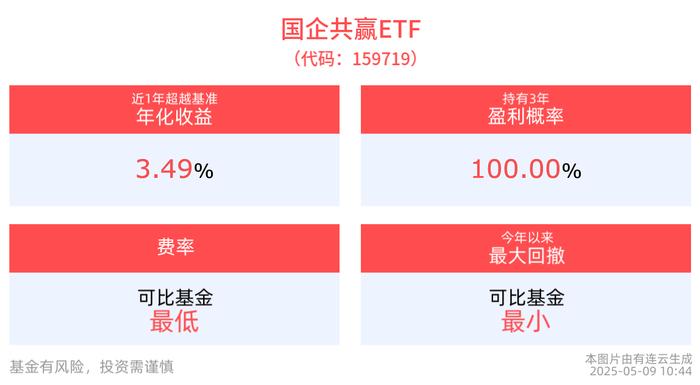
截至2025年5月9日 10:44,国企共赢ETF(159719)上涨0.13%,最新价报1.49元。 拉长时间看,截至2025年5月8日,国企共赢ETF近2周累计上涨0.61%,涨幅排名居同类第一。 截至2025年5月9日 10:45,中证粤港澳大湾区发展主题指数(931000)下跌0.59%。成分股方面涨跌互现, 稳健医疗(300888)领涨2.75%,信立泰(002294)上涨2.35%,海信家电(000921)上涨1.66%;广东宏大 (002683)领跌5.93%,深桑达A(000032)下跌4.33%,胜宏科技(300476)下跌3.81%。 大湾区ETF(512970)多空胶着,最新报价1.19元。拉长时间看,截至2025年5月8日,大湾区ETF近2周累 计上涨2.68%。 近日,国务院国资委发布首批央企高质量数据集优秀建设成果,第八届数字中国建设峰会期间,国务院 国资委集中发布了首批10余个行业30项央企人工智能行业高质量数据集优秀建设成果。 此外将进一步推动央企"AI+"专项行动走深走实,全面推进人工智能科技创新、产业发展和赋能应用。 以央企数据产业共同体为抓手,推动央企发挥自身海量数据积淀 ...






中国神华:长协稳定业绩,分红成长可期-20250509
Shanxi Securities· 2025-05-09 01:23
Investment Rating - The report maintains a "Buy-A" investment rating for China Shenhua Energy Company (601088.SH) [3][8] Core Views - The company reported a 21.1% year-on-year decline in revenue for Q1 2025, totaling 69.585 billion yuan, and an 18.0% decrease in net profit attributable to shareholders, amounting to 11.949 billion yuan [3] - The increase in long-term contracts has stabilized performance, and dividend growth is expected [3][7] - The coal segment's gross margin improved to 30.1%, up 1.2 percentage points year-on-year, despite a decrease in coal sales volume [3][4] Financial Performance Summary - Q1 2025 basic earnings per share (EPS) was 0.601 yuan, with a return on equity (ROE) of 2.80%, down 0.74 percentage points year-on-year [3] - The company’s total assets as of March 30, 2025, were 672.307 billion yuan, a 0.60% increase year-on-year, while net assets rose by 3.2% to 433.114 billion yuan [3] - The average coal selling price decreased by 11.5% to 506 yuan per ton, while the average unit sales cost fell by 13.07% to 353 yuan per ton [3][4] Segment Performance Summary - The coal segment generated revenue of 51.599 billion yuan, down 25.7% year-on-year, with a gross profit of 15.509 billion yuan [3] - The power segment's revenue was 20.854 billion yuan, a 14.7% decline, with a gross margin of 15.4%, down 1.3 percentage points [4] - The transportation segment's revenue decreased across various divisions, with coal chemical gross margins improving [5] Future Outlook - EPS forecasts for 2025, 2026, and 2027 are 2.74, 2.89, and 2.96 yuan, respectively, with corresponding price-to-earnings (P/E) ratios of 14.1, 13.4, and 13.1 [8][10] - The company plans to maintain a dividend payout ratio of at least 65% of net profit attributable to shareholders over the next three years [7]
上市煤企全解析(二):“五宗最”之换个角度看财报
GOLDEN SUN SECURITIES· 2025-05-09 01:23
Investment Rating - The report maintains an "Increase" rating for the coal mining industry [4] Core Viewpoints - The current coal price adjustment has been ongoing for nearly four years since the peak in Q4 2021, and the market is well aware of the price decline. The industry is at a critical stage of price bottoming, and the report emphasizes the importance of understanding the industry's fundamental attributes and maintaining confidence [7][63] - Key recommendations include major coal enterprises such as China Shenhua (H+A) and China Coal Energy (H+A), as well as companies showing signs of recovery like Qinfa [8][64] Summary by Sections Cash King - Since the supply-side reform in 2016, the historical burden on coal companies has significantly decreased. Despite the continuous decline in coal prices since early 2024, some companies have cash balances (cash and cash equivalents + trading financial assets) far exceeding their interest-bearing debts. As of Q1 2025, the top five companies with the highest cash balances are China Shenhua, Shaanxi Coal, Jinkong Coal, China Coal Energy, and Lu'an Environmental Energy [1][17] Low Debt - As of Q1 2025, the asset-liability ratio for large coal enterprises is 60.3%, an increase of 0.5 percentage points year-on-year. Most sampled coal companies have asset-liability ratios lower than the industry average. The companies with the lowest asset-liability ratios are China Shenhua, Jinkong Coal, Electric Power Investment Energy, Yitai B, and Shanghai Energy [20][21] Strong Foundation - Special reserves are funds set aside by coal companies for safety production and maintaining simple reproduction. The top five companies with the highest net increase in special reserves from the end of 2023 to Q1 2025 are China Shenhua, Shaanxi Coal, Yitai B, Lu'an Environmental Energy, and Gansu Energy [25][31] High Potential - Considering the cyclical nature of coal prices, coal companies may enhance cost control to ensure steady improvement in profitability. The report evaluates potential profit release using the ratio of operating cash flow minus net profit, depreciation, and financial expenses to net profit. The companies with the highest potential for profit release are Haohua Energy, Yitai B, Huabei Mining, China Coal Energy, and Shanmei International [2][51] Dividend King - The top five companies in terms of cumulative cash dividends over the past three years are China Shenhua, Shaanxi Coal, Yunkang Energy, China Coal Energy, and Lu'an Environmental Energy. The report highlights the high dividend attributes of coal companies, driven by reduced historical burdens and a cautious approach to reinvesting in traditional businesses [3][55]

山西证券研究早观点-20250509
Shanxi Securities· 2025-05-09 01:17
Core Insights - The report highlights the impact of recent monetary policy adjustments, including interest rate cuts and reserve requirement ratio reductions, aimed at stimulating domestic demand and supporting economic growth [6][7] - The performance of specific companies, such as Longtu Guangzhao and China Shenhua, is analyzed, with emphasis on their quarterly results and future growth prospects [5][9] Market Trends - The domestic market indices showed mixed performance, with the Shanghai Composite Index closing at 3,352.00, up by 0.28%, while the ChiNext Index increased by 1.65% to 2,029.45 [4] Company Analysis Longtu Guangzhao (688721.SH) - The company reported a decline in Q1 2025 revenue to 54.37 million yuan, down 8.97% year-on-year, and a net profit decrease of 30.00% to 17.33 million yuan, attributed to the new factory's ramp-up phase and strategic price reductions [8] - The company anticipates improved performance as production capacity utilization increases and customer purchasing normalizes [8] China Shenhua (601088.SH) - In Q1 2025, the company achieved revenue of 69.585 billion yuan, a decrease of 21.1% year-on-year, with a net profit of 11.949 billion yuan, down 18.0% [9] - The report notes an increase in long-term contract sales, which helped stabilize margins despite a drop in coal prices [9] Honghua Digital Science (688789.SH) - The company is benefiting from the increasing penetration of digital printing, with a projected revenue growth of 41.0% to 348 million yuan in 2025, and a net profit growth of 11.8% to 103 million yuan [12][14] - The integrated "equipment + consumables" business model is expected to drive future growth, supported by ongoing projects and market expansion [12][16] Investment Recommendations - The report maintains a "Buy-A" rating for Honghua Digital Science, citing its robust business model and growth potential in the digital printing sector [13][16] - For China Shenhua, the report suggests that despite current challenges, the company's dividend policy and market position provide a solid investment opportunity [10]

一文解读央行降准降息影响及投资策略
Sou Hu Cai Jing· 2025-05-08 16:34
Group 1 - The core viewpoint of the news is that the People's Bank of China announced a reduction in the reserve requirement ratio and interest rates to stimulate economic growth and support employment amid weak economic data [1][3][4] - The reduction in the reserve requirement ratio by 0.5 percentage points is expected to release approximately 1 trillion yuan in long-term funds [4] - The cut in the re-lending rate by 0.25 percentage points aims to alleviate the financial pressure on small and medium-sized enterprises [4] Group 2 - The immediate impact on the stock market is expected to be positive, with sectors such as real estate, consumer goods, and high-debt industries likely to benefit from lower financing costs [5][6] - Historical comparisons show that after previous rate cuts, the A-share market has generally performed well, with the 10-year government bond yield dropping to 1.6%, the lowest since 2005 [8][9] - The potential for further interest rate cuts exists if economic conditions remain weak, with a possibility of a 10 basis point reduction in the third quarter [10][11] Group 3 - The real estate market may stabilize in first-tier cities, but there are still significant inventory pressures in third- and fourth-tier cities, indicating a divergence in recovery [11] - There is a high likelihood that deposit rates will follow suit and decrease, potentially pushing more funds into the stock market [12] - Investment strategies suggest a balanced approach with a focus on sectors like real estate, automotive, and technology, while avoiding export-dependent industries [13][15]




近七成A股公司推年报分红,“中字头”公司扛旗
Di Yi Cai Jing· 2025-05-08 13:18
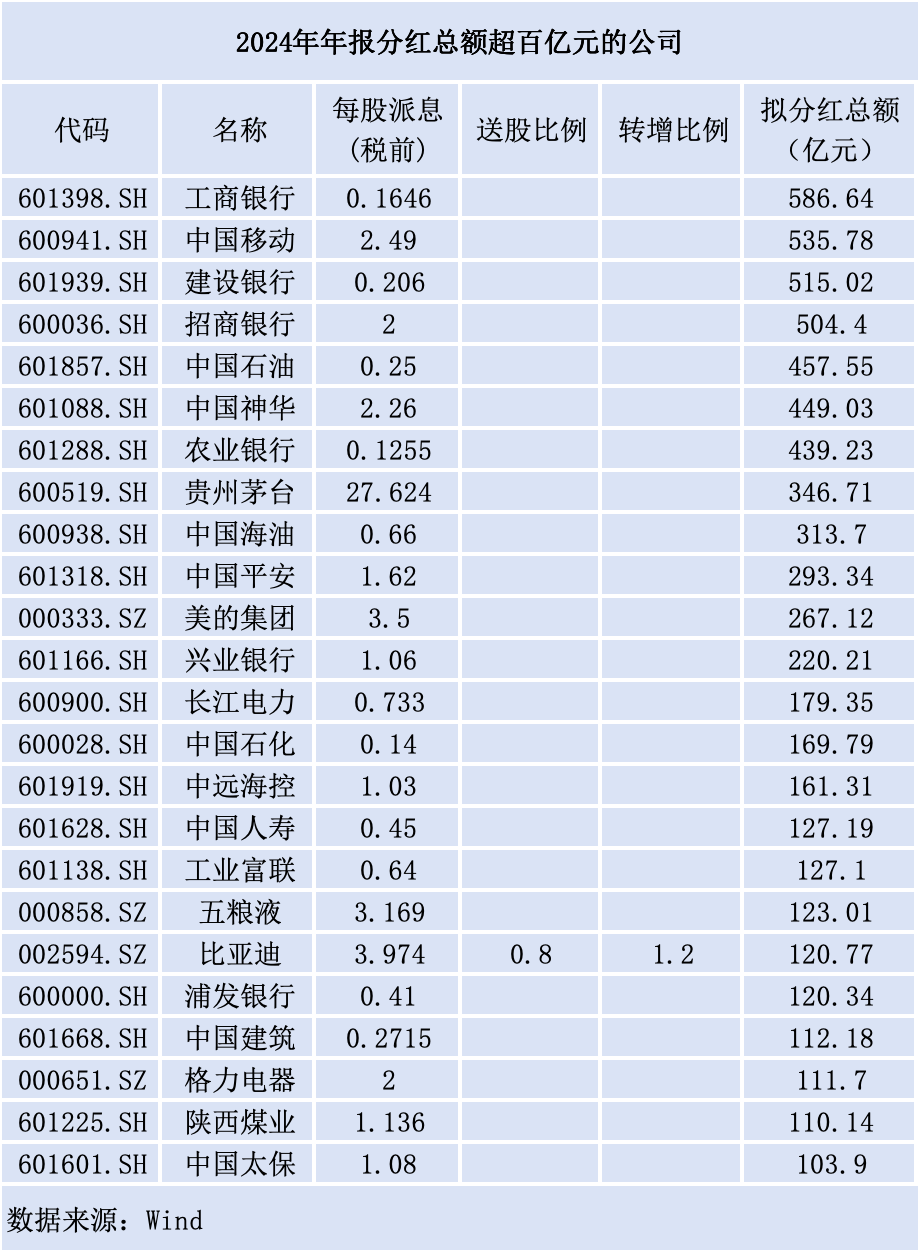
Core Viewpoint - The A-share market is experiencing a significant increase in cash dividends, with over 3,600 companies announcing dividend plans, totaling more than 1.6 trillion yuan, driven by policy guidance and a trend towards regular dividends [2][4][19]. Group 1: Dividend Trends - As of now, approximately 67% of A-share companies have disclosed dividend plans for the 2024 fiscal year, with 3,432 companies announcing their intentions [4]. - Major contributors to this dividend wave include state-owned enterprises and industry leaders, with Industrial and Commercial Bank of China, China Mobile, and China Construction Bank leading in total dividend amounts [2][5]. - The trend of regular cash dividends is becoming more pronounced, with a notable increase in both the scale and coverage of cash dividends among A-share companies [3][20]. Group 2: High Dividend Companies - The top three companies in terms of dividend amounts are Industrial and Commercial Bank of China (586.64 billion yuan), China Mobile (approximately 499.4 billion yuan), and China Construction Bank (515.02 billion yuan) [2][5][11]. - A total of 24 companies are expected to distribute over 10 billion yuan in dividends, with six of these being listed banks [6][7]. - Companies like BYD and Guizhou Moutai are also notable for their high per-share dividends, with BYD proposing a dividend of 39.74 yuan per share [6][11]. Group 3: High Transfer Plans - Some companies are not only offering cash dividends but also implementing high transfer plans, such as BYD's proposal of "10 shares for 8 transfers and 12 shares for distribution" [12][15]. - Other companies, including Daimei Co. and Bond Shares, are also adopting similar profit distribution strategies combining cash dividends with stock transfers [13][14]. - The trend of high transfer plans is seen as a way to manage market perceptions and attract retail investors, particularly in high-growth sectors like technology and advanced manufacturing [21]. Group 4: Regulatory Environment - The regulatory environment is increasingly supportive of cash dividends, with the China Securities Regulatory Commission emphasizing the importance of returning value to investors [19][20]. - New guidelines encourage companies to establish long-term dividend plans and improve dividend payout ratios, reflecting a shift towards more proactive dividend policies [19][20]. - The focus on regular dividends is expected to continue, with a growing number of companies in the technology sector also adopting dividend practices [20].





中证红利潜力指数上涨1.04%,前十大权重包含伊利股份等
Jin Rong Jie· 2025-05-08 11:46
Core Viewpoint - The China Securities Dividend Potential Index has shown a recent upward trend, indicating strong performance among companies with high dividend expectations and capabilities [2]. Group 1: Index Performance - The China Securities Dividend Potential Index rose by 1.04% to 9340.74 points, with a trading volume of 41.843 billion [1]. - Over the past month, the index increased by 5.15%, while it has decreased by 0.18% over the last three months and by 4.63% year-to-date [2]. Group 2: Index Composition - The index comprises 50 listed companies selected based on metrics such as earnings per share, undistributed profits per share, and return on equity [2]. - The top ten weighted companies in the index are: Kweichow Moutai (16.29%), Ping An Insurance (14.85%), Midea Group (9.48%), CATL (9.41%), Gree Electric (6.89%), Wuliangye (4.87%), Yili Group (4.76%), China Shenhua (4.11%), Shaanxi Coal and Chemical Industry (2.47%), and China Pacific Insurance (2.2%) [2]. Group 3: Market and Sector Allocation - The index's holdings are primarily from the Shanghai Stock Exchange (57.79%) and the Shenzhen Stock Exchange (42.21%) [2]. - Sector allocations include: Consumer Staples (32.93%), Discretionary Consumer (20.65%), Financials (17.05%), Industrials (9.41%), Energy (8.20%), Healthcare (5.24%), Information Technology (3.40%), Materials (2.43%), and Communication Services (0.69%) [2]. Group 4: Sample Adjustment Criteria - The index samples are adjusted annually, with the next adjustment scheduled for the second Friday of December [3]. - Companies must meet specific criteria to remain in the index, including a cash dividend to net profit ratio of at least 30%, ranking in the top 90% for average market capitalization, and average trading volume [3].




