LZLJ(000568)

Search documents
行业周报:白酒预期回归,新消费重获青睐-20250810
KAIYUAN SECURITIES· 2025-08-10 12:10
Investment Rating - The industry investment rating is "Positive" (maintained) [1] Core Viewpoints - The short-term pressure on the liquor industry does not change its long-term value, and new consumption is expected to regain market prominence [4] - The food and beverage index increased by 0.6% from August 4 to August 8, ranking 23rd among 28 sectors, underperforming the CSI 300 by approximately 0.6 percentage points [12][14] - The snack food sector, soft drinks, and meat products showed relatively strong performance with increases of 3.9%, 3.0%, and 2.7% respectively [12][14] Summary by Sections Weekly Insights - The liquor sector faced significant challenges in Q2 due to the ongoing impact of the "ban on alcohol" and a struggling restaurant industry, leading to slower cash flow and increased inventory for liquor companies [4][12] - Market expectations for the liquor sector are currently low, with low valuations and a favorable chip structure, indicating potential for recovery post-Mid-Autumn Festival [4][12] Market Performance - The food and beverage sector underperformed the broader market, with the index rising by 0.6% while the leading sub-sectors were snacks, soft drinks, and meat products [12][14] - Notable individual stock performances included ST Xifa, Ximai Food, and Jinzi Ham leading in gains, while *ST Yedao, Ketaobiology, and Beiyinmei faced declines [12][14] Upstream Data - Some upstream raw material prices have decreased, with the price of fresh milk at 3.0 CNY/kg, down 5.6% year-on-year, while pork prices were 20.4 CNY/kg, down 21.2% year-on-year [19][26] - The price of full-fat milk powder increased by 23.1% year-on-year, indicating a mixed trend in dairy prices [23] Liquor Industry News - The launch of the commemorative Maotai Five-Star trademark liquor sold out quickly, generating sales of 179 million CNY [40] - New product releases, such as the "Bull Market" super beer by Zhenjiu Lidu, highlight innovation in the liquor sector [39] Memorandum - Attention is drawn to the upcoming half-year report from Guizhou Maotai on August 13, which is expected to provide further insights into the company's performance [41][44]




酒品篇:以数智化升级实现降本增效
Sou Hu Cai Jing· 2025-08-10 11:03
Core Viewpoint - The domestic liquor industry is actively promoting technological innovation and digital transformation to enhance quality, reduce costs, and improve efficiency in response to changing consumer demands and increasing market competition [1][2]. Market Overview - The Chinese liquor market is undergoing a rapid transformation, with changes in consumption patterns, structures, and philosophies. Major liquor companies are focusing on digitalization to improve production efficiency and product quality while reducing operational costs [2][4]. - According to the China Alcoholic Drinks Association, by the end of 2024, the total consumption of alcoholic beverages in China will remain below 50 million kiloliters, with baijiu and beer dominating the market, accounting for approximately 93% of total consumption [4]. Baijiu Industry - The baijiu industry, as the absolute leader in the Chinese liquor market, has seen a slowdown in growth after rapid expansion. In 2024, the production of baijiu from large-scale enterprises is expected to be 4.145 million kiloliters, a year-on-year decrease of 1.8%, while sales revenue is projected to reach 796.384 billion yuan, a growth of 5.3% [5]. - The market is increasingly concentrated among leading brands, with top companies like Kweichow Moutai and Wuliangye capturing a significant share of industry profits. In 2024, 20 A-share baijiu companies are expected to generate total revenue of 442.2 billion yuan and net profits of 166.6 billion yuan [5][6]. - Changing consumer preferences, particularly among younger consumers, are driving the industry towards lower-alcohol products and international market expansion [6]. Beer Industry - The beer industry in China is experiencing a "volume decline and price increase" trend, with 2024 beer production expected to be 35.213 million kiloliters, a decrease of 0.6% year-on-year. However, revenue and profits are on the rise, with sales revenue increasing from 147.45 billion yuan in 2018 to 186.3 billion yuan in 2023 [9][10]. - Major players like Budweiser APAC, China Resources Beer, and Tsingtao Brewery are leveraging brand strength and market share to maintain their leading positions. The industry is also seeing a shift towards high-end products and digital transformation [10][13]. - Craft beer and non-alcoholic beer are emerging as rapidly growing segments, with craft beer consumption expected to reach 230,000 kiloliters by 2025, reflecting a compound annual growth rate of 17% [10]. Digital and Intelligent Transformation - The liquor industry is embracing digital and intelligent technologies as core drivers of transformation. Companies are implementing automation, big data analytics, and blockchain technology to enhance production efficiency and consumer trust [15][21]. - Kweichow Moutai is leading in digital transformation with initiatives like the "i Moutai" platform, which integrates various operational aspects and utilizes blockchain for product traceability [17][18]. - Wuliangye is investing in multiple projects to enhance its digital capabilities, including smart warehousing and supply chain management [19][20]. - China Resources Beer is integrating IoT and data-driven approaches to automate production processes and enhance operational efficiency [21][22]. - Tsingtao Brewery is advancing its digital strategy across its entire business chain, focusing on data collection, product development, and smart logistics [26][27]. Notable Projects - The Luzhou Laojiao Intelligent Packaging Center, recognized as the first "lighthouse factory" in the baijiu industry, showcases advanced automation and digital integration in its operations [29][31]. - China Resources Snow Beer has launched a JIT intelligent corridor project to enhance supply chain efficiency, marking a significant step towards digital transformation in the beverage supply chain [33].




食品饮料周观点:统一中报超预期,关注零食高成长-20250810
GOLDEN SUN SECURITIES· 2025-08-10 08:26
Investment Rating - The report maintains an "Increase" rating for the food and beverage industry, indicating a positive outlook for the sector [4]. Core Insights - The report highlights that the liquor industry is gradually releasing pressure from distribution channels, indicating a potential for future growth. It suggests focusing on three main lines: leading brands, high-certainty regional liquors, and elastic stocks benefiting from recovery and increased risk appetite [1][2]. - The snack sector shows significant growth potential, with companies like Yanjing Beer and Zhujiang Beer being highlighted for their strong performance. The report emphasizes the importance of channel leadership and growth potential in selecting stocks [3][6]. Summary by Sections Liquor Industry - The report notes that the liquor industry is experiencing a deep adjustment, shifting from scale growth to high-quality development. It emphasizes the importance of brand strength and strategic initiatives to capture new consumer trends [2]. - The expected revenue for Zhenjiu Lidong in H1 2025 is projected to be between 2.4 billion to 2.55 billion yuan, reflecting a year-on-year decline of 38.3% to 41.9% due to economic uncertainties and policy impacts [2]. Beer and Beverage Sector - The beer segment shows promising results, with Huiquan Brewery reporting a revenue of 351 million yuan in H1 2025, a year-on-year increase of 1.03%, and a net profit of 40 million yuan, up 25.52% [3]. - Unified Enterprises China achieved a revenue of 17.087 billion yuan in H1 2025, representing a 10.6% year-on-year growth, with a net profit of 1.287 billion yuan, up 33.2% [3]. Snack Sector - The snack sector is highlighted for its recovery in stock prices, with expectations for continued high growth due to new product launches and channel transformations. The report notes a narrowing decline in raw milk prices, which may positively impact the dairy segment [6].


白酒指数弱反弹,重组预期公司股价异动:*ST岩石本周大涨,*ST椰岛却跌了丨酒市周报
Mei Ri Jing Ji Xin Wen· 2025-08-10 08:15
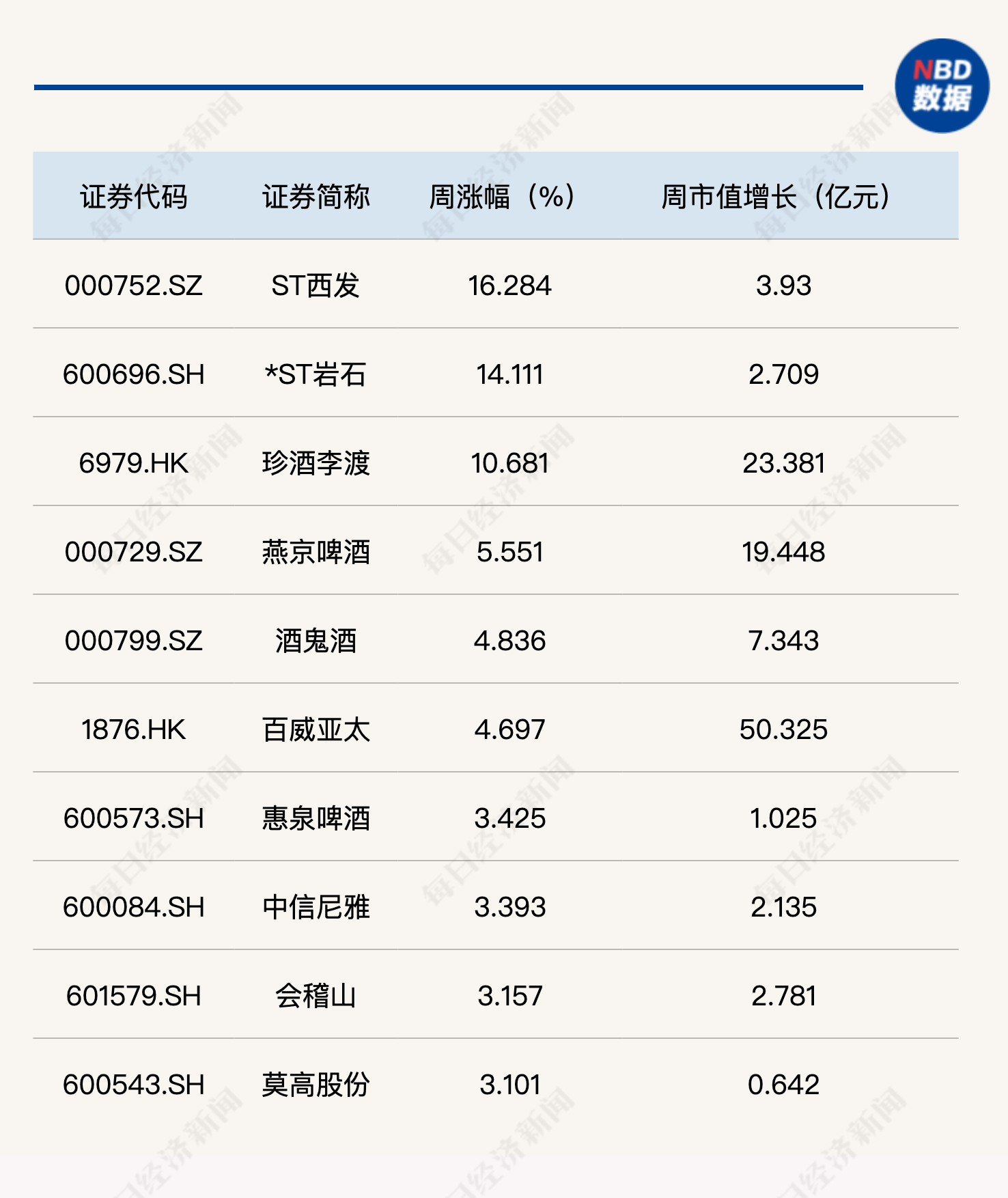
Core Viewpoint - The white liquor sector continues to show weak rebound momentum due to persistent demand-side issues, with the Wind white liquor index rising only 0.78% this week, significantly lower than the Shanghai and Shenzhen indices [1] Industry Summary - The white liquor sector is transitioning from a volume-price logic to a share logic, leading to weakened growth potential for most stocks in the sector. White liquor may no longer be considered a cyclical growth stock, with a few stocks becoming "quasi-debt assets" due to competitive advantages, making stable ROE increasingly important for pricing [1][5] - Despite a slight increase in the white liquor index this week, several companies, including Jinshiyuan, Shunxin Agriculture, Jinzongzi Liquor, Shede Liquor, and Huangtai Liquor, saw their stock prices decline. Jinshiyuan reported significant operational difficulties, indicating that the industry is unlikely to see a turnaround in the short term [4][5] Company-Specific Summary - *ST Yanshi and *ST Yedao have experienced significant stock price fluctuations due to restructuring expectations, with market speculation evident [3] - *ST Yanshi's actual controller is under criminal investigation, which may lead to a change in company control if the judicial disposition of his shares occurs. *ST Yedao is backed by state-owned assets in Haikou, with the CSRC supporting state-led restructuring of troubled companies [4] - Jinshiyuan has reported a decline in terminal sales growth in June and July compared to April and May, primarily due to policy factors and seasonal influences. The company anticipates a substantial industry recovery may not occur until the second half of 2026 [5]


食品饮料行业周报:优质食品公司价值逐步显现,白酒继续等待-20250809
Shenwan Hongyuan Securities· 2025-08-09 15:25
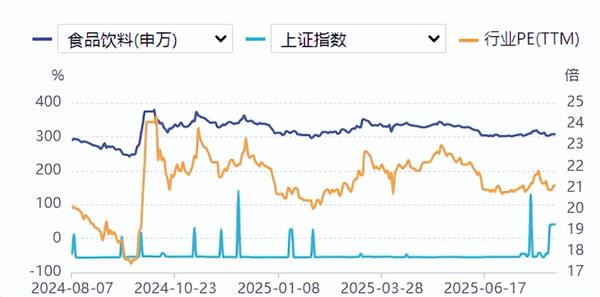
Investment Rating - The investment analysis opinion indicates a positive outlook for traditional consumer leading companies, suggesting they have long-term investment value from a dividend and yield perspective [5]. Core Viewpoints - The report emphasizes that the head companies in traditional consumption have undergone adjustments and are now positioned for long-term investment value. It highlights the potential for performance differentiation among food stocks characterized by new consumption trends, with a focus on companies that possess long-term competitiveness and improvement potential [5]. - In the liquor sector, the report notes that due to slow macro demand recovery and further restrictions on consumption scenarios, sales pressure is expected to remain significant this year, with financial statements also under pressure. Key recommendations include Guizhou Moutai, Shanxi Fenjiu, and Luzhou Laojiao, while also paying attention to Wuliangye, Jinshiyuan, and Yingjiagongjiu [5][6]. - For the mass consumer goods sector, the report suggests that cost advantages will support profitability, and the emergence of new products and channels will foster growth. It recommends leading companies in mature sectors like dairy and beer, and highlights growth opportunities in new retail formats driven by consumer trends towards self-indulgence, health, and convenience [5][7]. Summary by Sections 1. Weekly Industry Insights - The food and beverage sector saw a 0.63% increase last week, with liquor rising by 0.38%. However, it underperformed the broader market, lagging by 1.48 percentage points [4]. - The report ranks the food and beverage sector 26th among 31 sub-industries in terms of performance [4]. 2. Liquor Sector Analysis - Moutai's bottle price is reported at 1875 RMB, with a week-on-week increase of 15 RMB, while the box price remains stable at 1910 RMB. Wuliangye's price is approximately 870 RMB, also stable [6][19]. - The report suggests that high-end liquor prices have stabilized since July, but future trends remain uncertain, advising patience for fundamental changes in the industry [6]. 3. Mass Consumer Goods Sector Analysis - The report increases its recommendation for Uni-President China, noting that the company's mid-year performance exceeded expectations. Forecasted net profits for 2025-2027 are 2.315 billion, 2.579 billion, and 2.843 billion RMB, respectively, with year-on-year growth rates of 25%, 11%, and 10% [7][10]. - The report highlights the continuous improvement in profitability driven by structural upgrades in food and beverage businesses, alongside a focus on expanding into dining, gift boxes, and family consumption scenarios [7]. 4. Market Performance of Sub-sectors - The food and beverage industry underperformed the Shenwan A index by 1.29 percentage points during the period from August 4 to August 8, with various sub-sectors showing mixed performance [35]. - The report indicates that the liquor sector has consistently lagged behind the market, with a notable decline in excess returns compared to the Shenwan A index [36].
食品饮料行业2025Q2基金持仓分析:白酒重仓比例持续回落,大众品除休闲食品外均有下降
Wanlian Securities· 2025-08-08 10:16
Investment Rating - The report indicates a structural investment opportunity in the food and beverage industry, particularly in the beverage, snack, and health product sectors, while suggesting a cautious approach towards the liquor sector, which is currently in a bottoming phase [4]. Core Insights - The heavy investment ratio in the food and beverage sector has significantly decreased, with a total market value of heavy holdings at 243.716 billion yuan, down by 49.483 billion yuan from the previous quarter [1][11]. - The liquor sector continues to see a decline in heavy investment ratios, with the white liquor segment dropping to 2.90%, a decrease of 0.81 percentage points [2][14]. - The report highlights that the food and beverage sector's heavy investment ratio is currently below the five-year average of 7.04%, indicating potential for recovery [1][11]. Summary by Sections Heavy Investment Ratio Analysis - In Q2 2025, the food and beverage sector had 3,146 heavy investment funds, a decrease of 611 funds from the previous quarter, with a heavy investment ratio of 3.38%, down by 0.85 percentage points [1][11]. - The heavy investment market value for the food and beverage sector accounted for 9.39% of the total heavy holdings, a decrease of 1.96 percentage points [13]. Sector Breakdown - The white liquor sector's heavy investment ratio has been on a downward trend, while the snack food sector, excluding leisure foods, has also seen declines [2][14]. - The beverage and dairy sectors experienced slight decreases in heavy investment ratios, with the beverage sector at 0.21% and the food processing sector at 0.05% [17][20]. Individual Stock Analysis - The top ten heavy investment stocks in the food and beverage sector are dominated by white liquor stocks, with seven out of ten positions held by liquor companies, including Guizhou Moutai and Wuliangye [3][29]. - The report notes that the heavy investment ratio for the top ten stocks in the food and beverage sector is 3.09%, a decrease of 0.86 percentage points from the previous quarter [3][29]. Investment Recommendations - The report suggests focusing on structural investment opportunities in the beverage, snack, and health product sectors, while being cautious with the liquor sector, which is expected to stabilize due to low valuations and high dividends [4].

白酒板块8月8日跌0.54%,泸州老窖领跌,主力资金净流出2.93亿元
Zheng Xing Xing Ye Ri Bao· 2025-08-08 08:26
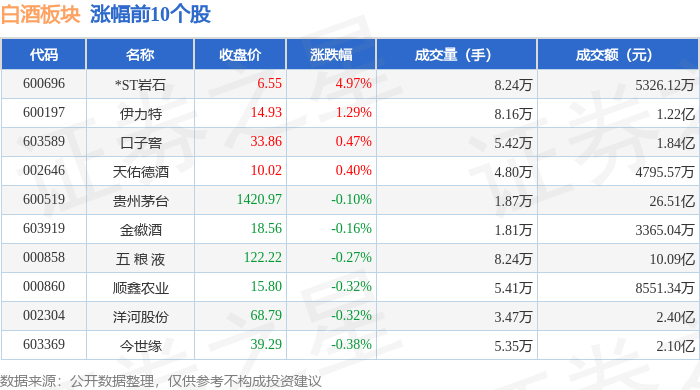
证券之星消息,8月8日白酒板块较上一交易日下跌0.54%,泸州老窖领跌。当日上证指数报收于 3635.13,下跌0.12%。深证成指报收于11128.67,下跌0.26%。白酒板块个股涨跌见下表: | 代码 | 名称 | 收盘价 | 涨跌幅 | 成交量(手) | 成交额(元) | | --- | --- | --- | --- | --- | --- | | 600696 | *ST岩石 | 6.55 | 4.97% | 8.24万 | 5326.12万 | | 600197 | 伊力特 | 14.93 | 1.29% | 8.16万 | 1.22亿 | | 603589 | 口子窖 | 33.86 | 0.47% | 5.42万 | 1.84亿 | | 002646 | 天佑德酒 | 10.02 | 0.40% | 4.80万 | 4795.57万 | | 615009 | 贵州茅台 | 1420.97 | -0.10% | 1.87万 | 26.51亿 | | 616809 | 金徽酒 | 18.56 | -0.16% | 1.81万 | 3365.04万 | | 000858 | 五粮液 | 122.2 ...

食品饮料周报:市场规模超1500亿元 酒企争喝光瓶酒
Zheng Quan Zhi Xing· 2025-08-08 07:17
Market Performance - The Shanghai and Shenzhen 300 Index increased by 1.23%, while the Shenwan Food and Beverage Index rose by 0.68% during the period from August 4 to August 8, 2025 [1]. Institutional Insights - Guohai Securities maintains a "recommended" rating for the food and beverage sector, citing recent policy measures that are expected to improve macroeconomic expectations and enhance both valuation and performance in the sector [2]. - Zhongyuan Securities suggests focusing on investment opportunities in the white liquor, soft drinks, health products, baking, and snacks sectors, with a recommended stock portfolio including brands like Yingjia Gongjiu and Luzhou Laojiao [3]. Regulatory Developments - The State Administration for Market Regulation has drafted a regulation concerning food safety responsibilities for food sales chain enterprises, emphasizing risk prevention and management responsibilities at various levels [4]. - A joint reminder from the State Administration for Market Regulation and the China Consumers Association warns consumers against believing health claims made by ordinary food products [5]. Industry Trends - The market for light bottle liquor is projected to exceed 150 billion yuan in 2024 and is expected to surpass 200 billion yuan in 2025, with increased competition in lower-tier markets [8]. - The export value of Zunyi liquor (excluding Moutai Group) reached 39.81 million yuan, showing a year-on-year increase of 870.82%, driven by policies supporting international market expansion [9]. Company News - Moutai Group has announced the cessation of production for Taiyuan liquor to optimize its product structure and enhance market competitiveness [11]. - Tianyoude Liquor plans to invest 160 million yuan in building a winery in Tibet as part of its strategy to overcome current financial challenges [12]. - Yingjia Gongjiu has established a new biotechnology company with an investment of 8 million yuan, focusing on technology promotion and application services [13].

白酒板块资本市场持续增长 酒企布局新赛道
Bei Jing Shang Bao· 2025-08-08 06:59
Core Insights - The liquor sector is experiencing significant growth in the capital market, with major companies like Luzhou Laojiao and Wuliangye establishing new retail companies to adapt to the digital sales landscape [1][2][4] - The establishment of new retail companies by liquor firms is driven by the influence of social media and online sales platforms on consumer marketing [3][6] Group 1: Company Developments - Luzhou Laojiao New Retail Co., Ltd. was recently established with a registered capital of 50 million yuan, focusing on self-operated e-commerce [2] - Wuliangye New Retail Management Co., Ltd. was established in May 2020 with a registered capital of 100 million yuan, and has since launched the Wuliangye Cloud Store to enhance online sales [2][4] - Both companies are leveraging online platforms to expand their sales channels, with Luzhou Laojiao reporting a dual sales model that includes traditional and emerging online channels [2][4] Group 2: Market Trends - The new retail market for liquor is projected to grow significantly, with an estimated market size of 1,167.5 billion yuan in 2020, expected to reach 1,363.1 billion yuan in 2021 [4] - Online sales channels are becoming increasingly important, with comprehensive e-commerce platforms capturing 58.2% of the online sales market [5] - The trend towards digitalization and the targeting of younger consumers is evident, as companies adapt to changing consumer preferences [5][6] Group 3: Financial Performance - Huazhi Wine achieved revenue of 2.35 billion yuan in Q1, a year-on-year increase of 81.8%, with a net profit of 190 million yuan, up 95.2% [4] - Yijiu Yijiu reported revenue of 1.455 billion yuan, a year-on-year increase of 78.11%, with a net profit of 52.75 million yuan, up 162.86% [4] - Even during challenging market conditions in 2020, Huazhi Wine reported a revenue of 4.941 billion yuan, a 32.20% increase year-on-year [4] Group 4: Consumer Engagement - The establishment of new retail companies allows liquor firms to interact more effectively with consumers, gaining insights into consumer demands and preferences [6][7] - New retail platforms serve as effective testing grounds for new products, enabling quicker feedback on pricing, packaging, and taste compared to traditional channels [6][7] - Companies are also focusing on brand integrity by reducing the risk of counterfeit products through their own retail platforms [7]
反内卷二次发酵,不含金融地产的自由现金流ETF备受关注
Xin Lang Cai Jing· 2025-08-08 05:40
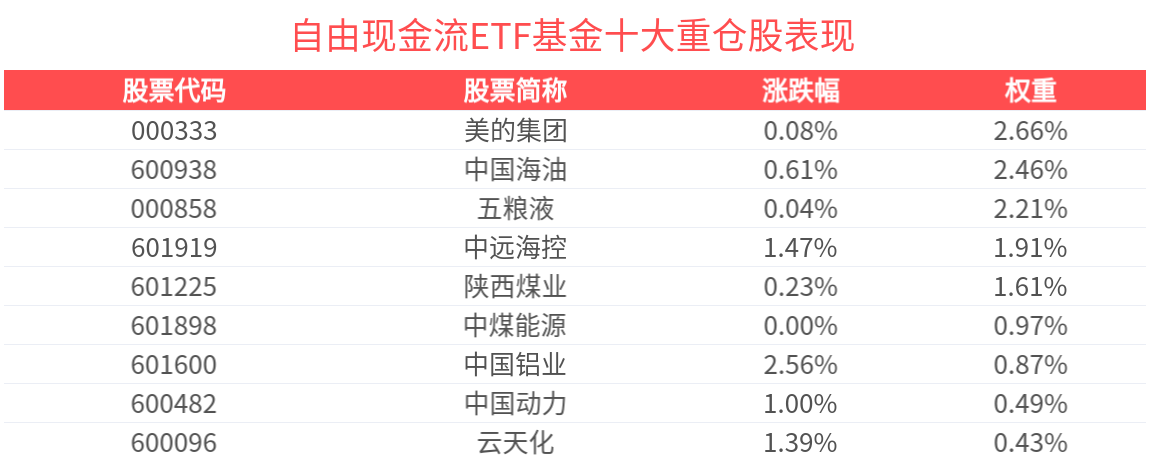
Group 1 - The core viewpoint of the news is the performance of the CSI All Share Free Cash Flow Index and its related ETF, highlighting significant increases in both the index and the ETF, indicating strong cash flow generation capabilities among the constituent companies [1][2] - As of August 8, 2025, the CSI All Share Free Cash Flow Index rose by 0.83%, with notable increases in constituent stocks such as Chuncheng Power (up 5.14%) and Luoyang Molybdenum (up 4.22%) [1] - The Free Cash Flow ETF (159233) has shown a cumulative increase of 2.31% over the past week, with a trading volume of 633.98 million yuan and a turnover rate of 4.07% [1] Group 2 - The Free Cash Flow ETF has a management fee of 0.50% and a custody fee of 0.10%, closely tracking the CSI All Share Free Cash Flow Index, which includes 100 high free cash flow rate companies [2] - As of July 31, 2025, the top ten weighted stocks in the CSI All Share Free Cash Flow Index accounted for 57.53% of the index, including companies like China National Offshore Oil (600938) and Wuliangye (000858) [2] - The ETF has recorded a maximum monthly return of 4.04% since its inception, with an average monthly return of 2.20% and a monthly profit probability of 88.24% [1]