WLY(000858)

Search documents
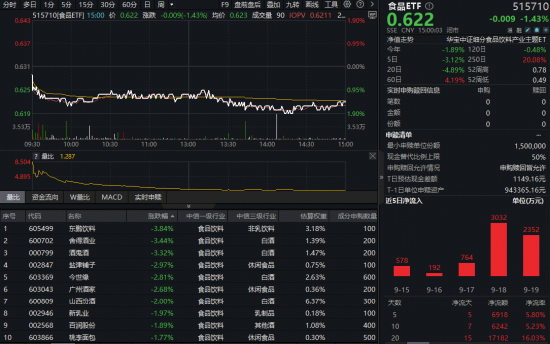
吃喝板块继续回调!食品ETF(515710)收跌1.43%,近20日吸金超1.7亿元!布局窗口悄然打开?
Xin Lang Ji Jin· 2025-09-22 12:03
Group 1 - The food and beverage sector is experiencing a pullback, with the Food ETF (515710) showing a significant decline of 1.43% at the close, and individual stocks like Dongpeng Beverage and Shede Liquor dropping over 3% [1][3] - Despite the recent downturn, the Food ETF has seen net inflows of 69.18 million yuan over the last five trading days, indicating continued investor interest [3][4] - The white liquor sector is under demand pressure, but there are signs of improvement in sales performance as the Mid-Autumn Festival and National Day approach, suggesting a potential recovery in the market [3][5] Group 2 - The current valuation of the food and beverage sector is at a low point, with the food index's price-to-earnings ratio at 20.74, which is in the 7.06% percentile of the last decade, indicating a good time for long-term investment [4][5] - The government’s advocacy for reducing competition is expected to stabilize prices and support high-quality development, which may lead to a recovery in the liquor sector [5][6] - The white liquor sector is entering a peak season, with signs of improved sales and inventory reduction, suggesting that the bottoming out of the sector may present investment opportunities [6][7]







饮酒思源系列(二十二):再论白酒周期及中秋复盘展望
Changjiang Securities· 2025-09-22 09:42
Investment Rating - The report maintains a "Positive" investment rating for the liquor industry [10] Core Insights - The liquor inventory cycle is gradually turning, with expectations of a demand recovery driven by ongoing economic policies and improved consumer confidence. The industry is entering a critical phase for left-side layout [2][8] - Current valuations and fund holdings in the liquor industry are at historical lows, indicating a favorable time for allocation. Leading liquor companies are showing strong dividend support [2][8] Summary by Sections Inventory Management - The liquor industry has clear inventory cycle fluctuations, with different phases affecting stock performance. The current phase indicates a shift from passive inventory accumulation to active inventory reduction, suggesting a more scientific and rational management approach by manufacturers [6][20][24] Demand Recovery - The demand for liquor is closely tied to macroeconomic conditions. Historical data shows that liquor industry revenue growth aligns with GDP growth, indicating potential for gradual recovery as the economy improves [36][39] Head Brand Concentration - The trend of market share concentration towards leading brands continues, with top companies maintaining stable growth despite overall market slowdowns. In 2024, listed liquor companies accounted for 28% of the total production, a historical high [42][44] Mid-Autumn Festival Performance Review - Historical performance around the Mid-Autumn Festival shows varying results for liquor stocks compared to the CSI 300 index. The fundamental performance remains the decisive factor for excess returns during this period [49][52]






食品饮料行业周报:双节白酒备货表现分化,关注高德扫街榜催化-20250922
Huaxin Securities· 2025-09-22 09:39
Investment Rating - The report maintains a "Recommended" investment rating for the food and beverage industry [8][52]. Core Viewpoints - The white liquor sector is expected to see differentiated performance in sales channels and regions as the National Day and Mid-Autumn Festival approach, with traditional channels under pressure while new retail channels show growth [6][52]. - The pre-prepared food sector is poised for growth with the introduction of national safety standards, benefiting leading brands and enhancing industry self-regulation [7][53]. - The new consumption sector is supported by initiatives like the "Gaode Street Ranking" which aims to boost offline dining, indicating a positive trend for restaurant traffic [7][53]. Summary by Sections Industry News - Beer enterprise registrations increased by 10.83% year-on-year from January to August [5][19]. - The retail sales of tobacco and alcohol reached 419.4 billion yuan in the first eight months [5][19]. - White liquor production decreased by 9% cumulatively [5][19]. Investment Insights - In the white liquor sector, sales are under pressure, particularly in group purchase channels, while instant retail and live streaming channels are growing rapidly [6][52]. - The report suggests focusing on leading companies with high dividends such as Kweichow Moutai, Wuliangye, and Luzhou Laojiao, as well as more elastic stocks like JiuGuiJiu and SheDeJiuYe [6][52]. - The pre-prepared food industry is expected to benefit from clearer safety standards, which will help leading brands expand their market share [7][53]. Key Company Feedback - The report highlights several companies with strong growth potential, including Xiamen Food, Youyou Food, and Dongpeng Beverage, as well as beverage brands like Nayuki Tea and others [8][56]. - The report provides earnings forecasts for key companies, indicating a positive outlook for their performance [8][56]. Industry Data Trends - The cumulative production of white liquor in 2024 was 4.145 million tons, a decrease of 7.72% year-on-year, while the industry revenue reached 796.4 billion yuan, an increase of 5.3% [32][33]. - The pre-prepared food market is projected to grow at a CAGR of 23%, reaching 749 billion yuan by 2026 [51][53].
这些股票,获融资客加仓
Zhong Guo Zheng Quan Bao - Zhong Zheng Wang· 2025-09-22 08:58
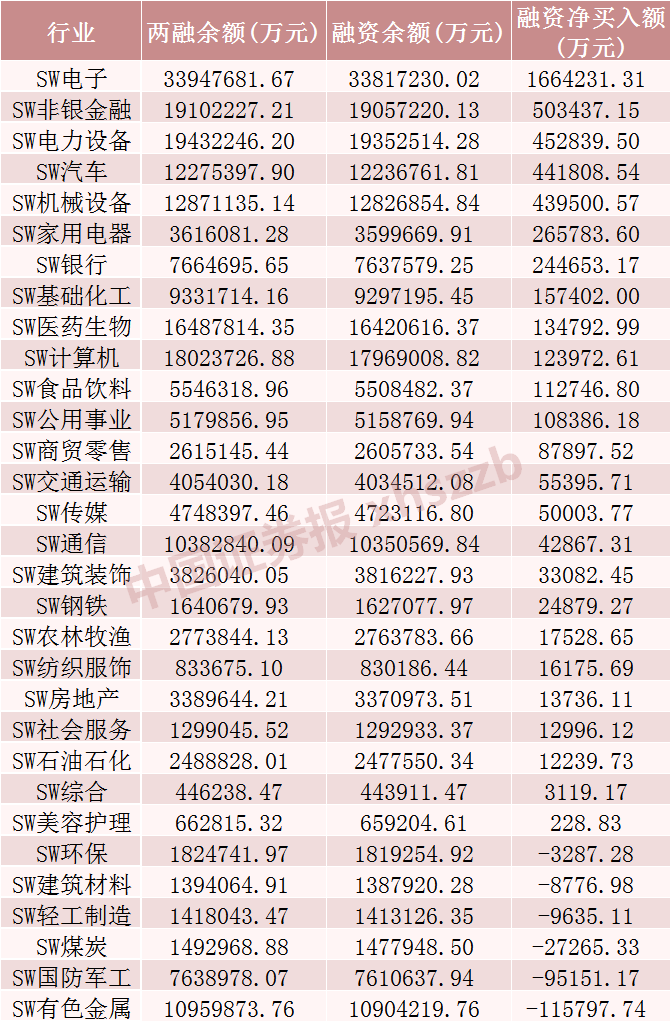
Core Insights - As of September 19, the financing balance of the A-share market reached 2.38161 trillion yuan, with a margin trading balance of 16.575 billion yuan, indicating an increase of 46.646 billion yuan in financing balance over the past week [1][2] - The electronic industry saw a significant increase in financing balance, exceeding 16 billion yuan, with Shenghong Technology being the stock with the highest net buying amount [1][3] Financing and Margin Trading Overview - From August 13 to September 19, the A-share market experienced 28 consecutive trading days with transaction volumes and margin trading balances exceeding 2 trillion yuan [2][3] - During the last week, the financing balance increased by 46.646 billion yuan, with notable daily increases on September 15 (18.337 billion yuan), September 16 (22.511 billion yuan), and September 17 (12.711 billion yuan) [2][3] Industry Performance - Among the 31 industries tracked, 25 saw an increase in financing balance, with the electronic, non-bank financial, and power equipment sectors leading in net buying amounts of 16.642 billion yuan, 5.034 billion yuan, and 4.528 billion yuan respectively [3] - Conversely, the non-ferrous metals, defense, and coal industries experienced the highest net selling amounts of 1.158 billion yuan, 0.952 billion yuan, and 0.273 billion yuan respectively [3] Stock-Specific Activity - Last week, financing clients increased their positions in 202 stocks by over 100 million yuan, with the top ten stocks being Shenghong Technology (2.112 billion yuan), SMIC (2.056 billion yuan), and CITIC Securities (1.775 billion yuan) [4] - The top ten stocks with the highest net selling amounts included Xinyi Technology (1.577 billion yuan), Zijin Mining (0.964 billion yuan), and Haiguang Information (0.964 billion yuan) [5] Margin Trading Details - As of September 19, the margin trading balance was 16.575 billion yuan, with a slight decrease of 0.032 billion yuan over the past week [5] - The stocks with the highest margin trading balances included Ningde Times (119 million yuan), Shenghong Technology (98 million yuan), and Kweichow Moutai (82 million yuan) [5][6]




今日净申购8400万份,食品饮料ETF天弘(159736)连续4日获资金净流入,机构:重视白酒底部催化
2 1 Shi Ji Jing Ji Bao Dao· 2025-09-22 08:13
Group 1 - The A-share market saw all three major indices rise collectively on September 22, indicating positive market sentiment [1] - The Tianhong Food and Beverage ETF (159736) closed down 1.22% with a trading volume exceeding 280 million yuan and a net subscription of 84 million units [1] - The Tianhong Food and Beverage ETF has experienced a net inflow of funds for four consecutive days, accumulating 74.35 million yuan [1] Group 2 - The Tianhong Food and Beverage ETF closely tracks the CSI Food and Beverage Index, which selects stocks from the beverage, packaged food, and meat industries [1] - Major holdings in the Tianhong Food and Beverage ETF include leading companies such as Kweichow Moutai, Yili, Wuliangye, Shanxi Fenjiu, and Luzhou Laojiao [1] - Huachuang Securities emphasizes the importance of bottom-catalysts in the liquor sector, suggesting that traditional consumption is entering a phase of accumulation [1] Group 3 - Guoyuan Securities recommends closely monitoring the pricing and sales dynamics in the liquor sector as the Double Festival approaches, focusing on high-end liquor companies with strong brand and channel capabilities [2] - The beer industry is noted for its stable competitive landscape, while segments like snacks and energy drinks are experiencing high demand [2] - The dairy sector shows signs of stabilization in raw milk prices, with leading dairy companies demonstrating resilience [2]
食品饮料行业双周报:8月社零+3.4%,高端酒批价节前承压-20250922
Guoyuan Securities· 2025-09-22 07:43
Investment Rating - The report maintains a recommendation for the food and beverage industry [4] Core Viewpoints - The A-share food and beverage industry has seen a decline of 1.48% over the past two weeks, underperforming the Shanghai Composite Index by 1.68 percentage points and the Shenzhen Component Index by 5.29 percentage points [1][11] - In the sub-sectors, processed food (+0.71%) and soft drinks (+0.39%) have increased, while snacks (-5.82%), other alcoholic beverages (-3.70%), and baked goods (-3.23%) have experienced significant declines [1][11] - Key stocks such as Qianwei Yangchu (+21.28%), Richen Co. (+14.10%), and Weizhi Xiang (+10.87%) have shown notable gains, while Kweichow Moutai (-13.07%), Ziyan Food (-11.79%), and Jiahe Food (-11.54%) have faced substantial losses [1][11] Summary by Sections Market Review - The A-share food and beverage industry has declined by 3.37% year-to-date, underperforming the Shanghai Composite Index by 17.35 percentage points and the Shenzhen Component Index by 28.88 percentage points [11] - The total retail sales in August reached 396.68 billion yuan, growing by 3.4% year-on-year, with a slight decrease of 0.3 percentage points compared to July [3][54] Key Data Tracking - The price of Feitian Moutai has decreased by 30 yuan for original boxes and 40 yuan for loose packaging compared to two weeks ago, with current prices at 1,830 yuan and 1,800 yuan respectively [2][26] - The average price of fresh milk in major production areas is 3.03 yuan per kilogram, down 3.5% year-on-year [34] Key Events Tracking - The national standard for sterilized milk has been revised, prohibiting the addition of reconstituted milk in long-term pure milk [3][54] - The snack brand Mingming Hen Mang has surpassed 20,000 stores, becoming the first in the domestic leisure food and beverage chain industry to achieve this milestone [3][54] Investment Recommendations - In the liquor sector, it is advised to closely monitor price trends and sales performance, focusing on high-end liquor companies with strong brand and channel capabilities such as Kweichow Moutai, Wuliangye, and Luzhou Laojiao [7][56] - For consumer goods, the beer industry remains stable, and there is high demand in segments like snacks and energy drinks [7][57]

白酒板块午盘下跌 贵州茅台微跌0.75%
Bei Jing Shang Bao· 2025-09-22 03:59
Core Viewpoint - The liquor industry is experiencing a mixed performance as it enters the peak season, with demand showing improvement on a month-over-month basis but still facing a 10-20% shortfall year-over-year [1] Industry Summary - The Shanghai Composite Index rose by 0.07% to 3822.59 points, while the liquor sector closed at 2294.54 points, down 1.01% [1] - A total of 19 liquor stocks declined, with Shede Liquor leading the drop at 3.08% [1] - Major liquor companies such as Kweichow Moutai, Wuliangye, Shanxi Fenjiu, Luzhou Laojiao, and Yanghe Brewery saw varying stock price changes, with Kweichow Moutai closing at 1457.00 CNY per share, down 0.75% [1][1][1] Company Insights - According to a report from China Merchants Securities, the liquor industry is entering a peak season with overall feedback being tepid [1] - The report emphasizes the importance of focusing on supply-side changes at the enterprise level during this adjustment period, as leading companies like Moutai and Wuliangye are sending positive signals [1] - As the peak season unfolds, the direction of industry clearing will become clearer, and the bottom of the market will become increasingly evident [1]
解码食饮:迎又一年双节,如何展望旺季行情
2025-09-22 01:00
Summary of the Conference Call on the Baijiu Industry Industry Overview - The overall sales volume in the baijiu industry has declined, with distributors expecting a 20%-30% drop in sales during the upcoming double festival period. Sales volume decreased by 40%-50% in July and August [1][2] - High-end baijiu wholesale prices are weak, with Feitian Moutai priced around 1,780 RMB. Demand for baijiu in banquet scenarios remains stable, while mid-range products perform more consistently [1][4] Key Points and Arguments - **Sales Performance**: The baijiu industry is facing significant sales pressure, with actual sales declines exceeding previous market expectations. Most regions, except for Henan, are experiencing sales drops greater than anticipated [2] - **Inventory Levels**: From June to August, the average sales volume decreased by 50%, leading to a slight increase in inventory levels compared to last year. Most distributors have higher inventory levels than the same period last year [3] - **Price Trends**: High-end baijiu products like Feitian Moutai and Wuliangye are experiencing weak wholesale prices. Feitian Moutai's price is expected to fluctuate between 1,700 and 1,800 RMB during the double festival period [4][8] - **Company Performance Adjustments**: Guizhou Moutai has lowered its annual growth target but maintains a steady collection rate compared to last year. Wuliangye is also expected to adjust its growth target due to market conditions [6][9] Company-Specific Insights - **Guizhou Moutai**: The company is increasing promotional activities for its series of products and expects a slight downward adjustment in annual growth targets, which may benefit investors by releasing risks [8] - **Wuliangye**: The company is shifting its focus from absolute growth to long-term competitiveness, with a return rate of approximately 60%-70% [9][10] - **Luzhou Laojiao**: The company is implementing a price stabilization strategy and focusing on expanding its terminal market through targeted promotions [11] - **Shanxi Fenjiu**: The company is facing significant sales declines but is maintaining a stable price point due to good relationships with distributors [13] Investment Recommendations - The report suggests focusing on companies with potential for policy-driven growth and those that can adapt to market changes, such as Jiu Gui, She De, and Shui Jing Fang. Mid-range products like Gu Qing Gong and Ying Jia Gong are also highlighted for their recovery potential [5][7] - The overall sentiment is that the baijiu industry is currently at a low point, but there are opportunities for recovery and growth in specific segments and companies [27] Additional Considerations - The impact of external factors, such as government inspections and coal supply pressures, has affected consumption patterns in various regions [12][14] - The performance of next-tier baijiu products is weaker compared to high-end and mid-range products, indicating a need for careful monitoring of new product launches [21] This summary encapsulates the key insights and trends discussed in the conference call regarding the baijiu industry, highlighting both challenges and potential investment opportunities.


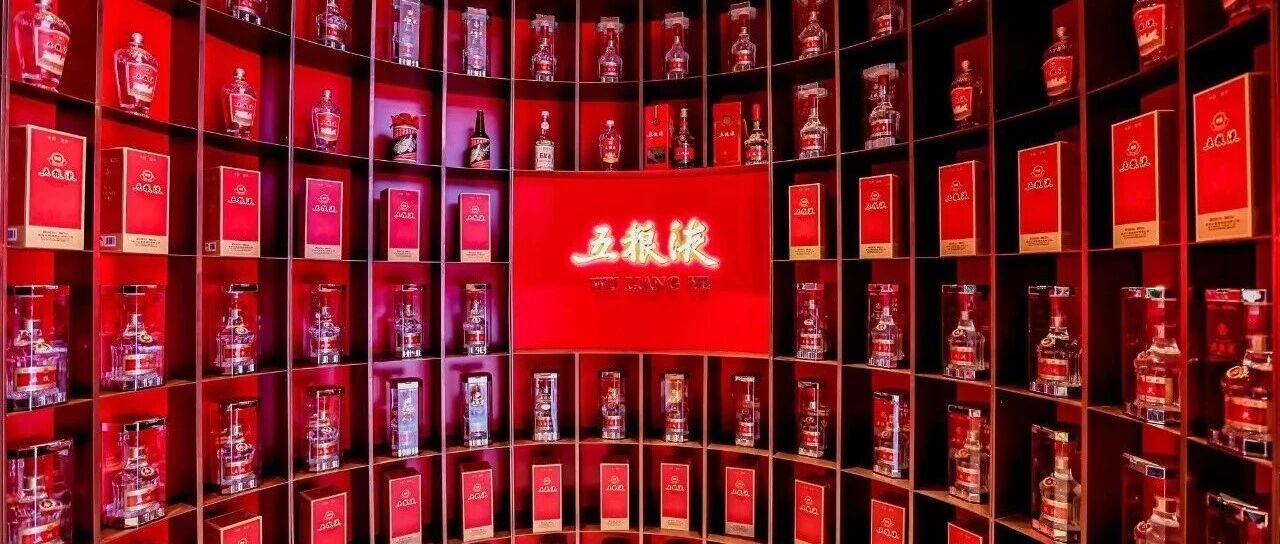
“高能级盛会+本地化场景”闪耀日本、新加坡,五粮液探索白酒国际化新范式
2 1 Shi Ji Jing Ji Bao Dao· 2025-09-21 11:37
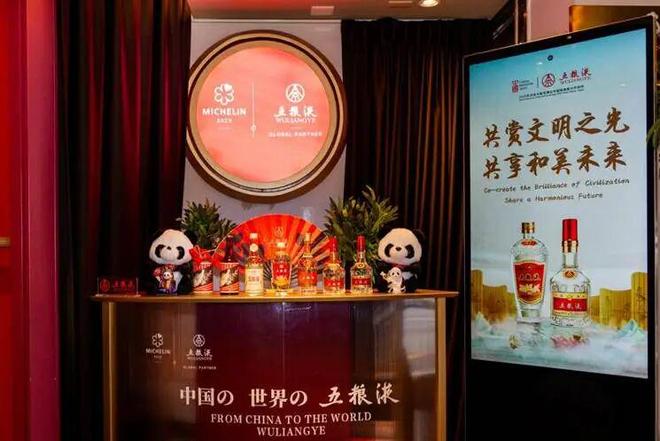
Core Insights - The article highlights the successful internationalization strategy of Wuliangye, showcasing its cultural and culinary integration at the 2025 Osaka Expo and its new restaurant openings in Singapore and Japan [4][12][15] Group 1: Event Highlights - The Wuliangye-themed day at the Osaka Expo has attracted significant attention, with daily visitor numbers reaching new highs [1] - The opening of the second overseas authorized restaurant, "Shinryugin," in Osaka, coincided with the Wuliangye-themed activities, enhancing brand visibility [1][9] - The Singapore Wuliangye restaurant opened on September 17, 2023, in the Bugis area, a hub for diverse culinary experiences [3][11] Group 2: Cultural Integration - Wuliangye is leveraging high-profile international events and localized experiences to deepen its cultural narrative and consumer engagement [4][13] - The immersive cultural experiences at the Osaka Expo, including interactive art and themed exhibits, aim to create lasting impressions of Chinese culture [6][8] - The Singapore restaurant features a blend of Chinese and local culinary elements, enhancing the dining experience and cultural resonance [11][12] Group 3: Strategic Approach - Wuliangye's strategy combines high-energy international platforms with localized market penetration, aiming for a sustainable global presence [4][13][15] - The brand's approach emphasizes a "standardized core with localized operations," allowing for adaptability while maintaining brand integrity [15] - The company aims to redefine the international perception of Chinese liquor, positioning it alongside global counterparts like French wine and Scotch whisky [16]
“高能级盛会+本地化场景”闪耀日本、新加坡,五粮液探索白酒国际化新范式
21世纪经济报道· 2025-09-21 11:30
Core Viewpoint - The article highlights the internationalization strategy of Wuliangye, showcasing its efforts to integrate Chinese culture with local markets through high-profile events and localized dining experiences, particularly in Japan and Singapore [1][3][11]. Group 1: Event Participation and Cultural Exchange - The 2025 Osaka Expo has seen a surge in daily visitor numbers, with the China Pavilion, featuring Wuliangye, receiving positive feedback for its innovative cultural presentations [1]. - Wuliangye's "Five Grains Liquor Theme Day" at the Osaka Expo included immersive cultural experiences, such as sand painting and interactive elements, enhancing visitor engagement [4][7]. - The opening of Wuliangye's second overseas authorized restaurant, "Shinryugin" in Osaka, marks a significant step in its international expansion strategy [8][10]. Group 2: Localization Strategy - Wuliangye's approach emphasizes deep localization, adapting its offerings to resonate with local tastes and cultural preferences, as seen in its Singapore restaurant that combines Chinese and local culinary elements [10][11]. - The Singapore Wuliangye restaurant, located in a vibrant food district, aims to enhance brand recognition and consumer engagement through tailored dining experiences [10][11]. - The brand's strategy includes creating immersive experiences that allow international consumers to appreciate the cultural significance of Chinese liquor [7][11]. Group 3: Brand Positioning and Future Outlook - Wuliangye's participation in high-profile international events serves as a platform for global exposure, reinforcing its status as a representative of Chinese liquor [11][13]. - The brand's model of "standardized core + localized operation" provides a replicable framework for other Chinese liquor companies aiming for international markets [13]. - The article suggests that Wuliangye's internationalization efforts could position Chinese liquor alongside globally recognized beverages like French wine and Scotch whisky in the future [13].