CATL(300750)

Search documents
基本面120ETF嘉实(159910)开盘涨0.08%
Xin Lang Cai Jing· 2026-02-12 01:44
Group 1 - The core point of the article highlights the performance of the Basic Fundamental 120 ETF managed by Harvest Fund Management, which opened at 2.504 yuan with a slight increase of 0.08% [1] - The ETF's performance benchmark is the Shenzhen Basic Fundamental 120 Index, and it has achieved a return of 150.22% since its inception on August 1, 2011, with a recent one-month return of 1.30% [1] Group 2 - Major holdings in the ETF include companies such as CATL, which increased by 0.54%, and Midea Group, which decreased by 0.29% [1] - Other notable stock performances include Gree Electric Appliances down by 0.21%, BOE Technology Group unchanged, Ping An Bank unchanged, Luxshare Precision up by 0.22%, Vanke A up by 0.82%, TCL Technology down by 0.21%, Wuliangye down by 0.13%, and Weichai Power up by 1.62% [1]




长安-宁德时代首发钠电量产车,展现多元供给韧性
Zhong Guo Neng Yuan Wang· 2026-02-12 01:30
Core Viewpoint - Changan Automobile and CATL have jointly launched the world's first sodium-ion battery mass-produced passenger vehicle, showcasing the resilience of diverse supply in the electric vehicle sector [2][3] Industry Summary - The rapid development of the new energy vehicle and energy storage industries has led to a surge in demand for lithium batteries, driving up lithium carbonate prices and prompting battery manufacturers to explore sodium resources [2][3] - CATL's sodium battery has a maximum energy density of 175Wh/kg, with pure electric range capabilities of up to 500km or even 600km [2][3] - In extreme cold conditions, the sodium battery vehicle demonstrates significant performance advantages, with nearly three times the discharge power compared to conventional lithium iron phosphate models at -30°C, over 90% capacity retention at -40°C, and stable discharge at -50°C [2][3] Technology Insights - Sodium batteries complement rather than simply replace lithium batteries, offering excellent low-temperature performance and fast charging/discharging capabilities [3] - The lower cost of sodium batteries presents vast application prospects in energy storage and other cost-sensitive areas [3] - The integration of sodium and lithium batteries in the same system can meet diverse needs for fast charging, low-temperature performance, long range, and cost efficiency [3] Investment Strategy - The sodium-ion battery industry is growing, with costs expected to decline as production scales up, enhancing its cost advantage amid rising lithium prices [4] - Sodium-ion batteries are suitable for various applications, including energy storage, light electric vehicles, backup power for data centers, and automotive starting power [4] - Companies leading in sodium-ion battery technology and production, such as CATL, Chuan Yi Technology, and Huayang Co., are recommended for investment [4] Market Review - The electric power equipment industry experienced a weekly increase of 2.20%, ranking third among 31 primary industries [5] - The electric power equipment sector outperformed the CSI 300 index, while major indices like the Shanghai Composite and CSI 300 saw declines of -1.3% [6]
锂电池供需偏紧 电芯厂加速扩产
Jing Ji Guan Cha Wang· 2026-02-11 16:25
Group 1 - The core viewpoint of the articles highlights the accelerated expansion of lithium battery manufacturers, with major companies like CATL and Guoxuan High-Tech planning significant investments to increase production capacity [2][5][6] - CATL announced a public issuance of corporate bonds to raise up to 5 billion yuan for project construction and operational funding [2] - Guoxuan High-Tech plans to raise 5 billion yuan to invest approximately 13 billion yuan in building 60GWh lithium battery capacity, positioning itself as a key player in the market [2][8] Group 2 - The lithium battery industry is experiencing a surge in investment, with over 282 projects planned in China, totaling more than 820 billion yuan, reflecting a year-on-year increase of over 74% [2] - The supply of lithium battery cells is currently tight, with many manufacturers having initiated expansion plans that will come online in the latter half of 2025 [3][7] - The demand for lithium batteries is expected to grow significantly, with cumulative sales projected to reach 1,700.5GWh in 2025, a year-on-year increase of 63.6% [7] Group 3 - The expansion of production capacity is primarily driven by the demand in the terminal market, especially in the energy storage sector, leading to a temporary supply-demand imbalance [7] - Guoxuan High-Tech's third-generation battery cells, which utilize a manganese iron phosphate chemical system, are expected to enhance competitiveness by reducing costs by 10%-15% [8] - The industry is witnessing a shift towards larger cell formats, with plans to transition from 300Ah to 587Ah cells, which may improve cost efficiency but also raise safety concerns [10] Group 4 - Despite the optimistic outlook, companies in the energy storage sector are cautious about expanding their battery production capacity due to market dynamics and competition [11][13] - The current market conditions have led to a situation where many companies are prioritizing international orders over domestic demand, creating pressure on local delivery capabilities [11][12] - Companies like Sungrow Power Supply are still evaluating the feasibility of entering battery cell production, indicating a cautious approach to future investments [14]



宁德时代“26CATLK1”票面利率为1.69%
Ge Long Hui· 2026-02-11 13:27
Core Viewpoint - CATL has received approval from the China Securities Regulatory Commission to issue corporate bonds worth up to RMB 5 billion, indicating strong market confidence in the company's financial strategy and growth potential [1] Group 1: Bond Issuance Details - The corporate bonds, referred to as "26CATLK1," are aimed at professional institutional investors and have a total issuance limit of RMB 5 billion, including the full amount [1] - The registration approval for the bond issuance was granted on February 6, 2026, under the regulatory document number 234 [1] Group 2: Interest Rate Information - On February 11, 2026, CATL and the lead underwriter conducted an inquiry for the coupon rate, with the range set between 1.60% and 2.20% [1] - The final coupon rate for the bonds was determined to be 1.69% based on the results of the inquiry and careful judgment by the issuer and underwriter [1]
宁德时代:“26CATLK1”票面利率为1.69%
Zhi Tong Cai Jing· 2026-02-11 13:23
Group 1 - The company, CATL, announced the public issuance of corporate bonds amounting to no more than RMB 5 billion, which has received approval from the China Securities Regulatory Commission on February 6, 2026 [1] - The inquiry for the coupon rate was conducted on February 11, 2026, with a range set between 1.60% and 2.20% [1] - The final coupon rate for the bonds, designated as "26CATLK1" with the bond code 524672, was determined to be 1.69% based on the results of the inquiry [1]
宁德时代(03750):“26CATLK1”票面利率为1.69%
智通财经网· 2026-02-11 13:19
Core Viewpoint - CATL has received approval from the China Securities Regulatory Commission to issue corporate bonds totaling up to RMB 5 billion, indicating a strategic move to raise capital for future investments and operations [1] Group 1: Bond Issuance Details - The corporate bonds will be issued to professional institutional investors, with a total amount not exceeding RMB 5 billion, including the full amount [1] - The registration approval for the bond issuance was granted on February 6, 2026, under the regulatory document number 2026〔234号〕 [1] - The final coupon rate for the bonds, after a pricing inquiry conducted on February 11, 2026, was set at 1.69%, within the inquiry range of 1.60% to 2.20% [1] Group 2: Bond Specifications - The bonds are designated with the name "26CATLK1" and the bond code is 524672 [1]
宁德时代(03750.HK)“26CATLK1”票面利率为1.69%
Ge Long Hui· 2026-02-11 13:18
Core Viewpoint - CATL has received approval from the China Securities Regulatory Commission to issue corporate bonds worth up to RMB 5 billion, indicating strong market confidence in the company's financial strategy and growth potential [1] Group 1: Bond Issuance Details - The corporate bonds, referred to as "26CATLK1," are aimed at professional institutional investors and have a total issuance limit of RMB 5 billion, including the full amount [1] - The approval for the bond issuance was granted on February 6, 2026, under the regulatory license number 234 [1] Group 2: Interest Rate Information - On February 11, 2026, CATL and the lead underwriter conducted an inquiry for the coupon rate, with a proposed range of 1.60% to 2.20% [1] - The final coupon rate for the bonds was set at 1.69% based on the results of the inquiry and careful judgment by the issuer and underwriter [1]
宁德时代(03750) - 海外监管公告-2026年面向专业投资者公开发行科技创新公司债券(第一期)...
2026-02-11 13:09
海外監管公告 寧德時代新能源科技股份有限公司2026年面向專業投資者 公開發行科技創新公司債券(第一期)票面利率公告 本公告乃根據香港聯合交易所有限公司證券上市規則第13.10B條而作出。 香港交易及結算所有限公司及香港聯合交易所有限公司對本公告之內容概不負責,對其準確性 或完整性亦不發表任何聲明,並明確表示概不就因本公告全部或任何部份內容而產生或因倚賴 該等內容而引致之任何損失承擔任何責任。 Contemporary Amperex Technology Co., Limited 寧德時代新能源科技股份有限公司 (於中華人民共和國註冊成立的股份有限公司) (股份代號:3750) 茲載列寧德時代新能源科技股份有限公司(「本公司」)於深圳證券交易所網站 ( http://www.szse.cn/ )及巨潮資訊網( www.cninfo.com.cn )所發布之《寧德時代新能 源科技股份有限公司2026年面向專業投資者公開發行科技創新公司債券(第一期) 票面利率公告》,僅供參閱。 承董事會命 寧德時代新能源科技股份有限公司 董事長、執行董事兼總經理 曾毓群先生 中國•寧德,二零二六年二月十一日 於本公告日期,本公 ...
宁德时代(300750) - 宁德时代新能源科技股份有限公司2026年面向专业投资者公开发行科技创新公司债券(第一期)票面利率公告
2026-02-11 11:22
债券代码:524672 债券简称:26CATLK1 宁德时代新能源科技股份有限公司 2026 年面向专业投资者公开发行 科技创新公司债券(第一期) 票面利率公告 本公司及董事会全体成员保证公告内容的真实、准确和完整,没有虚假记载、 误导性陈述或者重大遗漏。 宁德时代新能源科技股份有限公司(以下简称"发行人")面向专业机构投 资者公开发行(不超过)人民币 50 亿元(含 50 亿元)的公司债券(以下简称"本 次债券")已于 2026 年 2 月 6 日获得中国证券监督管理委员会注册批复(证监 许可〔2026〕234 号)。 2026 年 2 月 11 日,发行人和主承销商在网下向专业机构投资者进行了票面 利率询价,利率询价区间为 1.60%-2.20%。根据网下向专业机构投资者询价结果, 经发行人和主承销商审慎判断,最终确定本次债券票面利率为 1.69%。 发行人将按上述票面利率于 2026 年 2 月 12 日面向专业机构投资者网下发 行。具体认购方法请参考 2026 年 2 月 10 日刊登在深圳证券交易所网站 (http://www.szse.cn)、巨潮资讯网(http://www.cninfo.com ...
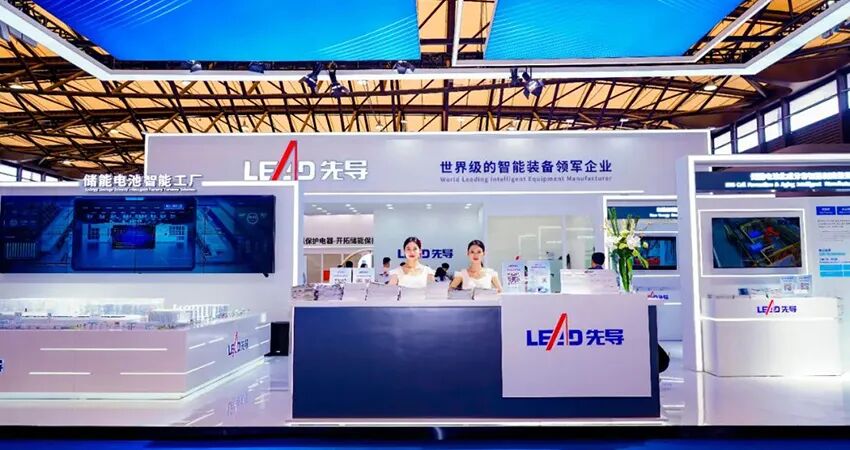
全球锂电装备一哥敲钟!宁德时代持股市值超680亿,特斯拉比亚迪都是客户
Xin Lang Cai Jing· 2026-02-11 10:34
Core Viewpoint - The successful IPO of Wuxi Xian Dao Intelligent Equipment Co., Ltd. (Xian Dao Intelligent) on the Hong Kong Stock Exchange marks a significant milestone for Chinese manufacturing companies, particularly in the lithium battery equipment sector, as it aims to expand its global presence and attract international capital [2][30][55]. Financial Performance - Xian Dao Intelligent's IPO raised approximately HKD 41.66 billion (about RMB 37.49 billion) by issuing 93.616 million H-shares, with a market capitalization reaching HKD 763.5 billion (approximately RMB 687.14 billion) [6][34]. - The company's revenue increased from RMB 138.36 billion in 2022 to RMB 164.83 billion in 2023, while net profit decreased from RMB 23.18 billion to RMB 17.71 billion during the same period [7][37]. - In 2024, revenue fell to RMB 117.73 billion, with net profit dropping to RMB 2.68 billion. However, by the first three quarters of 2025, revenue rebounded to RMB 103.88 billion, reflecting a 14.9% year-on-year growth, and net profit surged by 97.9% to RMB 11.61 billion compared to the same period in 2024 [9][37]. Market Position - According to Frost & Sullivan, Xian Dao Intelligent is the largest provider of lithium battery intelligent equipment globally, holding a market share of 15.5%, and it is also the leading supplier in China with a market share of 19.0% [6][12]. - The company is positioned as the second-largest supplier of new energy intelligent equipment globally, with a market share of 2.9% [12][40]. Product and Technology - Xian Dao Intelligent covers the entire lithium battery production process, including upstream, midstream, and downstream operations, and has developed key equipment for solid-state batteries [13][42]. - The company has a robust R&D team of over 4,000 employees and has secured 3,336 authorized patents, demonstrating its commitment to innovation [40]. Client Base - The client portfolio includes major global battery manufacturers such as CATL, Tesla, Volkswagen, BMW, and others, with the top five clients contributing approximately 40%-50% of the company's revenue [15][43]. - CATL is not only the largest customer but also a strategic investor, holding over 7% of the company's shares prior to the IPO [15][44]. Future Growth Strategy - To reduce reliance on the lithium battery sector, Xian Dao Intelligent is diversifying its revenue streams by expanding into non-lithium businesses such as photovoltaics, 3C electronics, hydrogen energy, and automotive production lines [16][45]. - The funds raised from the IPO will be allocated to expanding overseas R&D centers, enhancing core technology development, and improving digital management capabilities [54].