
Morgan Stanley(MS)

Search documents
外资做多中国股市新动向曝光
21世纪经济报道· 2025-12-29 14:15
Core Viewpoint - Major foreign institutions are optimistic about the Chinese stock market for 2026, shifting their focus from "valuation repair" in 2025 to "profit growth" in 2026, driven by accelerating corporate earnings, macro policy support, and RMB appreciation [1][3][6]. Group 1: Market Outlook - Goldman Sachs predicts a 38% increase in the Chinese stock market by the end of 2027, with corporate earnings expected to grow by 14% in 2026 and 12% in 2027 [4]. - UBS sets the target for the Hang Seng Tech Index at 7100 points and the MSCI China Index at 100 points by the end of 2026, indicating significant upside potential [4]. - HSBC forecasts the Shanghai Composite Index to reach 4500 points, the CSI 300 Index to 5400 points, and the Shenzhen Component Index to 16000 points by the end of 2026, driven primarily by corporate earnings growth rather than valuation increases [4]. Group 2: Investment Opportunities - Foreign institutions highlight structured investment opportunities, particularly in technology innovation, with a focus on artificial intelligence, semiconductors, and high-end manufacturing [8]. - Traditional industries are also attracting foreign investment, with expectations of valuation recovery and improved profitability in state-owned enterprises [8]. - The influx of foreign capital is primarily directed towards high-quality assets, including technology leaders and high-dividend stocks, emphasizing value investment [8][10]. Group 3: Foreign Capital Inflow - Since the beginning of 2025, global investments in Chinese assets have seen a net inflow of $83.1 billion, with the technology sector receiving the most significant inflow of $9.5 billion [10]. - Active foreign capital is expected to return to the Chinese market, with institutions like Citigroup maintaining an "overweight" rating on China while reducing exposure to other Asian emerging markets [10][12]. - The anticipated return of active funds is supported by improving corporate fundamentals, a weaker dollar, and the attractiveness of RMB assets [11][12].


外资持续看好中国资产:盈利接棒估值,科技仍是主线
2 1 Shi Ji Jing Ji Bao Dao· 2025-12-29 14:08
Core Viewpoint - Foreign institutions are optimistic about the Chinese stock market for 2026, shifting their focus from "valuation repair" in 2025 to "profit growth" in 2026, driven by accelerating corporate earnings, macro policy support, and RMB appreciation [1][2][5]. Investment Trends - As of December 20, 2025, global investment in Chinese assets through ETFs has seen a net inflow of $83.1 billion, with the technology sector receiving the most inflow at $9.5 billion [1][9]. - Active foreign capital is expected to return to the Chinese stock market, with some institutions already increasing their positions in preparation for 2026 [10][12]. Earnings Forecasts - Goldman Sachs predicts a 38% increase in the Chinese stock market by the end of 2027, with corporate earnings expected to grow by 14% in 2026 and 12% in 2027 [3]. - UBS forecasts an increase in the Hang Seng Tech Index target to 7,100 points and the MSCI China Index target to 100 points by the end of 2026, indicating significant upside potential [3]. Valuation Insights - Morgan Stanley and Goldman Sachs believe there is still about a 10% potential for valuation repair in the Chinese stock market, which will support market growth [4][5]. - JPMorgan has upgraded its rating on the Chinese market to "overweight," citing reasonable valuations and light positions among international investors [4]. Sector-Specific Opportunities - The technology sector is highlighted as a core focus for profit growth, with opportunities in artificial intelligence, semiconductors, and high-end manufacturing [6]. - Traditional industries are also attracting foreign investment, with improvements in state-owned enterprise profitability and dividend increases acting as a dual engine for market growth [7][8]. Market Dynamics - The report indicates that the Chinese stock market will enter a new phase dominated by fundamentals, with a focus on structural investment opportunities [2][5]. - The anticipated return of active foreign capital is expected to be driven by improving corporate fundamentals, a weaker dollar, and the attractiveness of RMB assets [12].

Banking giant picks 2026 top stocks to watch
Finbold· 2025-12-28 10:37
Core Insights - Morgan Stanley has identified a select group of stocks that are well-positioned for growth heading into 2026, focusing on strong fundamentals and favorable industry trends [1] Group 1: Artificial Intelligence - Nvidia is viewed as a core play on the artificial intelligence theme, with accelerating revenue growth and sustained demand exceeding supply [2] - Nvidia has outperformed its guidance, adding billions in sequential revenue, supported by a long runway for AI infrastructure spending [2] Group 2: Digital Media - Spotify is recognized for its growth and improved profitability, with its use of AI seen as a competitive advantage [3] - The company is expected to offset higher content costs in 2026 through pricing power and rising average revenue per user, supporting margin expansion [4] - Spotify shares have increased by approximately 30% in 2025, indicating growing confidence in its business model [4] Group 3: Cybersecurity - Palo Alto Networks is positioned as a leading beneficiary of platformization and AI adoption in cybersecurity, with an optimistic outlook due to attractive valuation levels and solid growth prospects [6] - The pending acquisition of CyberArk is expected to strengthen Palo Alto's product offering and long-term earnings power, despite a modest 2025 gain of about 3.6% [7] Group 4: Data Storage - Western Digital is highlighted as a top pick linked to cloud capital expenditure growth, with improving demand in the hard disk drive market and strong exposure to public cloud spending [9] - The company has seen its shares rise over 300% in 2025, with fundamentals justifying a bullish outlook going into next year [10]



3 Dividend Stocks Perfect For Every Portfolio
247Wallst· 2025-12-27 13:27
Core Insights - Investing in stocks is a preferred method for wealth building, providing both income and growth potential. Dividend stocks are essential for passive income investors, but selecting the right ones can be challenging due to the vast options available [1][2]. Company Summaries Coca-Cola - Coca-Cola (NYSE:KO) is a leading global beverage company with a diverse product portfolio, including soft drinks, teas, coffee, and juices. The company has successfully increased product prices while achieving higher revenue and sales [3][4]. - Coca-Cola is an asset-light business model focusing on syrup concentrate production, which allows for higher profit margins and lower operating costs, resulting in significant cash flow and shareholder rewards [4]. - The company has a strong dividend history, being a dividend aristocrat with 63 consecutive years of dividend increases, a yield of 2.90%, and an annual dividend of $2.04. The payout ratio stands at 67.85% [5]. - In Q3, Coca-Cola reported revenue of $12.5 billion, a 5% year-over-year increase, with organic revenue growth of 6%. Operating income surged by 59%, and EPS rose by 30% to $0.86. The company is expected to perform well in 2026 due to its global presence and steady dividend growth [6]. 3M Company - 3M (NYSE:MMM) is a global conglomerate with a diverse range of products in healthcare, industrial, safety, and consumer sectors. The company has recently seen a positive turnaround, with management raising full-year guidance [7][8]. - In Q3, 3M reported revenue of $6.50 billion, up 3.5%, and generated $1.3 billion in adjusted free cash flow. The safety and industrial segment grew by 5.4%, and EPS was reported at $1.55. The company is on a recovery path [8][9]. - The management anticipates full-year EPS between $7.95 and $8.05, with organic revenue expected to improve by over 2%. In Q3, 3M allocated $900 million for buybacks and dividends [9][10]. - The stock is currently priced at $161.76, reflecting a 24.72% increase in 2025, with a dividend yield of 1.81% and an annual dividend of $2.92. The payout ratio is 36.54% [10][11]. Morgan Stanley - Morgan Stanley (NYSE:MS) is one of the largest financial institutions in the U.S., known for its investment banking and wealth management services. It has a dividend yield of 2.31% and a history of 28 years of dividend payments [12][13]. - The company has seen a 38% stock price increase in 2025, currently trading at $172.96. It has a healthy investment banking pipeline and is positioned to benefit from increased M&A and IPO activities [12][13]. - In Q3, Morgan Stanley reported an 18% revenue increase to $18.22 billion, with profits soaring by 45% to $4.61 billion. The investment banking segment experienced a 44% growth, while equities trading revenue rose by 35% [14][15].



受监管放松推动,今年美国六大银行市值增加6000亿美元
Ge Long Hui A P P· 2025-12-26 15:21
Core Viewpoint - The article highlights that the six largest banks in the U.S. are projected to gain a combined market value of $600 billion by 2025, driven by regulatory rollbacks under the Trump administration and a recovery in investment banking [1] Group 1: Market Value Growth - The combined market value of the six largest U.S. banks—JPMorgan Chase, Bank of America, Citigroup, Wells Fargo, Goldman Sachs, and Morgan Stanley—rose to $2.37 trillion as of Tuesday's close, up from $1.77 trillion at the end of last year [1]


商品暴走、股债逻辑再逆转!摩根士丹利预警2026年三大“变局”
Sou Hu Cai Jing· 2025-12-25 09:44
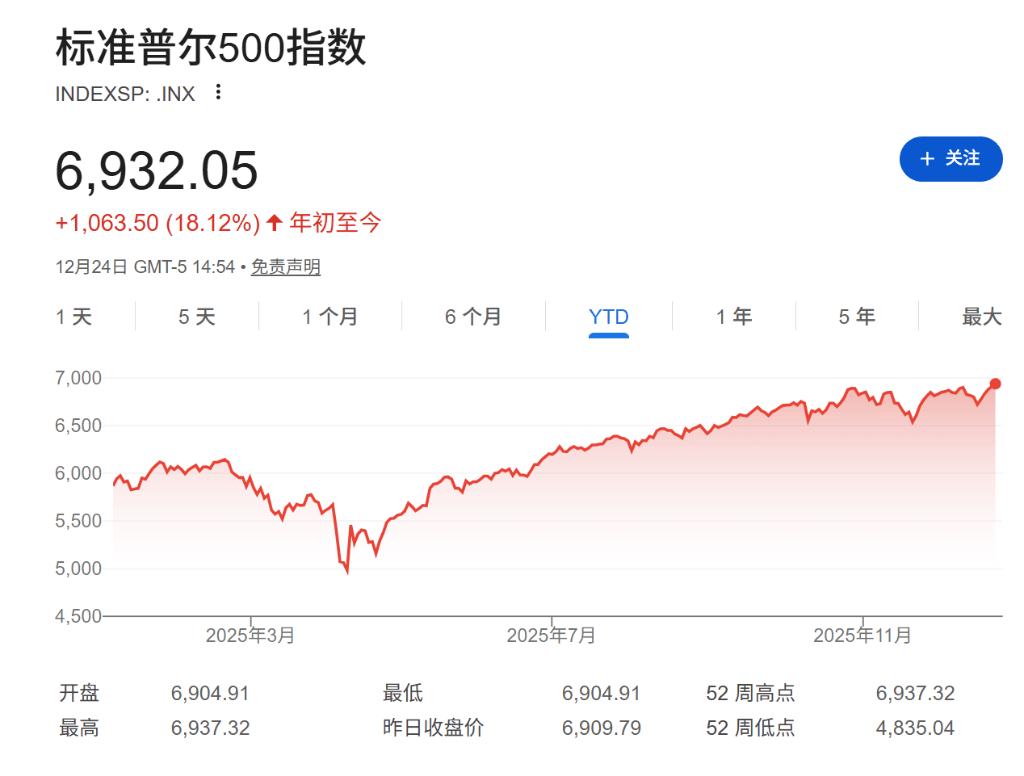
Group 1: Economic Outlook - Morgan Stanley's strategist team warns of a potential "no-employment productivity boom" in the U.S. economy, where weak labor markets suppress wage growth and inflation while accelerating productivity maintains steady economic growth [1][5] - The firm estimates that this trend could lead to core inflation falling below 2%, allowing the Federal Reserve to significantly cut interest rates without concerns of inflation rebounding [5] Group 2: Stock-Bond Relationship - The report indicates a fundamental shift in the correlation between stocks and bonds, predicting that the "bad news is good news" trading pattern may end, leading to increased sensitivity of risk assets to negative economic data [1][6] - As inflation expectations stabilize or face downward risks, U.S. Treasury bonds may regain their traditional role as a safe-haven asset and inflation hedge [6] Group 3: Commodity Prices - Morgan Stanley forecasts a potential surge in commodity and energy prices driven by a weaker dollar and recovering demand from major consumer countries, with gold prices recently breaking the $4,400 mark [2][7] - The firm maintains a baseline prediction of a 13% increase in the S&P 500 index for 2026, but emphasizes that these variables could lead to deviations from conventional market expectations [2]
黄金“暴利”下华尔街为之疯狂:广招贵金属交易员、金库成了“香饽饽”
Feng Huang Wang· 2025-12-25 08:04
Core Insights - The banking and trading sectors are expanding their precious metals trading and storage capabilities to capitalize on the record surge in gold prices this year, marking a significant opportunity in the financial industry [1] - Gold and silver prices have recently accelerated, with spot gold surpassing $4,500 per ounce and silver crossing $70 per ounce, resulting in year-to-date increases of 71% and 150%, respectively [1] Group 1: Revenue Growth - Major banks' precious metals trading departments have seen a 50% increase in revenue in the first nine months of this year compared to the same period in 2024 [2] - The revenue from precious metals trading for 12 leading banks reached approximately $1.4 billion from January to September, indicating that 2025 could be the second-best year for bank gold trading, following 2020 [2] Group 2: Market Participation and Competition - Banks that previously closed their precious metals trading departments, such as Société Générale, Morgan Stanley, and Sumitomo Mitsui Banking Corporation, are re-entering the market and expanding their teams [3] - Non-bank competitors, including Swiss refiner MKS Pamp and financial platform StoneX, are also enhancing their precious metals trading operations, indicating increased competition in the sector [3] Group 3: Storage Business Revival - The storage business, once considered dull and low-margin, is regaining popularity among banks, with many exploring or already engaged in this area [4] - Citigroup is reportedly considering opening a vault, while MKS Pamp has expanded its operations and aims to become a leading player in the precious metals industry [4] Group 4: Advantages and Challenges - Wall Street banks possess significant advantages due to their large balance sheets, which have become crucial as smaller traders face funding challenges amid rising gold prices [5] - Non-bank competitors have specialized advantages in physical gold procurement, which is complex due to compliance with "good delivery" standards, making banks hesitant to engage early in the supply chain [6]




美企靠关税抗裁员潮纸黄金微调整
Jin Tou Wang· 2025-12-25 03:06
Group 1 - The current U.S. job market is facing challenges, with concerns about potential layoffs in 2026, but Morgan Stanley believes many companies can avoid large-scale layoffs [2] - The two major macro themes for the U.S. in 2025 are increasing layoffs and persistent inflation, influenced by tariff pressures that led companies to reduce hiring earlier this year [2] - Morgan Stanley's chief U.S. economist Michael Gapen's team suggests that companies need to continue raising prices in 2026 after raising them throughout 2025 to stabilize employment [2] Group 2 - The paper gold price is currently experiencing a downward trend, influenced by expectations of Federal Reserve policies and fluctuations in the U.S. dollar, facing short-term adjustment pressure [3] - Despite the short-term challenges, the medium to long-term outlook for paper gold remains supported by safe-haven demand, with the potential for upward movement if prices stabilize above key support levels [3] - The MACD indicator suggests caution regarding the strengthening of bearish forces in the paper gold market [3]
关税影响或蔓延至2026年 大摩:企业将继续提价以避免裁员潮
Feng Huang Wang· 2025-12-25 01:24
Core Viewpoint - Morgan Stanley's chief U.S. economist Michael Gapen suggests that the U.S. economy may avoid large-scale layoffs by 2026, provided that companies continue to raise prices based on previous increases in 2025 [1][2] Group 1: Economic Outlook - The latest GDP data indicates that companies have made significant strides in recovering tariff costs by raising output prices, which helps restore profitability and mitigate recession risks [1] - A survey by Morgan Stanley reveals that U.S. companies plan to further increase prices in 2026 to cope with tariffs [1] - Gapen notes that tariffs have significantly raised non-labor costs over the past two quarters, leading companies to initially reduce hiring and experience profit declines [1] Group 2: Inflation and Pricing Strategies - Companies have begun to pass on more costs to consumers, with unit price increases surpassing non-labor costs, aiding in the recovery of profitability [1] - If the strategy of price increases is successful, inflation is expected to rise, but layoffs may be avoided [1] - The firm maintains that tariffs can be absorbed by exporters, U.S. businesses, or consumers [1] Group 3: Consumer Price Impact - Gapen indicates that if the government halts further tariff policies, the impact of tariffs on final consumer prices is largely complete [2] - The firm anticipates core inflation rates could reach 3% by early 2026 due to existing tariffs, with noticeable increases in consumer price inflation from June to September [2] - There is a limit to consumers' ability to absorb price increases, especially amid high economic uncertainty, raising concerns about the threshold at which consumers may resist price hikes [2] Group 4: Labor Market Implications - If companies find they cannot raise product prices due to consumer resistance and loss of market share, they may resort to further reducing labor costs, potentially leading to layoffs [2]
美国三季度GDP数据让华尔街转向!美银、高盛齐推“经济过热”交易
Jin Shi Shu Ju· 2025-12-24 03:56
Core Viewpoint - The recent U.S. GDP data for Q3 shows a surprising growth of 4.3%, significantly exceeding expectations, with consumer spending increasing by 3.5%, leading to a consensus on Wall Street regarding an "overheating economy" [2] Economic Growth and Inflation - Analysts are shifting focus from recession risks to expectations of strong growth and high inflation in the U.S. for the coming year [2] - Glenmede's Michael Reynolds highlights factors such as tariff policies, fiscal stimulus, labor market changes, AI-related productivity, and potential deregulation as contributors to above-trend growth prospects through 2026 [2] - Bank of America anticipates strong growth next year, with inflation remaining above target, supported by factors like Fed rate cuts and AI investments [3] Investment Strategies - Bank of America identifies commodities, particularly oil and energy, as preferred investments for the "overheating economy" scenario, suggesting that commodities will perform well in 2026 [5] - Goldman Sachs notes that cyclical assets typically perform well during economic expansions and could benefit from the macro environment next year [4] Sector-Specific Insights - Goldman Sachs points to housing and consumer-facing markets, including non-essential consumer goods and retail stocks, as areas of optimism, indicating that cyclical assets are rebounding [6] - Morgan Stanley views non-essential consumer goods as fitting the "overheating" investment narrative, with the sector's revenue growth exceeding expectations [6] - Small-cap stocks are seen as attractive, with expectations of accelerated earnings and pricing power as the market moves toward 2026 [7]