
POP MART(PMRTY)

Search documents
泡泡玛特王宁“今年营收300亿很轻松”;辛巴第五次退网
Sou Hu Cai Jing· 2025-08-20 23:47
Group 1: Pop Mart's Performance - Pop Mart reported a revenue of 13.88 billion yuan for the first half of 2025, representing a year-on-year increase of 204.4% [1] - The founder Wang Ning projected that the company's annual revenue could reach 30 billion yuan easily [1] - The Americas market showed remarkable growth with a staggering increase of 1142.3% [1] - Plush toys generated 6.14 billion yuan in revenue, surpassing the sales of figurines for the first time, with the LABUBU series contributing 34.7% to total revenue [1] - To address supply shortages, the production capacity for plush toys has been ramped up to 30 million units per month, a tenfold increase compared to the same period last year [1] Group 2: Xinba's Withdrawal from Live Streaming - Xinba announced his permanent exit from the live streaming industry for the fifth time, citing severe lung damage due to chronic bronchitis [3] - The Xin Xuan Group has faced multiple controversies regarding product quality, including issues with sanitary napkins and exaggerated claims about milk powder [3] - The public believes that the company must enhance quality control and rebuild trust following Xinba's departure [3] Group 3: Meituan's International Expansion - Meituan's international food delivery brand Keeta officially launched in Doha, Qatar, marking its second entry into the Middle East after Saudi Arabia [3] - The company plans to expand further into more Middle Eastern markets and aims to enter Brazil within a few months [3] Group 4: China Resources Beer Performance - China Resources Beer reported a revenue of 23.942 billion yuan for the first half of 2025, a year-on-year increase of 0.8% [14] - The company's net profit attributable to shareholders rose by 23% to 5.789 billion yuan [14] - The beer business generated 23.161 billion yuan in revenue, with a gross margin increase of 2.5 percentage points to 48.3% [14] Group 5: Three Squirrels New E-commerce Company - Three Squirrels has established a new e-commerce company focusing on the sale of agricultural products and maternal and infant goods [15] - The new company is wholly owned by Three Squirrels and aims to diversify its product offerings [15] Group 6: JD's Response to Market Expansion - JD responded to rumors about expanding its operations outside the Fifth Ring Road in Beijing, clarifying that there are no plans for such expansion [16] - The company is collaborating with existing community stores for its layout in the Beijing area [16] Group 7: LV's Beauty Store Launch - LV opened its first global beauty store in Nanjing, showcasing its strategic ambition in the Chinese market [17] - The store will feature a new beauty series, with global online pre-sales starting on August 25 [17] Group 8: Moutai's E-commerce Initiative - Moutai has partnered with Taobao Flash Sale to launch over 1,000 official stores, offering a "30-minute delivery" service for genuine Moutai products [19] - The initiative aims to connect Moutai's experience centers and over 6,500 themed terminal stores nationwide [19] Group 9: Cainiao's Supply Chain Collaboration - Cainiao has formed a deep supply chain partnership with the national brand Jianlibao, optimizing the direct-to-consumer model [20] - This collaboration aims to reduce logistics costs and enhance consumer experience, with plans to expand the model to Jianlibao's national production bases [20] Group 10: Meituan's Online Reservation Service - Meituan launched an online reservation service for restaurants ahead of the Qixi Festival, responding to increased demand for dining reservations [21] - The service includes a dynamic ranking of popular restaurants based on customer reviews and reservation trends [21]





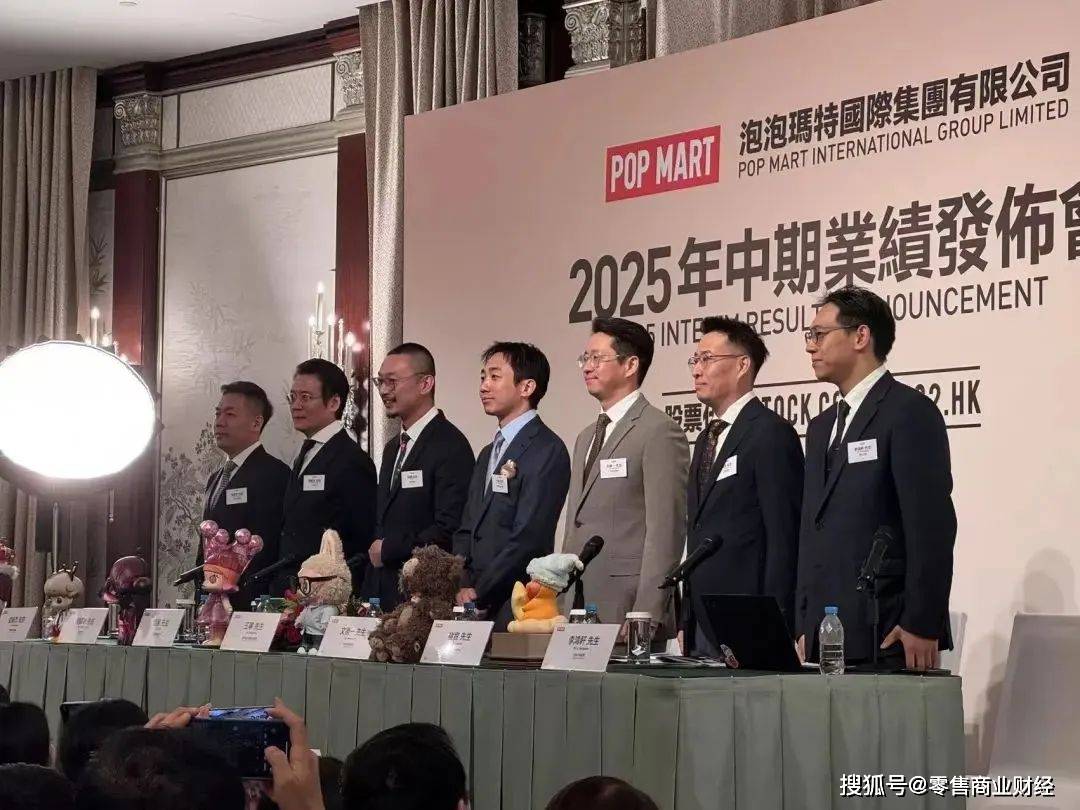
Labubu爆火后,泡泡玛特毛利率追平爱马仕
3 6 Ke· 2025-08-20 23:34
Core Insights - The article highlights the significant growth and success of Pop Mart, particularly through its popular IPs like Labubu and Molly, which have driven impressive financial results in the first half of 2025 [1][2][4] - The company has achieved record-high gross and net profit margins, with gross profit margin reaching 70.3%, comparable to luxury brands [2][7] - Pop Mart's revenue has seen substantial growth, with a 204.4% increase year-on-year, indicating strong market demand and effective business strategies [1][7] Financial Performance - For the first half of 2025, Pop Mart reported revenue of 138.76 billion yuan, a 204.4% increase from the same period in 2024 [1][7] - Gross profit reached 97.61 billion yuan, up 234.4%, with a gross margin increase from 64% to 70.3% [1][2] - Net profit for the same period was 46.82 billion yuan, reflecting a 385.6% year-on-year growth, surpassing the total net profit for 2024 [2][7] Market Expansion - Pop Mart's revenue distribution shows that 59.7% comes from China, while international markets contribute significantly, with a 439.6% increase in overseas revenue [7][10] - The company plans to expand its international presence, aiming to increase the number of overseas stores from 140 to over 200 by the end of the year [10][11] - The opening of flagship stores in key international markets, such as Thailand and Germany, demonstrates the company's commitment to global expansion [10][11] IP Strategy and Risks - The success of IPs like Labubu has raised discussions about the sustainability of their popularity and the risks associated with reliance on single IPs [4][12] - The company emphasizes its platform approach, aiming for a diverse range of IPs to mitigate risks and enhance overall brand health [12][15] - Pop Mart's management believes that the true commercial value of a world-class IP is just beginning to be realized, with potential for extensive product development [15]

老铺黄金上半年净利润同比涨超290%;泡泡玛特将布局中东、南亚等新兴市场丨消费早参
Mei Ri Jing Ji Xin Wen· 2025-08-20 23:32
Group 1: Lao Pu Gold - Lao Pu Gold reported a net profit of 2.35 billion yuan for the first half of 2025, with revenue reaching 12.354 billion yuan, a year-on-year increase of 251% [1] - The adjusted net profit grew by 290.6% compared to the previous year [1] - The company has established 29 stores in top commercial centers and has a loyal membership base of approximately 480,000, an increase of 130,000 members since the end of last year [1] Group 2: iQIYI - iQIYI's total revenue for the second quarter of 2025 was 6.63 billion yuan, reflecting an 11% year-on-year decline [2] - Membership service revenue accounted for 4.09 billion yuan, while online advertising service revenue was 1.27 billion yuan [2] - The decline in revenue may indicate a shift in the online video industry towards a more competitive landscape [2] Group 3: Pop Mart - Pop Mart plans to expand into emerging markets such as the Middle East and South Asia, while continuing to develop flagship stores in major cities like Paris, Sydney, Milan, and New York [3] - The company expects to have over 200 overseas stores by the end of the year [3] - This strategy reflects Pop Mart's accelerated global expansion and aims to enhance brand exposure and high transaction value conversion [3] Group 4: Amer Sports - Amer Sports reported a 23% year-on-year revenue increase for the second quarter, reaching 1.236 billion USD (approximately 8.878 billion yuan) [4] - Revenue in the Greater China region surged by 42% to 410 million USD [4] - The growth in the Greater China market highlights the strong demand for sports consumption, positioning it as a key growth driver for the company [4]


Pop Mart shares surge 12% after CEO says mini Labubus could launch as soon as this week
New York Post· 2025-08-20 20:46
Core Insights - Pop Mart's shares surged nearly 12% following the announcement of mini Labubu dolls, reaching a closing price of $40.75, the highest since its IPO in 2020 [1][3] - The company is on track to meet its revenue goal of 20 billion yuan ($2.78 billion) and anticipates achieving $4.18 billion this year [3][4] - Pop Mart's profit increased nearly 400% in the first half of the year, with net profit reported at $636 million, significantly exceeding estimates [4][10] Revenue and Growth - Revenue for Pop Mart skyrocketed 204.4% to approximately $1.93 billion, compared to a 62% growth in the same period last year [10] - The Americas region experienced a remarkable revenue increase of 1,142% year-over-year in the first half of this year [3] - The company plans to open 10 additional stores in the US by the end of the year, expanding its current footprint of about 40 stores [4] Market Position and Trends - Pop Mart's market capitalization has exceeded $46 billion, significantly larger than Mattel's $5.7 billion [5] - The popularity of Labubu dolls has been driven by the "blind box" sales strategy, creating a viral unboxing trend on social media [5][6] - Resale values for Labubu dolls can reach hundreds or thousands of dollars, indicating strong demand and market interest [8] Challenges and Competition - The rise in popularity has led to the emergence of counterfeit products, known as "Lafufus," which pose safety risks [9] - US regulators have issued warnings regarding the safety of these knockoffs, highlighting potential choking hazards for children [9]

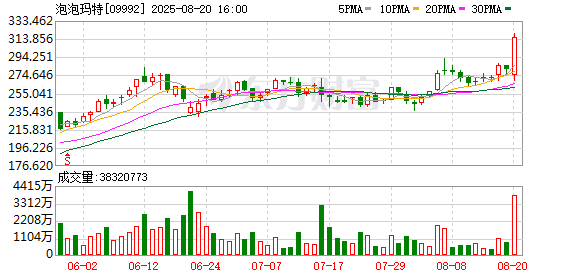
中报净利润大增近4倍 泡泡玛特股价创新高
Shen Zhen Shang Bao· 2025-08-20 16:55
Core Viewpoint - The significant increase in the mid-year performance of Pop Mart has led to a substantial rise in its stock price, marking it as a leader in the new consumption sector [2] Financial Performance - For the first half of the year, Pop Mart reported a revenue of 13.876 billion yuan, representing a year-on-year growth of 204.4% [2] - The net profit attributable to shareholders reached 4.574 billion yuan, showing a remarkable year-on-year increase of 396.5% [2] - The revenue and net profit for the first half of this year have already surpassed the total figures for the entire previous year, which were 13.04 billion yuan and 3.4 billion yuan respectively [2] Stock Market Reaction - On August 20, Pop Mart's stock surged by 12.54%, closing at 316 HKD, which is a historical high, with a total market capitalization of 424.4 billion HKD [2] - Since hitting a low in November 2022, Pop Mart's stock price has increased over 32 times, and it has risen 256% year-to-date [2] Expansion and Operations - As of the end of the first half, Pop Mart operates 571 stores across 18 countries and regions, with a net increase of 40 stores in the first half of the year [2] - The company operates 2,597 robotic stores, having added 105 new stores in the first half of the year [2]
市值超4000亿港元 泡泡玛特开启“全球狂奔”
Zheng Quan Ri Bao· 2025-08-20 16:44
Core Viewpoint - Pop Mart International Group Limited's stock price surpassed 300 HKD per share, with a market capitalization exceeding 400 billion HKD, driven by strong half-year financial results [2] Financial Performance - For the first half of the year, Pop Mart achieved revenue of 13.88 billion CNY, a year-on-year increase of 204.4%, and an adjusted net profit of 4.71 billion CNY, up 362.8% [2] - The revenue and adjusted net profit exceeded the company's projections for the entire year of 2024 [2] Regional Performance - The company disclosed significant growth across four major regions: China, Asia-Pacific (excluding China), the Americas, and Europe, with the Americas market growing over tenfold [2] - Five key IPs, including THEMONSTERS and MOLLY, each surpassed 1 billion CNY in sales during the first half of the year [3] IP Development Strategy - The management emphasized a balanced development of IPs, stating that LABUBU's sales contribution is healthy and not as exaggerated as perceived [3][4] - The company aims to avoid over-exploitation of popular IPs while continuing to develop new products and maintain a diverse IP portfolio [4] Global Expansion - Pop Mart plans to accelerate its global expansion, with overseas store openings expected to outpace domestic growth [5] - Currently, there are 140 overseas stores, with projections to exceed 200 by the end of the year, focusing on regions like the Middle East, South Asia, and Central and South America [5] Supply Chain and Production Capacity - The company reported a tenfold increase in production capacity for plush products, reaching over 30 million units in August [6] - The supply chain improvements and new material developments have enhanced quality management standards [6]
泡泡玛特狂奔:月产追全年 海外拉毛利
Bei Jing Shang Bao· 2025-08-20 16:04
Core Viewpoint - Pop Mart aims for a revenue target of 30 billion yuan for the year, focusing on IP sustainability, overseas expansion, and capacity to meet demand [1] Group 1: Financial Performance - LABUBU, a top IP under Pop Mart, achieved a revenue of 4.81 billion yuan, accounting for 34.7% of total revenue, with a year-on-year growth of approximately 668.4% [3] - The revenue from plush products reached 6.14 billion yuan in the first half of the year, a year-on-year increase of 1276.2%, surpassing the revenue from figurines for the first time [3] - Overall revenue for the first half of the year was 13.9 billion yuan, with a gross profit of 9.76 billion yuan, reflecting a year-on-year growth of 234.4% and a gross margin increase from 64% to 70.3% [9] Group 2: Production and Supply Chain - Pop Mart's production capacity for plush products increased tenfold, with an output of approximately 30 million units in August [3] - The company is currently focused on increasing production capacity to meet high market demand, with a goal to achieve a basic level of capacity before enhancing R&D investments [4] - Automation levels in production have been raised to 50%, significantly reducing labor requirements and improving supply chain stability [4] Group 3: Market Strategy - In the first half of the year, revenue from the Chinese market was 8.28 billion yuan, a year-on-year increase of 135.2%, with online sales growing by 212.2% [6] - Pop Mart emphasizes a unified ecosystem across all channels, balancing multiple product lines while ensuring a consistent consumer experience [6][7] - The company is expanding its international presence, with over 40 stores in the U.S. and plans to open more in various regions, including the Middle East and South America [10] Group 4: Regional Performance - The Americas saw a revenue increase of 1142.3% to 2.26 billion yuan, with 41 physical stores [11] - The Asia-Pacific region reported a revenue of 2.85 billion yuan, growing by 257.8%, focusing on travel retail [10][11] - European revenue reached 480 million yuan, a year-on-year increase of 729.2%, with a focus on iconic locations [10][11]
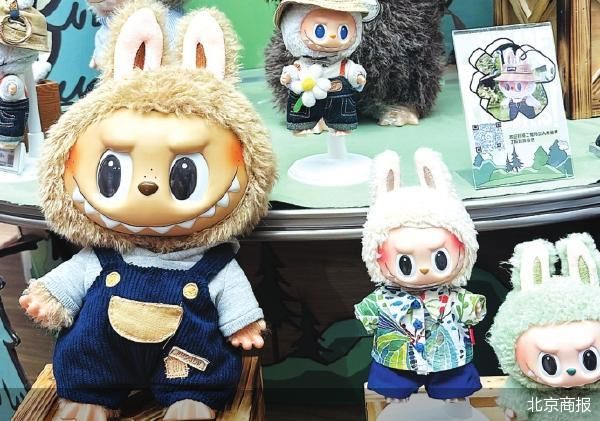
泡泡玛特(09992):2025年半年报点评:业绩超预期,继续看好优质IP在全球市场的商业价值潜力
Soochow Securities· 2025-08-20 15:36
Investment Rating - The investment rating for the company is "Buy" (maintained) [1] Core Insights - The company's performance exceeded expectations, with a strong growth trajectory driven by high-quality IP and robust domestic and international sales [2][3] - The company reported a significant increase in revenue and net profit, with a projected revenue of 30,480 million RMB in 2025, representing a year-on-year growth of 133.78% [1][9] - The core IP matrix has shown explosive growth, with five IPs generating over 1 billion RMB in revenue, particularly "The Monsters" which achieved 48.14 billion RMB, a year-on-year increase of 668% [9][10] Summary by Sections Domestic Performance - In the first half of 2025, domestic revenue reached 82.83 billion RMB, a year-on-year increase of 135%, with both offline and online channels achieving triple-digit growth [3] - Offline retail store revenue was 44.06 billion RMB, up 120% year-on-year, driven by store optimization and upgrades [3] - Online sales also surged, with revenue from box machines reaching 11.25 billion RMB, a year-on-year increase of 182% [3] International Expansion - The company has expanded its overseas stores to 128, with a net increase of 28 stores since the beginning of the year, leading to a 440% year-on-year increase in overseas revenue to 55.93 billion RMB [4][10] - The Americas saw particularly strong growth, with revenue of 22.65 billion RMB, a year-on-year increase of 1142% [4] Financial Projections - The company has adjusted its net profit forecasts for 2025-2027, increasing the estimates to 10,688 million RMB for 2025, 15,146 million RMB for 2026, and 18,888 million RMB for 2027 [10][11] - The projected P/E ratios for the upcoming years are approximately 37 for 2025, 26 for 2026, and 21 for 2027 [10][11] Product and IP Development - The plush product category has become the largest revenue contributor, with sales of 61.39 billion RMB in the first half of 2025, a year-on-year increase of 1276% [9][10] - The company is focusing on expanding its IP portfolio, with new IPs like "Crybaby" and "Star People" gaining significant traction [9][10]
泡泡玛特20250820
2025-08-20 14:49
Summary of the Conference Call for Pop Mart Company Overview - **Company**: Pop Mart - **Period**: First half of 2025 - **Revenue**: 1.385 billion RMB, a year-on-year increase of 70.3% [2][3] - **Net Profit**: 468 million RMB, a year-on-year increase of 385.6%, with a net profit margin of 33.7% [2][3] Key Financial Highlights - **Revenue Breakdown**: - Self-owned products accounted for 99.1% of total revenue, with The Monsters series generating 481 million RMB, a 668% increase [2][6] - Plush products became a bestseller, generating 614 million RMB, a 1,276.2% increase [2][8] - **Market Performance**: - Domestic market revenue accounted for 59.7%, while overseas revenue grew by 439.6% to 559 million RMB [2][15] - E-commerce channel revenue share increased to 45.8% [2][16] Product and IP Performance - **IP Highlights**: - Labubu became a super IP, contributing 34%-35% of total sales [7][24] - Five IPs exceeded 1 billion RMB in revenue, with The Monsters leading [6][7] - **Product Categories**: - Plush products surpassed figurines for the first time, becoming the largest category [10] - Gross margin improved from 60% to over 70% due to pricing strategies and cost optimizations [8] Global Market Expansion - **Store Count**: - Total of 571 stores globally, with 443 in China, 69 in Asia-Pacific, 41 in the Americas, and 18 in Europe [4] - **Future Plans**: - Continued exploration of emerging markets in the Middle East, Central Europe, and South America [17][30] - Plans to open flagship stores in major cities like Paris, Sydney, Milan, and New York [17] Operational Efficiency and Production Capacity - **Production Capacity**: - Monthly production of plush products reached over 30 million units, a tenfold increase compared to the previous year [18][19] - Automation and lean production techniques significantly enhanced efficiency [19] - **Supply Chain Innovations**: - Adoption of multi-color injection molding and sand-type 3D printing technologies to improve product quality [21][46] Customer Experience and Marketing Strategies - **Customer Experience Enhancements**: - Average processing time for in-store purchases reduced significantly [36] - Focus on improving customer service and product flow in stores [35] - **Marketing Approaches**: - Differentiated strategies for various consumer segments, emphasizing rapid customer acquisition and engagement [47] Future Outlook - **Revenue and Profitability Expectations**: - Anticipated overall net profit margin of approximately 35% for 2025 [22][41] - **Sustainability and Long-term Strategy**: - Emphasis on health and sustainability of the business model, with a focus on maintaining a balanced IP portfolio [22][29] Conclusion - **Overall Strategy**: - Pop Mart aims to leverage its strong IP portfolio and global expansion strategy to drive future growth while ensuring operational efficiency and enhancing customer experience [49]
美洲市场增速超10倍,泡泡玛特表态“全年300亿很轻松”
Guo Ji Jin Rong Bao· 2025-08-20 14:34
Core Viewpoint - The company aims to achieve significant revenue growth, projecting revenues of 200 billion yuan this year, with aspirations for 300 billion yuan, following a strong performance in the first half of the year [2][6]. Financial Performance - In the first half of the year, the company reported revenues of 138.8 billion yuan, a year-on-year increase of 204.4%, and adjusted net profit rose by 362.8% to 47.1 billion yuan, with a gross margin of 70.3%, up 6.3 percentage points from the previous year [6]. - Revenue growth was driven by substantial increases across all regions: China (82.8 billion yuan, +135.2%), Asia-Pacific (28.5 billion yuan, +257.8%), Americas (22.6 billion yuan, +1142.3%), and Europe & others (4.8 billion yuan, +729.2%) [6]. Market Expansion - The company has expanded its global presence, with a total of 571 stores and 2,597 robot stores worldwide as of June, including 443 stores in China, which saw a net increase of 12 stores from the previous year [7]. - The number of overseas stores reached 128, up from 58 a year earlier, with average revenue per store increasing by 99.3% [8]. Online Sales Growth - Online sales in the Americas surged by 1977.4% to 13.26 billion yuan, primarily through the company's official website and TikTok [9]. - The company is replicating its domestic online strategies in overseas markets, including the introduction of localized vending machine models [9]. Production Capacity - The monthly production capacity has reached approximately 30 million units, over ten times the capacity from the previous year, necessitating changes in production planning and automation [12]. - The company has improved operational efficiency by reducing the number of skilled workers needed for production lines through automation [12]. Intellectual Property Development - The company reported that 13 artist IPs generated over 1 billion yuan in revenue in the first half of the year, with significant contributions from key IPs such as THE MONSTERS and MOLLY [12]. - The company is cautiously developing its LABUBU IP, indicating strong market demand and plans for new product releases, including a Mini version [15][16].