
吉利汽车

Search documents
新能源汽车2026前瞻,“量变”到“质变”的分水岭
3 6 Ke· 2026-01-13 11:31
Core Insights - The Chinese electric vehicle (EV) industry is set to become mainstream by 2025, with retail penetration rates expected to exceed 60% by year-end, marking a significant shift from being an alternative option to a market leader [2][4] - Domestic brands like BYD and Geely are solidifying their positions, while new entrants are facing intense competition and differentiation [2][6] - The focus for 2026 will shift from market share expansion to value redefinition within the industry [3] Market Penetration - In the first eleven months of 2025, the production and sales of new energy vehicles (NEVs) in China saw a year-on-year increase of over 30%, with NEV sales accounting for 47.5% of total vehicle sales [4] - December is projected to see NEV retail sales reach 1.38 million units, with penetration rates likely to surpass 60% for the first time [4] - Domestic brands dominate the market, with a retail penetration rate of 79.6% for NEVs in November, far outpacing mainstream joint venture brands at 6.8% [4] Company Strategies and Challenges - BYD aims to expand its "smart driving equality" initiative, while facing challenges in balancing scale expansion with profit and quality [5] - Geely's strategy is showing results with a 60.5% NEV penetration rate, but it needs to build a "second growth curve" for overseas market presence [5] - Chery leads in overseas markets but must accelerate its domestic NEV transformation and smart technology integration [5] - New forces like Leap Motor are experiencing rapid growth, while Li Auto faces challenges due to product controversies and performance declines [6] Technological Advancements and Globalization - The "universal smart driving" concept is becoming a reality, with BYD's advanced driving assistance systems becoming more affordable [8] - The global expansion of Chinese EVs is evolving from simple product exports to establishing local manufacturing and supply chains in markets like Thailand [9] - The industry is witnessing a shift towards integrating technology and manufacturing, with companies like Chery and Seres successfully navigating the capital markets [10] Industry Restructuring and Future Directions - The industry is transitioning from a financing and expansion model to one focused on technology depth, profitability, and ecological value [10] - State-owned capital is evolving from a supportive role to an active industry integrator, aiming to stabilize the market and promote long-term R&D [11] - The automotive value chain is shifting towards a focus on electronic architecture, software, and services, with tech giants redefining the automotive experience [11] Challenges and Future Outlook - Structural challenges in the supply chain are emerging, with cost pressures affecting relationships with suppliers, particularly smaller firms [12] - Marketing practices that mislead consumers could damage long-term brand trust, highlighting the need for integrity in communications [12] - The industry must build resilient supply chains, drive technological innovation, and transition to localized ecosystems to sustain growth [13][14] - The competition is entering a new phase where success will depend on defining next-generation technology standards and achieving sustainable business models [15]






2025智能网联新能源汽车十大年度事件 | 精进2025——汽车行业10个十大年度盘点(七)
Jing Ji Guan Cha Wang· 2026-01-13 10:48
Core Insights - The automotive industry in China has made significant progress in 2025, driven by a series of proactive policies that have boosted consumption and improved the competitive environment [2] - The "2025 Progress Report" by Automotive Vertical Media highlights ten key annual reviews in the automotive sector, marking the sixth consecutive year of such reporting [2] Group 1: Key Events in Smart Connected New Energy Vehicles - The issuance of the first L3 special license plate in China marks the beginning of commercialized L3-level autonomous driving, with the first vehicle, Deep Blue SL03, officially licensed for road use [4][5] - The world's first flying car production line has been established in Guangzhou, with the first "land aircraft" successfully produced, indicating a significant step towards commercial production in the low-altitude economy [7][8] - Solid-state battery production is accelerating, with multiple companies announcing timelines for mass production, including CATL and Toyota, which are expected to enhance battery performance and safety [8][9] Group 2: AI Integration and Industry Transformation - Generative AI and large model technologies have been deeply integrated into the automotive industry, enhancing manufacturing efficiency and product competitiveness across the entire supply chain [10][12] - The adoption of AI technologies is reshaping the automotive industry's research and development logic, manufacturing models, and service ecosystems, driving the sector towards a higher quality of intelligent transformation [12] Group 3: Global Market Expansion and Competitiveness - Chinese automotive solutions have gained global recognition, with partnerships established with major international brands like BMW and collaborations with various multinational automakers, indicating a shift towards "China solutions" in the global market [13][14] - BYD has become the world's largest manufacturer of pure electric vehicles, surpassing Tesla in sales, reflecting the competitive strength of Chinese brands in the global electric vehicle market [19][20] Group 4: Safety Standards and Regulations - The introduction of new mandatory national standards for electric vehicle batteries emphasizes safety, requiring batteries to not catch fire or explode under thermal runaway conditions, effective from July 2026 [17][18] - The implementation of dynamic monitoring safety standards for new energy vehicles marks a transition to proactive safety management, enhancing consumer protection and industry accountability [21][22] Group 5: Charging Technology Advancements - The competition in ultra-fast charging technology has reached the "megawatt" level, with several companies launching solutions that enable rapid charging capabilities, significantly improving user experience in electric vehicles [15][16] - The advancements in charging technology are expected to reshape the competitive landscape of the electric vehicle market, facilitating broader adoption and integration of electric vehicles into everyday use [16] Group 6: IPO Trends in Autonomous Driving - The surge of IPOs among autonomous driving companies signifies a shift from capital cultivation to market validation, with major players like Pony.ai and Hesai Technology entering the public market [23][24] - The rise of end-to-end autonomous driving solutions is expected to accelerate the mass production of high-level autonomous vehicles, enhancing the industry's growth trajectory [24]


小鹏今年将推4款新车,冲击55万-60万销量目标|36氪独家
36氪· 2026-01-13 10:14
Core Viewpoint - Xiaopeng Motors has set an ambitious sales target of 550,000 to 600,000 units for 2026, representing a growth of approximately 28.1% to 39.7% from the 429,400 units expected in 2025, necessitating an average monthly delivery of over 45,800 to 50,000 units [4][5]. Group 1: Product Strategy - 2026 will be a pivotal year for Xiaopeng as it plans to launch seven new models featuring "super range extension" capabilities, including three super range products and four new dual-energy models [4]. - The new models include the Xiaopeng G01, a luxury 6-seat SUV, and the G02, a full-size flagship SUV, alongside two new Mona SUV models, D02 and D03 [5]. - Xiaopeng aims to enhance its product lineup in the mid-to-low-end market with the introduction of the Mona M03, which has significantly contributed to sales, accounting for nearly a quarter of total sales [8]. Group 2: Technological Advancements - Xiaopeng is focusing on smart technology, planning to implement its self-developed Turing chip and the second-generation VLA system to differentiate its high-end models [10][13]. - The latest models will transition to Turing chips, with the Max version featuring a single Turing chip with 720 TOPS of computing power, while the Ultra version will utilize three Turing chips for advanced driving and AI applications [13]. Group 3: Market Competition - The automotive market in 2026 is expected to be highly competitive, with Xiaopeng and Leap Motor targeting a combined sales goal of 1.6 million units, which may come at the expense of competitors like BYD and Geely [15][16]. - Both Xiaopeng and Leap Motor are entering the hybrid vehicle market, with Xiaopeng focusing on the 15-25 million price range, while Leap Motor targets the 10-20 million segment [16]. Group 4: Growth Challenges - Achieving high sales growth poses significant challenges, particularly as crossing the 500,000 sales threshold can complicate supply chain management and organizational coordination [17][18]. - The experience of other companies, such as Ideal, highlights the potential pitfalls of scaling operations rapidly, raising concerns about whether Xiaopeng and Leap Motor can successfully navigate these challenges [18].

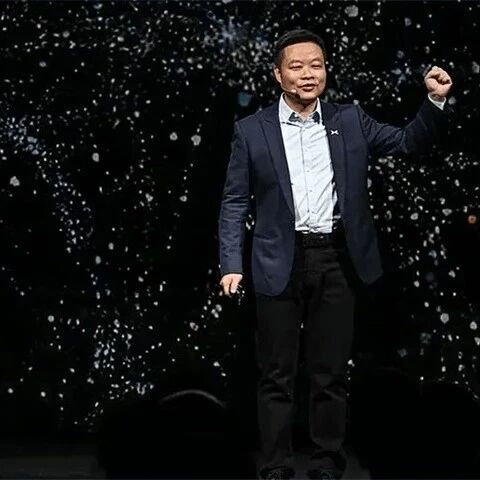
小米董事长雷军入选“2025年度汽车行业十大杰出人物”
Sou Hu Cai Jing· 2026-01-13 09:57
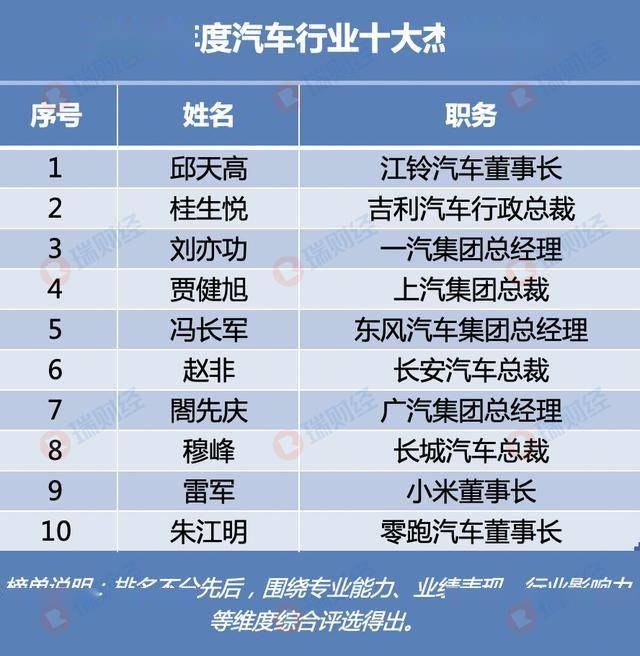
瑞财经1月13日,由瑞财经推出的"2025年度汽车行业十大杰出人物"榜单揭晓,小米董事长雷军入选。 "2025年度汽车行业十大杰出人物"榜单围绕专业能力、业绩表现、行业影响力等维度综合评选得出。 雷军,55岁,小米集团执行董事、创始人、董事长及首席执行官、以及智能电动汽车业务的首席执行 官,亦为薪酬委员会成员。雷军全面负责公司策略、公司文化及关键产品,并监管高级管理团队。雷军 现任集团多家附属公司、合并联属实体及经营实体的董事。雷军在2000年创办了在线零售平台卓越网并 在2004年将其出售给亚马逊。同时,雷军曾作为天使投资人,投资了JoYY Inc. 及UCWeb等多家创新型 企业。雷军更是知名的科技创业者。雷军于1992年加入金山软件有限公司并担任金山软件多个高级职 位,包括自2011年7月起担任董事长,自2008年8月起担任非执行董事,自1998年至2007年12月担任首席 执行官。自2011年12月起,雷军担任北京金山办公软件股份有限公司董事。自2012年1月起,雷军担任 金山云控股有限公司的非执行董事并在2015年4月起担任该公司的董事长。雷军于1991年7月自武汉大学 计算机科学系毕业,获得理学学 ...

四大板块齐头并进——车企2025产销快报解析
Zhong Guo Qi Che Bao Wang· 2026-01-13 09:43
Core Insights - The Chinese passenger car market is projected to retail 23.78 million units in 2025, reflecting a 4% year-on-year growth, supported by policies like "trade-in" [2] - Major domestic automakers such as BYD, Geely, Changan, and Leap Motor have achieved significant progress, while several joint venture companies are showing signs of recovery in China [2] Domestic Automakers Performance - BYD achieved a record annual sales of 4.60 million units in 2025, a 7.73% increase, with pure electric vehicle sales reaching 2.25 million units, up 27.85%, surpassing Tesla in global sales [3] - SAIC Group sold 4.51 million vehicles in 2025, a 12.3% increase, with its new energy vehicle sales growing by 33.1% to 1.64 million units [3] - China FAW's total vehicle sales reached 3.30 million units, a 3.2% increase, with its new energy vehicle sales soaring by 71% to 366,000 units [4] - Geely's total sales reached 3.02 million units, a 39% increase, with new energy vehicle sales hitting 1.69 million units, up 90% [4] - Changan's sales reached 2.91 million units, an 8.5% increase, with new energy vehicle sales growing by 51% to 1.11 million units [5] - Chery Group achieved a record high of 2.81 million units sold, with new energy vehicle sales increasing by 54.9% to 903,800 units [5] Joint Venture Automakers Performance - Joint venture automakers are under pressure but some have found ways to adapt, with FAW-Volkswagen leading in sales with 1.59 million units sold [7] - SAIC Volkswagen achieved sales of 1.06 million units, maintaining a strong position in the market [8] - Toyota's joint ventures in China reported positive growth, with FAW Toyota selling 805,500 units, a 3-year consecutive growth [8] New Energy Vehicle Market - New energy vehicles are a common highlight across major domestic automakers, with significant growth in sales and market penetration [3][4][5] - New entrants like Leap Motor and NIO are also showing strong growth, with Leap Motor achieving 596,600 units sold, a 103% increase [10] - Xpeng Motors delivered 429,400 units, a 126% increase, while NIO delivered 326,000 units, a 46.9% increase [11] Export Growth - China's automobile exports are expected to exceed 7 million units in 2025, marking a historic high [13] - Chery led the export of Chinese passenger cars with 1.34 million units, a 17.4% increase [13] - BYD's overseas sales surpassed 1 million units, a 145% increase, with significant growth in Europe [14] - New energy vehicle exports are also on the rise, with companies like Leap and Xpeng expanding their international presence [16]


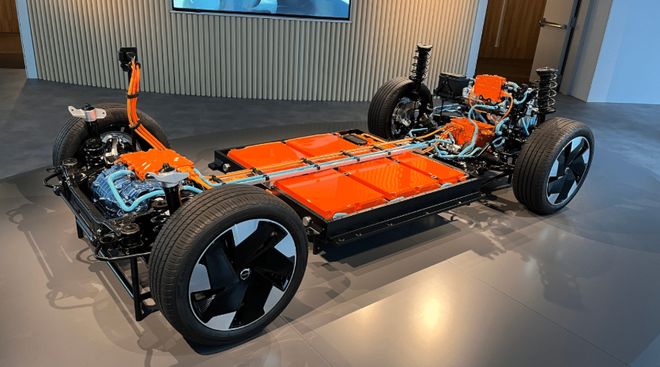
23亿元索赔案再发酵,多国召回搭载欣旺达电池的沃尔沃EX30
Guan Cha Zhe Wang· 2026-01-13 09:17
Core Viewpoint - The lawsuit involving Geely and Xinwanda, amounting to over 2.3 billion yuan, has escalated due to safety issues related to high-voltage battery units supplied by Xinwanda, affecting 10,440 Volvo EX30 vehicles in the UK [1][4]. Group 1: Lawsuit and Financial Implications - Geely's Zeekr brand filed a lawsuit against Xinwanda for over 2.3 billion yuan, equivalent to Xinwanda's cumulative net profit for 2023 and 2024 [4]. - The lawsuit highlights systemic quality control defects in Xinwanda's production line, raising concerns about battery reliability and internal testing protocols [4][5]. Group 2: Vehicle Safety Issues - Volvo UK has advised EX30 owners not to charge their vehicles above 70% until a permanent solution is found, following safety concerns linked to the high-voltage battery units [3][12]. - A fire incident involving a Volvo EX30 in Brazil has raised alarms, with preliminary indications suggesting a potential thermal runaway of the battery pack [6][7][8]. Group 3: Recall Actions - Multiple countries have initiated recalls for the Volvo EX30 due to potential overheating issues with the high-voltage battery, with the largest recall affecting 2,815 vehicles in Australia [9]. - The UK has not yet issued a recall, but there is growing pressure from affected owners, and dealers are forced to discount the impacted EX30 models [12].

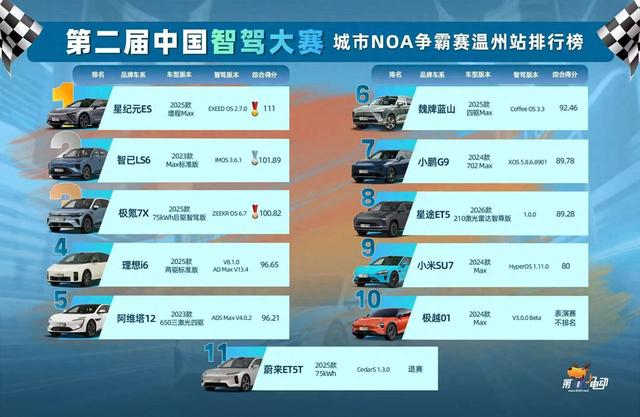
高含模量系统量产上车,千里浩瀚G-ASD推动智驾全面AI化进阶
Xin Lang Cai Jing· 2026-01-13 09:11
Core Insights - The second Intelligent Driving Competition's Wenzhou finals concluded, with the Zeekr 7X equipped with Qianli Haohuan G-ASD ranking in the top three, showcasing its industry-leading position [1] - The competition featured a challenging 28-kilometer course with 65 traffic lights and 7 difficult test points, demonstrating G-ASD's robust defensive driving capabilities and obstacle recognition in complex environments [1] Group 1 - Qianli Haohuan G-ASD is a new advanced driving assistance brand jointly launched by Qianli Zhijia and Geely, attracting significant attention in the global tech and automotive sectors since its debut at CES 2026 [3] - G-ASD offers a high-modulus intelligent driving solution that spans from Level 2 to Level 4 driving capabilities, differing from traditional systems by providing a smoother driving experience in complex urban conditions [3] - The system's human-like performance is attributed to its end-to-end model architecture, integrating advanced AI technologies such as multimodal base models and reinforcement learning, aiming to reduce reliance on artificial maps and preset rules [3] Group 2 - The first version of the G-ASD system is currently installed in 16 models under the Zeekr and Lynk & Co brands, covering over 300,000 vehicles [5] - As G-ASD is gradually adopted in more Geely vehicles, a revolution in intelligent driving experiences driven by high-modulus technology is accelerating towards a broader user market [5]
从AI眼镜到高阶智驾:CES释放电子产业链多终端进化信号
Ge Long Hui· 2026-01-13 08:47
Group 1: Wearable Devices and IoT - AI glasses and camera headphones remain the focus of wearable devices, with over 50 companies participating, primarily from mainland China, emphasizing aesthetics, lightweight design, all-day wear, multimodal interaction, and multi-chip solutions [1] - The innovation in headphones has shifted from single audio performance to a comprehensive evolution of sound quality, AI, and multimodal capabilities, with some products integrating cameras and environmental sensing [1] - New IoT categories such as smart imaging devices, 3D printers, and NAS are gaining attention, with many startups entering the market, alongside creative new products in AI home, AI recording cards, and AI displays [1] Group 2: Automotive Industry - AI is driving the intelligent upgrade of the entire automotive chain, with high-level autonomous driving expected to achieve large-scale implementation [2] - Chip manufacturers like NVIDIA are releasing open-source AI models to accelerate technology penetration and commercialization in the autonomous driving sector [2] - Domestic automakers such as Geely and Great Wall are showcasing their AI systems, while international companies like Mercedes and Jaguar Land Rover are partnering with AI giants to enhance their capabilities [2] Group 3: Robotics - Home and service robots are continuously upgrading, with traditional vacuum robots evolving to cover more cleaning scenarios and showcasing new intelligent models [3] - Humanoid robots remain a focal point, with companies demonstrating robots capable of complex movements and interactions [3] - The participation of domestic electronic industry companies in showcasing robotic components and manufacturing products has increased significantly [3] Group 4: PCs and Smartphones - Lenovo has introduced a cross-device super intelligent entity, Lenovo Qira, and partnered with NVIDIA for a new AI cloud super factory initiative, showcasing a range of AI-integrated devices [4] - Chip companies are upgrading edge chips to enhance the PC experience, with major players like Intel, Qualcomm, and AMD leading the advancements [4]



港股收评:恒指涨0.9%、科指涨0.11%,创新药及黄金概念股集体走高,大模型、商业航天概念股回调
Jin Rong Jie· 2026-01-13 08:18
1月13日,港股股指高开后震荡下行,截止收盘,恒生指数涨0.9%报26848.47点,恒生科技指数涨0.11% 报5869.79点,国企指数涨0.71%报9285.41点,红筹指数涨0.78%报4146.17点。 盘面上,大型科技股走势分化,阿里巴巴涨3.63%,腾讯控股涨0.72%,京东集团涨0.43%,小米集团跌 1.96%,网易跌0.18%,美团跌0.1%,快手跌2.24%,哔哩哔哩涨3.11%;创新药板块全天表现强势,药 明康德收涨8.3%;黄金股领涨,中国黄金国际涨超7%,万国黄金集团涨超5%,紫金黄金国际涨超 5%,灵宝黄金涨超3%;大模型概念股智谱跌超12%,MINIMAX跌超8%;半导体板块走弱,上海复旦 跌近5%,华虹半导体跌超2%;商业航天概念回调,金风科技跌超9%;今日三只新股上市,兆易创新涨 超37%,BBSB INTL涨超11%,红星冷链涨0.33%。 企业新闻 腾讯控股(00700.HK):斥资约6.36亿港元回购102.4万股,回购价614-627港元。 吉利汽车(00175.HK):斥资1.51亿港元回购900.7万股,回购价16.63-17.15港元。 钧达股份(02865. ...


观车 · 论势 || “车不好卖”:存量竞争下如何换挡升级
Zhong Guo Qi Che Bao Wang· 2026-01-13 07:26
Core Insights - The automotive industry in China is transitioning from a growth phase to a period of stock competition and structural clearing, making it increasingly difficult to sell cars in 2025 [1] - Leading companies like BYD and Geely are thriving through price competition and extensive product offerings, while many joint venture fuel vehicle companies and fringe new players are struggling to meet sales targets [1] Group 1: Profitability Challenges - The industry is trapped in a price war, particularly in the under 200,000 yuan segment, leading to a continuous compression of profit margins [2] - The automotive industry's profit margin was 4.4% from January to November 2025, significantly lower than the average profit margin of 6% for downstream industrial enterprises [2] Group 2: Capacity Utilization Issues - Structural overcapacity is a prominent issue, with capacity utilization rates for vehicle manufacturing and parts remaining below 75%, indicating a need for industry consolidation [2] - In 2025, the capacity utilization rate showed a gradual recovery but remained low, with major joint venture companies like SAIC-GM and Dongfeng Honda operating at only 40% to 60% capacity [2] Group 3: Transition Risks - The risk of asset depreciation due to technological shifts is significant, as production lines for fuel vehicles struggle to convert to new energy capacities [2] - Over half of automotive dealers reported losses in the first half of last year, exacerbating operational pressures on companies [2] Group 4: Strategic Upgrades - Companies must move away from low-price competition and focus on building core competencies in technology, resources, and market presence [3] - Technological innovation is crucial, with over 50% of new energy vehicles replacing fuel vehicles, highlighting the need for advancements in battery systems and intelligent driving technologies [3] Group 5: Global Expansion - Globalization is essential for growth, as traditional vehicle exports are no longer sufficient; companies must adopt a global 2.0 model that integrates capacity and supply chain collaboration [4] - BYD's overseas sales exceeded 1 million units in 2025, demonstrating the importance of international markets as a source of growth in a saturated domestic market [4] Group 6: Market Restructuring - The deepening of stock competition will lead to a fundamental restructuring of the automotive market, with a concentration of market players and a shift from price competition to value competition [4] - The next 3 to 5 years will see dynamic adjustments in fuel vehicle capacity, with some being shut down or restructured, while leading new energy companies will dominate the market [4] Group 7: Industry Transformation - The sales performance in 2025 reflects not only market competition but also signals the need for industry transformation, emphasizing the importance of focusing on technological innovation, resource integration, and global strategies [5]