海底捞

Search documents
商社行业周报(2026.1.26-2026.2.1):政策支持服务消费发展,关注春节数据-20260201
国泰海通· 2026-02-01 07:23
Investment Rating - The report assigns an "Accumulate" rating for the industry [4]. Core Insights - The upcoming Spring Festival is expected to see record-high passenger transport volumes in civil aviation [2]. - The report highlights optimism for travel-related sectors, including hotels, duty-free shops, and scenic spots, due to improved vacation policies and anti-monopoly measures in online travel agencies (OTAs) [4]. - The report suggests selecting short-term outperformers in the gold market, as the recent surge in gold prices may be ending [4]. - AI applications and undervalued new consumption sectors are also recommended for investment [4]. Industry Updates - The State Council issued a plan to accelerate the cultivation of new growth points in service consumption, urging local governments to enhance policy design and support measures [4]. - As of January 29, 2026, domestic flight ticket bookings for the Spring Festival exceeded 7.16 million, with a daily average increase of approximately 16% year-on-year [4]. - Retail sector insights indicate a 3% to 5% contraction in China's personal luxury goods market in 2025, showing signs of recovery compared to a significant decline in 2024 [4]. Company Performance Forecasts - Cai Bai Co. expects a net profit of 1.06 billion to 1.23 billion RMB for 2025, representing a year-on-year increase of 47.43% to 71.07% [4]. - Lai Shen Tong Ling anticipates a turnaround with a projected net profit of 58 million RMB for 2025, compared to a loss of 184 million RMB in the previous year [4]. - Yu Garden Co. forecasts a net loss of approximately 4.8 billion RMB for 2025, a significant decline from a profit of 125 million RMB in the previous year [4]. - The report includes various companies with "Accumulate" ratings, such as Zhou Dafu, Cai Bai Co., and others, with detailed profit forecasts and valuation metrics [5].





山寨餐饮连锁,涌入县城
吴晓波频道· 2026-02-01 00:29
Core Viewpoint - The article highlights the pitfalls of franchise investments in the fast food industry, particularly focusing on the deceptive practices of "quick franchise" companies that exploit aspiring entrepreneurs' dreams of wealth through shortcuts [2][10]. Group 1: Case Studies of Entrepreneurs - A case study of a woman named Ms. Bai illustrates the common experience of franchisees who invest heavily in a franchise, only to find that the promised profits do not materialize, leading to significant financial losses [3][6]. - Many entrepreneurs, like Ms. Bai, are drawn in by misleading claims of high daily sales, such as "selling 20,000 yuan a day," which leads them to invest substantial amounts, often exceeding 600,000 yuan in total costs [3][18]. - The article mentions various other entrepreneurs who have faced similar fates, including those who invested in franchises based on trendy concepts without proper market research [7][9]. Group 2: The Business Model of Quick Franchise Companies - Quick franchise companies operate on a model that prioritizes rapid brand creation and recruitment of franchisees, often without providing adequate support or follow-up services [9][10]. - These companies utilize psychological tactics to lure in potential franchisees, creating a false sense of legitimacy through elaborate presentations and misleading marketing materials [12][18]. - The lifecycle of a quick franchise brand is typically short, lasting only 6 to 9 months, during which time they can launch multiple brands and collect significant franchise fees [18][19]. Group 3: Psychological Manipulation and Market Dynamics - The article discusses how quick franchise companies exploit the aspirations of individuals, particularly those in lower-tier cities who are eager for economic independence but lack business acumen [20][24]. - Many victims of these schemes are often unaware of the operational complexities involved in running a franchise, making them susceptible to exaggerated claims of profitability [21][24]. - The phenomenon of "quick franchise" companies is linked to broader trends in the Chinese food and beverage industry, where established brands are expanding rapidly, creating a fertile ground for deceptive practices [28][29]. Group 4: Regional Factors and Industry Implications - The article notes that the rise of quick franchise companies is particularly pronounced in regions like Shandong, which has a strong agricultural and food production base, allowing for easy establishment of new brands [28][29]. - The article emphasizes that the exploitation of market gaps by quick franchise companies is a byproduct of a mismatch between industry maturity and market understanding among aspiring entrepreneurs [33].

海底捞也下场开店!翻红的糖水铺能火多久?
东京烘焙职业人· 2026-01-31 08:33
Core Viewpoint - Haidilao is entering the dessert market with its first "sugar water shop" in Shanghai, adopting a "store within a store" model to enhance customer experience and diversify its offerings [6][11][12]. Group 1: Haidilao's Sugar Water Shop - Haidilao's sugar water shop features a dedicated area for dessert, allowing customers to order sugar water independently of hot pot [11][12]. - The shop offers 13 types of fresh sugar water products, priced between 9.9 to 20 yuan, with the lowest price being for "Qing Bu Liang" at 9.9 yuan and the highest for "Tapioca Grand Slam" and "Sugar Water Xian Cao Grand Slam" at 20 yuan each [12][13]. - The shop has attracted significant consumer interest, with reports of popular items selling out quickly, indicating a strong market response [15][32]. Group 2: Competitive Landscape in the Sugar Water Market - The sugar water market is highly competitive, with established brands like Zhao Ji Chuan Cheng and Man Ji Dessert expanding aggressively, while new brands like Mai Ji Milk Company are rapidly gaining market share [20][25]. - Established brands are innovating their offerings and expanding their retail channels, while new entrants are adopting low-cost, high-efficiency models to capture market share [21][26]. - Cross-industry players, including tea brands, are also entering the sugar water market, adding to the competitive pressure [27][29]. Group 3: Challenges and Opportunities - The sugar water market faces challenges such as low consumer frequency compared to other beverages, seasonal demand fluctuations, and product homogeneity [34][36][38]. - Brands need to differentiate through recipe development, regional specialties, or unique consumer experiences to stand out in a crowded market [41]. - The increasing number of cross-industry competitors may lead to customer traffic diversion, making it essential for brands to adapt to changing consumer preferences [42].

叛逆,这届年轻人偷偷捧红了一张极小众“网红水单”
3 6 Ke· 2026-01-31 03:06
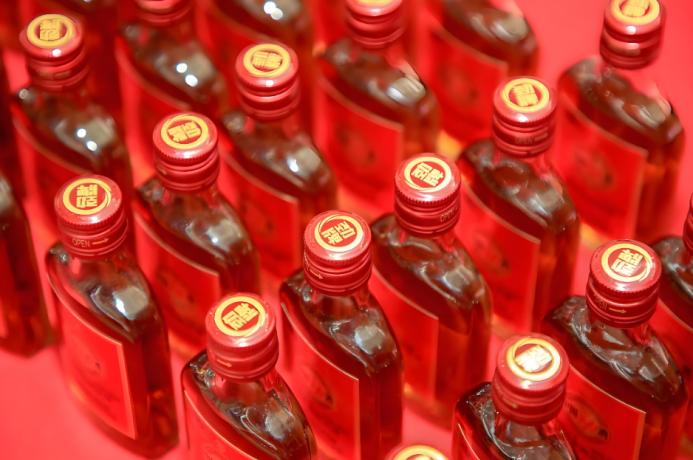
Core Insights - The article highlights the emergence of unconventional beverages among young consumers in 2025, showcasing a shift in drinking culture towards creative and personalized drink experiences [1][28] Group 1: The Rise of Jinjiao - Jinjiao has transformed from a traditional "health drink" to a trendy beverage dubbed "Auntie’s Elixir," appealing to young women through social media marketing [2][4] - The brand's popularity surged, with a 102.74% increase in search index on Douyin and 46.8 billion video views related to Jinjiao [6] - Jinjiao's marketing strategy included a dedicated content team to create relatable memes and engage younger audiences, establishing a youthful brand identity [9] Group 2: The Popularity of Ice Cups - Ice cups have become a key component in the beverage trend, with sales increasing over 300% for two consecutive years, and urban consumers averaging 48 cups per year [12][10] - The versatility of ice cups allows for creative drink combinations, making them a popular choice for young consumers seeking unique drinking experiences [14] - The low cost of ice cups (1-3 yuan) enhances their appeal, offering consumers a sense of creativity and enjoyment in their drink choices [14] Group 3: Convenience Store Mixology - Young consumers are utilizing 24-hour convenience stores as informal bars, creating personalized cocktails with affordable ingredients [15][17] - The trend of convenience store mixology has gained significant traction, with 42.9 billion views on Douyin for related content, indicating a strong market demand [17] - This trend reflects a desire for instant gratification and a fun, social drinking experience among young adults [17] Group 4: The Resurgence of Sweet Soup - Sweet soup has made a notable comeback, with brands like Haidilao entering the market, indicating a growing consumer interest in traditional desserts [18][19] - The expansion of sweet soup shops has been rapid, with significant new openings in 2025, showcasing a revival of this classic beverage category [19][21] - The emotional connection and nostalgic appeal of sweet soup resonate with consumers, fulfilling their desire for comfort and indulgence [23] Group 5: The Unexpected Popularity of Mate Tea - Mate tea has emerged as a surprising favorite among young consumers, despite its polarizing taste, with significant social media engagement [24][27] - The beverage's unique caffeine content and cultural associations contribute to its appeal, positioning it as a trendy choice for energy and social sharing [27] - The combination of its challenging flavor and health benefits aligns with the adventurous spirit of young drinkers [27]
中国必选消费品1月成本报告:涨价现实弱于预期,成本仍处低位
Haitong Securities International· 2026-01-30 13:53
Investment Rating - The report provides various investment ratings for companies in the consumer staples sector, with several companies rated as "Outperform" and one as "Neutral" [1]. Core Insights - The report indicates that price hikes in the consumer staples sector are weaker than expected, while costs remain low [1]. - The monitored spot cost indices for six consumer goods categories have declined, while futures cost indices have primarily increased [34]. Summary by Category Beer - The spot cost index decreased by 1.87% month-on-month, while the futures index increased by 3.15%. Year-to-date, the spot index has changed by -0.6% and the futures index by +1.81% [35]. - Glass prices have shown a month-on-month decrease of 1.2% for spot prices and an increase of 3.4% for futures prices [35]. Condiments - The spot cost index decreased by 1.37% month-on-month, while the futures index increased by 3.03%. Year-to-date changes are -0.42% for spot and +2.23% for futures [36]. - Soybean prices have decreased by 2.4% month-on-month for spot prices, while futures prices increased by 6.7% [36]. Dairy Products - The spot cost index decreased by 1.93% month-on-month, while the futures index increased by 1.58%. Year-to-date changes are -0.43% for spot and +1.68% for futures [37]. - Fresh milk prices rose to 3.04 yuan/kg, with corn prices increasing by 0.4% month-on-month [37]. Instant Noodles - The spot cost index decreased by 0.51% month-on-month, while the futures index increased by 3.31%. Year-to-date changes are +0.79% for spot and +3.46% for futures [38]. - Palm oil prices increased by 9.6% month-on-month for spot prices [38]. Frozen Food - The spot cost index decreased by 1.74% month-on-month, while the futures index decreased by 0.61%. Year-to-date changes are -1.44% for spot and -0.14% for futures [39]. - Vegetable prices fell by 1.8% month-on-month [39]. Soft Drinks - The spot cost index decreased by 3.71% month-on-month, while the futures index remained unchanged. Year-to-date changes are -1.12% for spot and -0.19% for futures [40]. - PET chip prices increased by 5.4% month-on-month [40].



多家餐饮企业发布2025年经营业绩
证券时报· 2026-01-30 10:57
Core Viewpoint - The restaurant industry is experiencing significant performance differentiation, with some companies achieving growth through strong brand power, supply chain management, and digital capabilities, while others face pressure due to homogenized competition, rising costs, and weak consumer demand [1]. Group 1: Performance Highlights - Guoquan, a Hong Kong-listed company, forecasts a revenue increase to RMB 77.5 billion to RMB 78.5 billion for 2025, representing a year-on-year growth of approximately 19.8% to 21.3%. Net profit is expected to reach RMB 4.43 billion to RMB 4.63 billion, a substantial increase of 83.7% to 92% [3]. - Yujian Xiaomian also announced a profit forecast of approximately RMB 1 billion to RMB 1.15 billion for the year ending December 31, 2025, reflecting a year-on-year increase of about 64.7% to 89.5%. Adjusted net profit is projected to be around RMB 1.25 billion to RMB 1.4 billion, up by 95.6% to 119.1% [4]. - Hu Shang Ayi expects a profit of approximately RMB 4.95 billion to RMB 5.25 billion for the year ending December 31, 2025, an increase of about 50% to 60% compared to the previous year [4]. Group 2: Strategic Adjustments - In response to market pressures, several restaurant companies are adjusting their strategic layouts. Jiumaojiu reported a significant reduction in the number of its main brands, with the number of Taier restaurants decreasing from 634 at the end of 2024 to 499 by the end of 2025, a net decrease of 135 [7]. - The company is accelerating the upgrade of its store model, with 243 "fresh" model stores established across 60 core cities by the end of 2025, indicating positive market feedback and replicability of the model [8]. - Haidilao is actively launching new concepts, such as the "Haidilao Dapaidang Hotpot" and "Sugar Water Shop," to enhance customer experience and improve turnover rates post-upgrade [8][9].

海底捞门店美甲订单热度上升:近三日北京门店接待超1.5万美甲单
Cai Jing Wang· 2026-01-30 03:37
(企业回应) 近日,海底捞方面透露,伴随过年三件套"美甲、美发、美睫"热度攀升,自1月中下旬后,北京区域海 底捞门店美甲订单呈现明显上升趋势,1月26日至28日,北京80来家门店总计接待近一万五千单美甲, 同比上周同期增加700多单。 海底捞天通苑华联店的一位美甲师介绍,进入寒假后,门店日均美甲订单新增50至60单,随着春节临 近,订单量预计还会持续上涨。 ...
服务消费扩容提质再迎政策利好
HTSC· 2026-01-30 02:25
Investment Rating - The report maintains an "Overweight" rating for the consumer discretionary sector [7] Core Insights - The "Work Plan" issued by the State Council aims to stimulate domestic demand by fostering new growth points in service consumption, focusing on six key areas including transportation, housekeeping, and online audiovisual services, as well as three potential areas: performance services, sports events, and emotional experience services [1][2] - The report emphasizes that service consumption is a natural direction for consumption upgrading and the pursuit of a better life by residents, with significant long-term potential in China as service consumption typically increases with GDP growth [1] - The report suggests that the recovery of service consumption will help shift traffic from online to offline, benefiting related industries such as dining, tourism, and retail [1] Summary by Sections Service Consumption Growth - The "Work Plan" includes twelve specific measures to enhance service consumption, with a focus on optimizing supply and encouraging innovative consumption scenarios [2][4] - The report highlights the importance of developing high-quality supply and encourages proactive exploration of new business models in the service sector [4] Transportation and Tourism Integration - The "Work Plan" proposes initiatives such as developing senior tourism trains and enhancing the quality of cruise and night tour services, which are expected to benefit related sectors [3] - The report notes that the integration of transportation and tourism, along with the emergence of quality tourism supply, will lead to an upturn in specific tourism segments [3] Investment Recommendations - The report recommends focusing on leading companies in the consumer sector, including: - Travel Chain: Recommended companies include Atour, Huazhu Group, Shoulv Hotel, and China Duty Free [5] - Ready-to-Drink Beverages and Dining: Recommended companies include Guming, Yum China, Yihai International, Dashihua, Chabaidao, Xiaocaiyuan, and Haidilao [5] - Emotional Consumption: Recommended companies include Pop Mart, Laopu Gold, Blukoo, Miniso, Shangmei, Maogeping, and Juzibio [5] - Scenario Chains: Recommended companies include Guoquan, Wancheng Group, Wanwu Xingsheng, and Shengbeila [5] - Sports Apparel: Recommended companies include Anta, Amer Sports, and Li Ning [5] Key Company Insights - Pop Mart has initiated share buybacks, reflecting confidence in growth prospects, and is expected to accelerate the diversification of its IP structure [12] - Laopu Gold is anticipated to perform well during the upcoming Spring Festival, with expectations of exceeding sales forecasts due to ongoing brand expansion and strong market demand [12] - Miniso's recent performance has exceeded guidance, driven by a successful large store strategy and improved operational efficiency [12]




盒马、沃尔玛等新零售渠道成新增长极,千味央厨C端战略显成效
Quan Jing Wang· 2026-01-30 02:16
Core Insights - The pre-prepared food market is transitioning from an efficiency solution in the restaurant industry to a regular choice for family daily and festive needs, driven by the younger generation's changing consumption habits [1] - The market penetration of pre-prepared foods in China is currently only 10%-15%, compared to over 60% in mature markets like the US and Japan, indicating significant growth potential [1] Industry Overview - The development of the pre-prepared food industry is driven by both supply and demand sides, with the industrialization and standardization of restaurant kitchens and the rising demand for convenient cooking at home [1] - The upcoming national standards for pre-prepared foods signify a speeding up of industry normalization, benefiting leading companies with strict quality control systems [1][4] Company Strategy - Qianwei Central Kitchen (千味央厨) has established a dual-driven development strategy focusing on strengthening its B-end business while expanding into the C-end market through e-commerce and new retail channels [2] - The company has successfully introduced its products into mainstream new retail channels such as Hema, Walmart, and Yonghui, positively impacting its overall revenue [2] Financial Performance - In the first three quarters of 2025, Qianwei Central Kitchen achieved total revenue of 1.378 billion yuan, a year-on-year increase of 1%, with the third quarter revenue reaching 492 million yuan, up 4.27% year-on-year [2] - The performance of direct and new retail channels has outperformed distribution channels, with significant contributions from new retail clients like Hema [2] Market Positioning - Qianwei Central Kitchen is leveraging a multi-brand matrix to segment and cover the market, with brands like "Xingkefang" and "Yuzhicao" establishing flagship stores on major e-commerce platforms [3] - The company has the potential to enter high-end membership supermarkets like Sam's Club, which require high product differentiation and stable quality [3] Future Outlook - With the impending implementation of national standards, the trend towards industry normalization and increased concentration is expected to become clearer, enhancing Qianwei Central Kitchen's competitive advantages in the C-end market [4] - The company's growth potential is anticipated to be further released as it expands into more C-end new channels, indicating promising long-term growth opportunities [4]
SKP、大悦城、兰州中心...西北68家商场2025年销售额来了!
3 6 Ke· 2026-01-30 01:57
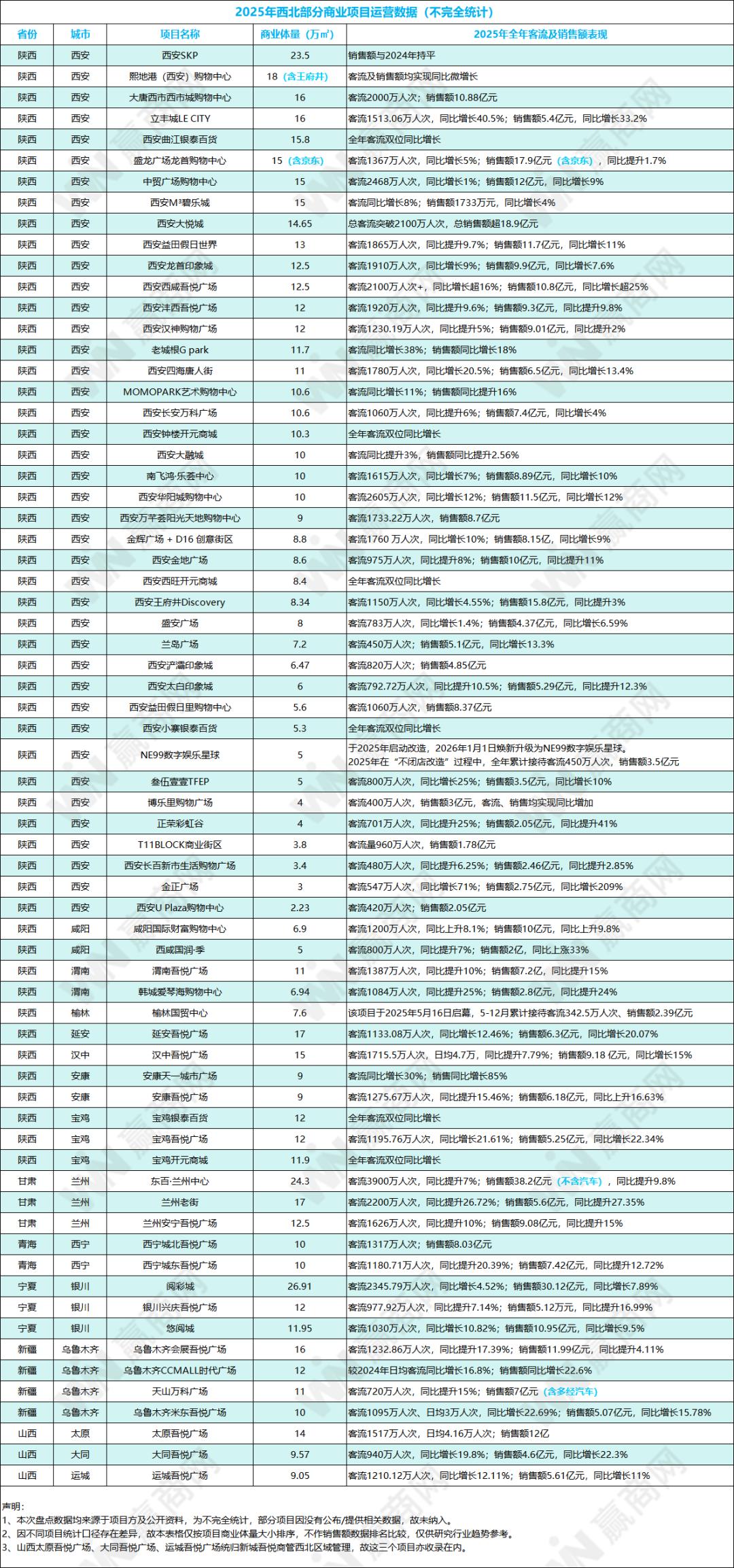
Core Insights - The commercial market in Northwest China shows steady growth in both customer traffic and sales, indicating resilience and a positive outlook for the industry [2][5][12] Group 1: Business Performance and Brand Insights - In 2025, 68 monitored projects in Northwest China reported stable or increasing customer traffic and sales, with 55.9% of projects achieving slight year-on-year growth [2] - Top-performing restaurant brands include Lanxiangzi (31 times in the top five), Haidilao (25 times), and KFC (16 times), which dominate the market through standardized operations [3] - Leading retail brands such as Huawei (34 times), Chow Tai Fook (25 times), and Xiaomi (19 times) are driving revenue growth, particularly in the digital and jewelry sectors [4] Group 2: Market Structure and Trends - The commercial landscape in Northwest China is shifting towards a focus on existing market optimization rather than new developments, aligning with national trends [5][6] - In 2025, only 19 new commercial projects were launched in Northwest China, with a significant increase in the proportion of projects focused on revitalizing existing spaces [7] - The annual brand replacement rate in the region is between 20-26%, indicating a shift towards enhancing existing commercial functions and customer engagement [8] Group 3: First Store Economy - The introduction of new brands is crucial for revitalizing existing commercial spaces, with 376 new stores opened in Xi'an in 2025, including 3 national first stores and 171 regional first stores [9] - This strategy not only injects vitality into existing projects but also directly contributes to increased customer traffic and sales [9] Group 4: Future Outlook - As the focus of commercial transformation shifts from basic adjustments to deep operational enhancements, businesses will better align with customer needs, fostering continuous economic vitality in the region [12]