华创证券

Search documents
人工智能ETF上涨;月内ETF“吸金”近千亿元丨ETF晚报
2 1 Shi Ji Jing Ji Bao Dao· 2025-10-20 10:13
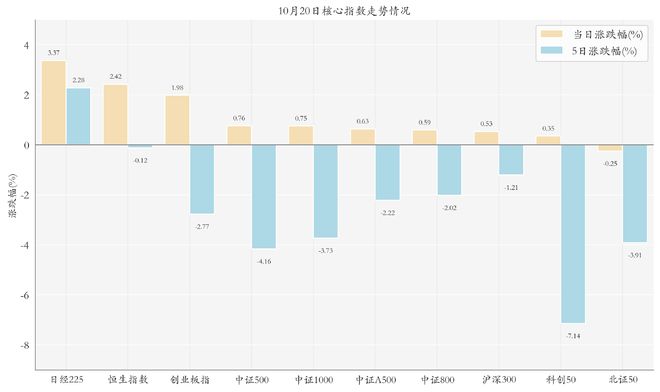
据证券日报,10月份以来,A股市场震荡中蕴含机遇,ETF(交易型开放式指数基金)市场凭借其交易 便捷、透明度高、成本低廉等优势,成为资金入市的重要通道,展现出强劲的"吸金"能力。 一、ETF行业快讯 1.三大指数集体上涨,多只创业板人工智能ETF上涨 今日,三大指数集体上涨,上证综指上涨0.63%,深证成指上涨0.98%, 创业板指上涨1.98%。多只通信 板块ETF上涨,其中,通信设备ETF(159583.SZ)上涨5.63%,创业板人工智能ETF南方(159382.SZ) 上涨3.90%,创业板人工智能ETF华夏(159381.SZ)上涨3.89%。 华创证券表示,本轮牛市AI产业链引领科技创新,三倍股主要集中在上游算力基础和下游端侧硬件。 去年924以来,政策与技术双轮驱动AI板块领涨。本轮行情AI板块涌现47只三倍股,主要集中在算力基 础与端侧硬件领域,创业板和科创板公司占比超八成。 2.月内ETF"吸金"近1000亿元 权益类贡献超九成 Wind资讯数据显示,截至10月17日,10月份以来ETF市场净流入额达991.61亿元。其中,权益类ETF贡 献924.57亿元,占比超九成,成为推动ETF市场资 ...

中通快递-W盘中涨超4% 通达系单票收入环比提升 机构看好10月行业旺季表现
Zhi Tong Cai Jing· 2025-10-20 07:13
Core Viewpoint - The express delivery sector is showing signs of recovery with increased business volume and revenue per package, particularly in September, indicating a positive trend as the peak season approaches [1] Group 1: Company Performance - ZTO Express (02057) saw its stock price rise by over 4% during trading, closing at 148.2 HKD with a transaction volume of 185 million HKD [1] - YTO Express (600233) reported a business volume of 2.627 billion packages in September, a year-on-year increase of 13.64%, with revenue per package at 2.21 RMB, up 1.09% [1] - Shentong Express (002468) completed 2.187 billion packages in September, reflecting a 9.46% year-on-year growth, with revenue per package at 2.12 RMB, an increase of 4.95% [1] - Yunda Express (002120) achieved a business volume of 2.110 billion packages in September, a 3.63% year-on-year increase, with revenue per package at 2.02 RMB, up 0.50% [1] Group 2: Industry Insights - Huachuang Securities noted that the average revenue per package for the three major express companies improved from July to September, with Shentong increasing by 0.15 RMB, YTO by 0.13 RMB, and Yunda by 0.11 RMB [1] - Shenwan Hongyuan anticipates that the third quarter will see express companies begin to realize profit recovery from price increases, with a focus on profit elasticity in the fourth quarter [1] - The report indicates that the average revenue per package was at a low point in July, but has shown improvement in August and September due to reduced competition, suggesting a positive outlook for the upcoming peak season in October [1]


“避风港”行情来袭!公募人士:港股或更有分红优势
证券时报· 2025-10-19 10:32
Core Viewpoint - The article discusses a shift in market focus towards dividend stocks as a defensive strategy, particularly in the context of recent market volatility and the performance of various sectors [1][3]. Group 1: Market Trends - The technology sector and solid-state battery stocks have cooled off, while dividend-paying stocks are stabilizing, supported by banks and insurance companies [1]. - As of October 17, the Shanghai and Shenzhen indices have seen declines of over 1% and 6% respectively, while the CSI Dividend Index has increased by approximately 2.48% [3]. - The Hang Seng China Central State-Owned Enterprises Dividend Index has also been rising, reaching historical highs [3]. Group 2: Investment Strategies - Current market conditions have led to a renewed interest in dividend assets, with funds seeking "safe havens" [3]. - Dividend stocks are showing attractive yields, with mainstream dividend stocks returning to over 4% [3]. - The banking sector has experienced a significant correction, with a maximum drawdown of about 15%, and is now seen as having a high safety margin in terms of valuation [4]. Group 3: Comparative Analysis - The Hang Seng China Central State-Owned Enterprises Dividend Index boasts a dividend yield of 6.02%, significantly higher than the CSI Dividend Index [7]. - The banking sector in A-shares has a dividend yield of around 5%, while the Hong Kong market approaches 6%, indicating a relative attractiveness [7]. - Insurance funds are expected to become a significant source of capital in the stock market, with a focus on dividend stocks due to their low volatility and high yield characteristics [7]. Group 4: Sector Performance - The banking sector is highlighted as a key performer within the dividend space, with expectations for fundamental improvements supported by regulatory policies [9]. - The combination of supportive monetary policy and measures to stabilize interest margins is anticipated to enhance net interest income growth for banks [9].

“避风港”行情来袭!公募人士:港股或更有分红优势
Zheng Quan Shi Bao Wang· 2025-10-19 09:35
Core Viewpoint - The market is shifting towards dividend stocks as a defensive strategy, particularly in the context of recent volatility in growth sectors like technology and solid-state batteries [1][2][3] Group 1: Market Trends - The technology sector and solid-state battery stocks have cooled off, leading to a renewed focus on dividend assets as a safe haven for investors [1] - As of October 17, the Shanghai and Shenzhen indices have seen declines of over 1% and 6% respectively, while the CSI Dividend Index has increased by approximately 2.48% [2] - The Hang Seng China Central State-Owned Enterprises Dividend Index has also been performing well, hovering near historical highs [2] Group 2: Investment Strategies - Fund managers are highlighting the appeal of dividend stocks due to their defensive characteristics, especially as the market seeks stability [2][3] - The dividend yield of major dividend stocks has returned to over 4%, enhancing their long-term investment value [2] - The banking sector has experienced a significant correction, with a maximum drawdown of about 15%, and is now showing signs of stabilization [3] Group 3: Comparative Analysis - The Hang Seng China Central State-Owned Enterprises Dividend Index boasts a dividend yield of 6.02%, significantly higher than the CSI Dividend Index [4] - The price-to-book (PB) ratio for the Hang Seng index is 0.61, and the price-to-earnings (PE) ratio is 6.81, indicating strong dividend potential [4] - The banking and highway sectors are highlighted as prime examples of dividend stocks, with yields around 5% for A-shares and nearly 6% for Hong Kong stocks [4] Group 4: Institutional Investment - Insurance funds are expected to become a significant source of incremental capital in the stock market, with a focus on Hong Kong dividend stocks due to their low volatility and high dividend characteristics [5] - The regulatory environment is supportive of the dividend sector, which is expected to bolster its performance [5] - The banking sector, as a key component of Hong Kong dividends, is anticipated to see improvements in its fundamentals due to supportive monetary policies [5]
“黄金狂热”到逆转的时候了吗?
Hua Er Jie Jian Wen· 2025-10-18 02:44
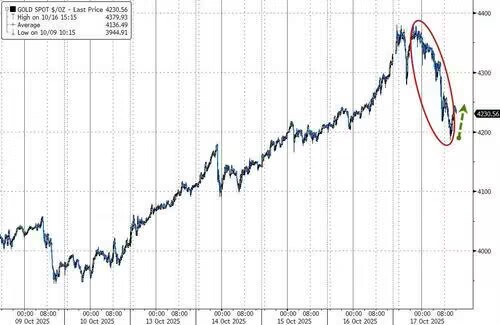
Core Viewpoint - The recent dramatic decline in gold prices, following a record high, raises concerns about whether the current gold bull market, driven by both safe-haven demand and speculative fervor, has reached a critical turning point [1][3]. Price Movement - On October 17, spot gold prices approached $4,380, setting a new historical record, but subsequently fell over 2% during the day, marking the largest single-day drop since Thanksgiving 2024. Despite this, gold prices increased nearly 5% for the week, marking the tenth consecutive week of gains and the best weekly performance since May [1][3]. Market Sentiment and Technical Indicators - Bill Gross, a legendary investor, warned that gold has become a "momentum/meme asset," suggesting potential buyers should wait [3]. - Technical indicators, market sentiment, and positioning are signaling that the gold market is becoming overcrowded, indicating that while gold may still be a "correct" asset, its price may no longer be "appropriate" [3][4]. - The distance between current prices and short-term moving averages is unusually large, with the 21-day moving average around $3,950 and the 50-day moving average at $3,675. A potential reversal pattern is forming, indicating short-term top risks [5]. Volatility and Institutional Positioning - The Gold Volatility Index (GVZ) has surged to extreme levels, reflecting a market driven by panic buying of call options, which could exacerbate price declines if sentiment reverses [7]. - Despite a record net inflow of $34.2 billion into gold ETFs over the past 10 weeks, the incremental inflow is slowing, indicating weakening buying momentum [9][10]. - Institutional positioning is at an extreme, with commodity trading advisors (CTAs) maintaining their highest long positions in gold, suggesting that any price reversal could trigger programmatic selling, amplifying declines [12][14]. Divergence from Traditional Drivers - The current gold bull market is characterized by a significant divergence from traditional fundamental drivers, with gold's rise not aligning with expected influences such as declining real interest rates or a weakening dollar [15][17]. - Gold prices have been rising alongside risk assets, which is unusual, and the recent increase in gold prices has outpaced the decline in real interest rates [15]. - The dollar index has been rising since mid-September, yet gold prices have seemingly ignored this traditional negative correlation [17]. Diverging Opinions on Market Outlook - A debate is emerging among Wall Street analysts regarding whether the current gold market represents a bubble or a new paradigm. Bears argue that the current enthusiasm is waning, while bulls maintain that strong physical demand can explain the price and interest rate divergence [18][19]. - Analysts from major banks suggest that non-traditional policies, including rising fiscal deficits and debt, will continue to support gold prices, with some asserting that the core driver of the current rally is the expectation of a restructuring of the global political economy [19].
三季度宏观数据下周发布,政策适时加力必要性上升
Di Yi Cai Jing Zi Xun· 2025-10-17 01:15
Economic Growth and Forecasts - China's GDP growth in the first half of the year was 5.3%, exceeding expectations, with third-quarter GDP growth forecasted at 4.8% [1][2] - The International Monetary Fund (IMF) maintained its 4.8% growth forecast for China, despite global economic challenges [2] - Economic indicators suggest a potential slowdown in investment and consumption, with third-quarter GDP growth possibly declining to 4.9% [2] Industrial Production and Demand - Industrial production showed resilience in September, with a manufacturing PMI of 49.8%, indicating slight improvement [3] - Predictions for September's industrial value-added growth are around 5.1%, slightly lower than the previous month [3] - Some sectors, such as automotive, are experiencing production slowdowns, while others like coal consumption have shown declines [3] Consumer Spending Trends - The forecast for September's retail sales growth is 3.1%, down from 3.4% in the previous month, indicating a slowdown in consumer spending [4][5] - The "old-for-new" policy has positively impacted certain consumer goods, with significant sales growth in home appliances and smart home products [5][6] - The automotive sector remains a significant contributor to retail sales, with production and sales figures showing strong year-on-year growth [6] Investment and Infrastructure - Fixed asset investment growth is predicted to be flat at 0% for September, reflecting ongoing economic challenges [6] - Infrastructure investment remains supported by strong excavator sales, which increased by 25.4% year-on-year in September [7] - The government is expected to enhance fiscal policies to support infrastructure and manufacturing investments in the fourth quarter [8][10] Policy Measures and Economic Outlook - There is an increasing necessity for timely policy adjustments to sustain economic growth, particularly in light of rising risks in key economic indicators [8][9] - The government plans to issue more bonds and enhance fiscal support for various sectors, including technology and infrastructure [9][10] - The overall macroeconomic policy is expected to remain accommodative, with a focus on stabilizing expectations and boosting confidence in the economy [10]
三季度宏观数据下周发布 政策适时加力必要性上升
Sou Hu Cai Jing· 2025-10-16 17:24
Group 1: Economic Growth and Forecasts - China's GDP growth in the first half of the year was 5.3%, exceeding expectations, with third-quarter GDP growth forecasted at 4.8% [1] - The International Monetary Fund (IMF) maintained its 4.8% growth forecast for China, despite global economic challenges [2] - Economic indicators suggest a potential decline in GDP growth to 4.9% in the third quarter due to slowing investment and consumption [2] Group 2: Industrial Production and Demand - Industrial production showed resilience in September, with the manufacturing PMI at 49.8%, indicating slight improvement [3] - Predictions for September's industrial value-added growth are around 5.1%, slightly lower than the previous month [3] - Net exports are expected to support economic growth, while domestic demand continues to slow [2][3] Group 3: Consumer Spending Trends - The forecast for September's retail sales growth is 3.1%, down from 3.4% in the previous month, influenced by subsidy policy changes [4] - Significant growth in consumer electronics sales was noted, with home appliance sales up 48.3% year-on-year [5] - The automotive sector remains a major contributor to retail sales, with production and sales figures showing strong growth [5] Group 4: Investment Trends - Fixed asset investment growth is predicted to be flat at 0% for September, reflecting ongoing economic challenges [6] - Investment growth across major categories is expected to decline, with infrastructure investment remaining under pressure [6] - The real estate sector continues to show weakness, with significant declines in land transaction values [6] Group 5: Policy Measures and Economic Support - The necessity for timely policy adjustments has increased, with expectations for enhanced fiscal measures in the fourth quarter [7] - New policy tools totaling 500 billion yuan are aimed at supporting manufacturing and infrastructure investment [8] - The government is focusing on targeted monetary policies to stimulate consumption and support key sectors [8]
三季度GDP增速或为4.8%,政策适时加力必要性上升
Di Yi Cai Jing· 2025-10-16 13:06
Economic Growth and Forecasts - China's GDP growth in the first half of the year was 5.3%, exceeding expectations, with the third-quarter growth forecasted at 4.8% [1][2] - The International Monetary Fund (IMF) maintains its 4.8% growth forecast for China for the year, despite global economic challenges [2] - Economic activity is expected to continue a moderate growth trend into the fourth quarter, with a full-year GDP growth forecast also at 4.8% [1][2] Industrial Production and Investment - Industrial production showed resilience in September, with a manufacturing PMI of 49.8%, indicating slight improvement [3] - Fixed asset investment growth is predicted to slow to 0% in September, reflecting ongoing economic pressures [6] - Excavator sales, a key indicator of economic activity, surged by 25.4% in September, suggesting continued support for infrastructure investment [7] Consumer Spending Trends - Retail sales growth for September is projected to decline to 3.0%, influenced by policy changes and economic conditions [5][4] - The automotive sector remains a significant contributor to consumer spending, with production and sales showing strong year-on-year growth [6] Policy Measures and Economic Support - The necessity for timely policy adjustments has increased, with expectations for targeted fiscal and monetary measures to support economic stability [8][9] - New policy tools totaling 500 billion yuan have been introduced to bolster investment in key sectors such as digital economy and green transformation [10] - The government is expected to enhance fiscal support for infrastructure and technology sectors in the fourth quarter [10]
债市日报:10月15日
Xin Hua Cai Jing· 2025-10-15 14:19
Core Viewpoint - The bond market showed slight weakness on October 15, with government bond futures mostly declining and interbank bond yields rising slightly, indicating a mixed response to inflation data and ongoing monetary policy considerations [1][2]. Market Performance - Government bond futures closed mostly lower, with the 30-year main contract down 0.14% at 114.58, the 10-year main contract down 0.06% at 108.130, and the 5-year main contract down 0.03% at 105.73 [2]. - The average yield on interbank major bonds increased by approximately 0.5 basis points, with the 10-year government bond yield rising to 1.7575% [2]. - The China Convertible Bond Index rose by 0.49% to 482.17 points, with notable gainers including Yong02 Convertible Bond and Zhongchong Convertible Bond, which increased by 8.46% and 6.40% respectively [2]. International Bond Market - In North America, U.S. Treasury yields collectively fell, with the 10-year yield down 2.5 basis points to 4.028% [3]. - In Asia, Japanese bond yields showed mixed results, while in the Eurozone, yields on 10-year bonds in France, Germany, Italy, and Spain all decreased [4]. Primary Market - The Ministry of Finance reported weighted average winning yields for 91-day and 182-day government bonds at 1.2634% and 1.3487%, respectively, with bid-to-cover ratios of 2.37 and 2.17 [5]. Liquidity Conditions - The central bank conducted a 435 billion yuan reverse repo operation on October 15, maintaining a stable liquidity environment with a fixed rate of 1.40% [6]. - The central bank plans to conduct a 600 billion yuan buyout reverse repo operation with a 6-month term to ensure ample liquidity in the banking system [6]. Economic Indicators - In September, the Producer Price Index (PPI) decreased by 2.3% year-on-year, while the Consumer Price Index (CPI) fell by 0.3% year-on-year, indicating a stable consumption market [8]. Institutional Perspectives - Institutions like Dongfang Jincheng and Huachuang Securities noted that the central bank's actions to inject medium-term liquidity through reverse repos are aimed at stabilizing the funding environment and supporting government bond issuance [9]. - CITIC Securities highlighted a potential increase in liquidity due to the natural maturity of previously purchased government bonds, suggesting a gradual reintroduction of government bond trading [9].
半导体ETF跌幅居前丨ETF基金日报
2 1 Shi Ji Jing Ji Bao Dao· 2025-10-15 03:29
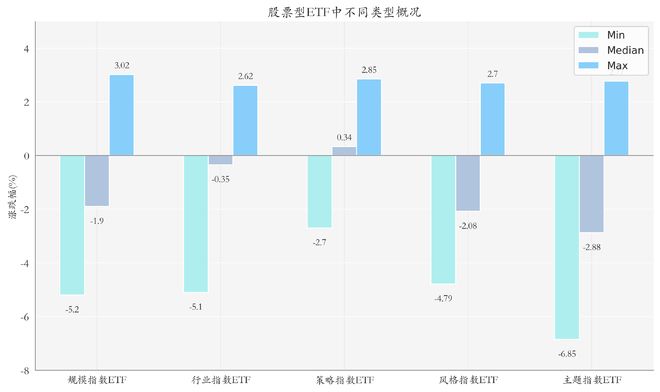
Market Overview - The Shanghai Composite Index fell by 0.62% to close at 3865.23 points, with a daily high of 3918.44 points [1] - The Shenzhen Component Index decreased by 2.54% to 12895.11 points, reaching a high of 13405.51 points [1] - The ChiNext Index dropped by 3.99% to 2955.98 points, with a peak of 3124.83 points [1] ETF Market Performance - The median return of stock ETFs was -1.9% [2] - The highest performing scale index ETF was Penghua SSE 180 ETF with a return of 3.02% [2] - The highest performing industry index ETF was Huaxia CSI Bank ETF with a return of 2.62% [2] - The highest performing strategy index ETF was Xinhua CSI Dividend Low Volatility ETF with a return of 2.85% [2] - The highest performing theme index ETF was Penghua CSI Liquor ETF with a return of 2.77% [2] ETF Performance Rankings - The top three ETFs by return were: - Penghua SSE 180 ETF (3.02%) - Xinhua CSI Dividend Low Volatility ETF (2.85%) - Penghua CSI Liquor ETF (2.77%) [4] - The top three ETFs by decline were: - Huaxia SSE Sci-Tech Innovation Board Semiconductor Materials Equipment Theme ETF (-6.85%) - Guotai CSI Semiconductor Materials Equipment Theme ETF (-6.81%) - E Fund CSI Semiconductor Materials Equipment Theme ETF (-6.74%) [4] ETF Fund Flows - The top three ETFs by inflow were: - Huabao CSI Bank ETF (14.1 billion) - Huaxia SSE Sci-Tech Innovation Board 50 Component ETF (6.8 billion) - Huaxia National Index Semiconductor Chip ETF (6.71 billion) [6] - The top three ETFs by outflow were: - Southern CSI 500 ETF (19.42 billion) - Southern CSI A500 ETF (8.67 billion) - Fuguo CSI A500 ETF (7.4 billion) [6] ETF Margin Trading Overview - The top three ETFs by margin buying were: - Huaxia SSE Sci-Tech Innovation Board 50 Component ETF (8.88 billion) - E Fund ChiNext ETF (6.17 billion) - Guotai CSI All-Share Securities Company ETF (5.83 billion) [8] - The top three ETFs by margin selling were: - Southern CSI 500 ETF (2.19 billion) - Huaxia SSE Sci-Tech Innovation Board 50 Component ETF (40.57 million) - Huaxia CSI 1000 ETF (33.83 million) [8] Industry Insights - Huachuang Securities indicates that domestic lithography machines are expected to enter a phase of accelerated commercialization, driven by policy support and technological advancements [9] - First Capital Securities states that U.S. semiconductor export controls will accelerate the self-sufficiency of the domestic industry chain, promoting domestic innovation [10]