
新钢股份

Search documents
高股息资产在市场震荡期中更显防御优势,国企红利ETF(159515)红盘上扬
Xin Lang Cai Jing· 2025-10-15 02:40
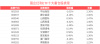
Core Insights - The China State-Owned Enterprises Dividend Index (000824) has shown a positive trend, with a 0.30% increase as of October 15, 2025, reflecting a shift in investment logic from offshore markets dominated by foreign capital to onshore markets led by domestic capital [1] - High dividend strategies, particularly those involving quality central enterprises, are becoming a core pillar for stabilizing market valuation systems due to their robust profitability and consistent dividend payouts [1] - Dividend investment is viewed as a long-term allocation strategy that transcends style rotations in the A-share market, offering stable cash flow and value appreciation opportunities [1] Index Performance - The China State-Owned Enterprises Dividend Index comprises 100 listed companies selected for their high cash dividend yields and stable dividends, representing the overall performance of high dividend yield securities among state-owned enterprises [2] - As of September 30, 2025, the top ten weighted stocks in the index include COSCO Shipping Holdings (601919), Jizhong Energy (000937), and Lu'an Environmental Energy (601699), with the top ten stocks accounting for 17.15% of the index [2] Stock Performance - Notable stock performances include: - COSCO Shipping Holdings (601919) decreased by 1.01% with a weight of 2.36% - Jizhong Energy (000937) decreased by 0.16% with a weight of 2.00% - Nanjing Steel (600282) increased by 2.62% with a weight of 1.23% [3]

国泰海通:钢铁节后需求仍有望逐步恢复增长 龙头竞争优势与盈利能力更加凸显
Zhi Tong Cai Jing· 2025-10-14 03:21
Core Viewpoint - The steel industry is expected to gradually bottom out in demand, with supply-side market clearing beginning to appear, leading to a potential recovery in the industry's fundamentals. If supply policies are implemented, the contraction of supply may accelerate, facilitating quicker industry recovery [1]. Demand and Supply Analysis - Steel consumption for the week of October 6-10, 2025, was 7.5143 million tons, a decrease of 1.5339 million tons week-on-week. Construction steel consumption was 2.2262 million tons, down 1.0846 million tons, while plate steel consumption was 5.2881 million tons, down 0.4493 million tons. Steel production was 8.6331 million tons, a decrease of 0.0376 million tons, and total inventory rose to 16.0072 million tons, an increase of 1.2786 million tons [2]. - The operating rate of blast furnaces at 247 steel mills was 84.27%, down 0.02 percentage points week-on-week, while electric furnace operating rates were 60.26%, down 1.28 percentage points. Despite a marginal decline in demand due to the National Day holiday, the industry remains in a traditional peak season, with expectations for gradual recovery in steel demand and inventory reduction [2]. Profitability Trends - The average gross profit per ton for rebar was 167.1 CNY, an increase of 24.3 CNY week-on-week, while hot-rolled coil gross profit was 112.1 CNY, up 29.3 CNY. The profitability rate for 247 steel companies was 56.28%, a decrease of 0.43% [3]. - The expectation is for iron ore production to accelerate while demand remains limited, leading to a gradual easing of iron ore prices and improvement in cost constraints for the steel industry, with a potential recovery in profitability levels [3]. Future Outlook - The negative impact of the real estate sector on steel demand is expected to diminish, with stable growth anticipated in demand from infrastructure and manufacturing sectors. Steel exports maintained a year-on-year increase from January to August [4]. - Over 40% of steel companies are currently experiencing losses, but market clearing is beginning to occur. Recent policies aim to reduce production and promote a balance between supply and demand, supporting the expectation of supply contraction and gradual recovery in the steel industry's fundamentals [4]. Recommended Companies - Key recommendations include Baosteel (600019) for its technological and product structure leadership, Hualing Steel (000932) for its product structure upgrades, and Fangda Special Steel (600507) for its low-cost advantages. Other recommendations include CITIC Special Steel (000708) for its competitive advantages and high dividend yield, as well as upstream resource companies like Hebei Steel Resources (000923) and Dazhong Mining (001203) due to their long-term growth potential [5].





当前时点,如何看待周期板块
2025-12-22 01:45
Summary of Key Points from Conference Call Records Industry Overview - **Steel Industry**: - Despite record high pig iron production, the decline in metallurgical coke and iron ore prices, along with increased steel billet exports, has not translated into growth in end demand, leading to a continuous drop in steel prices. Rebar profit margins are near breakeven levels [1][3] - Investment in steel stocks should focus on fundamental indicators and supply-demand relationships. After an initial valuation recovery, stocks fell in late March due to a lack of supporting fundamentals. It is recommended to preemptively invest in second-tier stocks benefiting from falling coke and iron ore prices, such as Liugang, Shougang, and Sansteel Mingguang, with significant profit growth expected in 2025 [1][13] - **Energy Metals**: - Strategic resources like rare earths and tungsten are affected by export control policies, with tungsten prices strengthening. The demand for humanoid robots and stabilization of macro demand are expected to drive a recovery in the rare earth market, with companies like China Rare Earth, Guangsheng Nonferrous, and Northern Rare Earth being noteworthy [1][14][16] - The cobalt market is poised for a second wave of price increases due to export bans from the Democratic Republic of Congo, with companies like Huayou Cobalt and Luoyang Molybdenum being highlighted [1][17] - Nickel prices are supported around $15,000 due to Indonesia's measures to strengthen pricing power, with a planned export ban from the Philippines in June 2025 potentially tightening supply [1][18][19] - **Lithium Carbonate Market**: - The lithium carbonate market has seen a significant downward trend due to weak fundamentals, with prices dropping below previous support levels. However, it is believed to have reached a cyclical bottom, making it a good time for long-term investments [1][20] - **Construction Materials**: - The construction materials sector is stable, with a slight improvement in new home sales. Investment opportunities include domestic alternatives and companies like Keda Manufacturing and China National Materials, which are expected to benefit from AI demand and high-end chip packaging materials [1][21] Key Insights and Arguments - **Steel Production vs. Demand**: - High pig iron production does not necessarily indicate strong downstream demand, as evidenced by the ongoing decline in steel prices. Factors such as lower prices for raw materials and increased exports of semi-finished products contribute to this disconnect [1][5][6][7] - **Investment Strategy**: - The steel sector's key indicators include steel prices and gross profit per ton. If these do not align, it hampers the potential for performance recovery. Investors should closely monitor these metrics to adjust strategies accordingly [1][10][11] - **Future Recommendations**: - For 2025, it is advised to focus on second-tier stocks that will benefit from lower raw material costs, which will enhance profitability. Companies like Liugang and Shougang are expected to show significant profit growth [1][13] Additional Important Content - **OPEC's Impact on Oil and Aviation**: - OPEC's recent production increases are expected to benefit oil transportation and aviation sectors, with a projected 20% decrease in fuel costs leading to improved profitability in the aviation industry [4][22][24] - **Chemical Industry Opportunities**: - The chemical sector is seeing opportunities due to the gradual lifting of export restrictions on fertilizers, with companies like Hualu Hengsheng and Luxi Chemical being highlighted for potential gains [4][26] - **Market Dynamics**: - The coal market is currently under pressure due to high inventory levels and weak demand, but upcoming seasonal demand may stabilize prices. Recommendations include focusing on low-cost producers like Shenhua and Yanzhou Coal [1][45][46][47] This summary encapsulates the critical insights and recommendations from the conference call records, providing a comprehensive overview of the current state and future outlook of the relevant industries.
中美博弈或升温,关注避险需求与战略小金属
East Money Securities· 2025-10-13 12:30
Investment Rating - The report maintains an "Outperform" rating for the industry [2][9]. Core Insights - The report highlights the increasing geopolitical tensions between China and the U.S., which may elevate demand for safe-haven assets like gold and strategic metals such as rare earths and tungsten [5][9]. - The copper market is experiencing supply disruptions, with prices trending upward due to tight supply conditions [5]. - Aluminum demand is expected to continue, with potential opportunities for investment following market corrections [5]. - The strategic importance of rare earths and tungsten is emphasized due to recent export controls and geopolitical developments [5][9]. Summary by Sections Copper Sector - Supply disruptions are ongoing, with LME copper prices at $10,735 per ton, reflecting a week-on-week increase of 1.9% [5]. - The processing fee for imported copper concentrate is negative, indicating tight supply [5]. - Companies with rich copper reserves are recommended for investment [9]. Aluminum Sector - LME aluminum prices reached $2,800 per ton, up 3.6% week-on-week [5]. - The operating rate for aluminum processing enterprises has slightly decreased, but demand is expected to remain stable [5]. - Investment opportunities are suggested for companies in the aluminum sector following market corrections [9]. Gold Sector - Gold prices are rising, with SHFE gold at 901.6 RMB per gram, up 3.1% week-on-week [5]. - The report suggests that geopolitical tensions may enhance gold's strategic position as a safe-haven asset [5]. - Investment in gold-related companies is recommended due to their undervalued resource potential [9]. Rare Metals Sector - Rare earth prices remain stable, with praseodymium-neodymium oxide at 683,000 RMB per ton [5]. - Recent export controls on rare earths have heightened their strategic importance amid U.S.-China tensions [5][9]. - Investment opportunities are highlighted in companies involved in rare earth production [9]. Steel Sector - Steel prices are stable, with SHFE rebar at 3,103 RMB per ton, reflecting a week-on-week increase of 1.0% [6]. - The report notes frequent disruptions in iron ore supply negotiations, which may impact future prices [6]. - Companies with high self-sufficiency in iron ore are recommended for investment [9].




周期论剑 -三季报展望
2025-10-13 01:00
Summary of Key Points from Conference Call Records Industry Overview - **Financial Conditions**: Domestic financial conditions are stabilizing, with loose fiscal and monetary policies aimed at stabilizing the capital market, which helps to build consensus, boost expectations, and attract foreign capital [1][3] - **Investment Focus**: The main investment themes include technology, particularly AI innovation and semiconductor equipment, as well as adjusted financial sectors and industries like non-ferrous metals, chemicals, steel, and new energy [1][4] Company Insights - **Aviation Industry**: During the 2025 National Day holiday, air passenger traffic significantly increased, with ticket prices rising beyond expectations. The aviation industry is expected to see profits surpassing 2019 levels in Q3 2025, contingent on the recovery of business travel demand [1][5] - **LNG Shipping Market**: The LNG shipping market is expected to perform well in Q4 2025, benefiting from OPEC's production increase and additional supply from South America and West Africa, indicating a rebound in profitability for shipping companies [1][7] - **Coal Market**: The coal market is experiencing a dual improvement in supply and demand, with prices expected to rise gradually starting in the second half of 2026. The focus on coal stocks is increasing due to supply constraints and unexpected demand [1][14][15][16] Key Industry Trends - **Oil Prices**: Recent declines in oil prices are attributed to geopolitical factors, tariffs, and OPEC+ production increases. Future price movements will depend on the attitudes of oil-producing countries and geopolitical developments [1][8][9] - **Steel Industry**: The steel sector is expected to perform well in Q4, with historical data suggesting that policy-related factors can lead to year-end rallies. The industry is also seeing a shift towards a more stable supply-demand balance, with potential profit increases in the coming years [1][19][20] Recommendations - **Investment Recommendations**: - **Aviation**: Focus on companies that can capitalize on the recovery of business travel and rising ticket prices [1][5] - **LNG Shipping**: Companies like China Merchants Energy and China Ship Leasing are recommended due to expected profitability rebounds [1][7] - **Coal**: Companies like China Shenhua and other major state-owned enterprises are highlighted for their strong market positions and potential for profit growth [1][18][17] - **Steel**: Recommended companies include Baosteel and Hualing Steel, which have cost advantages and strong market positions [1][20] Additional Insights - **Geopolitical Impact**: The current geopolitical landscape is influencing market dynamics, with clearer boundaries around trade risks compared to earlier in the year. This clarity is seen as an opportunity for investors to increase their holdings in Chinese assets [2][3] - **Consumer Building Materials**: The consumer building materials sector is showing signs of recovery, with leading companies expected to perform well despite a challenging market environment [1][24][25] This summary encapsulates the key insights and recommendations from the conference call records, providing a comprehensive overview of the current state and future outlook of various industries and companies.
铁矿石人民币结算比例加大,印证国内定价权强化
Changjiang Securities· 2025-10-12 23:30
Investment Rating - The industry investment rating is Neutral, maintained [8] Core Views - The recent agreement between China Mineral Resources Group and BHP to implement RMB settlement for iron ore spot trading indicates a strengthening of domestic pricing power for iron ore. This is expected to lead to a more reasonable profit distribution within the black industry chain as iron ore prices may decrease due to an increase in supply from new projects like West Simandou [2][6] - The steel industry is currently experiencing a "weak reality, strong expectations" scenario, with a significant drop in apparent consumption due to holiday-related workday discrepancies. However, recent government announcements regarding price regulation and safety inspections may catalyze improvements in the industry's profitability [4][5] Summary by Sections Iron Ore Pricing Power - The proportion of iron ore settled in RMB is increasing, reflecting a strengthening of domestic pricing power. China’s annual iron ore trade exceeds $1.2 trillion, with about 80% settled in USD. The concentration of procurement power among state-owned enterprises is expected to enhance negotiation capabilities [5][6] Supply and Demand Dynamics - Apparent consumption of steel has decreased significantly, with a year-on-year drop of 21.14% and a month-on-month drop of 21.55%. Steel inventory has accumulated, indicating an oversupply situation [5] - Daily average pig iron production has slightly decreased to 2.4154 million tons, with total steel production showing a year-on-year decline of 0.16% and a month-on-month decline of 0.66% [5] Market Expectations - The steel market is currently characterized by strong expectations despite weak realities. Recent government measures aimed at regulating prices and ensuring safety in production may lead to a more favorable environment for profitability in the steel sector [4][5] Investment Opportunities - The report suggests focusing on four main investment lines: 1. Companies benefiting from the release of new capacities in iron and coke, such as Nanjing Steel and Baosteel [25] 2. Companies with low market value relative to their earnings, like New Steel and Fangda Special Steel [26] 3. Mergers and acquisitions in the context of state-owned enterprise reforms [26] 4. High-quality processing leaders and resource companies, particularly in the context of macroeconomic recovery expectations [26]
证券研究报告行业周报:纷争的世界-20251012
GOLDEN SUN SECURITIES· 2025-10-12 09:44
Investment Rating - The industry investment rating is maintained as "Buy" for several key companies [6]. Core Insights - The steel industry is experiencing a slight decline in daily molten iron production, with an average of 241.5 thousand tons, down by 0.3 thousand tons [12]. - Total steel inventory is showing seasonal accumulation post the National Day holiday, with a week-on-week increase of 8.7% [24]. - Apparent consumption of steel products has decreased seasonally, with a notable drop in rebar demand [37]. - Iron ore prices have risen, influenced by changes in shipping volumes from Australia and Brazil [46]. - Steel prices are stable with slight improvements in immediate profit margins, indicating a potential for continued industry recovery [70]. Summary by Sections Supply - Daily molten iron production has slightly decreased to 241.5 thousand tons, with a decline in rebar and hot-rolled coil production [12][17]. Inventory - Total steel inventory has increased by 8.7% week-on-week, with steel mill inventories rising more than social inventories [24][26]. Demand - Apparent consumption of the five major steel products has decreased by 17.0% week-on-week, with rebar consumption down by 36.5% [48][37]. Raw Materials - Iron ore prices have increased, with the Platts 62% iron ore price index at $107.4 per ton, up by 3.4% week-on-week [58]. Prices and Profits - The comprehensive steel price index remains stable at 122.7, with slight improvements in immediate profit margins for long-process steel products [70][71].


硅铁、锰硅产业链周度报告-20251012
Guo Tai Jun An Qi Huo· 2025-10-12 06:47
1. Report Industry Investment Rating - Not provided in the content 2. Core Viewpoints of the Report - The alloy market has a strong wait - and - see sentiment, and the alloy prices are oscillating. Manganese ore prices are firm this week, the fluctuation range of manganese silicon is limited, and the price of ferrosilicon is oscillating weakly due to fundamental pressure [3][6]. - Macroscopically, domestically, relevant departments issued an announcement on governing price disorderly competition; overseas, there are differences in the Fed's interest - rate cuts, and tariff events may lead to an escalation of the Sino - US trade war. Microscopically, the molten iron output decreased slightly, the support for raw material demand is limited, and the cost of ferrosilicon is expected to decline, resulting in a higher price fluctuation range than that of manganese silicon [5]. 3. Summary According to Relevant Catalogs 3.1 Futures Contract Performance - The FeSi2511 contract oscillated this week, closing at 5,436 yuan/ton, a decrease of 58 yuan/ton compared to the pre - holiday closing price, with a trading volume of 234,128 lots and an open interest of 118,193 lots, an increase of 112 lots compared to the previous period [8]. - The MnSi2601 contract oscillated this week, closing at 5,760 yuan/ton, an increase of 2 yuan/ton compared to the pre - holiday closing price, with a trading volume of 279,333 lots and an open interest of 376,591 lots, an increase of 28,300 lots compared to the previous period [8]. 3.2 Spot Price - The spot price of ferrosilicon in major regions across the country oscillated weakly this week. The aggregated quotation of 75B ferrosilicon in the main production areas was 5,150 - 5,380 yuan/ton, a week - on - week change of - 50 yuan/ton [9]. - The aggregated quotation range of silicon - manganese spot in major regions across the country was 5,620 - 5,980 yuan/ton, with a price fluctuation of - 120 - 0 yuan/ton [9]. 3.3 Manganese Silicon Fundamentals 3.3.1 Production - The weekly output of manganese silicon was 204,200 tons, a decrease of 2,200 tons compared to last week, with a week - on - week change rate of - 1.1%. The weekly operating rate was 43.19%, a decrease of 0.99 percentage points compared to last week [17]. 3.3.2 Steel Tendering - After the holiday, the steel tendering price showed a downward trend, and the market was mainly in a wait - and - see mode [24]. 3.3.3 Demand - From the performance of downstream steel mills, production remained at a high level, but the actual output of molten iron decreased. The blast furnace operating rate of 247 steel enterprises was 90.55%, a decrease of 0.1 percentage points compared to last week; the daily average molten iron output was 241,540 tons, a decrease of 2,700 tons compared to last week. The overall demand for manganese silicon was weak [27]. 3.3.4 Inventory - As of October 10, the number of manganese silicon warehouse receipts was 54,041, a decrease of 2,070 compared to September 26, with a converted inventory of 270,205 tons and a warehouse receipt destocking of 10,360 tons [31]. - In September, the average available days of silicon - manganese inventory in steel mills were 15.93 days (+0.95 days) [32]. - As of October 10, the inventory of 63 domestic silicon - manganese sample enterprises was 242,500 tons, an increase of 8,700 tons compared to September 26 [36]. 3.3.5 Manganese Ore - The global manganese ore departure volume recovered, and the departure volume from Ghana increased month - on - month. The major port aggregated departure volume was 984,400 tons, an increase of 48,900 tons compared to the previous period [40]. - After the holiday, the arrival of manganese ore at ports may increase. The expected future arrival volume at Tianjin Port is 503,900 tons, and at Qinzhou Port is 82,800 tons [47]. - The manganese ore port quotations were firm. For example, in November 2025, Comilog's Gabonese lump was reported at 4.35 US dollars/ton - degree, a month - on - month increase of 0.08 US dollars/ton - degree [52]. 3.4 Ferrosilicon Fundamentals 3.4.1 Production - The weekly output of ferrosilicon was 115,800 tons, with no change compared to last week and an increase of 13,000 tons compared to the week before the holiday. The weekly operating rate was 35.94%, an increase of 0.61 percentage points compared to the pre - holiday operating rate [58]. 3.4.2 Steel Tendering - Steel mills have not launched a new round of tendering quotations, and the price of traders' point - price shipments is relatively low [65]. 3.4.3 Demand - From the performance of downstream steel mills, production remained at a high level, but the actual output of molten iron decreased. The blast furnace operating rate of 247 steel enterprises was 90.55%, a decrease of 0.1 percentage points compared to last week; the daily average molten iron output was 241,540 tons, a decrease of 2,700 tons compared to last week [75]. - The non - steel demand: the stainless - steel crude steel output in September was 3.0661 million tons, a month - on - month increase of 163,300 tons and a year - on - year increase of 7.65%. The metal output in September was 76,800 tons, a month - on - month increase of 10.5% and a year - on - year increase of 2.4%. The ferrosilicon export volume in August was 35,000 tons, a month - on - month decrease of 2.6% [75]. 3.4.4 Inventory - As of October 10, the number of ferrosilicon warehouse receipts was 15,040, a decrease of 2,333 compared to September 26, with a converted inventory of 75,200 tons and a warehouse receipt destocking of 11,665 tons [77]. - In September, the average available days of ferrosilicon inventory in steel mills were 15.52 days (+0.85 days) [78]. - As of October 10, the inventory of 60 domestic ferrosilicon sample enterprises was 66,030 tons, an increase of 4,570 tons compared to September 26 [82]. 3.4.5 Cost - The raw material price decreased, and the production cost center of ferrosilicon moved down [85].
两部门着手治理价格无序竞争,反内卷下钢价有望迎来秩序重构
Xinda Securities· 2025-10-12 06:37
Investment Rating - The investment rating for the steel industry is "Positive" [2] Core Viewpoints - The steel sector has shown resilience with a weekly increase of 3.67%, outperforming the broader market, while specific segments like special steel and long products also saw gains [10][12] - The report highlights a potential restructuring of steel prices due to government efforts to curb disorderly competition and excess capacity, which may lead to improved profitability for steel companies [3][4] - Despite current supply-demand imbalances and declining profits, the implementation of "stabilization growth" policies is expected to support steel demand, particularly in real estate and infrastructure sectors [3][4] Supply Situation - As of October 10, the capacity utilization rate for blast furnaces among sampled steel companies is 90.6%, a slight decrease of 0.10 percentage points week-on-week [26] - The production of five major steel products reached 7.535 million tons, reflecting a week-on-week decrease of 2.44 million tons [26] - Daily average pig iron production was 2.4154 million tons, down 0.27 million tons week-on-week but up 135,200 tons year-on-year [26] Demand Situation - The consumption of five major steel products was 7.514 million tons as of October 10, down 153,390 tons week-on-week, marking a 16.95% decrease [36] - The transaction volume of construction steel among mainstream traders was 91,000 tons as of October 17, down 1.78 tons week-on-week [36] Inventory Situation - Social inventory of five major steel products increased to 11.282 million tons as of October 10, up 69,230 tons week-on-week, a 6.54% increase [44] - Factory inventory for the same products reached 4.726 million tons, up 58,630 tons week-on-week, a 14.16% increase [44] Steel Prices & Profits - The comprehensive index for ordinary steel was 3,460.3 yuan/ton as of October 11, down 20.27 yuan/ton week-on-week, a 0.58% decrease [50] - The profit for rebar produced in blast furnaces was -22 yuan/ton, a significant drop of 52 yuan/ton week-on-week [58] - The profit for electric arc furnace-produced construction steel was -152 yuan/ton, down 17 yuan/ton week-on-week [58] Raw Material Situation - The spot price index for Australian iron ore (62% Fe) was 793 yuan/ton as of October 11, up 6.0 yuan/ton week-on-week [72] - The price for primary metallurgical coke was 1,770 yuan/ton, an increase of 55.0 yuan/ton week-on-week [72]
2025年1-8月全国黑色金属冶炼和压延加工业出口货值为1338.9亿元,累计下滑2.2%
Chan Ye Xin Xi Wang· 2025-10-12 02:35
Core Insights - The article discusses the performance and export trends of China's black metal smelting and rolling processing industry, highlighting a decline in export value in 2025 compared to previous years [1] Industry Summary - In August 2025, the export value of China's black metal smelting and rolling processing industry was 16.42 billion yuan, representing a year-on-year decrease of 13.5% [1] - From January to August 2025, the cumulative export value reached 133.89 billion yuan, showing a slight year-on-year decline of 2.2% [1] - The data indicates a downward trend in the export performance of the black metal industry over the specified period [1] Company Summary - The article lists several companies involved in the black metal industry, including CITIC Special Steel, Hebei Iron and Steel, and others, indicating their relevance in the market [1] - The report by Zhiyan Consulting provides a comprehensive market survey and investment outlook for the black metal mining and selection industry from 2026 to 2032, suggesting potential future developments [1]


