
古茗

Search documents
这些消费者去奶茶店、咖啡店的理由,没想到是……
东京烘焙职业人· 2025-12-28 08:33
Core Viewpoint - The rise of "Instagrammable" spaces in beverage shops, particularly in tea and coffee stores, is becoming a significant factor in attracting customers, as seen in the popularity of Luckin Coffee's store in Pizhou, which gained attention for its aesthetic appeal rather than product promotions [2][4]. Group 1: Thematic Stores and Consumer Experience - Beverage brands are increasingly focused on creating "thematic stores" and "third spaces" that enhance the consumer experience beyond just the drinks offered [5][7]. - For instance, Heytea's new store in Huizhou features minimalist design elements that provide a serene environment, appealing to consumers seeking relaxation [5]. - The design evolution of brands like Guming Coffee reflects a continuous exploration of consumer scenarios and sensory experiences, with their sixth-generation store showcasing this trend [7]. Group 2: Independent Cafés and Atmosphere - Independent coffee shops excel at creating narrative atmospheres, using simple elements like lighting and decor to evoke specific feelings and experiences [11]. - Examples include a retro café in Shanghai that uses a sunset lamp to create a sought-after "dusk warmth" ambiance, and a Chengdu café that offers a laid-back vibe with natural elements like trees and bamboo chairs [11][13]. - The value of a café or tea shop often extends beyond the beverages served, as the overall experience and atmosphere contribute significantly to customer satisfaction and memory [13].


茶专家评“咖啡因”焦虑:将茶饮与“毒品”绑定是对中国茶文化的污蔑
新华网财经· 2025-12-28 04:35
Core Viewpoint - The incident involving the tea brand BaWang Tea Ji highlights the urgent need for scientific education in China's new tea beverage industry, particularly regarding caffeine content and its effects on health [2][10]. Group 1: Incident Overview - On December 26, BaWang Tea Ji faced a public relations crisis when a self-media outlet linked caffeine in tea to controlled substances, causing public panic and significant stock price fluctuations [1]. - The Chinese Tea Circulation Association responded by educating the public about the relationship between tea and caffeine [1]. Group 2: Public Perception and Knowledge Gap - A survey indicated that 52.15% of respondents were unaware that tea contains caffeine, reflecting a significant knowledge gap among consumers [3]. - The misconception that tea is linked to addiction or harmful effects is a misrepresentation of tea culture and science [5]. Group 3: Scientific Insights on Tea Components - Tea contains both caffeine, which stimulates the central nervous system, and theanine, which has calming effects, creating a balanced experience for consumers [4]. - Caffeine in tea is a natural component, and its concentration in brewed tea is typically between 2% to 4%, insufficient to cause addiction [6]. Group 4: Industry Evolution and Consumer Trends - The new tea beverage industry has transitioned from using powdered ingredients to emphasizing fresh tea leaves and quality, which has led to increased caffeine awareness among consumers [7]. - Leading brands like Heytea and BaWang Tea Ji are adopting transparency in ingredient sourcing and caffeine content, catering to diverse consumer needs [9]. Group 5: Cultural and Historical Context - Tea, as a cultural symbol with a rich history, has faced similar scrutiny as coffee did in its early days, necessitating a collective effort from the industry to educate consumers [8]. - The new tea beverage sector plays a crucial role in modernizing traditional tea practices and making them relevant to younger consumers [9]. Group 6: Future Directions - The "caffeine anxiety" incident underscores the need for the industry to establish a clear and scientific knowledge framework about tea, akin to what has been achieved for coffee [10]. - By eliminating knowledge barriers and promoting standardized practices, the new tea beverage industry can enhance its global standing and cultural significance [10].

新茶饮上市背后:流水的品牌,铁打的供应链
Ge Long Hui· 2025-12-26 17:52
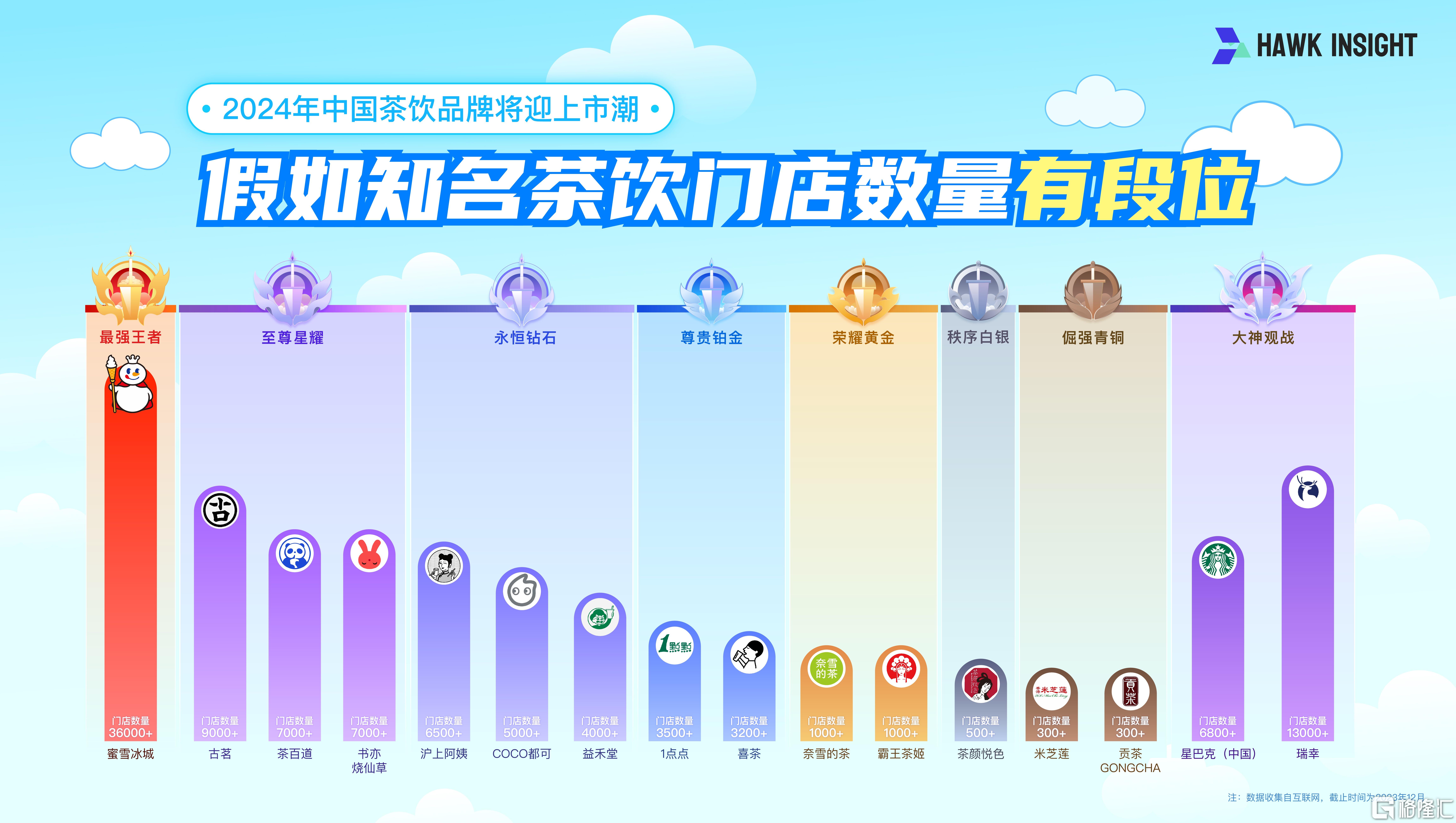
Group 1 - The new tea beverage industry is experiencing a resurgence, with significant interest in new products and flavors, leading to increased activity in the secondary market [2] - Major players like Cha Bai Dao, Mi Xue Bing Cheng, and Gu Ming have submitted IPO applications, indicating a competitive push in the new tea beverage sector [2][3] - The number of stores for the top 20 new tea brands has increased by 32% from 78,324 at the end of 2022 to 103,783 by the end of 2023, reflecting a strong growth trend [2] Group 2 - New tea brands are aggressively pursuing the "10,000 stores" goal as a strategy to capture market share, with Gu Ming reaching 9,001 stores and Mi Xue Bing Cheng leading with 36,000 stores [3][5] - The expansion into lower-tier markets is a key focus, with significant growth in delivery orders from fourth and fifth-tier cities, showing increases of 30% and 36% respectively [5][8] - The price competition in the tea beverage market has intensified, with many brands offering products at promotional prices around 9.9 yuan, reflecting a shift in consumer behavior towards value [7][14] Group 3 - The profitability of tea beverage brands is under pressure, with net profit margins for mature brands ranging from 10% to 15%, significantly lower than expected [8][11] - Companies like Nai Xue's Tea have faced substantial losses, with cumulative losses of 808 million yuan from 2020 to 2022, highlighting the financial challenges in the industry [8][11] - The supply chain has become a critical factor for success, with brands like Mi Xue Bing Cheng generating 98% of their revenue from selling materials and equipment to franchisees, emphasizing the importance of a robust supply chain [15][16] Group 4 - The new tea beverage industry is expected to see a gradual decline in growth rates, with projected market growth rates of 13.4%, 6.4%, and 5.7% from 2023 to 2025 [8] - The industry is characterized by low barriers to entry and high product homogeneity, leading to intense competition and price wars among brands [14][21] - Future trends in the industry are expected to focus on product innovation, supply chain optimization, and channel expansion, with a growing emphasis on the importance of supply chain management [21][22]
现制茶饮巨头齐聚港股冲刺IPO 茶饮第二股将花落谁家?
Ge Long Hui· 2025-12-26 17:52
Core Viewpoint - The competition in the Chinese ready-to-drink tea market is intensifying as multiple brands, including Mixue Ice City, Gu Ming, and Cha Bai Dao, are preparing for IPOs, aiming to become the second listed tea brand after Nayuki Tea [2][27]. Group 1: Market Overview - The Chinese ready-to-drink tea market is projected to reach a scale of 149.8 billion yuan in 2023, with a compound annual growth rate of nearly 20% over the past three years, and is expected to expand to 201.5 billion yuan by 2025 [3]. - As of August 31, 2023, there are approximately 515,000 new tea drink stores in operation, a growth of over 36% from 378,000 stores at the end of 2020 [3]. Group 2: Company Expansion Strategies - Mixue Ice City has over 32,000 stores in China and approximately 4,000 overseas, with a cup output of about 5.8 billion cups in the first nine months of 2023, making it the leading ready-to-drink beverage company in China and the second globally [8]. - Gu Ming has 9,001 stores as of December 31, 2023, a 35% increase from the end of 2022, positioning it as a strong contender to enter the "10,000-store era" [8]. - Cha Bai Dao has 7,111 stores, achieving coverage across all provinces and cities in mainland China, and is also approaching the "10,000-store era" [8]. Group 3: Future Expansion Directions - Gu Ming plans to expand into northern China, where it currently has no presence in 19 provinces, indicating significant growth potential [10]. - Cha Bai Dao aims to increase its penetration in second-tier and lower-tier cities, where it currently has about 60% of its stores, and will focus on enhancing store density in potential business districts [12]. - Mixue Ice City is focusing on international expansion, having opened its first overseas store in Vietnam in 2018 and now operating in 11 countries, with plans to deepen its presence in Southeast Asia [13][15]. Group 4: Supply Chain and Logistics - Mixue Ice City has built a large-scale supply and logistics system, with 26 warehouses totaling over 300,000 square meters, making it the largest in the industry [15][16]. - Gu Ming operates the largest cold chain logistics infrastructure among Chinese ready-to-drink tea brands, with 21 warehouses and a delivery cost of only about 0.9% of GMV [18][19]. - Cha Bai Dao relies on a combination of self-operated and third-party logistics, with 22 high-standard warehouses covering a total area of approximately 80,000 square meters [21][22]. Group 5: Marketing Strategies - Mixue Ice City has successfully created a strong brand IP, "Xue Wang," which has garnered over 87 billion exposures on social media platforms, and has developed various related products and events [23][24]. - Other brands, such as Cha Bai Dao and Gu Ming, have engaged in numerous co-branding marketing events, with over 230 collaborations reported in the first three quarters of 2023 [26]. Group 6: Conclusion - The entry of brands like Cha Bai Dao into the IPO stage suggests a potential reshuffling in the ready-to-drink tea market, with various aspects such as R&D, supply chain, digitalization, cold chain logistics, and marketing presenting opportunities for growth [27].
“读秒捡钱”,这个春节县城奶茶赚疯了
Ge Long Hui· 2025-12-26 14:10
Core Insights - The rapid development of tea beverage brands in county-level markets reflects a significant shift in consumer preferences and market dynamics, with major brands like Starbucks and Heytea expanding into these areas [4][19] - The tea beverage industry experienced a surge in demand during the recent Spring Festival, with a notable increase in delivery orders from county markets, indicating a robust growth potential in these previously underserved regions [6][5] Market Trends - The number of new chain tea beverage stores in county areas exceeded 9,000 in 2022, with an overall opening rate of approximately 36%, showcasing the rapid expansion of this market segment [10] - Major tea brands have reported a 65% year-on-year increase in delivery orders during the Spring Festival period, highlighting the growing consumer base and demand in county markets [6] Consumer Behavior - Consumers in county areas are increasingly seeking diverse beverage options, with a shift from traditional offerings to modern tea drinks, reflecting changing tastes and preferences among younger demographics [5][19] - The average price of a tea beverage ranges from 10 to 20 yuan, making it accessible to a broad consumer base while still generating significant daily revenue for stores [11] Business Strategies - Brands are focusing on improving order fulfillment speed and operational efficiency to capitalize on peak demand periods, with some stores achieving beverage preparation times of around one minute [8][9] - The expansion strategy includes targeting lower-rent locations outside of prime commercial areas, allowing for cost savings while still reaching a wide customer base through delivery services [16][18] Competitive Landscape - The tea beverage market is becoming increasingly competitive, with many brands facing challenges related to product homogeneity and market saturation, prompting a focus on differentiation and innovation [11][12] - The rise of online marketing and delivery platforms has become crucial for brand visibility and sales, particularly in county markets where traditional foot traffic may be lower [18][23]
2025餐饮十大关键词发布:上市潮、外卖大战、现炒……
Sou Hu Cai Jing· 2025-12-26 11:01
Core Insights - The restaurant industry in 2025 faced significant challenges, with a sense of uncertainty prevailing throughout the year, leading to transformative changes that will impact the future [1] Group 1: IPO Wave - A wave of IPOs occurred in the restaurant industry in 2025, particularly in the tea beverage sector, with companies like Gu Ming, Mi Xue Bing Cheng, and others successfully entering the capital market [2] - Future IPO activity is expected to decline due to the saturation of top-tier companies and increased listing standards set by the Hong Kong Stock Exchange [2] Group 2: Takeout Wars - The fierce competition in the takeout sector resulted in a loss of 80 billion yuan, highlighting the intense and brutal nature of the market [3] - The competition evolved through two phases, with major players like JD and Meituan initially competing, followed by a shift in focus to instant retail [3] - Regulatory intervention and industry association calls for sustainability led to a de-escalation of the takeout wars by late 2025 [3] Group 3: Platform Rankings - Internet giants engaged in a battle for restaurant rankings, with platforms like Gaode and Douyin launching various lists to address industry pain points and rebuild evaluation systems [5] - The competition for rankings reflects a fundamental shift in business logic, aiming to create a trustworthy, data-driven local service ecosystem [5] Group 4: Regional Flavors Nationalization - The trend of regional flavors gaining national popularity intensified, with dishes like Guizhou sour soup and Jiangxi stir-fry emerging as significant market players [6] - The market for Jiangxi stir-fry is projected to exceed 50 billion yuan, driven by consumer preferences for cost-effectiveness and freshly cooked meals [6] - Challenges such as ingredient supply and standardization remain, but the trend contributes to local agricultural development and diversifies consumer choices [6] Group 5: Growth in Store Count and Cross-Industry Expansion - Three brands joined the "10,000 store club" in 2025, marking a significant milestone despite a shift in focus from store count to horizontal expansion [8] - Brands like Haidilao are exploring various formats and cross-industry ventures, indicating a trend towards diversification and resilience [8] Group 6: The "Xi Luo" Controversy - The "Xi Luo" incident triggered significant industry reflection, leading to a reevaluation of standards and consumer perceptions within the restaurant sector [9] - The founder of Xibei acknowledged the impact of pride on business decisions, emphasizing the need for humility and adaptability in the face of challenges [9] Group 7: Foreign Enterprises Changing Ownership - In November 2025, Starbucks China and Burger King China changed ownership to local institutions, indicating a shift towards deep localization in the restaurant sector [10] - The ability to understand local consumer demands and establish a localized operational framework is becoming crucial for success in the Chinese market [10] Group 8: Regulatory Standardization - Increased regulatory scrutiny in the restaurant industry was evident in 2025, particularly concerning takeout services and social security compliance [11] - The implementation of national standards for takeout platforms and the prohibition of voluntary social security waivers reflect a commitment to consumer protection and industry accountability [11]




海通国际2026年1月金股
Haitong Securities International· 2025-12-26 06:30
Investment Focus - Alphabet (GOOGL US) is expected to maintain strong advertising revenue due to AI integration in search functionalities and a significant increase in TPU orders, projecting over 30% growth in cloud business for the year [1] - Alibaba (BABA US) anticipates a cloud business growth rate of 28%-30%, driven by strong demand in China and synergies from its food delivery services, with a projected MAU growth of 20-30% for Taobao [1] - NVIDIA (NVDA US) is expected to achieve strong revenue growth, with projections indicating potential revenue exceeding $500 billion, supported by significant demand for its products [1] - Tencent (700 HK) is recommended for its robust growth in gaming and advertising, with a target price of 700, and is expected to benefit from AI trends [3] - Tencent Music (TME US) is expected to maintain double-digit growth in subscription revenue, supported by its long-term partnerships with top domestic artists [3] - New Oxygen (SY US) is positioned for rapid expansion in the light medical beauty sector, with plans to increase self-operated stores significantly by 2025 [3] - Trip.com (TCOM US) is projected to benefit from the recovery of domestic leisure travel and inbound tourism, with a revenue growth forecast of 14% to 71.1 billion yuan [4] - Kuaishou (1024 HK) is expected to see significant revenue contributions from its advertising solutions, with a target price of 93 [4] - Futu (FUTU US) is recognized for its strong user base and compliance advantages, with a projected PE of 17x for 2026, indicating significant valuation potential [4][5] - AIA (1299 HK) is expected to see steady growth in new business value due to its expansion strategy in mainland China and demand for traditional savings products [5] - Howmet Aerospace (HWM US) is positioned for stable revenue growth due to its strong market position in gas turbine components and a long order backlog [10]
浙商证券浙商早知道-20251226
ZHESHANG SECURITIES· 2025-12-25 23:30
证券研究报告 | 浙商早知道 报告日期:2025 年 12 月 26 日 浙商早知道 2025 年 12 月 26 日 市场总览 重要观点 http://www.stocke.com.cn 1/4 请务必阅读正文之后的免责条款部分 大势:周四上证指数上涨 0.47%,沪深 300 上涨 0.18%,科创 50 下跌 0.23%,中证 1000 上涨 0.97%,创业板指上 0.30%,恒生指数上涨 0.17%。 行业:周四表现最好的行业分别是国防军工(+2.91%)、轻工制造(+1.59%)、机械设备(+1.51%)、汽车(+1.46%)、 非银金融(+1.08%),表现最差的行业分别是综合(-1.12%)、有色金属(-0.77%)、商贸零售(-0.47%)、煤炭(-0.24%)、 通信(-0.18%)。 资金:周四沪深两市总成交额为 19245 亿元,南下资金净流出 11.75 亿港元。 【浙商大制造中观策略 邱世梁/王华君/周向昉】机械设备 年度行业策略报告:可控核聚变:招标提速,设备先行 ——20251224 【浙商大消费中观策略 钟烨晨】酒店餐饮 年度行业策略报告:2026 年餐饮行业风险排雷手册—— ...
成本不到3元,溢价超300%!网红抗炎神器爆火,收割了谁
2 1 Shi Ji Jing Ji Bao Dao· 2025-12-25 12:54
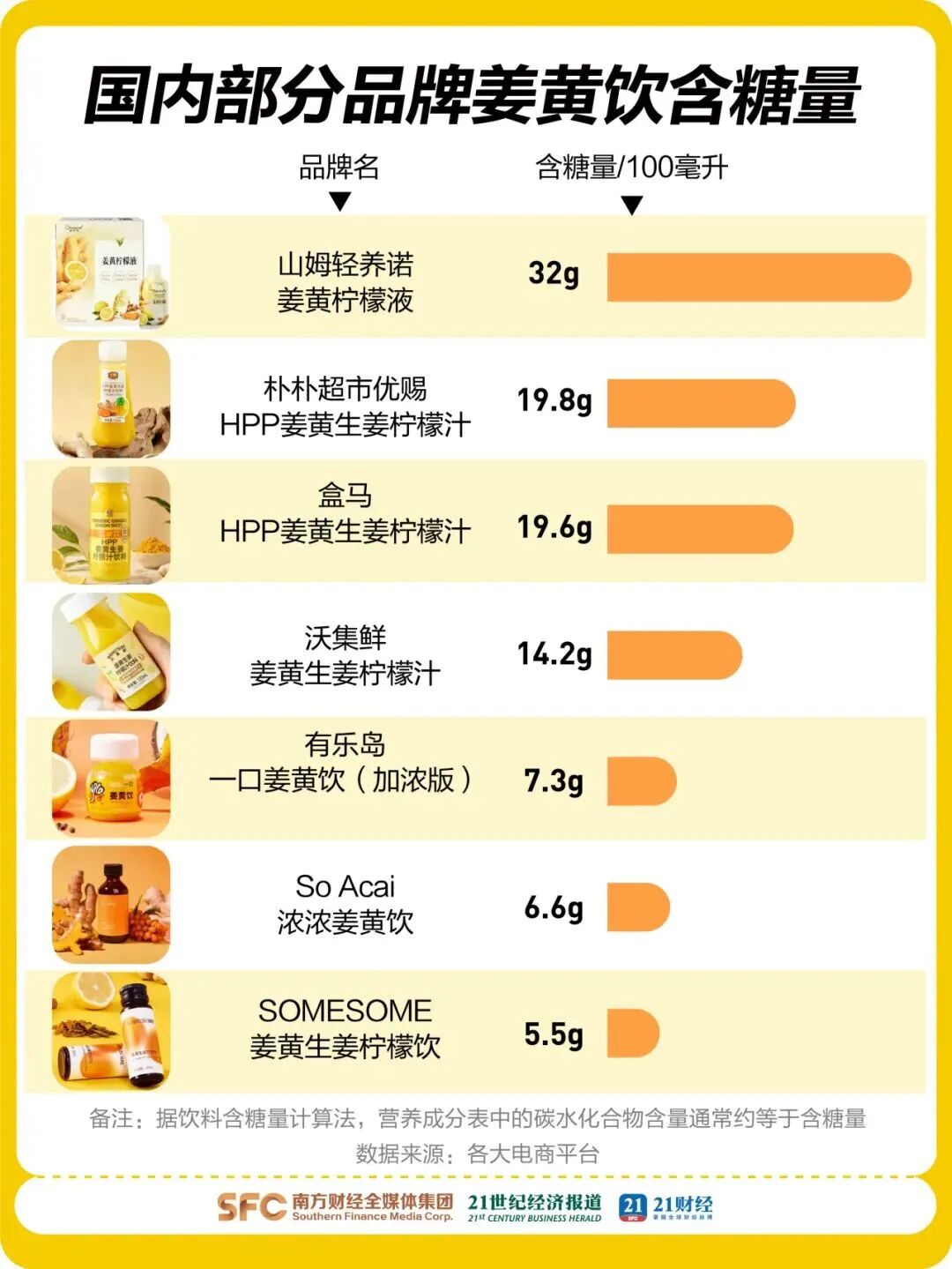
Core Insights - The rise of turmeric drinks as a health trend is driven by consumer demand for wellness, but there are significant gaps between marketing claims and actual health benefits [1][5][6] - Turmeric's active ingredient, curcumin, shows potential anti-inflammatory properties in laboratory settings, but the effectiveness in humans is questionable due to absorption issues [2][3] - Many turmeric drinks on the market contain insufficient curcumin levels to achieve the claimed health benefits, leading to consumer misconceptions [3][7] Market Dynamics - The surge in turmeric drink popularity reflects a broader trend of consumers seeking quick and easy health solutions amid modern lifestyle pressures [5][6] - Marketing strategies often emphasize the exotic nature of turmeric combined with Western health trends, creating a high demand for these products [6][7] - The cost of turmeric drinks is significantly inflated, with production costs being low compared to retail prices, leading to high profit margins for companies [7] Consumer Awareness - Consumers often confuse turmeric drinks with health supplements, not recognizing that these products are essentially regular foods without proven health claims [5][8] - There is a need for consumers to critically evaluate product labels, focusing on curcumin content and sugar levels to avoid misleading marketing [8] - The emphasis on high sugar content in many turmeric drinks contradicts their purported health benefits, potentially leading to adverse health effects [4][8]
年度策略报告姊妹篇:2026年餐饮行业风险排雷手册-20251225
ZHESHANG SECURITIES· 2025-12-25 07:37
Group 1 - The core view of the report emphasizes that the restaurant industry is stabilizing, with a differentiation in the tea beverage sector [7][10] - The investment strategy for 2026 is based on the belief that the restaurant sector will see a recovery, driven by a rebound in consumer spending and a favorable comparison to 2019 levels [10] - Key assumptions include a moderate recovery in CPI and stable single-store operations, while the main concern is that CPI recovery may fall short of expectations [10][11] Group 2 - The macro risk identified is that CPI recovery may not meet expectations, which could exert downward pressure on customer spending in the restaurant sector [11][12] - The operational risk involves single-store performance not meeting expectations, which could impact brand confidence and overall annual performance [13][14] - The report highlights specific stocks such as Haidilao and Yum China, noting that they could face risks related to CPI recovery [17][25] Group 3 - The report identifies Haidilao as a leading Chinese restaurant chain, which may face pressure on customer spending if CPI does not recover as anticipated [17][18] - Yum China, which includes KFC and Pizza Hut, is also highlighted for similar risks related to CPI recovery affecting customer spending [25][26] - Other notable companies like Mixue and Gu Ming are mentioned, with risks tied to single-store performance impacting their expansion and overall performance [33][40]